
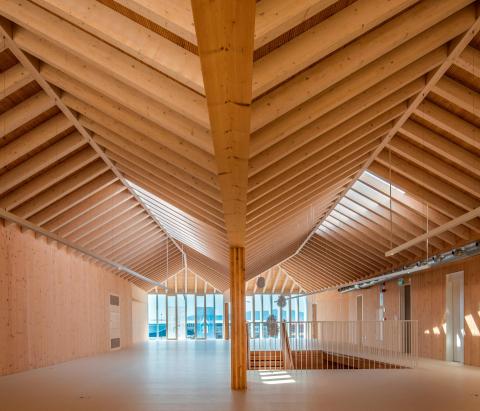
Berbés UVigo
Rehabilitation and enlargement of three old fishermen houses as new multipurpose building for the University of Vigo in the historical centre of the city.
Rehabilitation and enlargement of three old fishermen houses as new multipurpose building for the University of Vigo in the historical centre of the city.
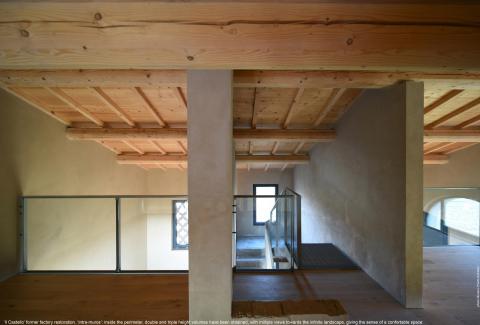
Born for the drying of tabacco and synthesis of a landscape intended for work, the ancient factory called ‘Il Castello’ is recovered for new uses, opening up to the Community as a court of collective knowledge, theater of public-private synergies aimed at regenerating the land over which it dominates. Respect for environmental values has led the intervention to develop almost exclusively inside the building, reconfigured in order to restore its semantic identity in the contemporary dimension.
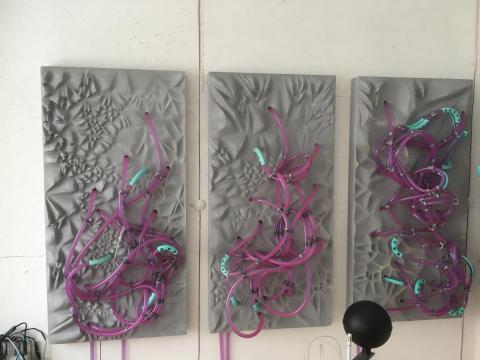
This project was developed during research funded by the Austrian Research Promotion Agency. It deals with the refurbishment of buildings of the post-war area and beyond, that show little mass and little structrural redundancy, thus being badly equipped for the global warming and the potential to naturally cool the building by thermal inertia and night ventilation. Together with an artist, elements have been developed that allow to channel night-cooled water just to where it is needed.
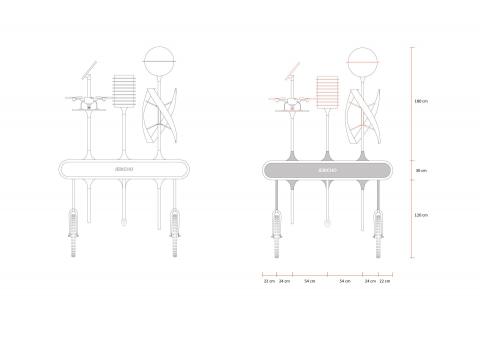
Jericho is an initial response to the problem of increasing soil consumption. It's a project of a terraforming architecture: a mobile mechano-biological device with an aim to fertilise and re-naturalize the land that has lost its productive capacity.
Through an integrated ecological process, Jericho transforms the soil harmed by human actions into a productive and habitable state once again, restoring it to its natural cycles related to its ecosystem and biodiversity.

Les androïdes rêvent-ils de cochons électriques ? [Do androids dream of electric pigs ?] is an exhibition presented by Marie-Haude Caraës at the Saint-Étienne International Design Biennial in 2013. The intention of this exhibition, conceived by the Cité du design's research department, was to give an account of designers' work on the theme of animality : a tactile approach to portraying the sensory experience of the designer, a zone where the tides of humanity and animality converge.
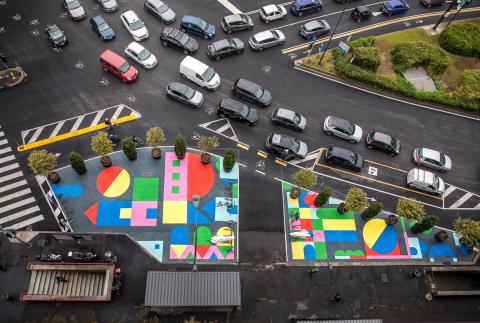
Piazza Minniti and Piazzale Loreto transformation is an unprecedented experiment where Urban Mobility meets Participatory Public Art. Realized in 2020 during the emergency, the project merges tactical urbanism techniques with visual, relational and public arts; sustainable urban mobility goals with a fully inclusive citizen engagement process; an unprecedented administrative procedure with the culture of a Design City. Through quick, light, reversible, unexpensive and transferrable actions.
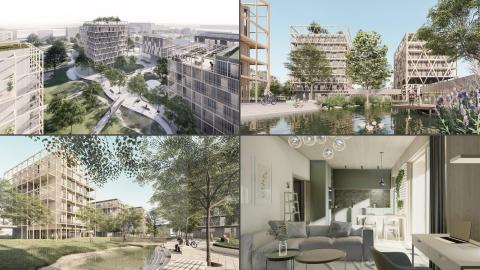
Brownfield in Saint-Denis is being transformed into a new sustainable residential area that offers a home for more than 1,000 inhabitants, facilities for education, culture and civic amenities. Further revitalization of industrial heritage and city park. We create a city of short distances, which is designed for pedestrians. We target the use of natural and recycled materials and energy self-sufficiency thanks to the smart grid. The area functions as fan village during the Summer Olympic 2024.
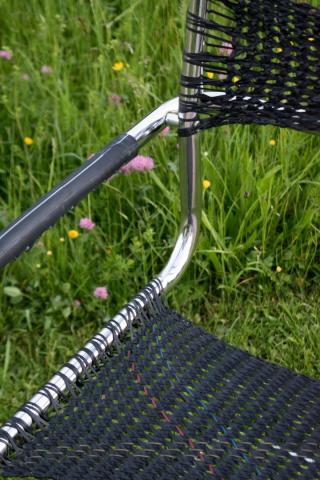
Bicycle tubes seem to only one use... Well, they don't! The new generation is the one deciding on what is cool, and we can do that while saving the world. Bauhaus has to be turned upside down! Inspired by its historic interdisciplinarity the aim is to combine sustainability, functionality, and aesthetics to inspire the daily lives of the whole community instead of only the ones who can afford fancy products.
we empower the hobbyist, artisan, and artist!
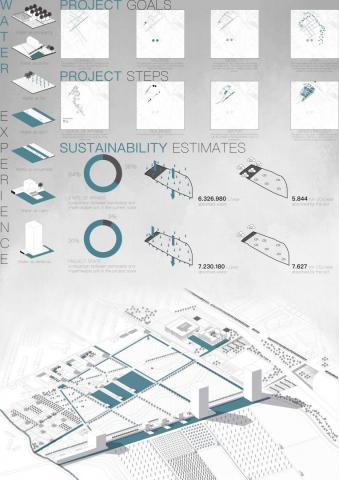
The main intent of the project is to re-form this portion of the city, integrating it with the Milanese context, thus creating a new polarity for the community. The project intends to maintain an active relationship with the historical memory of the place and at the same time define new spaces that can be used by the community. Water is used as a design element, which allows you to work on three very specific levels of redevelopment: urban, social and environmental.
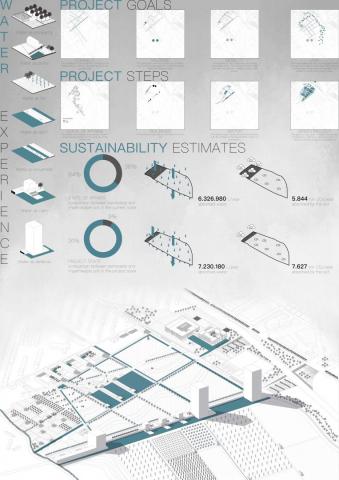
The main intent of the project is to re-form this portion of the city, integrating it with the Milanese context, thus creating a new polarity for the community. The project intends to maintain an active relationship with the historical memory of the place and at the same time define new spaces that can be used by the community. Water is used as a design element, which allows you to work on three very specific levels of redevelopment: urban, social and environmental.