EVA
Basic information
Project Title
Full project title
Category
Project Description
This project was developed during research funded by the Austrian Research Promotion Agency. It deals with the refurbishment of buildings of the post-war area and beyond, that show little mass and little structrural redundancy, thus being badly equipped for the global warming and the potential to naturally cool the building by thermal inertia and night ventilation. Together with an artist, elements have been developed that allow to channel night-cooled water just to where it is needed.
Project Region
EU Programme or fund
Description of the project
Summary
While retrofitting with thermal insulation is the usual method of renovation and is more likely to be limited to cultural and economic than physical constraints, retrofitting thermal mass is unusual and no examples could be found. The cultural limits of insulation relate primarily to the structured facade design of the 19th century and before, but also on the strongly articulated concrete skeletons of brutalism. At present, these buildings can only be thermally renovated from the inside if you want to preserve their external appearance. This leads to problems during implementation, since such renovation is difficult in properties in use and leads to physical problems, since thermal bridges inevitably arise. The interior insulation, in turn, removes storage mass from the building. The retrofitting of buildings with mass is problematic for another reason: As insulation is naturally very light, the static load on the building hardly changes. In order to increase the heat storage capacity, however, mass must inevitably be introduced, which would possibly overload the structural, load-bearing parts of the building. However, it is not really necessary to put tons of additional mass to a building. It is only important that the human body is in a favorable ratio of air and radiation temperature. In simple terms, the well-being of a person is about the operative temperature, to which the calculation models for the verification of thermal comfort usually also refer.
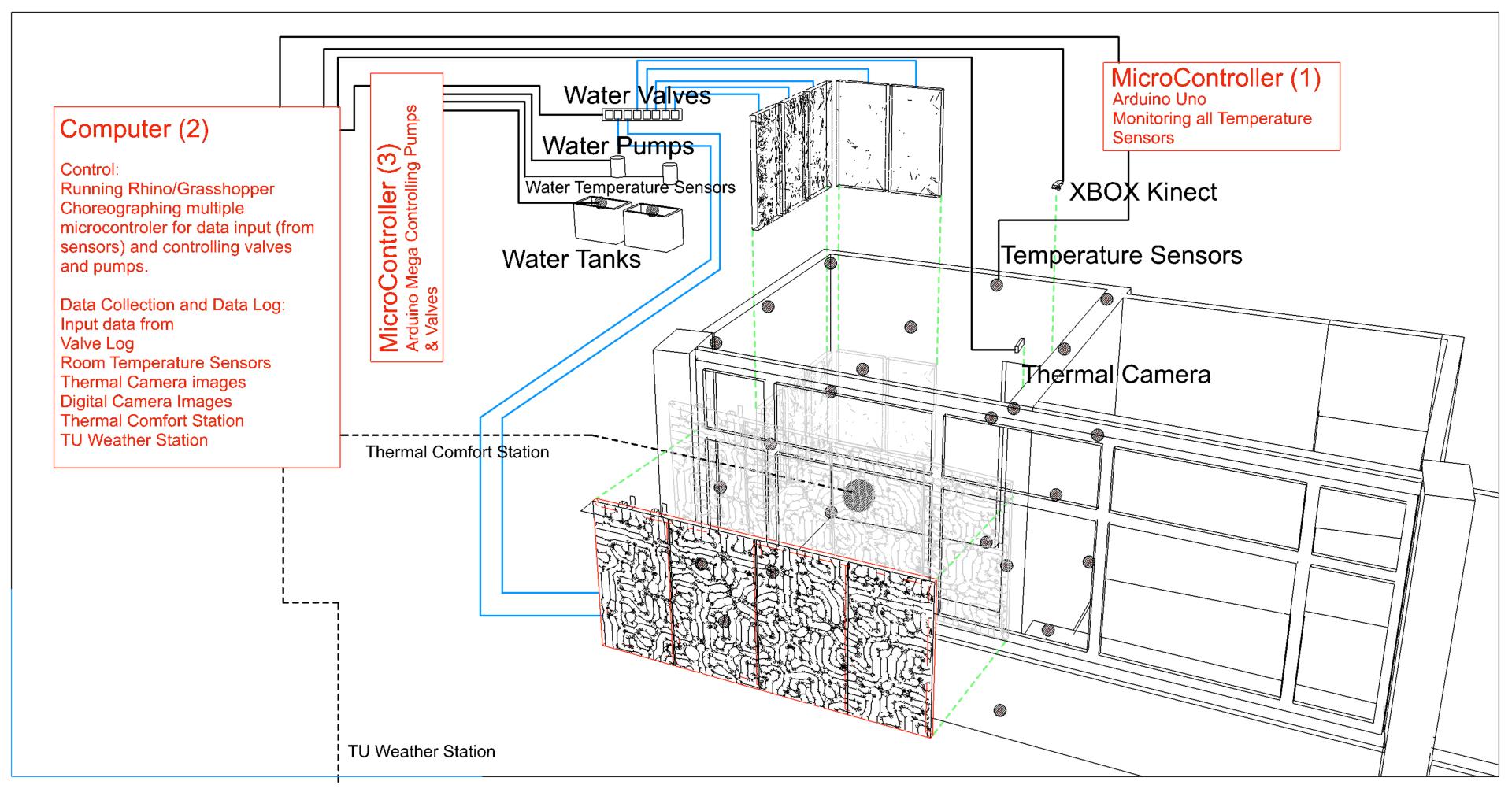
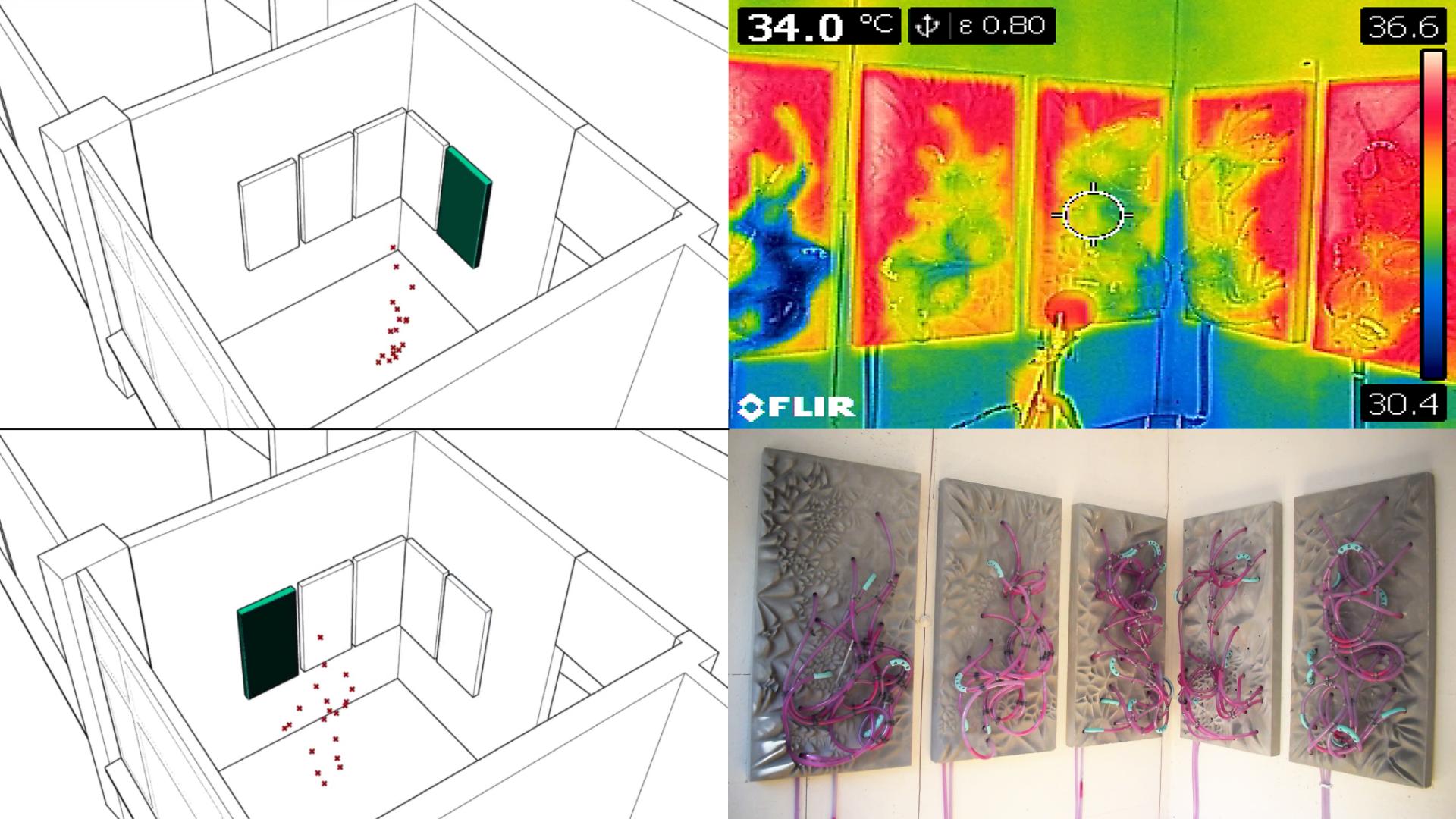
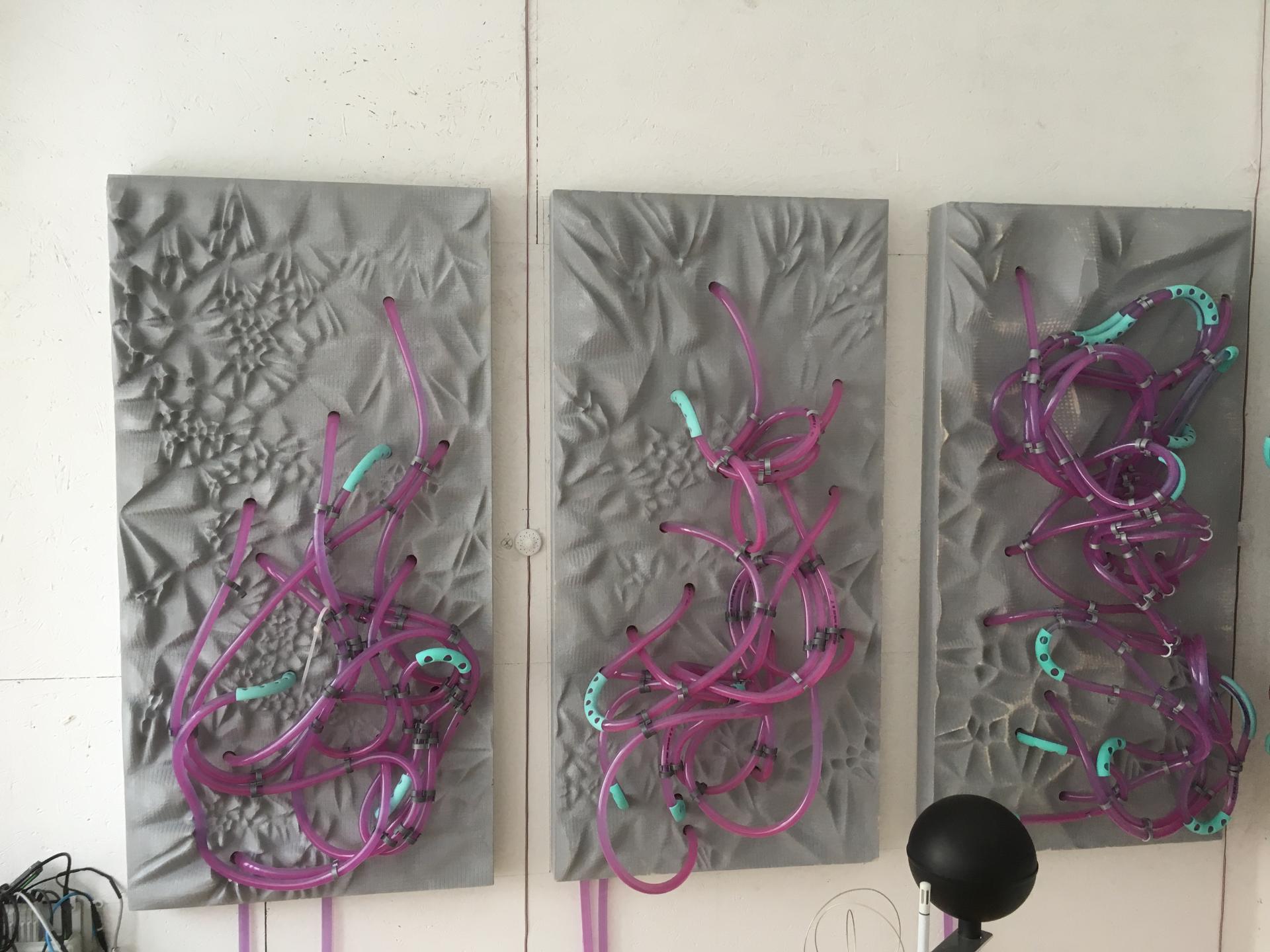
In the EVA project two rooms of a light weight 1960ies building were observed. One has been equipped with panels that can adapt the surface temperature to a given situation, as long enough cold water from the night is available. The other one has been left in its original state. As a result, the difference of the operative temperature has been 4K, showing a significant increase of comfort, achieved with little means.
Key objectives for sustainability
Key goal is to activate the potential of night cooling in the more moderate climates of Central and Northern Europe. This regions, as of now with buildings barely equipped with air conditioning systems, will soon be hit by global warming. However, even the worst IPCC scenarios still show significant amplitudes between day and night time temperatures. In order to get these amplitudes activated, buildings must show an certain thermal inertia. With the EVA project we introduced the idea of a dynamic thermal mass that has the capability to adapt to presence and location of human beings any time it is needed. That way, a significant number of future air conditioning systems should become obsolete, rendering all the energy demand and CO2 emissions of such systems obsolete.
Key objectives for aesthetics and quality
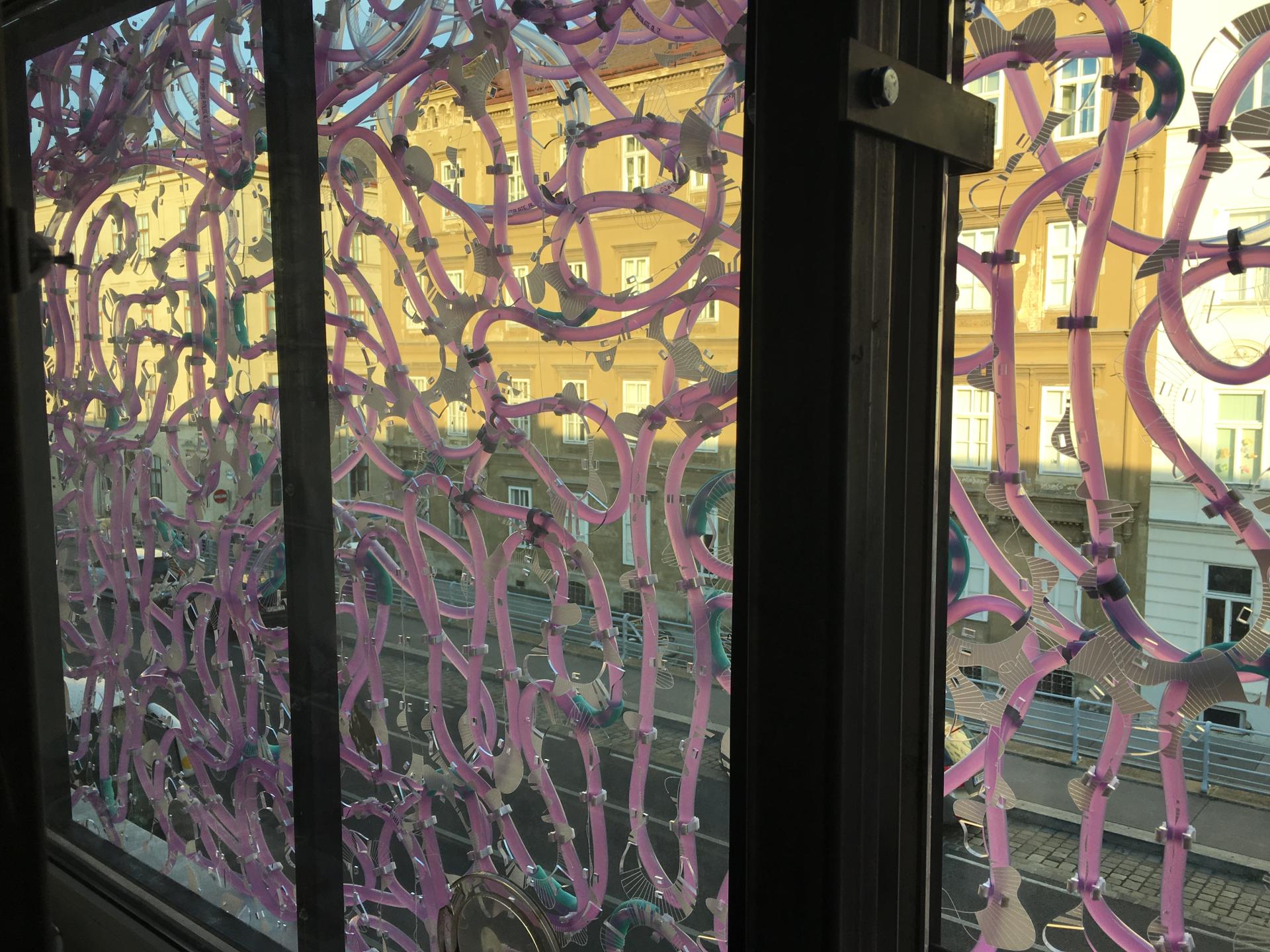
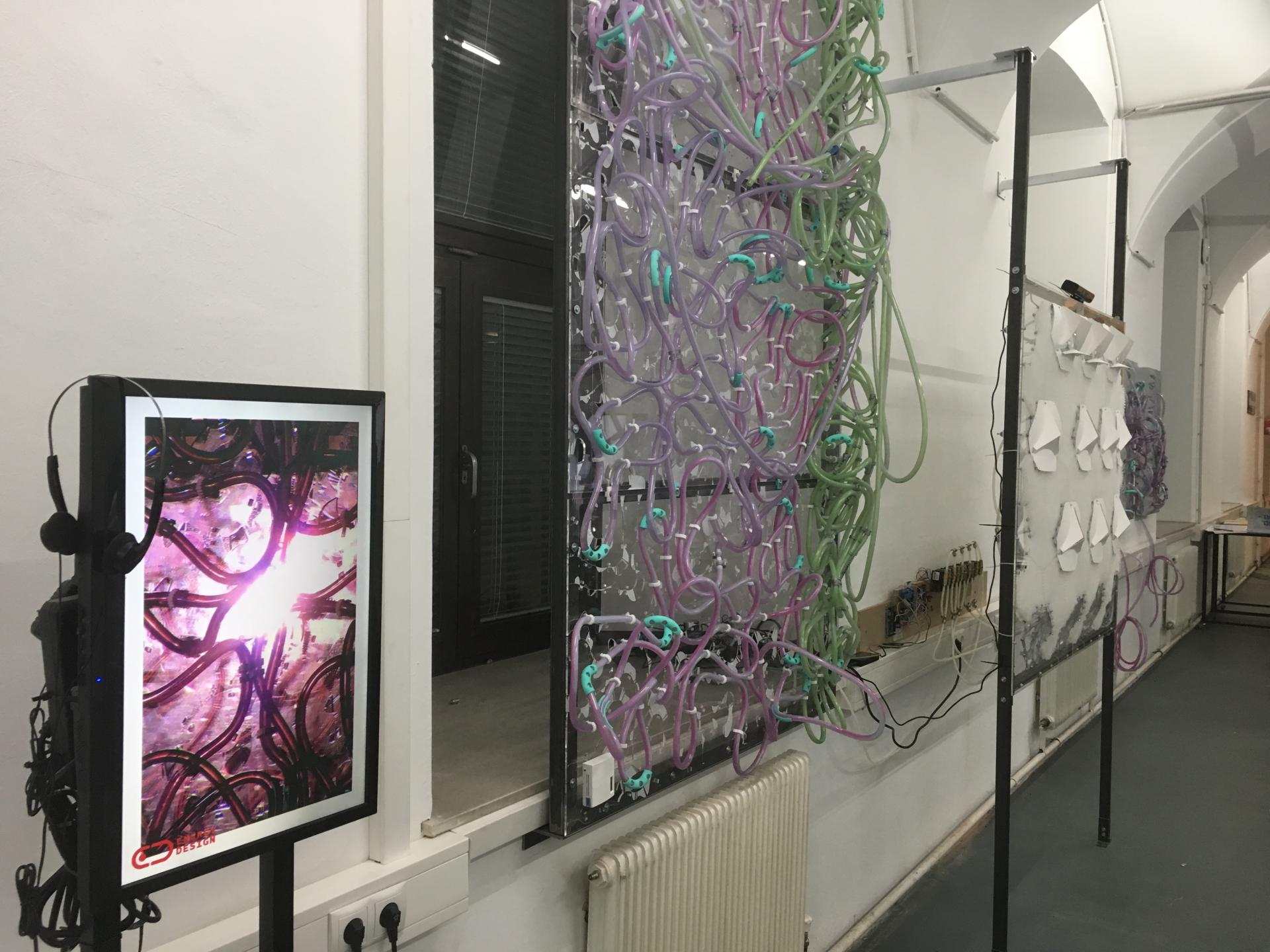
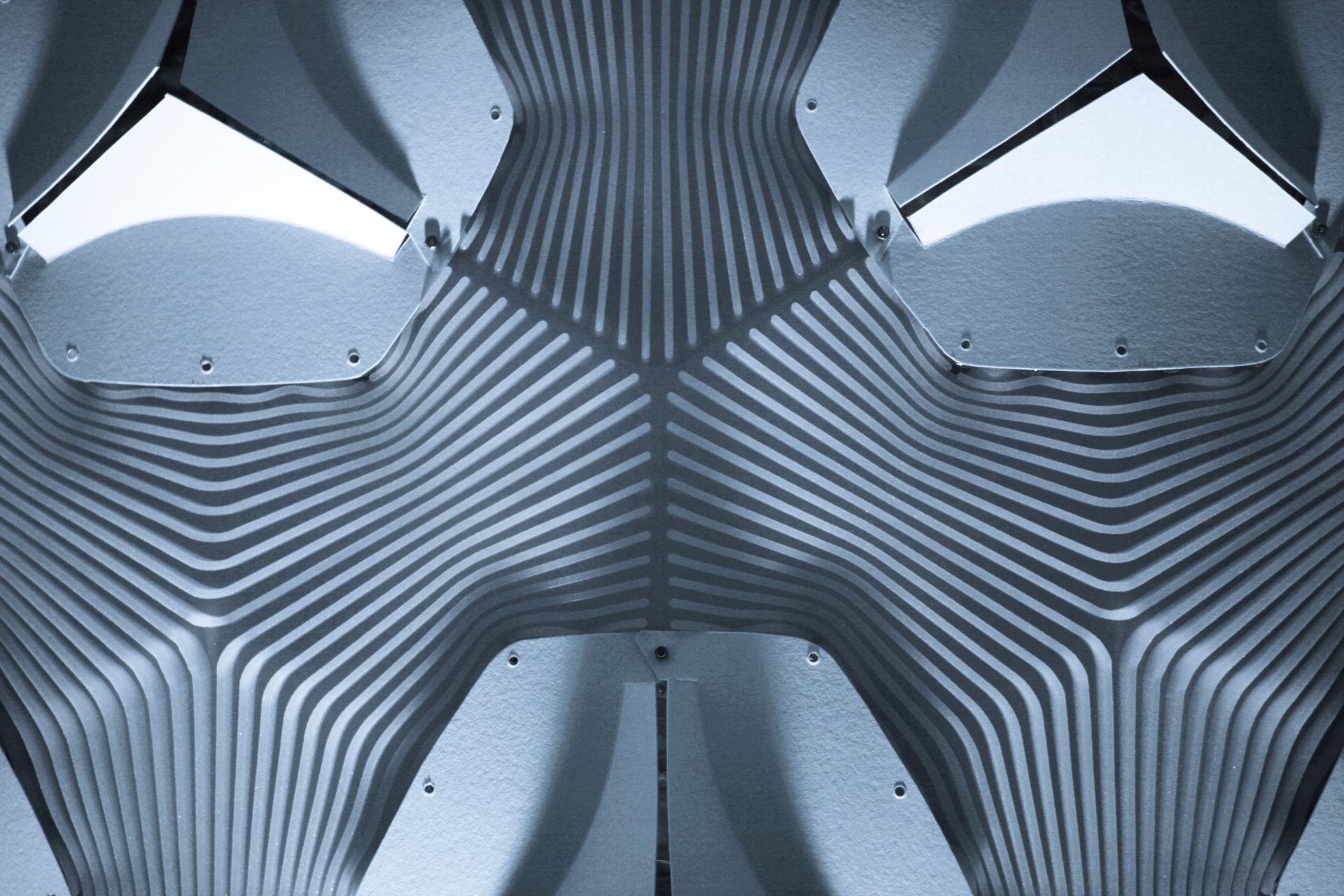
We did not just want to implement a technical system, but, having an artist in our team, designed the adaptable elements as sculptural pieces of art that enrich a space, just as a painting or sculpture would do. These elements however are more than mere decoration. As Galo Moncayo, our artist, puts it:
"I endeavor to strip technological artifacts of their ‘shelf identity’ and bring out their human qualities. I use multiple media, not to create ‘electronic sculptures,’ but rather to create dynamic situations that will provoke thought, reflection, and discovery. I want to mix what is regarded as the human psyche with what is the electronic object. I want to create situations that are curiously comparable with everyday life but with a provocative twist."
Key objectives for inclusion
One critic of the classic concept of thermal comfort as specified by the ISO 7730 is the fact, that it puts the physiology of a 70kg white male in a business suit in the center of its considerations. Where the investigations of P.O. Fanger included males and females equally, yet, being executed in the 1970ies, probably not in an equal way POCs, the ISO 7730 sets the business suit as the standard human insulation (1clo) and classic office work as the standard metabolic rate (1met). The lay out of modern buildings follows this logic, optimizing them to an optimum of max 26°C operative temperature. As the indoor climate usually is old out through the whole building, little adaption is possible. Wich the EVA project, we provide a system that can adapt to any individual comfort, moving away from the idea of standardised ("normal") human beings.
Results in relation to category
The project was presented at several conferences and has been published on the homepage of the Austrian minister for climate protection, environment, energy, mobility, innovation and technology: https://nachhaltigwirtschaften.at/de/sdz/projekte/evaluierung-visionaerer-architekturkonzepte.php
Its findings also became part of teachings at the faculties of architecture at the Applied Arts University and the University of Technology in Vienna.
How Citizens benefit
Th EVA project shows the potential of an adaptive sensor-based system in two aspects: it needs less and it serves more.
being super-adaptive, the cooling potential is activated just at the very moment and the very location where it is needed.
being super-adaptive, a user has full control of the thermal comfort of his or her place.
Innovative character
The EVA projects deals with thermal inertia in a new way and applies latest sensor techniques and micro controllers. However, given the advances of these technologies and the availability of these systems, the project is not a high-tech solution, that could only be implemented by a few specialised companies. In contrary, the way, the moduls are designed, the can be easily further developed (to adapt the design), produced and implemented by any kind of medium skilled person or company.