
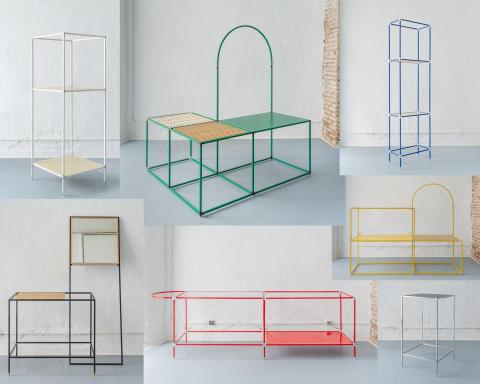
Standard
Standard, the new and simpler modular system to build pieces of furniture for life
Standard, the new and simpler modular system to build pieces of furniture for life
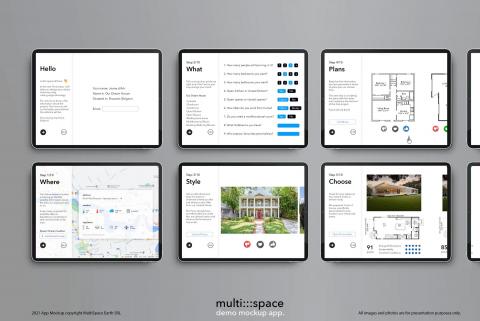
MultiSpace will help future home-owners conceptualize and design sustainable, personalised, affordable homes, in under 18 minutes. Based on data about the home location, on user’s needs and wants, using in-house developed algorithms and AI, it automatically generates styles, plans, 3Ds and simulations.
Architects and engineers can intervene in the process to better translate the digital dream into a physical reality, from idea to documentation, permitting, building and final inspection.
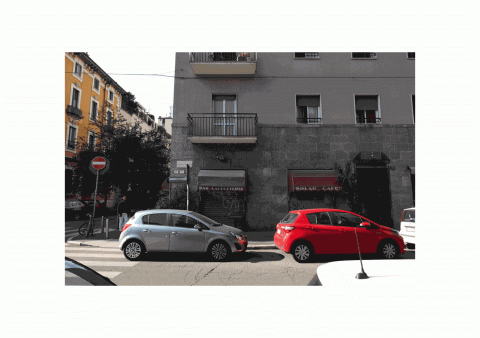
The horizon, a perceived line at which the earth's surface and the sky meet, is associated with freedom and imagination. The urban horizon, a city’s silhouette, is outlined by parked cars. Awareness towards the visual and physical pollution of our urban habitats, enables us to collectively discover the opportunities given by a new model of locally centralized parking options: An extensive and climate-effective liberation of public spaces which creates a #newurbanhorizon !
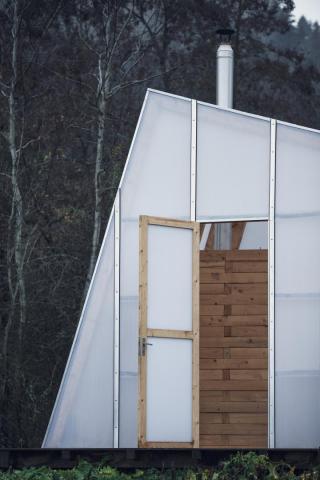
No electricity, no artificial sounds, just an object illuminated by candlelight, turning it into a radiant lantern. At the edge of the woods stands a public sauna, that's uniquely connecting the community and turned the established building hierarchies upside down. There was no client, the finances were obtained from a public crowdfunding campaign and a local construction company employing people from underprivileged communities built the object. To date, the sauna is maintained by the villagers
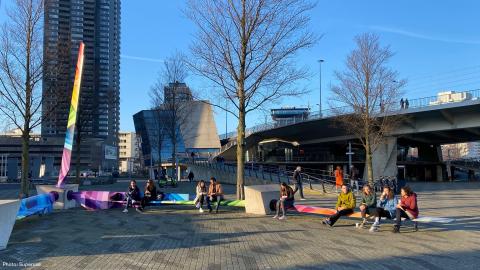
Blade Made is a circular economy strategy by Superuse, where the waste of the wind energy sector is transformed into public furniture like seating, playgrounds or bus shelters. This specific example shows the first Blade Made project by Superuse, a playground in Rotterdam. By reusing the carbon emissions are reduced up to 90% compared to a standard playground. The striking aesthetic of Blade Made playgrounds stimulates the imagination of children and facilitates social interaction.
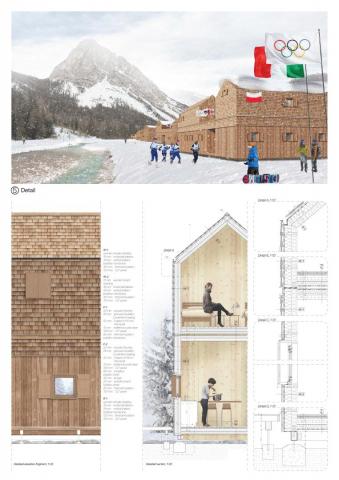
The project of Olympic Village in Cortina d'Ampezzo, focuses on the topics of modular architecture, suggesting a concept of a - HOME AS A PRODUCT. This type of home is produced in the factory on the assembly-line, likewise any good of a mass production, it is eager to be transported to any location and serve its function, as a housing during a Mega-event like Olympic games as well as a holiday house for private individuals, or as an emergency housing for those in need.
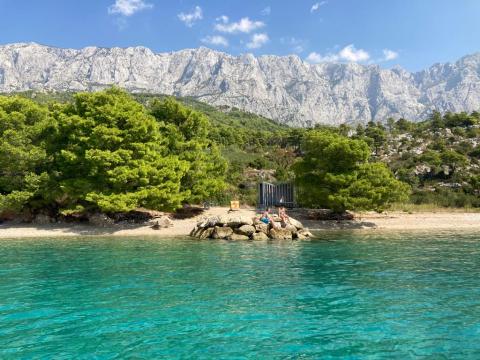
The “Development of the bicycle rest areas and infrastructure on bicycle/thematic trails in the Split-Dalmatia County" project showcased how smart and yet simple solutions can contribute to the revitalization of the territory and bringing together the local community, while sustainable reinvention of derelict areas into an attractive rest stops for cyclo-tourists supported the concept of green mobility as one of the key sustainable development goals of the country.
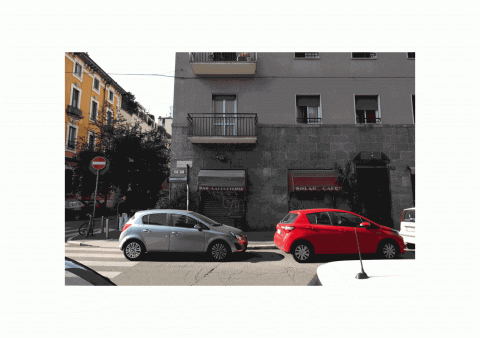
The horizon, a perceived line at which the earth's surface and the sky meet, is associated with freedom and imagination. The urban horizon, a city’s silhouette, is outlined by parked cars. Awareness towards the visual and physical pollution of our urban habitats, enables us to collectively discover the opportunities given by a new model of locally centralized parking options: An extensive and climate-effective liberation of public spaces which creates a #newurbanhorizon !
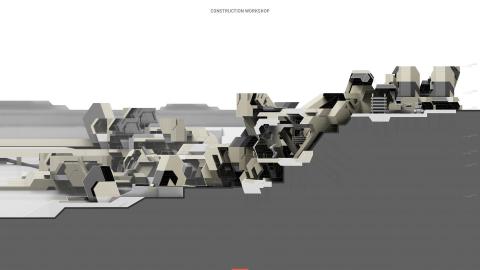
The Eutopian Factory outlines an alternative to the current model of industrial manufacturing. Leaving behind excessive production and environmental exploitation of the last 150 years, it embraces key concepts of pre-industrial labour (such as highly skilled workforce, sustainable scale of resource harvesting based on local availability, clustering into self-sufficient production hamlets, avoiding overscaling the production rate) and updated with the current possibilities of Industry 4.0.
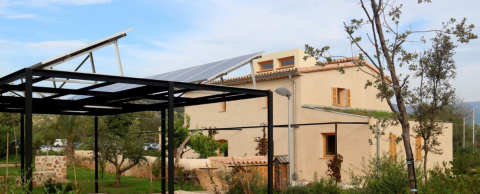
Renovation of an old stone farmhouse located on the UIB campus, to become an innovation center for sustainable and healthy construction. Part of the building has been renovated and the rest rebuilt with innovative techniques which are more natural than industrial (straw, clay mortar, permaculture ...); all of this attending to circularity criteria. The result is an exemple for how to renovate this type of Med structures balancing tradition and innovation and achieving a bioconstruction ecosystem