
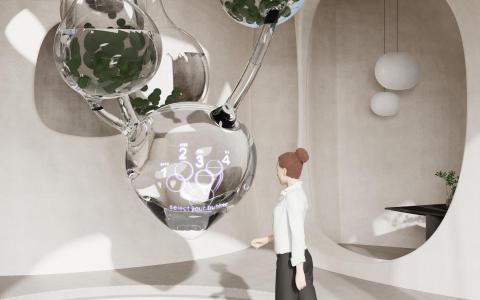
ALYSSA
Alyssa, is a water purification and preservation system lead by algae, based on the balance between humans and nature. Nature as a guide, technology as bridge between man and planet, water as a shared resource.
Alyssa, is a water purification and preservation system lead by algae, based on the balance between humans and nature. Nature as a guide, technology as bridge between man and planet, water as a shared resource.
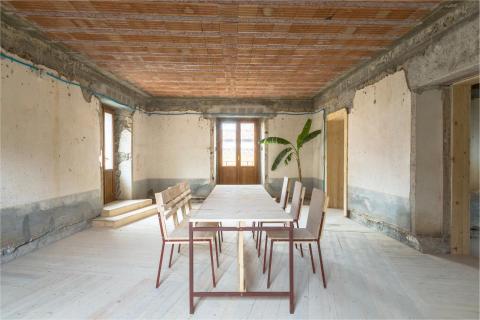
The "BelMondo" system, through an international, nomadic and digital network of creative professionals working in Belmonte Calabro, aims to experiment with new and more advanced forms of urban and social regeneration. The experience that is taking place in Calabria has gradually been taking shape, through the annual editions of Crossings (2016-2019), as an intertwining of activities that have, in fact, generated various moments of meeting and cultural exchanges between different stakeholders.
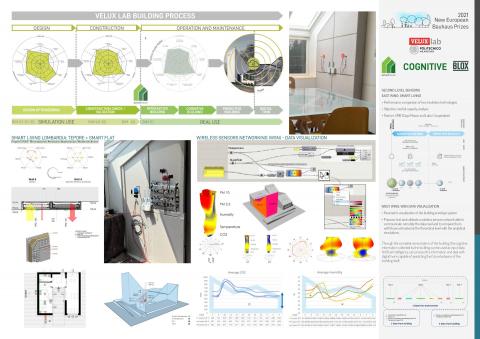
VeluxLab is the first Nearly Zero Energy Building (NZEB) of the Politecnico di Milano and the first Italian Active House. It is an open experimental unit designed through an innovative methodology and circular approach to managing the construction process, starting from the design phase to production, operation, and maintenance of a truly intelligent and active building. VeluxLab integrates aesthetic, design and technology, focusing on comfort, energy, and environmental building criteria.
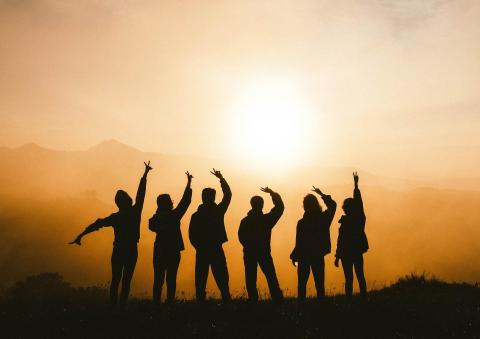
The New European Bauhaus Summers (NEB Summers) is a new educational model to create a continuity to the Eramus program and the conditions to connect students from all over Europe during their shared summer period, by giving them the opportunity to join European projects related to sustainability, inclusion and aestethic. Summer is a common cultural moment in Europe for students and could become a chance for the young generation to travel, learn and act for a desirable future.
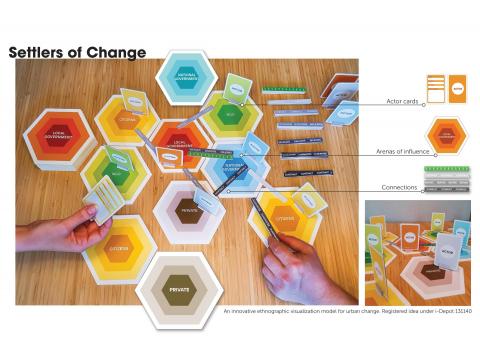
An innovative ethnographic visualization model where different participants jointly learn through building and altering the urban planning governance process to achieve change, with focus on sustainable transitions. The interdisciplinary model is based on management, design and urban planning and allows for a physical learning experience of arranging pieces as to mimic the urban governance networks, with its arenas of influence, actors and relationships.
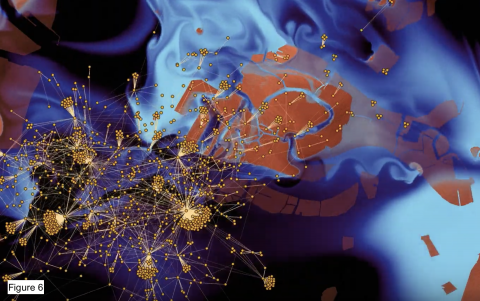
How can communities cope with the devastating effects of climate change and build a new future? The Aqua Granda project has allowed Venetian citizens to jointly build a digital memory from social media and other sources about the devastating floods of November 2019, Artists and scientists have created powerful art works to unlock meanings from these archives and results are being shown in a hybrid exhibition distributed throughout the city using augmented reality on mobile devices.
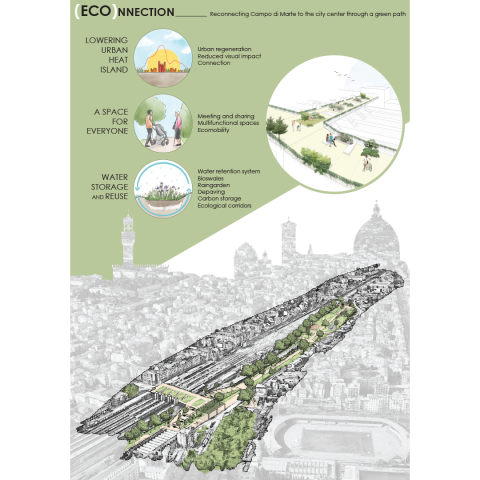
The concept aims to mend Florence’s urban structure, reconnecting the historic center with Campo di Marte's neighborhood, which are now separated by the homonymous train station.
The urban regeneration project aims to create a large pedestrian area by reusing the structures and spaces of the railway - currently no longer in use - in order to give back space to pedestrians and creating ecological connections with the surrounding green areas and the hillside behind.
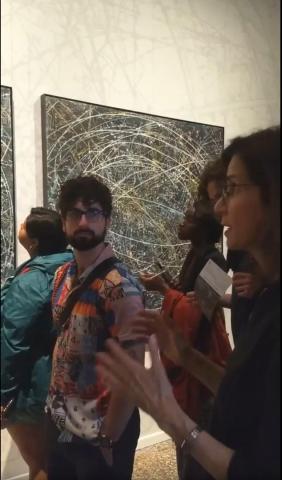
Goldsleger's painting exhibition challenges viewers to immerse themselves in places where environmental and socio-economic events occur, the effects of which are felt worldwide. Her art calls for sustainability and embraces "multiple interpretations while conveying her sensitivity for the human experience. Her diagrammatic images also suggest natural and societal orders and serve as a reminder of the transitory realities present within contemporary society." (Curator Shannon Morris)
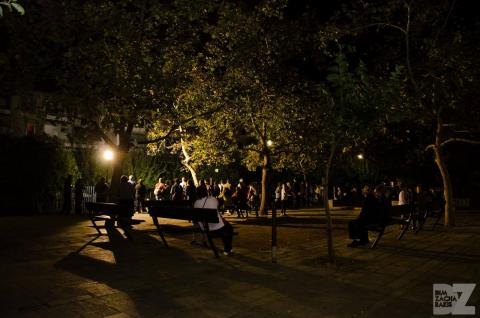
“Dourgouti Island Hotel” combines performing arts with community mapping practices with a site-specific performance born of rich material that derives from a palette of collective actions.
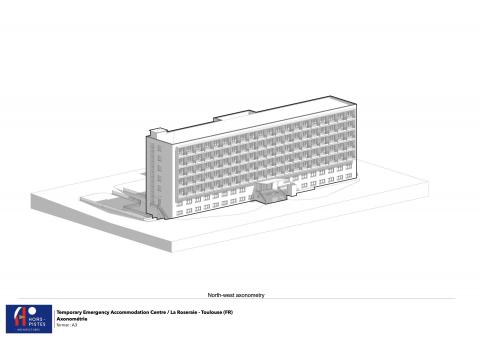
Our modern society is facing a deep housing crisis while our current development model generates a large stock of vacant buildings. In France, more than 3 million homes and 5 million square meters of offices are empty. Our ambition is to create new housing models and to help owners and authorities to mobilize these abandoned spaces to offer temporary accommodation. In this project we created 220 temporary emergency accommodations in a former student residence that had been abandoned for 4 years.