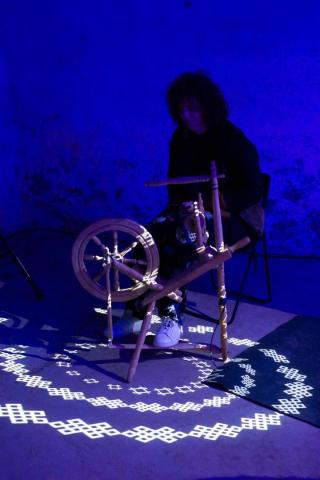
Project Can You Feed Your Coat? is dedicated to the evaluation of exclusively local sources and the renewal of the tradition in sheep wool processing in the Czech Republic. Since 2018, I have been dealing with the issue of unused Czech sheep wool and I am coming up with the renewal of our very traditional production of Loden. Under the Linda Havrlíková clothing brand, I provide clothes whose wearer knows their perfect local origin.
NEB Prizes 2021: All Applications
Filter by
Applications (2025)
Showing results 951 to 960
Heritas – is a cultural heritage festival organized by a team of volunteers, happening once a year, covering themes of heritage knowledge, conservation and technology. The goal of the festival is to encourage people to take the leadership in initiating cultural heritage preservation activities as well as to develop a participatory approach to the cultural heritage preservation and maintenance. Our key tools for achieving these goals - communication, education and a strong, motivated community.
We designed a sensory journey of reconnection with the sea while integrating cultural activities and new digitalized spaces. Materials are consciously chosen with the idea of combining a global perspective with a glocal vision. The project thus not only focuses on innovative technological solutions but also enhances local resources and production cultures. In the spirit of Universal Design, a clear color code features the whole project offering an immediate understanding of the environment.
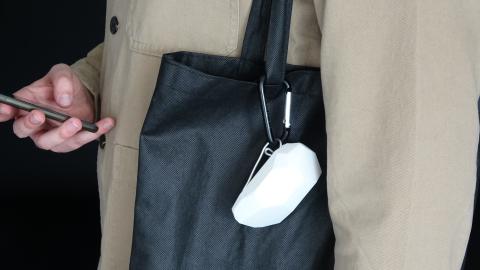
Eo is a citizen science porject meant for an urban lifestyle, where the quality of air is hardly monitored and dramatically change from zone to zone every day. The device collects data pinpointing the degree of breathability every 100 m during an outdoor activity, like commuting to work or jogging. Data are eventually shared with other users to build a common air quality map of the concerned city. At the same time, Eo transmits quantitative data to experts to get elaborated.
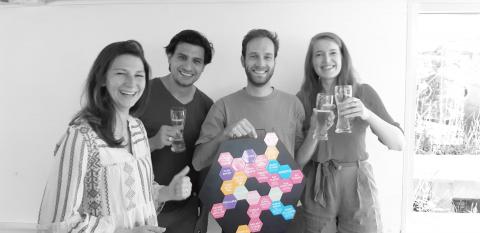
This game combines a language, rules and tools to learn, communicate and solve problems. Building blocks from sustainable systems around the world are offered to the players. During the game ideas are selected, linked, added, contextualized, sharpened in teams. All teams compete for a winning system design. The game - frequently updated - helps people to translate ambitions, ideas and plans into innovative system designs, in every sector, context, and through all scales.
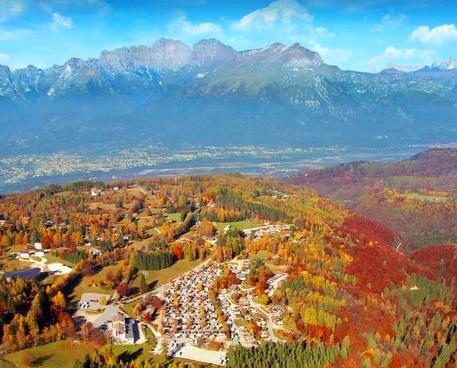
Boris Hristov International Academy and Festival come out a Rinascimental Concept: the creation of a witty framework made of operas, concerts, performances, flashmobs, cultural meetings, which will bring a new wave of youthful enthusiasm and talents in wonderful urban and rural spaces (Belluno, Nevegal and the surroundings) in order to return traditional and natural places to Opera, by gathering artistical, musical and natural heritage of the Country, the “Bel Paese” so dear to the great bass.
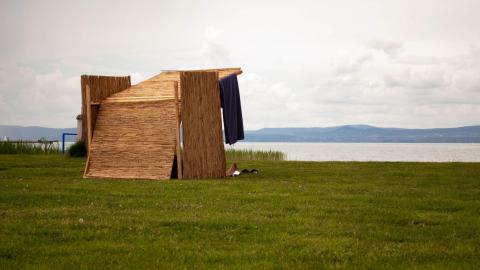
In Central Europe's biggest freshwater lake, reed is one of the most important parts of the wildlife. Due to the artificially high water levels regular reed harvesting is one of the best ways to keep its quality where it is before it gets worse but last year only less than 10% of harvestable reed was cut. Reed cabin is not only a product which gives a base for beach attenders with shade and safety but also a system in which local harvesting makes possible to harvest as much reed as needed
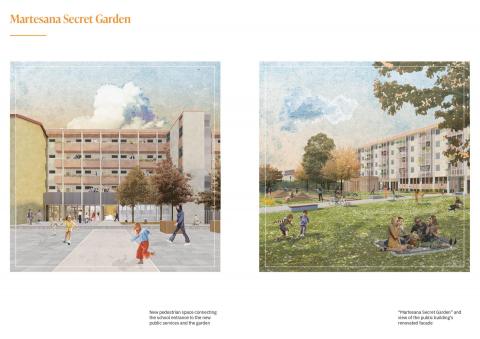
Within the regeneration of the public realm in Adriano district, the project focuses on the spatial dimension of collaboration. Starting from existing dynamics, it aims to re-activate public spaces and neglected green areas by triggering bottom-up processes and prefiguring the future urban development. In this way, the project became a tool that systematizes the social, economic, and environmental actions to be carried out and the physical transformations to revitalize the neighbourhood.
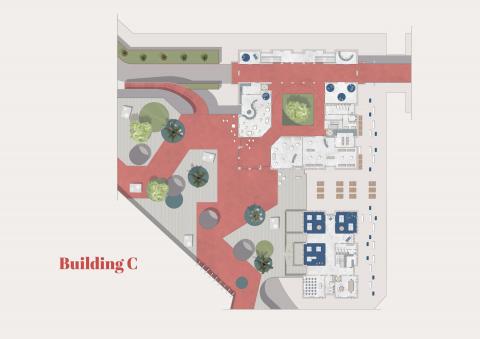
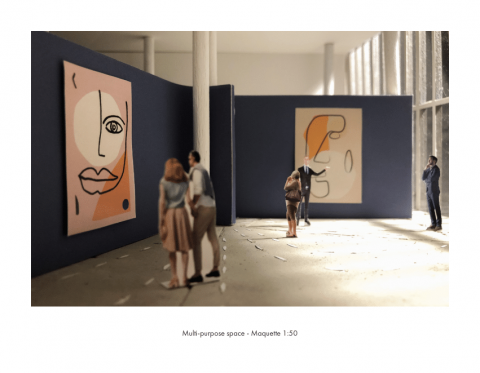
QCS Urban Grafting aims at the requalification of an abandoned area through the design of a unique architectural complex, speaking directly to both cultural and physical contexts. In this way, the architectural volumes of the student hostel and the multi-purpose space are designed in relation to the public system of plazas. The proposal is based on the theme of the path, used as a tool to define the spaces, creating a relationship both for the accessibility and the permeability within the block.
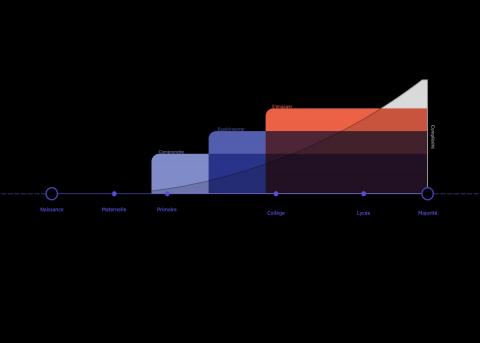
Futurons is an educational program designed from the territory's specificities. It aims to help children from kindergarten to high school understand the interdependencies between individuals and their environments and to design more sustainable lifestyles around four themes: Cultivating, Travelling, inhabiting and Using. Together with teachers, students and territorial actors, Futurons designs a digital platform with adapted educational resources, citizen cartography and ready-to-use workshops.