DNA game
Basic information
Project Title
Full project title
Category
Project Description
This game combines a language, rules and tools to learn, communicate and solve problems. Building blocks from sustainable systems around the world are offered to the players. During the game ideas are selected, linked, added, contextualized, sharpened in teams. All teams compete for a winning system design. The game - frequently updated - helps people to translate ambitions, ideas and plans into innovative system designs, in every sector, context, and through all scales.
Project Region
EU Programme or fund
Description of the project
Summary
Purpose
This game combines a language, rules and tools to learn, communicate and solve problems. The game helps people to translate ambitions, ideas and plans into innovative system designs, in every sector, context through all scales.
Design
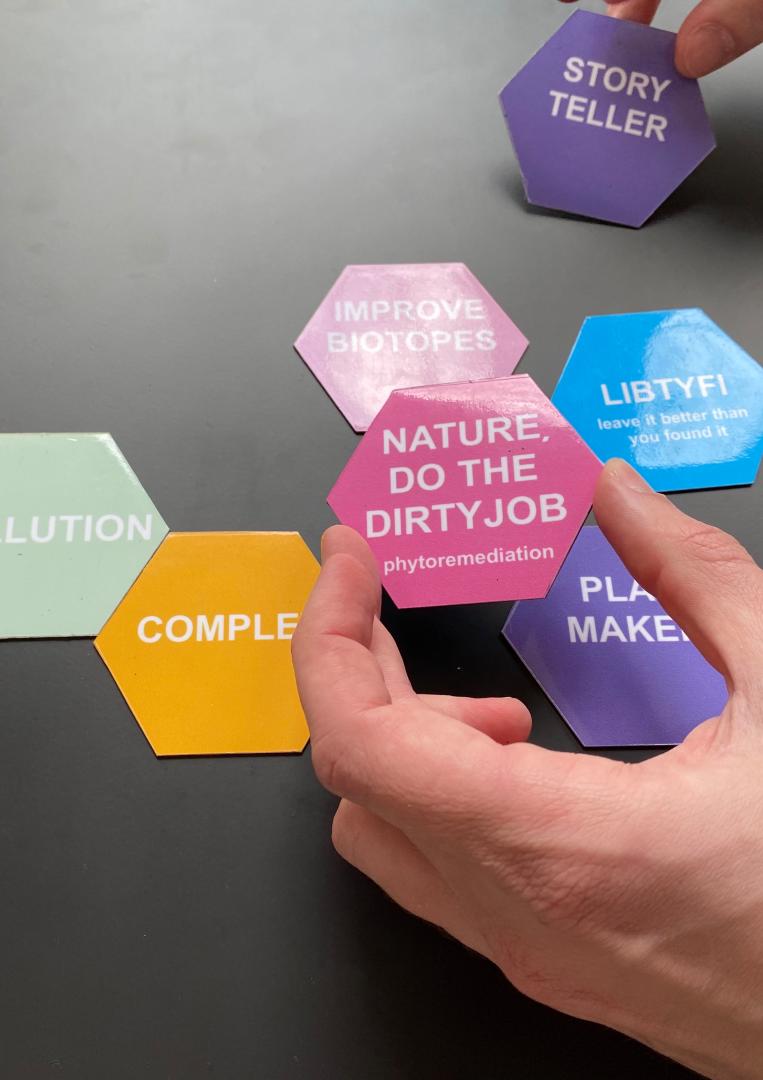
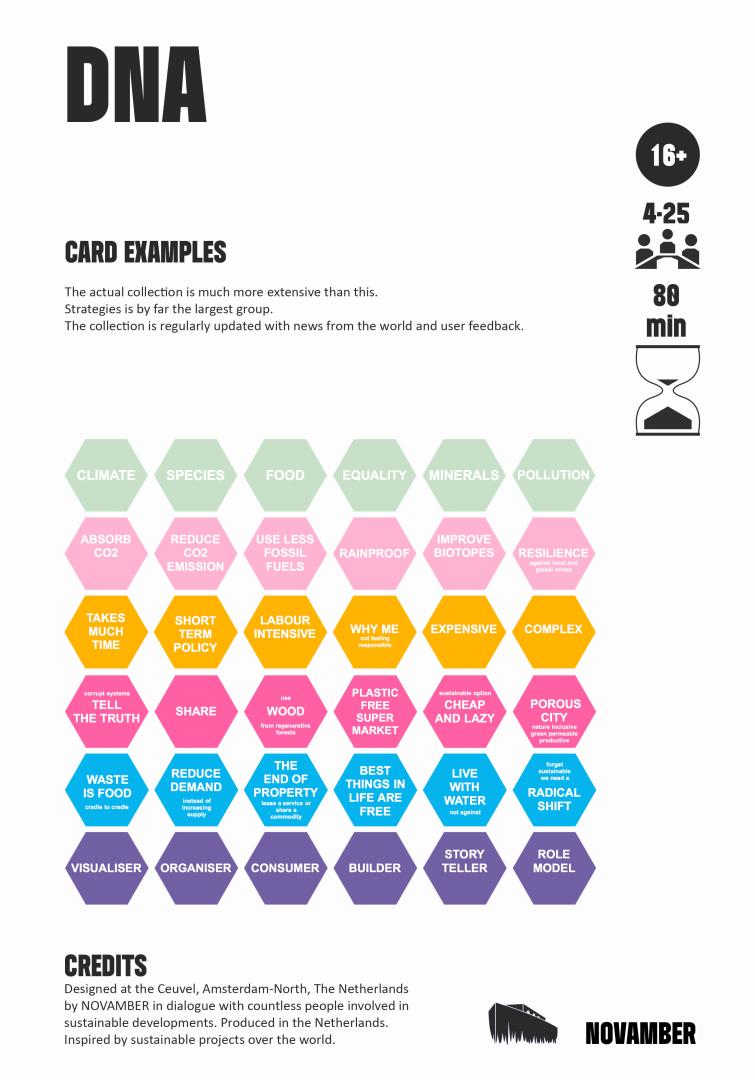
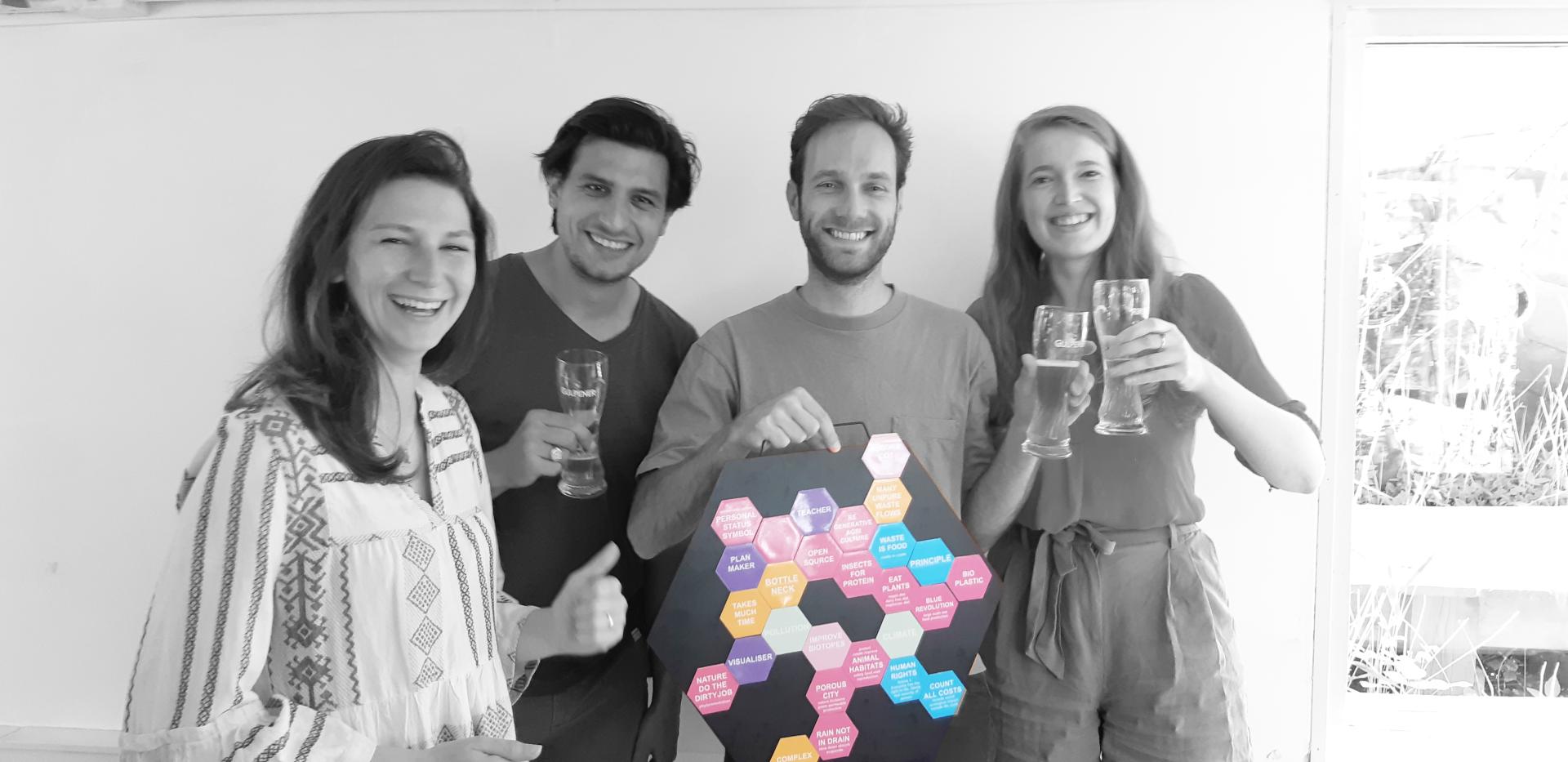
Sustainable purposes, goals, principles, strategies and effective roles in sustainable systems (change) are harvested from projects in all sectors and disciplines all over the world. Typical bottlenecks are included. It is poured into colourful game cards that you can hold, move and stick on a board. Players are invited to complement this set with their own desired DNA game cards.
Relevance
This game supports effective systemic solutions or innovations by encouraging a sustainable ‘DNA’. It works for all situations, sectors, disciplines and organisations (like companies, authorities, schools, associations) on any scale level. Used in the European context, DNA supports international cross-cultural and interdisciplinary sustainability debate and problem solving. Europe ‘thinks like one organism’.
Game structure
A DNA consultant guides the game. It can be played with 4-25 persons, the target age is 16+ and the game takes 80 minutes. Each game has its unique preliminary focus, determined prior to the game.
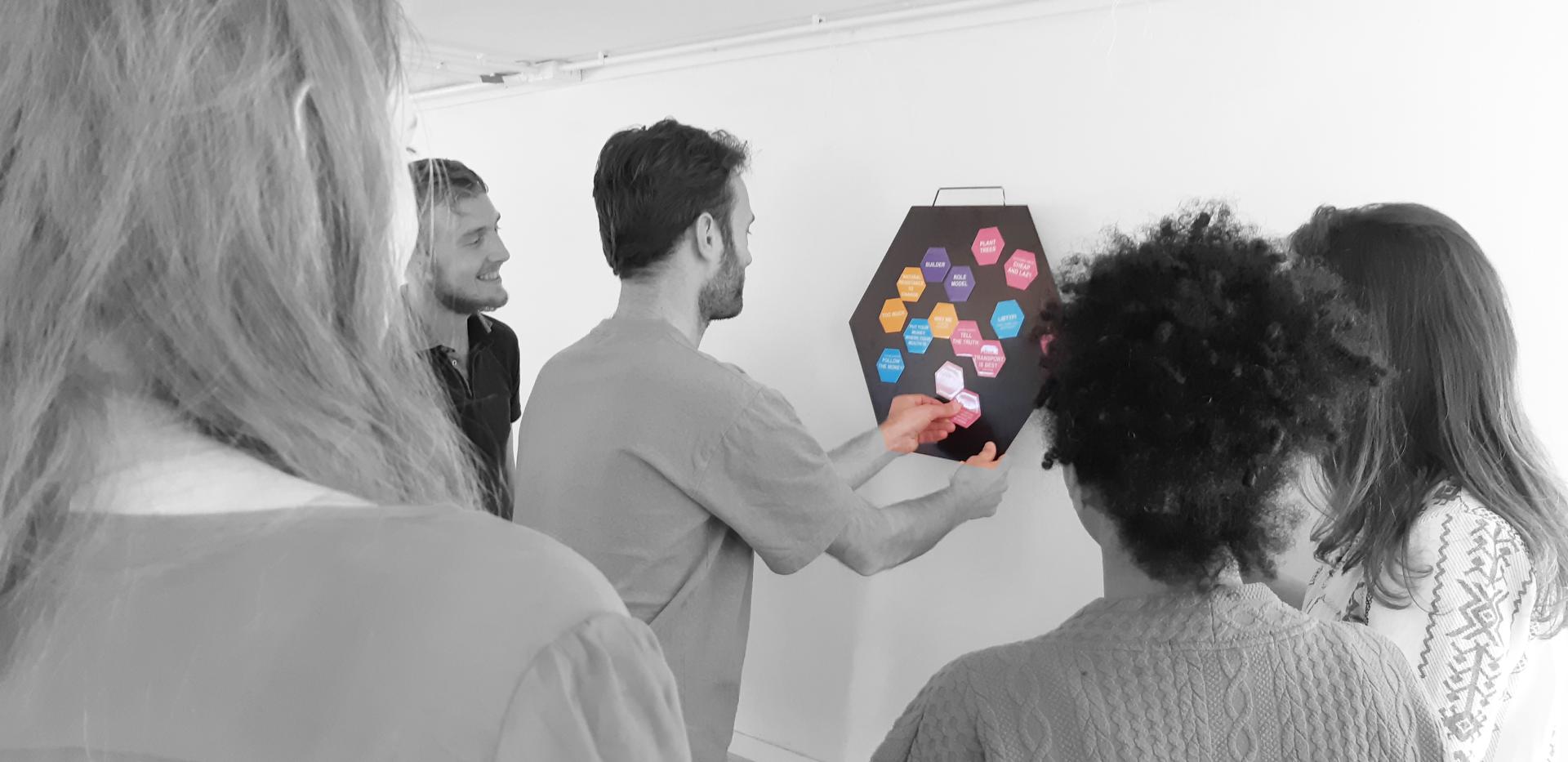
After a short introduction the game starts with an open brainstorm and words are stuck to the magnetic wall. Based on personal engagement small teams are then formed.
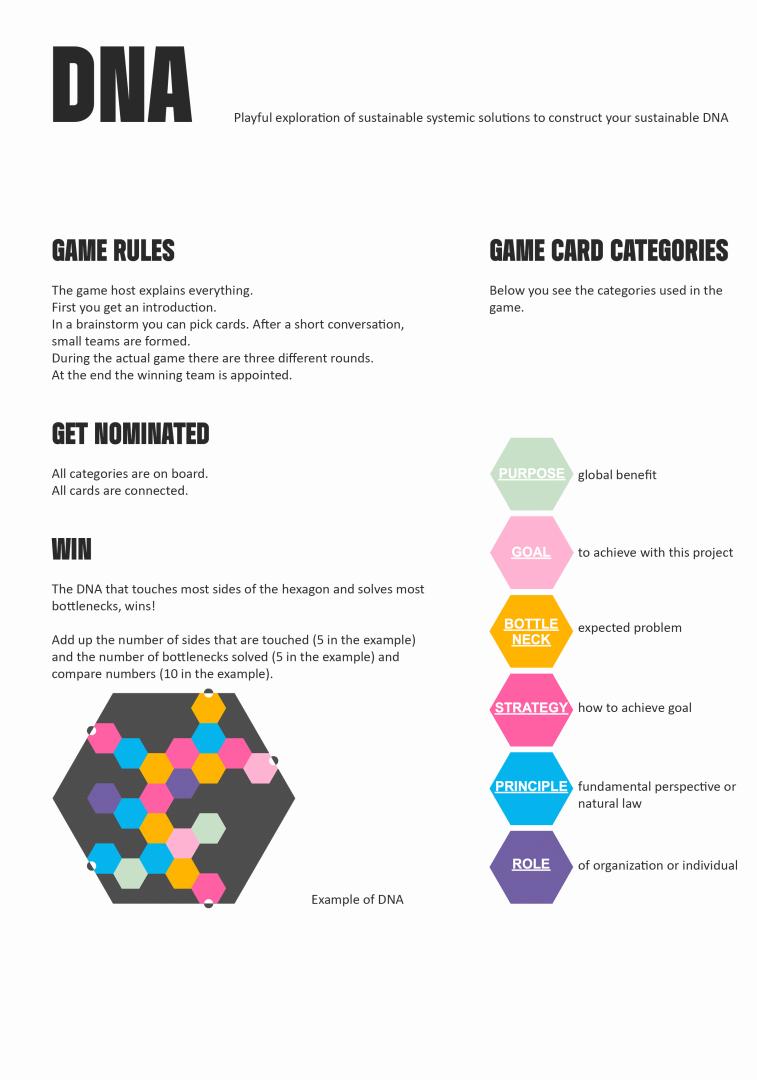
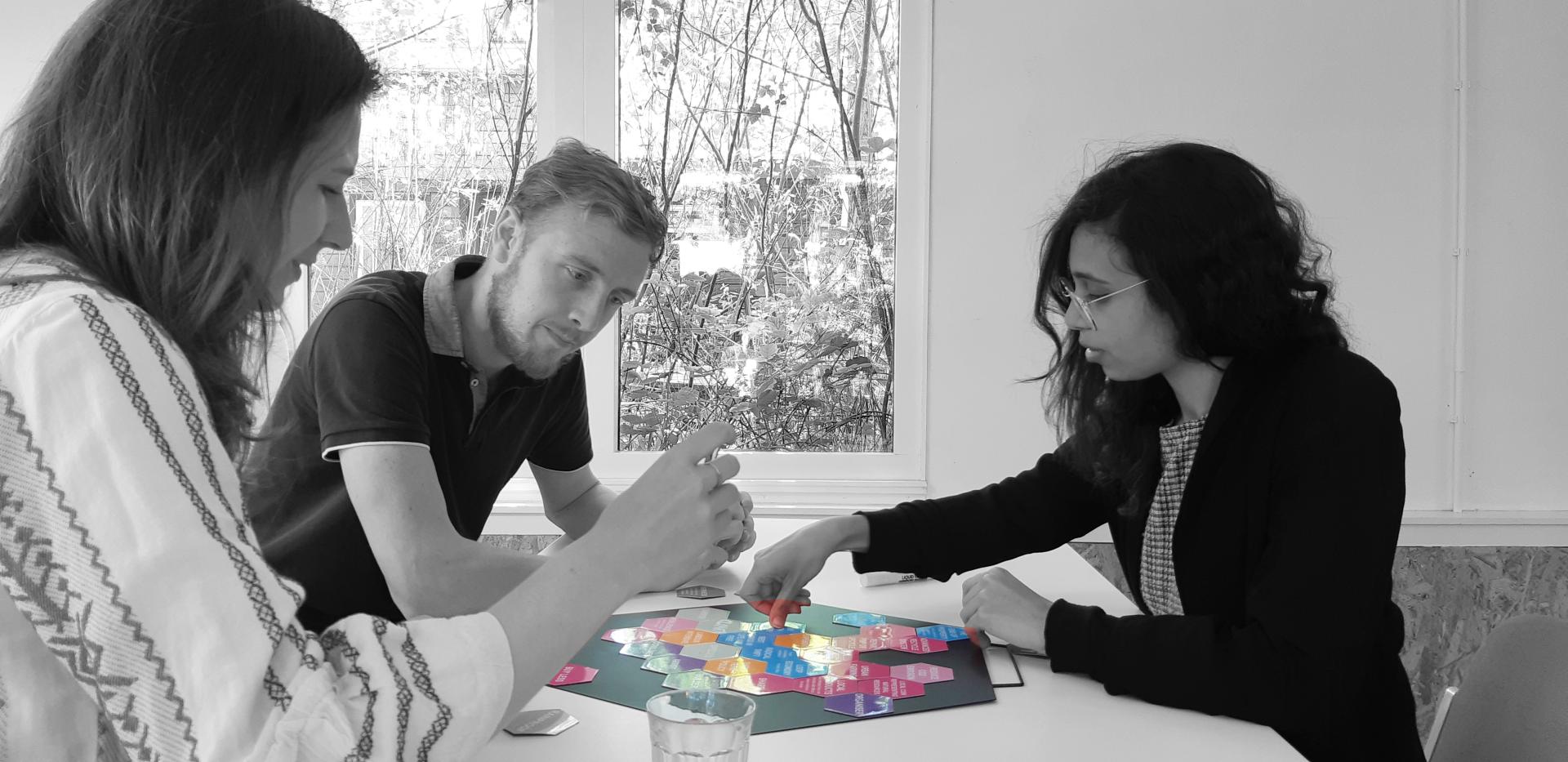
These teams simultaneously play a concentrated board game, which facilitates the structured design and construction of the ‘DNA’. The ideas are linked, enriched, contextualized, sharpened, and teams compete for the ‘winning’ project DNA. Team members help each other, get all categories on board, and create one DNA structure. More and more bottlenecks are solved and the DNA is elaborated further. The one who touches most sides of the hexagon and solves most bottlenecks wins.
Key objectives for sustainability
The game is a reaction on the urgent challenges we face and the way society deals with them either effectively or counter-effectively.
This game combines a language, rules and tools to learn, communicate and solve problems. Building blocks from sustainable systems around the world are offered to the players. The game helps people to translate ambitions, ideas and plans into innovative system designs, in every sector, context, and through all scales.
All major sustainable objectives ought to get included and expressed under various categories. For reference, all sustainability goals of the United Nations are included. All major objectives of the European Green Deal are included. They are expressed under the game card categories goals, purposes, strategies and principles.
The game stimulates sustainable system thinking.
The game empowers organisations and individuals by finding a preferred role in the game, in which they can make the best contribution to a sustainable world.
Last but not least, the actual projects that are boosted using ‘DNA’ are affected, and sustainable system improvements are a structural impact.
Key objectives for aesthetics and quality
Language
DNA is a tool to understand each other, and to learn from opening up to other ideas. It is a tool to analyse, to structure and to build. It helps people to interpret notions in the same way. It enables ‘speaking the same language’. This fosters effective communication and problem solving in complex matters.
Meaningful words
One could see beauty in the natural power of the principles, the power of strategies regardless of their context, of inevitable simple logic, of thinks that ‘just work’.
Game experience
The game is designed to be fun, challenging and dynamic. These are key factors of success: they help to engage and inspire people, and to focus, also as a group.
The physical game
The hexagon shape looks simple but hides rich geometrical possibilities. The efficient hexagonal pattern is prevalent in nature due to it’s efficiency, and is repetitively used in architecture, art and religion. The colour scheme is based on a famous cartoon.
The complete kit is packed in one lightweight wooden suitcase, so the game consultant can easily travel around with the sustainable DNA.
Key objectives for inclusion
All key roles (of an organization or an individual) in the execution of (radical) change are ought to be included.
A ‘role’ is typically not limited to a profession, which can be deliberating to find out. For instance, an ‘artist’ can be a ‘storyteller’, an ‘activist’ can be a ‘politician’, an ‘architect’ can be a ‘teacher’, a ‘designer’ can be ‘ad-maker’ and many ‘consumers’ together can become ‘fundraiser’.
In the game you can combine the principle of ‘human rights’ with the strategy of ‘make the sustainable option the lawful option’. The flexibility of the game makes it attractive to create inclusive concepts, such as extending ‘rights’ to other living creatures, or even (lifeless) entities that form the precondition for life.
Inclusion is key to achieve sustainable development goals. Caring for our natural world and caring for (all!) the people on earth comes from one and the same heart and logic and this care (or alternatively neglect or destruction) is part of the same (global) system.
Results in relation to category
DNA supports students and professionals to:
- gain knowledge and contextual awareness
- open up their horizon of possibilities
- explore new solutions, create links and innovate
- structure thoughts and communicate about plans
- work interdisciplinary in a team
- make a systematic, realistic plan which tackles bottlenecks
- discover roles and position oneself within the system or discipline
- engage global challenges with personal ambitions
During years of teaching at various Universities, Art- and Architecture Academies, the need for an educational tool specifically aimed at sustainable development grew. DNA game serves to deliver more open-minded, innovative and passionate young professionals, who can consciously choose a role or position within sustainable development.
Many people and organisations visit the two sustainable urban developments Ceuvel https://deceuvel.nl/en/ https://deceuvel.nl/en/] and Schoonschip https://schoonschipamsterdam.org/#site_header] and get inspired. This game helps them to push their own sustainable ambitions towards an effective plan and realisation. The game has been developed and optimised over the last two years, and launched as a professional service at the Ceuvel.
The game is received with great enthusiasm and boosts motivation, inspiration, focus and team ambition. DNA structures - created in a short time, the game only takes 80 minutes - are taken home and further developed.
People love to contribute to the evolution of the game from specific needs of their own professional context. People want to ‘have’ it for their own sustainable consultancy work.
How Citizens benefit
On-going design process
The DNA of existing sustainable systems are laid out on tables with key professionals, to learn which factors are crucial for (realising) these systems. These DNA conversations are mutually beneficial. During the game players can also write on empty cards. After every game is played, the written cards are noted so they can be selected for the standard card collection. This is on on-going process to make the DNA more extensive and keep it up to date.
Engaging in the game as a team
Playing the game is impossible without being involved, and to play it well obviously affects the result. Healthy ambition is triggered with a competitive element, there are tricks to keep focus and winning is celebrated. It is teamwork, listening to all individuals and constructive cooperation are essential to the game.
Impact of the game on the players
This collective experience reinforces the group to carry on as a team with the further development of the plans after the game is finished and the DNA delivered. The game stimulates sustainable system thinking. The game empowers organisations and individuals by finding a preferred role in the game, in which they can make the best contribution to a sustainable world.
Impact of realised projects inspired by DNA
The actual projects that are boosted using ‘DNA’ are affected, and the impact of sustainable system improvements is a structural impact.
Innovative character
As far as known, this method does not yet exist elsewhere, such a game with it’s own language, tools and rules.
The game is essentially open-minded and open source. It is analytical, abstract, but simultaneously highly pragmatic. It is focused on system change. It embraces more perspectives, and is by nature multidisciplinary.
It opens up perspectives, enriches, educates, diverges and converges into an action plan. Playing this game is a way to get to know the sustainable DNA, and to immediately apply it to ones own organization / practice. The game provides space for ventilating and articulating individual ideas, for helping each other, and to create a project DNA as a team.