La Rivoluzione delle Seppie
Basic information
Project Title
Full project title
Category
Project Description
The "BelMondo" system, through an international, nomadic and digital network of creative professionals working in Belmonte Calabro, aims to experiment with new and more advanced forms of urban and social regeneration. The experience that is taking place in Calabria has gradually been taking shape, through the annual editions of Crossings (2016-2019), as an intertwining of activities that have, in fact, generated various moments of meeting and cultural exchanges between different stakeholders.
Project Region
EU Programme or fund
Description of the project
Summary
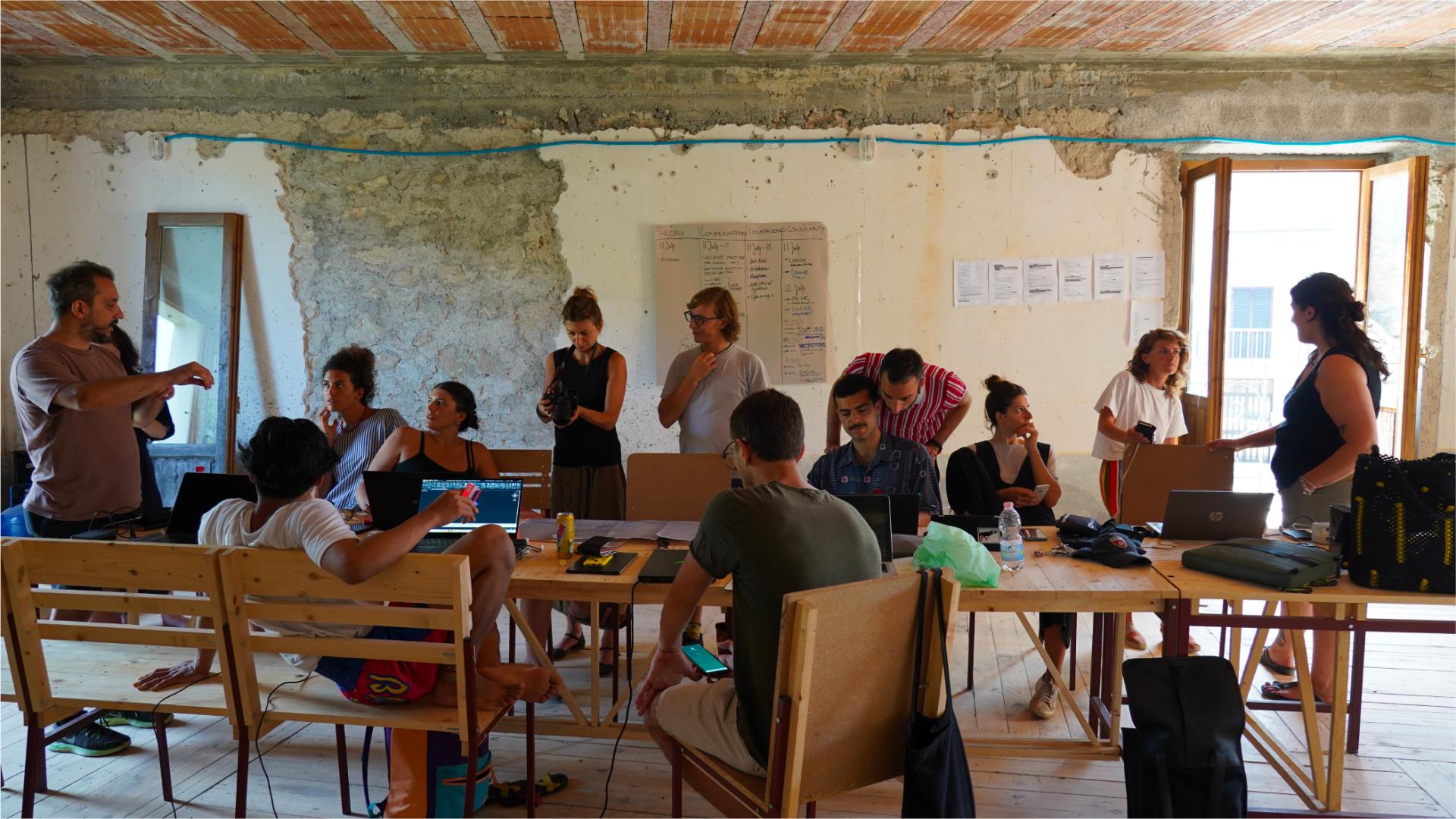
La Rivoluzione delle Seppie: Collaboration for Public Action, is a project born from imagining a new community whilst not ignoring those from which we come. Characterised by collaboration and occupation, we search for new modes of living and working within a context otherwise largely unseen. Le Seppie “test by doing”, such that the physicality and locality of an existing marginal place provides the setting for, and influences, their idea, providing space for implementation and growth. We seek a new paradigm for the growing conditions separating old and new, rural and urban. Beginning with a series of cross-disciplinary workshops curated and run by a group of architects, self-build furniture and fabric installations were used as mediums for temporary integration and spatial re-activation. In so doing, an underused public square became an introductory point for migrants, locals and other participants to collaborate and realise a project, opening up the possibility for future modes of learning, cultural exchange, and urban revitalisation.
Le Seppie are always trying to capitalise on the current situations and abilities of members and participants, both when grounded in the historic centre of Belmonte and when working remotely. As such the “Critical Mass” of Le Seppie continues to host and organise these shared moments of cultural and skills exchange. They are paramount to the growth of the communities involved and physical spaces where they belong. However, these moments of intense collaboration and construction are far from a means to an end; they provide the fertile ground for personal and working connections unique to this setting.
Le Seppie are a group of “digital nomads”, who now offer the possibility to the wider public to join this movement. They now stand at the beginning of yet another small leap: providing and sustaining an ongoing material and digital environment for continued co-living and co-working, known as the BelMondo experience.
Key objectives for sustainability
For Le Seppie sustainability is considered as a social and functional act. It is understood that the actions, although ephemeral in ways, are more permanent in others. By creating interventions that are both sensitive and incremental in their approach, Le Seppie offers a place that people choose to return to and recognise as their own. They are designing, making and doing, with the help of artisans and more skilled participants in the present moment, with the firm understanding that what is done is also for future inhabitants with whom they haven’t yet met. Avoiding the common trap of temporary interventions that later become obsolete, is their first approach to this theme.
Construction here is incremental and considered. They aim to understand what is needed in the present moment and what this may mean for everyone involved, drawing on the town in its past and present conditions to understand what may work and what may not. From this, more measured and suitable interventions can be made. An early example was the need to update the interior of the town library, with the users unsure exactly how they wished to organise it later. For this reason, a collection of 'mobile furnitures' were created, that now take the role of display pieces, whilst serving as smaller structures that are utilised for outdoor events. This stands in contrast to the overly determined pre-existing structures that, although once served much of the same use, were unable to simultaneously serve future and unprecedented needs of the town. These pieces drew on the scale and form of what already existed but also considered what was manageable in terms of fabrication and transportation of material. More so, these were constructed by a group of returning students, migrants and professionals enabling a form of education and participation otherwise solely theoretical.
Key objectives for aesthetics and quality
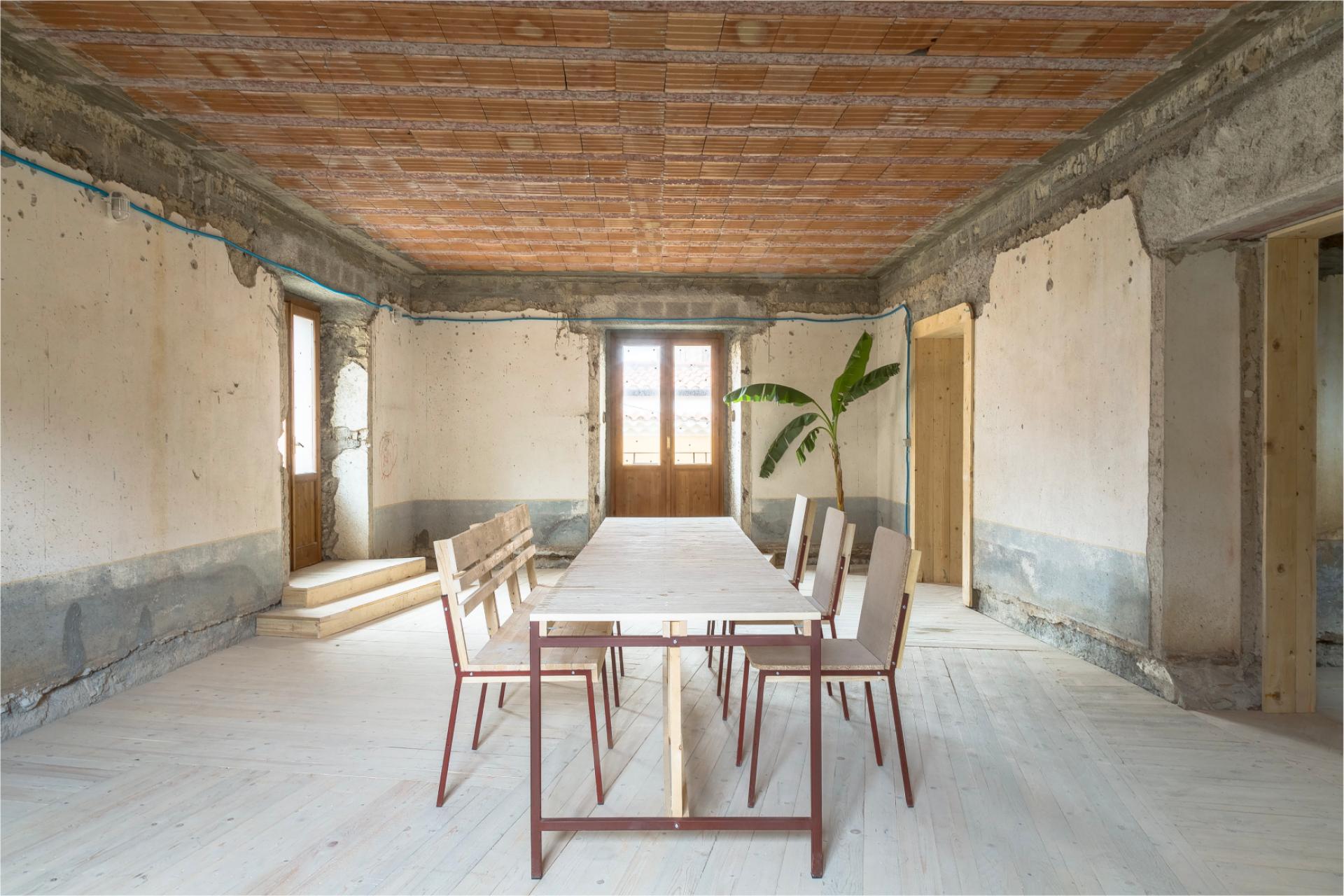
Le Seppie’s approach to construction and use of space can be described as DIY and pluralistic, working with and beyond the romance of a historic centre and the ruined nature of the built environment. In responding to the aesthetics and conditions of an abandoned building, they are fortunate enough to be able to indulge in both a remote landscape and intense building. The juxtaposition of the domestic within the ruined is at once liminal and hugely comforting, providing the joy of forgetting you are operating in what is ultimately a construction site. This reinforces the previously stated ideas of incrementalism, as through this continued occupation, is discovered the necessary changes to slowly be made. This informs a shared understanding of the next steps for improvement. Time begins to reveal the details. A place has been created that provokes discussion, and is now beginning to tell it’s own story. It provides both a curiosity and an evident logic by opening up spaces that are subject to small but continued change of use.
The mode of living and working is underpinned by sharing ideas and skills, but also material things and resources. Our collaboration through both working and living creates a resourcefulness of materials and consumption which is largely appreciated and can be taken advantage of. This leads to an understanding of how to express individual ideas in a common space, and arguably a re-understanding of where our individual eccentricities can positively take place. Circularity thus also comes in the form of sharing knowledge and democratic experience, reinforcing a sense of place.
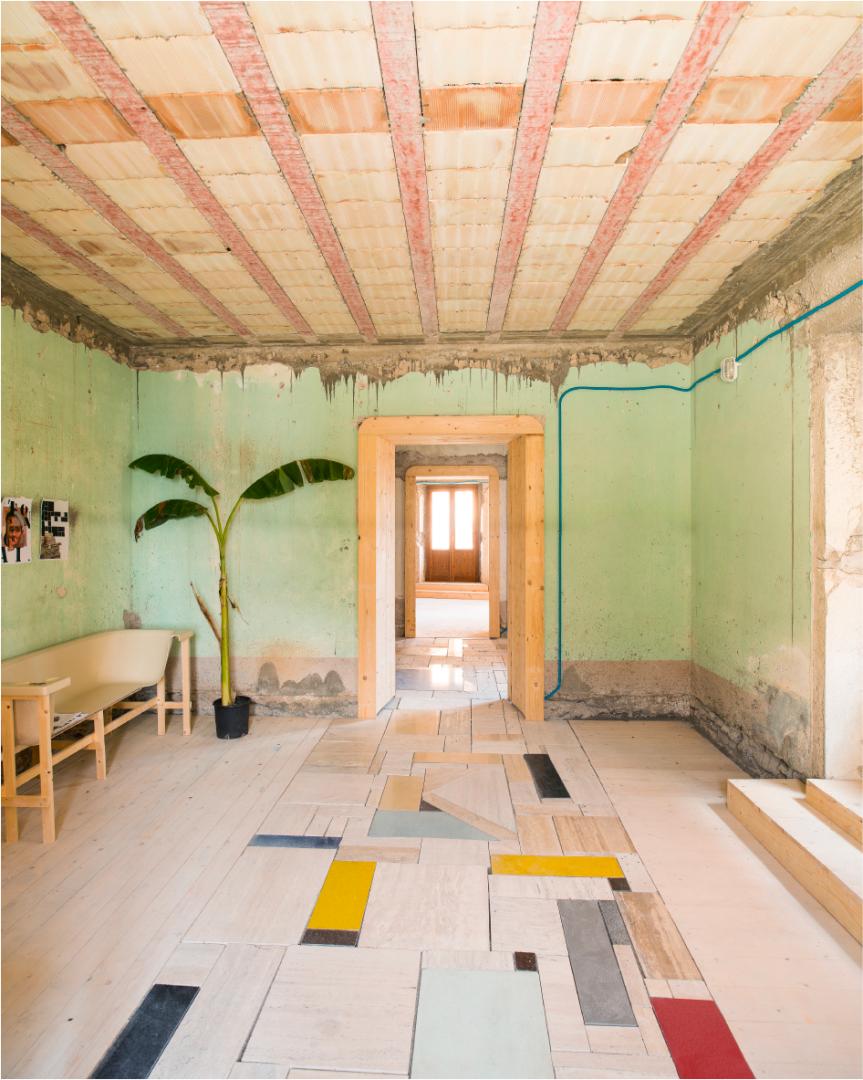
Several rooms in the Casa Di Belmondo, as distinct from the larger material approach of wood, contain a mosaic of marble floors. Participants used off-cuts sourced from local artisans, otherwise unused, and explored through workshops the aesthetic possibilities in-situ. Gestures such as this create a necessary distinction from a solely functional approach to place-making.
Key objectives for inclusion
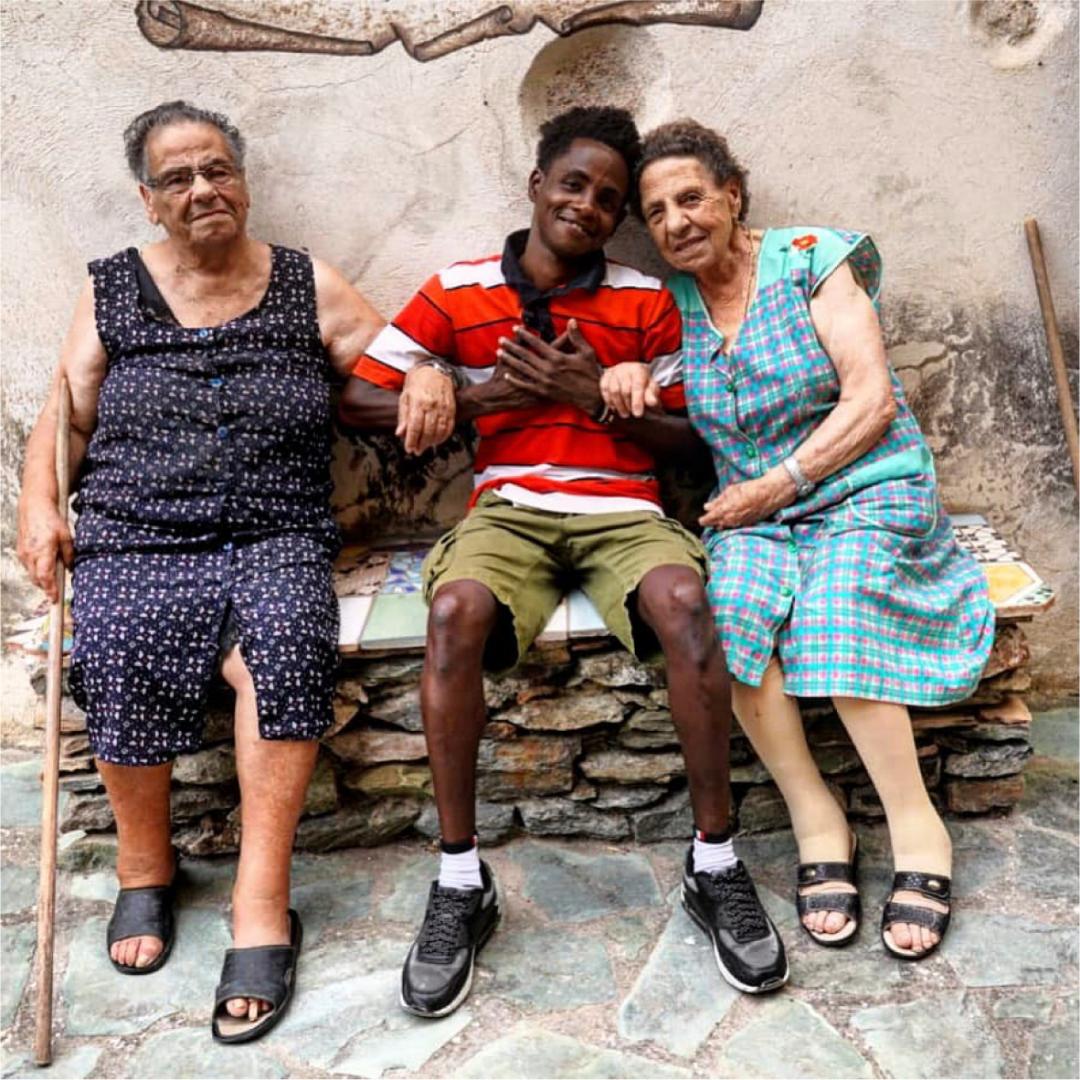
Le Seppie through their cultural and social innovative events aims at addressing two contemporary phenomena - villages’ depopulation and global immigration, as an opportunity, rather than a crisis. By doing so, they move beyond mere cultural exchange, to reach a new degree of contamination of places and ‘non-places’. The main aim is the generation of moments, designed to tackle those phenomena, by providing new ways of encounters that can bring people of different ages and cultures together, through the research and design of actions to valorise the internal areas and influence the community’s behavioural pattern. Le Seppie wants to generate a melting pot of elements, resources, from different fields: architectural, cinema, theatrical, musical, culinary and sports. The main objectives:
- Increase the knowledge of the local area and its cultural heritage
- Test new innovative actions to tackle the depopulation of minor villages
- Design and build urban structure for the areas and places subject to requalification
- Value cultural differences and promote contamination
- Promote the local craftsmanship and the typical culinary culture
- Facilitate conversations and exchange between the different cultural and generational communities
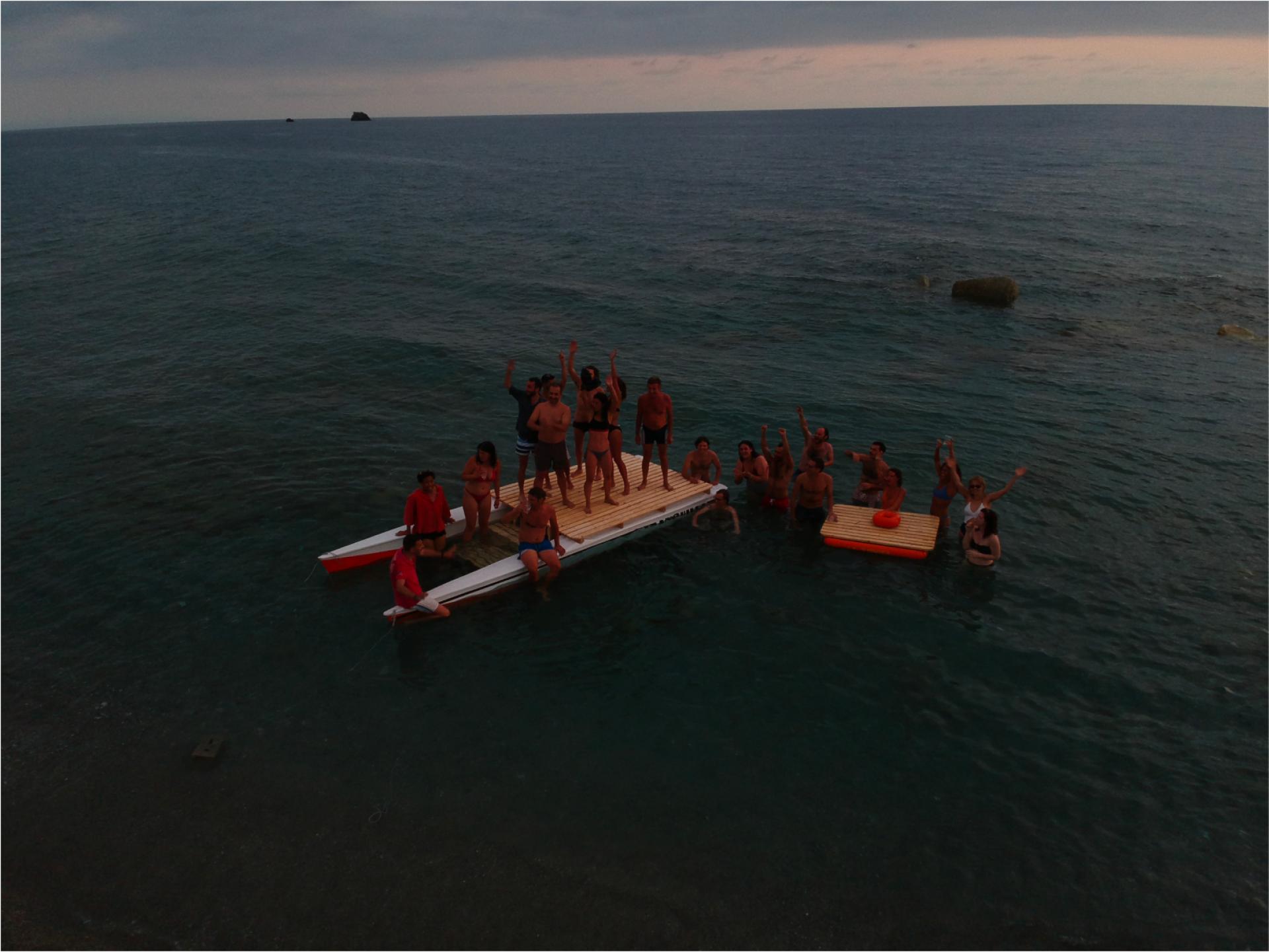
These objectives have been met, especially, during the main event "Crossings", which is organised by Le Seppie in collaboration with various stakeholders including the Belmonte Calabro municipality, the London Metropolitan University and the architectural collective "Orizzontale".
These initiatives aim to deepen the values of equality among citizens, collaboration, integration and social inclusion through research, study, training and exchange. Linking stakeholders is key to the success of such a system. Its work emphasises creating new links between unconnected stakeholders who are already inclined to improve their area but who require a network in order to create stronger opportunities.
Results in relation to category
Yet while the local youth are leaving their home region (Calabria) to bigger cities or other countries seeking better educational and professional opportunities, a new population from various African and Asian countries has landed on the shore, with hopes and dreams, a desire of integration, of contribution, which cannot be fulfilled due to a shortage of opportunities and innovation in most of the hosting regions. Le Seppie’s goal is to create a model, both in approach and practice, for the establishment of innovative projects in the rural area. Their work aims to launch and test projects in order to effectively improve the local situation, as well as creating a precedent to inform the bigger debate about the re-purposing and the re-valorisation of rural European villages.
Therefore, Belmondo can be considered as an innovative action as it aims to activate paths to contrast the depopulation of places. Its main aim is to examine, discuss, develop and build creative ideas and cultural encounters around and within the historic center of Belmonte Calabro.The aim is, also, of giving life to a "civic assembly" for stimulating moments of innovation, social and cultural within a rural marginal area. After the experiments and installations made in the municipal library building, today it is precisely the building of the former convent - previously destined for the Casa of Culture - to become the subject of interest in Le Seppie activities. Le Seppie have decided to give shape to this place with the aim of welcoming an audience composed of various stakeholders and collaborators, such as students, artists, migrants, academics and young professionals from different fields. The goal is to work on this unfinished renovation project, like a creative construction site that expands throughout the entire village, so as to make some of its spaces progressively functional - for social and cultural purposes - and its positioning for urban development.
How Citizens benefit
The Belmondo system aims to give life to a "civic assembly" for stimulating moments of innovation, social and cultural within a rural marginal area. On one hand, the purpose is to share disciplines, resources, culture and knowledge to improve the quality of life with an eye towards innovation, on the other it is to learn and develop skills that can improve the surrounding context with the goal of increasing the productivity of the group and local active agents. The aim is to create a permanent space with cultural, artistic and social activities, which will promote integration and development of the territory, connecting old and new inhabitants to reflect on how research, architecture, design, art and communication can be used to improve the shared urban fabric of rural communities. Not only to promote and transform them into cultural attractions, but also to enhance their autonomy and independence in the organic organization of local life. By creating a longer-term plan, the aim is to describe the village as a living architecture, a set of places that can welcome the unexpected and offer free spaces in which to integrate unscheduled uses and allow communities to appropriate them according to their own collective needs. Continuing to use the Municipal Library as a place for meeting and exchange between the local community and the temporary community, the goal is to transform the Casa di Belmondo into a factory of ideas, research and experimentation. By adapting, thinking and building, Le Seppie, wants to propose new forms of self-management able to promote active citizenship and create a constant wealth for the village. Since Crossings 2019, Le Seppie is focusing on the reactivation of la Casa, starting from moments of encounter between the architect and the various users of the space, moments of exchange between the local community of Belmonte and the “temporary” one made up of migrants, students, academics, and professionals participating in the project.
Innovative character
One of the main innovative characters of this project is based on the significance of the collaboration within the community. As opposed to a competitive work culture e hyper-specialized concentrated in large urban centers, it is important to propose an active dynamic process with the aim of developing a new model of living and working collectively. Through the exchange of knowledge and cultural contamination between the international network and the local community, it will be possible to increase the chances of growth in the social, cultural and economic situation of the most fragile realities.
In this context, collaboration between global and local reality is now necessary for a new development of rural areas. The latter is configured as a powerful agent for affirming empowerment of local actors and the maintenance of culture even in those areas where the offer is absent. The creation of a new international community capable of collaborating for the conservation and development of culture is able to bring economic and social well-being even in marginal realities.
In practice, through a critical reading, Le Seppie intends to apply experimental methods, which aim at reactivating and regenerating places through a design vision aimed at making these areas competitive and attractive both at the global level and within their local territorial systems. Depopulation and physical territorial degradation make these places perceive as "empty" spaces, capable of attracting, thanks to their environmental and landscape factors, both those who intend to live them in temporary forms of recreational and experiential use, and those who aim for a residential and productive settlement based on the "awareness of places". This is how these spaces have gradually become laboratories of experiences that do not contrast the advantages of the city, but try to combine them with rural environmental and socio-cultural values.