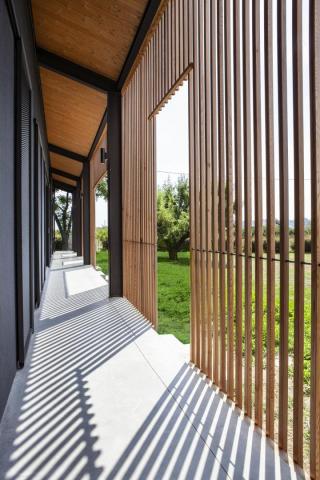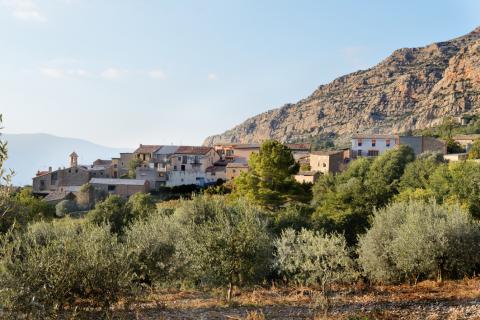
In this project an old house was converted in a passive house thanks to the big south façade where was installed a passive solution that allows to reach the comfort with the support of a biomass heater for the cloudy days.
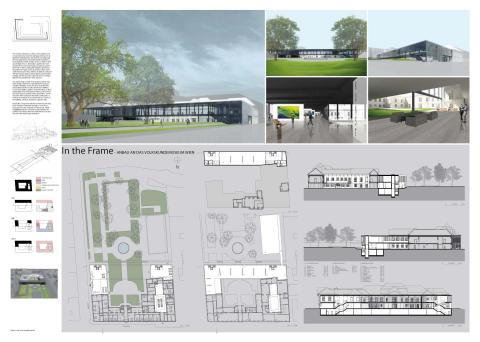
The historic building of the Volkskundemuseum Wien expanded in the spirit of the New European Bauhaus. The building due to dissimilarity of the mold fits into the existing architectural context basing on the principle of contrast. The architectural form was obtained using elementary figures and limited means of artistic expression. Attention was paid to the material - steel and its features. The solid reminds Mies van der Rohe‘s purist ideas, derived from rationality and technology.
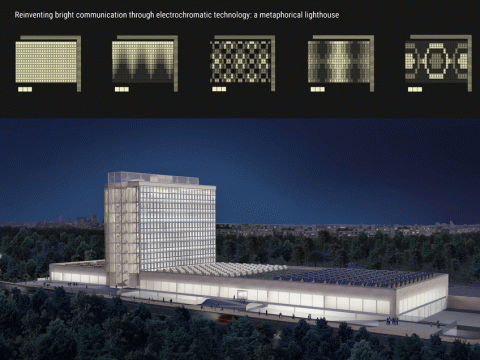
The aim of this project is to transform the Musée des Arts et Traditions Populaires – ATP (Jean Dubuisson, 1972, Paris) into a multi-functional cultural centre, integrated in the surrounding park, while preserving the structural skeleton. The architecture responds to 2050 Paris Energy Plan to counteract climate change and face challenges of sustainable urban development in terms of technology, materials, energy networks, water, natural ventilation, pollution, social inclusion and communication.
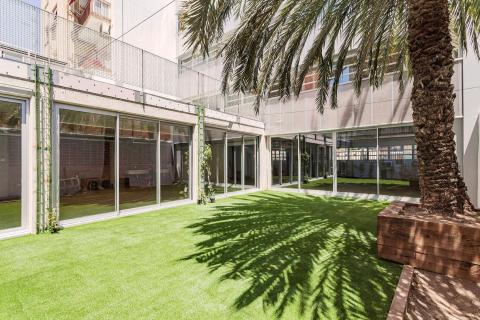
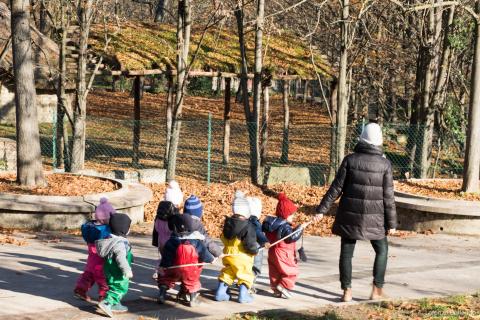
Centre Sant Jaume is a sustainable architectural project designed to give light to Badalona city, with an architectural solution that provides a high efficient cooling system with innovative lighting proposal. The aim is to improve social inclusion of children from 0-20 years in risk of exclusion. It is developed as a space that links aesthetics with user comfort and warmth. The project is interdisciplinary and collaborative and had the participation of local community since the beginning.
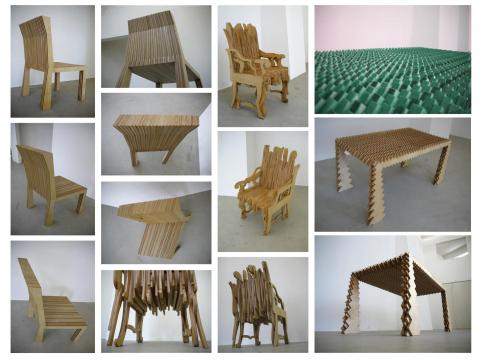
Recycled materials, digital production, parametric project design and made in Italy are at the core of materieunite. We design and create permanent and temporary spaces through using recycled cardboard and other materials which are either recyclable or recovered from supply chain waste.
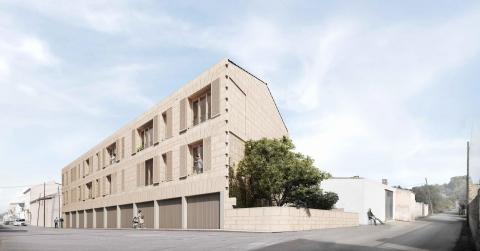
The material isolation of the Balearic Islands made its inhabitants develop their own material culture out of the island’s limited resources. This enclosed landscape gave shape to sustainable techniques that deeply align with our current search for circularity and can thus be brought into the future. Together with the Balearic Institute of Housing, we are developing a 10 social housing units scheme that updates sandstone and timber construction while taking advantage of its sustainable nature.
Kilowatt has regenerated an abandoned public place, turning it into a community hub with a social impact business model. The space now breathes 7 days a week with social impact projects and cultural activities, a coworking space, a kindergarten, an organic veggie bistrot, festivals and curatorial activities that dig into sustainability issues. Le Serre boosts the activation of communities bringing together art and science, technology and humanities to address contemporary challenges.
Man constantly tries to imitate nature’s beauty, as everything is functional in it. Unfortunately, man’s creations are imperfect: they consume resources, pollute air and soil. Man is aware that his creations have flaws, but often pretends not to see them. We want to be eye-opener. We chose to design sustainable buildings using Passive House Standard: zero energy consumption, zero emissions, healthy environments. The planet is our home and we, as architects, we have the duty to take care of it.
The GO[A]T WASTE? project explores in a playful way the possibilities for reuse and circular economy in the building field in Latvia. Three prefabricated stands from construction waste were used as base for an educational workshop for children in which they could take part in decorating them while at the same time learning about reuse and recycling. After the workshop the stands were moved to a nearby mini zoo and joined into a single pavilion which from now on is used as a playground for goats.
My research reflects alertness to thrust creative practice from ‘applying’ a concept into ‘performing’ urgencies: catalysing the designer-researcher and public's positions toward participating in the analysis, conception, proposition and creation processes. At this historical period, when the climate, economic, governmental and democratic systems are in crises. Powers are shifting, and profoundly at stake, my research undoubtedly takes on another more relevant dimension.