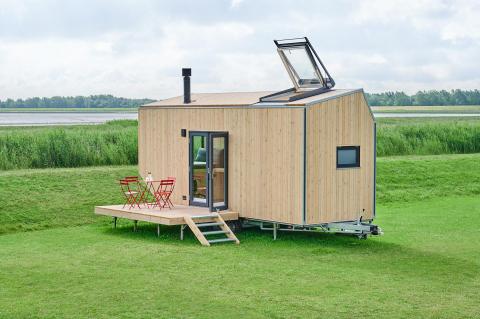
Our future on the planet depends crucially on how we humans will spend our time in the future. Tourism plays an important role in this. Make your decision on how and where to travel part of the solution. Spend your vacation in one of our sustainable tiny house settlements. The 22 square meters are full of green innovations that make sustainability tangible. We call this the tourism of the future - which protects nature and inspire people to lead a more conscious life.
NEB Prizes 2021: All Applications
Filter by
Applications (2025)
Showing results 1691 to 1700
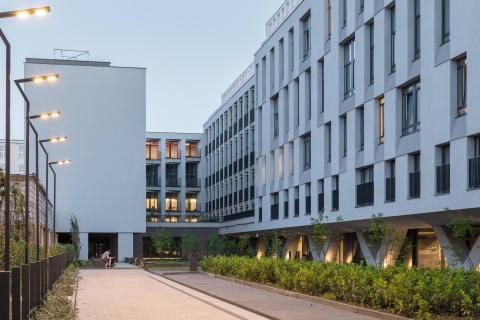
The building of the student house is located on the outskirts of the city center of Łódź - a district that has been impoverished for the last decades. Our investment was to reverse this trend, and the goal was achieved through the reconstruction of the facility, which not only introduced over 500 young, vital residents to the district, but also made the ground floor and internal courtyard spaces available for public spaces serving neighbors.
Our future on the planet depends crucially on how we humans will spend our time in the future. Tourism plays an important role in this. Make your decision on how and where to travel part of the solution. Spend your vacation in one of our sustainable tiny house settlements. The 22 square meters are full of green innovations that make sustainability tangible. We call this the tourism of the future - which protects nature and inspire people to lead a more conscious life.
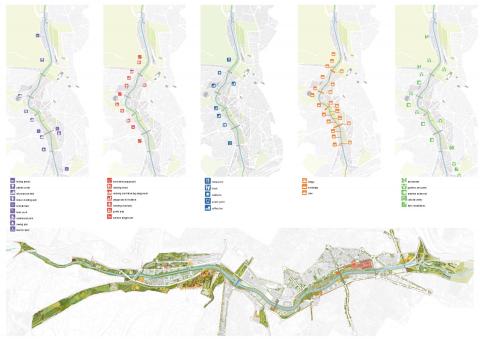
Madrid Río is a truly exceptional project. Undoubtedly, it is the most important project executed in Madrid over the last few decades and probably one of the most ambitious projects carried out in Europe in recent times. It is only comparable to the Big Dig, completed in Boston, USA. This is perhaps the first european project that truly integrates large infrastructure and the built urban fabric with the natural environment that surround them.
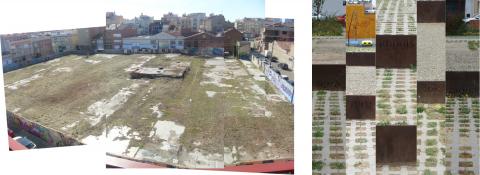
“Creating something from the void”. The real void doesn’t exist.
How to create a public communal space without forgetting the memory of a closed site -part of the industrial heritage in town-, having only a few ground-level ruins, just tracks on the floor?
The proposal was such as a principle: it had not to be an imposed model, it had to be just a transformation, an evolution from that fake “void”, providing a reminding message of the old exploitation models of Earth's resources.
Rethink Architecture is an online platform for sustainable architecture. It inspires architects, investors, and everyone interested in architecture to design sustainable buildings and cities. It brings them together so they can share knowledge and collaborate during the (re)construction process. Together they can create more beautiful, inclusive, and sustainable cities.
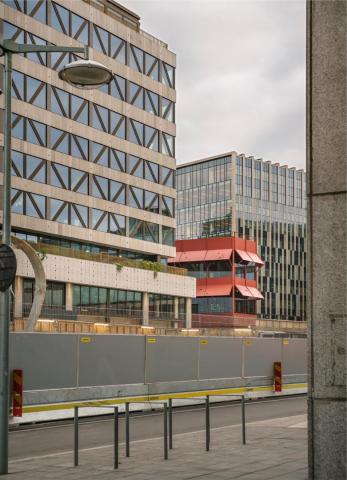
With its location in the heart of Stockholm, next to Sergels Torg and the Culture House, the S-Building from the building complex Sergelhuset has one of Sweden's most exposed facades. The framework is preserved and the new stone facade mainly consists of recycled granite from the original building. A design approach that maintains a high architectural level, looks back to history but above all protects our resources from a sustainability perspective.
A temporary entrance building for the saxony state exhibition created with a fully circular approach. Including the process of disassembly and the re-usage of all materials afterwards, the concept uses existing industrial goods and combines them into a building with an inclusive ramp system, to welcome visitors to the exhibition and lead them into the former assembly and production hall. Topics such production circles and recycling processes become legible as design-determining aesthetics.
SANTERAMO CITY, APULIAN LANDSCAPE, ITALY. LAND OF ALTA MURGIA NATURAL PARK.
THE DESIGN PROPOSAL CONSISTS IN THE RAVAMPING OF THE CITY AND THE CITIZENS OF SANTERAMO, PROVIDING A DYNAMIC CO-DESIGN IN ALL THE FRINGES OF THE CITY AND ACTING ON THE PUBLIC SPACES BETWEEN CITY AND COUNTRYSIDE WITH 3 MAIN ACTIONS
1. REGENERATING PERI-URBAN LANDSCAPE AND PUBLIC SPACES
2. VALUING HISTORICAL LANDSCAPE AND RURAL ARCHITECTURES
3. REGENERATING ABANDONED BUILDINGS
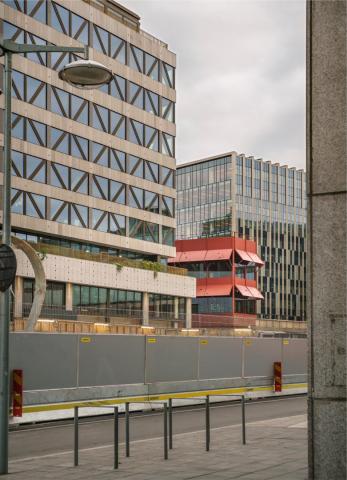
With its location in the heart of Stockholm, next to Sergels Torg and the Culture House, the S-Building from the building complex Sergelhuset has one of Sweden's most exposed facades. The framework is preserved and the new stone facade mainly consists of recycled granite from the original building. A design approach that maintains a high architectural level, looks back to history but above all protects our resources from a sustainability perspective.