BaseCamp Łódź Rewolucji 1905
Basic information
Project Title
Full project title
Category
Project Description
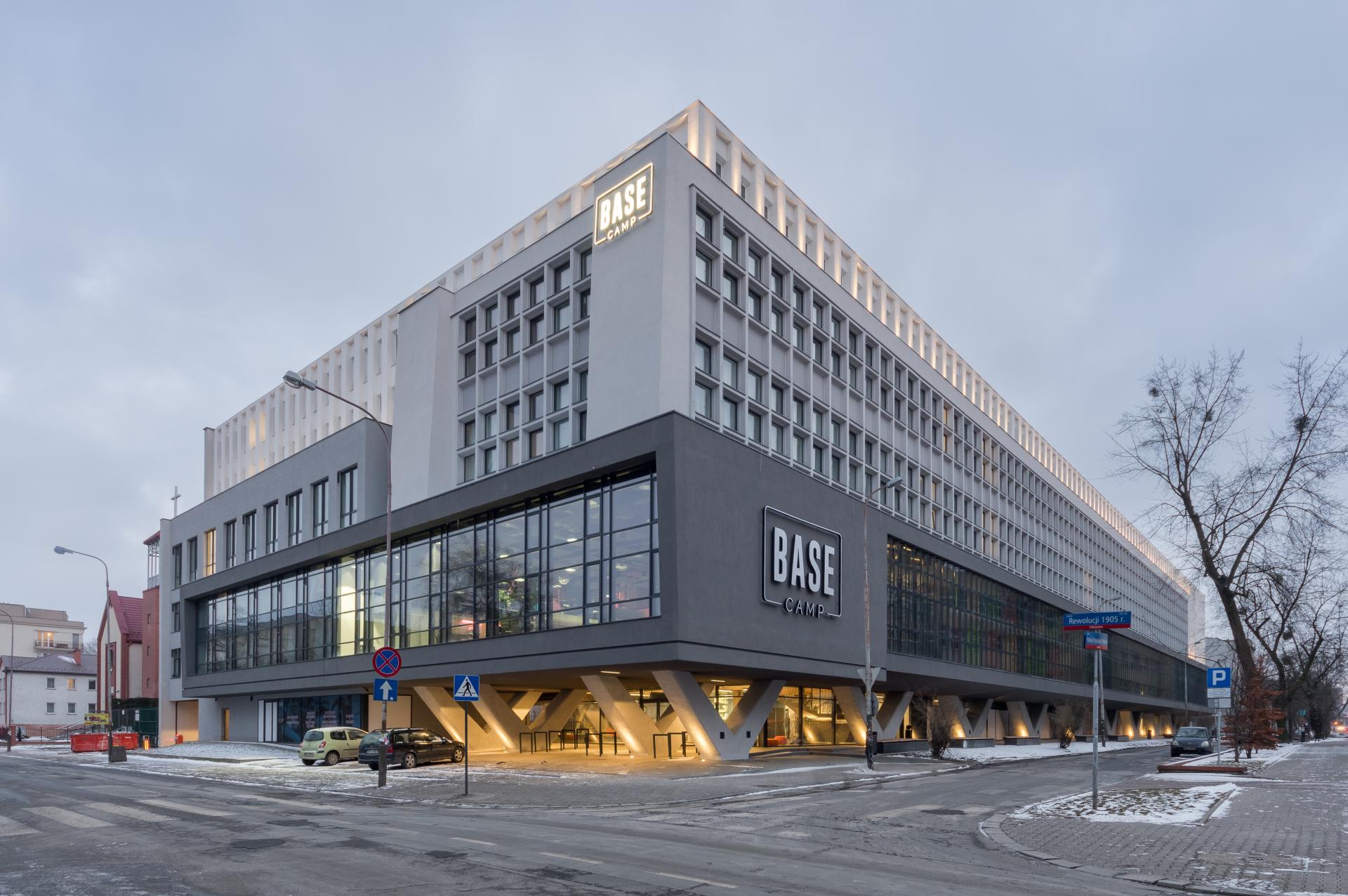
The building of the student house is located on the outskirts of the city center of Łódź - a district that has been impoverished for the last decades. Our investment was to reverse this trend, and the goal was achieved through the reconstruction of the facility, which not only introduced over 500 young, vital residents to the district, but also made the ground floor and internal courtyard spaces available for public spaces serving neighbors.
Project Region
EU Programme or fund
Description of the project
Summary
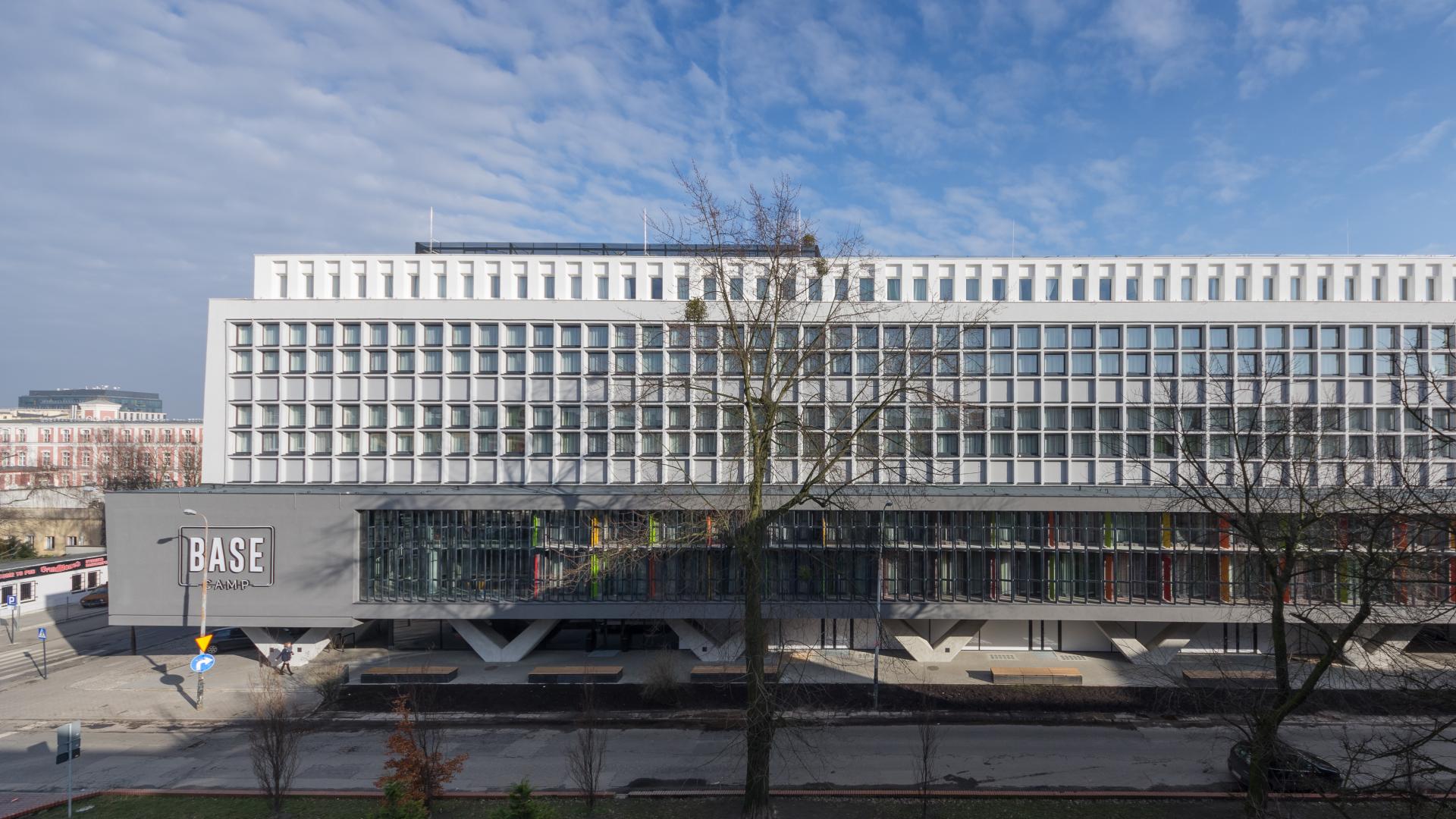
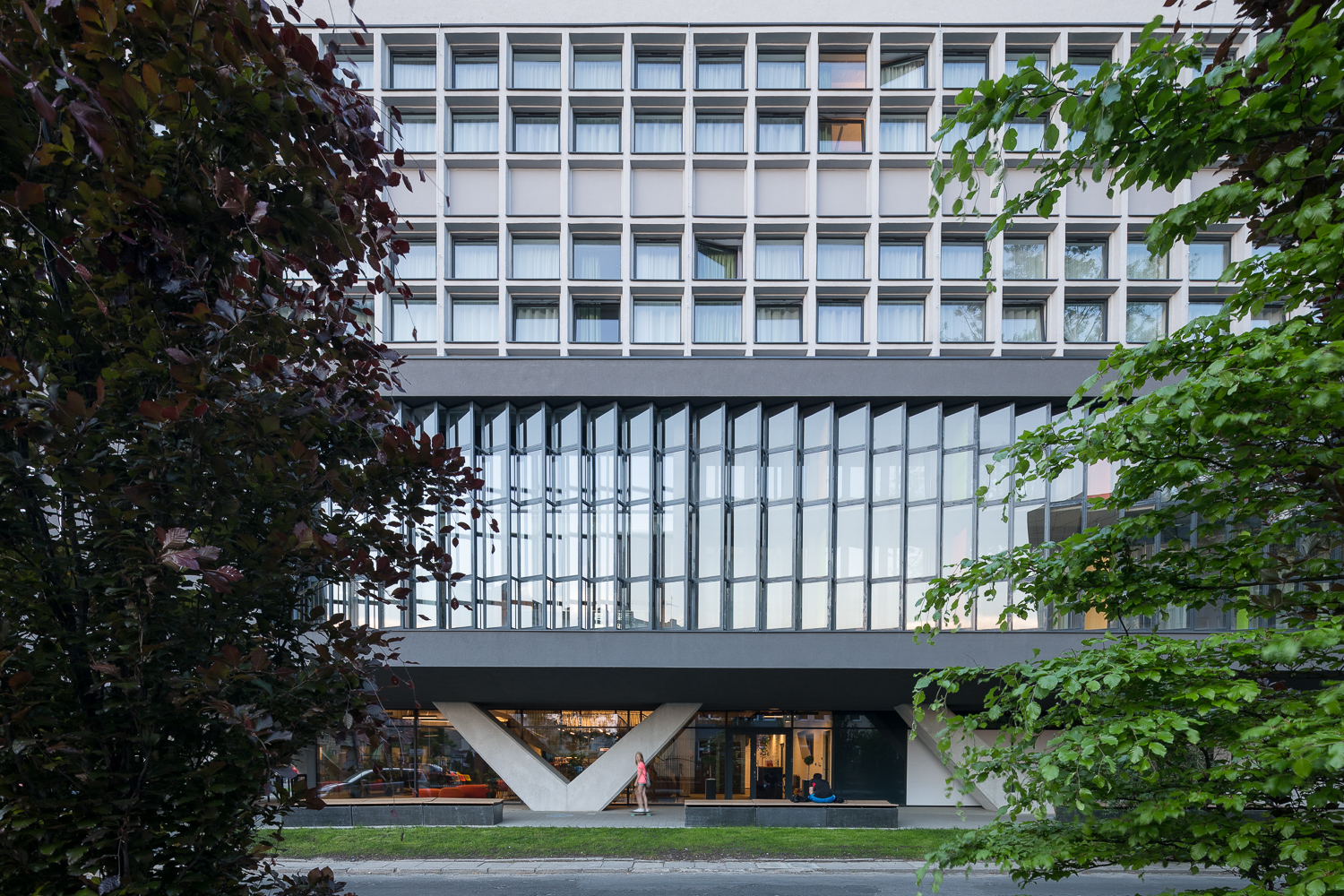
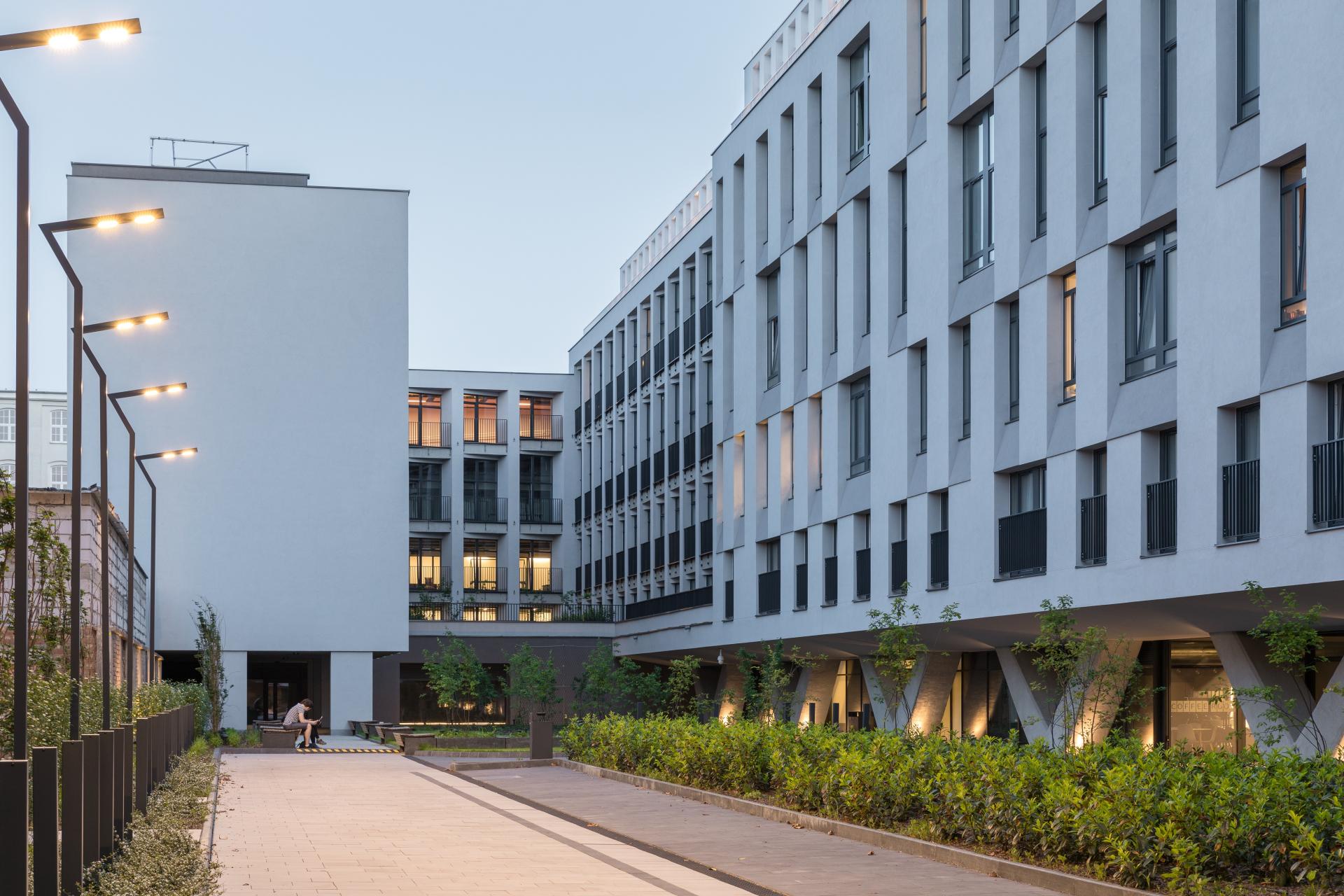
The building of the student house, created in the post-industrial building of the former printing house, erected in the 1960s. Due to its location in the city center, the building had a very carefully and interestingly designed facade. The layout of the entire building clearly referred to the principles of internationa style (open plan of the building, groundlevel on columns, linear, horizontal arrangement of windows, utility roofs). The facility was rebuilt into a student dormitory however new function and new quality did not blurred existing characteristics of architecture . Over 485 residential rooms for over 500 qualities were introduced, including high quality private, semi-private and public, which were subordinated to one goal only - the best possible creation of the community of students and residents of the surrounding quarters.
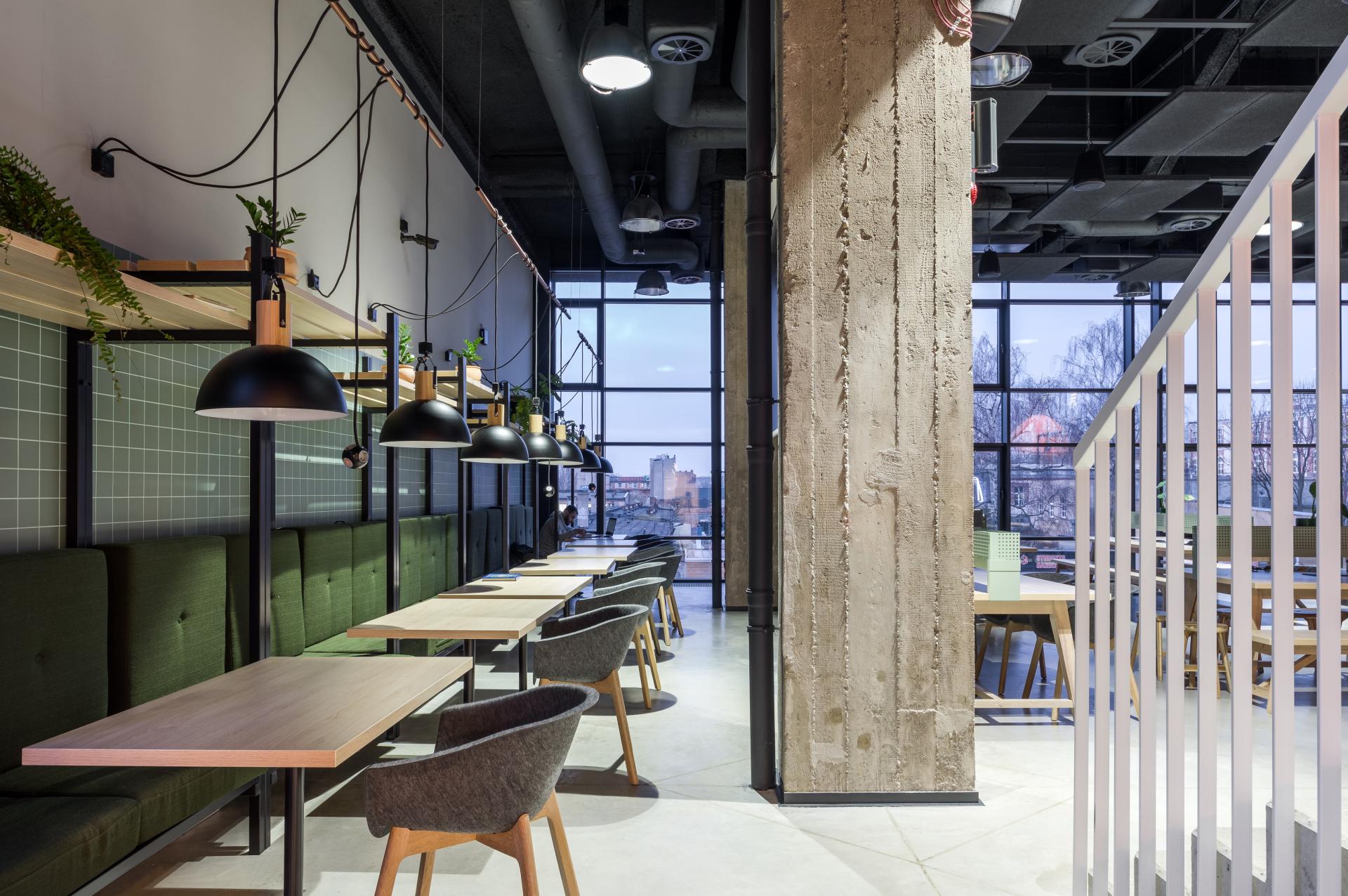
Opening of the internal area with service premises on the ground floors has significantly improved the quality of public spaces in the area. The entire building, together with its inhabitants, contributed to social changes in this part, attracting new services and initiatives for the benefit of the new community, and thus all inhabitants. The author of the interior design was the German Studio Aisslinger.
Key objectives for sustainability
The existing building has been rebuilt. Existing construction was used. Some of the extended structures are based on elements made of steel, which leaves a smaller carbon footprint. The dormitory building has been adapted with the use of light plaster walls, which makes it easier to rearrange or change the purpose of the facility in the future. In addition, the thermal insulation of partitions has been increased, reaching modern coefficients. The ventilation systems have been changed to more efficient and energy-saving.
Key objectives for aesthetics and quality
As the project was rebuilt and the existing facade composition were balanced with the solids and divisions - the most important task was to keep these divisions and insert a new division of rooms into the existing tissue. Among other things, the existing curtain walls were adapted and turned into balcony covers. The new parts of the project gained non-aesthetically pleasing solutions, so that they would not compete with the existing composition.
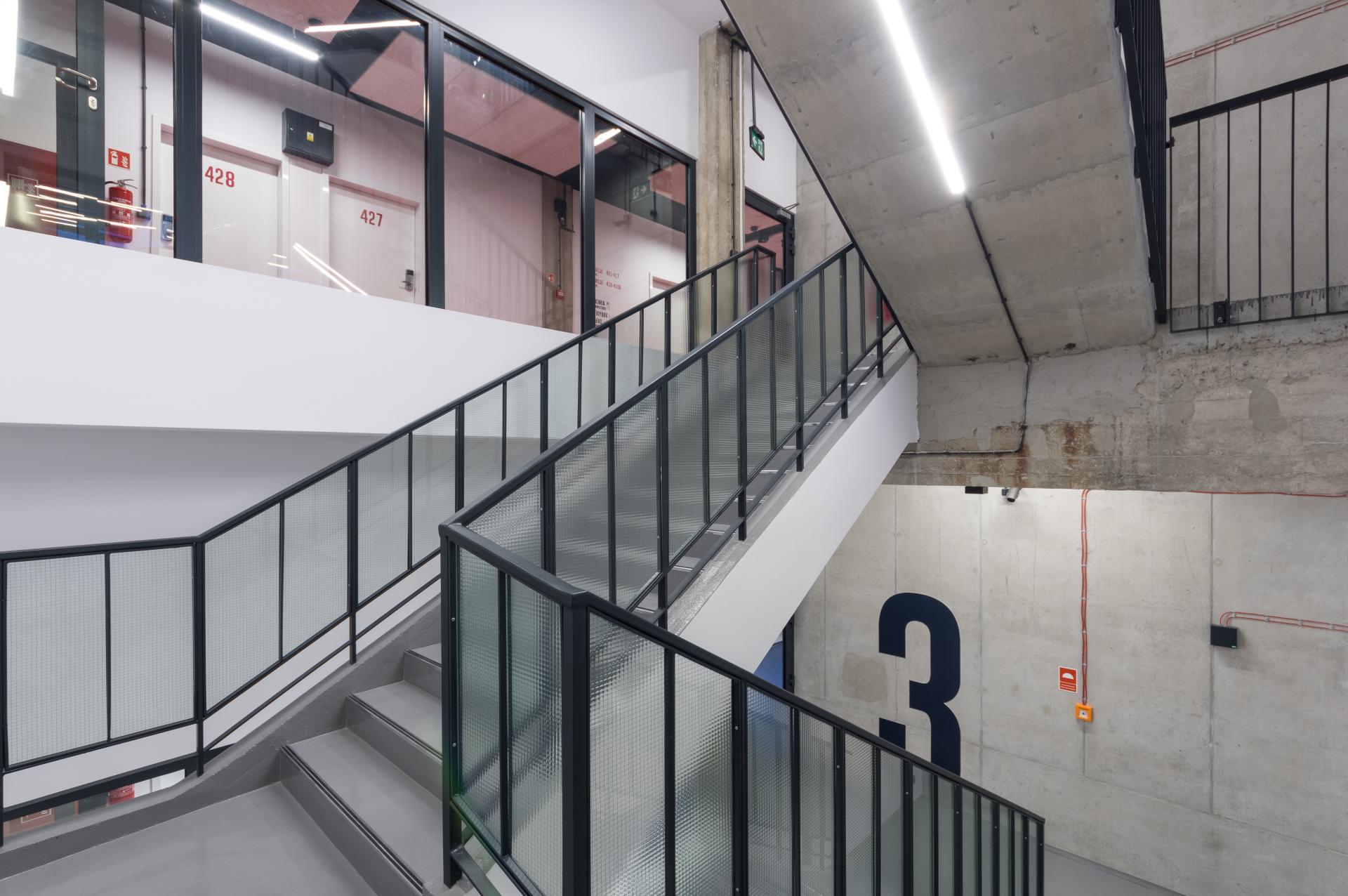
Inside, a decision was made to leave the raw fabric of the reinforced concrete structure. Attempts were made to contrast the new and the existing elements. The raw construction of the industrial facility contrasts with the soft elements of textile finishes by Studio Aisslinger.
Key objectives for inclusion
The idea for a student house was to create many rooms and areas with different functions, which can be placed on a gradation scale, between rooms - the most private - such as student rooms, through double rooms, study rooms, common kitchens, multi-function rooms - up to public, available to residents of nearby quarters. On this principle - an industrial facility, once inaccessible to the public, created a space with services on the ground floors and an open courtyard. Thanks to the surrounding quarters, they gained public space of a new quality.
Results in relation to category
The building of the printing house from the 1960s, which filled the long frontage of the street with an important corner, was an empty space in terms of the impact on the street and its inhabitants. After the reconstruction, the facility invites you to use the internal courtyard, use the services located on the ground floor. In addition, the student community that was created thanks to living in the facility had a very strong influence on the area. The new model of life of residents - students, attracted other initiatives such as services, restaurants, etc. - which was the beginning of the change of the face of this part of the district.
How Citizens benefit
Citizens were not directly involved in programming the functions of this facility. Nevertheless, the building, because it was not entered on the list of monuments of the city of Łódź, was treated with due diligence, trying not to obliterate the characteristics of an industrial building whose architecture was in line with the international style. Thanks to this, the identity of the place was preserved. The inhabitants identify with the shape of this building, which is why the changes were made mainly in the sphere of functions, opening it even more for the city - and not in the sphere of shape or aesthetics.
Innovative character
The building, despite the use of access control, ensuring the safety of residents, placed a very strong emphasis on the possibility of opening the ground floor and the inner courtyard. Inhabitants of the neighboring quarters gained public space of high quality, the deficit of which is noted in the area.
In addition, the internal division creates various types of spaces with different sizes and numbers of inhabitants - which has so far been unknown on the Polish student housing market.