Urbanisation of the space Vapor Cusido
Basic information
Project Title
Full project title
Category
Project Description
“Creating something from the void”. The real void doesn’t exist.
How to create a public communal space without forgetting the memory of a closed site -part of the industrial heritage in town-, having only a few ground-level ruins, just tracks on the floor?
The proposal was such as a principle: it had not to be an imposed model, it had to be just a transformation, an evolution from that fake “void”, providing a reminding message of the old exploitation models of Earth's resources.
Project Region
EU Programme or fund
Description of the project
Summary
“Creating something from the void”. The real void doesn’t exist.
How to create a public communal space without forgetting the memory of a closed site -part of the industrial heritage in town-, having only a few ground-level ruins, just tracks on the floor?
The proposal was such as a principle: it had not to be an imposed model, it had to be just a transformation, an evolution from that fake “void”, providing a reminding message of the old exploitation models of Earth's resources.
Key objectives for sustainability
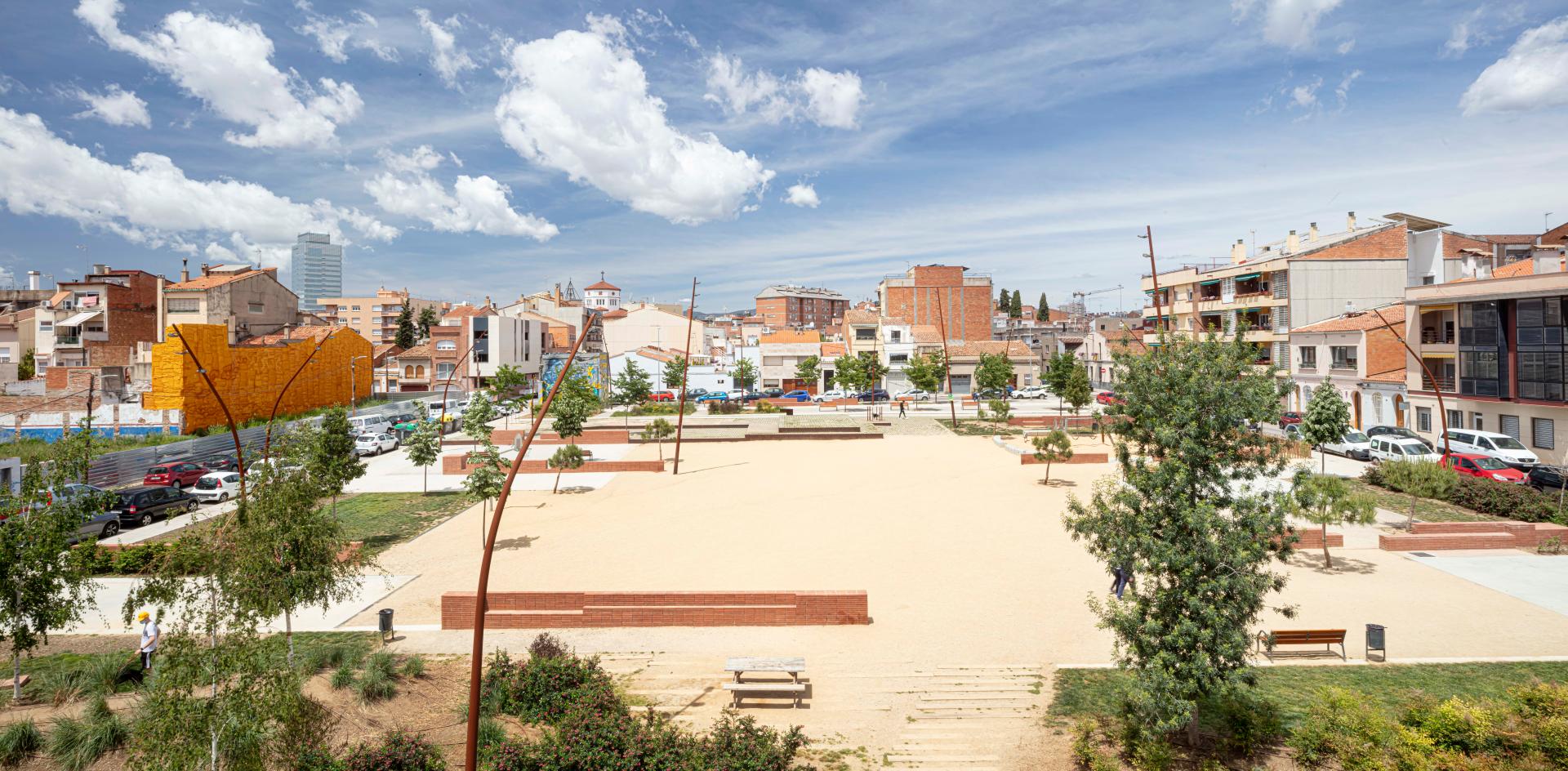
The intervention sought to explain the transformation of an old built space, closed and private, to an open, participative and public space that showed not only a change in the forms, but also a change in its sustainable nature. It could be said that there was also a reuse, sort of recycling of the memory of the place to create an again useful reality.
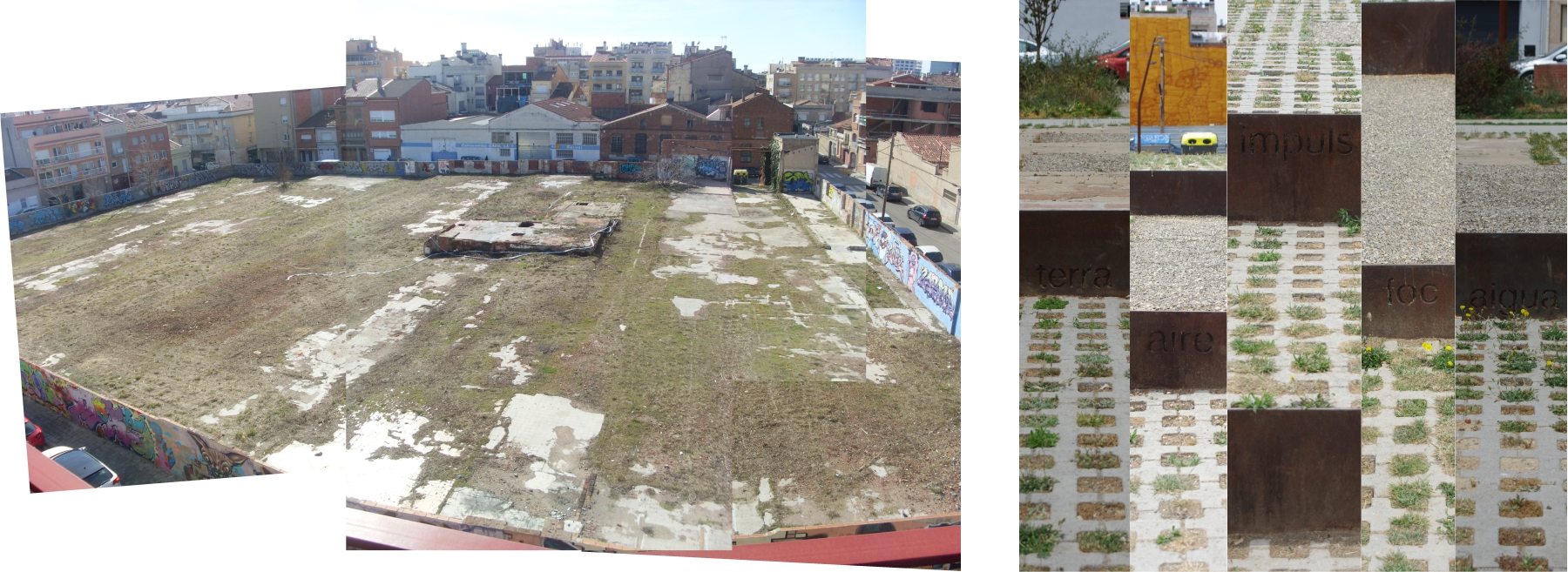
The past is shown in the intervention, based upon an activity dependable of the use of the four classic elements of the nature -water, earth, fire and air-, representatives of the four known forms of matter, according to westerner classics, to explain the different behaviours of nature.
Those four elements “stolen” from Nature, were the necessary components to produce the sap of progress: the steam. The steam was necessary to generate the propel that moved the Industrial Revolution. Coal came from the earth and provided energy, water filled the boiler. Fire provided heat to make water boil. Finally, air absorbed the cremated gases. It was an integral use of resources to achieve the desired power of the propel.
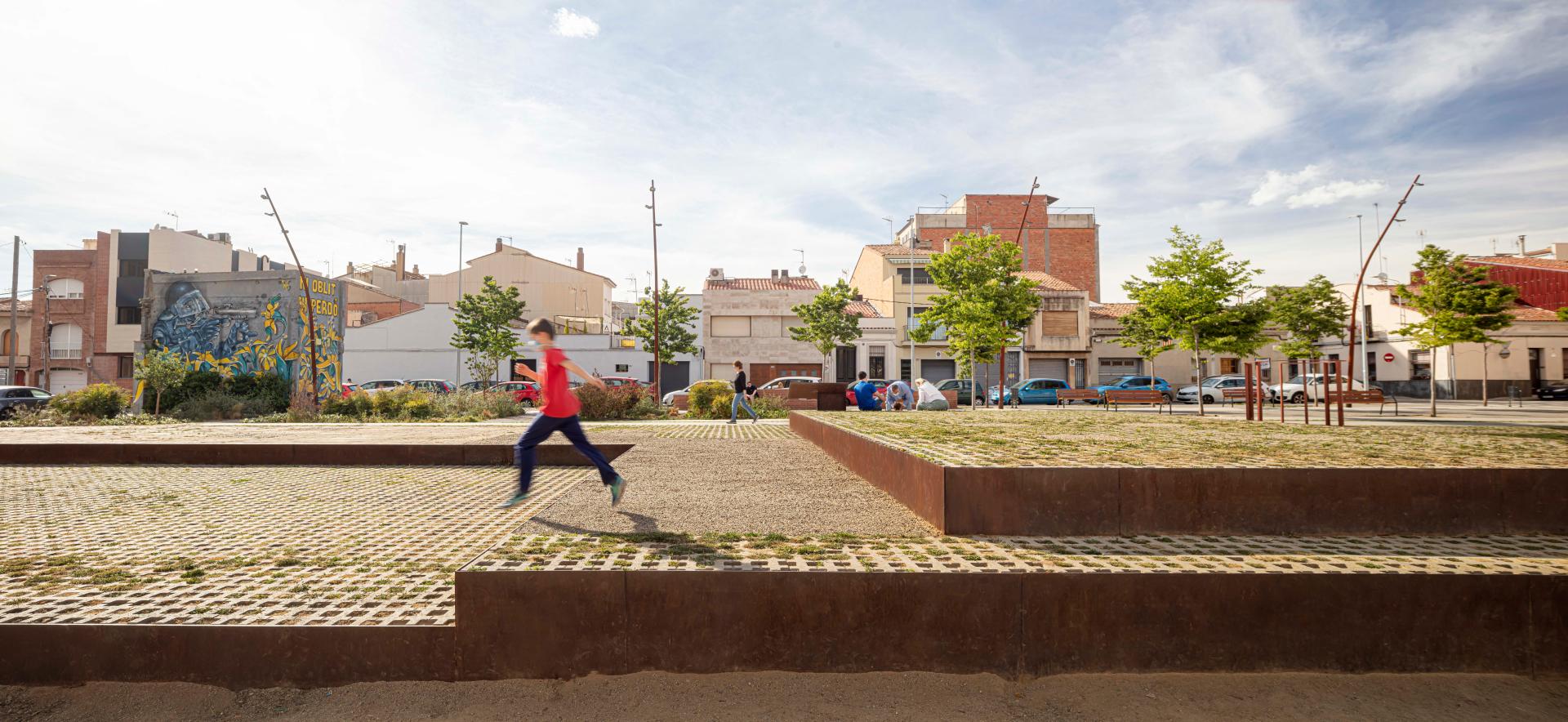
The very low budget forced the project to be austere and synthetic, also sustainable in its own resources. The past had to be represented, but also the present, greener, more permeable –a small floodable zone was created to retain the water and to favour the growth of flora-, softer, but, above all, cleaner.
The foundations of the old walls were used to bear all the intervention. The old pavements were respected and repaired, all the demolition materials were used to form the bases of the news pavements.
Key objectives for aesthetics and quality
The objectives were to show a way to intervene in a space that once was private and now public, without the imposition of models of pre-established urban design. It was about applying a principle of transformation of what was hidden in the nearly inexistent ruins, without forgetting to explain what emanated from those remains: an obsolete energetic model, repeatedly used in the architectonic heritage of the period.
Three axis of change were applied in this reality:
- from the building to the open space
- from industrial usage to green recreation
- and from productive to didactic
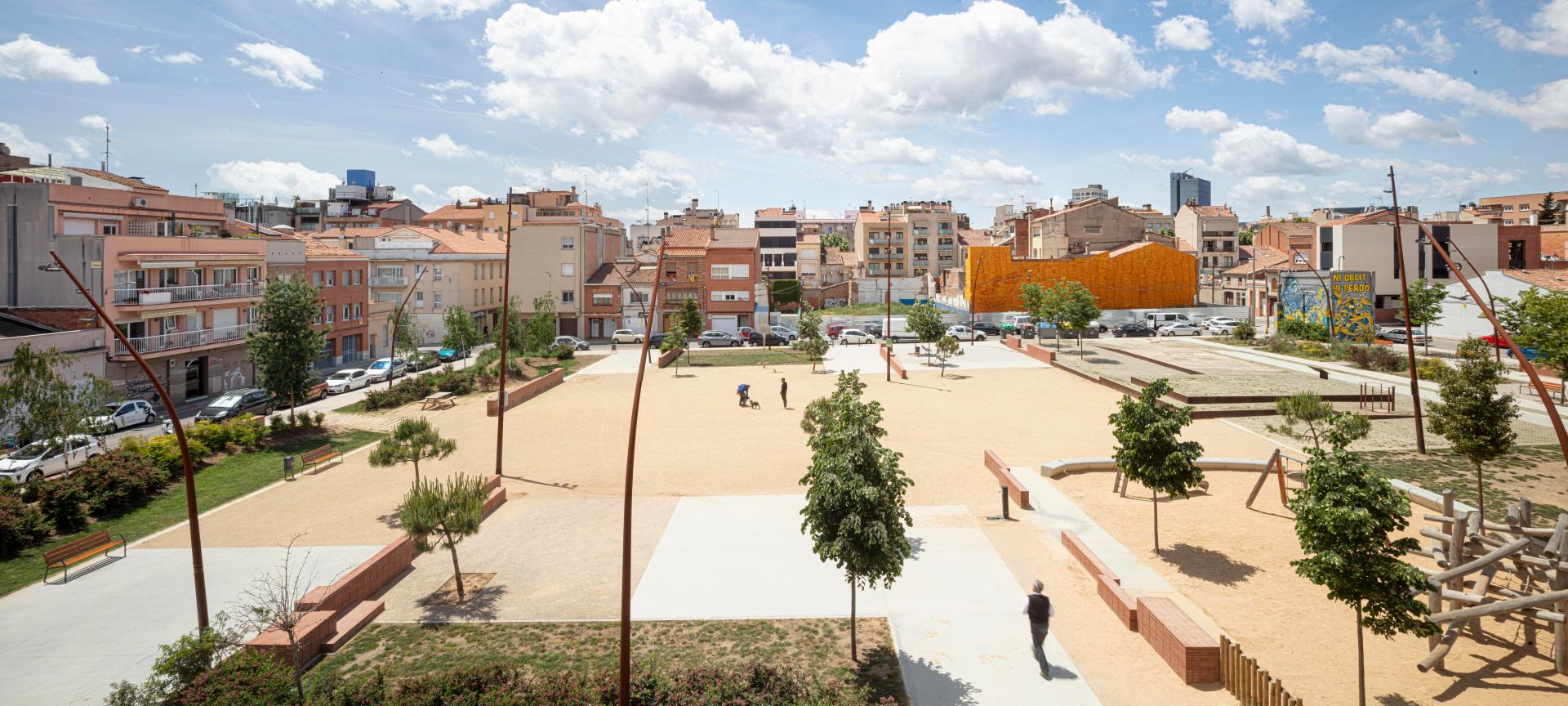
These axis were the ones used to retrieve the geometry of the industrial units, and to maintain the position of the old boiler, the water well, the chimney and the coal bunker.
The transformation and adaptability have created its own aesthetics. With a very low budget, the simplicity had to dominate the project and, therefore, the beauty had to emanate from the sincerity of the materials and the evolution of those during time and use.
The outline was chosen around an open and multi-use centre, dominated by the most recognisable remains of the old building, and a perimeter full of spaces of diverse nature and capacity, destined to be used as meeting, celebration and playing points for children, little concerts, food-trucks, etc.
The materials already used in the old building -brick, steel, concrete, wood...- will be the ones doing the plastic transcription of the intervention, adapting themselves to the human body and its behaviour.
Key objectives for inclusion
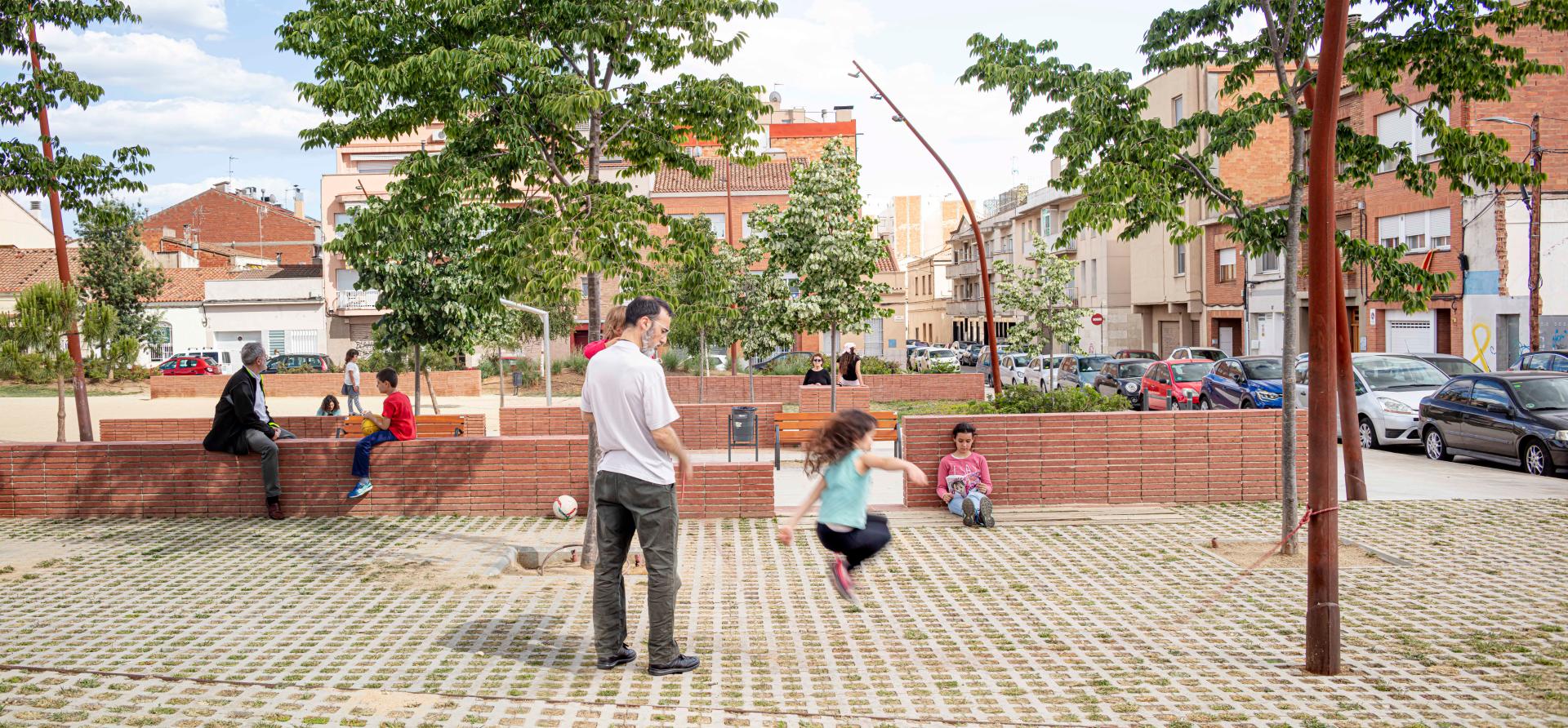
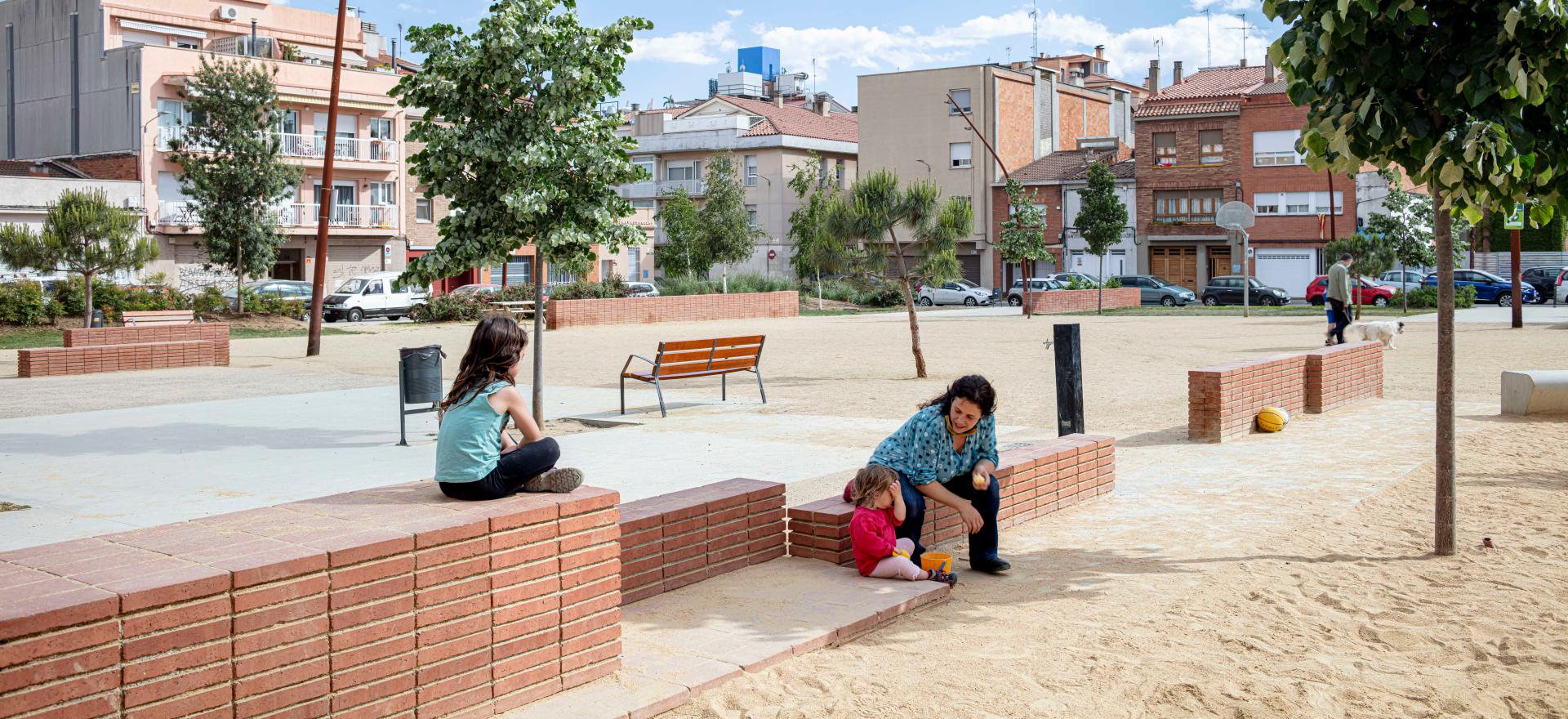
The open space, public and permeable project does not exclude people or collectives. On the contrary, the accessibility is total and it's open to every citizen who wishes to access. As a public space, there is no mechanism of inclusivity for minorities at risk of exclusion, or collectives with discrimination problems. The project contemplates a special will to be versatile with its spaces, and flexible in its functions. It allows simultaneity of groups, individuals, games, little concerts, pets, conversations… and generational diversity, babes, children, teens, adults, elder people...
A big part of the proposed adaptation in this intervention is based in the plastic brick benches. This urban furniture fits to the different activities and people who use them and who want to play with them.
Results in relation to category
4. The implication of the local society was, from the demolition of the building in 2012, absolute. From that moment, the neighbours of the Creu Alta Neighbours Association gathered the old wishes of its members to gain that space in the interest of the community.
The implication was not only from the neighbour’s part, but also from the Town Council, and the author of the project. From 2017, different acts took place. There were work meetings evenly, a popular poll was created to choose a name for the new space, and the Association together with the Town Councill organized a start-of-works ceremony and, at the end, an opening ceremony.
The results are highly satisfactory. The space is used by people from all ages and several parts of the day. The flexibility of their spaces allows the simultaneity of activities of different capacities. There are two schools nearby that use this space as an ampliation of their playground and teaching spaces, and there have been talks in one of those schools in order to explain the project and all its meanings and contents.
How Citizens benefit
The project of transformation of this space started a long ago. It started when, since 2012 Creu Alta's Neighbourhood Association started defending the use of the plot as a green urban space. The old factory had been demolished that year because of its unstable structures. The neighbours formed then a public commission of work and, in a process that lasted years, argued and created the future functional program where they channelled their will and their needs. The work of its components and the interest that the Town Council of Sabadell showed, resulted in the 2017 public competition to develop an urbanisation project and, finally, the space was constructed during 2018-2019.
The intervention has an enormous effect in the life in the zone, considering that is a neighbourhood without many green areas. Its urban fabric didn't allow new spaces except through the demolition of old buildings. Its construction has offered a new dimension in the neighbourhood, and its space is used the main part of time.
Innovative character
The project brings together a set of responses related to the original question of presentation: How to create a public communal space without forgetting the memory of a closed site -part of the industrial heritage in town-, having only a few ground-level ruins, just tracks on the floor?
This question has been answered with complexity and the verification that it is not a space like others. What makes innovative this solution consists in using, at the same time, different standards of analysis: the recognition of the underlying collective memory; the recognition of the historic presence of the previous building; the recognition of the architectural characteristics of the factory and its relation with a hierarchy of space, usage and functions; the technological characteristics, unique to the facility and related to the universal history of textile industry; the recognition of the imprint that the type of building has contributed to the energetic model of the 19th and 20th centuries; and finally, the opportunity of uniting all those variables to be further spread and reincorporated to the place and memory of the youngest people.