
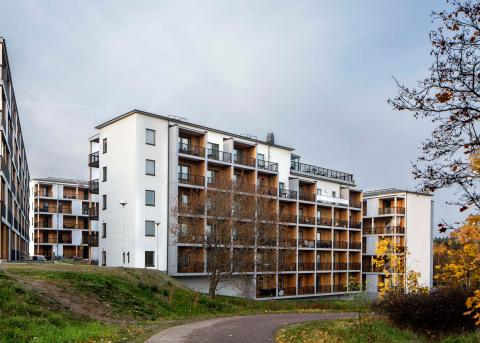
Terrasshusen
Terrasshusen – modern living in social spaces. Modular, sustainable, beautiful architecture for everyday life.
Terrasshusen – modern living in social spaces. Modular, sustainable, beautiful architecture for everyday life.

There is a consensus among researchers that we are not reaching many critical Sustainable Development Goals with the speed at which they are needed. This combined with the global COVID-19 pandemic creates a ticking time bomb with global repercussions. To reach unprecedented results, we need an improved testing bed for radical, new solutions. This testbed can drive sustainable development, inclusive economic growth and create jobs. This testbed is Ambitious.Africa.
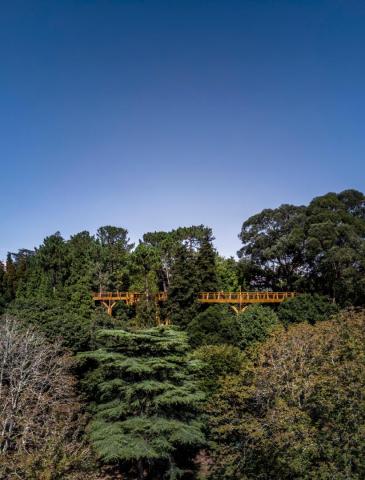
The Treetop Walk of Serralves Park, in Porto, offers an innovative way to enjoy this unique natural heritage, promoting awareness of nature conservation, developing educational programmes and scientific research – in particular, related to the carbon cycle and climate change – and hosting artistic events. It is a beautiful example of sustainable contemporary architecture!
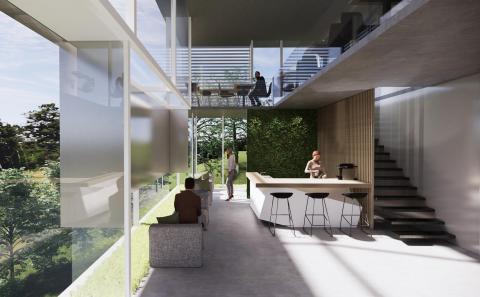
This project aims to identify a system of structures of co-working that can satisfy the needs and solve the problems of this type of spaces. Through a modular structure and easily re-aggregable in unlimited configurations, and flexible, through the use of movable walls, the entire system guarantees adaptability to any type of territory, allowing the declination of the design idea into the urban, lake and mountain settings.
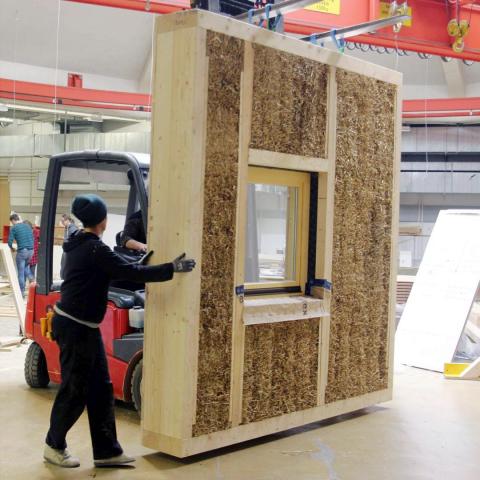
The modular building system vivihouse opens up the world of constructing for the general public. Commoning and co-creation are thus moving out of the sandbox into new scales of action. This way, up to six-storey buildings made from renewable materials can be realised inclusively, as the first beautiful prototypes demonstrate. Now a platform is to be created that connects users, planners, craftspeople and companies - to collaboratively explore new forms of city-making within the circular economy.
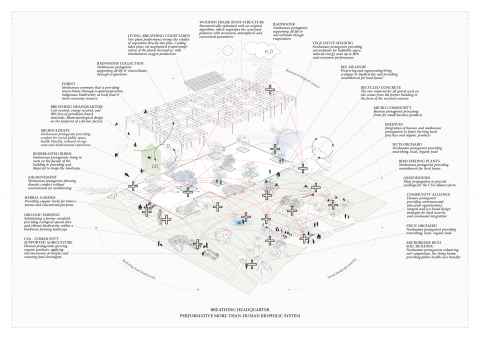
Imagine one possible future: It is plant-based, socially fair and ecologically sound — in rethinking given standards in design, material use, energy usage and bioclimatic design for the built environment.
How can we think it all together?
We answer in designing an entire ecosystem. In taking up the natural performance of our breathing world as our instructive co-designer.
A biophilic systems-design-approach that introduces breathing into buildings.
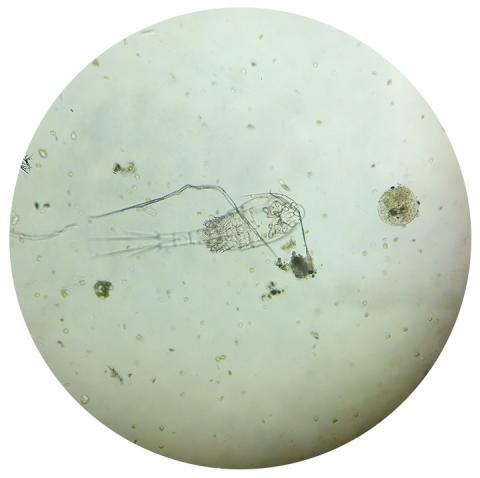
Few of us are familiar with plankton, yet they are an essential part of our ecosystem. The BIOTOPIA project of design allows the public to use digital devices as a means of contributing to scientific research and raising awareness about plankton. Our project of design offers a complete experience in three main stages: Making your own plankton observation kit called the Exoscope, using a web app to analyze plankton and finally an immersive database in virtual reality.
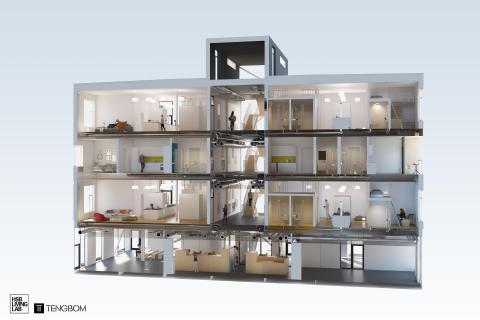
In HSB Living Lab 40 people have their permanent homes at the same time as research are conducted simultaneously, 24-hours a day. The purpose to create sustainable housing of the future.
It is a unique arena that facilitate collaborative innovation between citizens, researchers, and companies. Here innovative solutions can be tested in real-life environment. The goal is to speed up the process of introducing accommodation innovations. So far over 130 differen
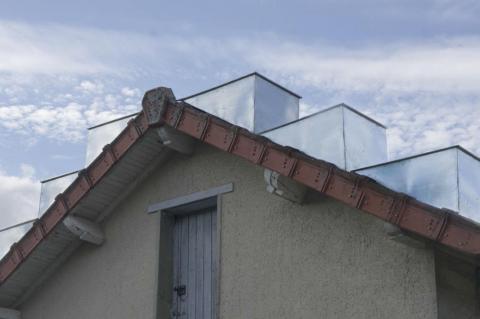
This experimental project takes rainwater as a potential source of energy. The water is used both as a way to produce electricity and a way to storage a physical potential, reproducing the principle of water dams at home. It consists in a system of two objects. This is part of a design research called Available Networks. A work intending to exploit our surrounding and discrete sources of energy.
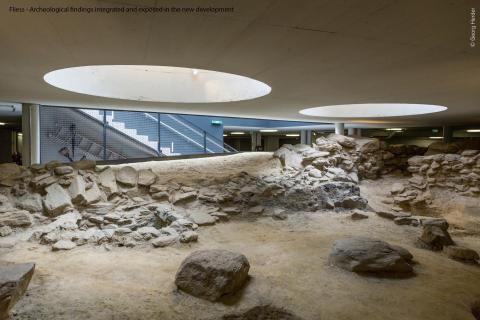
“Finally, we are meeting again in the central square – and not only in the cemetery”, said an old woman at the opening ceremony. For many years the small Austrian village seemed to be slowly dying. More and more disused buildings were emerging in the centre and to satisfy their daily needs its ageing inhabitants had no alternative but to drive to other places. An innovative combination of an architectural competition with a participatory process brought the empty, voiceless place back to life.