Terrasshusen
Basic information
Project Title
Full project title
Category
Project Description
Terrasshusen – modern living in social spaces. Modular, sustainable, beautiful architecture for everyday life.
Project Region
EU Programme or fund
Description of the project
Summary
BAU designed BRF Terrasshusen on behalf of Bolite Bostäder AB and in close collaboration with Moelven. The project is part of the expansion of Knivsta where thousands of homes will be created in coming years.
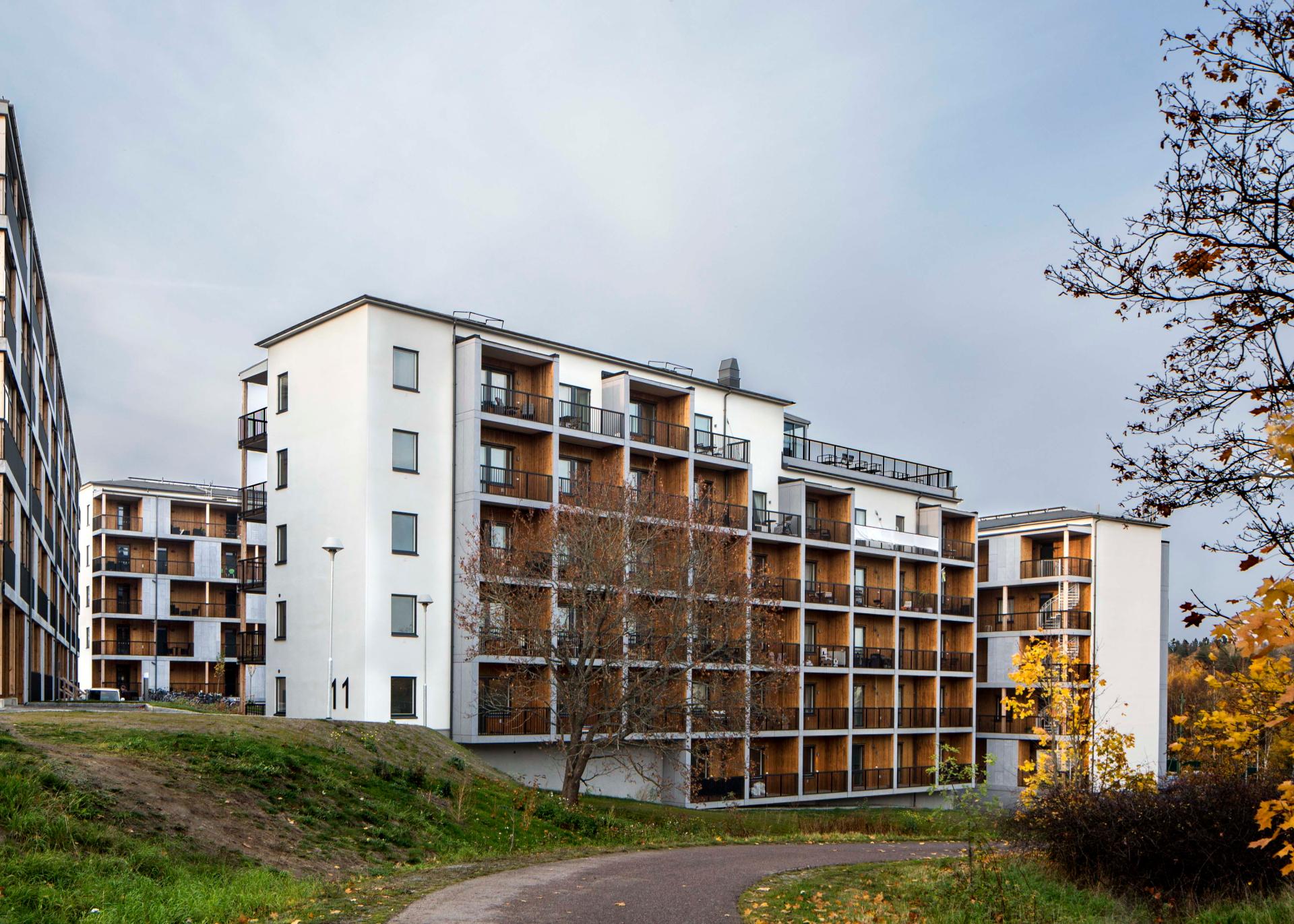
BRF Terrasshusen is divided into two tenant-owner associations, formed in 2015, with a total of 205 studio and one-bedroom apartments ranging in size from 27 to 41m2.
These small apartments contribute to an increasingly diverse supply of housing types in the municipality, which originally consisted of villas from the 1960s and larger apartments built during the period between 1970 - 2000 when the area evolved from being an industrial community to becoming a residential area for commuters in the service sector.
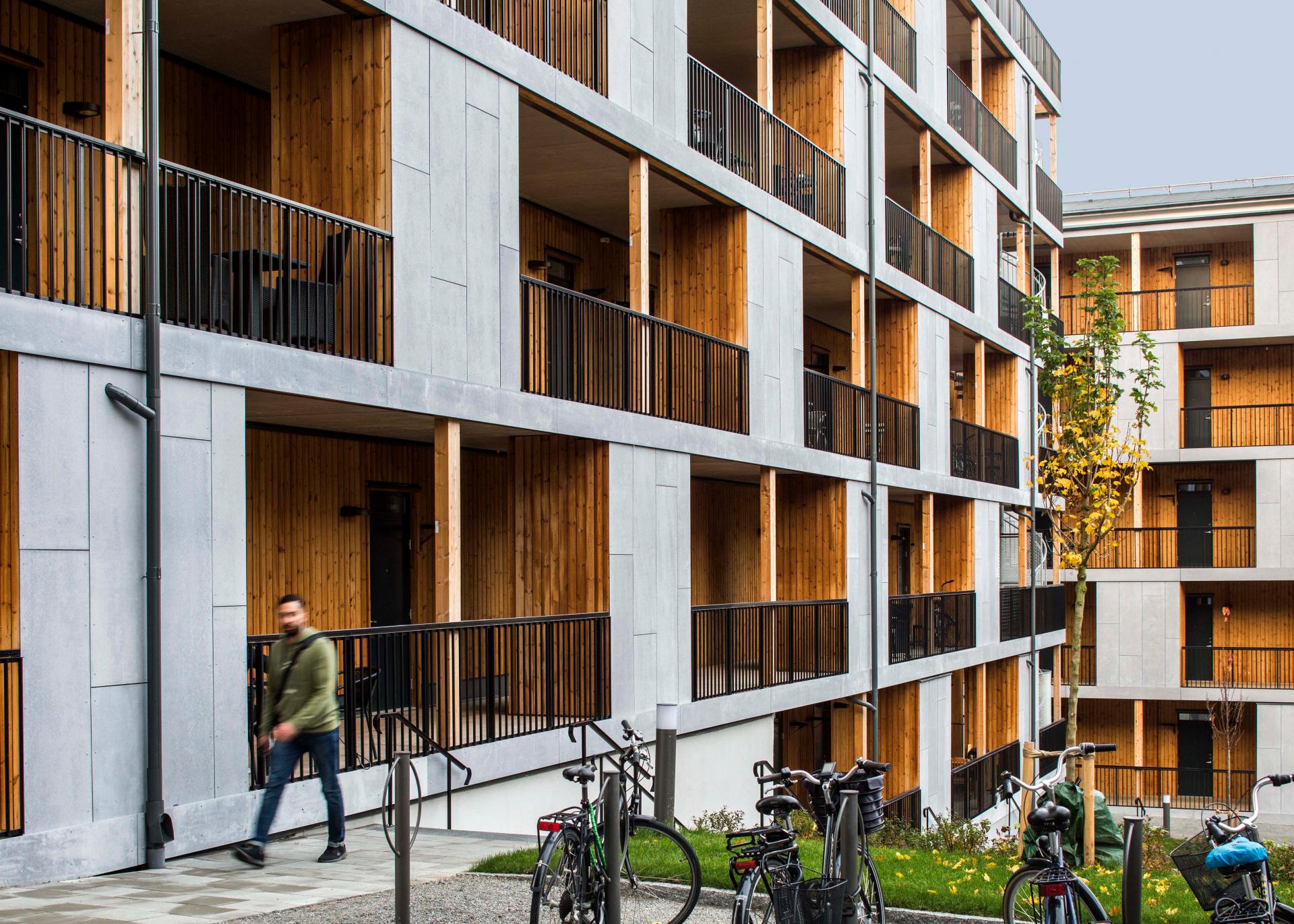
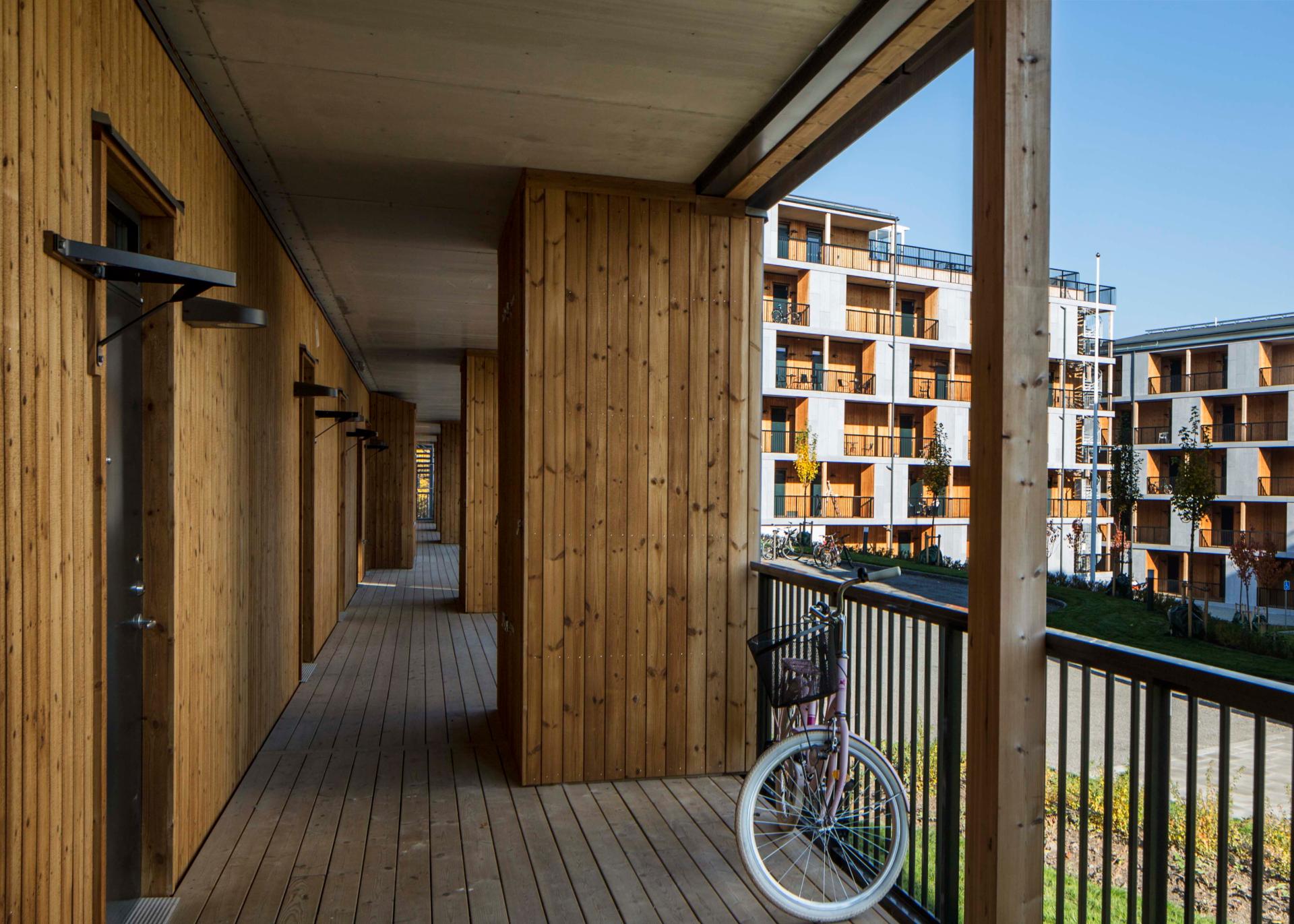
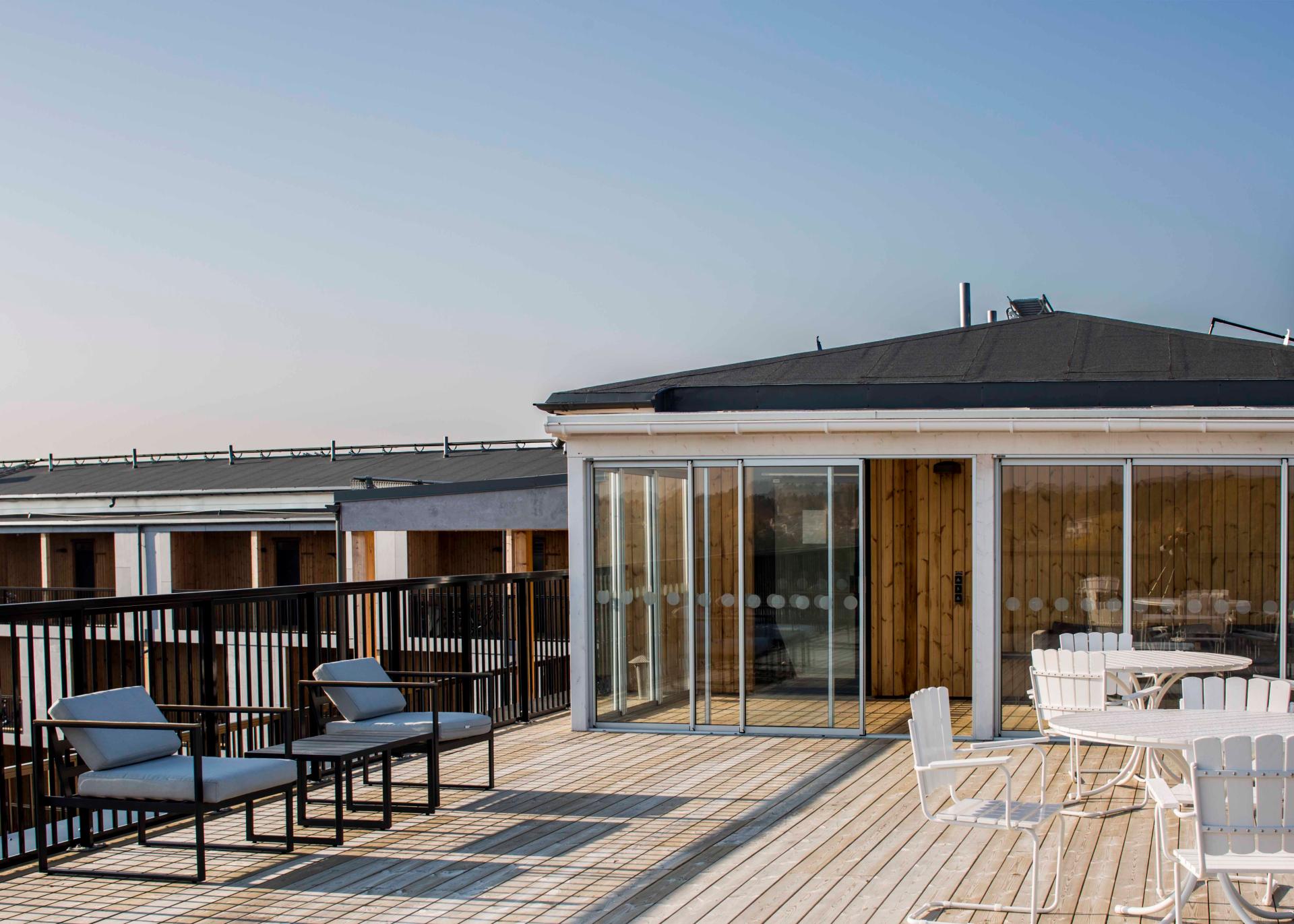
The homes are not only cost-effective, they are also beautifully designed and provide a context where social interaction is encouraged and enabled via shared living areas in the form of terraces, courtyards and generous access balconies. The carefully considered architectural approach, the choice of materials and the opportunities for a high quality of life that this socially focused design provides make BRF Terrasshusen an important addition in the small but growing municipality.
Key objectives for sustainability
BRF Terrasshusen comprises modularized building units offering several apartment types which contributes to a cost-effective and fast construction process. Construction of modular wooden apartment buildings offers many benefits; If you build with wood, greenhouse gas emissions are greatly reduced. Wood binds carbon dioxide helping to mitigate the climate crisis. In addition, research shows that wooden buildings provide a more pleasant indoor climate. Our well-being is integral to the sustainability of our society.
When modules for multi-story buildings are manufactured indoors it enables an increased quality in production; for example, by reducing the risk of moisture damage. The system is flexible and entails short delivery times which aid in the control of the construction budget.
Multi-story modular houses where wood comprises the structure of the building offers a more sustainable construction than concrete as it means that the building is for the most part produced from renewable materials. Timber paneling further enhances the ecological footprint through the continued use of natural materials.
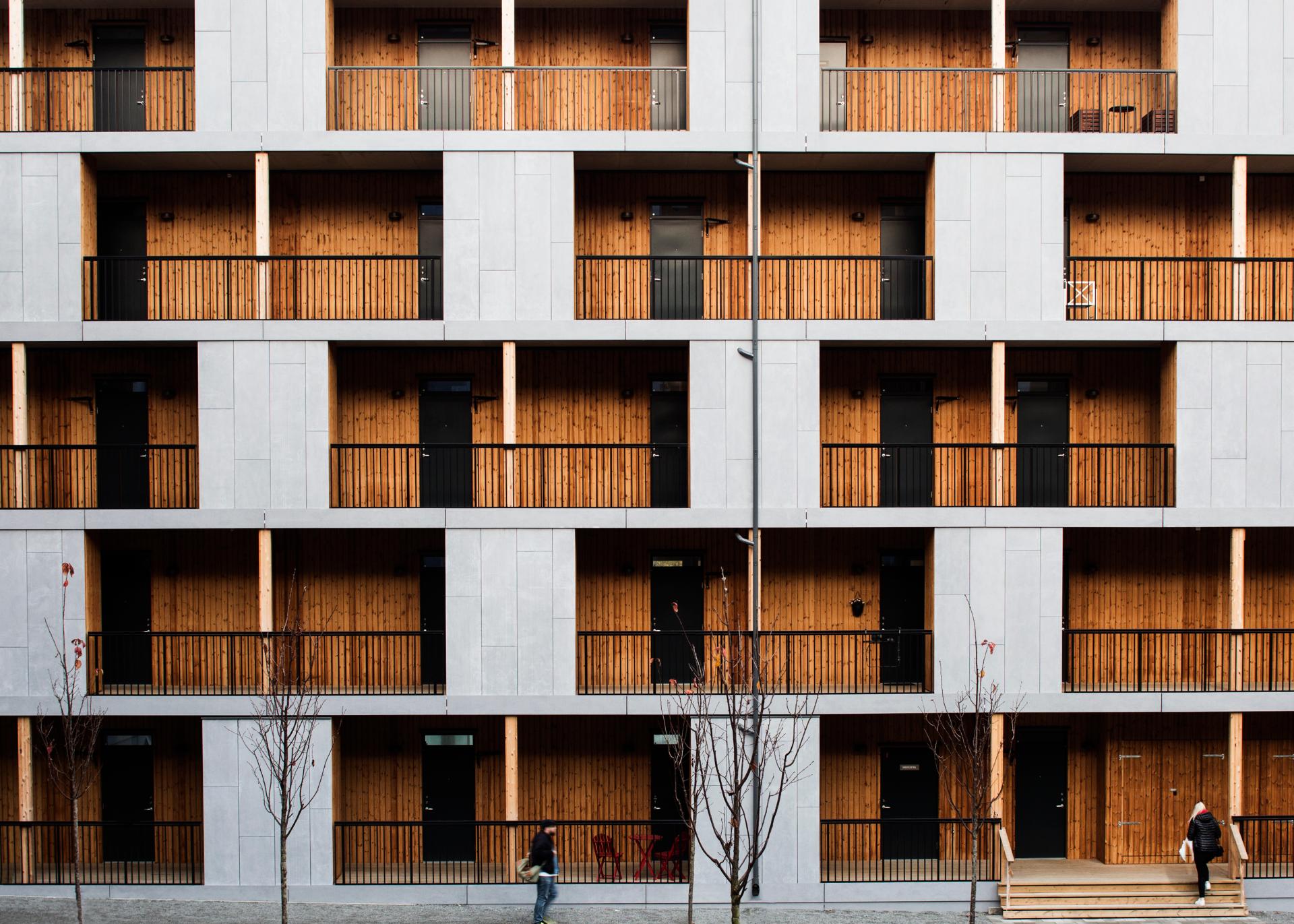
The generously deep access balconies are not only a functional solution but enable space for recreation and socializing. Social sustainability has been a key driving concept throughout the project.
Key objectives for aesthetics and quality
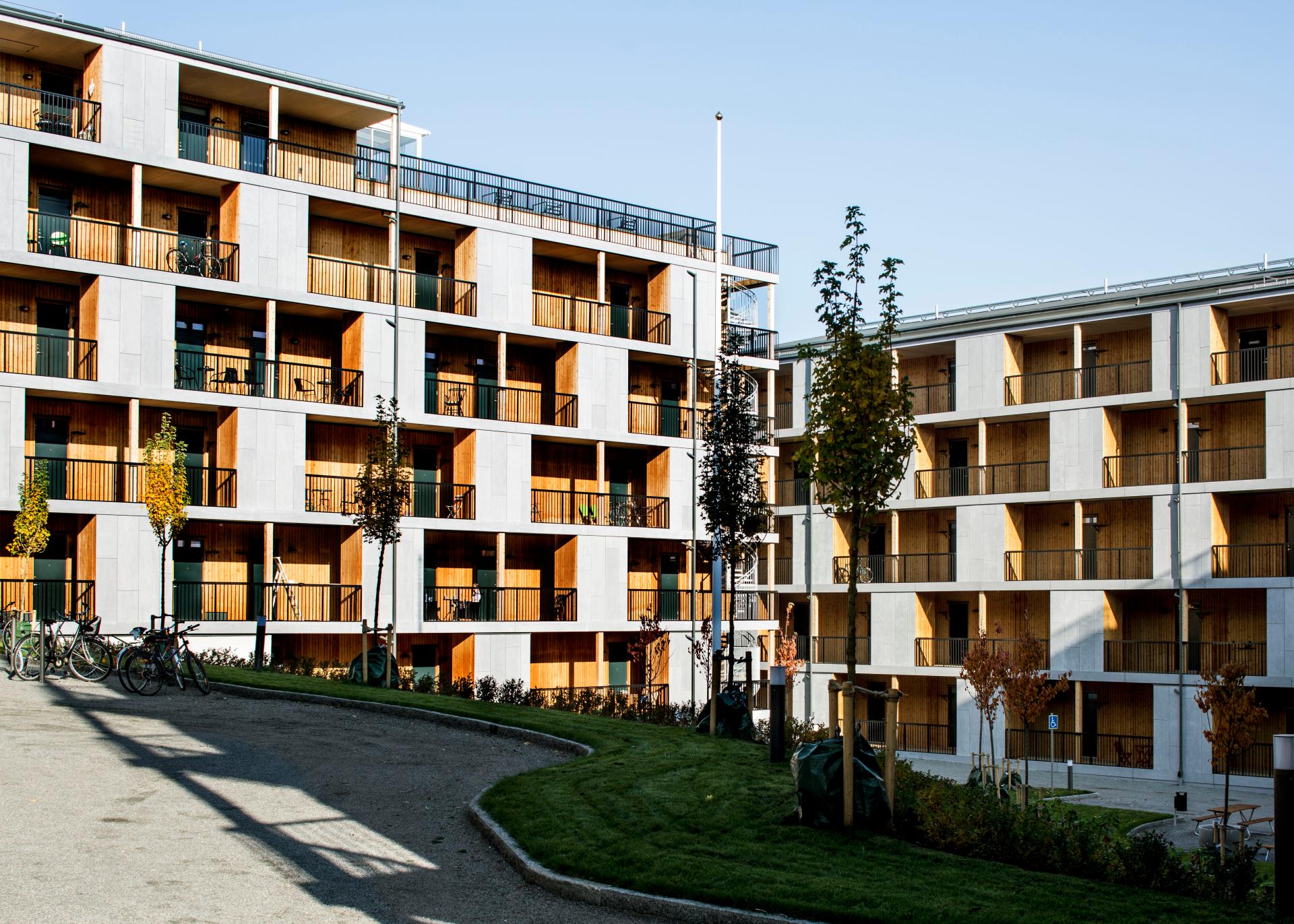
During the design phase for BRF Terrasshusen the idea emerged to create white plaster façades surrounding the block and construct inward facing facades that would be characterized by wood-clad entrance terraces and storage areas. The overall graphic effect of the courtyard façade is reminiscent of a birch trunk. The design gives the neighborhood its character and an identity that residents can feel proud of.
Key objectives for inclusion
The vision for Terrasshusen is: accommodation that combines modern apartments with areas encouraging social interaction. Light and air characterize the apartments which have windows in the facades on both sides of the building, have generous ceiling heights and custom designed kitchens. The common roof terrace offers a gathering place for all residents. The inner courtyard has meeting places on several levels and is enclosed, offering a calm atmosphere and a sense of belonging. At the same time ample openings have been provided to allow sunlight to reach the greenery.
Offering small efficient apartments to a younger population seeking their first home, or indeed to an older population vacating their villas, is an important way to encourage and maintain demographic variation in the municipality.
Results in relation to category
This is BAU’s first collaboration with Bolite's. The project offered BAU the opportunity to design a modular building with an architecture beyond the everyday. The concept has subsequently been developed in two additional projects: Cederhusen in Vegastaden and Fågelsången in Nyköping.
The pioneering work undertaken in this fast moving planning process, where private sector and municipal authorities collaborated to formulate ideal conditions for efficiency, buildability, aesthetics and social initiatives, has enabled the developer to go on to successfully complete over a thousand homes to date.
How Citizens benefit
An important part of the Swedish urban planning system is the democratic process, where open consultations enable anyone that wishes to submit comments on detailed plan proposals. Locations in Knivsta considered suitable for youth housing were identified via a municipal initiative which in turn attracted a developer interested in producing small, space efficient and cost-effective housing. The design BAU produced, combining sustainable materials with an accessible and inviting design, was well received by the local residents who generally tend to be skeptical of change.
The management of the housing in the form of tenant-owner associations displays the residents commitment and keen interest in the local environment.
Innovative character
Developments in timber construction offer many opportunities; for exciting architecture, innovation in design and production and improving the of quality of life for residents. With wood as the predominant material, or even in careful combination with other materials, unique conditions arise to help achieve beautiful, exciting and harmonious buildings. Prefabrication offers a faster and higher quality method of building when compared to traditional on-site construction. In factories the wooden modules are manufactured, weather-protected and quality-assured on modern production lines where some stages are automated for increased efficiency and precision. As a bonus staff have a better working environment: warm, bright and in clean, wood-scented air! The wooden facade panels are manufactured using heat-treated pine which is specially impregnated with fire retardants to meet the fire requirements.