Schermbeck
Basic information
Project Title
Full project title
Category
Project Description
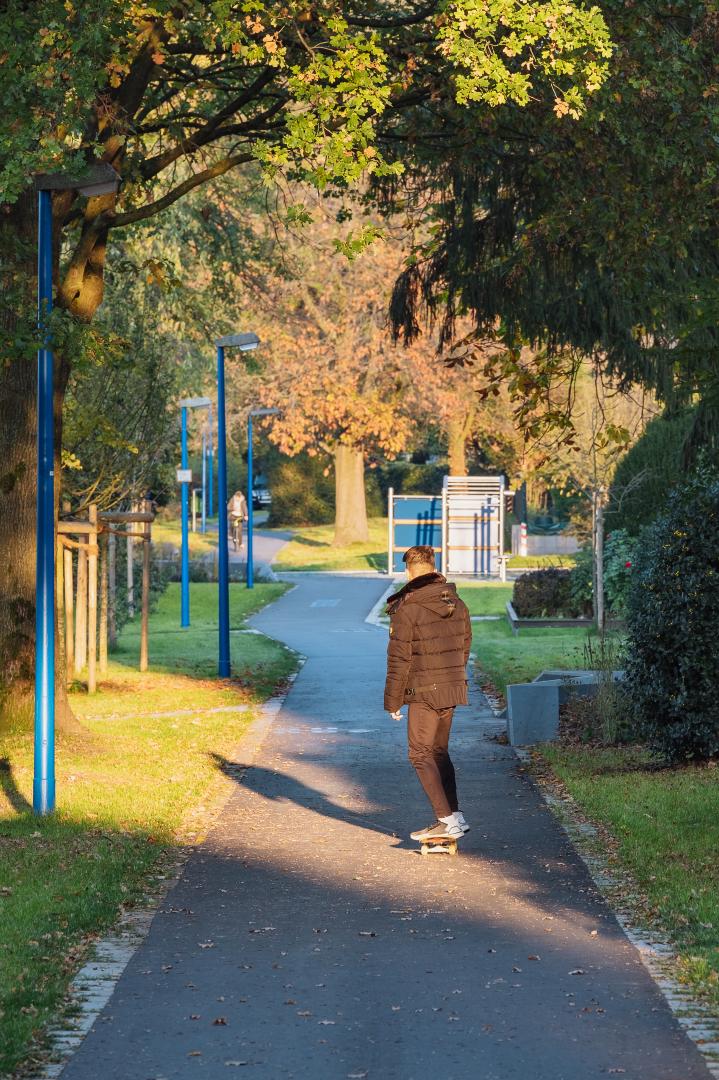
The play and movement space concept in Schermbeck shows perspectives for an attractive, networked and thus sustainable spatial framework. Citizens should be attracted to the outdoors and leave their cars behind. Children get to know their everyday routes in a new way through the newly created play and exercise areas.
Geographical Scope
Project Region
Urban or rural issues
Physical or other transformations
EU Programme or fund
Description of the project
Summary
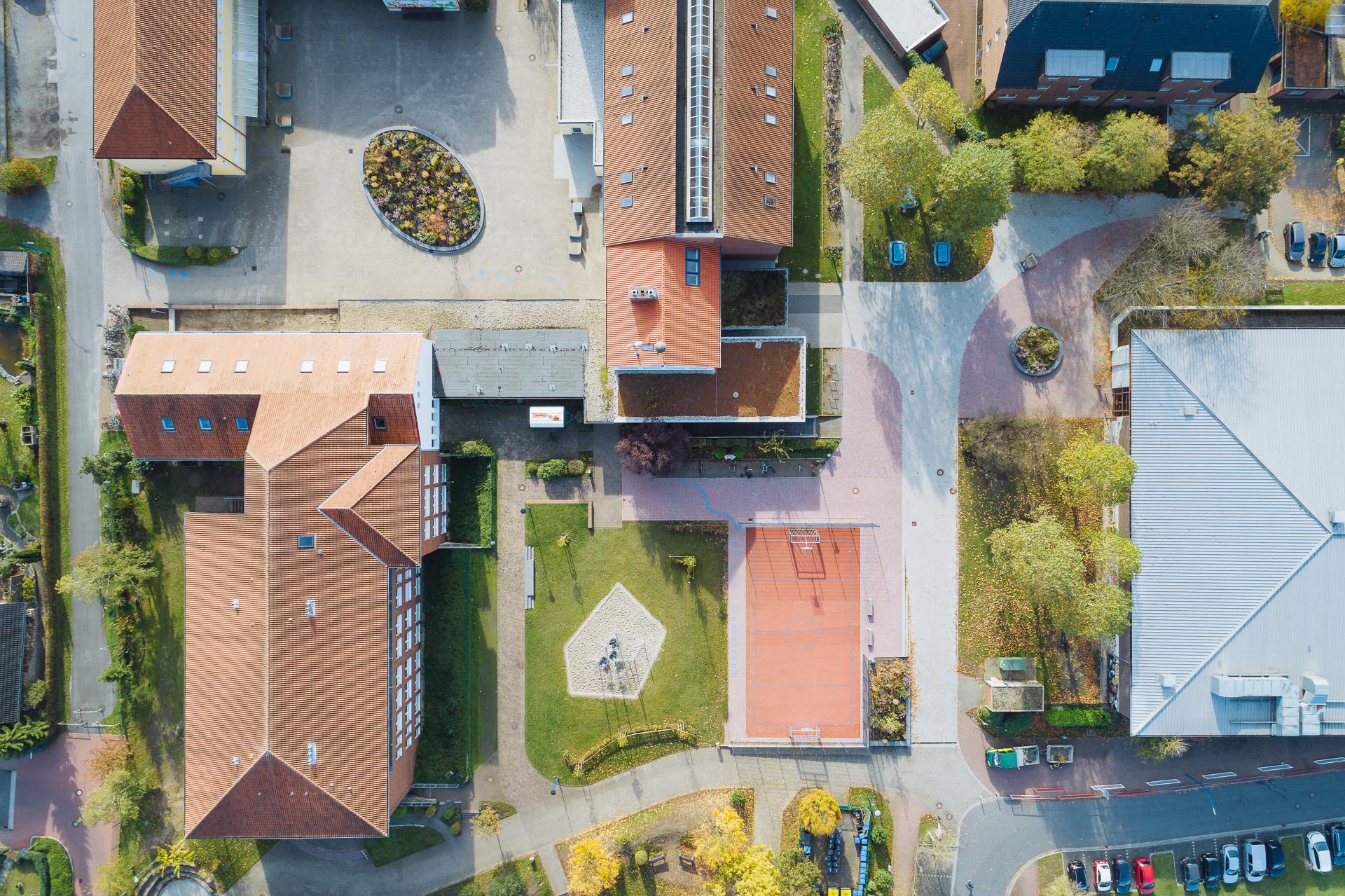
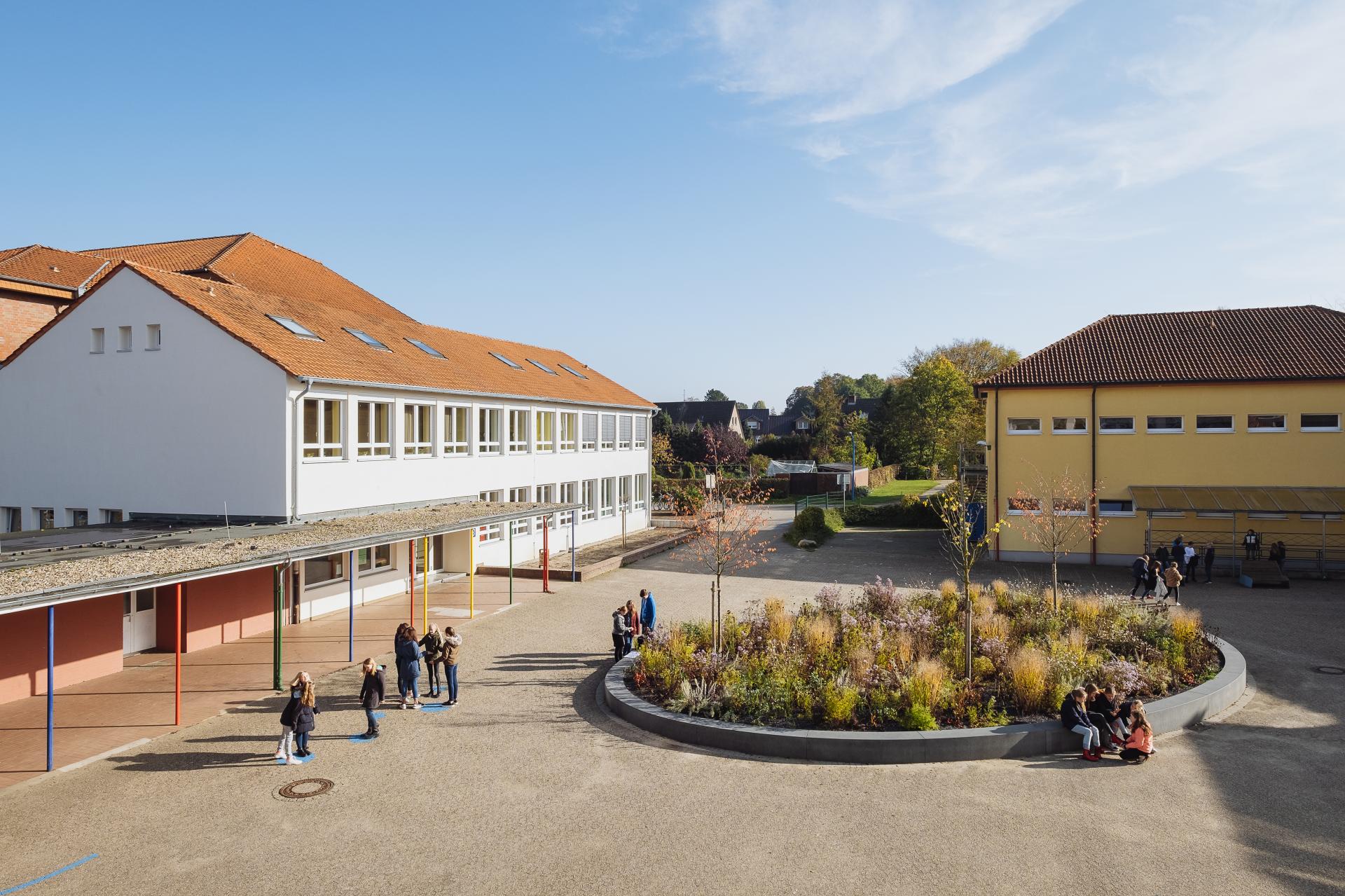
Unremarkable and ordinary, that is the appearance of the small town of Schermbeck on the western edge of the Münsterland region. Equally inconspicuous are the changes in the open space that were developed and implemented by DTP Landschaftsarchitekten as part of the play and movement space concept. On site they are invaluable: "People in Schermbeck are walking again and children are roaming the town again. It's wonderful, just like it used to be," enthuses Mayor Mike Rexforth. There is nothing backward about looking back to the past. Quite the opposite. He sees that the measures of the play and exercise area concept are attracting more citizens outside again and making them leave their cars behind. Above all, however, children experience their city in a whole new way. Along newly created pathways, they move from one upgraded play and exercise area to another. They conquer their living environment through play and learning on these forays through the town. "What sounds banal is of great educational value. That's why the play and movement space concept, developed together with the children and young people, has changed so much in Schermbeck," sums up the principal of the comprehensive school Mr. Hohmann. The entire town of Schermbeck has become playable: Every path is now a game.
Key objectives for sustainability
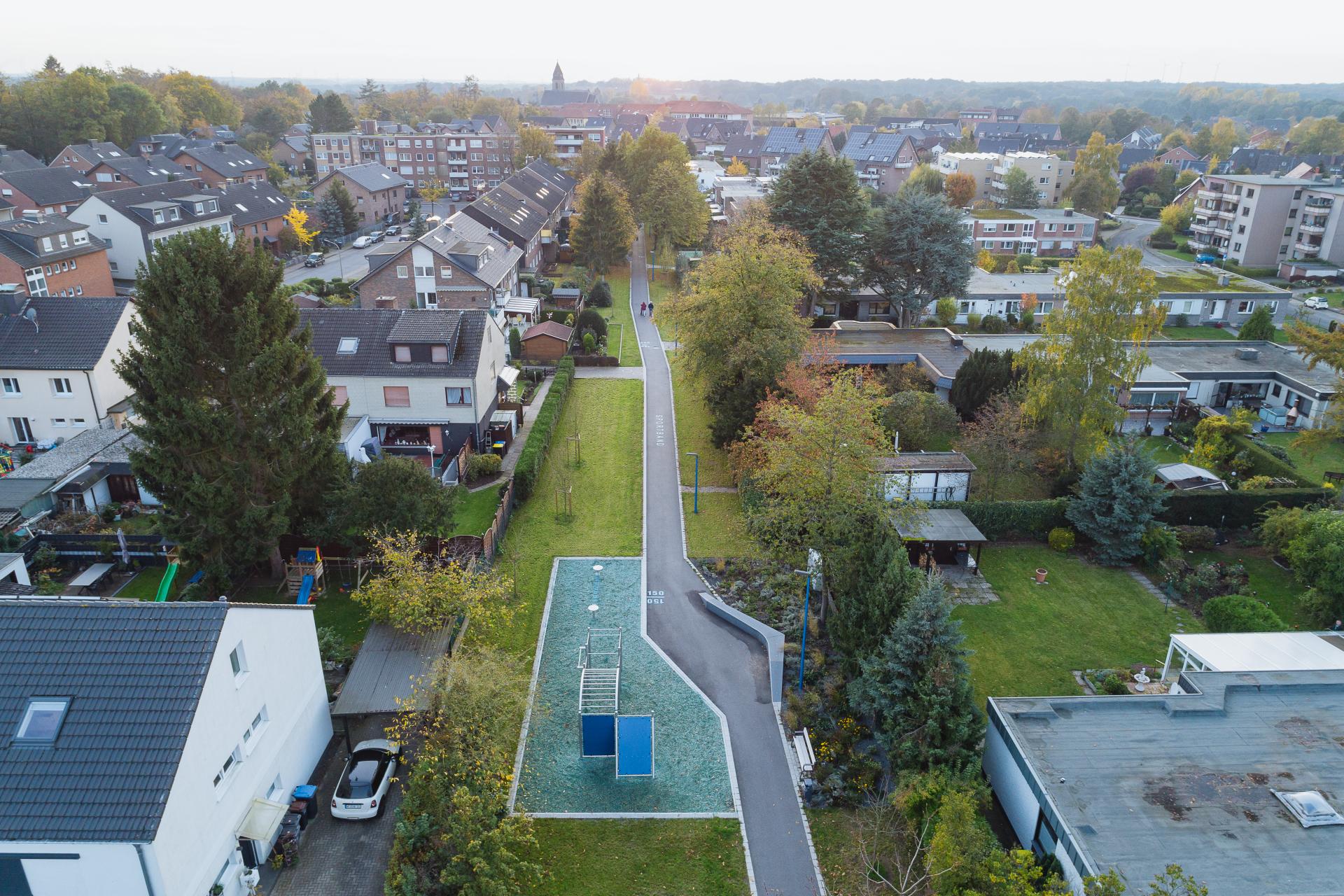
The goal was to "unlock" the site, to network it out of its closed-off insularity and make it accessible, thus bringing people back into town on foot and leaving their cars behind. The five focus areas identified in the community priority areas will be linked as a system almost linked as a traffic-free system.
Key objectives for aesthetics and quality
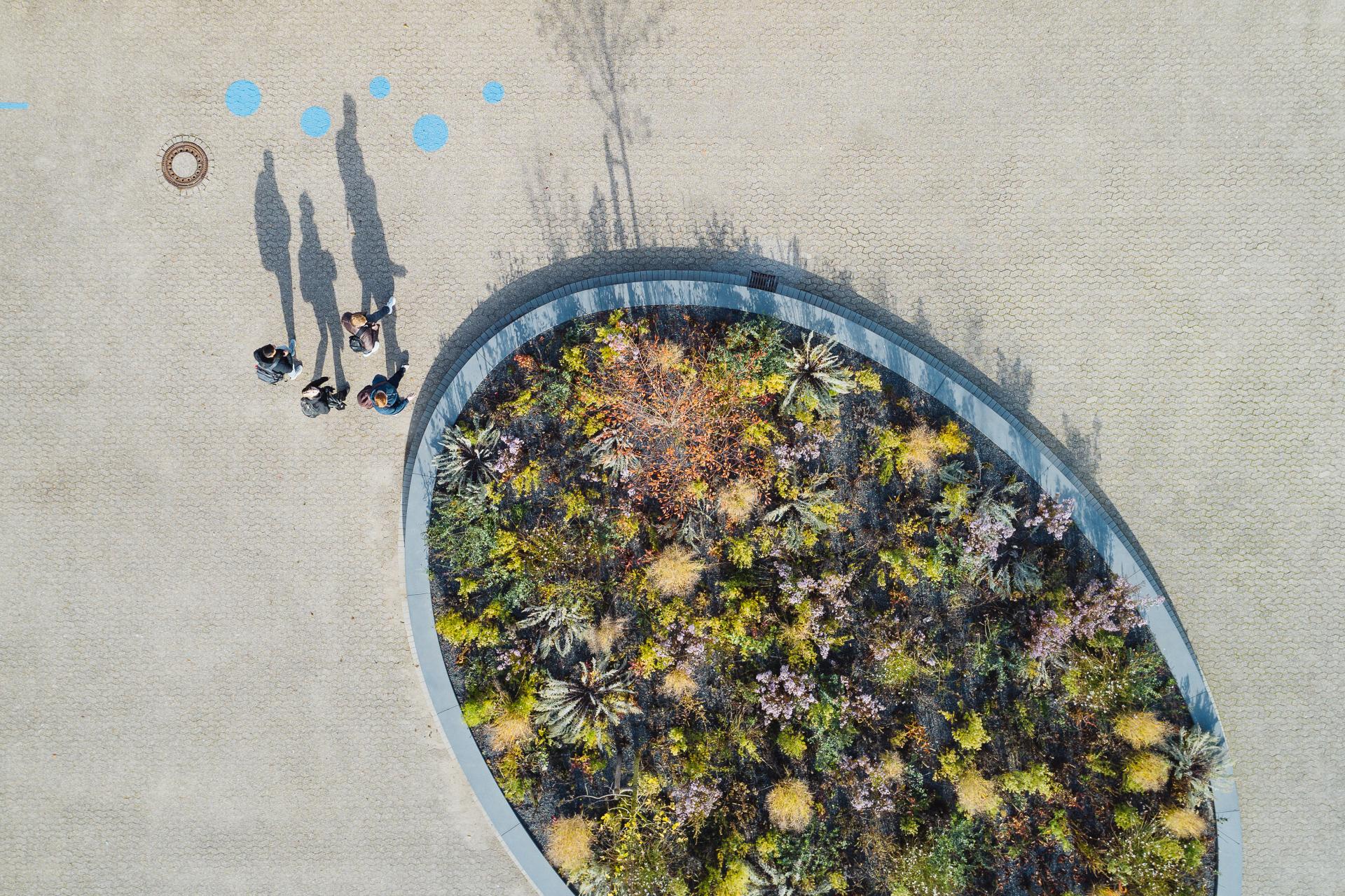
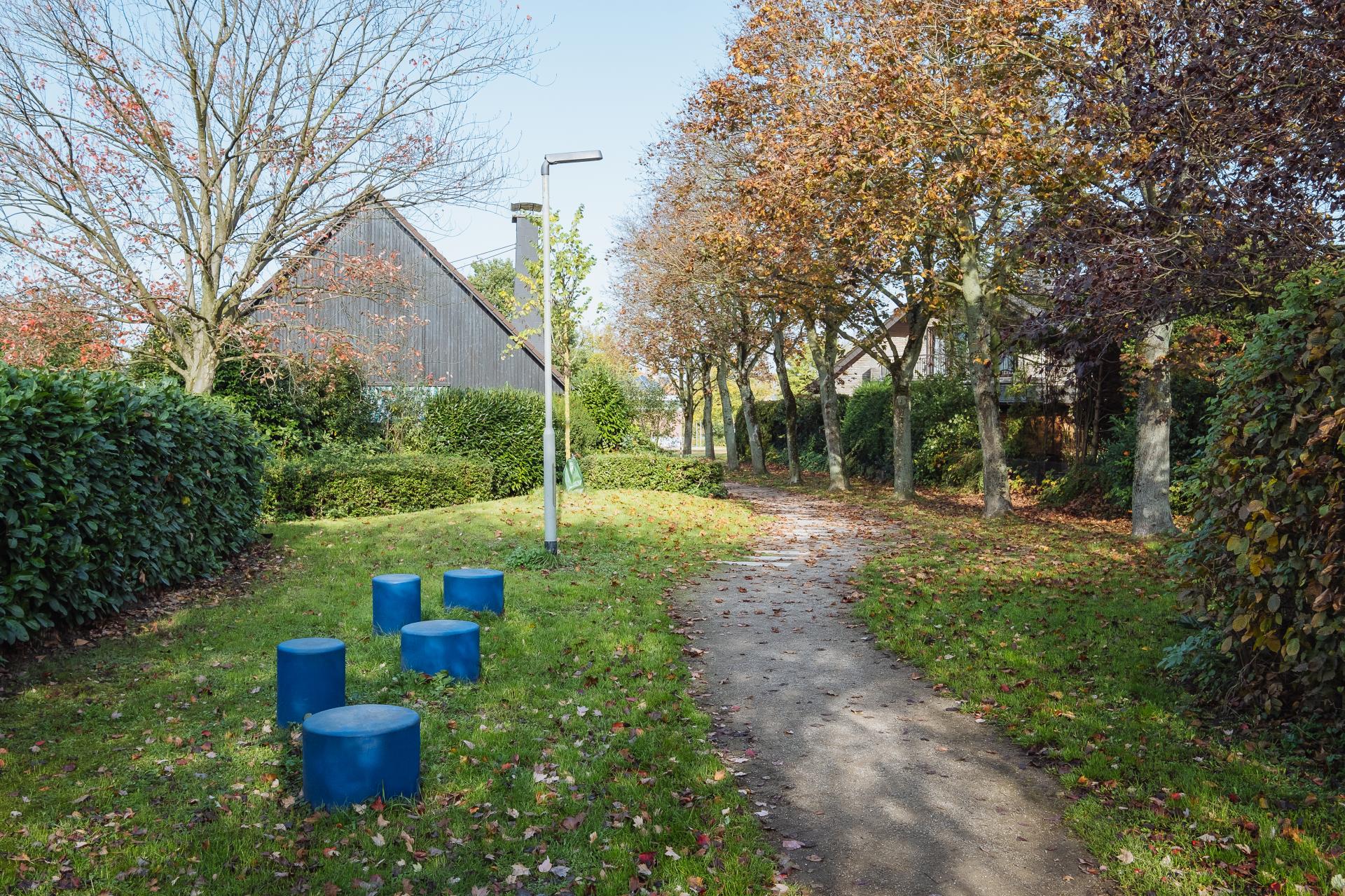
Clear markings, recurring elements and a new color scheme make paths and links recognizable and individual modules into a whole. Designed at children's height and comprehensible even without reading skills, the guidance system is a reliable companion on forays through the city and a playful design tool.
Key objectives for inclusion
The participation of the citizens of Schermbeck, especially the students and teachers of the comprehensive school, was an important part of the play and movement space concept. The Schermbeck play and movement area is the result of an intensive planning, coordination and participation process. Various participation formats took place at important milestones in the process in order to reach as many stakeholders and a large public as possible. After the completion of the schoolyard and the sports facilities, there was a big civic celebration with everyone who was involved.
Results in relation to category
- Traffic-free design and routing
- Giving children new space to play and move
- After-work playground with boules facility to become a meeting place for young and old alike
- Networking of important locations
How Citizens benefit
- Citizens were able to participate in workshops and contribute ideas
- Close and intensive cooperation between Schermbeck citizens, especially students and teachers
- Citizens had a say in how this place was designed
- For the opening of the schoolyard and the sports facilities there was a big party for all
Physical or other transformations
Innovative character
- Re-acquaint everyday routes with newly created places to play and exercise.
- Traffic-free linking of individual locations
- Integration of once unused areas into the district
- Involvement of citizens in the development process
Learning transferred to other parties
- Open space development as an important driver for urban development
- Urban development from an open space perspective: new qualities for cities!
- Multi-use, lively neighbourhoods define liveable cities
- Reclamation of industrial wastelands as open spaces for people as a huge opportunity
- Open networked spaces as a stimulus for the mobility transition