Mind over Matter
Basic information
Project Title
Mind over Matter
Full project title
Mind over Matter
Category
Shaping a circular industrial ecosystem and supporting life-cycle thinking
Project Description
Mind over Matter draws inspiration from the humankind's aspiration to create a better world. Our initiative wants to help shape young minds so that they can use creativity and intellect to transform matter into something that is useful, sustainable and adds value to the world. With an innovative methodology that forms a transdisciplinary approach to scientific problem-solving by integrating art into science, we aim to demistify scientific processes and motivate young people to approach STEM.
Geographical Scope
Cross-border/international
Project Region
CROSS-BORDER/INTERNATIONAL: Croatia, Sweden
Urban or rural issues
It addresses urban-rural linkages
Physical or other transformations
It refers to other types of transformations (soft investment)
EU Programme or fund
Yes
Which funds
ERASMUS
Description of the project
Summary
Can an architect use sculpture to repair life under water? Can a graphic designer reduce inequalities in the world through theatre? Can art contribute to solving concrete, real-life problems? Mind over Matter initiative devises educational activities which integrate art into science and creates a transdisciplinary approach to scientific problem-solving that draws knowledge from across a diverse range of expertise, all with the aim of helping young people who might not see themselves as venturing into STEM fields to have a positive experience of STEM subjects, which can lead to a growing interest in a STEM specialism or further work in a STEAM-oriented career.
The initiative is based on the development of an innovative methodology which accentuates progressive assumptions about what the learning process should look like: how the environment can be conductive to high youth engagement, how introducing real-world, concrete problems can motivate engagement and learning, how the educator does not and should not have a pre-defined solution to the problem, thus facilitating the development of various aspects of knowledge and skills. Students devise projects which solve real-life problems (related to UN’s Sustainable Development Goals) and use materials available to them in their schools and surroundings to create prototype solutions as possible answers to set questions. By engaging in this type of learning, students learn about sustainability, inclusion and the value of transdisciplinary approach to problem solving. They develop solutions for actual world problems, becoming aware how their actions can initiate changes in their local community and beyond and understand how global change requires joining together and acting on a global level. Finally, they are encouraged to think about problems in an innovative way and realize that imagination and creativity are the underlying elements of science, life and creating solutions for world problems.
The initiative is based on the development of an innovative methodology which accentuates progressive assumptions about what the learning process should look like: how the environment can be conductive to high youth engagement, how introducing real-world, concrete problems can motivate engagement and learning, how the educator does not and should not have a pre-defined solution to the problem, thus facilitating the development of various aspects of knowledge and skills. Students devise projects which solve real-life problems (related to UN’s Sustainable Development Goals) and use materials available to them in their schools and surroundings to create prototype solutions as possible answers to set questions. By engaging in this type of learning, students learn about sustainability, inclusion and the value of transdisciplinary approach to problem solving. They develop solutions for actual world problems, becoming aware how their actions can initiate changes in their local community and beyond and understand how global change requires joining together and acting on a global level. Finally, they are encouraged to think about problems in an innovative way and realize that imagination and creativity are the underlying elements of science, life and creating solutions for world problems.
Key objectives for sustainability
In devising and implementing the initiative, it was very important to make sure that all its results can be maintained, transferred and reused: this includes the methodology itself, developed pilot programs, recommendations and promotional materials. These are readily available for use on the initiative’s website to all people, regardless of age groups, social or geographical circumstances. Cards are translated in several European languages and can be used online as well as in their physical form. Furthermore, pilots that have been implemented are reusable by design, and their relevance - since they do not depend on specific technologies - can be sustained for years.
Through this methodology, young people directly reflect on the UN's sustainable development goals and on possible solutions to global problems. By participating in the initiative, they are encouraged to think about their personal values and attitudes in terms of sustainability and life values. Equality, inclusiveness and care for current and future generations are promoted in such a way to make participants aware that people are part of nature and that caring for nature is essential for our happy and carefree life. Through their involvement, students acquire the knowledge and skills needed to transform the current system into one that is more focused on sustainability and circularity. They understand that the changes that are necessary do not come overnight, but they also understand that their opinion is important and that big changes start from the smallest ones - from changes made by conscious individuals.
Through this methodology, young people directly reflect on the UN's sustainable development goals and on possible solutions to global problems. By participating in the initiative, they are encouraged to think about their personal values and attitudes in terms of sustainability and life values. Equality, inclusiveness and care for current and future generations are promoted in such a way to make participants aware that people are part of nature and that caring for nature is essential for our happy and carefree life. Through their involvement, students acquire the knowledge and skills needed to transform the current system into one that is more focused on sustainability and circularity. They understand that the changes that are necessary do not come overnight, but they also understand that their opinion is important and that big changes start from the smallest ones - from changes made by conscious individuals.
Key objectives for aesthetics and quality
The playing cards created as a part of the initiative as the material to implement the methodology were designed in a colourful, attractive way in order to be attractive to young people who use them. At the same time, visually, they are quite unimposing because they are meant to be used as a catalyst of free thinking and flow of ideas, rather than objects that define thought and give clear, strict impression of what they are supposed to signify. Their purpose is most strongly presented linguistically, with clearly and boldly expressed notions representing the four categories that the game bases on – arts, STEAM careers, UN SDG’s and concepts.
Pilots have demonstrated that the methodology encourages creativity in young people and using them increases the quality of their experience, as participants strive from being offered fresh, innovative approaches to learning and being placed in the centre of the process. While creating solutions to problems posed with the help of the cards, they are able to work with different materials, tools and techniques, thus being able to express themselves freely, in a way they see most fit. Such free expression directly positively influences the participant’s self-esteem, enjoyment and involvement in the entire process. While solving problems in teams, young people become more self-aware, see themselves as responsible inhabitants of planet Earth and thus contribute to solving the problems of today (as well as the problems of tomorrow). Realization that they can and should be active participants in solving problems of the world, rather than passive ones, brings positive emotions connected with responsibility and the feeling of having power to do good in your hands.
Pilots have demonstrated that the methodology encourages creativity in young people and using them increases the quality of their experience, as participants strive from being offered fresh, innovative approaches to learning and being placed in the centre of the process. While creating solutions to problems posed with the help of the cards, they are able to work with different materials, tools and techniques, thus being able to express themselves freely, in a way they see most fit. Such free expression directly positively influences the participant’s self-esteem, enjoyment and involvement in the entire process. While solving problems in teams, young people become more self-aware, see themselves as responsible inhabitants of planet Earth and thus contribute to solving the problems of today (as well as the problems of tomorrow). Realization that they can and should be active participants in solving problems of the world, rather than passive ones, brings positive emotions connected with responsibility and the feeling of having power to do good in your hands.
Key objectives for inclusion
The Mind over Matter methodology was designed to be inclusive and accessible to everyone. In addition to the physical form (playing cards), the methodology is also available in an online version to make it accessible to young people around the world, regardless of potential geographical, social or other types of obstacles they may face. It is also important to note the fact that the use of this methodology is completely free, which gives it enormous value and even greater accessibility. In this way, it is possible to transfer the developed methodology simply and easily among young people around the world and provide new knowledge and skills to all its users.
Results in relation to category
The goal of the Mind over Matter initiative was to increase the motivation of young people to get involved in educational programs in STEM field (Science, Technology, Engineering, Mathematics). We believe that STEM can change the world for the better, therefore, in cooperation with our partners, we created innovative educational programs in which we have covered the field of STEM and injected a little art and creativity into it - STEAM (eng. Arts). In this way, we wanted to raise interest among all young people to explore Mathematics, Physics, Biology, Chemistry and all other natural science subjects in a creative way.
We distinguished the above-mentioned two approaches as follows: STEM is a scientific field, and by inserting art and creativity (that is, the "A" in STEM), the emphasis is placed on the learning process and its creativity.
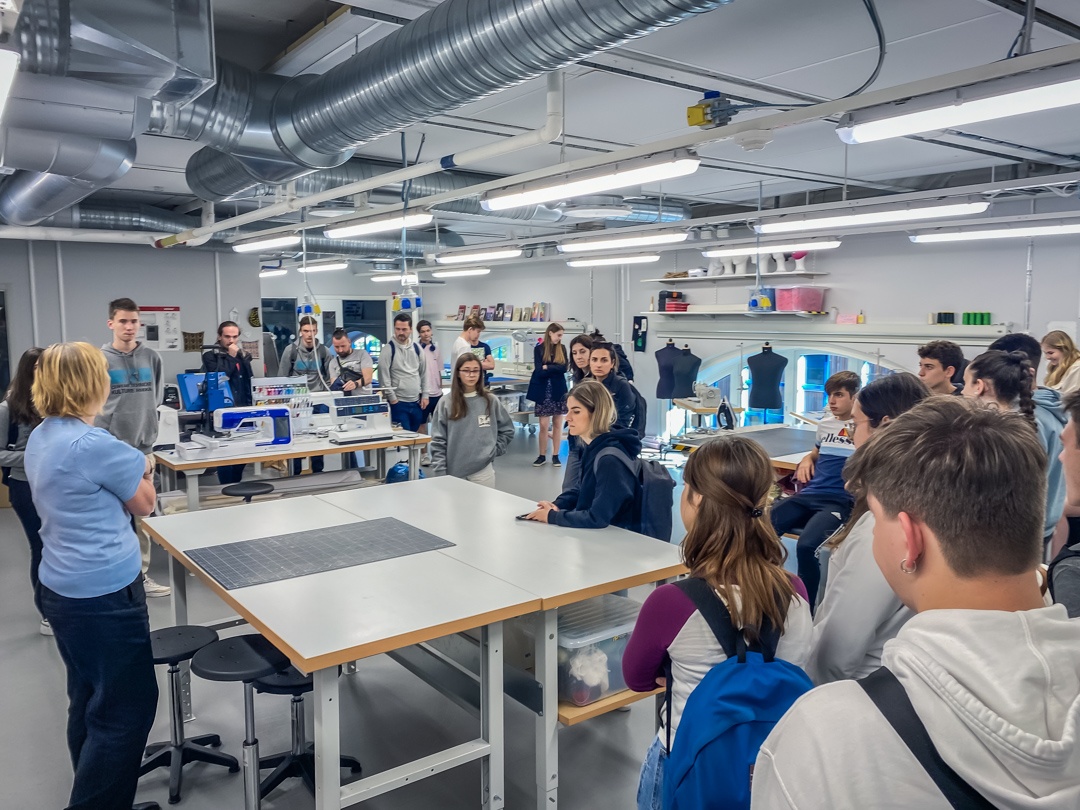
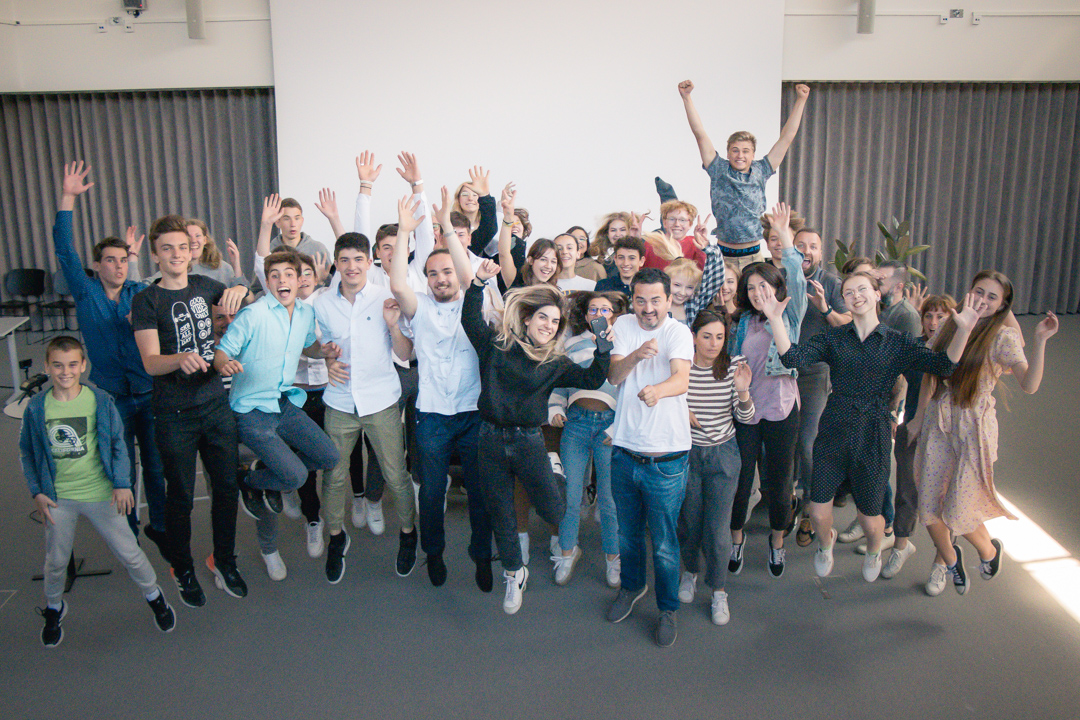
Mind over Matter methodology was piloted in schools of the partner consortium countries among more than 500 students. Of those 500, almost 90 percent had no interest in the STEM field before the implementation of the project. Primary school students participated in the piloting, as well as their teachers who also attended multiplier events at the Center of technical culture Rijeka in order to learn how to use the Mind over Matter methodology independently. All the teachers that participated in the piloting phase also received their own deck of Mind over Matter playing cards so that even after the end of the project, they could continue to use this fun way of learning about sustainability and inclusion.
We distinguished the above-mentioned two approaches as follows: STEM is a scientific field, and by inserting art and creativity (that is, the "A" in STEM), the emphasis is placed on the learning process and its creativity.
Mind over Matter methodology was piloted in schools of the partner consortium countries among more than 500 students. Of those 500, almost 90 percent had no interest in the STEM field before the implementation of the project. Primary school students participated in the piloting, as well as their teachers who also attended multiplier events at the Center of technical culture Rijeka in order to learn how to use the Mind over Matter methodology independently. All the teachers that participated in the piloting phase also received their own deck of Mind over Matter playing cards so that even after the end of the project, they could continue to use this fun way of learning about sustainability and inclusion.
How Citizens benefit
Mind over Matter initiative identifies and exploits the opportunities inherent in STEAM educational activities that inspire young people to follow STEM pathways through education and professional careers, with their interdisciplinary integration with art and creativity. By learning and problem-solving, young people become more aware of how they can be active citizens, leaders of change and participants in solving problems on local, national and global levels. By contributing to raising this generation of young people who will one day take on full responsibilities for the communities they live in and the world they inhabit and pursue STEM careers which are globally seen as careers of the future, the initiative indirectly affects the global community and all citizens of the world who will ultimately benefit from being led by such aspiring, progressive future leaders.
Physical or other transformations
It refers to other types of transformations (soft investment)
Innovative character
As a part of Mind over Matter initiative, a new, innovative methodology has been developed that conveys knowledge about sustainability to younger generations in an open, fun way. The methodology is adapted for use in the formal education system, but its implementation offers students a completely new approach to learning. Through activities that emphasize creative thinking when finding answers, as opposed to those that strictly follow the scientific structure to the answer, Mind over Matter methodology tries to demonstrate to young people how the STEM scientific field implies expressing creativity, exploring the unknown and having an open mind. Through the initiative, we wanted to emphasize the importance of STEAM approach in the education of young people, an approach which will break prejudices against science and technical subjects and increase the number of young people who continue further education in STEM fields. We believe that this is a crucial moment that will result in an increase in the interest of young people in choosing a STEM career. The new methodology is based on an interactive environment in which young people must use skills from different domains to solve a given problem in an innovative way with the help of a mentor who will not offer traditionally prescribed solutions.
Disciplines/knowledge reflected
All organizations participating in the initiative are relevant in STEAM and share the same outlooks, but they differ in the way they cover fields of STEAM education, use learning methodologies and work with target groups. Furthermore, they are members of different European networks or have different connections on those levels with relevant stakeholders. By partnering up in such a way, we ensured that results would be developed by the means of experimenting with teaching methodologies, testing them, sharing know-how and experiences in working with young people in the field of STEAM. Each of the partner organizations brought a fresh perspective and experience to the table, thus adding layers to the initiative, increasing its quality and facilitating the observance of the issue from different angles.
The greatest value of the initiative – the innovative methodology that encourages exploration of different disciplines, areas and types of knowledge – enables the user to see how disciplines that may seem rigidly set apart, different and even opposite, are connected and mutually dependant, thus shifting the user's perspective of the enclosedness of STEM field. Once such a mindset is developed, there is no end in creativity, as witnessed by innovative and imaginative results created on workshops, pilot classes and Maekathons within the initiative.
The greatest value of the initiative – the innovative methodology that encourages exploration of different disciplines, areas and types of knowledge – enables the user to see how disciplines that may seem rigidly set apart, different and even opposite, are connected and mutually dependant, thus shifting the user's perspective of the enclosedness of STEM field. Once such a mindset is developed, there is no end in creativity, as witnessed by innovative and imaginative results created on workshops, pilot classes and Maekathons within the initiative.
Methodology used
Through the Mind over Matter initiative, we wanted to emphasize the importance of the STEAM approach in the education of young people, which will break prejudices against science and technical subjects and increase the number of young people who continue further education in STEM fields. Therefore, experts from partner organizations of the Mind over Matter project have developed an innovative methodology that is more focused on the solution, thus increasing the confidence of young people to continue exploring the STEM field.
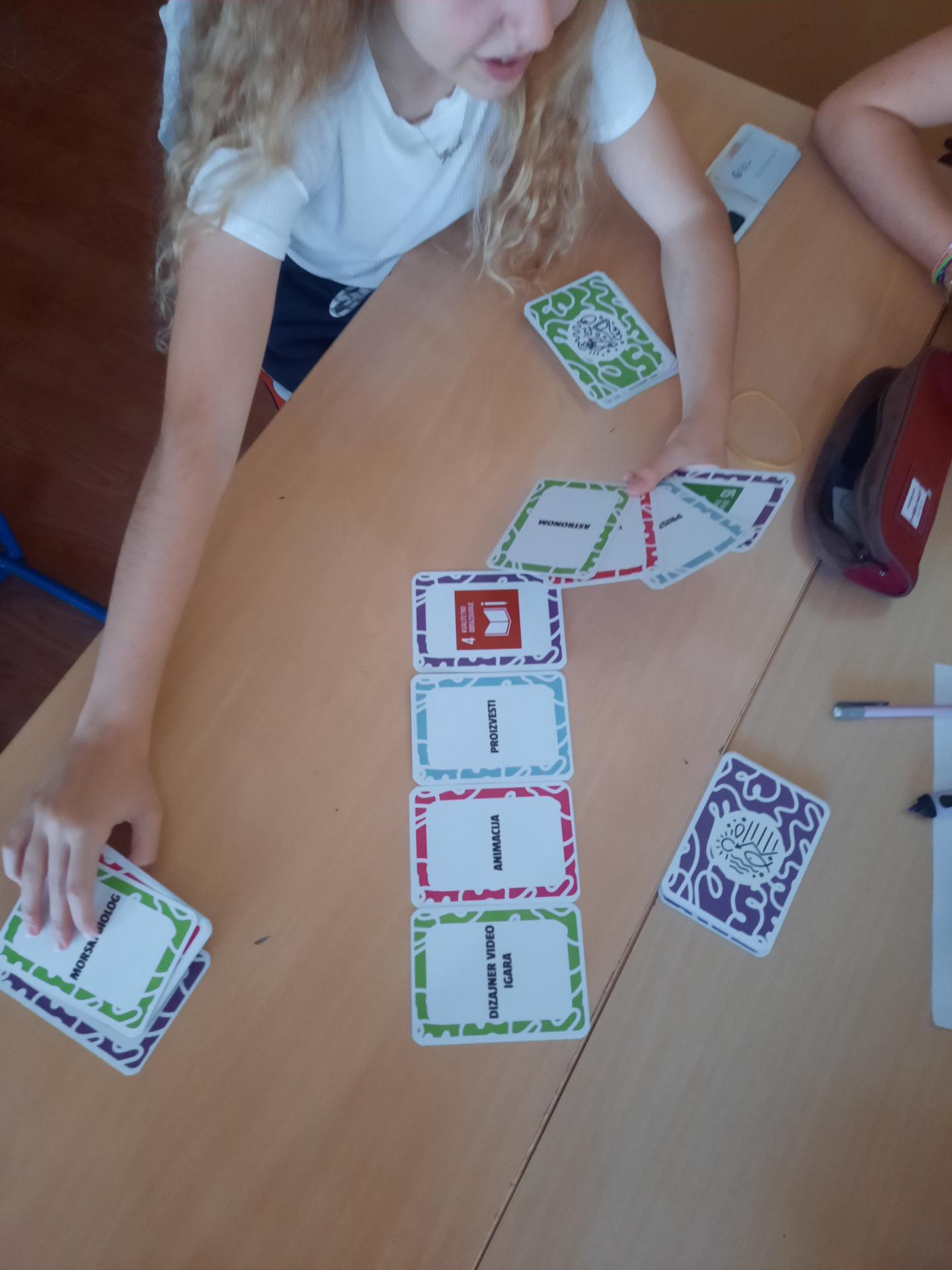
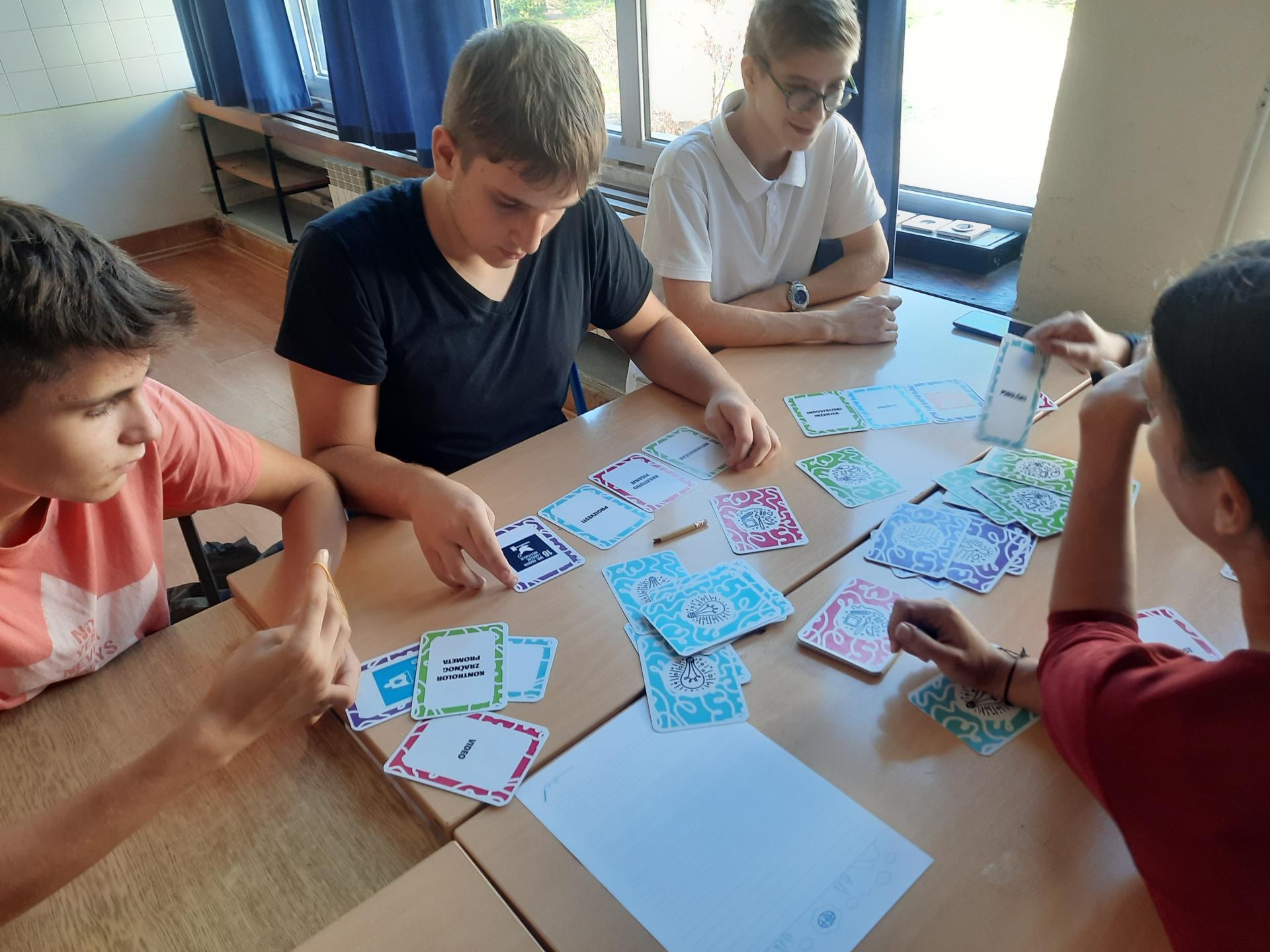
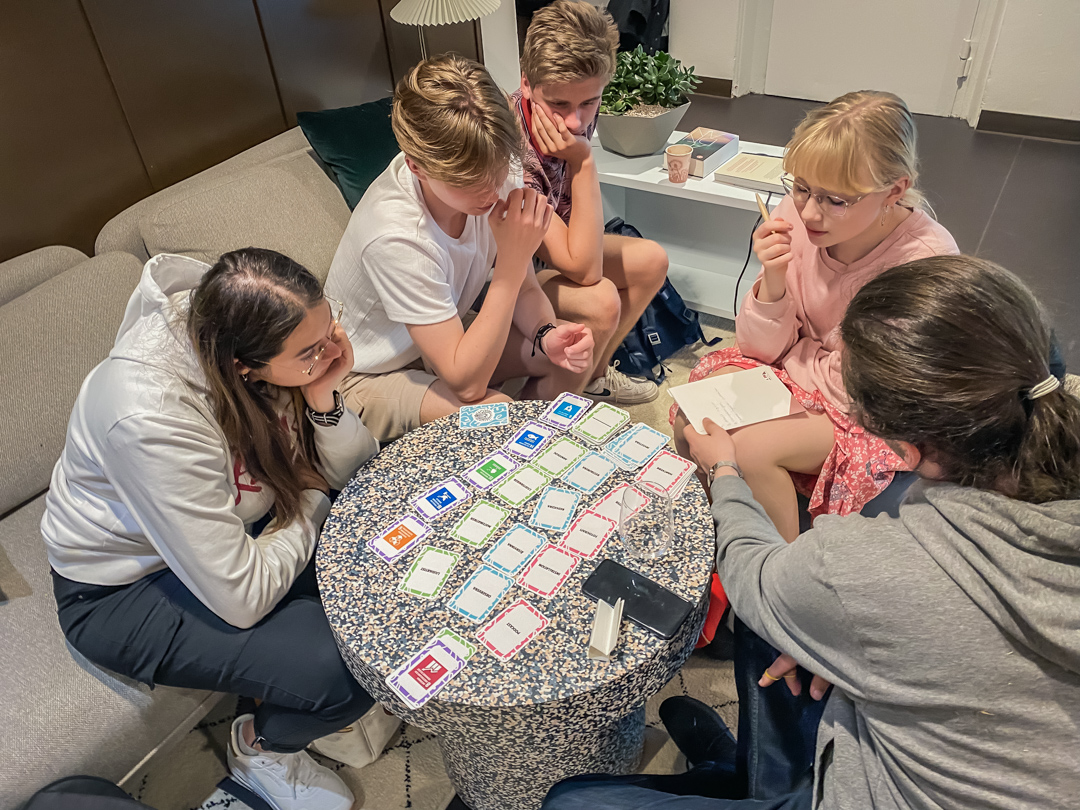
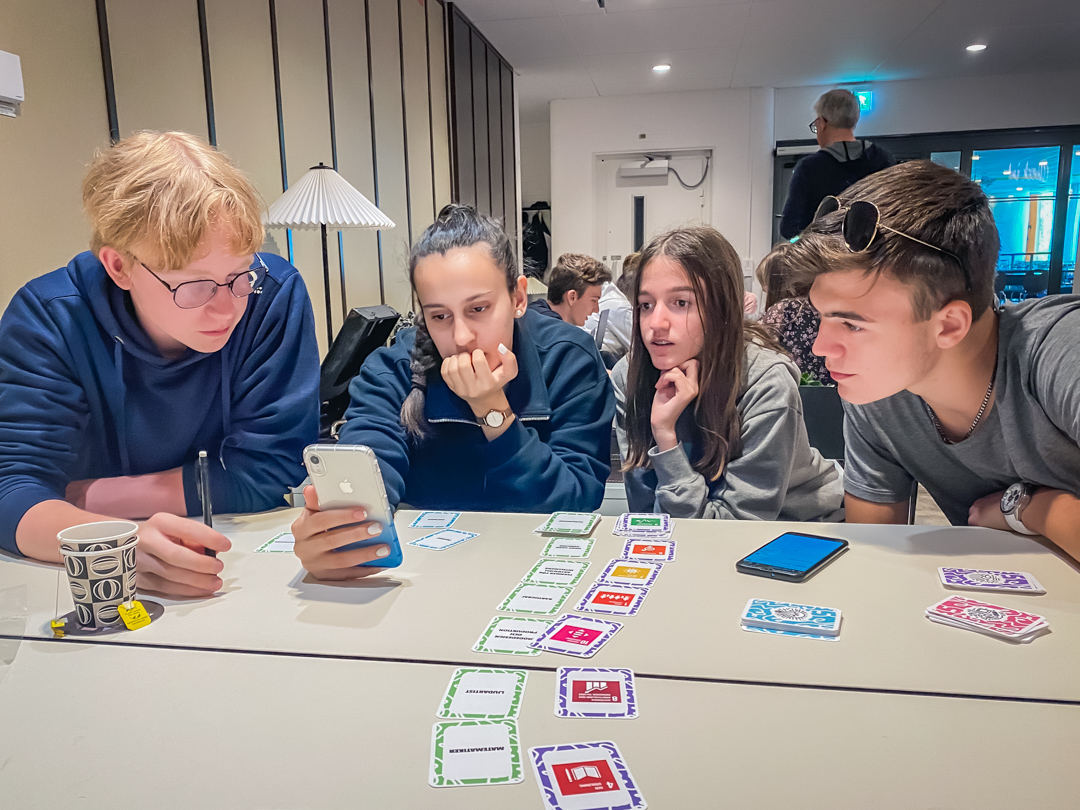
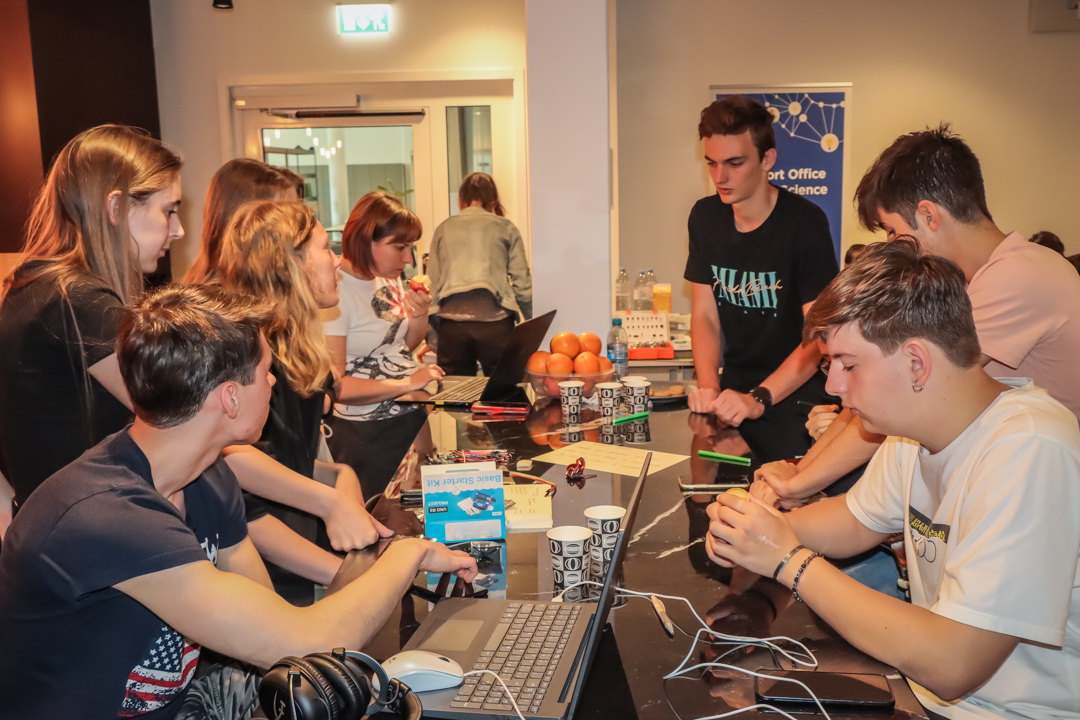
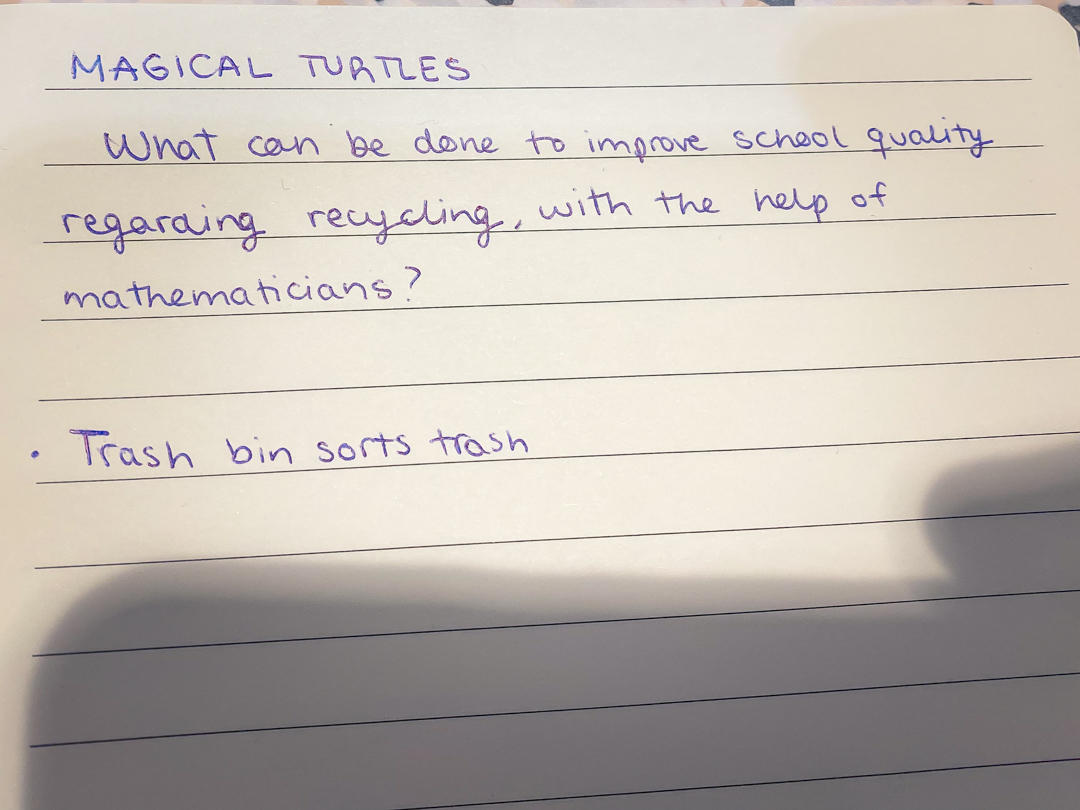
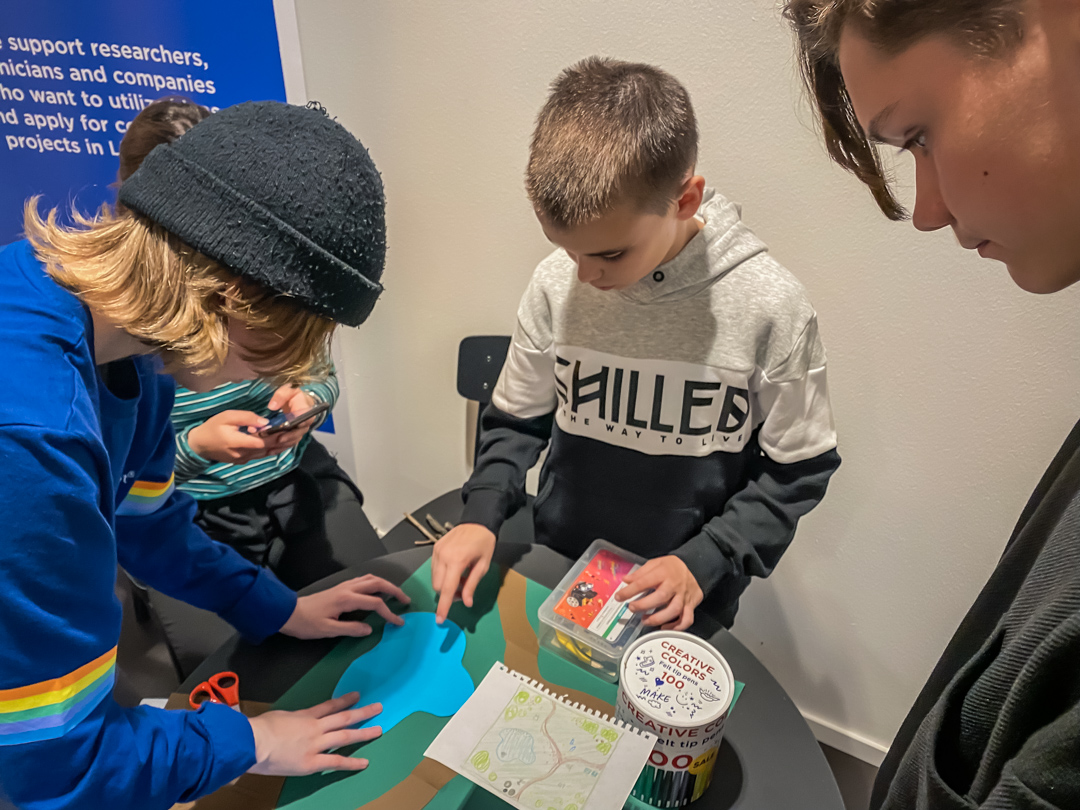
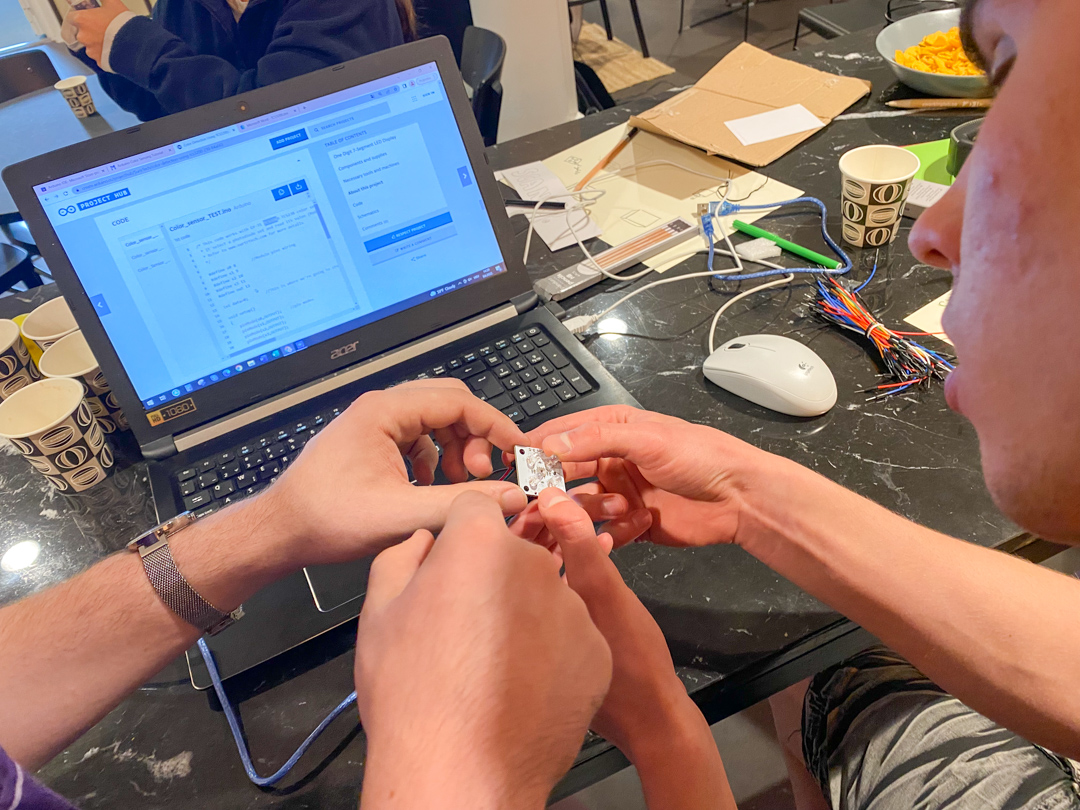
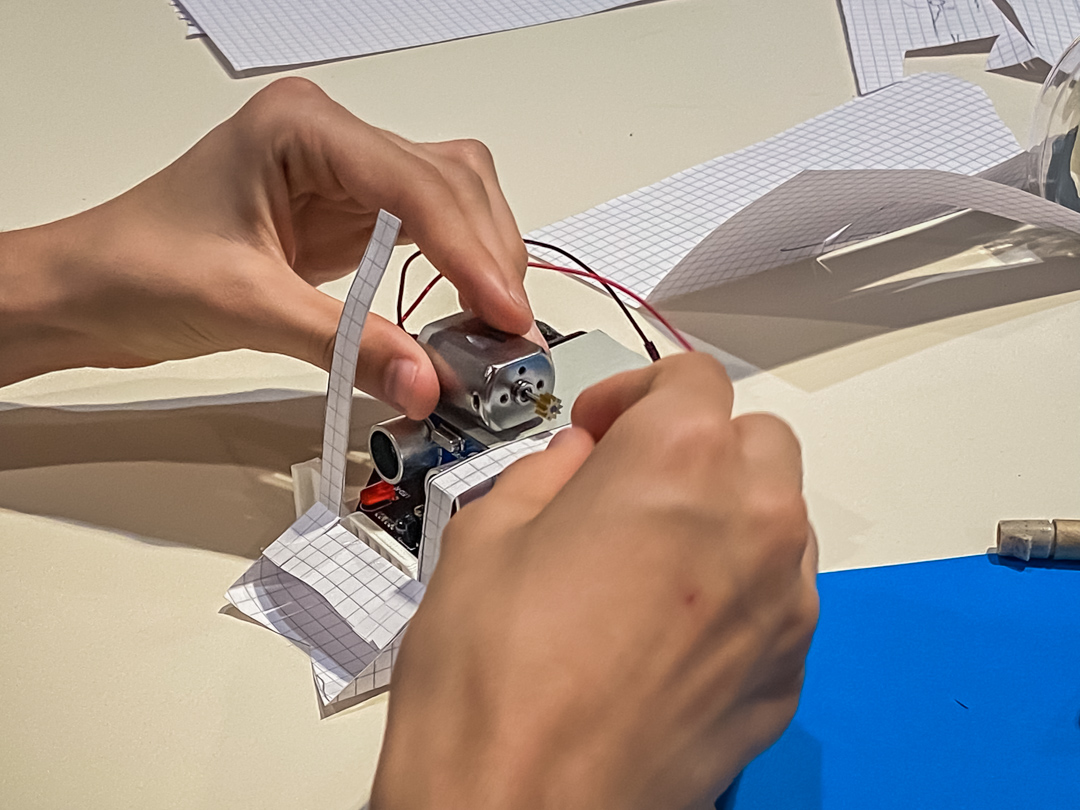
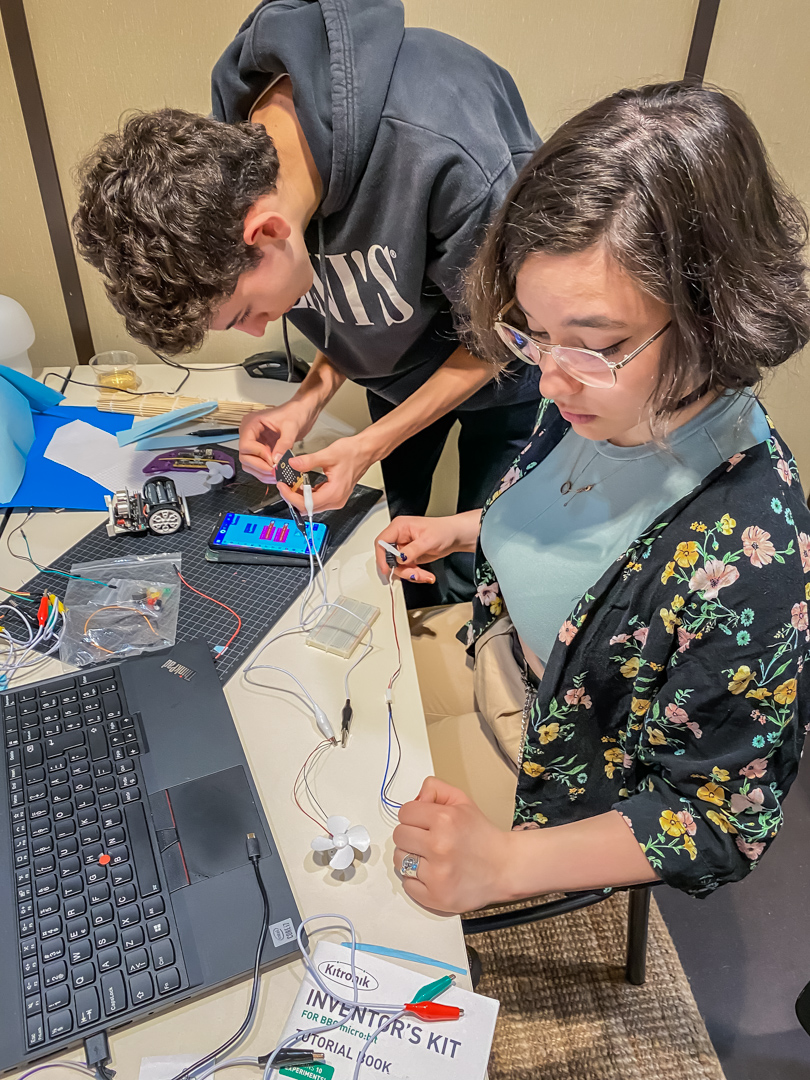
The methodology is based on an interactive environment in which young people must use skills from different domains to solve a given problem in an innovative way with the help of a mentor who does not offer traditionally prescribed solutions and is implemented through a card game. There are four categorized decks of cards: Art, UN’s Sustainable Development Goals, Concepts and STEAM occupations and the game can be carried out in one, two or three phases, depending on the available time. Working in teams, participants use the combination of four cards they have randomly picked from the decks (one card from each deck) to form a problem question that integrates concepts from all cards (example of a problem questions: How can a food technician encourage sustainable food through art). Based on the formed question, the workshop can continue in three versions: short (posing the question – brainstorming – presenting the solution to others), medium (posing the question – brainstorming – development of the prototype – presenting the solution) and extended (posing the question – brainstorming – prototype development – iteration – presentation). All of this can play out in face-to-face workshops or online and the participants create a prototype solution with materials available to them in their schools or homes.
The methodology is based on an interactive environment in which young people must use skills from different domains to solve a given problem in an innovative way with the help of a mentor who does not offer traditionally prescribed solutions and is implemented through a card game. There are four categorized decks of cards: Art, UN’s Sustainable Development Goals, Concepts and STEAM occupations and the game can be carried out in one, two or three phases, depending on the available time. Working in teams, participants use the combination of four cards they have randomly picked from the decks (one card from each deck) to form a problem question that integrates concepts from all cards (example of a problem questions: How can a food technician encourage sustainable food through art). Based on the formed question, the workshop can continue in three versions: short (posing the question – brainstorming – presenting the solution to others), medium (posing the question – brainstorming – development of the prototype – presenting the solution) and extended (posing the question – brainstorming – prototype development – iteration – presentation). All of this can play out in face-to-face workshops or online and the participants create a prototype solution with materials available to them in their schools or homes.
How stakeholders are engaged
From the very beginning of development of the initiative special attention was paid to include partners that can see the issue that was to be tackled from different angles and perspectives: partner organizations excel in technology and innovation, combining art and science, work with children and young people, etc. The issue was one recognized on a European level, as witnessed through several studies funded by the European Commission – the reputation of STEM as a difficult, not very attractive career that can only be pursued by individuals extremely interested and advanced in technological and scientific fields. Role models from STEM and STEAM companies were engaged as “ambassadors” of the field, providing information about career and education pathways that demystify scientific and technical careers and help increase students’ confidence in pursuing them. Young people enrolled in STEM education and STEM careers were also engaged so that they can participate in creation of the methodology, co-design the pilots and serve as “agents of change” among young people by sharing their experiences and serve as role models and mentors.
Partners also reached relevant stakeholders on local, regional, national and EU level in order to make a developed methodology a standard, and not an exception. The methodology was also shared with experts from the educational sector for the duration of the project, encouraging them to include it in their regular educational activities. By making recommendations about the methodology, its testing and the results of evaluations by external experts, we tried to influence decision-makers in the field of education and youth in such a way that they recognize the innovative STEAM methodology as an example of good practice and include it in their recommendations, plans and strategies.
Partners also reached relevant stakeholders on local, regional, national and EU level in order to make a developed methodology a standard, and not an exception. The methodology was also shared with experts from the educational sector for the duration of the project, encouraging them to include it in their regular educational activities. By making recommendations about the methodology, its testing and the results of evaluations by external experts, we tried to influence decision-makers in the field of education and youth in such a way that they recognize the innovative STEAM methodology as an example of good practice and include it in their recommendations, plans and strategies.
Global challenges
The Mind over Matter initiative and its innovative methodology find their core in thematization of the UN’s Sustainable Development Goals, which address the global challenges that the world of today faces, including poverty, inequality, climate change, environmental degradation, peace and justice. Through action on a local and global level, reaching these goals are a means to achieve a better and more sustainable future. By introducing these notions to young people who may not be aware of them, and placing them in a position of agents of change who can, through their projects, join in solving some of the world’s problems, the initiative contributes to reaching these goals. UN SDG’s are, in the initiative, placed in correlation to STEM careers, the innovative careers of the future, and art, the constant source of inspiration and creativity. By applying the methodology through the card game and the development of problem questions and their solutions, students find direct solutions to today's global challenges and learn to think about the sustainability of the world around them. Although their solutions do not necessarily offer an immediate solution to problems on a global scale, they teach them that, to achieve a global change, it is important to start from within themselves and from actions in their local communities.
Learning transferred to other parties
Outputs developed as part of the Mind over Matter initiative have a great transferability potential. The methodology can be applied in almost all formal and non-formal teaching circumstances and its guidelines and scale-up are available on the initiative’s website. It is easy to use, therefore teachers do not need to have a long preparation for its implementation but can easily include it in their daily teaching. In addition to teachers in schools, the methodology is available to all other youth workers who can include its interesting implementation in different ways in a variety of activities with young people. Piloting activities that have been implemented are also available online, as models for anyone who may need some inspiration on how to implement these educational activities.
We would also like to proudly point out that, due to its quality and innovative approach, Mind over Matter Erasmus+ project was recognized by Croatia’s National Agency as an example of good practice at the national level and rated with a maximum of 100 points. It was also proposed as an example of good practice at the European level, and we are currently waiting for European Commission’s decision on that matter. Given these great news, the story about Mind over Matter will surely spread beyond the borders of Croatia and enable the transferability of this methodology around the Europe.
We would also like to proudly point out that, due to its quality and innovative approach, Mind over Matter Erasmus+ project was recognized by Croatia’s National Agency as an example of good practice at the national level and rated with a maximum of 100 points. It was also proposed as an example of good practice at the European level, and we are currently waiting for European Commission’s decision on that matter. Given these great news, the story about Mind over Matter will surely spread beyond the borders of Croatia and enable the transferability of this methodology around the Europe.