Digital Gardening
Basic information
Project Title
Full project title
Category
Project Description
Green suburban residential areas should contribute with more effort to sustainability in the future:
This can be achieved by supporting urban gardening with digital technology.
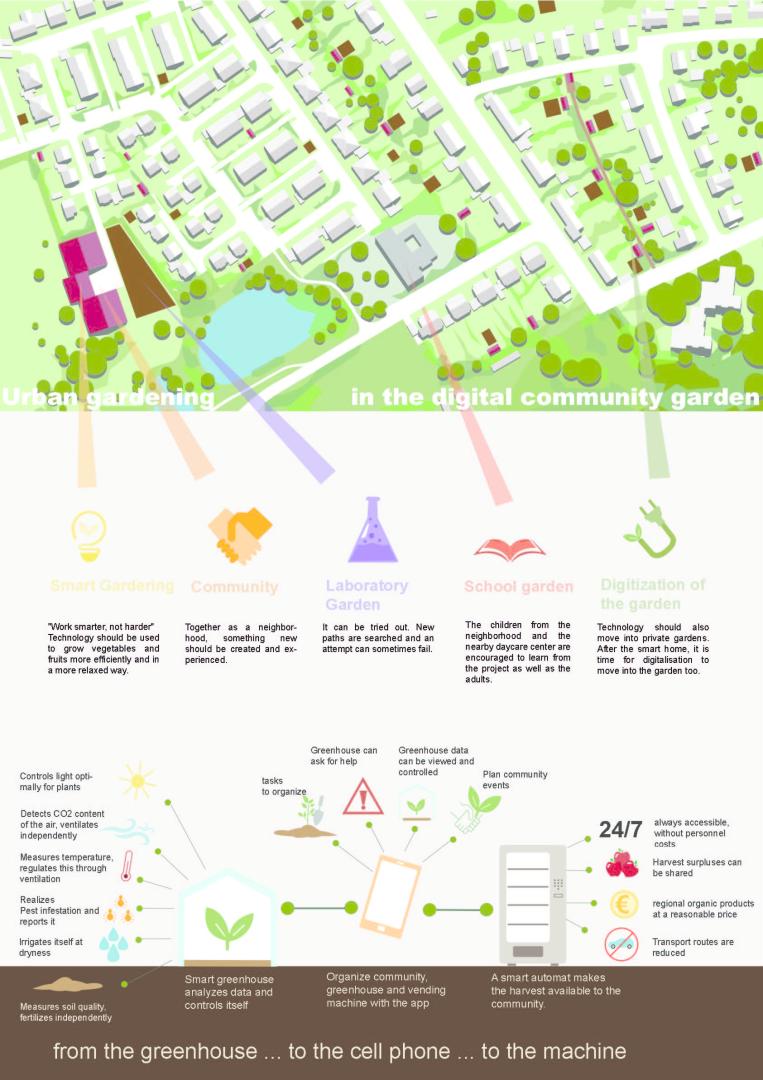
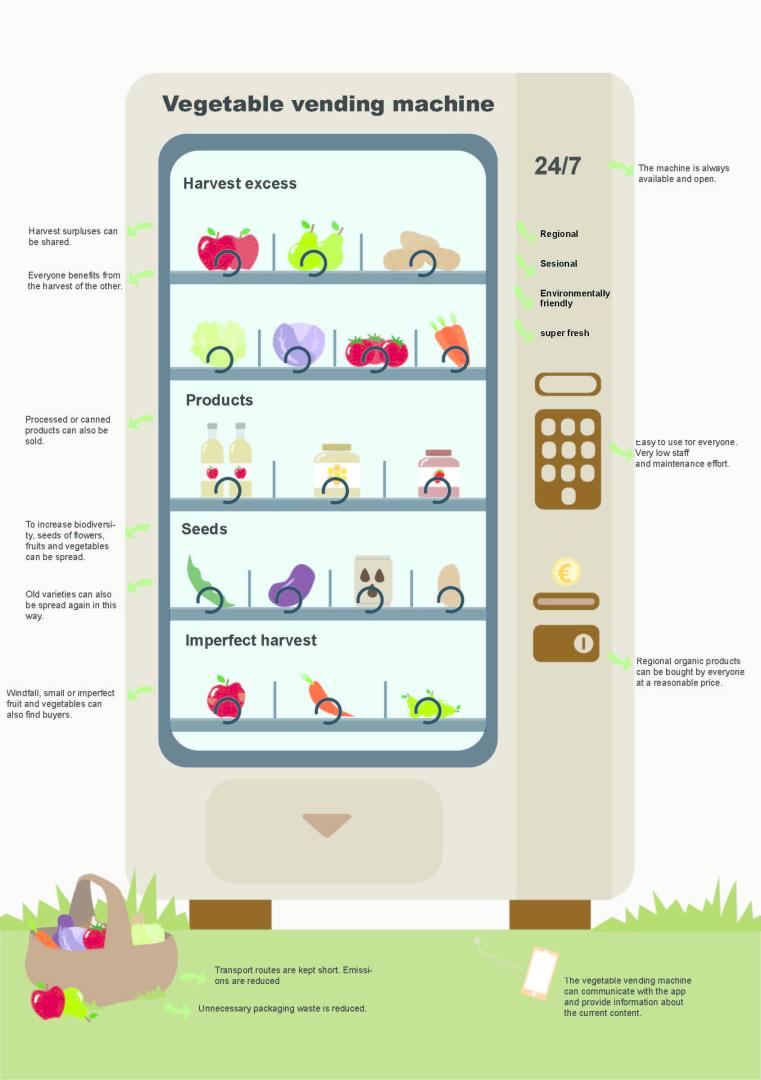
Digital community greenhouses can be a starting point for communication, learning and harvesting. The digitisation of green spaces is transferred into the private gardens, where a smart phone app helps with watering, disease prevention and other know how. The harvest can then be locally distributed by vending machines.
Project Region
EU Programme or fund
Description of the project
Summary
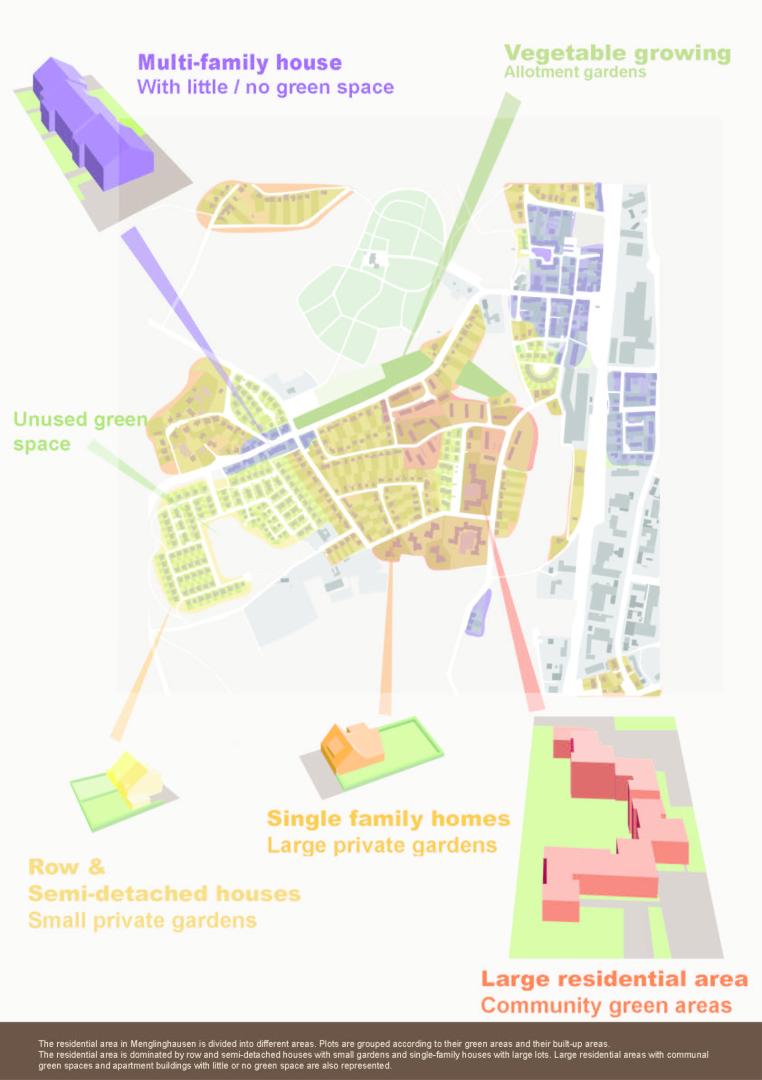
In the relatively well-off Dortmund suburb of Hombruch, our concept is to reactivate unused lawns and convert them into cultivation areas with the help of technology. Modern technology is intended to revolutionise the self-growing of vegetables and fruits. The self-sufficiency from one's own garden, which was typical a hundred years ago in workers' settlements, is to be updated for our current era. Technical achievements such as artificial intelligence are intended to reduce the workload and maximise profitability. A digital community greenhouse, which regulates itself, should help to achieve new technical achievements and to distribute applied knowledge about modern urban cultivation into private gardens. Vegetable vending machines should enable the exchange and distribution of harvest yields from private gardens and the greenhouse among the neighbourhood and thus make the local organic products available to everyone.
Key objectives for sustainability
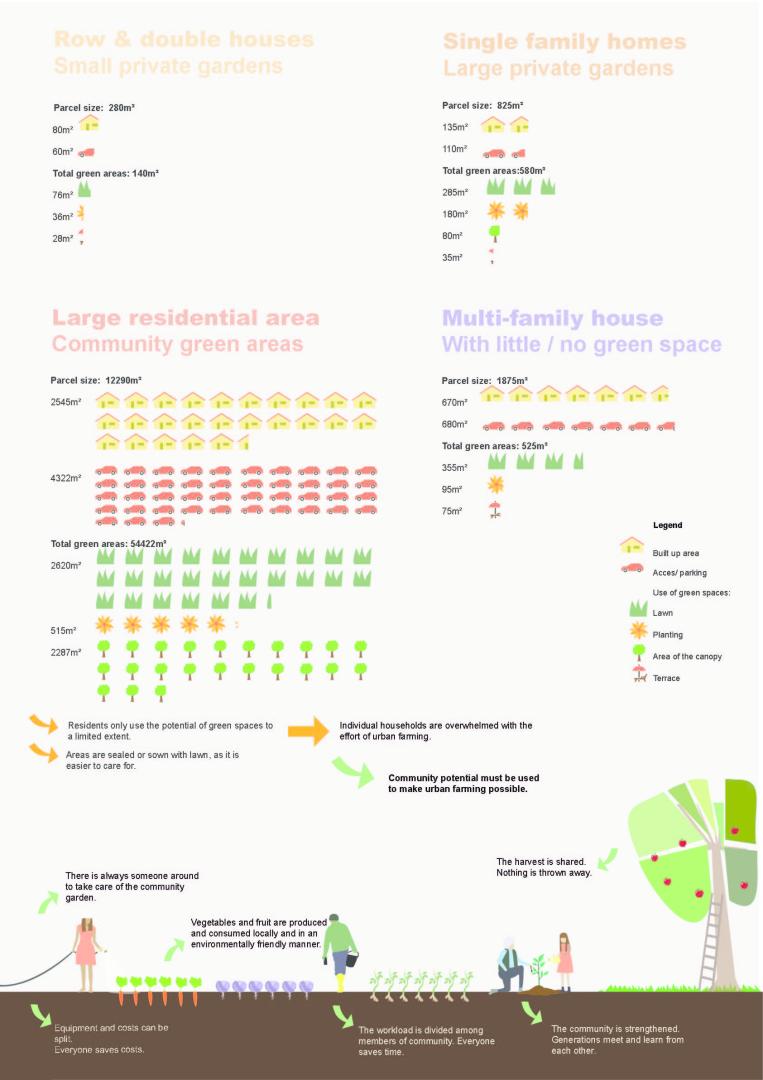
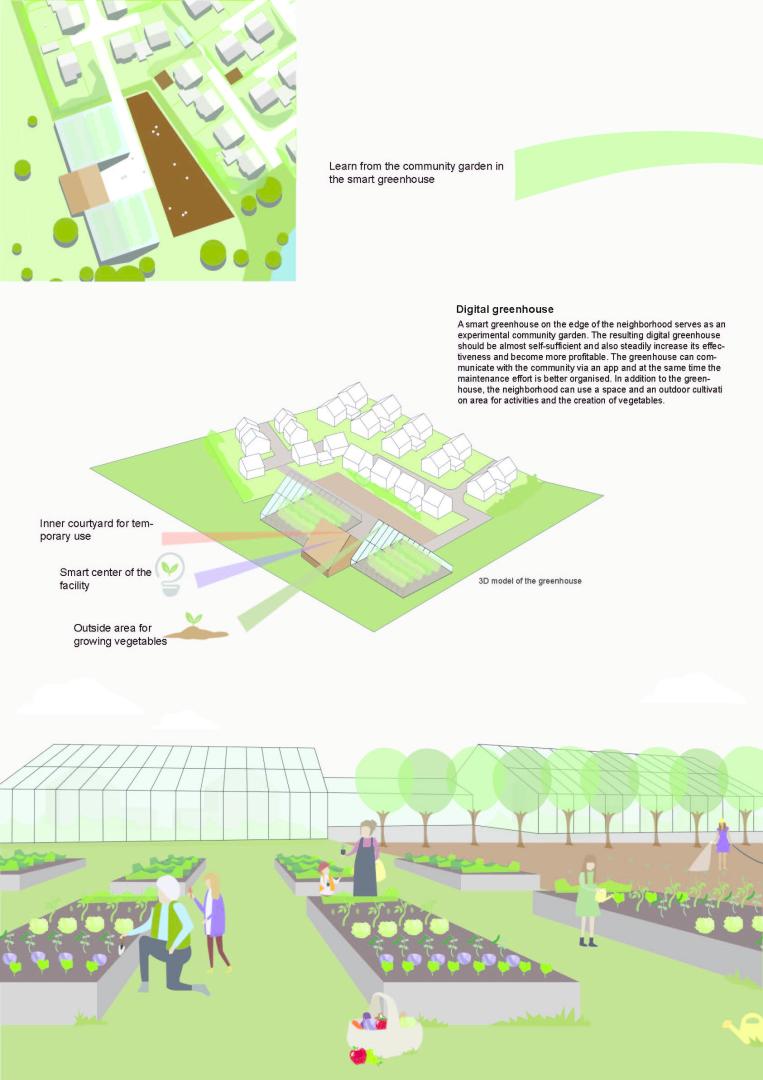
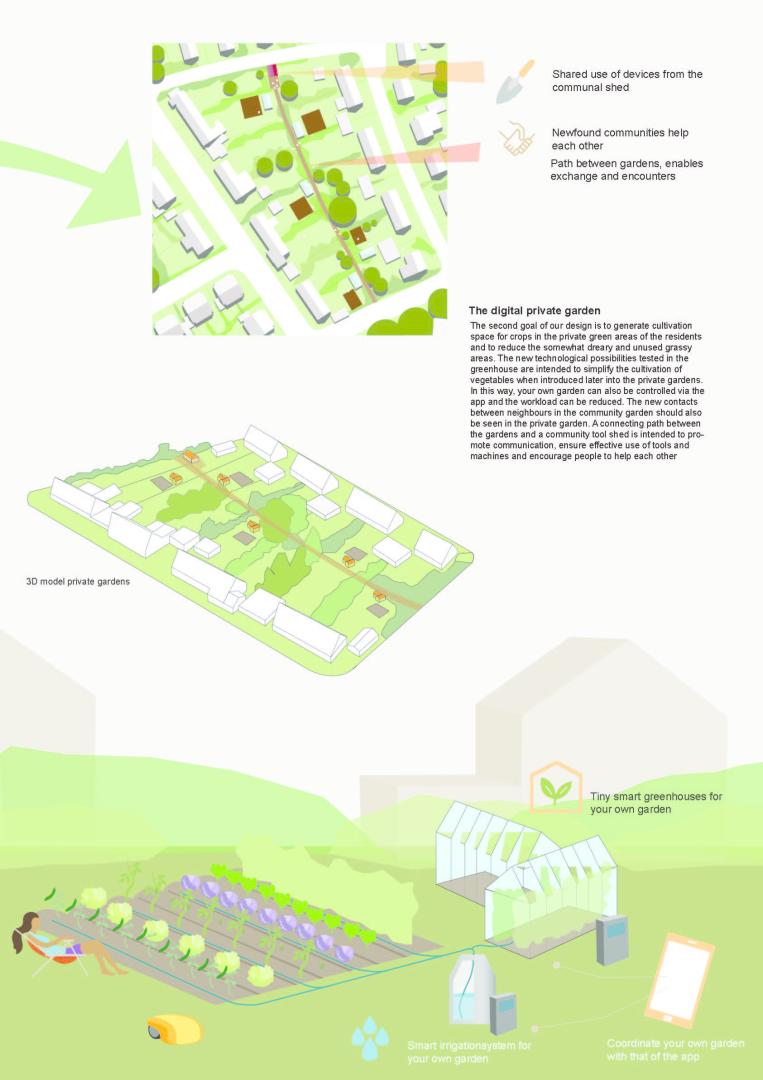
The basic idea of the project “digital gardening” is to use existing green spaces in order to better exploit their existing potential. Lawns are to be converted into vegetable and fruit growing areas. The model for this is the use of gardens as a self-sufficient allotment comes from our ancestral predecessors, who a hundred years ago where required to grow their own food. Growing fruits and vegetables yourself not only has financial benefits, but is also environmentally beneficial. With the help of new technology, growing vegetables should be more productive and less labour intensive. A smart greenhouse on the edge of the neighbourhood serves as an experimental community garden. The resulting digital greenhouse should be almost self-sufficient and also steadily increase its effectiveness and become more profitable. The greenhouse can communicate with the community via an app and at the same time the maintenance effort can be better organised. In addition to the greenhouse, the neighbourhood can use this space and an outdoor cultivation area for other activities, the creation of vegetable beds and temporary projects. The second goal of our design is to generate cultivation space for crops in the private green areas of the residents and to reduce the somewhat dreary and unused grassy areas. The new technological possibilities tested in the greenhouse are intended to simplify the cultivation of vegetables when introduced later into the private gardens. In this way, your own garden can also be controlled via the app and the workload can be reduced. The new contacts between neighbours in the community garden should also be seen in the private garden. A connecting path between the gardens and a community tool shed is intended to promote communication, ensure effective use of tools and machines and encourage people to help each other.
Key objectives for aesthetics and quality
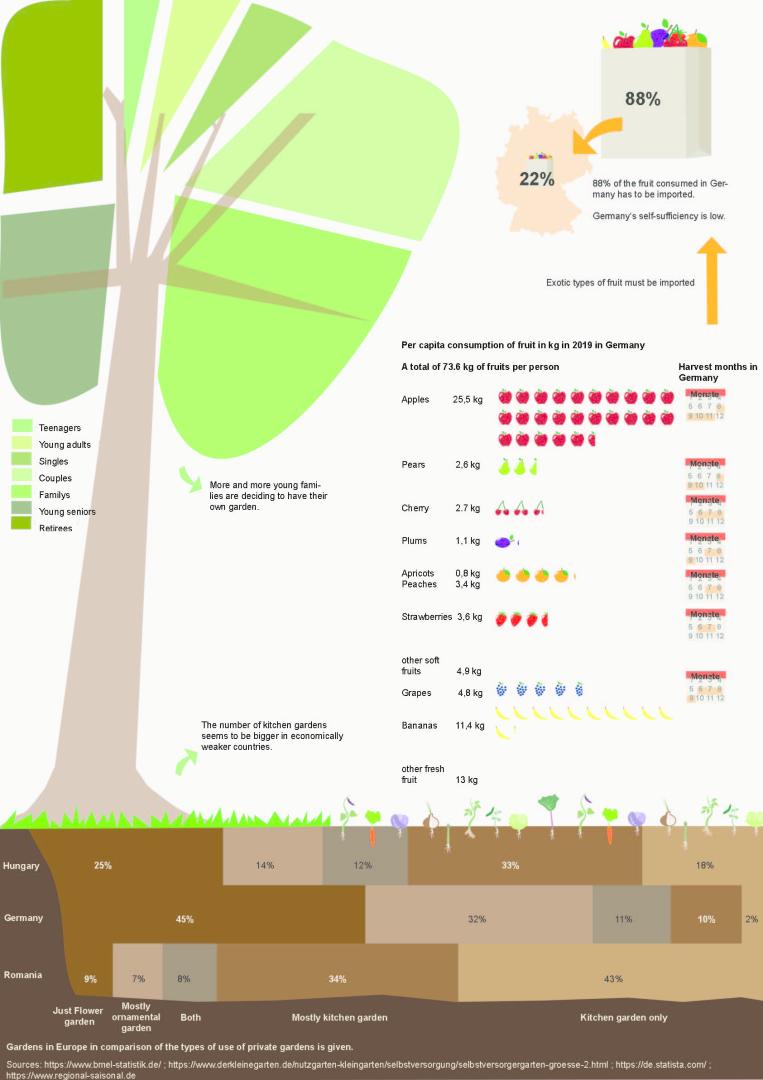
The project is intended to bring biodiversity and nature back into the underused private gardens of local residents and to beautify the district by making greater use of the existing soils potential. Cultivated fruits, vegetables, but also flowers, can enhance the area, which at the moment is mainly dominated by mowed lawns or even gravel front gardens. Additionally, bringing back the experience of growing vegetables and fruits yourself and harvesting and consuming fruits and vegetables from your own garden or the community greenhouse should benefit society more broadly. In particular, children and school groups can learn how to grow their own Food and, above all, have fun with their own garden. The concept of community plays an important role in our approach. It creates an opportunity for neighbourhoods to do and create something together. Knowledge transfer between different generations should be encouraged so that everyone can benefit from each other’s knowledge and learning. Instead of living next to each other in isolation, an enhanced neighbourhood community should emerge from the project.
Key objectives for inclusion
Inclusivity is very important in our project. We are convinced that everyone can contribute something to the project or can benefit from our project. Whether old, young, physically or mentally impaired, everyone can bring their skills to a suitable point in our project and help others with their expertise. Whether the participant is a young student who can help design the app or an elderly lady who shares her experiences and recipes, every participant in the community can get involved. The greenhouse should be built barrier-free so that everyone can access and work. Raised beds and barrier-free transplanting tables reduce obstacles to getting involved. The community is open to everyone and gives everyone an insight into their successes and research. In addition, everyone can benefit from the shared harvests in the vegetable vending machine and thus experience the fruits of each other’s labour.
Innovative character
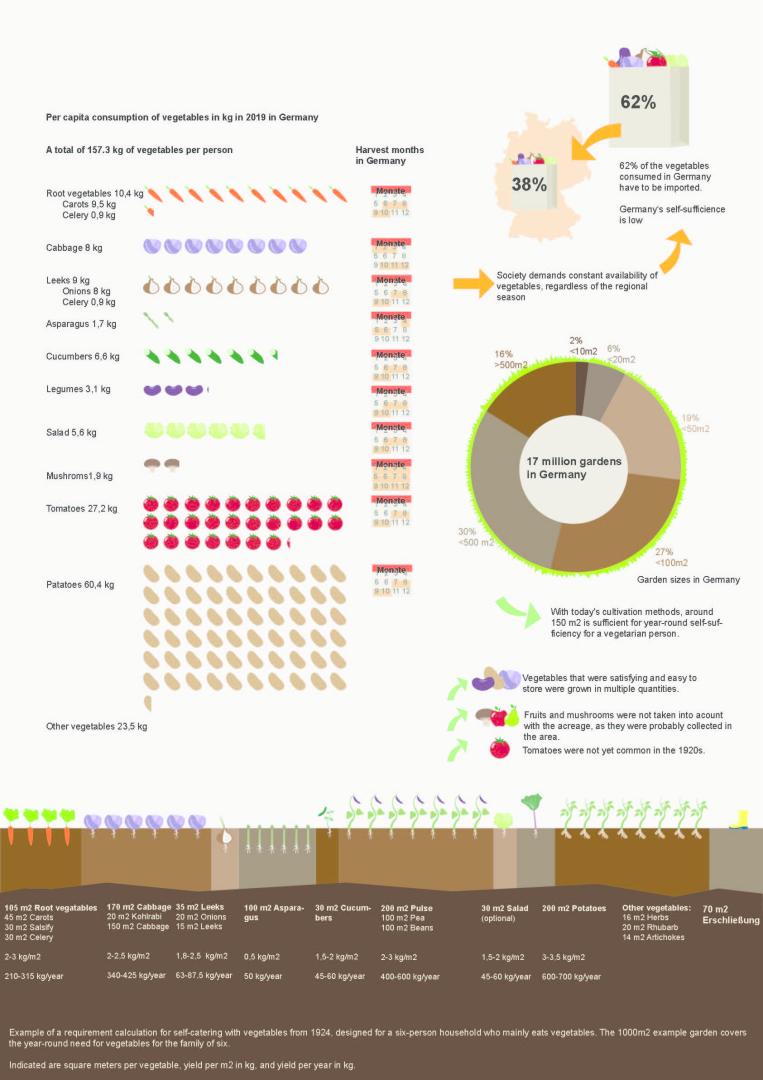
At the beginning of our project, we looked at a typical working-class family from the Ruhr area living a hundred years ago and how they used their own fertile soil to feed themselves. When we looked at the current status of the local gardens and discovered that most of the fertile soils are unfortunately covered by lawns and that Vegetable Gardens are slowly disappearing. We believe that the use of your own garden should not only be rediscovered, but also further developed. Thanks to modern understanding, and technology, your own garden can be used even more efficiently than our grandparents did back then. Modern Artificial Intelligence can increase productivity by collecting and evaluating data. Sensors can be used to react quickly to current conditions and work can be reduced for the participants. The greenhouse can use an app to pass on current information to everyone involved, but it can also be controlled from home using a smartphone. Ideal or perfect harvesting times can be calculated and recorded. Tasks or community events can also be organised much better using the app. Concepts like SmartHome have been around for a long time and they are gradually becoming more popular, it is time that this type of technology also moves into our gardens.