Building a Build School
Basic information
Project Title
Full project title
Category
Project Description
Everyone can learn to build - and perhaps everyone should.
With Europe facing a housing crisis, set against a climate emergency, BUILD SCHOOL set out to empower people with the skills, knowledge and community needed to take on sustainable building projects.
Designed to demystify the basics and hands-on workshops putting new skills to instant use, the courses doubled people’s confidence to take on their own projects and went on to spur the development of a new social enterprise.
Geographical Scope
Project Region
Urban or rural issues
Physical or other transformations
EU Programme or fund
Description of the project
Summary
Like elsewhere in Europe, Ireland is experiencing a housing crisis that is taking a toll on the security and wellbeing of Irish people. Construction costs are rising at their fastest pace in 17 years, house prices are rising by 13% annually and ‘generation rent’ is stuck at home with their parents or in an inflated rental market. Meanwhile, against the backdrop of the climate emergency, Ireland is also now on a legally-binding path to reach net-zero emissions by 2050.
Having worked in construction and design, we have seen the role our homes play in the foundation of a decent and sustainable life. But with less of us than ever able to rent, buy or build a place to live - let alone feel confident in our ability to create a home that can be built or lived in a sustainable way - we saw a gap to address.
We started our ‘Build School’ project with the basic belief that anyone can learn to build, and the realisation that teaching people to build could not only help them address their basic need for shelter in a sustainable and affordable way, but also to move on to address their higher level needs.
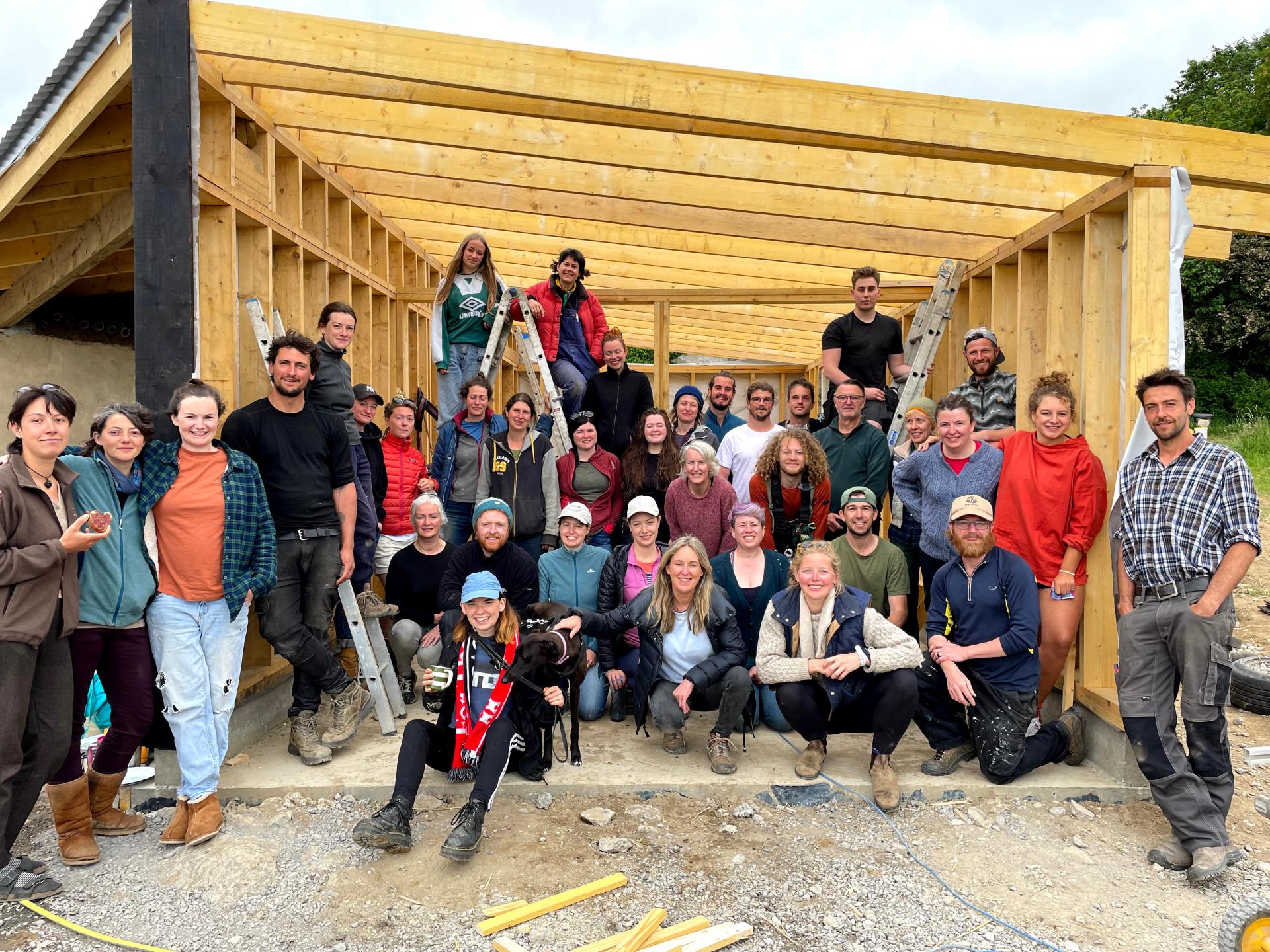
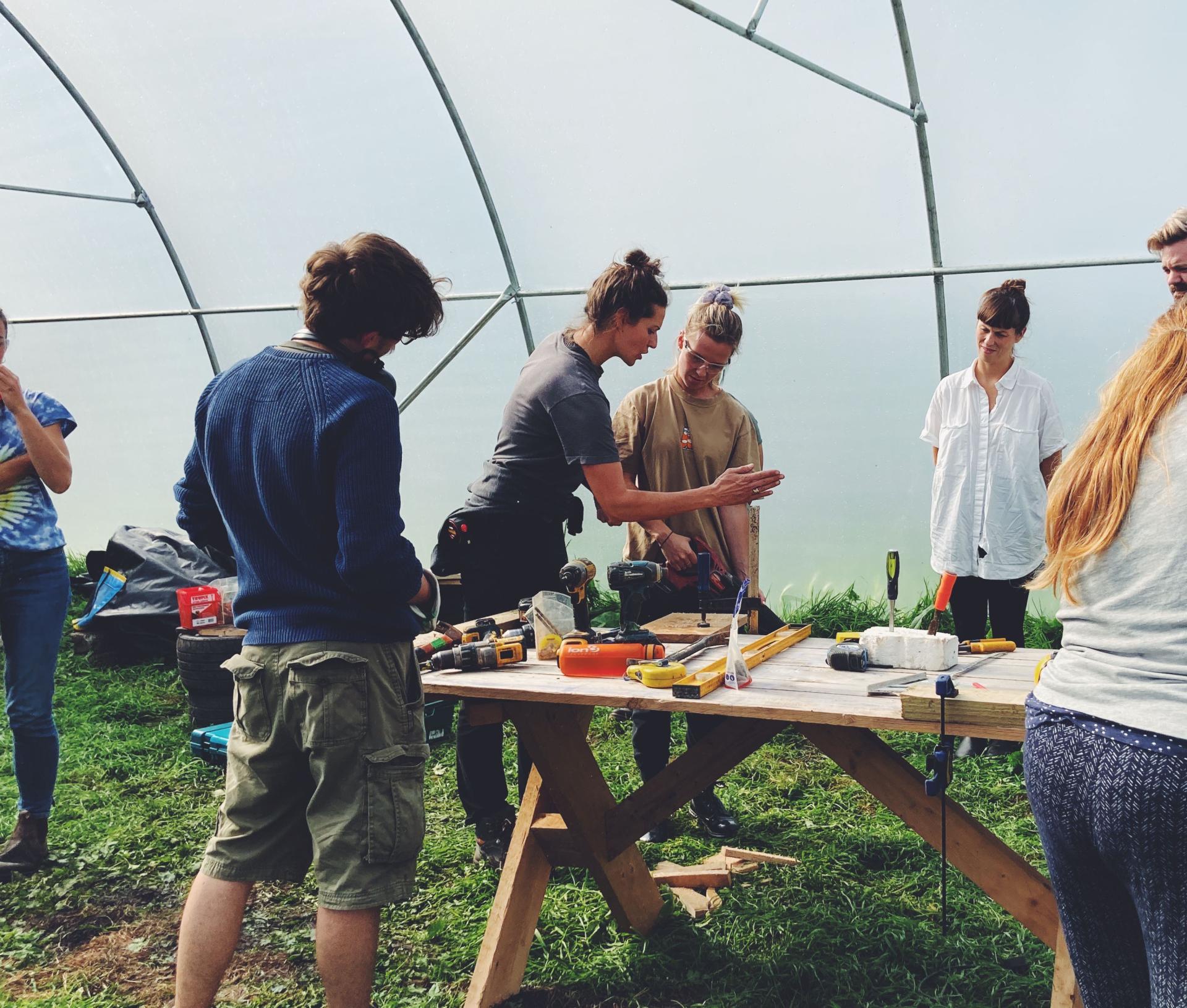
To test the concept, we set out to run a series of prototype workshops, with the first workshop just six people sitting around a kitchen table. We have now taught over 200 people as part of our 5 day Build School courses, with our last group also building a new education centre for a local reforestation-oriented social enterprise, HomeTree.
We have run the course 9 times, evolving from participant contributions each time. Our curriculum now includes solar energy harvesting, repurposing waste materials and alternative options for waste water treatment. Our instruction style has benefitted from regular reviews with our instructors, and an emphasis on a highly empathic, gentle teaching culture.
Whilst this prototyping stage of the project is complete, Build School will now be scaled through a new social enterprise, Common Knowledge.
Key objectives for sustainability
For most of us, our homes could be the greatest financial, emotional and time investment we will ever make. The way we create and live in them is a significant determinant of our ability to live a sustainable life. Build School fosters sustainability this in three ways:
1. Empowering people with a sustainability mindset and skills
We know from research in Ireland that people are already aware of the need to live more sustainably, but lack the mindset and skills to do so. We equip and empower people with the skills, experience and knowledge they need to address their basic needs for shelter in a sustainable way. The example this sets is that to empower sustainable change, we need to empower an individual and collective sense of agency.
2. Encouraging a zero-waste and circular approach
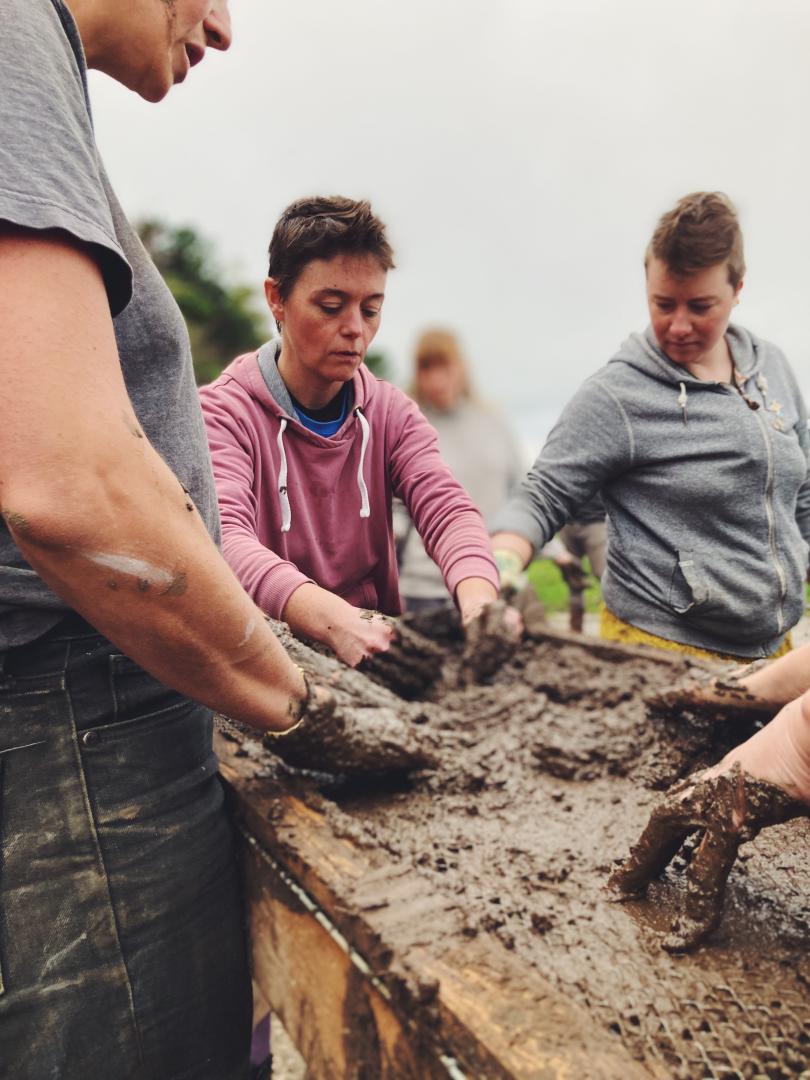
Build School teaches the importance and function of a circular economy on a global level yet focuses on how we can bring these principles into our home and daily lives. We bring the simple truths of personal waste, energy usage and material choices to life by applying it to people’s home environment. We also share skills for the use of waste products, including reclaimed building materials, discarded glass bottles and sheep’s wool. This is exemplary in terms of applying sustainability to people’s real daily lives.
3. Equipping people to repair
By teaching the skills necessary to mend and repair our homes and the items within them, we are reducing the consumption of new items. By learning the skills they will need to make and mend their own homes they are becoming truly sustainable home owners. This shows how to reduce consumption, we need to promote skills.
At Build School, we propose that sustainability is not the ultimate ambition, but the minimum level of consideration needed now when creating a new home. Ultimately, we have seeded a vision for a world that is regenerative and abundant - where our homes and lives don’t just minmise harm, but give back to p
Key objectives for aesthetics and quality
In creating Build School, we have placed a significant emphasis on the experience, believing that how you engage people is as important as what you are engaging them with. The following areas were particularly important:
1. A new contemporary aesthetic for building
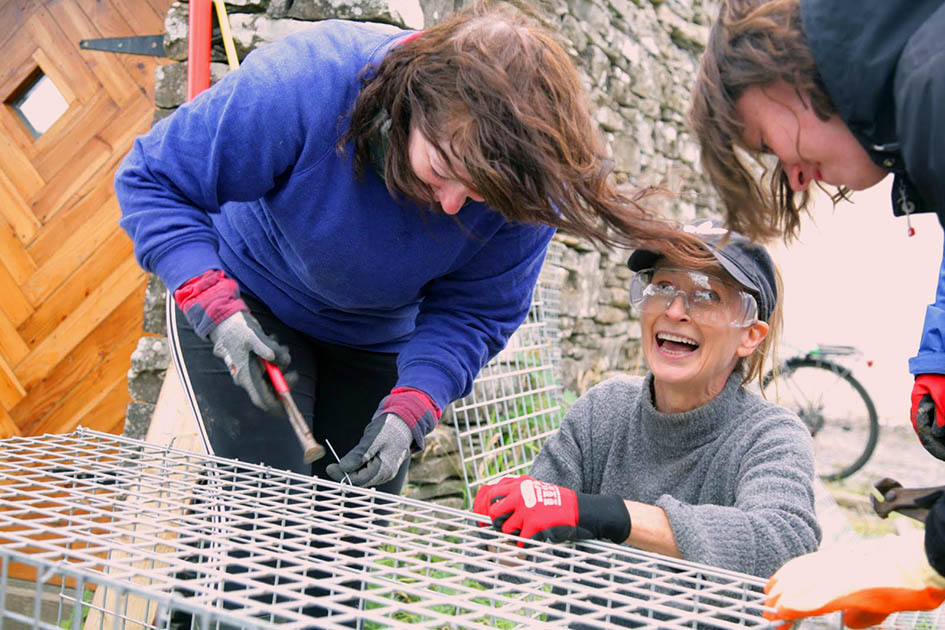
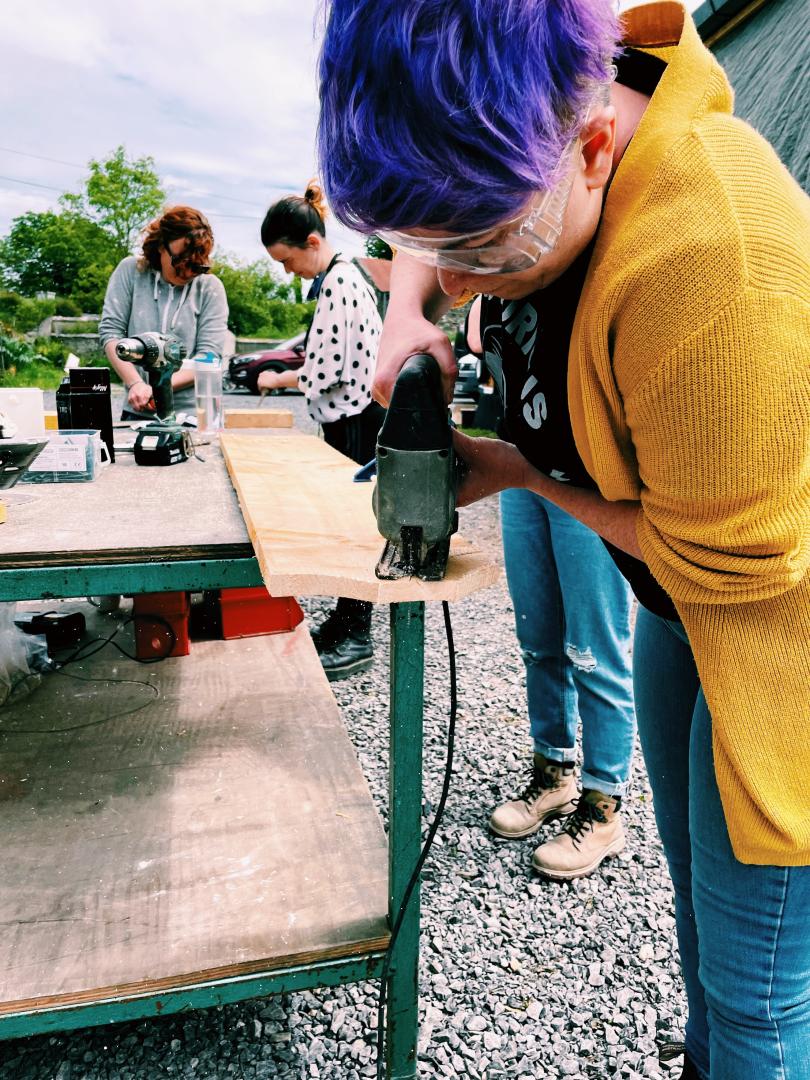
The construction and DIY world traditionally uses bold, primary visuals and masculine language. To engage people who feel like building is ‘not for them’, we needed to orient the aesthetic of our communications both in terms of visuals and language to be welcoming, soft, questioning, simple and open. We used warm, friendly photography that shows diverse groups having enjoyable and sociable learning moments. With more than 55% of participants now female, it is an exemplary case study of aesthethic appeal.
2. A hands-on and empowering experiential learning approach
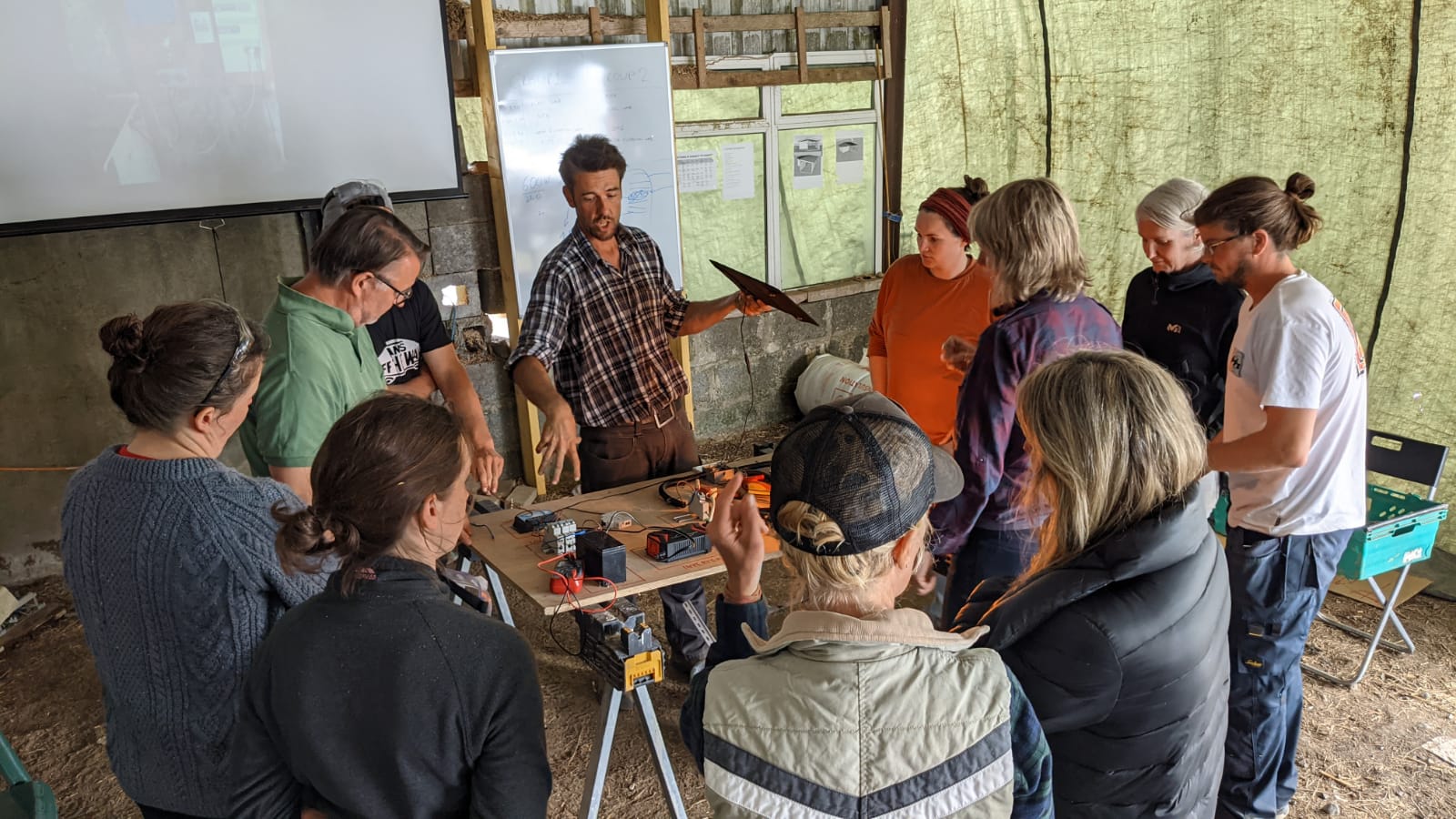
The aesthetic of skill sharing is a central aspect of Build School. We selected our instructors for their ability to relate to and support others before their technical expertise. We empowered people to enter the conversation about the design, form and future functions of their home in a way that is warm, inclusive, informal and engaging. By blending classroom and hands on sessions, we engage different learning styles. This style of engagement is exemplary is helping people to feel trusted, included and empowered.
3. Building reframed as a culturally-rich and communal experience
Using our own previous experience in hospitality and events, we developed Build School with particular care to the cultural and communal experience. We eat nutritious, consciously-sourced food communally. Our shared camp kitchen facilities and campfire encourage a sense of belonging. Our outdoor shower and toilet facilities connect people to nature. For many, it is their first experience of using highly sustainable compost toilets. More than just an experiential novelty, these dimensions helps people to see sustainable culture in action.
Key objectives for inclusion
From it’s very outset, inclusion has been at the core of how we have designed and delivered Build School. We invite anyone who has ever felt excluded from the housing or building conversation to engage with us. This has manifested in the following ways:
1. Creating equal opportunity and wider participation in the housing market
With so many people now excluded from the opportunity to purchase an average-price house in Ireland, let alone to refurbish a property they may already own, Build School has offered an alternative pathway to securing affordable housing. We have received feedback from our participants that the Build Schools is a very reasonable cost for the value it offers, as they can often have a significant multiplier saving on their house purchase or construction costs. This demonstrates how communities can address social issues together.
2. Including people previously excluded from these hands-on skills
In Europe, 97% of builders are men (Eurostat), a strong indicator of how segregated building skills are. By extending the conversation beyond solely it’s traditional base, we have ensured our courses have at least 55% women participants, and 15% LGBT+/queer participants. Anecdotally, they have told us of their experience of growing up feeling that these skills were either withheld by educational or family structures, or inaccessible in terms of how they are transmitted. This is exemplary of how to address stereotypes and extend access.
3. Including people facing economic barriers to participation in the course
We are conscious that despite the relative value of our course in terms of savings that can be achieved through the newly acquired skills, the cost of participation can act as a barrier for many. For each course we offered one person the course free of charge, according to their circumstance. Our hope is that this would help to ensure no-one is left behind. This shows how a community can lift others up with them. a
Results in relation to category
The following results demonstrate how Build School is helping to regain a sense of belonging:
We have rekindled belief that people can belong in Ireland
Whilst many Irish people are feeling alienated by the housing crisis, our research shows that Build School participants double their self-confidence to create a home in Ireland. For example, Jonny Horn, who was unable to save enough to renovate a derelict cottage as he was still paying rent for the family home. After attending Build School Jonny built an affordable cabin on the land beside the cottage, using savings from rent to renovate the cottage as their forever home.
We have created a place for communal and intergenerational exchange
Now having engaged more than 200 students, we have seen the satisfaction and purpose that is derived from learning how to solve social and personal issues together. Build School provides a site for discussion and building a sense of collective agency. We have engaged a diverse group of participants from all over the country with participants ranging from 16 to 70.
We are promoting traditional culture whilst advocating for regenerative approaches
We are passionate about transmitting traditional knowledge, know-how and skills, though it will take time for this to manifest in build projects. We demonstrate that there are many alternative materials that can be grown rather than mined and extracted from the earth - for example, mycellium or sheep’s wool in place of rockwool or insulation, timber instead of concrete structure. Through a sustained emphasis on the use of regenerative materials that we will help to shape future attitudes towards these materials.
It has formed the basis for a new social enterprise
Based on the model developed through the Build School prototyping project, we have formed a new social enterprise that aims to empower people with the skill, resources and community for an affordable, sustainable home.
How Citizens benefit
We co-designed BUILD SCHOOL with an international group
We worked with a group of contributors and instructors from Italy, France, England and Ireland. Together, we have created the learning programmes and culture of BUILD SCHOOL, enriching with a multitude of perspectives and cultures.
We engaged with local social enterprise
We have invited other social enterprises to submit proposals to our programme and have used those opportunities to host BUILD SCHOOL on the land of these social enterprises and leave useful community buildings behind. We run co-design sessions with these social enterprises to bring them into the design process from the outset and work with them to design a building that suits their specific needs. We always offer a free place on the course to a member of their team so that they are involved during the build, are aware of how their structure is built and have the skills and knowledge to carry out further work in the future.
We engaged with more than 200 participants
Over three years of prototyping BUILD SCHOOL, more than 200 students participated in the course. A key aspect of the process was asking people to input through research and feedback about the programme. This feedback guided us in understanding where we were succeeding and where we were falling short in our own efforts of inclusion and relevancy in an ever changing world. The feedback of the courses has shaped our lesson plans, our timings and teaching formats and our teacher to students ratios.
Ultimately, we hope that their engagement Build School will lead to more people having sustainable and affordable housing, and have a lasting impact that links with European Green Deal ambitions around renovated, energy efficient buildings, healthy and affordable food, and reduced consumption.
Physical or other transformations
Innovative character
Focus on learning through problem-related storytelling
In any problem solving environment the culture and setting is as integral to the transfer of knowledge as the content we are trying to teach. We put significant focus on the design of our content to make it appealing for participants, and on drawing out personal experiences to make participation more interesting, relatable and engaging.
Use of an empowering, hands-on learning approach
With the experience of teaching hundreds of participants to date, our team has developed a unique and powerful approach to empowering participants. This hands-on learning approach will allow participants to put their new knowledge to practice right away, accommodating multiple learning styles. Participants leave Build School with a sense of achievement, whether from creating a new idea or practising skills with their community.
The digital community
Unlike many construction-related projects we are digital natives and use social media to keep the conversation going outside the courses themselves. All participants from the Build School prototype project automatically have access an online community of people who are interested in learning, skill sharing and working on collaborative projects. Now operated by Common Knowledge for continuity, ‘The Commonage’ is a forum where people and communities can connect with each other and take part in future community events and activities. There participants can further their interests, learning about R&D projects Common Knowledge is working on and having an opportunity to share ideas / get involved in further R&D projects.
Learning transferred to other parties
BUILD SCHOOL has potential to tap into the collective spirit and existing strengths of European communities.
The curriculum of the Build School is largely contained in a book that we have published called ‘Build Your Own’. It is our dream that others would use this to create Build Schools all over Europe.
As a result of the Build School, Harrison was also invited to contribute to a TV show on national television called ‘Build Your Own’ that will further a mainstream conversation on this topic.
Our experience with running Build School led at the end of the prototyping phase to the establishment of a new non-profit social enterprise Common Knowledge, in partnership with a former Build School student who has experience in public engagement, project management, development and innovation. Together we hope to use the Build School model already developed to reach even more students, and are persuing funding opportunities that will might help us to extend its impact to an even more inclusive group.
As part of this, we are seeking funding to create a BUILD SCHOOL toolkit that would be made available as an open access resource for people to take the principles of BUILD SCHOOL and bring them into their own communities. We hope that participants from our programme could comprise some of the teaching staff on these courses and that they could take place all over Europe.