MALVA
Basic information
Project Title
Full project title
Category
Project Region
EU Programme or fund
Description of the project
Summary
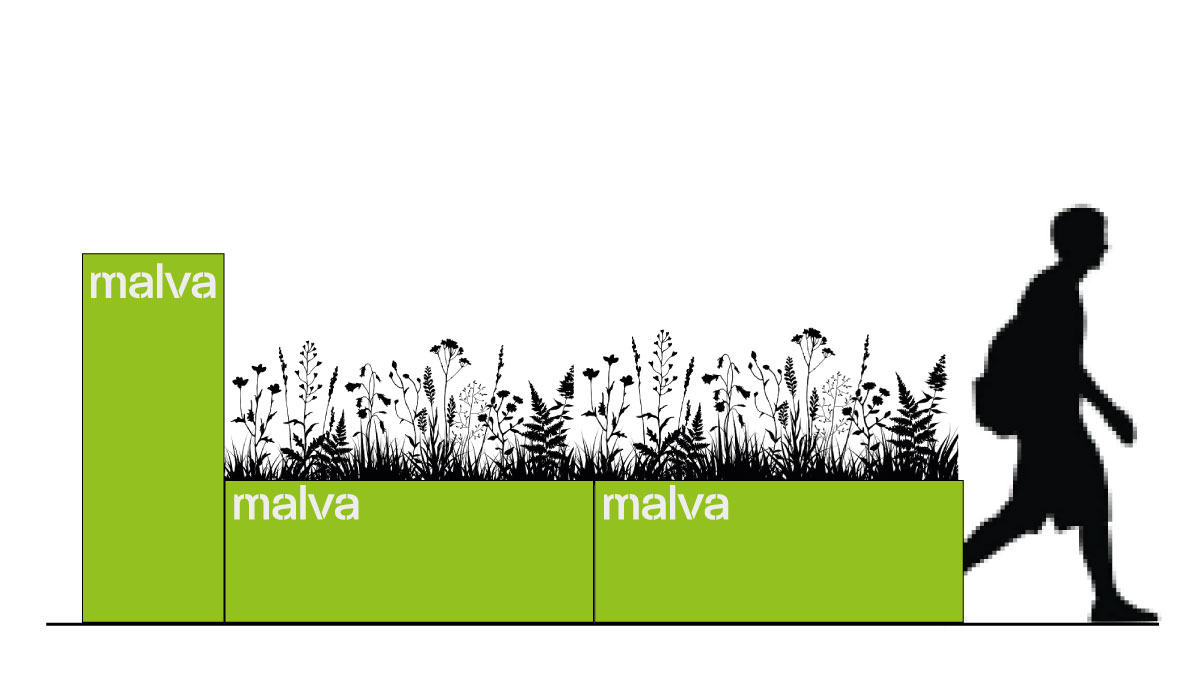
Modular planter system built with materials reclaimed from decommissioned school desks to be installed in various configurations in public and communal spaces in urban settings such as plazas, schoolyards, yards and playgrounds. In the planter will be planted an array of wild flowers and shrubs to be selected as part of the project from the regional flora.
One of the aims of the concept is to provide city dwellers with an accessible example of the rich biodiversity that surrounds our cities and to showcase the potential uses of wild plants, many of which have high ornamental value, in urban greening and other ecological initiatives.
By growing a large variety of flowering plants selected to flower in complementary seasons, the planters will represent viable microhabitats to support pollinators as crucial elements of our ecosystem that usually struggle in cities.
The project is meant to engage the public in a practical way by encouraging to harvest seeds from the plants in the planter and sowing them in other places. The goal is the propagation of useful plant species while promoting good stewardship of biodiversity within a community, especially in youth.
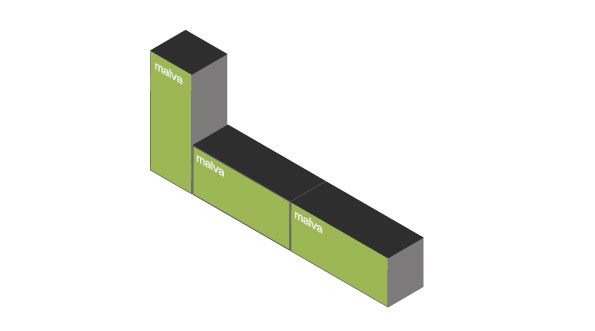
The system will comprise a horizontal module as the planter itself and a vertical water reservoir module with a manual mechanical irrigation system connected to all other modules. People will be able to easily activate the irrigation to water the plants, giving further interactivity to the installation.
The tops of school desks will be repurposed as panels for the modules given their durability, quantity and conformity. School desks are typically difficult to recycle, with their laminated wooden tops ending up in landfills. Using them in a way that benefits from the properties of the material in its current state would give a good example of circular design, and an especially useful one in the setting of a schoolyard, where pupils would be able to see an object they are familiar with reused in a different way
Key objectives for sustainability
The concept will deliver an effective way to increase biodiversity within cities by introducing many different plant species and promoting their propagation through the involvement of the local communities.
The planters will have a positive impact on pollinators both as a single installation, with wildflowers producing large amounts of nectar that insects can feed on, and as a network, gradually reducing the distance between green spaces that are viable for pollinators within the city, making it more hospitable and giving them a chance at proliferating in the urban environment.
As a consequence of the sanitary measures taken against COVID-19 many Italian schools have had to replace their older two-person school desks that didn’t allow for social distancing with new, single person school desks. There have already been concerns around the disposal of the two-person desks.
Realizing the concept will prevent a large number of these desks that will be decommissioned from being improperly disposed of and ending up in a landfill, avoiding a large, one-time production of waste and using it to create something beautiful and beneficial for the environment.
Key objectives for aesthetics and quality
The concept aims to display the high ornamental value of wild plants with their wide range of shapes, proportions, patterns and colors. Once carefully selected and planted, the plants will be pruned and managed minimally, allowing them to develop and interact naturally. This will create a scaled down wild landscape that will present a natural aesthetic, attracting the attention of passersby in contrast with the urban landscape.
The range of bees and other pollinators hopefully attracted by the flowers in the planters will be an integral part of the visual interest of the installations, as different bee species vary greatly in color, size and morphology.
The planters will showcase the use of repurposed material, rather than hiding it, with the school desks meant to be easily recognizable as an object people and children in particular are familiar with, now being used as a functional and colorful part of something new.
Trough visual cues and instructions, people will be encouraged to interact with the installation, trying to recognize the different plants and insects and harvesting seeds from the plants for replanting. This can be a highly engaging and educational activity for children who may not often have the opportunity to experience nature.
Key objectives for inclusion
The planters will be installed in several accessible areas in the city, retaining their simple construction and aesthetic to communicate the importance of the natural world and of sustainable practices with low environmental impact.
The installations will be small windows into nature where anyone will be able to see, smell and touch a range of wild plants that they would usually never encounter in their daily urban life.
Depending on the season and the time of day the conditions of the plants and the activity of various insects will vary, giving variety to the ways different people will experience the installations. Once in front of the planters, how long a person observes them for will depend on each’s own curiosity, with the interest of people and especially children who may not have had many opportunities to experience the natural world usually peaked.
Having more interactions with the nature during the day increases the quality of living and helps to reduce stress in urban dwellers. The concept will be a simple, repeatable solution to include green elements within a community and will give anyone the opportunity of recreating their own.
Innovative character
Urban greening and planting initiatives tend to focus on trees for their long-term potential and symbolic value. The concept will highlight the importance of wild flowers and flowering plants in ecosystem efforts, where they act as regulators for soil conditions such as temperature and humidity and are crucial to support the pollinators and other insects needed to establish thriving ecosystems.
The approach of using complementary wild plants can be adapted to any scale, from a small domestic application to larger reforestation and afforestation projects.
Waste materials that are hard to recycle are usually complex, manufactured objects with specific material properties. School desks are one of many examples of such object that have long lifecycles and are decommissioned in large batches but very infrequently, making it difficult to have specific recycling processes in place.
Designing the modules for the planter in a way that makes use of the material’s characteristics makes it possible to intercept the waste even before it needs to be recycled, further lowering the amount of energy needed both for disposing of the old objects and for producing the new ones, along with their environmental impact.