Scuola 2.0
Basic information
Project Title
Full project title
Category
Project Description
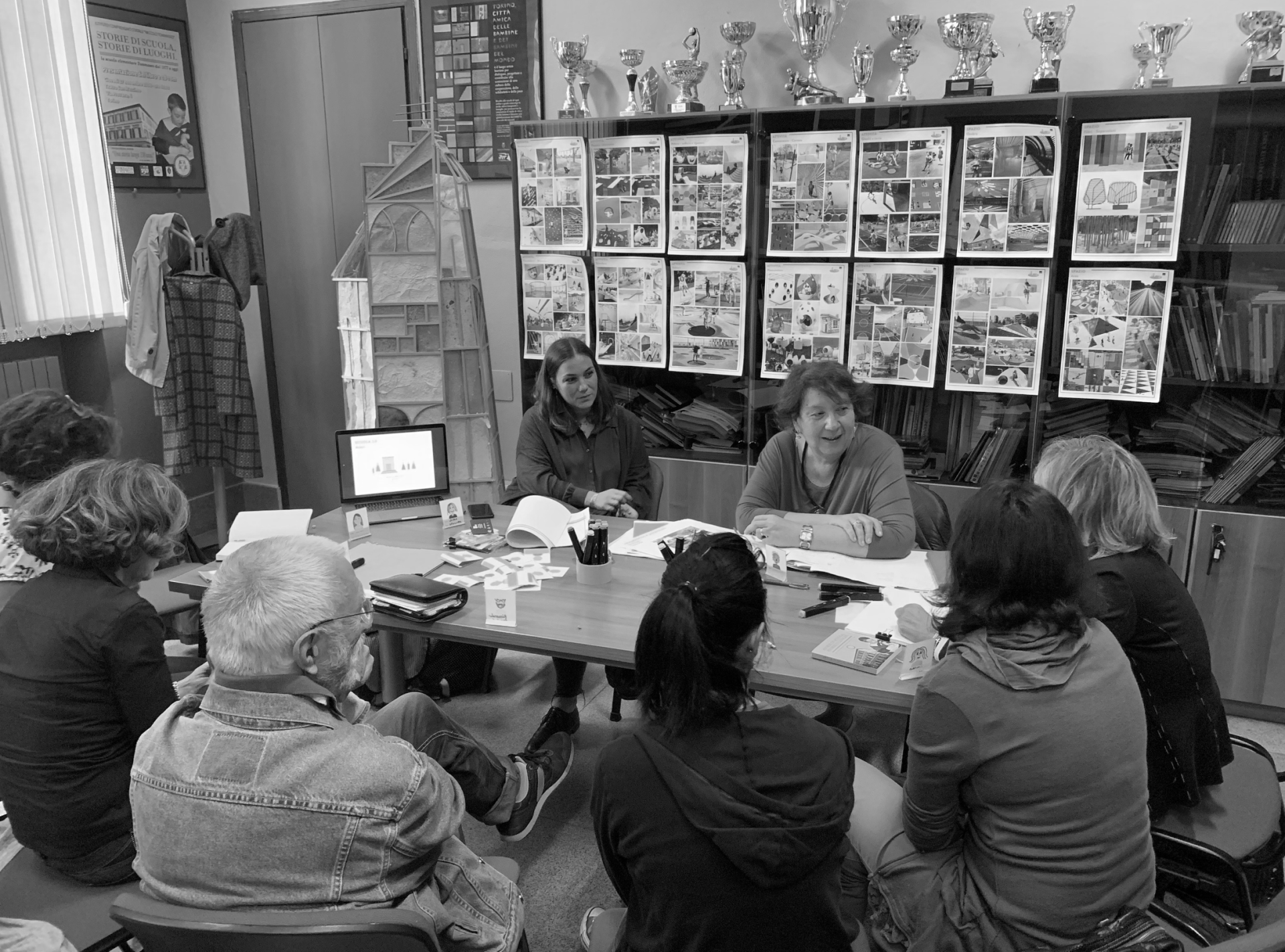
Scuola 2.0 action aims to prototype five common shared spaces in five schools of North Italy through a co-design process with the communitỳ. The participatory process objective is to change the use and implementation of the school spaces’ infrastructure to make them more functional. The project was an opportunity to build synergies between school and territory to prevent social exclusion through a co-design and prototyping of new scenarios in the educational sphere.
Project Region
EU Programme or fund
Description of the project
Summary
Scuola 2.0 action aims to prototype five common spaces in five primary and secondary schools through a co-design process with the communitỳ of students, teachers, parents, and operators. The purpose of the participatory process is the possible change of use and implementation of the spaces’ infrastructure to make them more functional.
Twenty-four partners have joined La Mia Scuola è Differente! proposal with five schools between Milan, Turin, and Padua in Italy. It is a three-year national project (2019-22) selected by Con i Bambini as part of the Fund for Combating Poverty in Child Education and coordinated by Diapason Cooperativa Sociale of Milan. The project provides significant resources to focus on schools as educating communities and promoting the skills necessary for social inclusion through innovative paths.
Among the leading partners in Milan, the research group Polimi DESIS Lab of the Department of Design at the Politecnico di Milano is the coordinator of Scuola 2.0 activity. This project has been an opportunity to reflect on several topics, especially on the importance of public space - internal and external - in school buildings, co-design in the concept phases with the educating and parent community, and the importance of prototyping and actual implementation of spaces; but also, to prevent social exclusion by building a solid synergy between school, territory, and families. The issue with schools in peripheral areas is they present themselves as schools for foreigners, and Italians very often try to take their children out of the neighbourhood, as long as they do not attend an institution branded as for fragile categories.
The project aims to activate a virtuous circuit to encourage the whole parent and educating community to see the school as a positive, inclusive place, both from an experiential and cognitive perspective. Above all, in terms of a safe and inspirational space.
Key objectives for sustainability
The project plans to identify in the territories the subjects that can contribute to the sustainability of the project, such as the involvement of businesses and commercial operators, unconventional actors of the educating community, who can contribute to the continuity of the project. Among the objectives of involvement is the elderly inhabitants of the neighborhoods, rediscovered as a resource, who will contribute to the historical formation of the minors given their positive insertion in the context of life. A fundamental role in the process is the University sphere. In addition to the Politecnico di Milano, the universities of Padua (psychology) and Turin also connected the school with different initiatives linked more to the personal and cognitive pathway, which initiatives children and young people towards a possible job. The knowledge between the two worlds helps increase motivation to study, in a new way, little experienced in primary and secondary schools. Teachers and families can also deal with the university world, facilitating educational and training choices and helping in orientation towards higher studies. In Politecnico di Milano, the designer’s role is to help as the facilitator, generate new ideas, and then spread and replicate them in other or similar contexts and learn new concepts and responsive topics as a result. The main objective has been to guide all phases, through horizontal communication and interaction, the people involved. In these cases, all the actors are experts and are positive and fundamental contributions to the project’s success; obviously, the time and interest invested in the activities is the generating mechanism of the whole project process.
Key objectives for aesthetics and quality
The main aim of Scuola 2.0 action is the prototyping of five common spaces in the schools involved, through a co-design process with the communitỳ of reference (students, teachers, parents, operators). The outcome of these participatory paths is the possible change of use and implementation of the spaces’ infrastructure to make them more functional and pleasant. So, restart from the peripheral schools, making them more attractive, engaging activities for children and adults, opening to the neighborhood and the community, and therefore more inclusive. Five participatory design processes have developed to reorganize common spaces in partner schools in Milan, Turin and Padua. Rethinking spaces without physical boundaries, but through a spatial and experiential model, safer, more flexible, free, transformable, and accessible to all. In the three schools in Milan, the focus was on redeveloping transitional spaces (corridors), playful-creative spaces, and psychomotor paths for disabled children. In the nursery school of Turin a co-design was carried out, involving the community of grandparents and children 3-5 years old, for the arrangement of the external courtyard: with play and sensory functions, stimulating manipulation and creativity in each child. Finally, in the school in Padua was considered the auditorium. The final goal was to transform this space into a stage for the neighbourhood, organize the school's music concerts and similar activities, and involve the community in more significant initiatives. The projects are based entirely on material and visual language unity and the individual parts’ replicability and on the concept of collaborative self-construction: organize full-day prototyping events with the involvement of the project actors and students - future users of the spaces - to construct new spaces. They have allowed local merchants and artisans of the neighbourhood to support the preliminary ideas and realization.
Key objectives for inclusion
Schools today play a fundamental role in preserving social relations from the risk of extinction, in being an effective response to uncertainty through the reactivation of community initiatives. Schools are no longer just a place of growth for children and young people, but also a social structure, a place where families can meet, an occasion for socialising; they are vital centres throughout urban realities. Strengthening the participation of families in the life of the school means reinforcing the educational alliance and has direct repercussions on the growth path of children, helping to break down a level of conflict that is very present in Italy between teachers and parents.
By carrying out co-design activities to create shared spaces within the project's partner schools, a strong involvement on the part of teachers and managers was noted, but above all the relationship created with the group of parents who took part in the meetings held. Their interest was seen more in the practical phase of the meetings, but at the same time they were fundamental because of the role of the students, giving voice to their needs and their imaginative ideas. The objective of the participatory process for each school was to involve a heterogeneous group of actors with different skills to add value to the project. In fact, in the case of the redesign of a psychomotor space, it was beneficial to have the opinion and guidance of several scientific experts on the subject. It was essential to understand firsthand from educators and specialists how to create a comfortable, safe, creative space that could break down spatially the barriers of disability. The designer’s role is to help as a facilitator, to generate new ideas and then spread and replicate them in other or similar context, but also learn new concepts and responsive topics as result.
Innovative character
Scuola 2.0 action aims to prototype five common spaces in five primary and secondary schools through a co-design process with the communitỳ of students, teachers, parents, and operators. The purpose of the participatory process is the possible change of use and implementation of the spaces’ infrastructure to make them more functional. Starting from the guidelines and experiences gained in recent years from the management and implementation of co-design sessions and projects of common learning and socialization spaces, it is possible to hypothesize a diffusion of the approach and results on a wider network of actors on the territory, in particular through schools present in new fragile contexts characterized by situations of cultural and educational poverty.
Furthermore, one of the objectives of the project is to leave the 5 schools involved with co-design guidelines that they can follow on their own in the future for the construction of new shared spaces, this objective will certainly be achieved in the coming months.
Unfortunately, due to the pandemic in progress, the prototyping activities have been delayed and therefore, the first activity to be concluded will certainly be that of creating the common spaces designed through the co-design sessions. The defined projects can be expanded and enriched with new components and aspects, other spaces and functions; many of these previously hypothesized during the co-design process and therefore easily achievable soon.
The project was an opportunity to build synergies between school and territory to prevent social exclusion through a co-design and prototyping of new scenarios in the educational sphere.