A new approach in digital era
Basic information
Project Title
Full project title
Category
Project Description
My idea is to put in practice all my ecology knowledge in a sustainable tourism. To implement my idea, the solution is to create an online platform with ecological content and to create a habitat for tourist, students and all categories interested about how they could create a unique experience exploring our beautiful nature.The Danube Delta Biosphere, through her natural and cultural richness, could change our lifestyle.
Project Region
EU Programme or fund
Description of the project
Summary
The digital era we live in, can be an effective tool in ecological education, as long as tourism will be friendly to nature, traditions and to the rural population. The development of this type of tourism requires promotion, requires the creation of a model that integrates: nature, cultural heritage and local people. My proposal is to create a mobile application to promote rural tourism and ecotourism.
In this moment, there is no digital environmental education tool for the Danube Delta in our country. Important information about the value of ecosystems is dissipated in several sources, which makes them difficult to access, and at the same time, the correctness of information available on several sources can be questionable
The platform will contain several sections:
• Information of the week, In order to maintain the attention of the user of the application, it is necessary to disseminate a qualitative and easy to view content (maximum 5 minutes) with short text, images or videos
• Importance and status of the reservation - this information must be presented briefly: UNESCO status, national status, wetland status, particularities of the reservation (number of species of flora and fauna, types of habitats)
• Biological atlas: a brief characterization of plant and animal species. The information will be translated into a easily format understood by the general public and will address the following issues:. popular and scientific name of the species, an image, relevant information about the biology and ecology of the species
• Landscapes and traditions - a section that aims to promote the cultural and natural heritage of the delta: tourist attractions, traditional customs, archaeological sites. Thus, the application becomes a virtual tourist guide that provides an overview of cultural and natural values.
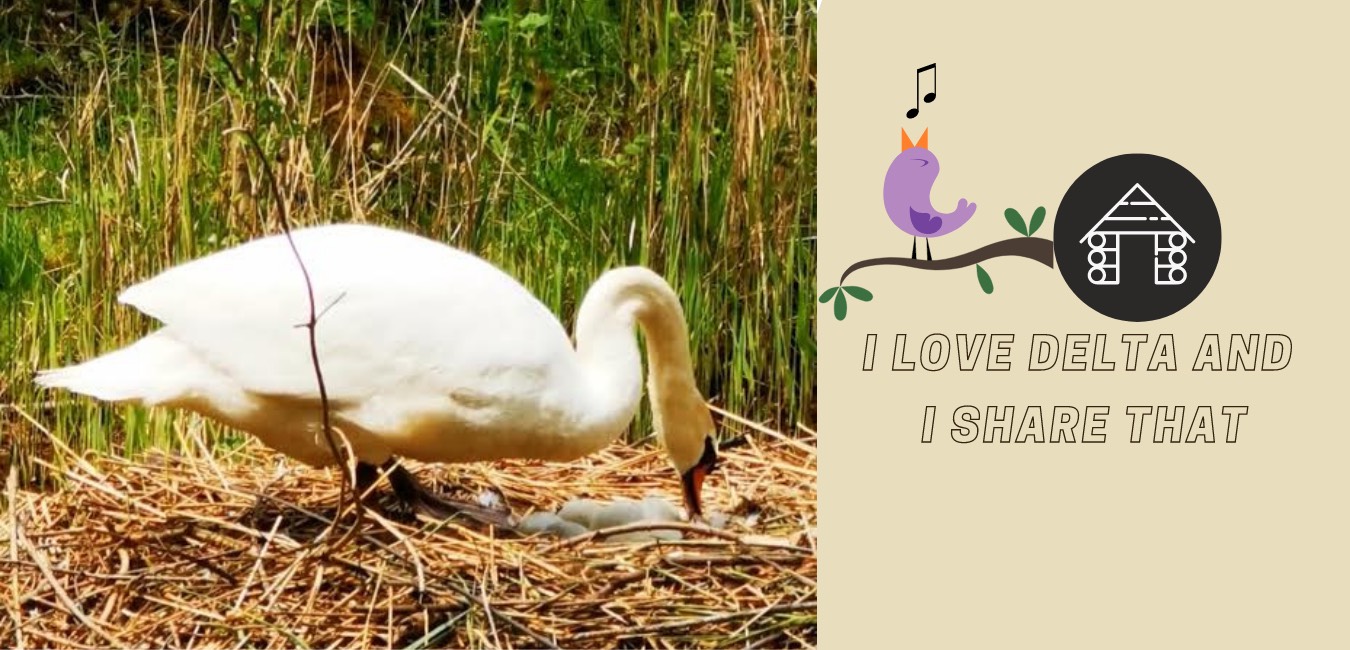
• I love the delta and I share that! A section in which each individual expresses his admiration for the Danube Delta.
Key objectives for sustainability
This project, although customized for an area of the Danube Delta Biosphere Reserve, can be a sustainable model applicable in all areas of tourist interest. The closeness to nature, cultural heritage and indigenous peoples, will change people's perception of the importance of the environment in which we live.
The need of people to explore nature has become increasingly evident in the context of urban agglomerations in recent decades. Holidays, weekend vacations, trips in the interest of the service, can become an effective tool in human ecological education. Having a unique experience, full of knowledge, people can stay connected with nature, developing a sense of responsibility for nature and traditions. A new approach is needed, of sustainability in all sectors of socio-economic activities, the human footprint on the environment must be as small as possible, so that future generations could have the premises of a normal life.
Awareness of the natural and cultural importance is achieved through feeling and this can be offered only by practicing ecotourism in rural areas, close to the nature. Ecotourism is the opportunity for an ecological education of tourists and, at the same time, an alternative for the economic development of local communities.
Rural tourism is a return to pure values, to the ancestral space, closer to nature, reeds, organic food, traditional recipes, handicrafts. These cottages will be located as a settlement inside the local community for a complete exploration. Thus, the tourist can really have a valuable experience.
Key objectives for aesthetics and quality
The implementation of this project will give a different nuance to the tourism, will connect tourists with nature and local traditions and their experiences will be a worth model to follow. A movie seen outdoors, a bike ride, a boating day in the most beautiful places, a traditional food, the fact that in your vacation you recycled waste, is a sum of an image, once lost, in which man was connected with nature, with the values of the local community and was an example worth following in healthy habits. The project is committed to have an important role in environmental education for all social categories. The platform through its content, thought in an attractive form, will stimulate the people respect for nature. When we say attractive, we mean: images with plant and animal species, human involvement in ecological activities, healthy practices for people and nature. An eloquent example is the section I love the Delta and I share that, it will be a campaign in which actions that are beneficial for the environment will be promoted. These could happen only via this sustainable approach.
The knowledge from biological experts it is the best way to ecological education. Harmonizing relationship between man and nature is essential if we want to enjoy the aesthetic values of nature. Some examples are: to know how sensitive are birds in the contact with people and what is the distance in witch we do not disturb them; what species of plants are endangered, what types of habitats are vulnerable and indispensable for species of plants and animals.
Key objectives for inclusion
Education is a key driver in achieving the goals of the 2030 Agenda for Sustainable Development and is targeted in Goal 4 Transforming our world: Ensuring an inclusive and equitable education and promoting lifelong learning opportunities. Education is one of the most important powerful ways to improve the health of individuals and to ensure that these benefits will be passed on to future generations. Equal access to learning opportunities is an indispensable condition for achieving a good education for all. Lifelong learning involves the integration of learning and lifestyle, covering learning activities for people of all ages (children, young people, adults, the elderly) a variety of contexts (family, school, community, job, etc.).
An ecological approach to lifelong learning refers to a conscious attitude towards the interactions we have with the natural and cultural environment, an ethic of conserving the diversity of ecological resources, techniques and methods of applying these ethics and a proactive policy of morality, all this aiming to restore the quality of the environment in which we live.
The project is aiming to gather all social categories: from children to elderly people, from local people to tourist, from the specialists in environmental sciences to lovers of nature, etc. It creates a community which is more aware of the benefits of a healthy environment.
The communication between members from different social categories is achieved through common activities:interactive educational activities, volunteer actions, watching documentaries, team sports(cycling, chess,) and trips.
Innovative character
Innovation is represented by the ecological approach of tourism and the practice of nature-friendly activities, promoted in a digital way. The knowledge acquired during the Faculty of Biology, the Environmental Protection Section, the Integrated Management of Natural Capital Master and the Applied Geobiology in Natural and Cultural Heritage Conservation Master (first year of study), at Bucharest University, gives me an different perspective of tourism, an educational one, by connecting people with nature and local traditions. The arrangement of the cottages involves a connection with nature, through outdoor relaxation activities: cycling, arranging exhibitions, watching movies outdoor, tourism boating, camping space for tents. The cottages could be a habitat for volunteer activities for pupils, students and other social category, in terms of environmental protection: education campaigns by watching videos of natural and cultural heritage, afforestation campaigns, waste collection actions. This will be done through collaboration with NGOs that promote environmental protection, with schools and faculties. Experiences and activities will be promoted on the developed platform to ensure a good dissemination of information.