Wood for Life
Basic information
Project Title
Full project title
Category
Project Description
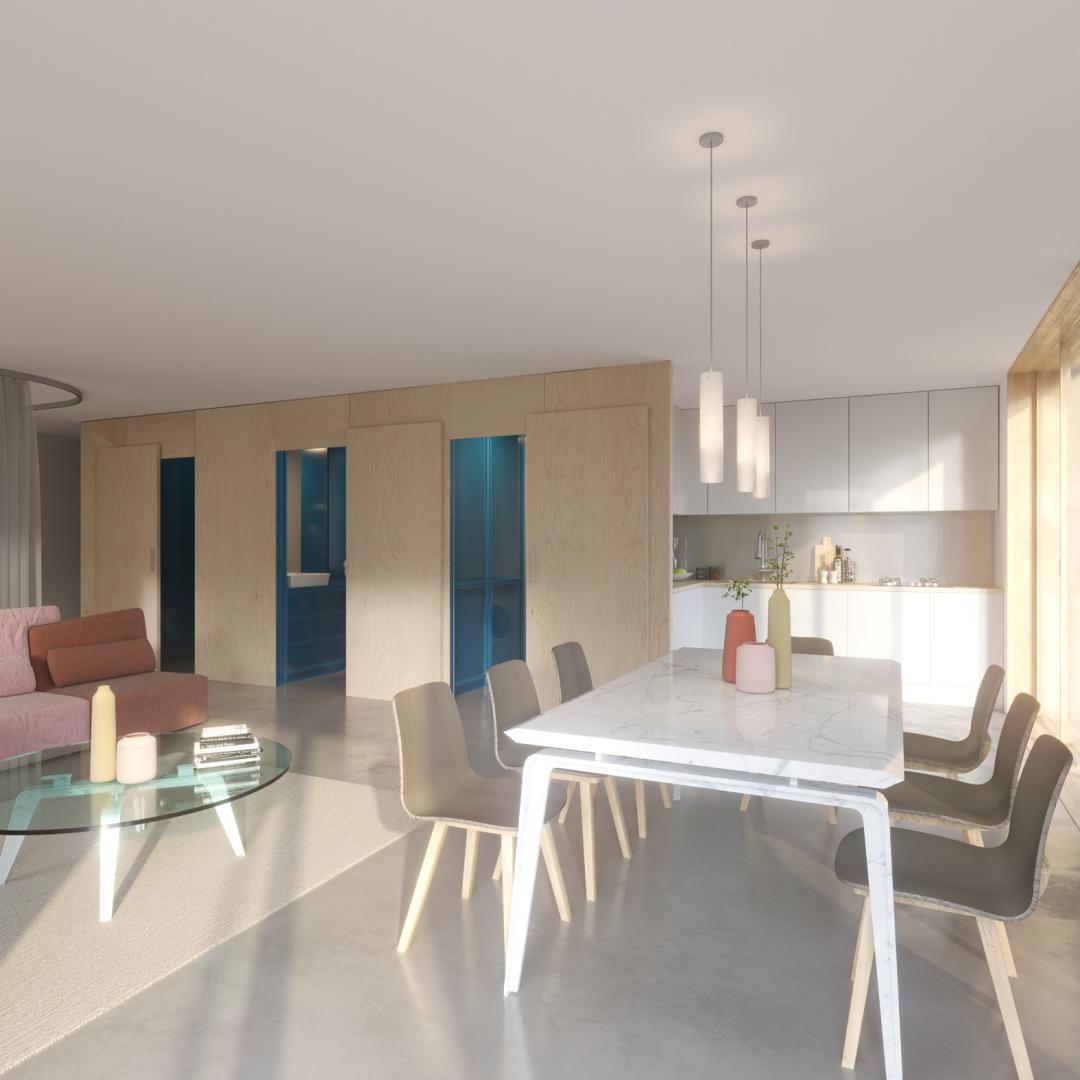
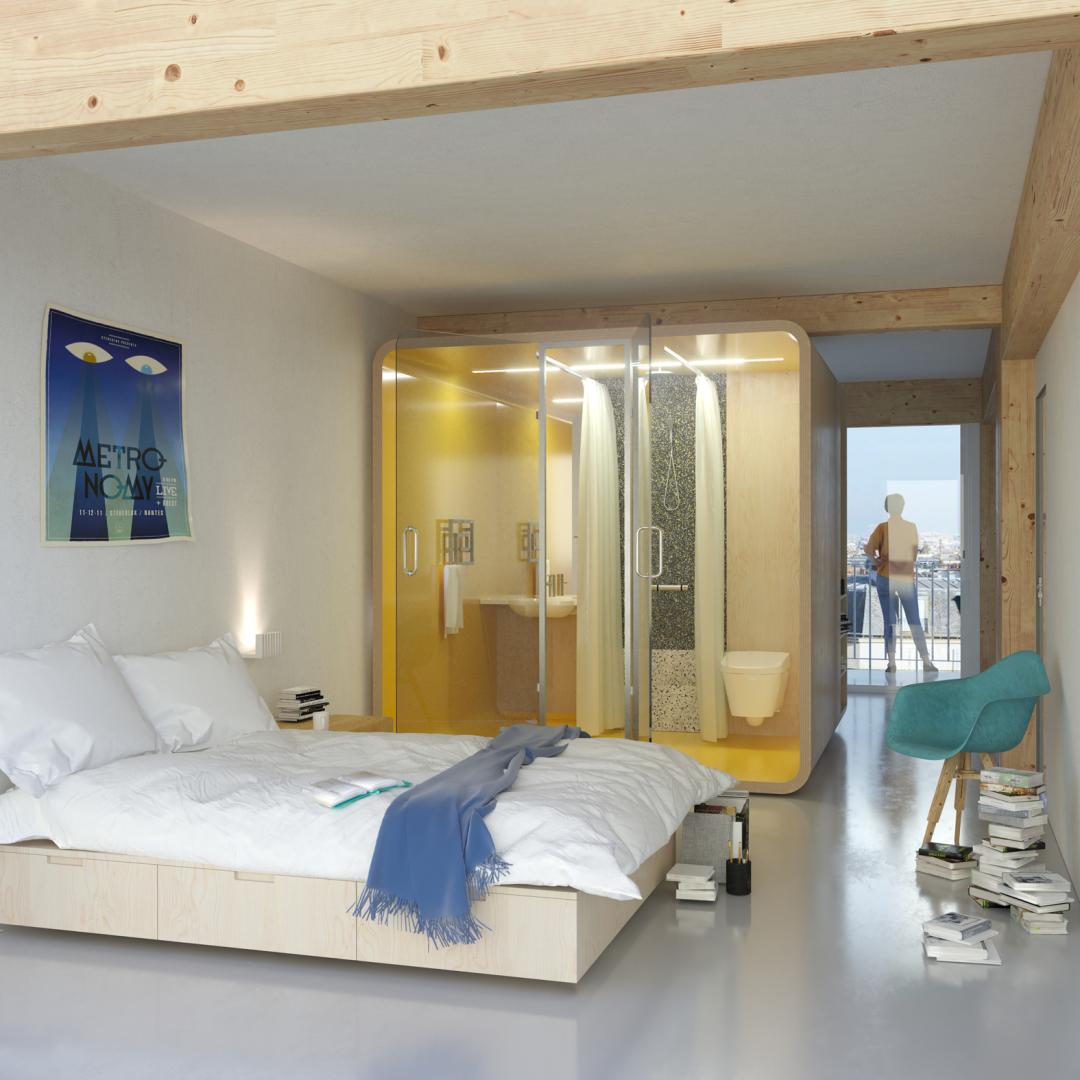
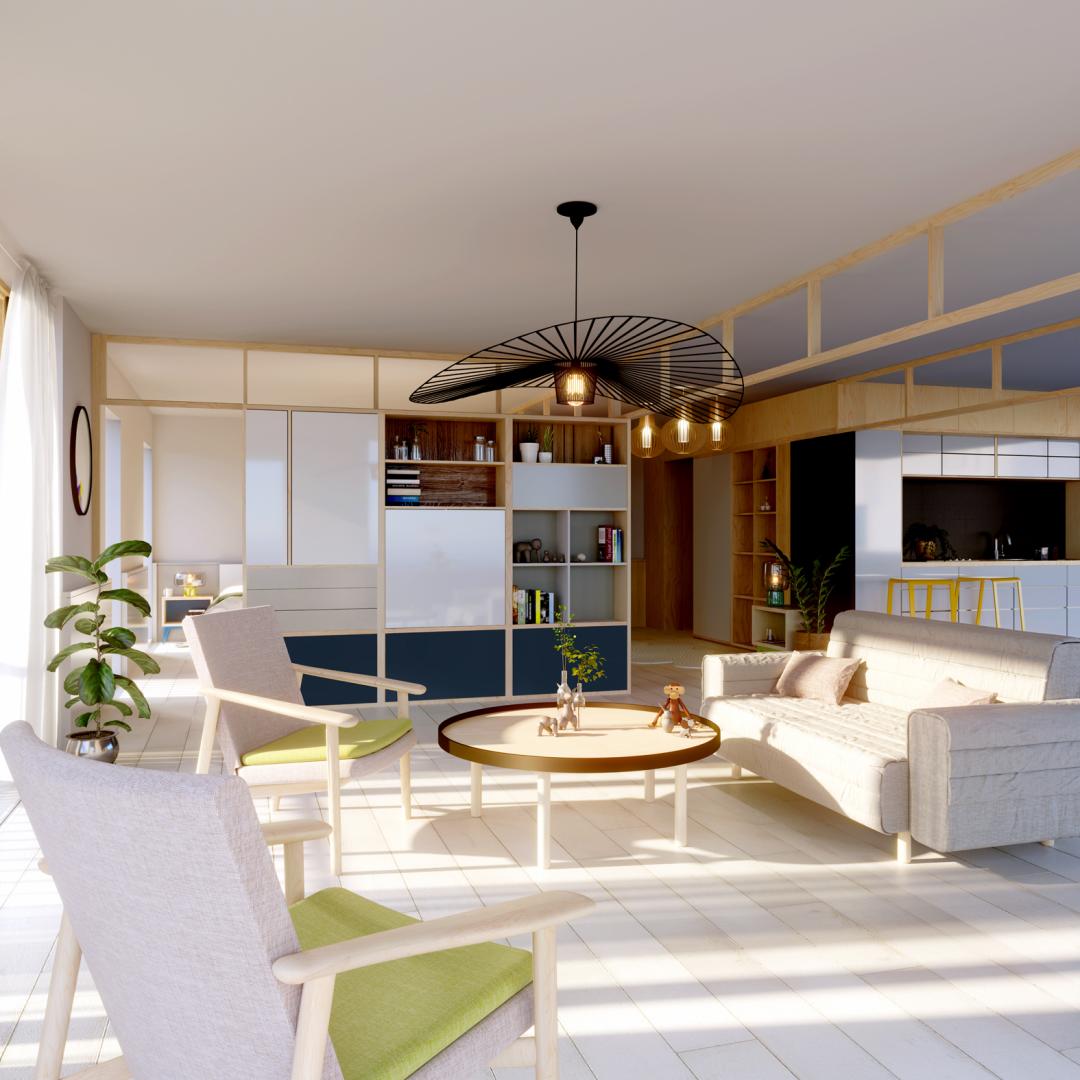
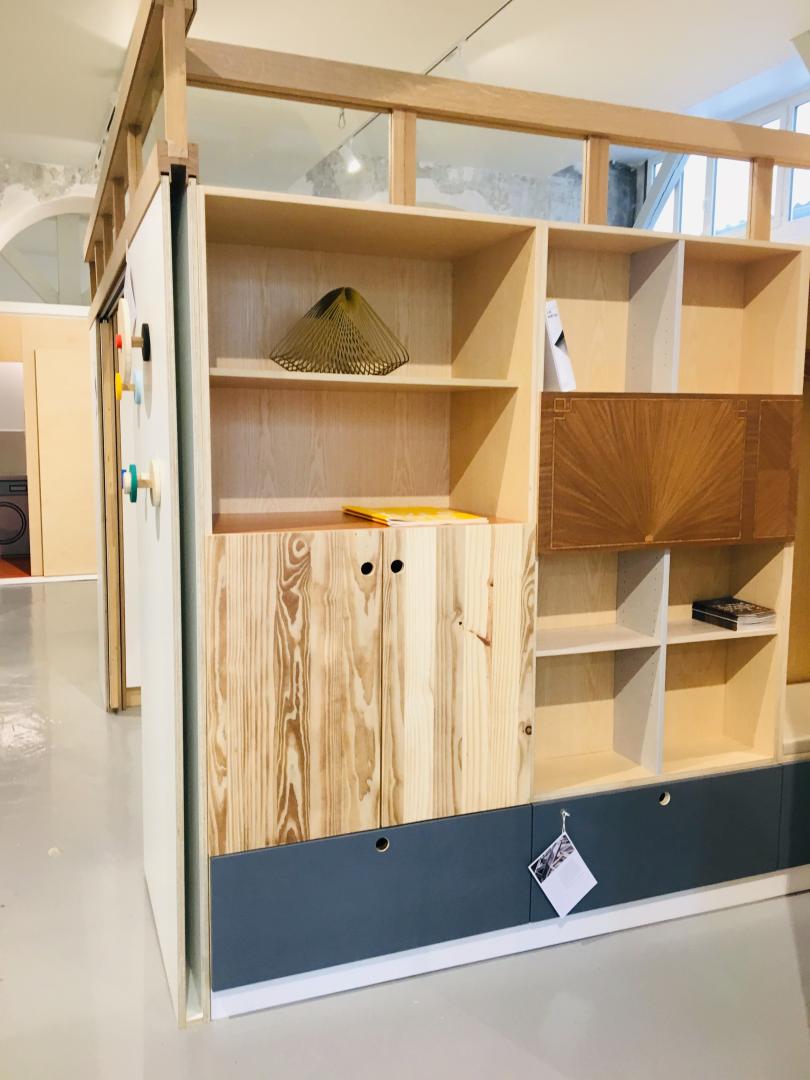
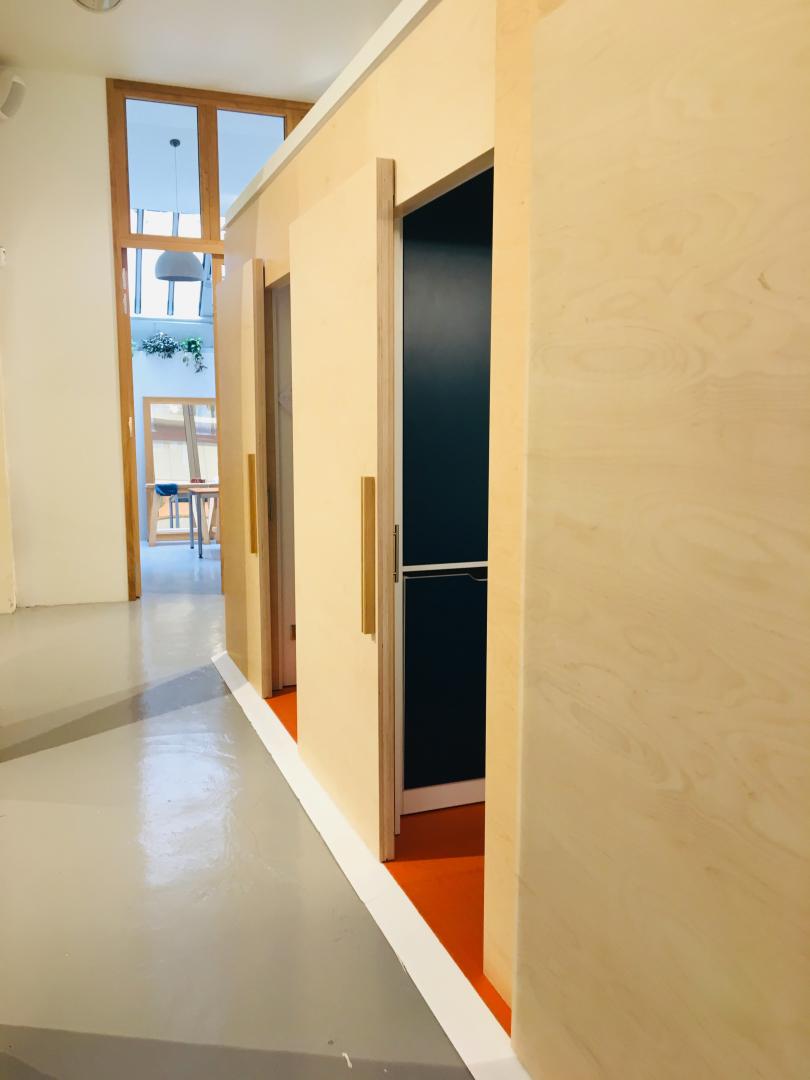
Define, design and prototype new ways of partioning and improving the quality of living spaces. Partion solutions were developed by multitalented teams with architects, designers, manufacturers and marketing people from the furniture and construction industries. The main objective was to design partitions in order to optimize living space with multifunctional and scalable partitions. Those partitions are made of wood, bio-based or re-used materials; in other words "low impact" solutions.
Project Region
EU Programme or fund
Description of the project
Summary
The "Wood For Life" project is part of the ADIVBOIS French national initiative to develop tall wood buildings in 11 locations. This project was initiated by 4 Ministers in order to boost industrial innovation in the wood sector from forestry to building and furniture industries.
In order to differentiate the products offering, the project teams were asked to work on 2 main innovations, the wood structure of the building and the flexibility in the building in order to accommodate the twenty first century way of living in the cities. This second innovation was intended to explore and enable new uses of wood in the building.
The project was structured around 3 steps:
The first one was to gather needs and expectations from users, potential customers, publics through large scale and nationwide studies. The outcomes were shared with both project teams and senior managers of the industries in order to define key criteria’s for the PUCA challenge (PUCA is the prospective department of the Construction Ministry).
Based on the outputs of the PUCA challenge, 3 project teams were selected. At this stage each team was allowed to re-work their initial design to a proof of concept.
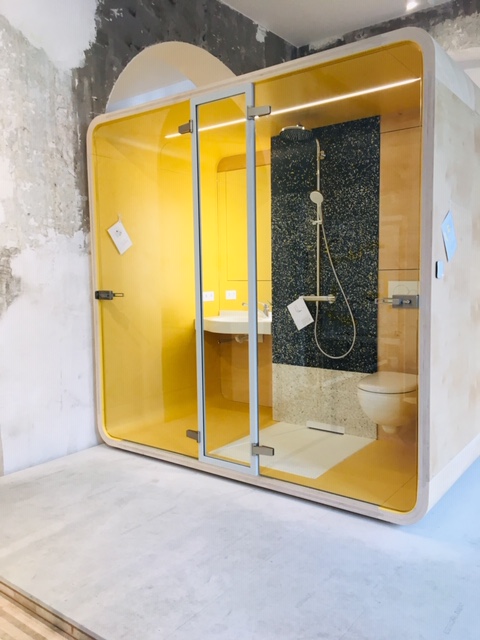
The 3rd step of the project was to prototype to full scale the concept including the interface with the wooden structure. Then the product concept and offering were designed in order to be presented to French building developers.
The teams were composed of architects, furniture designers, manufacturers and joiners. We ended up with a full-scale costing exercise in order to proof the economical validity of the concepts.
Key objectives for sustainability
The key objectives were:
maximize the use of renewable materials in the secondary works evaluate the carbon storage in the structure and equipments of the building
minimize the impacts of transports
maximize "prefab" solutions in order to reduce water usage and waste We have developed a scope to evaluate the impact of each project.
This scope includes 4 categories divided in 9 criteria's:
1. Origin and traceability
2. Timber quantities
3. Wooden feeling / interior usage 4. Energy / carbon / total cost
A first eavluation was carried out at the PUCA challenge step for each of the 48 projects.
The final evaluation will be completed at the delivery of the 11 demonstrators which will start in 2022.
Key objectives for aesthetics and quality
Our project was developped on the historical heritage of the Bauhaus. This may sound a bit presumptuous but our team is composed of an historian of the furnitures and arts, 3 architects, members of the National Academy of Architecures who structured our project arround the frame developped by the founder of the Modern movement and the approach of Le Corbusier.
The challenge for the 3 teams was to introduce the concept of personnalized functionnalities and aesthetic based on an industrialized and rationnalized product offering. The use of BIM and 3D models enable the teams to develop interfaces suitable with the quality level expected and the productivity needed.
The benefit of having 3 teams working on 3 concepts in parallel enable us to demonstrate that creativity in the 21st century is no longer limited but sublimated by robotics in the furniture industry.
Key objectives for inclusion
Inclusion and re-use were highly recommended in the 1st specification of the PUCA challenge. We were fortunate to get teams who worked on this SSE criteria and the craddle to craddle with our partners VALDELIA and ECOMOBILIER.
These 2 partners are the nationwide collectors of used furnitures for businesses, hotels and adminstrations. For example used desktop panels were used to produce the innovative "A-PART" bookshelf - partition.
The EMMAÜS foundation for integration of disabled workers is a producer of furnitures integrated in the "A-PART" prototype.
Results in relation to category
The impacts evaluation of the project is not possible at this stage because buildings are still under construction. The prototypes have to be improved for the first series.
How Citizens benefit
The project is based on the will to understand the type of living hood the French society is looking for in the 21st century.
Studies conducted at the early stage of the project convinced the project leadership that a wood building is much more than a wood frame and technical requirements.
Wood is a key material in the living environment of more than 95% of French people.
The demonstrators and the prototypes are overall well accepted by the public. The evolution of the local regulations is happening now. The enthusiasm of the public who was able to see and test the prototypes is a key motivator for the industry. They need to work on the market (price and product mix).
These systems are solutions which will allow to match the goal more descent housing.
Innovative character
The innovative character of the project is basically to consider that we can't continue to reduce square meters for the same functions and usage without changing the equipments and the secondary works. In other words how can we expect to have inhabitants happier if we keep reducing their living space and the quality of air, view, relationships ...
Modular and flexible components with "plug and play" connections and simple interface to the building are answers to evolutivite living spaces and faster installation.
The work on functinnality, light, connection with the nature and natural material became a priority to "re-enchant" the cities.