LIGHTWEIGHT CONCRETE CEILING
Basic information
Project Title
Full project title
Category
Project Description
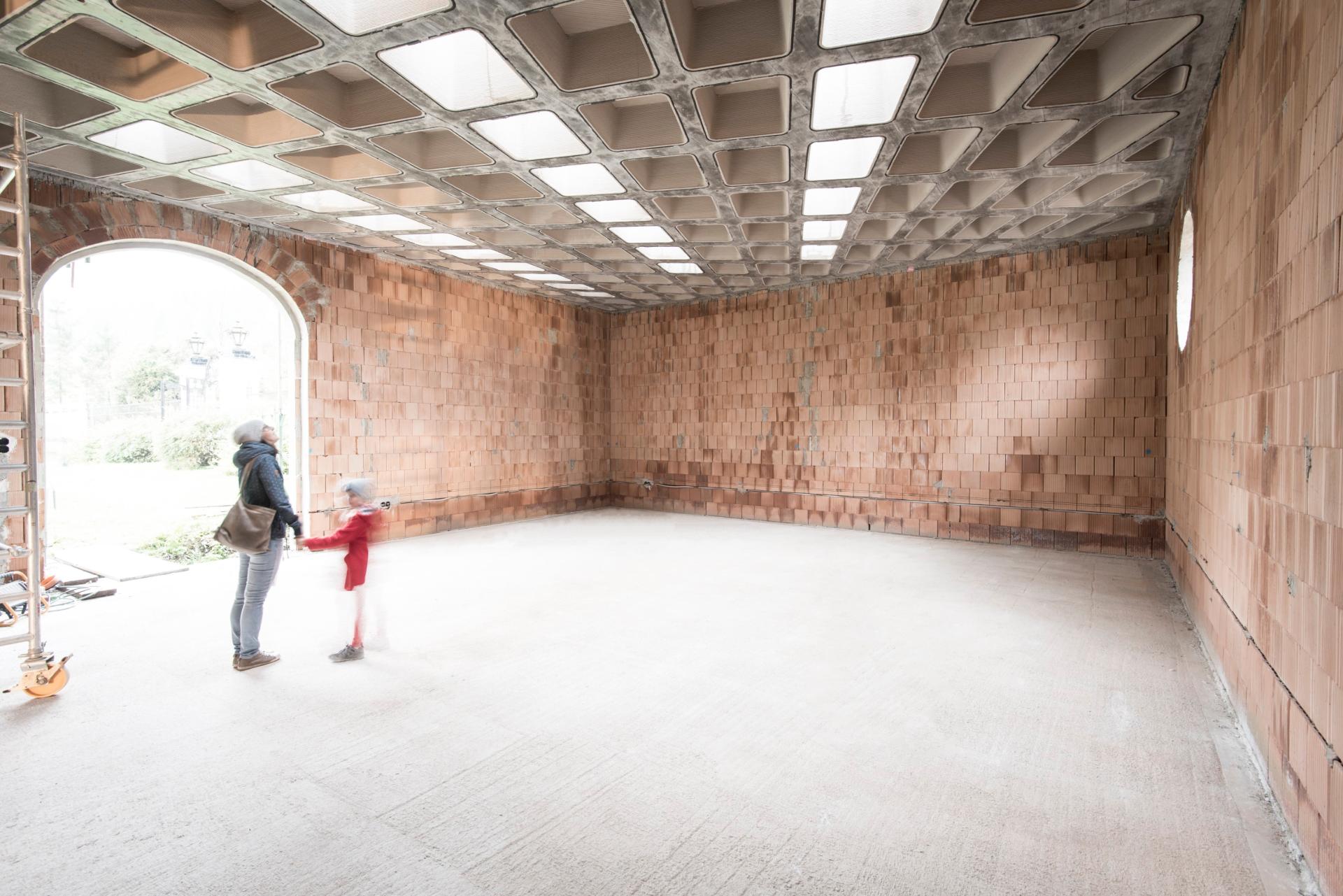
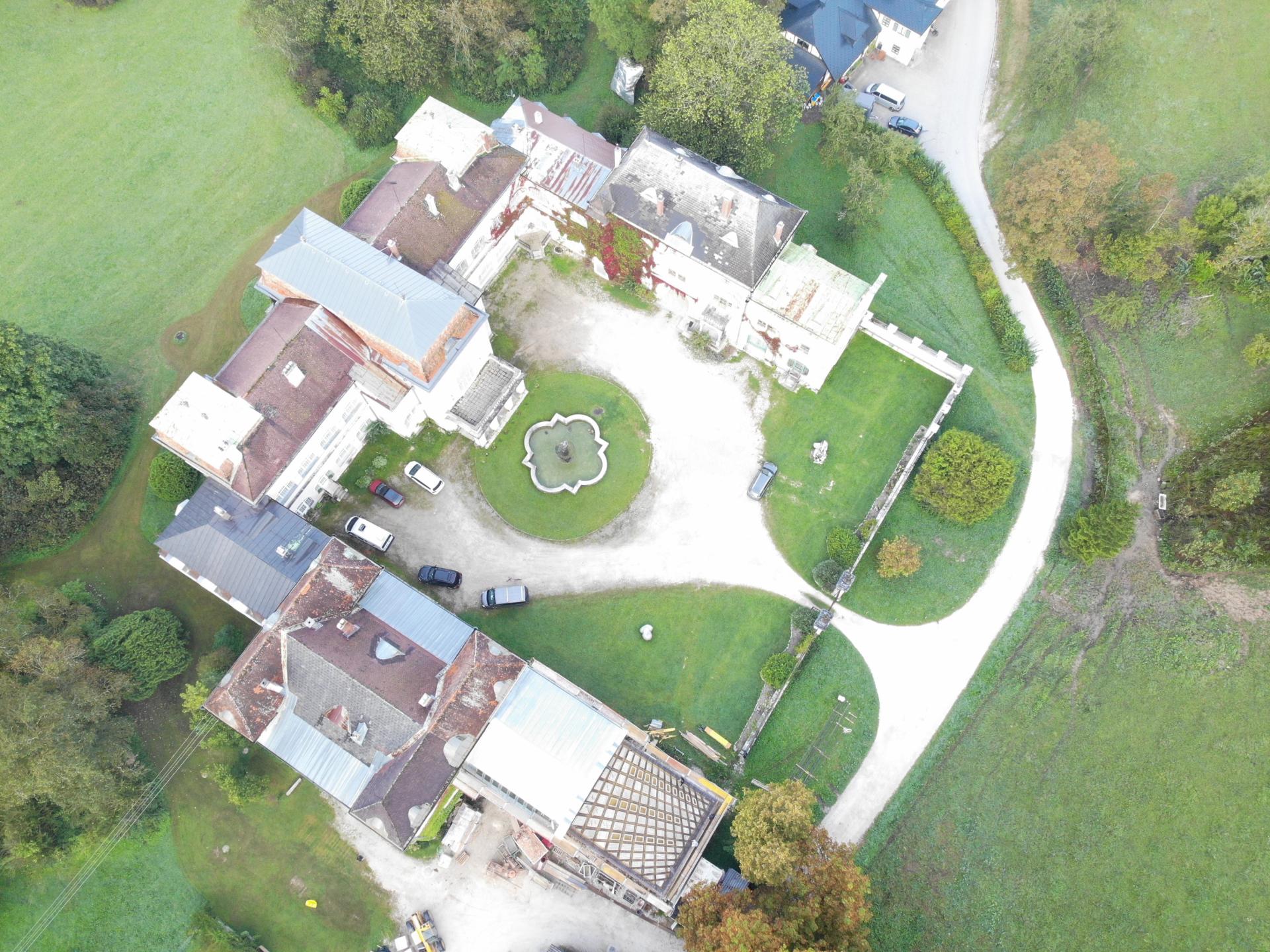
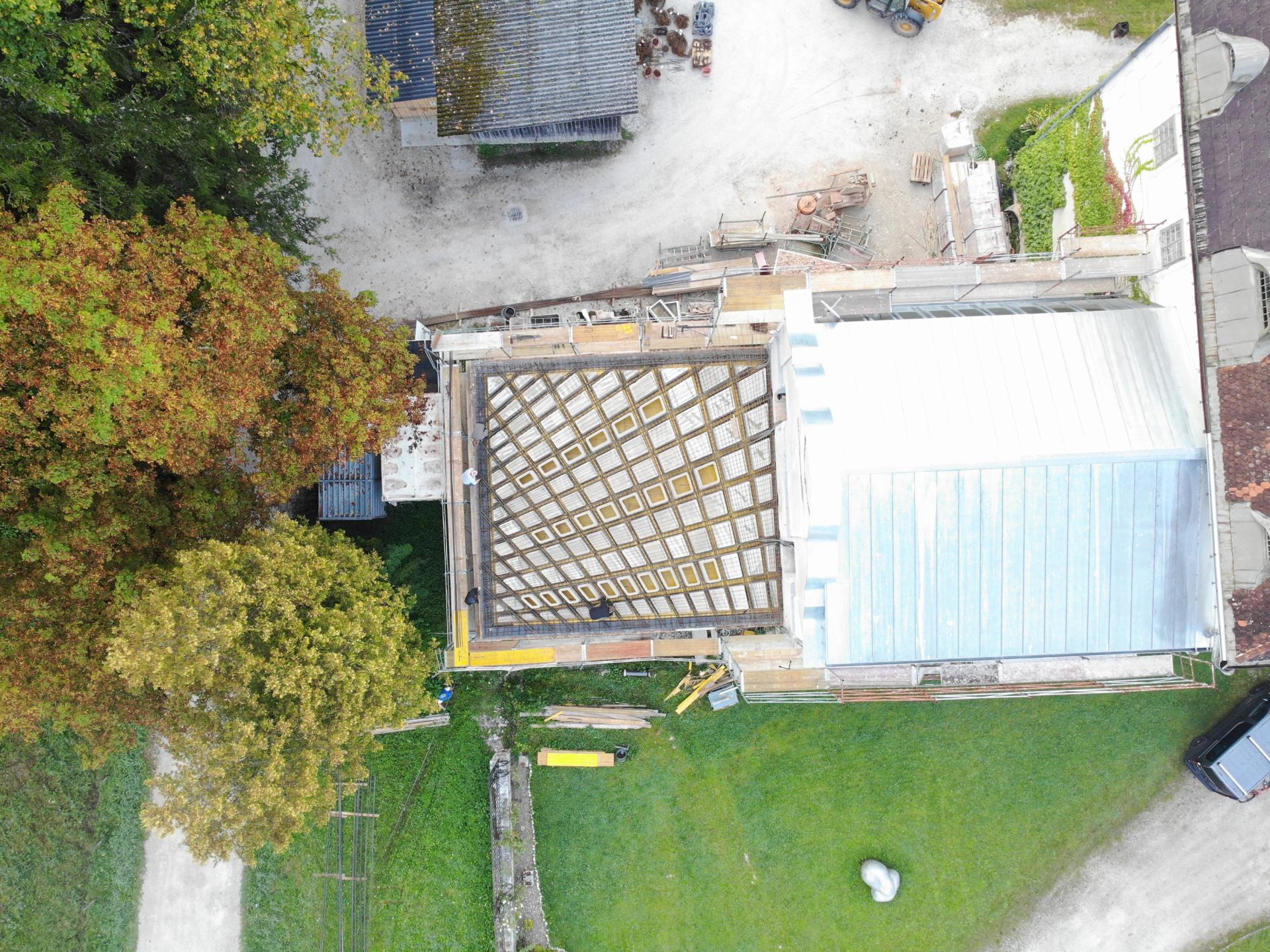
For a 100m2 ceiling above a studio in Seehof Castle in Lunz am See, 130 different 3D-printed concrete recess bodies were digitally planned, automatically produced and moved on the construction site. The architectural implementation is a symbiosis of an immersive spatial effect, static effectiveness and resource efficiency. The wide-span roof construction stands for a sustainable approach to the use of reinforced concrete, which relies on economical digital production methods to save resources.
Project Region
EU Programme or fund
Description of the project
Summary
For many years, the Institute of Structural Design (ITE) at Graz University of Technology has worked intensively to develop construction methods that enable resource-optimised use of material. Concrete, as the most widely used building material worldwide, plays an important role and additive manufacturing offers a promising perspective for changing conventional reinforced concrete production methods. One of these methods developed at the institute is the production of 40% mass reduced lightweight ceilings using 3D printed formworks and additional in-situ concrete.
In April 2020, the ITE was commissioned to apply this new construction method to a 100-square-metre roof that covered an atelier at Seehof Castle in Lunz am See. The project involved the conceptual design, developed in cooperation with Hans Kupelwieser, the complete execution and detailed planning as well as the realisation of the actual construction using 130 different 3D-printed voids.
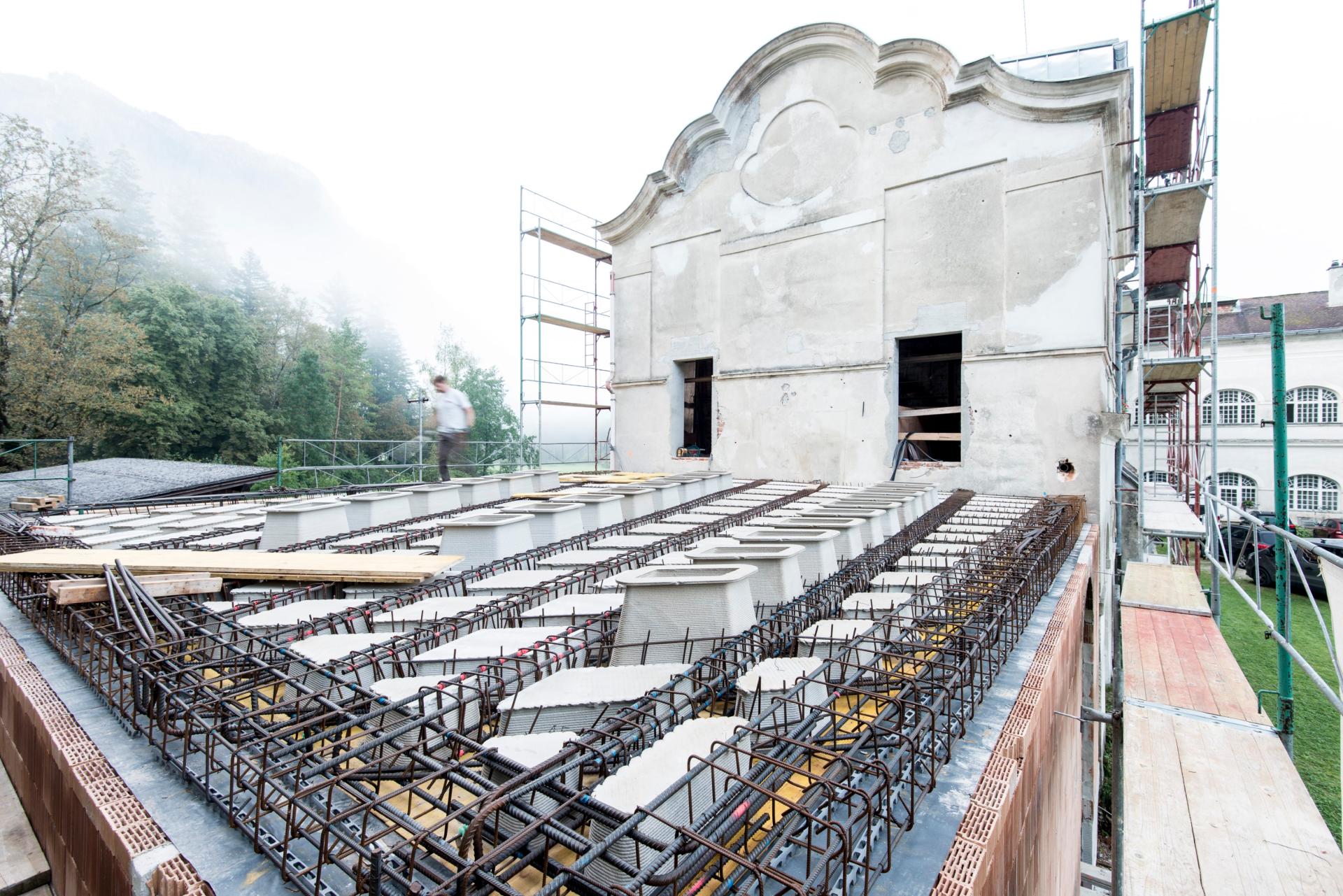
The voids were produced in the Laboratory for Structural Engineering (LKI) in the Robot Design Laboratory of the Technical University of Graz using the commercial available 3D printing system from Baumit and Baumit Printcret 230N. The voids were placed on the formwork on the construction site with the professional support of the building company Gusel.
After an inspiring and extraordinary construction process, the novel slab was ready to have the formwork removed in mid-October. The wide-span ceiling construction is representative of a sustainable approach to using reinforced concrete, which, among other things, relies on economical, digital production methods to reduce resource consumption.
Key objectives for sustainability
3D concrete printing is an alternative to erecting formwork panels and traditional concreting which opens new horizons for using materials precisely and above all frugally. Slender concrete elements with thin walls can be produced to individual designs quickly and at low cost. Discerning quality, filigree forms that appear at first glance to be unfeasible for buildings with more than one storey are all of a sudden almost within reach. The construction method used in the project demonstrate the manufacture of less material- and emissions- intensive floor slabs. Waffle and ribbed slabs or filigree concrete elements in general, such as those designed by Pier Luigi Nervi or Aldo Favini and architects like Angelo Mangiarotti in the 1960s and 1970s, are earlier examples of material-saving and often visible building construction elements. They use typically 30- 40 % less material compared to solid slabs. Today's multi-storey buildings, on the other hand, often have floor slabs with a constant rectangular cross-section supported at discrete points because the extra formwork cost for material saving construction makes this alternative economically unviable. An innovative and pragmatic solution pointing the way to a new type of lightweight concrete is 130-printed formwork elements that act as lost formwork and can be used with conventional concreting methods.
Key objectives for aesthetics and quality
Each of the voids (developed in cooperation with Hans Kupelwieser) has a different shape, the walls are slightly conical and the corners are softly rounded. The surfaces on the side of the voids define the sides of the longitudinal and transverse ribs of the slab. Each of the ribs are aligned to a vanishing point, which is situated on the projection lines of the two edge curves. Additionally, the ribs have a slight curvature and taper towards the vanishing point. The perspective of the room is hereby distorted, which leads to a multitude of different perceptions of the space.
To ensure sufficient natural lighting, 24 of the voids were designed as openings with no lid.
The lids of the voids were different heights and had a 2% slope towards the lowest point of the roof. This special feature made it easier to manufacture the slope on the top surface of the final concrete slab correctly.
Key objectives for inclusion
The presented project was developed in close cooperation with the client and artist Hans Kupelwieser. The use of additive manufacturing methods promotes individuality and enables it to be implemented more affordably. The inclusion of the building owner can take place more intensively.
The machines and materials used for manufacturing are available worldwide and, as industrial machines, are also inexpensive. Improvements in the construction process and the manufacturing process can make the costs competitive and affordable.
Results in relation to category
The process of 3D printing with mineral building material opens up new possibilities for the material to be used very precisely and, above all, very economically. This potential is met by the weekly in-depth discussion on the climate compatibility of concrete. Nothing would be more up-to-date and appropriate at the moment than immediately reviewing the material consumption for building elements used in large numbers in normal building construction. Savings potentials of 30-40% in material and the associated CO2 emissions can already be achieved with the new construction method. The construction industry is therefore certainly one of the industrial sectors that can very quickly contribute a noticeable reduction in emissions.
Coffered and ribbed ceilings use 30% to 40% less material compared to flat ceilings. The daily construction practice for multi-storey buildings, on the other hand, provides for point-supported flat ceilings with a constant cross-section. This is due to the fact that an increased formwork effort in comparison to the material costs simply does not appear economical. However, the optimization of supporting structures with regard to their Global Warming Potential (GWP) is an overdue and necessary step. Structural engineering in particular could make this important contribution, but the price competition that has persisted for years has prevented the planning of material-optimized components in standard buildings. 3D printing as a manufacturing method and digitalization for an economical planning process enables a comeback of the coffered ceilings. 3D-printed lost formworks, which serve as permanent formwork and are supplemented with conventional concreting methods, represent an innovative and pragmatic method of taking the long necessary step towards a new lightweight concrete construction.
How Citizens benefit
The project at hand tries to sensitize society for a more careful handling of building materials. The fact that at least half of the mass of a component can be removed while its performance remains unchanged is intended to set this process in motion. This principle of material removal can then be applied to all mass-relevant building components. In the case of multi-storey buildings, the general dimensioning of the building components also benefits, since the dead weight represents a significant design factor. As process-inherent construction procedures evolve and construction costs become competitive with established construction methods, we see great potential.
Innovative character
The aim of the developed construction process was not only to conserve resources, but also to ensure that it could be transferred to building practice in the near future. The ecological potentials should be able to make a significant contribution to the 2030 climate targets.