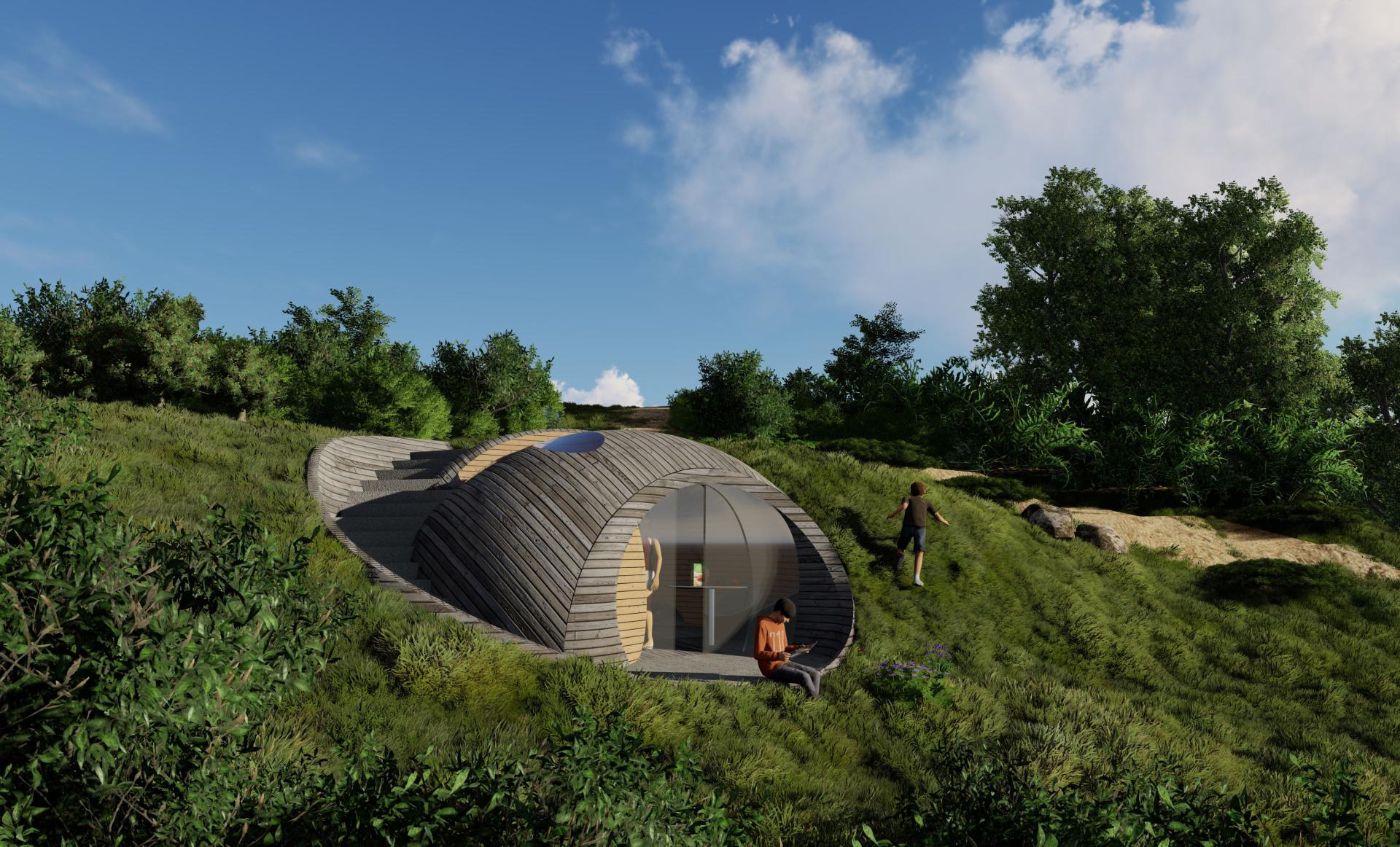
Semi-buried bioclimatic houses
Basic information
Project Title
Full project title
Category
Project Description
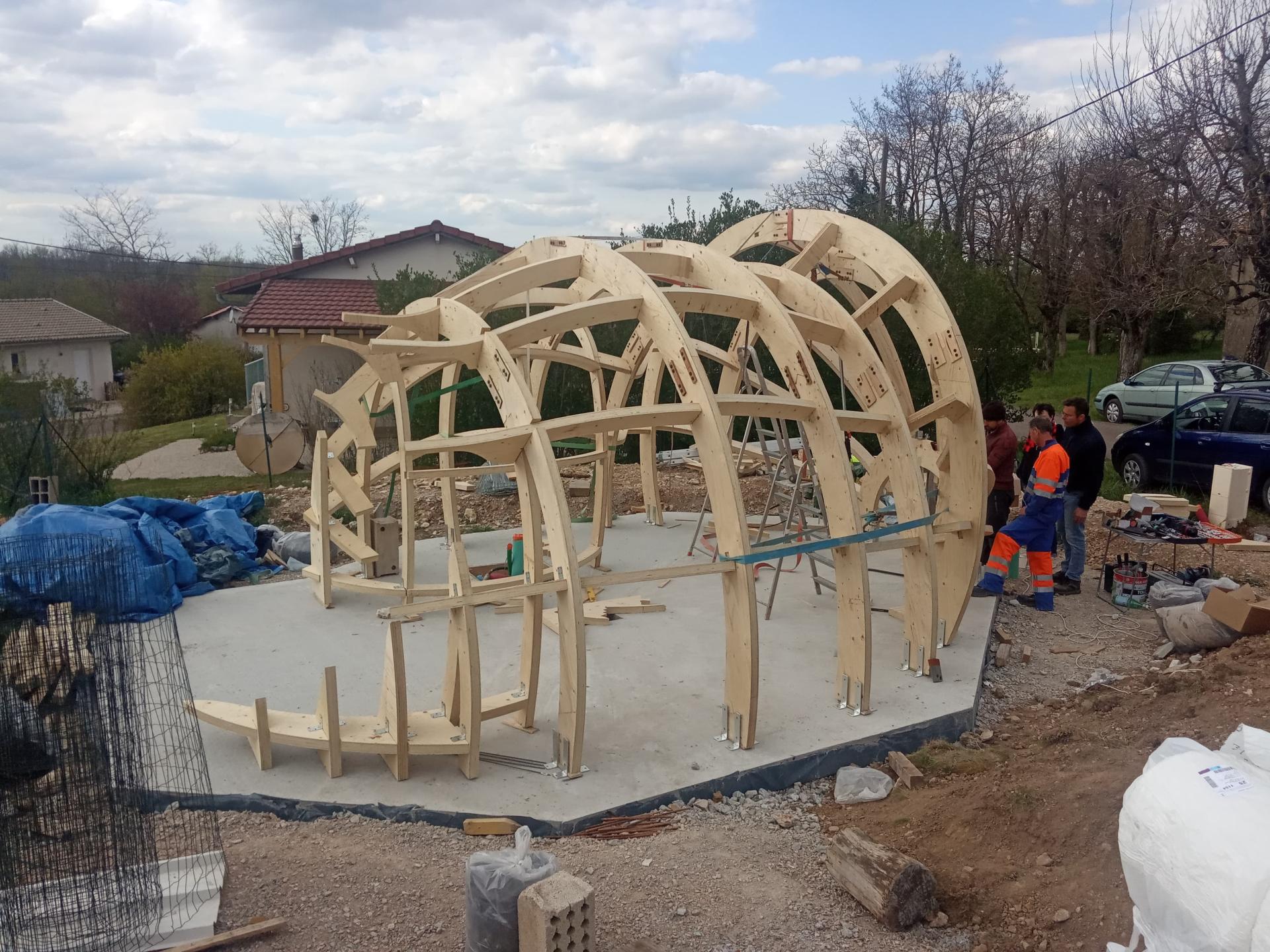
The concept of semi-underground houses as new model for urban sustainable environment stems from the need to re-think settlement typologies. The peculiarity of this type of houses is their capacity to relate to the ground morphology by inserting in a “non-violent way” as well as their structures entirely made out of wood. The end result is a semi-underground dwelling that naturally fits to the ground in accordance with the principles of bioclimatic architecture, thus obtaining a circular shape.
Project Region
EU Programme or fund
Description of the project
Summary
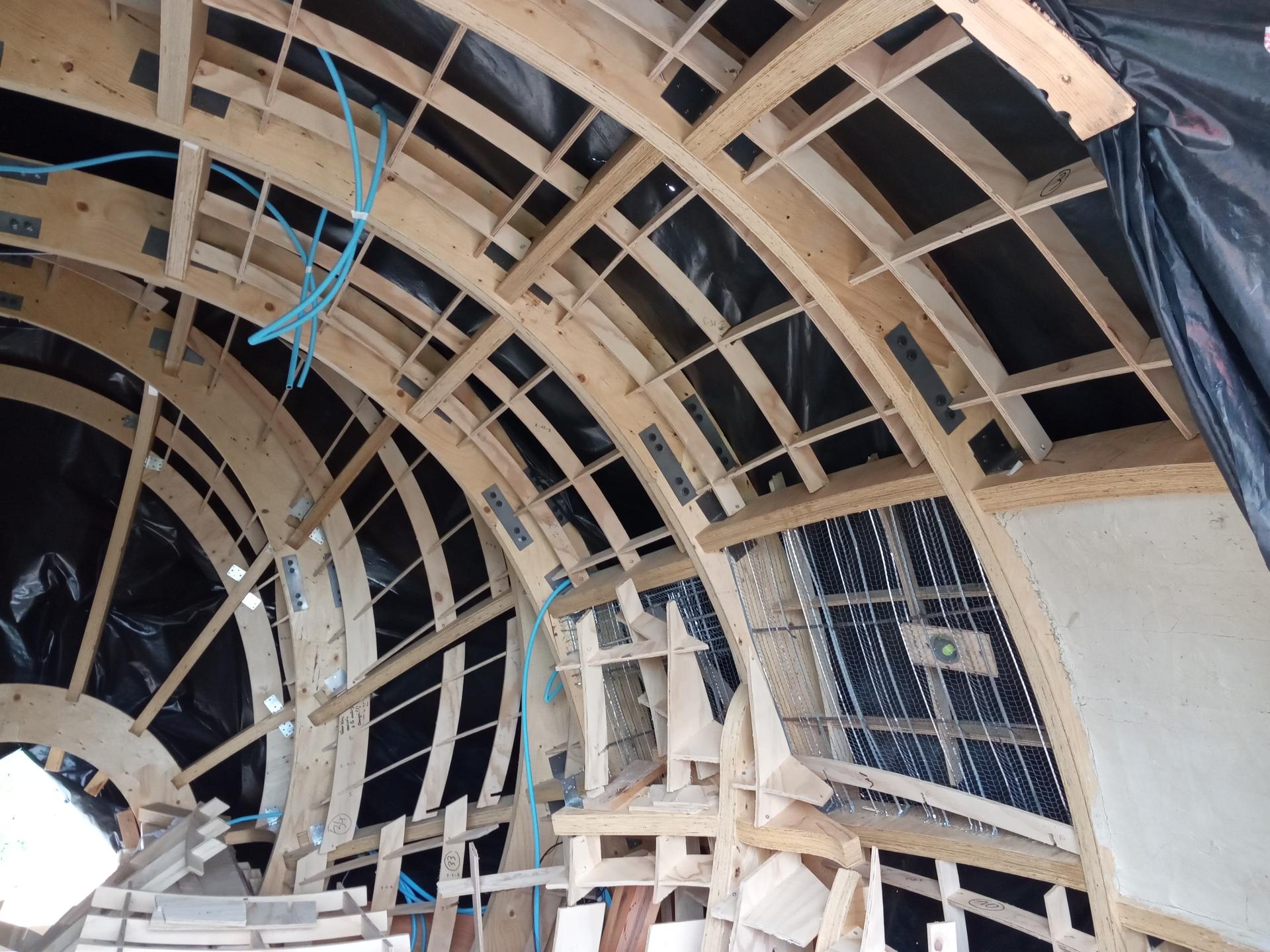
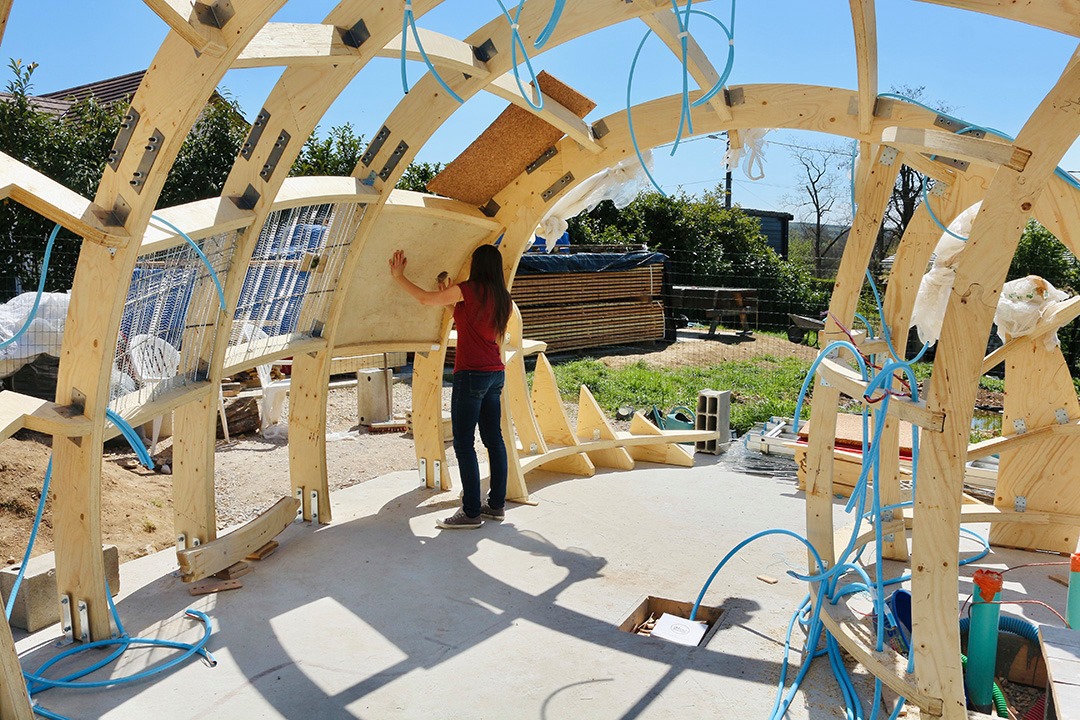
Here we consider a strategy to generate a complex architectural form whose structure is intimately linked to the material. This approach is stimulated by the Spanish architectural tradition where architectural design and engineering are not separated, but integrated into the curriculum and professional practice. We are interested in the use of this construction, the types of wood materials, the structure-envelope relationships, the tools and software used, the digital manufacturing processes involved or the types of joints used.
Key objectives for sustainability
The objective is to achieve energy neutrality. Firstly, by using wood for the entire structure, the only use of concrete is for the concrete slab. Secondly, by using the properties of the soil. The soil, which is dry and insulated, stores heat constantly at 21 degrees. This allows the house to be heated or cooled free of charge all year round without the need for a sophisticated storage system. Thus, The building's heating is achieved by a "passive system" that uses the energy that is immediately available in the environment, this consisting of a wall of storage for the absorption and distribution of heat,
Key objectives for aesthetics and quality
Roundhouses were the standard form of housing built in parts of Europe from the Bronze Age throughout the Iron Age, and in some areas well into the Sub Roman period. Nous souhaitons construire pour le confort humain avec les critères de la nature. La forme circulaire du Cocoon se veut ergonomique et en droite ligne de cet héritage historique. This design experience allows us to understand how to transform our cities into "green cities" with the resources we are given by architectural and engineering studies. And it wants to be a demonstration of how we can have energy solutions that make our environments more livable by participating in a cultural climate that crosses all over the world and wants to transform our cities
Key objectives for inclusion
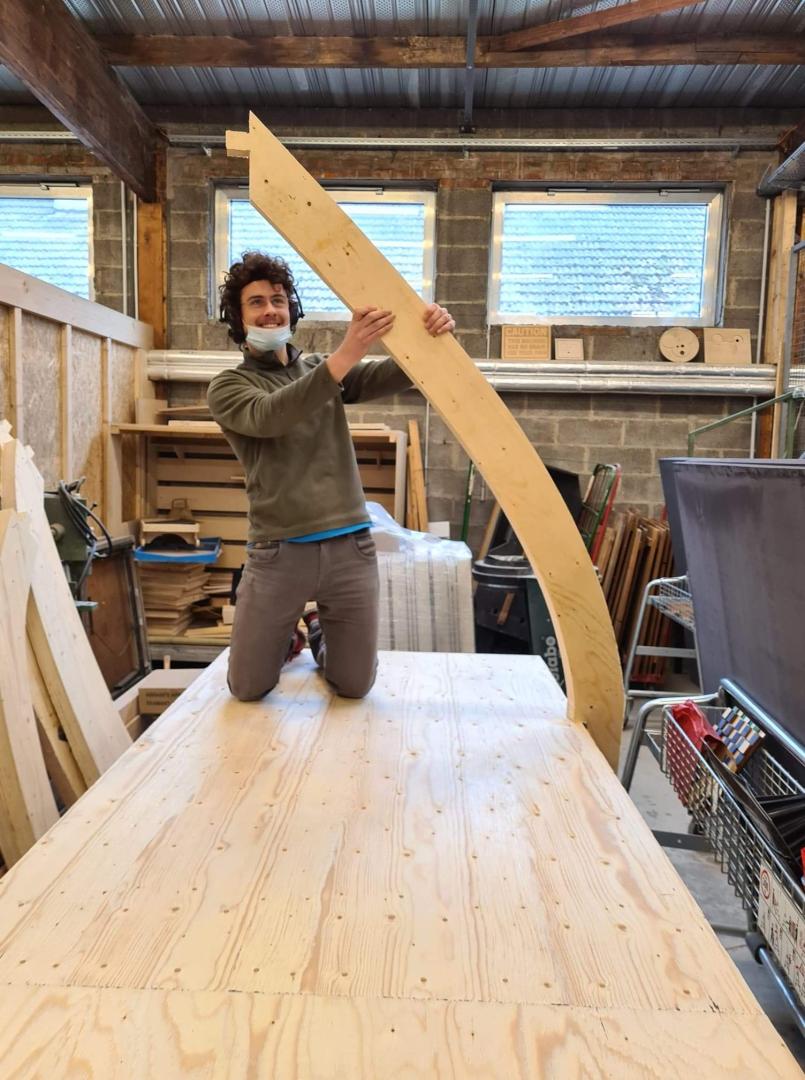
The strength of the project is its cost. For about 50,000 euros, we can offer quality, environmentally friendly and ergonomic housing. To do this, we use the FabLab technique which allows us to offer Cocoon in kit form, making final assembly easier. This also allows us to reduce costs and to adapt to the demands of interested people.
Innovative character
Currently only certain architectural and design firms are able to carry out these specific projects, which is therefore expensive. A completely redesigned construction principle based on the wood prototype allows for an embossed structure consisting of an assembly of ribs which, in addition to a wide variety of shapes, can be dimensioned according to the distribution of pressure points using the "Soft Kill Option" method: In addition to allowing a precise and predictive modelling of the envelope, the Soft Kill Option also concerns the internal part, inspired by the mechanisms present in organisms such as bones or trees, in order to optimise the structure as much as possible (uniform distribution of the loads on all the structure); a criterion decreasing the costs and allowing a great variety of shapes.