Educational Incubator
Basic information
Project Title
Full project title
Category
Project Description
Educational Incubator of Entrepreneurship in Zdziwój Nowy and Zdziwój Stary as a way to revitalize areas displaced by the German occupier during World War II.
The old rural abandoned school has been renovated and extended with a new office part to a high standard.
The implementation not only brings a new architectural quality to the rural area, but above all is to build a place for the creation of modern companies concentrated around the economic zone.
Project Region
EU Programme or fund
Which funds
Other Funds
European regional development fund
Regional Operational Program of the Mazowieckie Voivodeship for the years 2014-2020
Description of the project
Summary
Educational Incubator of Entrepreneurship in Zdziwój Nowy and Zdziwój Stary as a way to revitalize areas displaced by the German occupier during World War II - the building is an exemplary example of contemporary architecture set in a rural context.
The project won the first prize in a national architectural competition. The innovative solutions in the project have been noticed and appreciated by the jury.
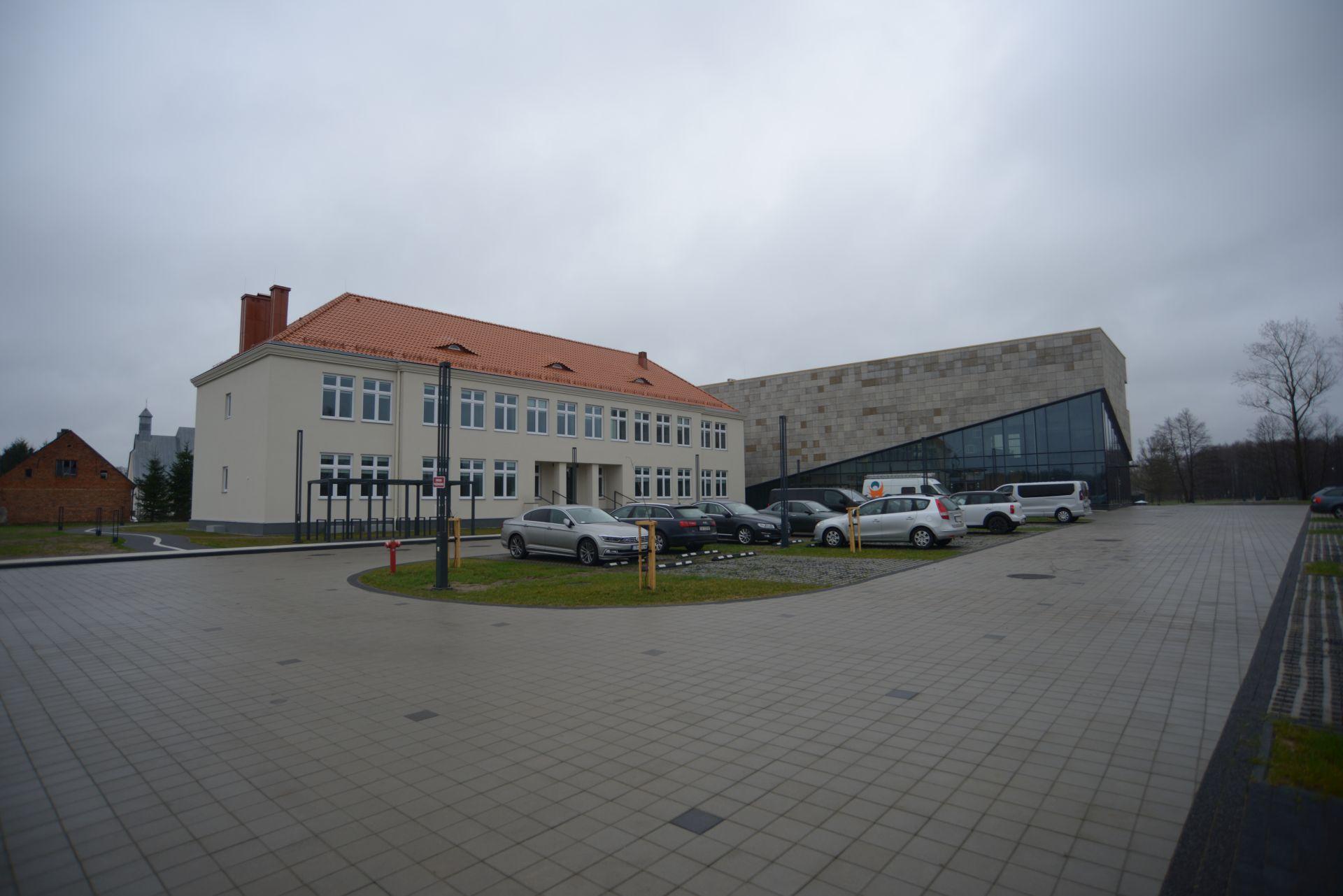
The main idea of the concept is to harmoniously integrate new cubatures into the existing buildings of the village. The new cubature complements the buildings in a natural way for the rural layout of the villages of Zdziwój Nowy and Stary. The arrangement of cubatures perpendicular to each other is a traditional way of shaping the space in the surrounding villages and it is about respect for the place and its spatial values. The designers proposed a body of the building with a flat roof, as opposed to the existing buildings in the vicinity. The function of the building and its relatively large cubature, considering the rural conditions, allow the design team to break with the traditional steep roof. In addition, the modern form of the building allows you to create a high-quality landmark, positively distinguished against the low-quality buildings in the neighborhood. The new form builds the identity of the place, and the creation of high-quality rural architecture was the highest priority of the concept.
The competition concept results from three basic determinants:
- first, it results from respect for the given place and its context
- secondly, the designed architecture is a sign of the times in which it is created
- thirdly, it is supposed to harmoniously harmonize with the environment, giving it a new value
Key objectives for sustainability
The new part of the building was designed in a passive system. Thanks to the correct positioning of the facility in relation to the directions of the world, large energy gains were ensured from the facade on the south side. In summer, the building should be protected against overheating by using a system of internal roller shutters and blinds.
Walls and roof, thermally insulated with high-performance materials, allow to obtain a heat transfer coefficient for zero-energy buildings.
The roof of the new part of the building is intended as a structure for a photovoltaic power plant. Photovoltaic panels were installed on its surface.
The new part of the building is equipped with a mechanical ventilation system with recuperation - heat recovery. In order to pre-heat the ventilated air, a ground heat exchanger is installed.
The building is heated by a heat pump with a bottom deep source.
Key objectives for aesthetics and quality
Architecture
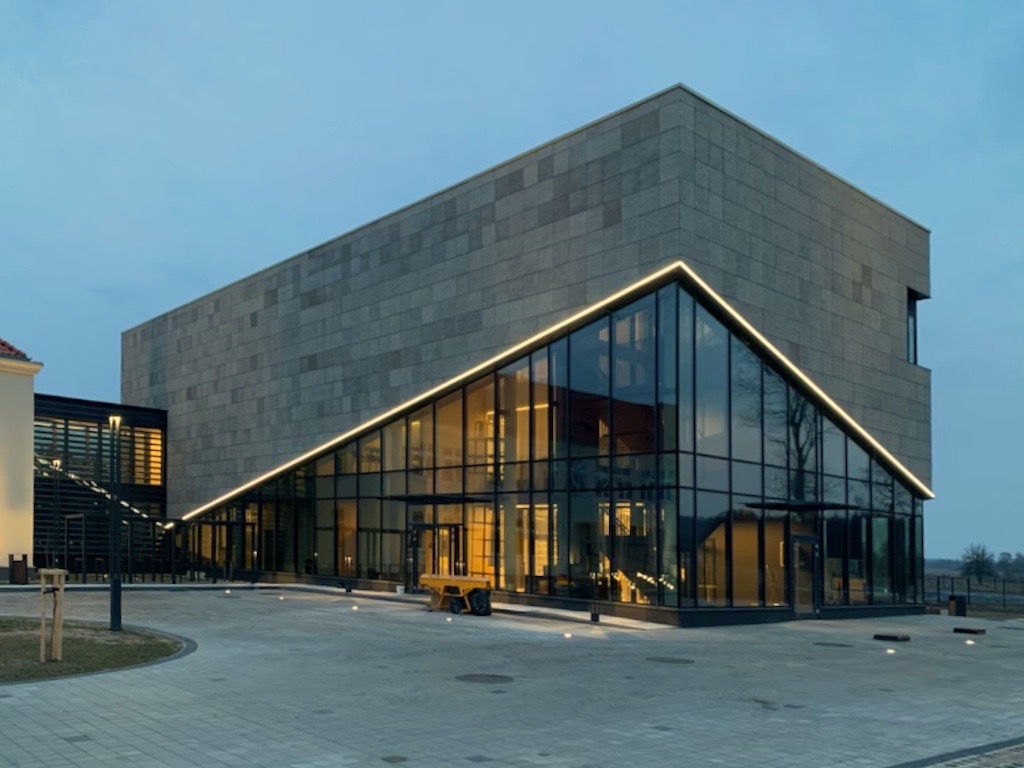
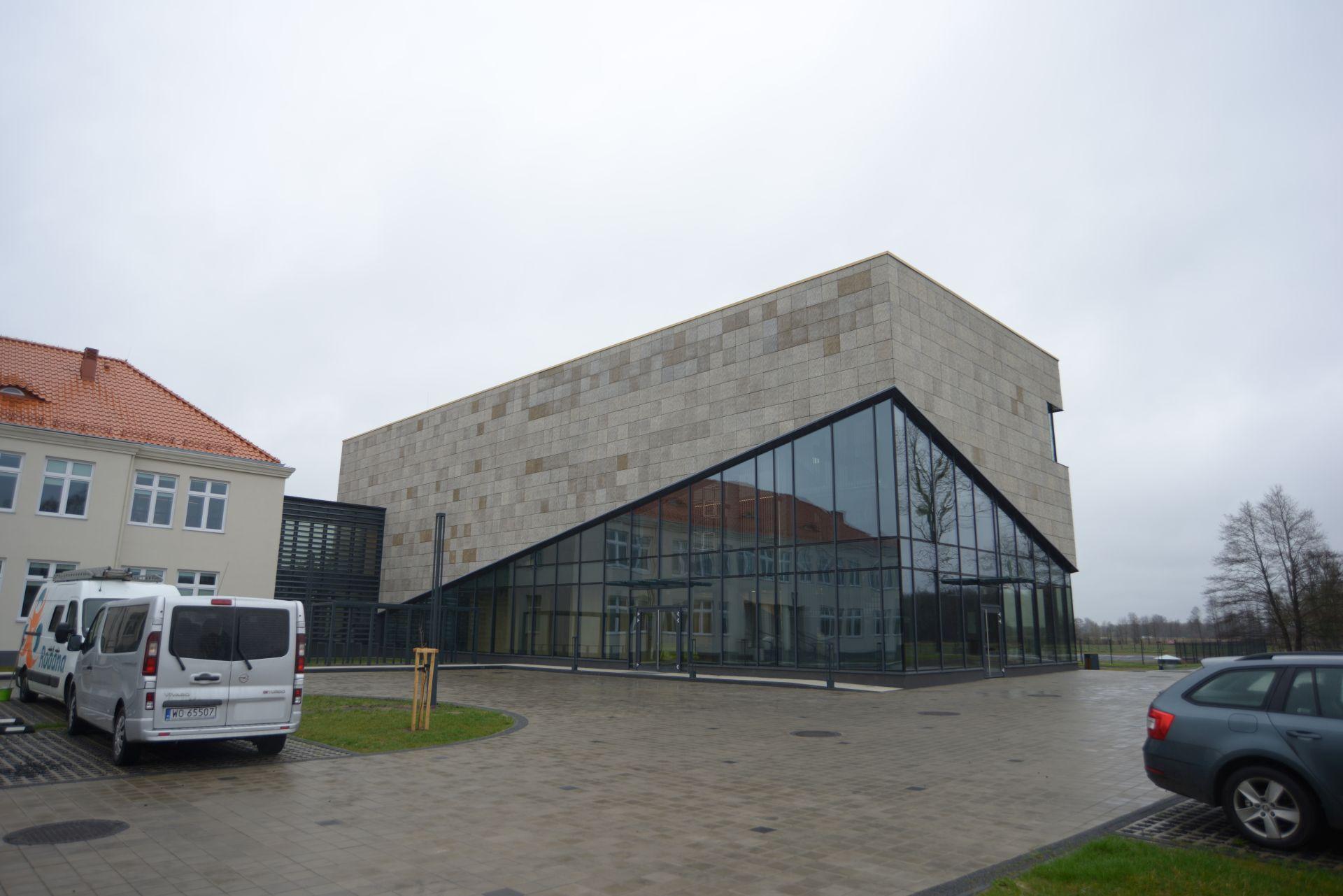
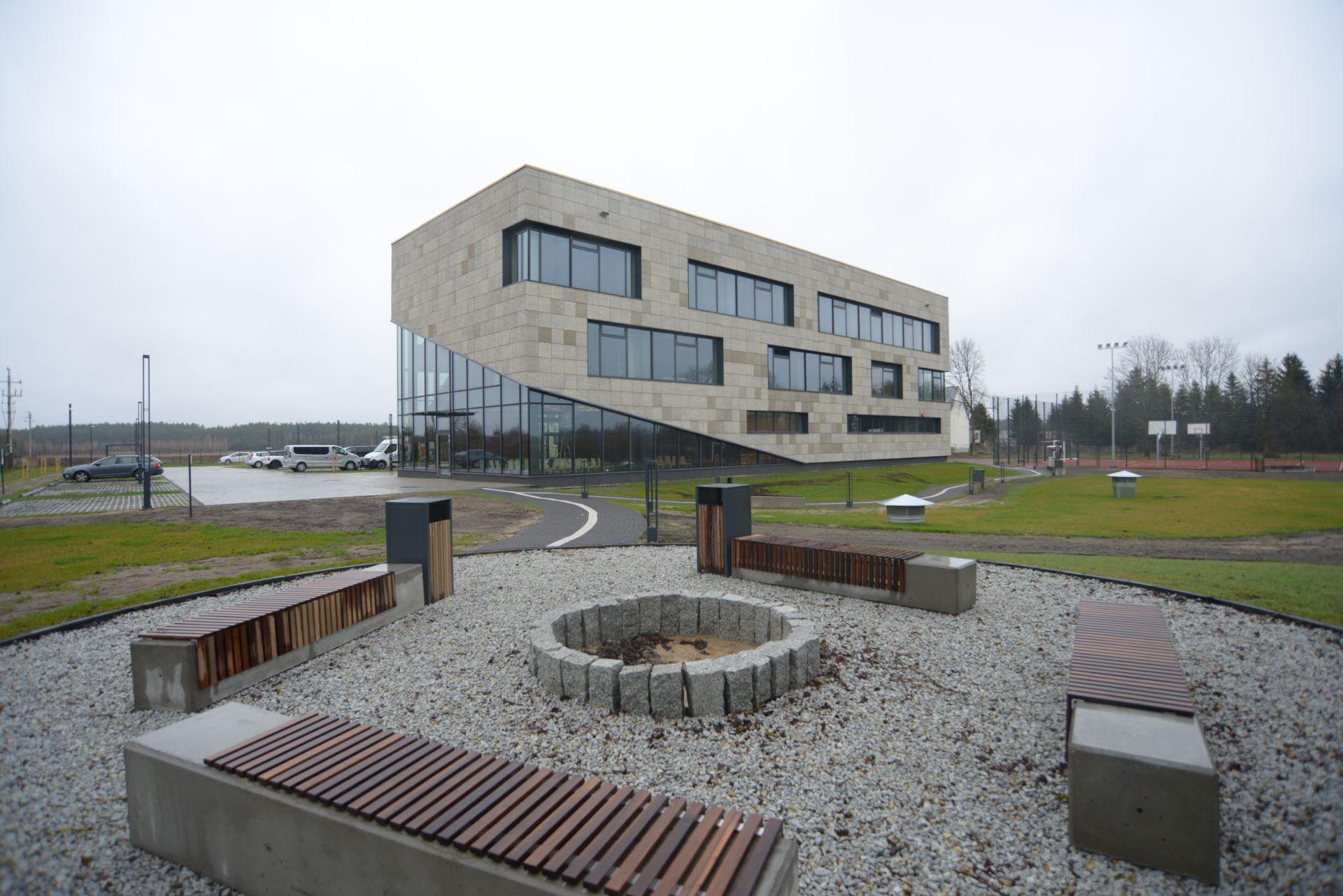
The shape of the building is a synthesis of two cuboidal solids subordinated to the rural layout. The existing school building was left unchanged in terms of the shape of the facility. The newly designed part was designed from materials contrasting with the existing part, i.e. glass-aluminum facades and a concrete facade with a natural thatch pattern. Thanks to the use of materials other than traditional ones - plastered walls, traditional windows and doors, a steep roof covered with ceramic tiles - it was possible to achieve the effect of a metaphorical break with tradition. The new part is a nod to the future, juxtaposed with the old part that represents the past. The present time is the keystone of the past and future tense - users using the facility on an ongoing basis.
The new part of the facility was shaped as a scaled bale of pressed straw. The bale is cut by a theoretical, oblique plane, symbolizing a break with the traditional perception of the village's function as a place of food production. The lower part of the facility located below the surface represents modernity and technological progress consistent with the facility's function - a business incubator, a place for technology development and research. The oblique position of the plane may be associated, for example, with the movement of a scythe cutting grain, with an oblique plow, leaving some freedom of interpretation. Thanks to the combination of the material traditionally used for roofing - thatch - and the material traditionally used in office construction - glass and aluminum facades - it was possible to create an original, unique combination of materials. Thatched roof is clearly associated with what is rural, the glass facade with what is big city. This combination allows you to create a modern quality that respects both tradition and locality.
Key objectives for inclusion
Functional division
The existing school is intended to be adapted for residential, leisure and social purposes, together with accompanying functions. In this part, 18 accommodation rooms with individual bathrooms have been designed - 34 beds are provided. In addition, there are utility rooms, cleaning rooms, a laundry room, and a kitchen.
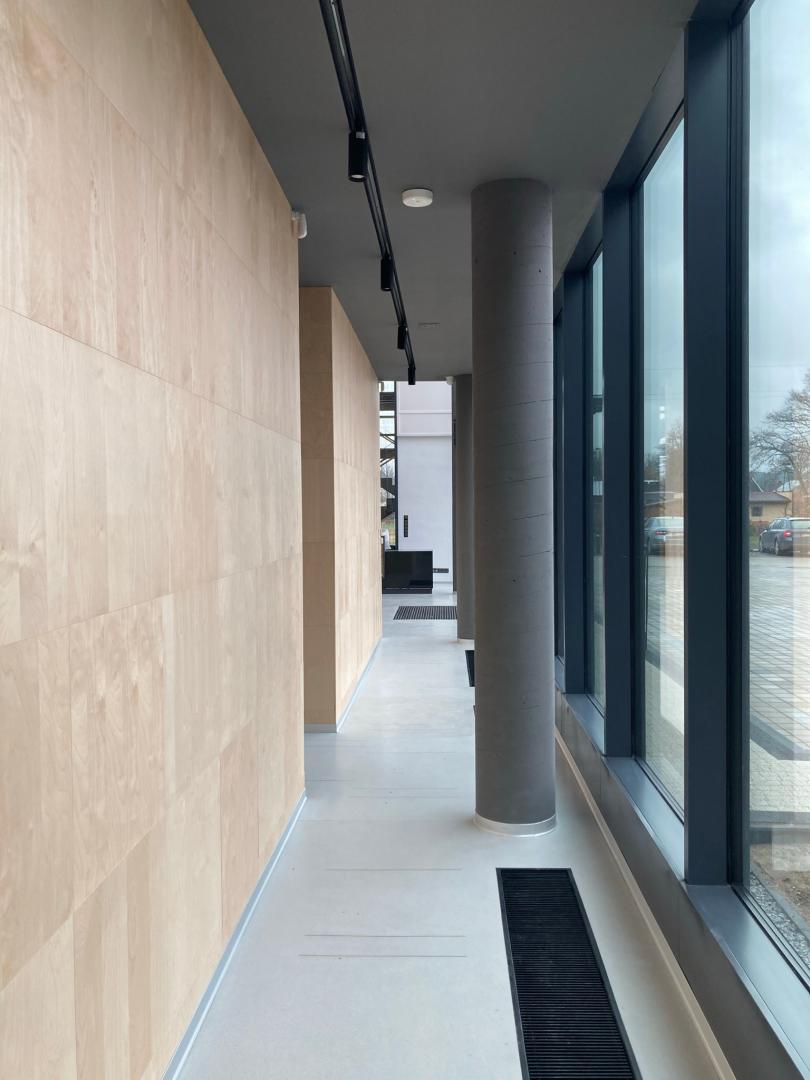
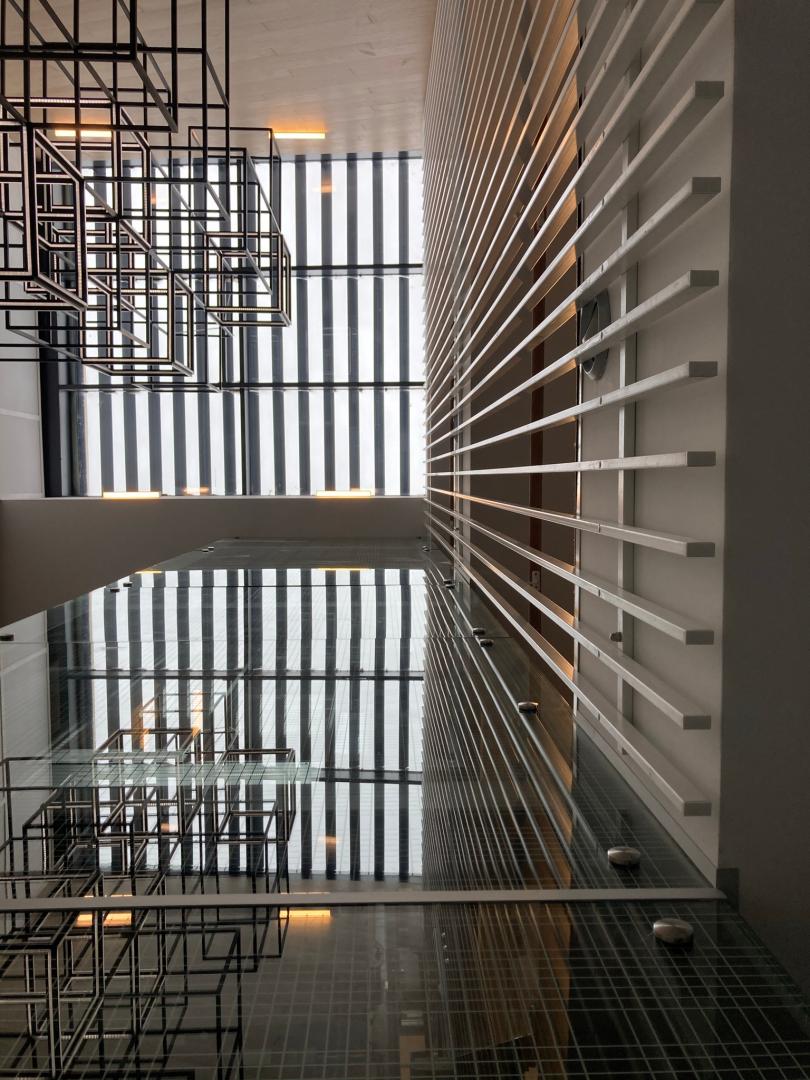
In the new part, training and teaching rooms as well as office and administration rooms were designed. On the ground floor there will be an auditorium and training room for about 100 people. The room can be divided into three smaller or two different sizes - a room for 70 people and a room for practical classes for 12 people. The rooms can be combined or divided thanks to the use of a sliding wall. The hall is accompanied by a warehouse for furniture. The entrance area, protected by an air curtain, is a spacious foyer with access to the reception desk, cloakroom, toilets and technical part. The foyer can also be used for exhibition purposes, organization of exhibitions, etc. Roof skylights are to be installed in communication spaces.
On the first floor there will be a set of toilets and six office and teaching rooms with an area of approximately 35 m2 each. The rooms can be used as educational rooms, offices for rent for incubated companies, meeting rooms, etc.
On the second floor, there will be a kitchen and social room, toilets, a cleaning room, two administrative offices, and five office and teaching rooms.
Results in relation to category
Zdziwój Nowy i Stary are forgotten rural areas like many in Poland. Inhabitants of such areas struggle with numerous socio-economic problems, such as: low standard of living, depopulation - migration to cities, economic emigration, low level of education, lack of prospects, lack of access to modern technologies.
Building an Educational Incubator of Entrepreneurship allows for equal living conditions for city and rural residents and regeneration of rural spaces.
How Citizens benefit
The construction of the Educational Business Incubator was carried out by local companies employing local residents. A significant part of the funds allocated to the construction of the facility was used locally.
At a later stage of the facility operation, it is planned to employ residents to operate the facility and, above all, to make it available to interested entities that are to create a lively business environment. It is planned to create 5 start-ups - technology companies each year.
Innovative character
During the implementation of the project, we created a unique, so far the only known in the world, facade made of concrete slabs with a reflection of natural thatch. In order to make the plates, a model was created - a sculpture made of stacked thatch fibers, which was used to make negative and positive forms. The molds were used for trial castings in many color variants.
The novelty of the object also lies in the complex architectural idea metaphorically presented in the form of an object. The theoretical plane crosses the building, combining new and old, urban with rural, organic and inorganic.
The applied pro-ecological technologies should also be considered as innovative solutions for degraded areas where the project was created.