BP GANG
Basic information
Project Title
Full project title
Category
Project Description
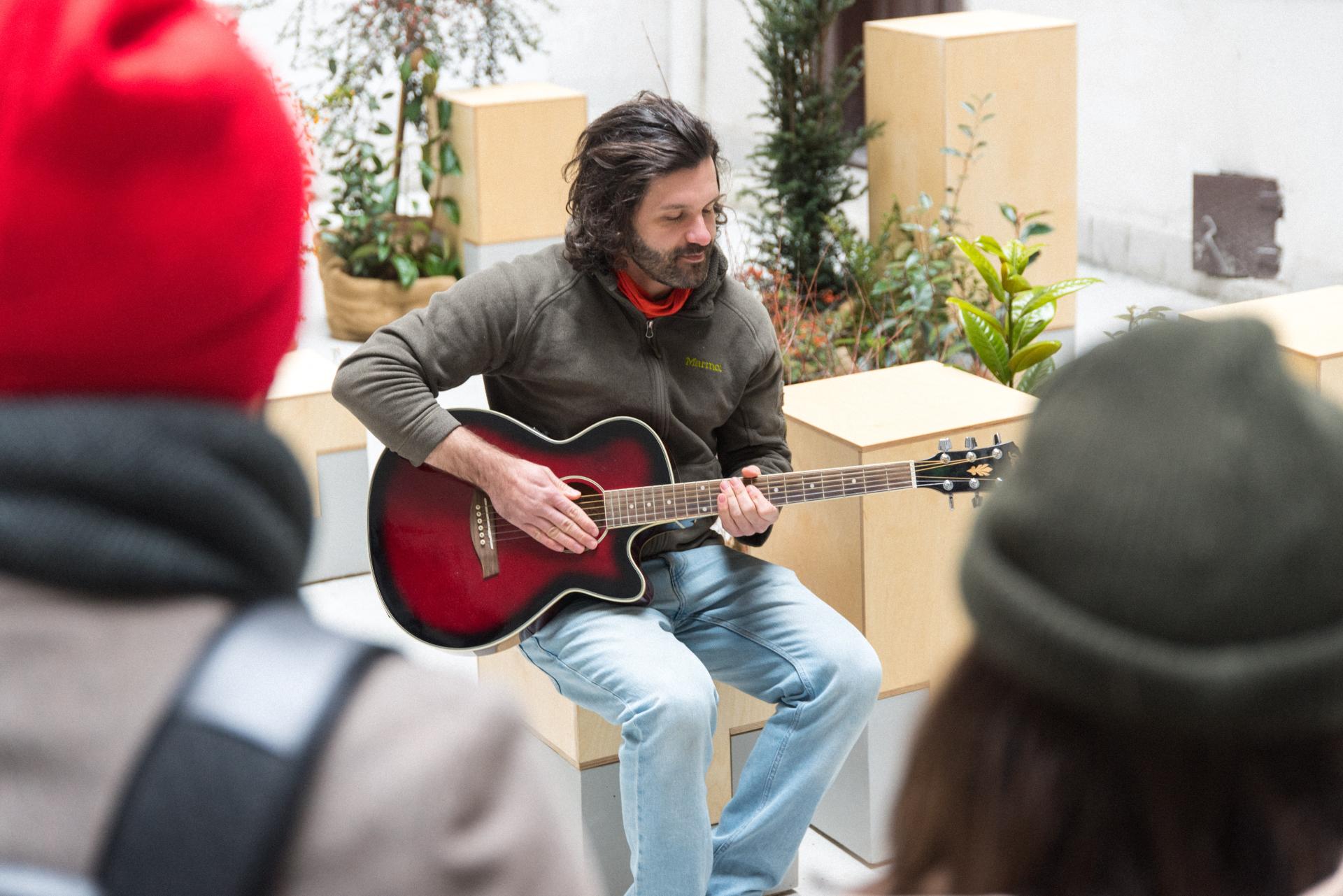
We focus on the transformation of tenement block's courtyards into new cores of community life. With the design and installation of digitally fabricated sets of furniture and graphics, we aim to stimulate more interaction between urban residents through fine art, music, theatre, puppetry, and games for kids, vibrant cultural life in the courtyards maintaining social distancing measures daily.
12. Specific
Project Region
EU Programme or fund
Which funds
Other Funds
The project received funding in 2020 from the initiative FURNISH – Fast Urban Responses for New Inclusive Spaces and Habitat funded by EIT Urban Mobility.
Description of the project
Summary
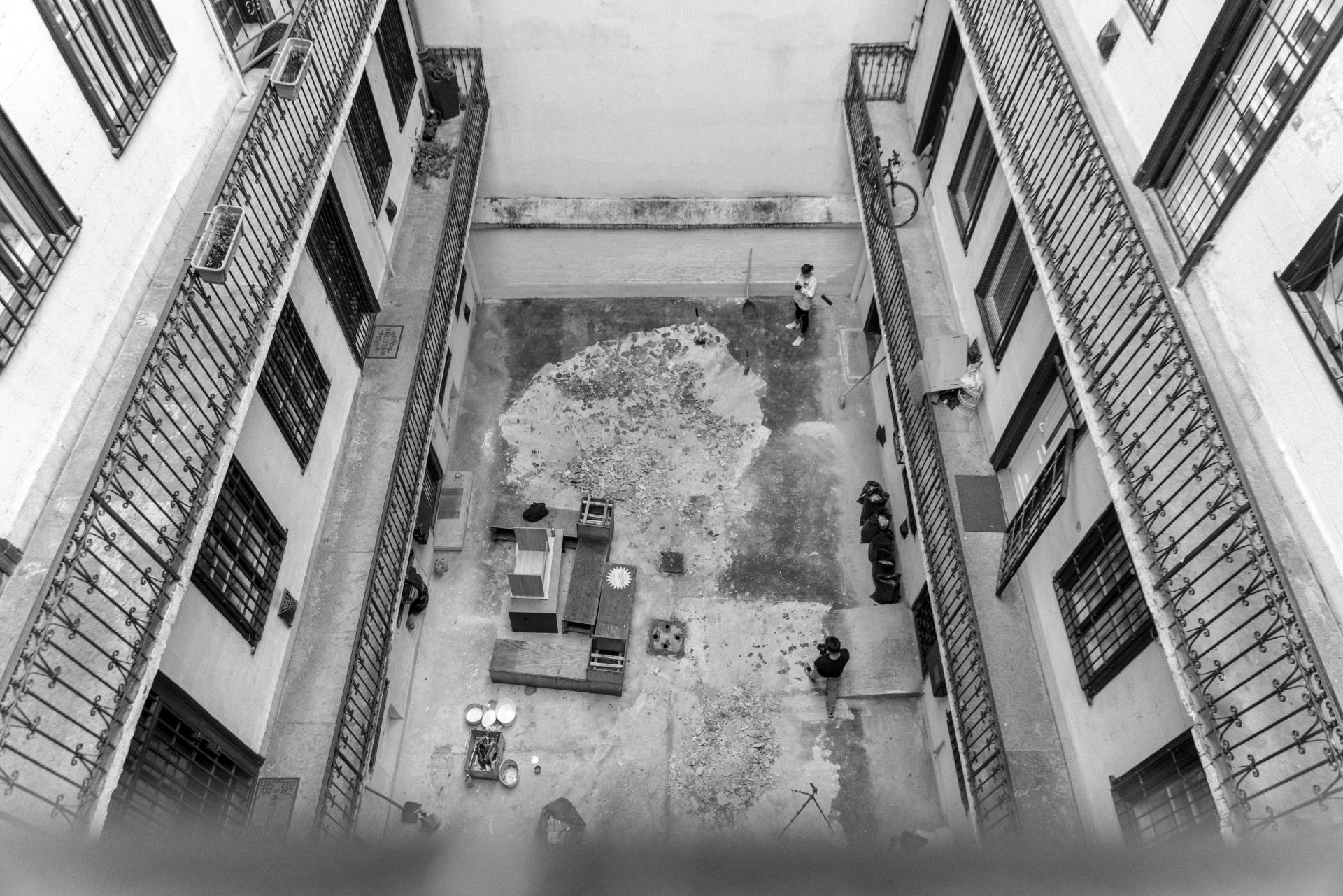
The peculiar courtyard tenement blocks with suspended corridors of Budapest became the dominant model of urban housing in late 19th century Budapest. An extremely dense pattern of these houses grew out from the ground over a short period of time. Thus each house has a small central courtyard at its center. While maximizing profit for investors and landlords, aesthetics and superdense were more important than the actual quality of spaces and living conditions. Still, the narrow courtyards often became the interface for communication between inhabitants. However, with changing lifestyles and atomization over the last century, many of these typically Eastern European interstitial spaces became desolate and neglected.
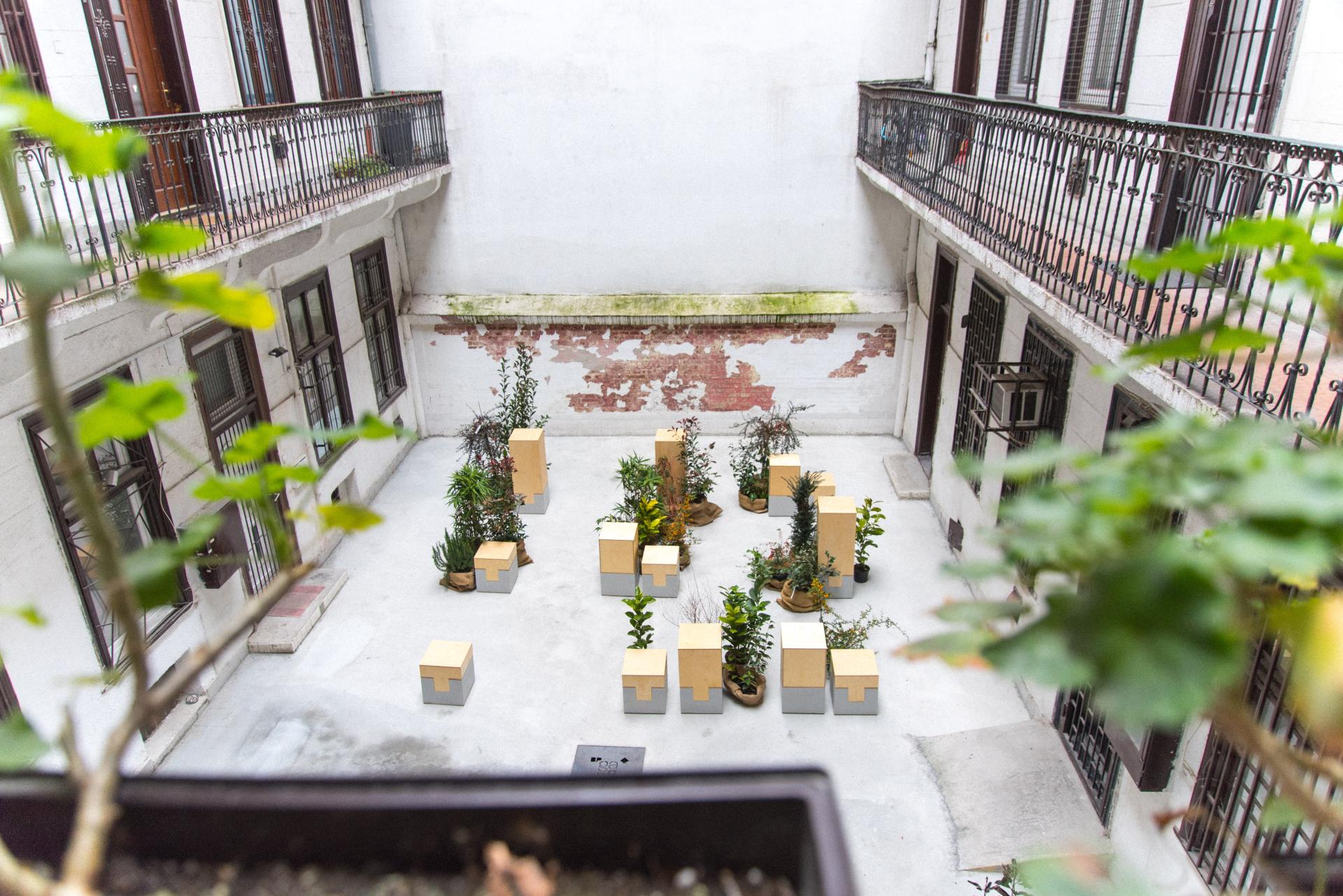
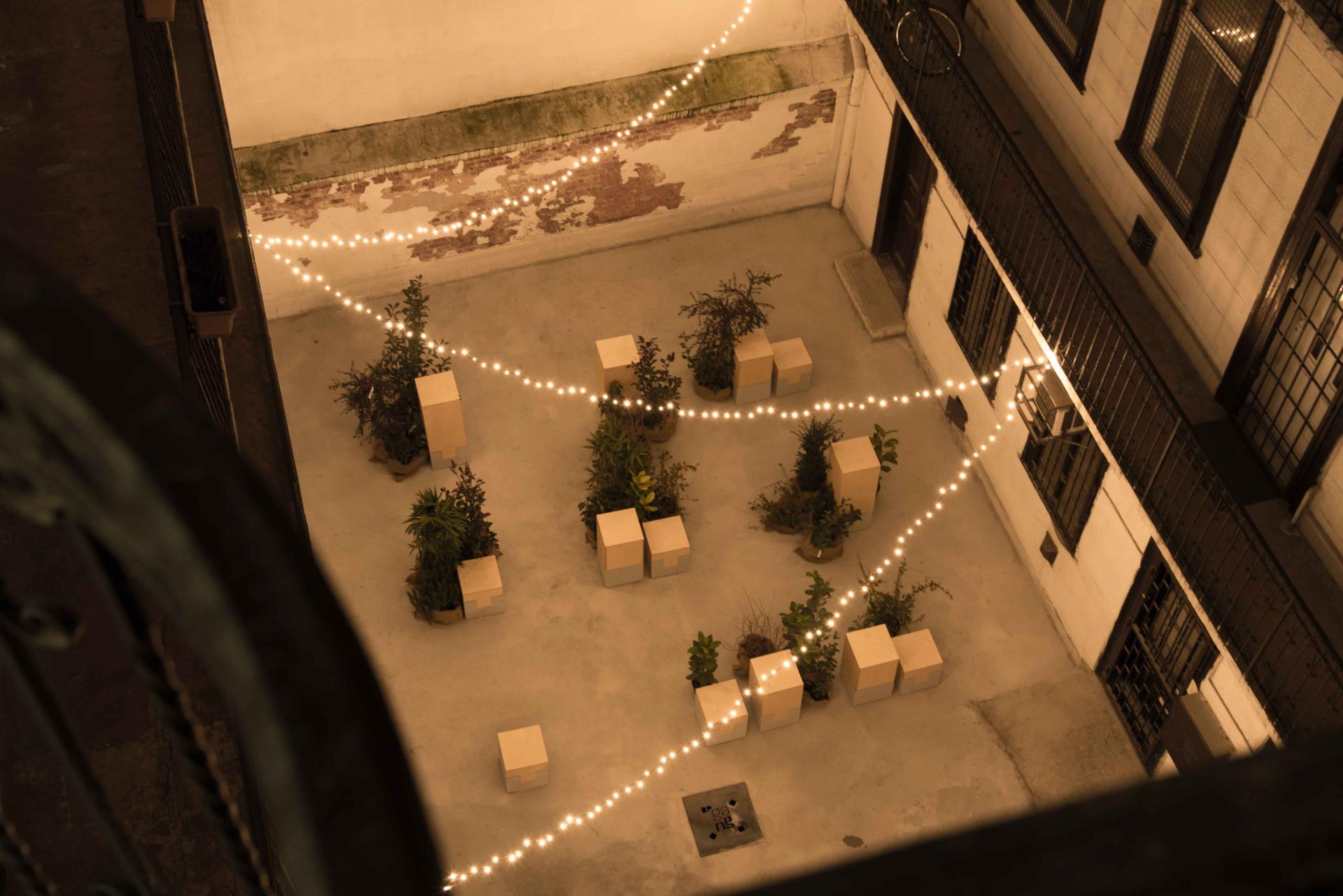
Although social distancing is necessary to reduce the spread of the disease, if not implemented correctly, such measures can also lead to the increased social isolation of people most in need of support and care. Due to the pandemic, human connection and culture are limited to our homes and their immediate environment. From singing on balconies to courtyard concerts, communities improvised new forms of interactions and rituals while sharing experiences based on mutual trust. As our location, we chose the courtyard and the suspended corridors of a typical tenement house in Budapest. By reconsidering the site, we focused on transforming the common spaces of the block into new cores of community life. Creating new daily rituals, giving an opportunity for safe gathering, and providing space and auditorium for plays and concerts were the main aspects that led us to our project. We implemented our installation in two different areas of the building. In the corridors, we placed CNC milled plywood cutty-stools and windowsills to invite the residents to use this common area as their own balcony. We divided the courtyard into a grid system and placed 20 pieces of digitally fabricated furniture at safe distance. We involved the residents in the design process.
Key objectives for sustainability
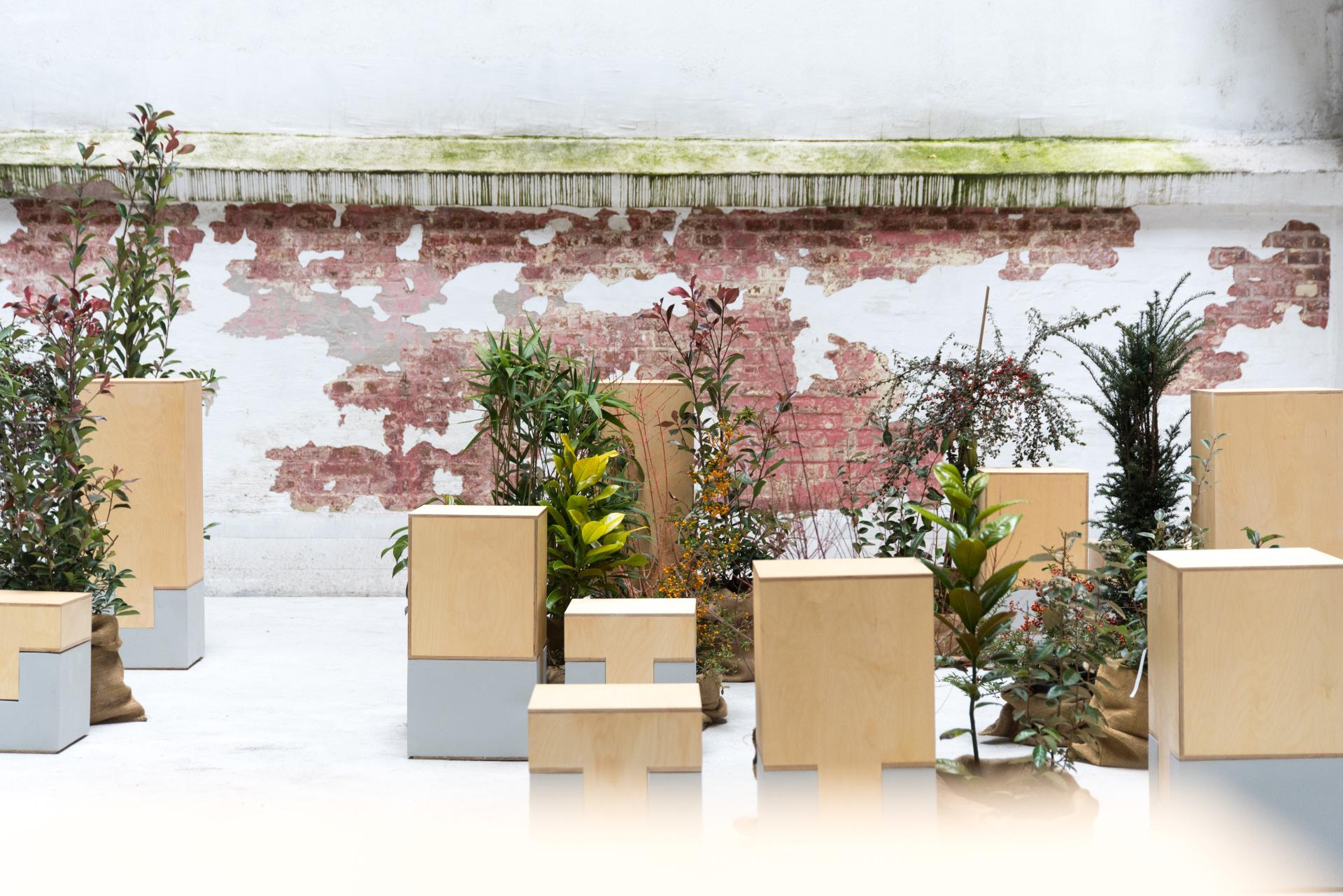
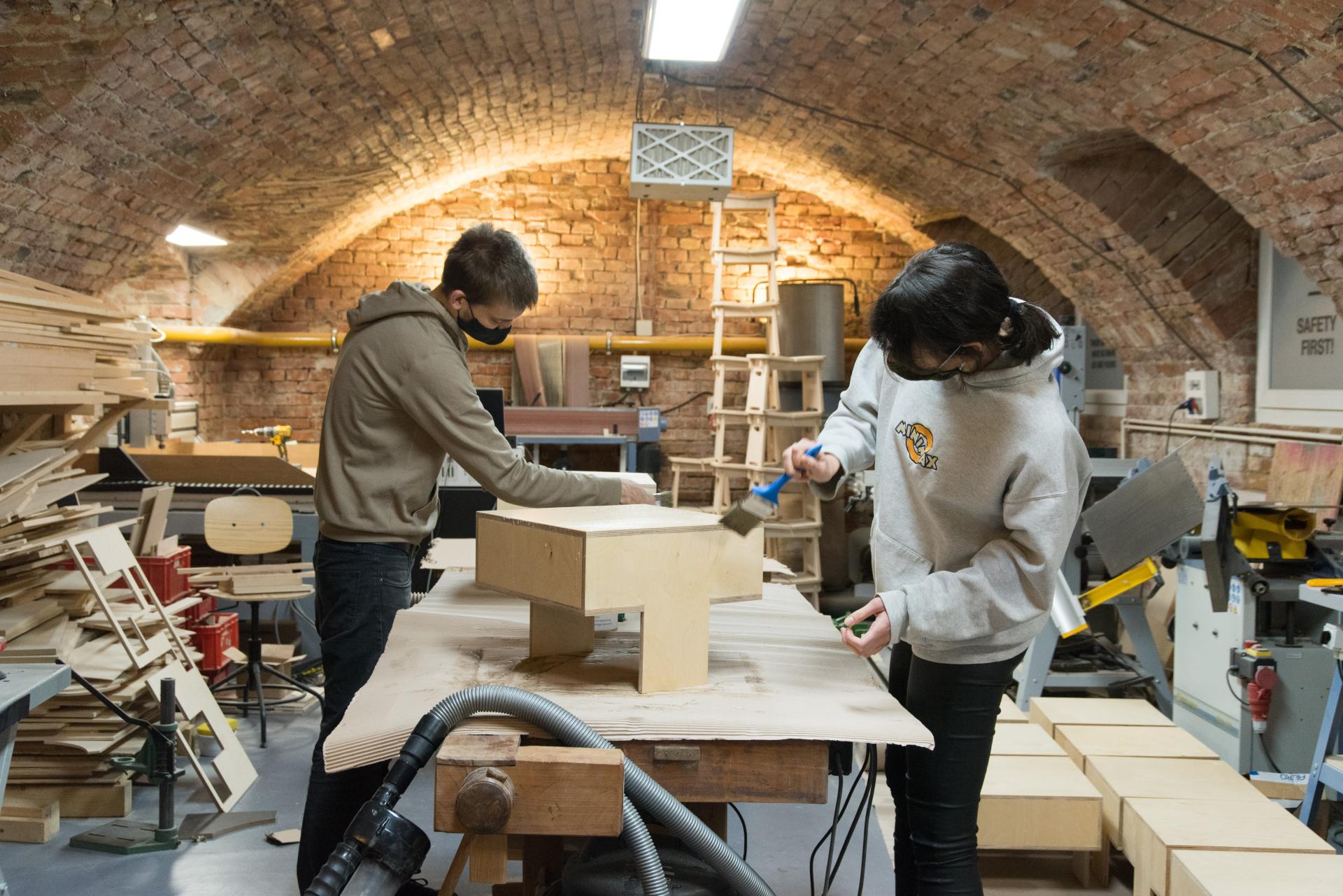
BP GANG is an open-source project designed for digital fabrication and for distributed manufacturing. Today, the products we buy usually travel thousands of kilometers before we can enjoy them. They are assembled in super-sized factories out of materials that often have to travel long distances before reaching the factory. These factories turn out mass-produced, highly standardized products, which leaves no room for individual customer needs or and the use of local resources. The designer’s role is evolving and adapting to a new digitized world. Distributed Design is a new approach to design that utilizes global connectivity to move data, instead of a product. The approach rethinks how goods are produced, from what materials and enhances the customer’s relationship with their products. We developed a complete open-source design and prepared a fabrication package so the installation partly or completely can be reproduced anywhere. Our primary approach was to create all elements from the same material using the same manufacturing technology. For CNC milling, we designed parts with digital joints, which means there is no need for other tools besides glue and clamps. Of course, after assembly, we sanded all edges, and we used transparent bio woodstain, which remained the grain of the wood visible. To reduce the ecological footprint of products we not just used environmentally friendly materials but produced everything locally.
Key objectives for aesthetics and quality
We focused on transforming the regular tenement block's courtyard into the new core of community life. The core idea came from Fanni HEGYI and Juli KÉRI architects. So our team name "BP GANG" referring to the suspended corridor of these houses and the coolness of the idea. The courtyard was unused and neglected, in condition, there was no stimulus for social integration. We aimed to stimulate more interaction between urban residents through fine art, music, theater, vibrant cultural life in the courtyards, and daily social distancing measures. Our task was to produce the necessary objects and spatial arrangements for these events to unfold successfully, even in today's exceptional circumstances. We implemented our installation in two different areas of the building. In the corridors, we placed CNC milled plywood cutty-stools and windowsills to invite the residents to use this common area as their own balcony. We divided the courtyard into a 50x50 cm grid system and placed 20 pieces of digitally fabricated furniture at a safe distance. Each piece of furniture consists of two materials. Due to the heavy bottom, we promote the safety rules, concrete made the elements stable and hardly moveable while the plywood top made the blocks user-friendly. The furniture differs in size and function: the smallest piece is designed for seating, the highest for standing while the medium one is for leaning on them. Since the joints are the same the furniture is easily variable. We used a visual grid system and plants to create an inclusive atmosphere and to achieve a good space distribution.
Key objectives for inclusion
Although social distancing is necessary to reduce the spread of the disease, if not implemented correctly, such measures can also lead to the increased social isolation of people most in need of support and care. Now we live in a world where accessibility to human connection and culture is often limited to our homes and the immediate environment, such as common areas of condominiums. From singing on balconies to courtyard concerts, communities improvised new forms of interactions and rituals that could become shared experiences based on mutual trust. These helped many of us to face the difficulties posed by this historic crisis and lead to positive psychological growth. We focus on the transformation of these courtyards into new cores of community life. With the design and installation of digitally fabricated sets of furniture and graphics, we aim to stimulate more interaction between urban residents through fine art, music, theatre, puppetry, and games for kids, vibrant cultural life in the courtyards maintaining social distancing measures daily. Our project is inclusive of the local society: we involved the residents both in the design process and the installation of the parts. The use of design principles based on distributed systems helped every member of the community to quickly learn new skills and participate in the common endeavor. Their personal contribution creates a stronger sense of belonging by helping them see these installations as their own creation. Everyone included.
Results in relation to category
We are proud to say that we reinvented the courtyard for the people to meet and share, by transforming the regular tenement block's courtyard into the new core of community life. We involved the residents both in the design process and the installation of the parts. The use of design principles based on distributed systems helped every member of the community to quickly learn new skills and participate in the common endeavor. Their personal contribution creates a stronger sense of belonging by helping them see these installations as their own creation. Everyone included. With the design and installation of digitally fabricated sets of furniture and graphics, we aimed to stimulate more interaction between urban residents through fine art, music, theatre, puppetry, and games for kids, vibrant cultural life in the courtyards maintaining social distancing measures daily. Since BP GANG several cultural events helped to build a community from the inhabitants.
How Citizens benefit
Our project is inclusive of the local society: we involved the residents both in the design process and the installation of the parts. The use of design principles based on distributed systems helped every member of the community to quickly learn new skills and participate in the common endeavor. Their personal contribution creates a stronger sense of belonging by helping them see these installations as their own creation. Everyone included. We aimed to stimulate more interaction between urban residents through fine art, music, theatre, puppetry, and games for kids, vibrant cultural life in the courtyards maintaining social distancing measures daily. Since BP GANG several cultural events helped to build a community from the inhabitants.
Innovative character
An open-source distributed design for digital fabrication. So simple. The designer’s role is evolving and adapting to a new digitized world. Distributed Design is a new approach to design that utilizes global connectivity to move data, instead of a product. The approach rethinks how goods are produced, from what materials and enhances the customer’s relationship with their products. We developed a completely open-source design and prepared a fabrication package so the installation partly or completely can be reproduced anywhere. Our primary approach was to create all elements from the same material using the same manufacturing technology.