MCSC 2020 Paris Co-evolution
Basic information
Project Title
Full project title
Category
Project Description
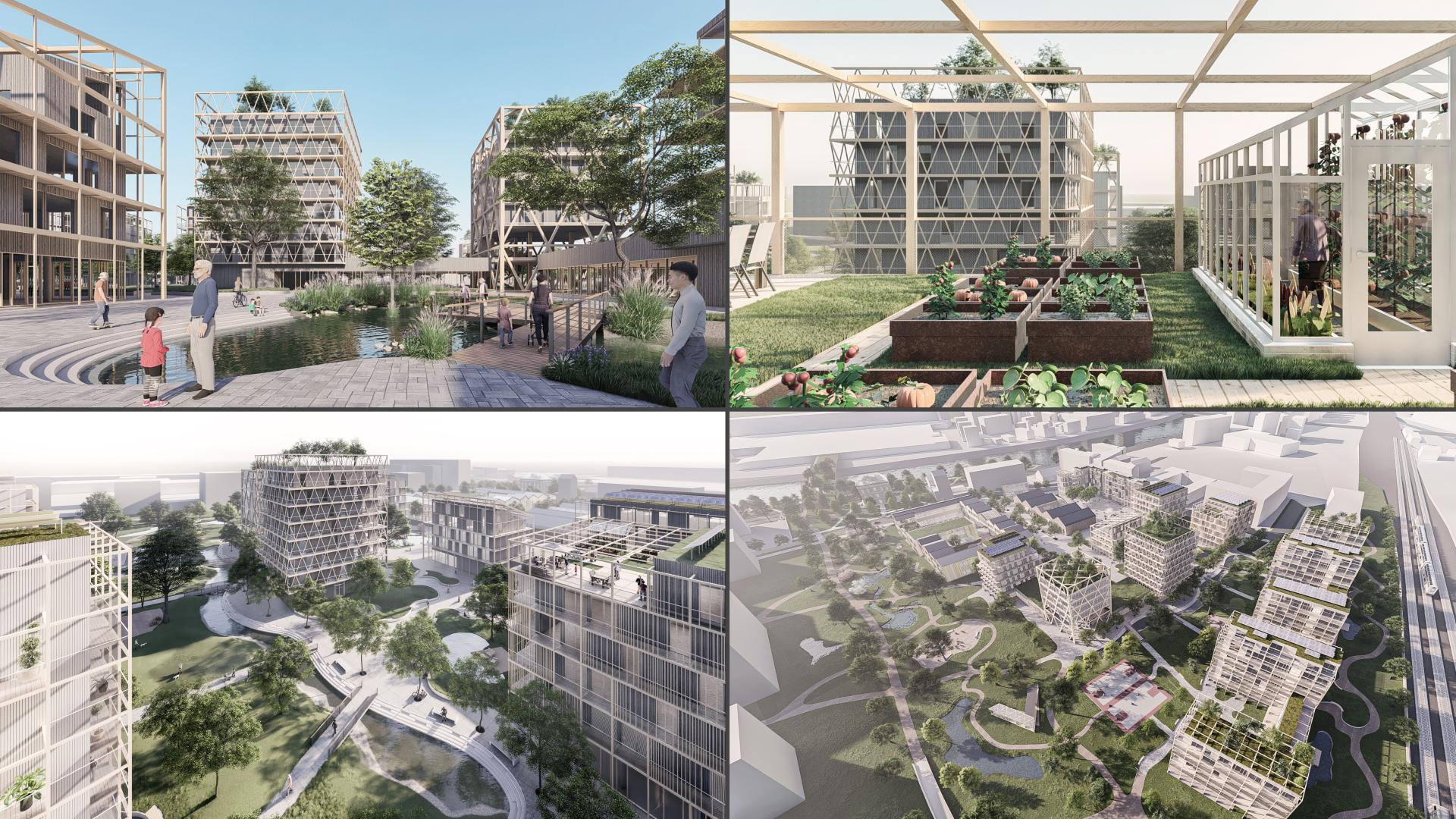
Brownfield in Saint-Denis is being transformed into a new sustainable residential area that offers a home for more than 1,000 inhabitants, facilities for education, culture and civic amenities. Further revitalization of industrial heritage and city park. We create a city of short distances, which is designed for pedestrians. We target the use of natural and recycled materials and energy self-sufficiency thanks to the smart grid. The area functions as fan village during the Summer Olympic 2024.
Project Region
EU Programme or fund
Description of the project
Summary
From the abandoned 7,5ha large brownfield, we created a new residential sustainable district that will start the transformation in Saint-Denis. Area offers a home for more than 1,000 inhabitants, facilities for education, culture and civic amenities. Further revitalization of industrial heritage and city park. We create a city of short distances, which is designed for pedestrians. The aim is the synergy of industrial heritage and new architecture with regard to genius loci. We want to design place with the image of a living city, which is forms all-day using of the building, mixing functions taht prevent the formativ of dark spots in the city. List of the designed buildings include affortable residental buildig with green and community roofs, groupe scolaire for approx 550 pupils and convesion of historicical Villa La Maison Coignet and industrial warehouses, which are transformed to commercial and cultural spaces. Design is based on proven analytical sites, we proposed a new transport solution, a sociological study and the interaction of people of different generations and minorities. Another key idea is to integrate the site into the networks of city parks in Paris using new cycle paths. The cut-off site is connected to the surroundings district by green bridges over the river Seina and the railway corridor. We designed buildings with almost zero CO2 footprint. Next main idea is a use of natural and recycled materials and energy self-sufficiency thanks to the smart grid. Our goal is prefabrication and dry construction process. The excavated land is reused on the site. Gray water recycling saved 40% of clean water. Rainwater accumulates on green roofs and outdoor areas and cools the microclimate in the city. Renewable energy sources generate all the necessary energy. We want to bring our vision or aspects from this project to another similar places in Europe.
The area functions as fan village during the Summer Olympic 2024.
Key objectives for sustainability
The basis is a proposal for the concept of green urbanism and a sociological study focused on the social interaction of the population. The aim is the synergy of industrial heritage and new architecture with regard to genius loci. We designed buildings with almost zero CO2 footprint, which are a combination of a wooden structure with a concrete first floor. We have breathed new variable and flexible use into industrial heritage sites. We used to open private objects to people with the possibility of constantly adapting the function. The city at short distances reduces the need of cars. We use natural and recycled materials from local companies. The load-bearing structures are optically recognized, concrete as a reference to history, CLT walls as a natural material. Our goal is prefabrication and dry construction process. The excavated land is reused on the site. Gray water recycling saved 40% of clean water. Rainwater accumulates on green roofs and outdoor areas and cools the microclimate in the city. Renewable energy sources generate all the necessary energy. The roof landscape consists of community and growing green roofs. Saddle roofs are made of integrated PV panels. Assessment od daylight and overheating create a quality indoor environment. The electricity produced is used directly in the building or accumulated in the battery. Energy is shared through a smart grid between objects with different daily peaks. Our goal is self-sufficiency and efficient use of energy. The result of the design are buildings with extremely low energy needs for heating. As part of the life cycle of buildings, we also considered the subsequent ecological recycling of new buildings. The architecture fully works with the proposed greenery, which consists of local greenery and trees. Other aspects are a combination of forced and natural ventilation, waste sorting, growing on green roofs, using energy-efficient appliances, an educational roof in a school building.
Key objectives for aesthetics and quality
The concept of pixel modular architecture, which is used on residential buildings, creates a full connection between aesthetic intent and function. The shaping of mass is based on the disposition, shading or gradation of materials in an urban context. Apartment buildings have the form of vertical or horizontal blocks with four to 8 floors. The blocks are connected by community and commercial spaces with 1-2 floors. This divides the mass, lets daylight into the space and creates vistas. The goal is showingthe building structures in the form of reinforced concrete and CLT panels. The roof landscape consists of community spaces, apartments, growing gardens. The facade is made of wooden vertical cladding. The groupe scolaire concept is based on functional zoning and connection to the mass of industrial warehouses. It is a two-storey building with a dynamic saddle roof and two courtyards, where there are playgrounds. The roof is made of integrated PV panels. The facade consists of polycarbonate colored panels or wood paneling. The interior consists of an showing glulam column structure, CLT panels or minimalist white elements. The column construction is used to integrate storage spaces. The building is completed by a green educational garden growing greenhouse. In industrial warehouses, we exposed brick masonry and restored steel truss structures. The roof is made of integrated PV panels. We opened the perimeter walls and fitted them with industrial windows and connected the building with the exterior. The Maison La Coignet building is equipped with a new communication core, which connects all floors and the roof becomes a green lookout. The outdoor spaces are based on a tasteful combination of historic paving and modern large-format. Main ideas is accompany nature with architecture. Green roofs, gardens, parks, alleys, threshing paths, greenery on balconies and the use of water features that support architecture and bring emotional and aesthetic well-being in space.
Key objectives for inclusion
The basis is a proposal for the concept of green urbanism and a sociological study focused on the social interaction of the population. The aim is the synergy of industrial heritage and new architecture with regard to genius loci. We want to design place with the image of a living city, which is forms all-day using of the building, mixing functions taht prevent the formativ of dark spots in the city. Our design includes residental buildings, where are community and commercial spaces located in the first floor. Residental building looks lika quality and afforable architecture which creates quality place to live. Another buildings are industrial warehouses and Villa La Maison Coignet and Groupe scolaire. For industrial herritage is the main idea of bringing a new variable function, which open the building to public and create adaptations of building over time. We want to save he historici values of building and bring quality conversion architecture. Groupe scolaire is a education building which offers a program for all-day use for kids, adults, public, etc. GS is designed as energy energy self-sufficient building with near zero carbon footprint. Public space include pedestrian zone, plaza, playgrounds, variable usable places of example as alternative theater, makets, projections etc. The main public space is city park - Pacr de la Coignet which continues throug two new designer green bridges which connects the park with other city district. Park is a place for social interaction of inhabitants. Technical main ideas includes use of reneweable sources of energy, natural and recycled materials from local companies, water and energy saving. We want to design architecure with is based on aesthetic quality and technological integration, quality interior spaces and outdoor microclimate. We also target barrier-free communication in buildings and public spaces. The main idea is "From a brownfield to an Olympic athletic village and then a sustainable residential district."
Innovative character
From the abandoned brownfield, we created a new residential area that will start the transformation in Saint-Denis. Based on proven analytical sites, we proposed a new transport solution, a sociological study and the interaction of people of different generations and minorities. Another key idea is to integrate the site into the networks of city parks in Paris using new cycle paths. The cut-off site is connected to the surroundings by green bridges over the river Seine and the railway corridor. The designed buildings with the minimum required energy consumption for heating are two energy independent, thanks to an smart grid network. Smart grid network is an energy connection of objects with different daily peaks - housing, school, work, commerce. Each function has a different daily peak. Smart grit network efficiently shares energy between objects as needed. Energy movement is monitored. The whole roof landscape consists of green roofs and useful spaces. Saddle roofs are made of integrated PV panels. The roof protects us against weather, but it also has an aesthetic effect and produces electricity. The school - Groupe scolaire is made of a glulam skeleton and a modular prefabricated curtain wall panels. Almost the entire building is made of natural and recycled materials and is energy self-sufficient. The building is multi-purpose with all-day use, in the form of library, pc room, music classrooms, workshops and etc. The corridor is designed as a playful corridor with integrated functions and games. We dedicate the maximum amount of space to children. Energy sources are PV panels and heat pumps. The heat pump is used for heating and in reverse cooling mode. We use only extremely economical appliances for both electricity and water consumption. The whole area is barrier-free access and a goal for security. Public lighting without light smog. The shading solution is part of the architectural design. The gray water recycling system saves 40% of drinking water.