Dessa
Basic information
Project Title
Full project title
Category
Project Description
An innovative furniture system that reduces the amount of manufactured elements and waste. A company that uses this system has the ability to recover unwanted components, regenerate them or recycle them properly. Users can replace only a few elements to change the look of the furniture, which will significantly reduce consumption. In addition, the user has the opportunity to replace single elements that have broken down without the need to dispose of the entire furniture.
Project Region
EU Programme or fund
Description of the project
Summary
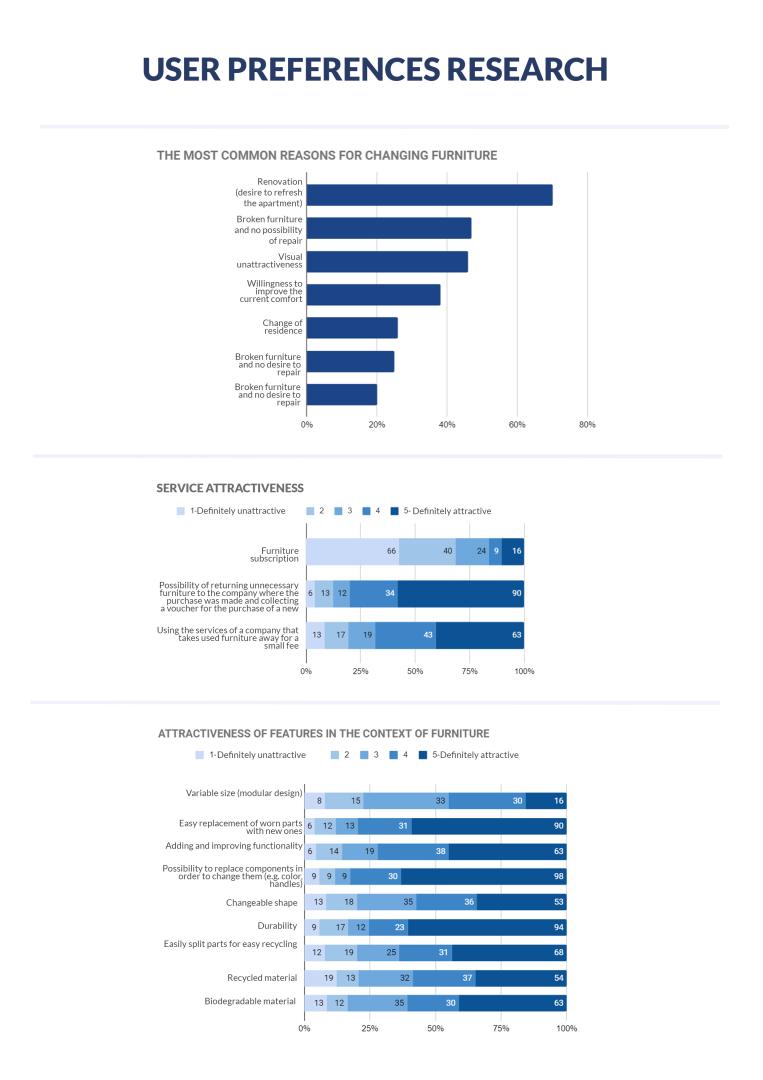
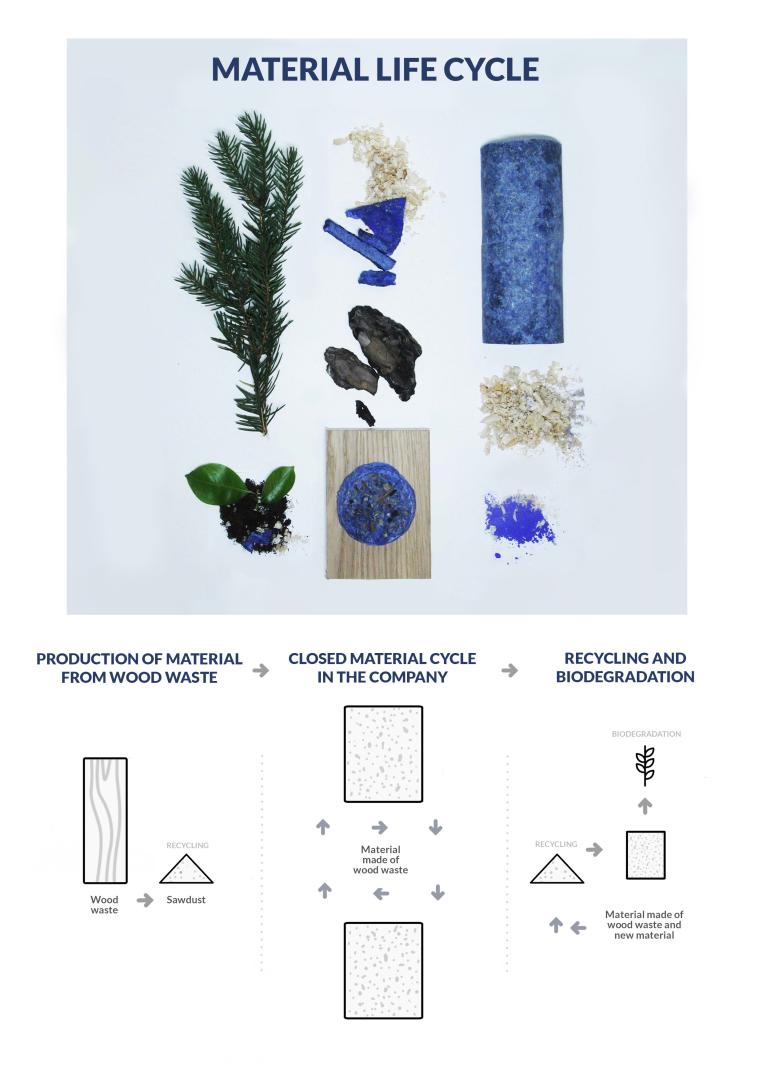
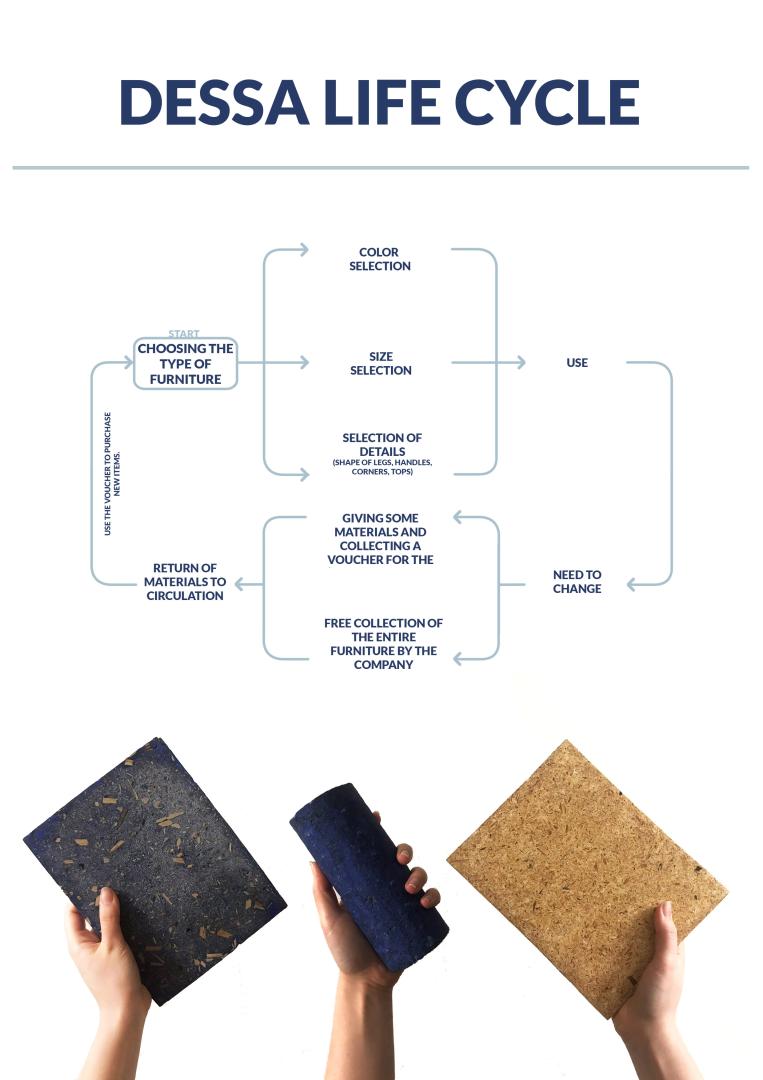
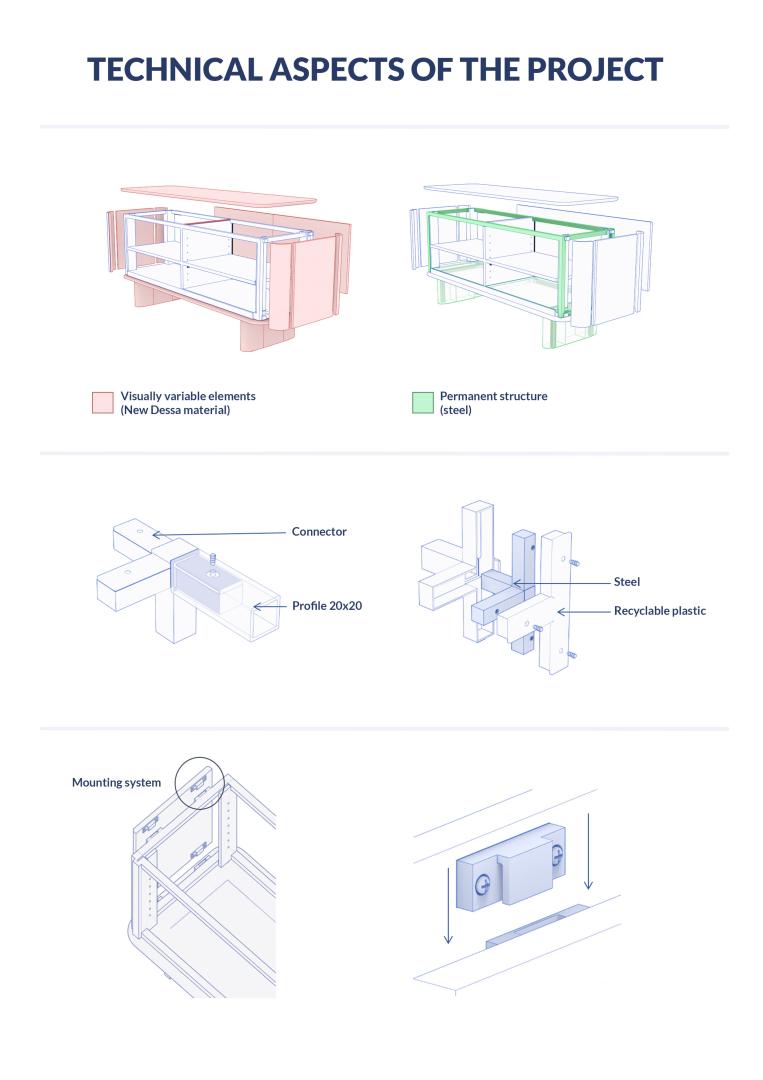
The aim of the project is to create a furniture system that will reduce excessive consumption in the furniture industry. To do this, I started with a survey of current user behavior and desires. The new alternative is not only more sustainable than the existing solutions, but is also attractive to users and companies. I believe that revolutionary design is to create even more attractive solutions for users with the least possible harm to the environment. As a result, users will be willing to benefit from eco-innovation. Research has shown that users most often replace furniture due to visual old age and the inability to repair. The furniture consists of a frame of connectors and external visual elements. The furniture system provides for the possibility of replacing both single elements that are broken and external parts that affect the aesthetics of the furniture. Thanks to special connectors, the user can also add or remove modules to change the size. Moreover, a new material based on wood waste, lime and protein, which is fully biodegradable, has been developed. This is an alternative to harmful boards based on formaldehyde. The boards can be regenerated and partially used as waste in the production of subsequent batches. However, the system is designed to accept new materials in the future, such as recycled plastic, materials from used tires and 3D prints. The concept also makes it possible to add personalized functionalities that will facilitate functioning also for people with disabilities. The user will provide the company with unwanted items and collect a voucher to buy new ones. In this way, only part of the components will be replaced and the company will have control over the raw materials. The company will be able to recover racks and external plates and mechanisms for use in future collections, and users will only replace some of the materials that will be recycled.
Key objectives for sustainability
The main goal of the project is to create a furniture facility that will be a response to excessive consumerism and the problem of too much waste generated by the furniture industry. The first research goal was to find out how to reduce the use of natural resources in the production of furniture. The analysis of secondary sources showed that the most desirable situation would be an efficient regeneration that would allow the same components to be used in further production or recycled and then reprocessed. In order to fully use the potential of the new materials, it should be possible to easily disassemble them and divide the furniture into different parts. In a circular economy, each object is considered as a set of components in order to be able to repair only individual components, not the whole. In a situation where only one element breaks down, the inability to replace it makes the entire piece of furniture inoperable and useless. In the document "European Green Deal" you can find further recommendations that indicate the need to use standardized furniture fittings and the possibility of replacing broken individual components over the next few years. The project is to show that you can combine the needs of users and environmentally friendly operation. This is especially important in the context of circular economy, as behavior during and after use is one of the most important factors that affect the circulation of components and materials in the loop. For this reason, strengthening correct behavior and preventing negative behaviors is one of the key tasks. The fully configurable system also allows for greater configuration of individual elements. Furniture will be able to be updated, but also to create designs of individual elements that will make life easier for the disabled.
Key objectives for aesthetics and quality
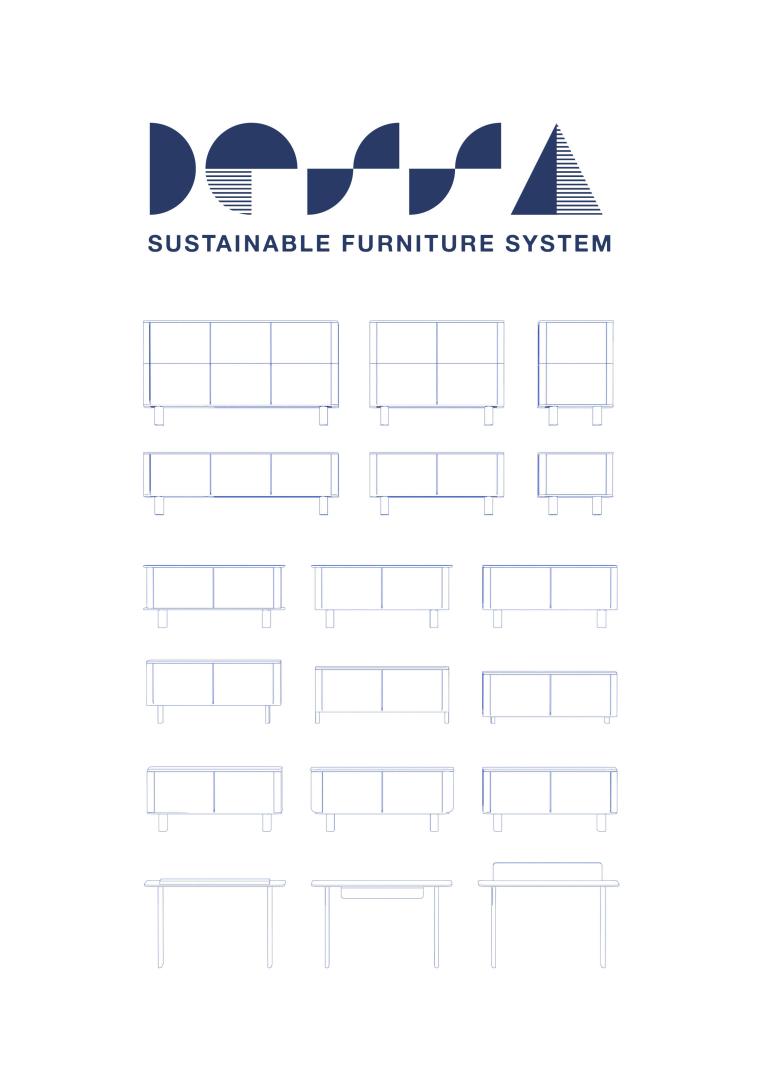
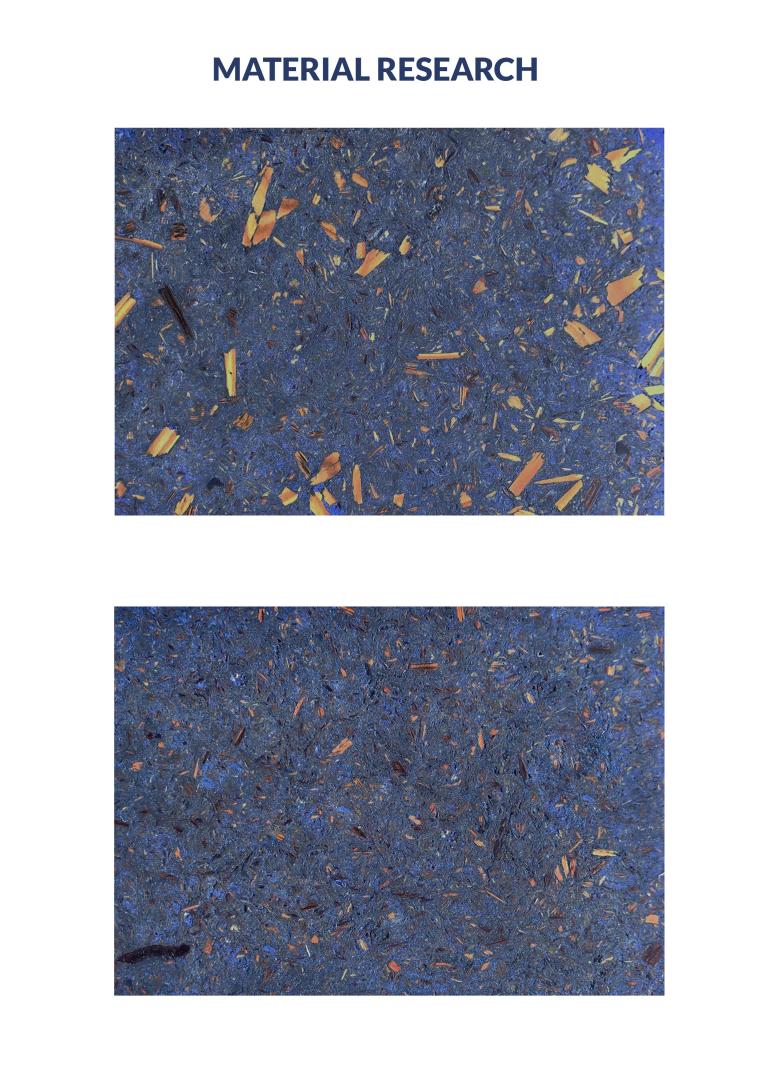
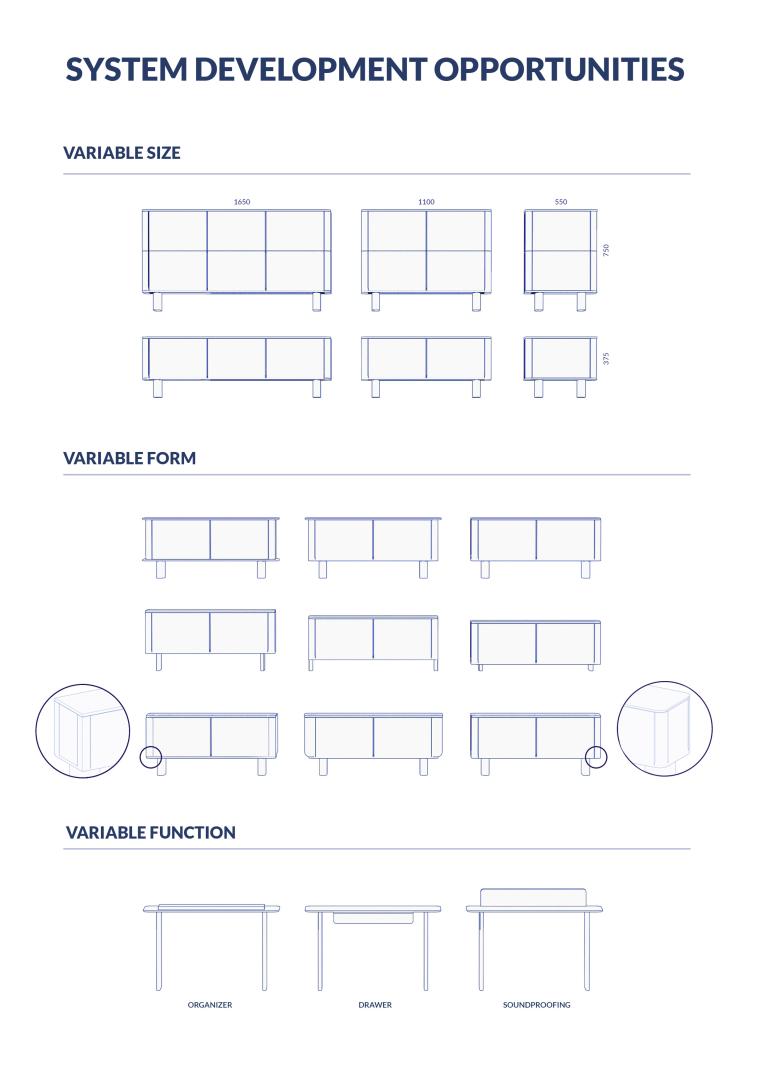
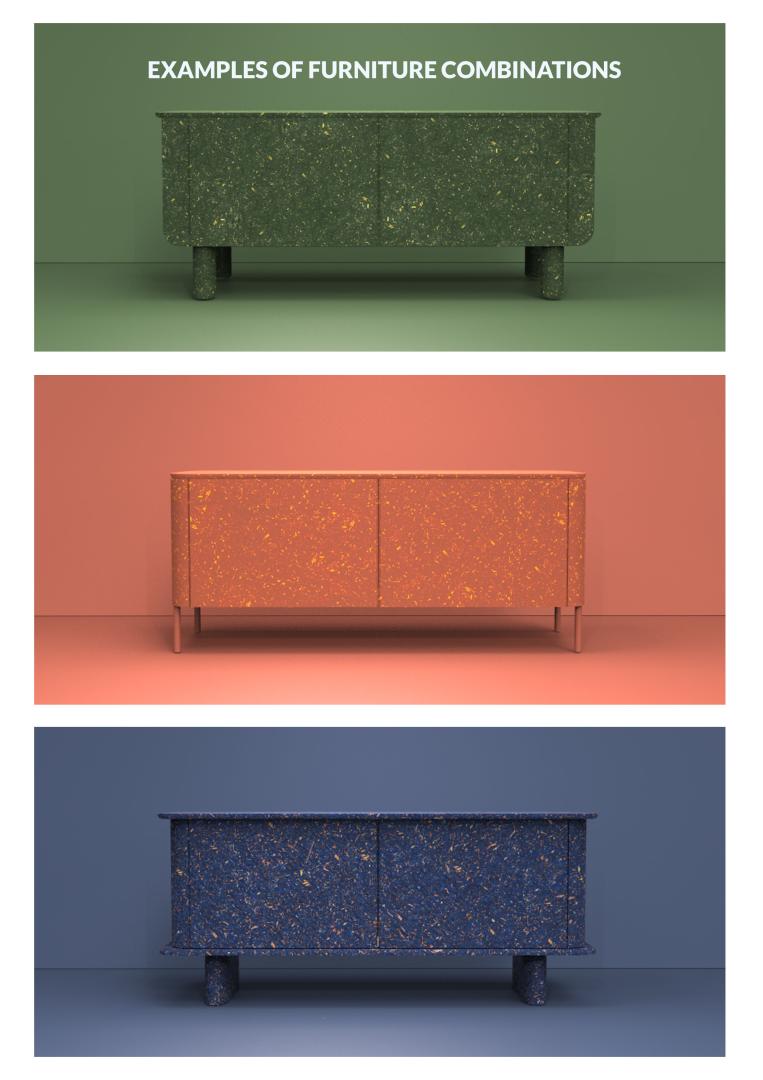
The furniture system will consist of several elements. The structure consists of metal that will be painted in different colors. Several color variants will allow you to create monochrome and color combinations. The construction allows for the possibility of varying the spacing of the legs in the case of box furniture, and the construction of openwork desks and shelves. In addition, interchangeable fasteners allow you to change the number of modules and the size of the furniture. Fasteners are attached to the structure, which can be used to hang panels that will change the aesthetic character of the furniture. The aesthetics of the furniture will also be influenced by the material that will be used to produce the boards. The aesthetics of the new material based on wood waste, protein and lime depends on the type of wood used. A fine and soft chip will create a uniform color, while large and hard pieces will look like wooden terrazzo. However, the success of this furniture system does not depend on a single material. Trends and production possibilities are changing, so in the future it is possible to introduce into the loop also recyclable plastic sheets, as well as yet undiscovered innovative materials. The configuration system will be very extensive, so that the user is always satisfied with the components he chooses, it will be supported by a special algorithm when choosing.
Key objectives for inclusion
The project provides a number of facilities for its users and is very developmental in this respect. The possibility of configuring the elements creates an opportunity for disabled people to choose the functionalities necessary for them. Thanks to this, they will be able to acquire furniture that will be aesthetic and will not look like hospital equipment. It is very important for people with disabilities to function normally and be able to surround themselves with aesthetic objects that will not reveal their otherness. For people in wheelchairs, it will be possible to adjust the height of the desk tops and the mechanisms that make it easier to remove items from tall cabinets. Blind, visually impaired people and people with limited hand motor skills will be able to adjust the way the cabinets are opened and the table top organization according to their preferences to facilitate everyday functioning.
Innovative character
In a circular economy, we should follow the principle of product integrity and design for recycling. According to these rules, furniture should be created in such a way that it is emotionally and physically durable. The Dessa project takes into account that the furniture can be recycled, modernized, disassembled, maintained, and resistant to multi-faceted aging. In the newly designed system, the user will be able to replace and repair broken elements and change the impression of the furniture. The traditional furniture recycling system focuses on the furniture itself, while the new system is part of the circular economy. In a modern system, the focus should be on the relationship between objects and the person himself and his needs. Investigating these values contributes to building a sound and effective furniture recycling design system.
Currently, there are more and more projects on the market that give the possibility of disassembling elements and sometimes even the possibility of replacing individual parts, but there are no system solutions that will completely revolutionize the furniture market. The combination of the latest findings related to the production of furniture and requests for users has resulted in the creation of a special ecological material and a system for constructing furniture. The new proposal gives the possibility of a simple replacement of legs, table tops and side plates, which translates into a change of impression and the possibility of replacing only a broken element while maintaining the rest of the materials. Such a management system will allow the company to recover some materials and construction elements for the production of new furniture in the future. As a result, the amount of waste and resources needed to create new components will be reduced. This creates savings in a given company and helps to create a long-term relationship with the user.