The city of tomorrow - tangible today!
Basic information
Project Title
Full project title
Category
Project Description
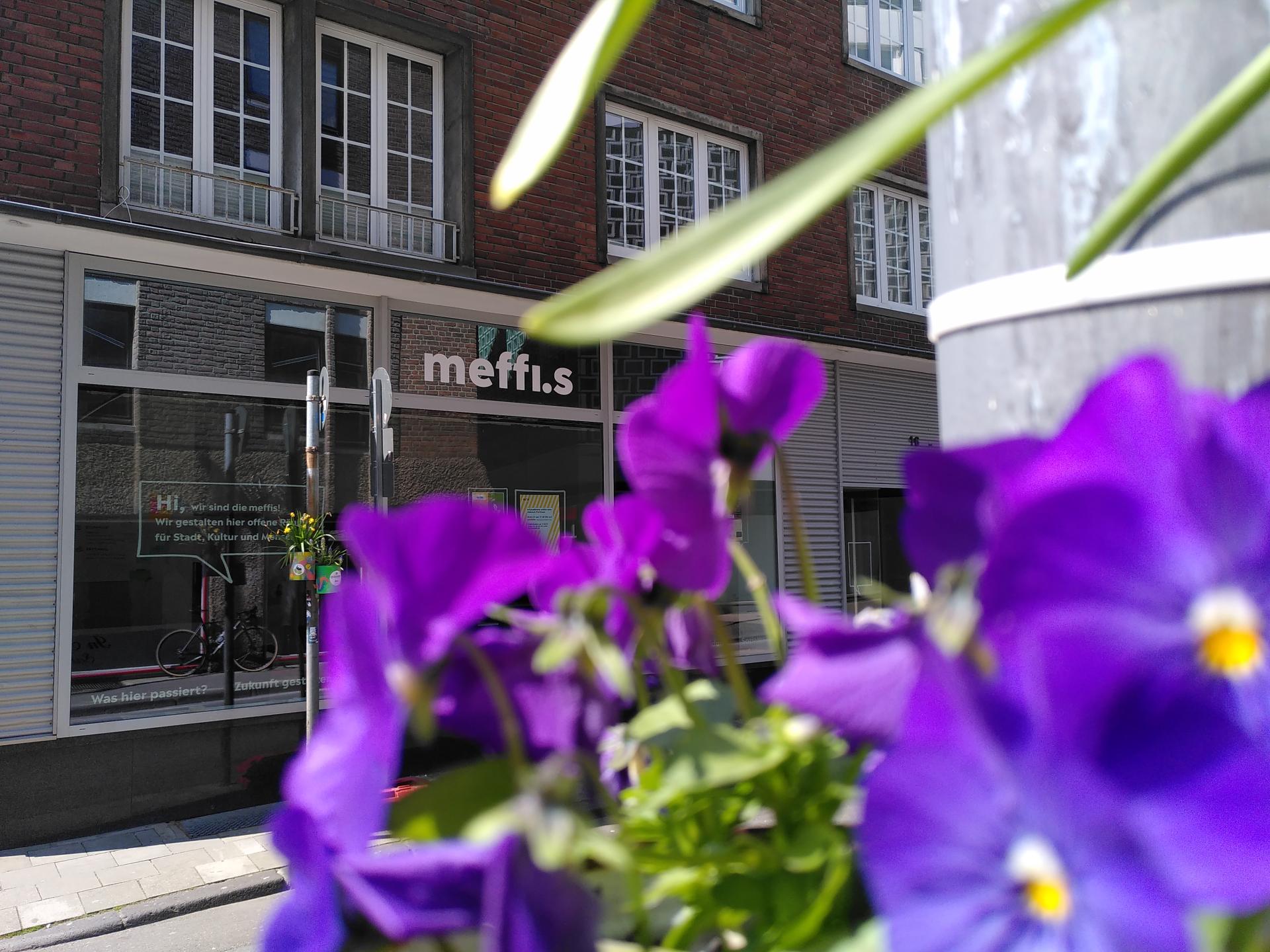
Hi, we are the Meffis!
As an association of individuals, initiatives and organisations we discuss, test and shape the pathways towards a sustainable future of Aachen. Starting in October 2021 and located right at the heart of our city, we are developing a sociocultural hub, comprising of workspaces, a studio, a café, a small theater and a large new park to engage a diverse set of stakeholders in socially innovative activities to make everyone a true urban pioneer and creator of her*his city.
Project Region
EU Programme or fund
Description of the project
Summary
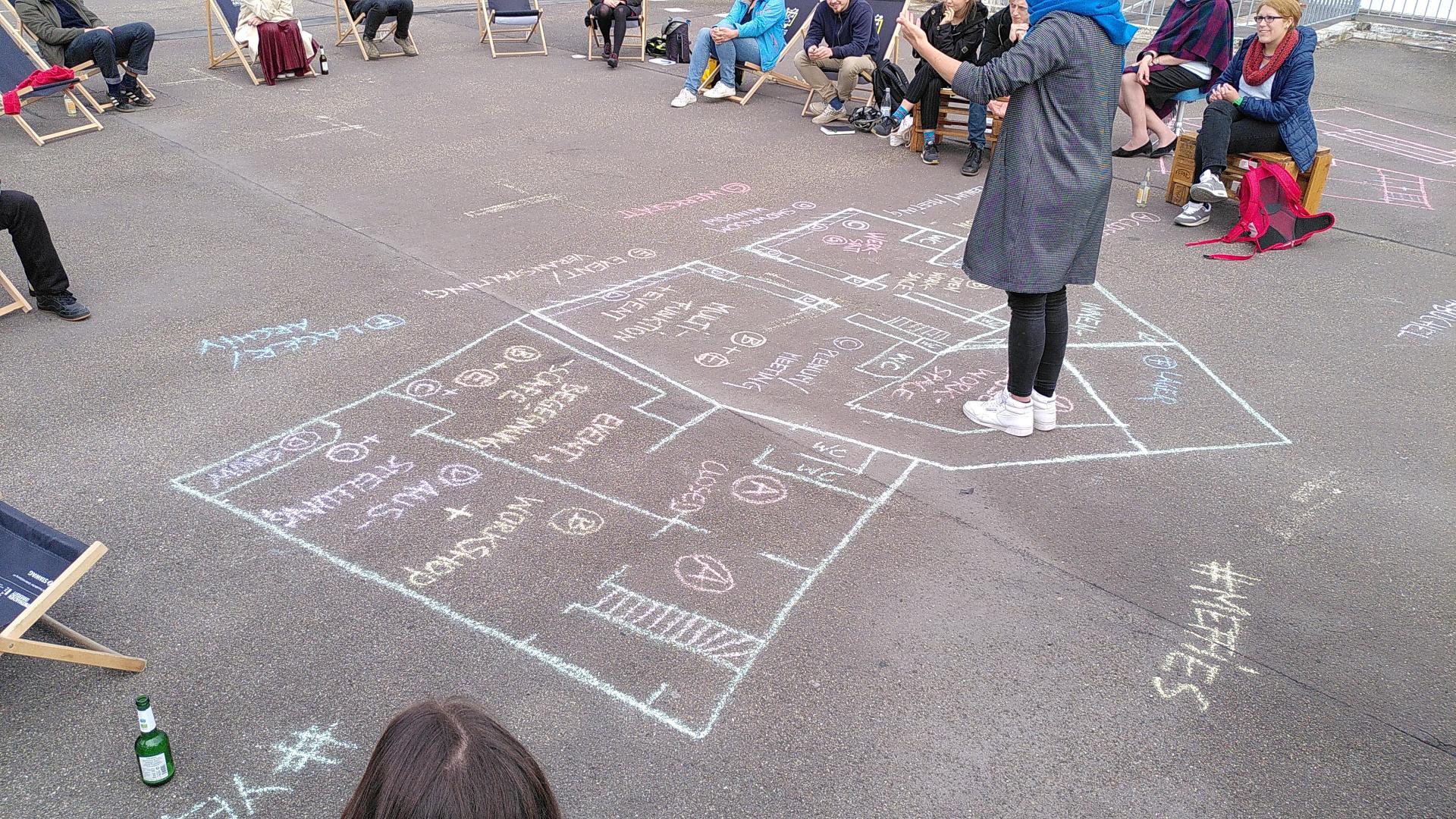
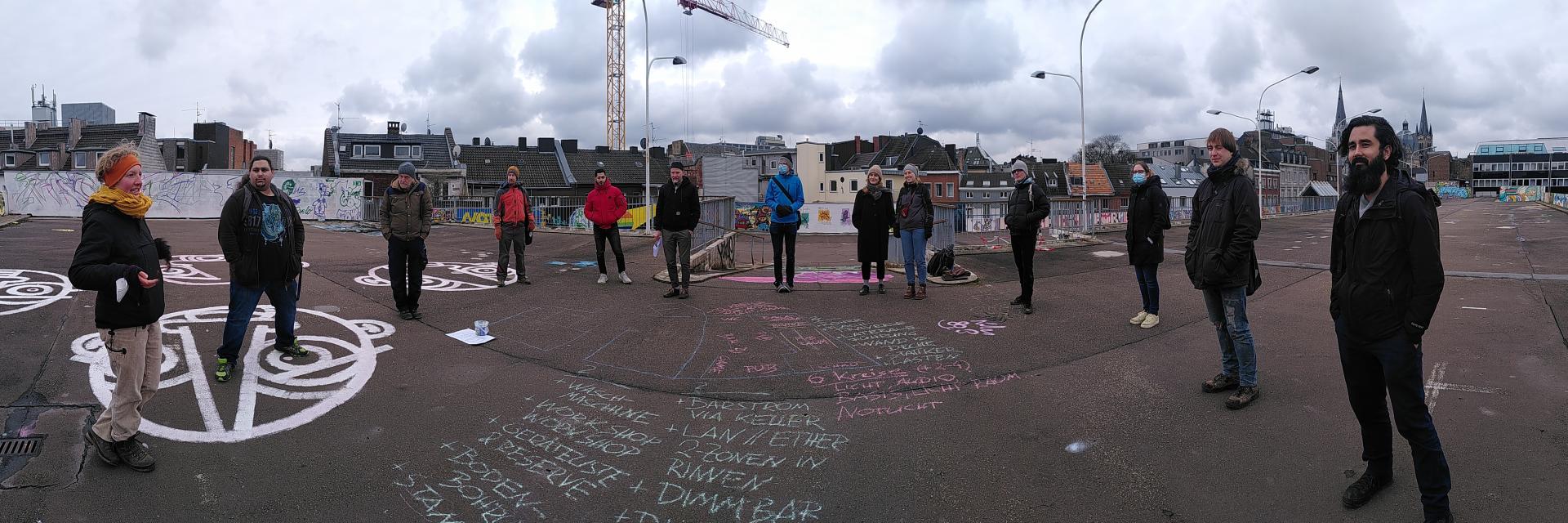
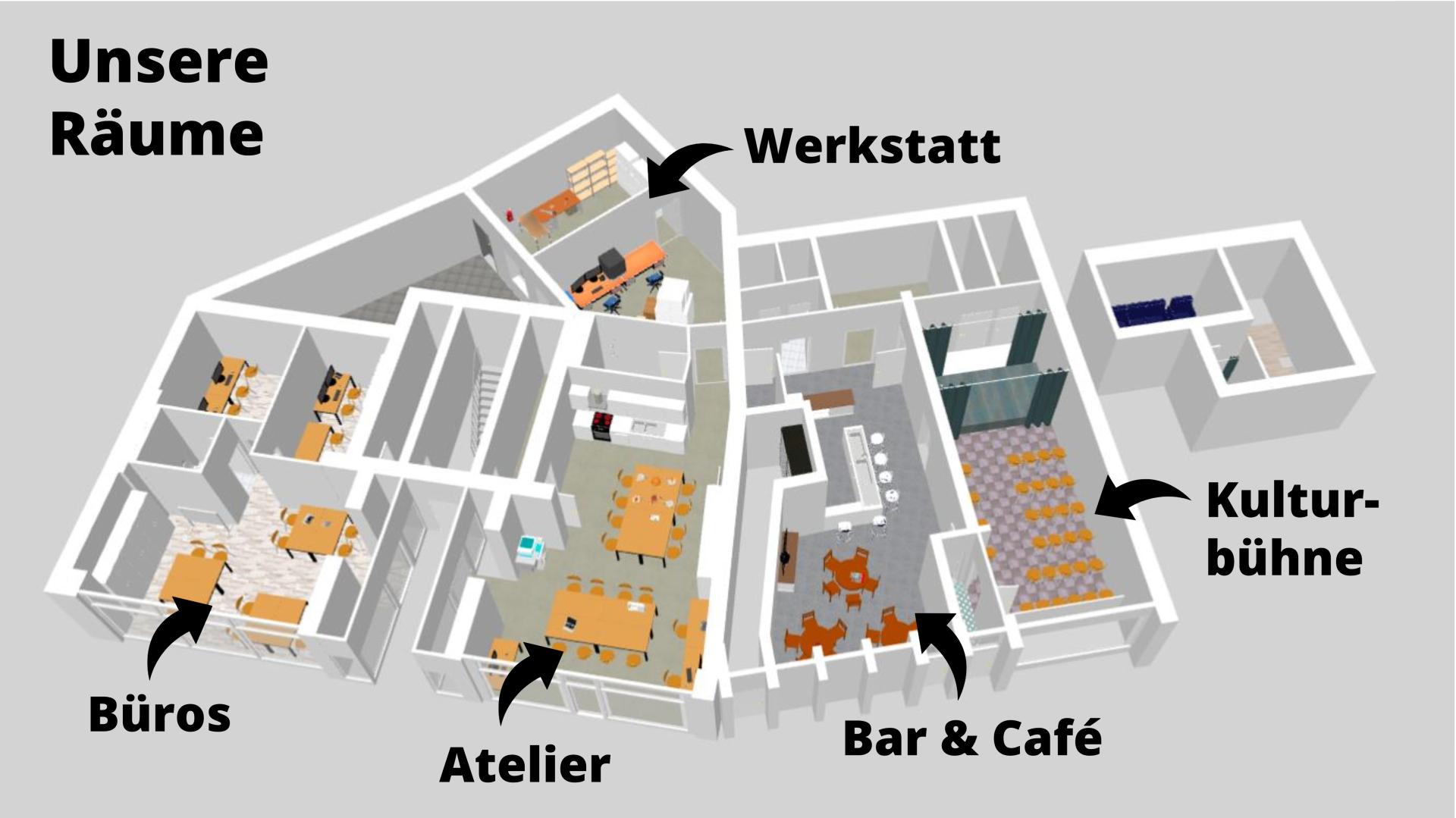
A coworking area, a makerspace including a studio and workshop, a café-bar, a cabaret stage and a new park area are being developed in vacant spaces in Aachen´s citycenter. The resulting hub is an open space for meeting, social engagement and creative development and aims to be part of a new regional ecosystem for social innovation. The development is driven by local initiatives in close cooperation with the city, the urban development company SEGA, the university and civil society organizations. The community of pioneers "Meffis" consists of more than 130 people who have been advancing the process in three development strands since February 2020:
- Community development: The development and establishment of participatory formats during COVID-19 requires a structured development. In the initiation, structuring, establishment and optimization stages, the focus is on cohesion, role understanding & responsibility, communication & collaboration and the bridging function in the neighborhood.
- Organizational development: A stable process requires strong organizational structures to prevent overburdening of those involved. In the strand of organizational development, the focus is on the legal form & contractual regulations, decision-making mechanisms & committees, goal setting and the sustainable financing model.
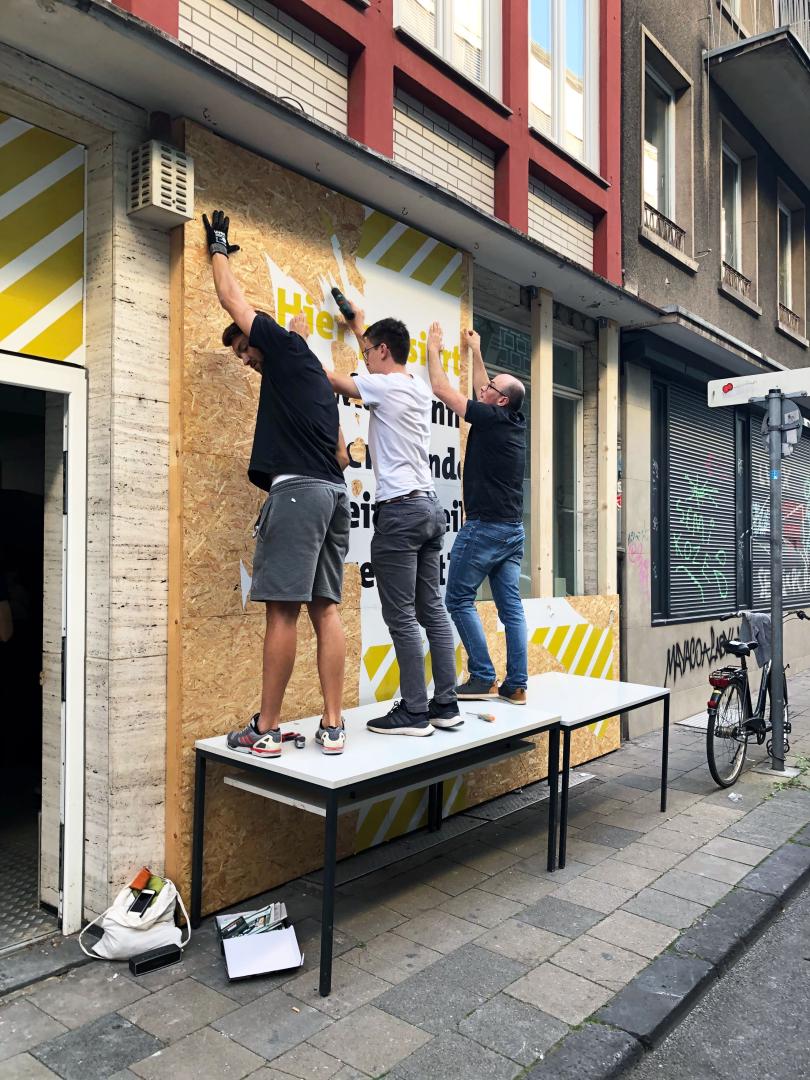
- Real estate development: In regular coordination loops, the construction process is implemented as a cooperative project with a high share of own work by representatives of Meffis, an architectural firm, SEGA and an agency for labor market reintegration.
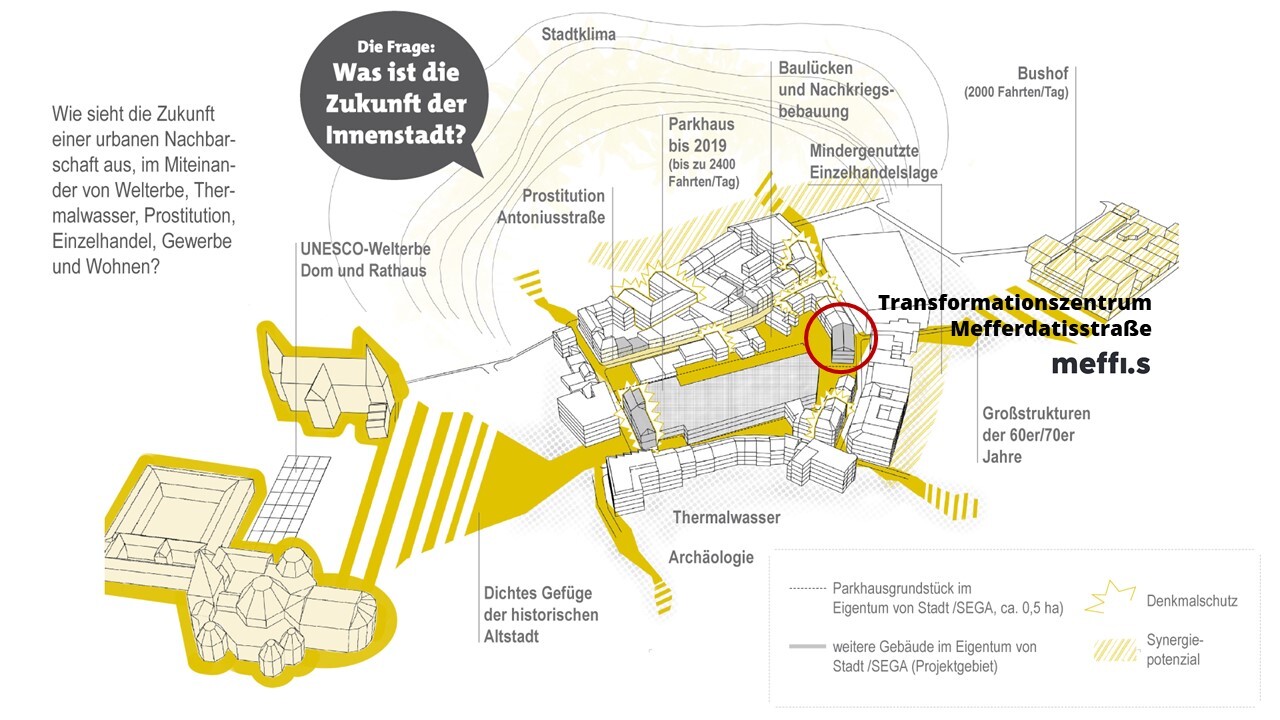
The location and environment of the center require a place with a social and spatial bridging function. The prerequisite is a comprehensive understanding of the relationships in the neighborhood and beyond. To develop this, the process is accompanied by a research community, whose findings are incorporated into the programmatic strategy.
Key objectives for sustainability
Social Sustainability (goals/approach)
- Creating an inclusive space: Analyising and lowering barriers on various levels (e.g. mobility, language, accessability) by involving local expertise (mostly NGOs)
- Sharing knowledge and skills to empower people: Cooperation with educational entities, especially with the newly started Academy for public welfare oriented urban development at RWTH Aachen University [formal]; creating non-formal learning experiences, e.g. participating in the learning process
Financial Sustainability
- Embedding new modes of value creation: Aligned with the urban development company and local authorities we will offer a public welfare oriented fund for our neighborhood (de-monetarization; microinvestments in social initiatives)
- Establishing a social enterprise: The Co-Founders percieve themselves as social entrepreneurs and are currently working on a distinct business model, in close cooperation with local entrepreneurs
Ecological Sustainability
- Reuse and Circulate: Most of the materials and components used in the hub are re-used or refurbished
- Green Procurement: We focus on transparent supply chains and certified products
- Cooperation: The local Cradle-to-Cradle-Chapter is part of our community
We host Fridays for Future, Health for Future, the Sustainability Cafe Aachen, the Plattform for Sustainability in Aachen and various other organisations and initiatives activley working in the sphere of sustainable development. We see ourselfs as enablers and responsible to deliver the best infrastructure and ressources to empower the initiatives mentioned above.
Key objectives for aesthetics and quality
To accomodate various - sometimes opposing needs - of our future guests and members, we have developed a new visual language for our internal and external areas dubbed "improvised chic". Functionality is considered a second and mostly hidden layer in our design approach, whereas wellbeing and the creation of an engaging environment (in terms of work, creativity, community) form the first and visual layer. Our interior/exterior design team is constantly iterating the visual language with our future user group, to refine the non-technical specifications.
Our goal is to use the "visual language" of our interior/exterior design to bridge the gap between one-sided (and therefore exclusive) or to put it differently "either-or" approaches in public spaces. Many times public spaces are either too structured and pre-organised (discouraging creativity and self-organisation) or too unstructured (encouraging vandalism) - by carefully combining the best elements of both worlds and create the infrastructure needed for a truly inclusive space.
Key objectives for inclusion
Creating an inclusive space is one of our most important but at the same time most challenging targets. Being inclusive means being open for a diverse set of needs, opinions and ideas - and being able to facilitate the setting needed. The community is investing considerable resources to fullfill the technical and even more important social requirements:
- Understanding one´s environment: We organised a scientific analysis of the Social Mileus surrounding us by conducting qualitative interviews and handing out a (quantitative) questionaire. In addition we are regularyly mapping the actors and perspectives during strategic workshops. We have expanded this analysis over the whole city of Aachen in order to cooperate with established organisations
- Assure the technical requirements: In terms of mobility and digital and non-digital accessability we are currently working on lowering or eliminating existing barriers. Examples: barrier-free rooms, tactile and audible maps, accessible digital content.
- Just do it: In addition to the theoretical examination we have to live up to our goals: One of our initiatives will host an inclusive theater group at our hub, we will host an initiative supporting the women working in the red-light-district nearby, we are in touch with the homeless people close to our real estates and of course are open to people regardless of their background.
- Inclusive development process: All three strands of our project (community, organisation, real estate) are designed to be open - everbody can join, contribute or track at any given time.
Innovative character
The following building blocks must be taken into account when evaluating the innovative character:
- System analysis: In order to address potential pioneers or to support pioneers well, a comprehensive analysis of the environment (actors & boundary conditions) is necessary.
- Selection of pioneers (individuals & organizations): Pioneers must overcome the classic understanding of volunteerism and any existing barriers of sensitivities. They should be skilled in cross-organizational dialogue and project development.
- Ensure alignment: Establishing professional joint project and interface management is imperative.
- Be able to run: Mutual trust is required for an exploratory process. Trust-building can be promoted through suitable interface formats and targeted backing (e.g., by the administration vis-à-vis politicians, by the pioneers vis-à-vis the skeptics in civil society). Different nudging strategies can be used.
- New and shared narratives: The pioneer initiative is accompanied by a shared campaign that offers new, bold and above all context-sensitive narratives.
We are focusing on the concept of openness, which refers both to the attitude of the actors involved and to the organizational theory. All building blocks have been implemented in other projects (in Aachen and beyond) already - we do not consider ourselfs to be the first nor the only ones pursuing the goals described, thus can be considered as a transfer-innovation.
The hub is supposed to become the starting point of new social and systemic innovations.