LocHal, Tilburg
Basic information
Project Title
Full project title
Category
Project Description
The sheer sense of scale and unique historical detailing of former industrial buildings has supported an increase in the adaptive reuse of these properties over the past two decades. The LocHal is exemplary for reuse and repurpose of this iconic industrial site. The new mix-used building is a hub for knowledge sharing, housing a library, co-working spaces and a host of local cultural hubs - including an investment fund and a regional knowledge institute.
Project Region
EU Programme or fund
Description of the project
Summary
The Dutch city of Tilburg provides a world-class example with the re-opening of LocHal, a cultural destination that breathes life into this iconic industrial site.
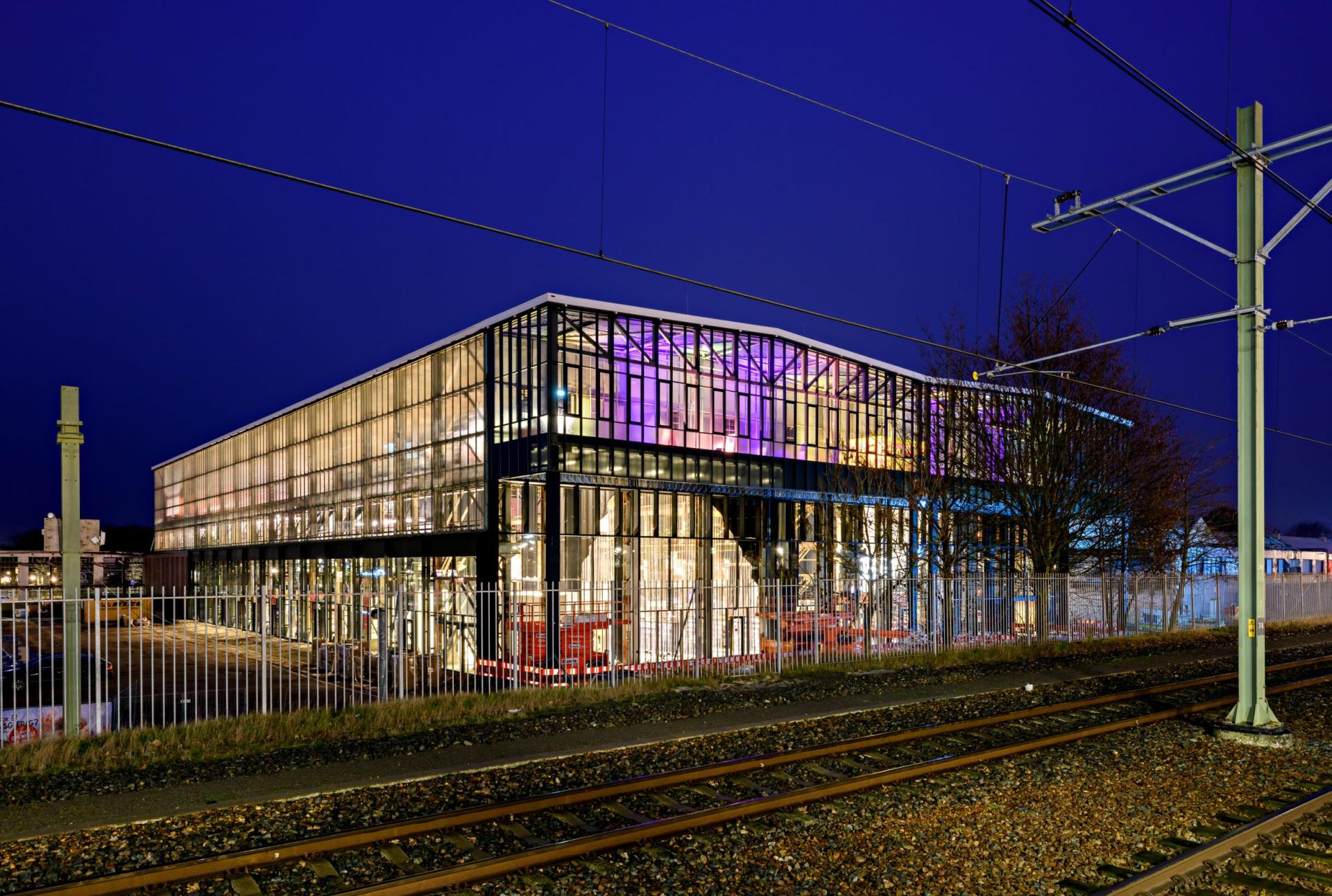
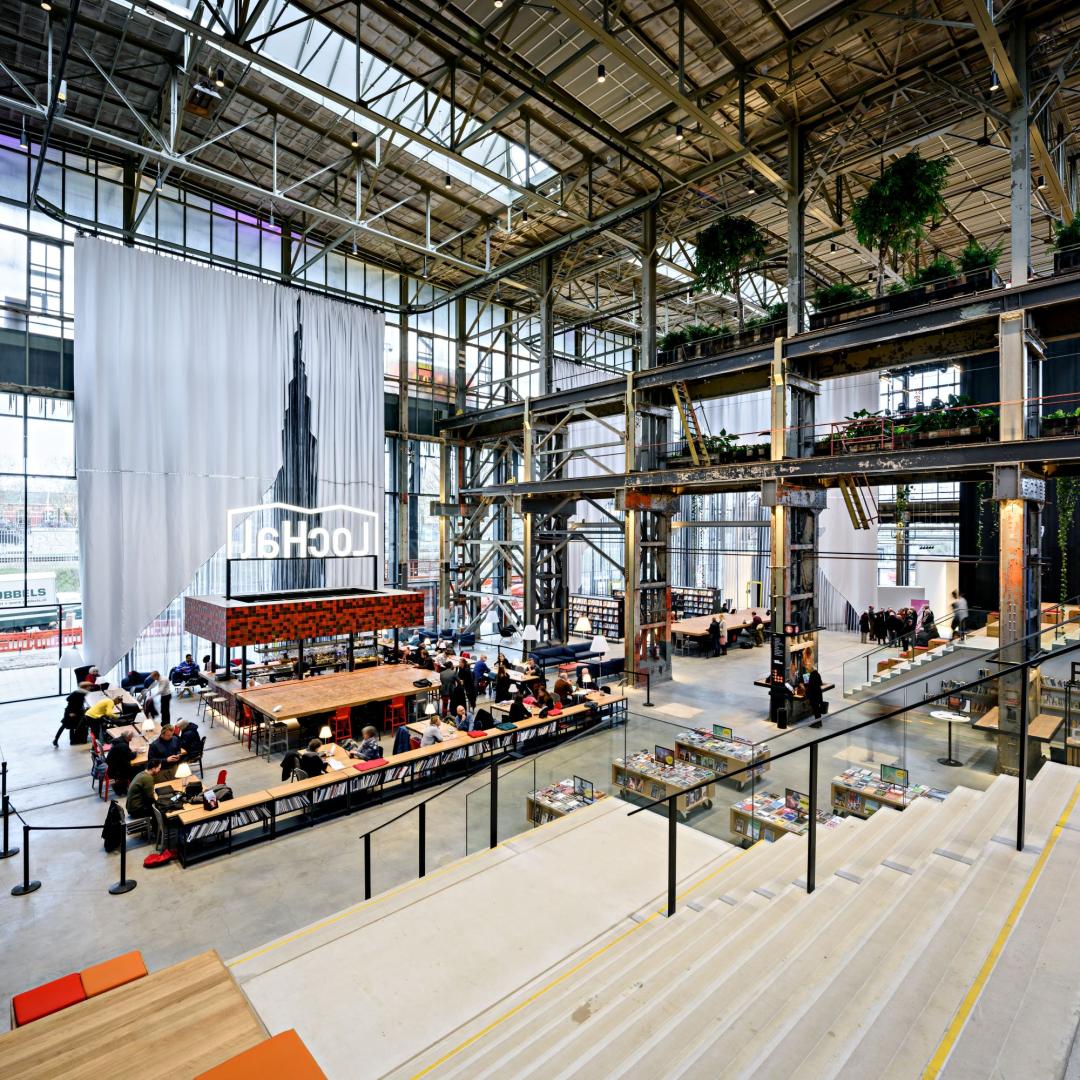
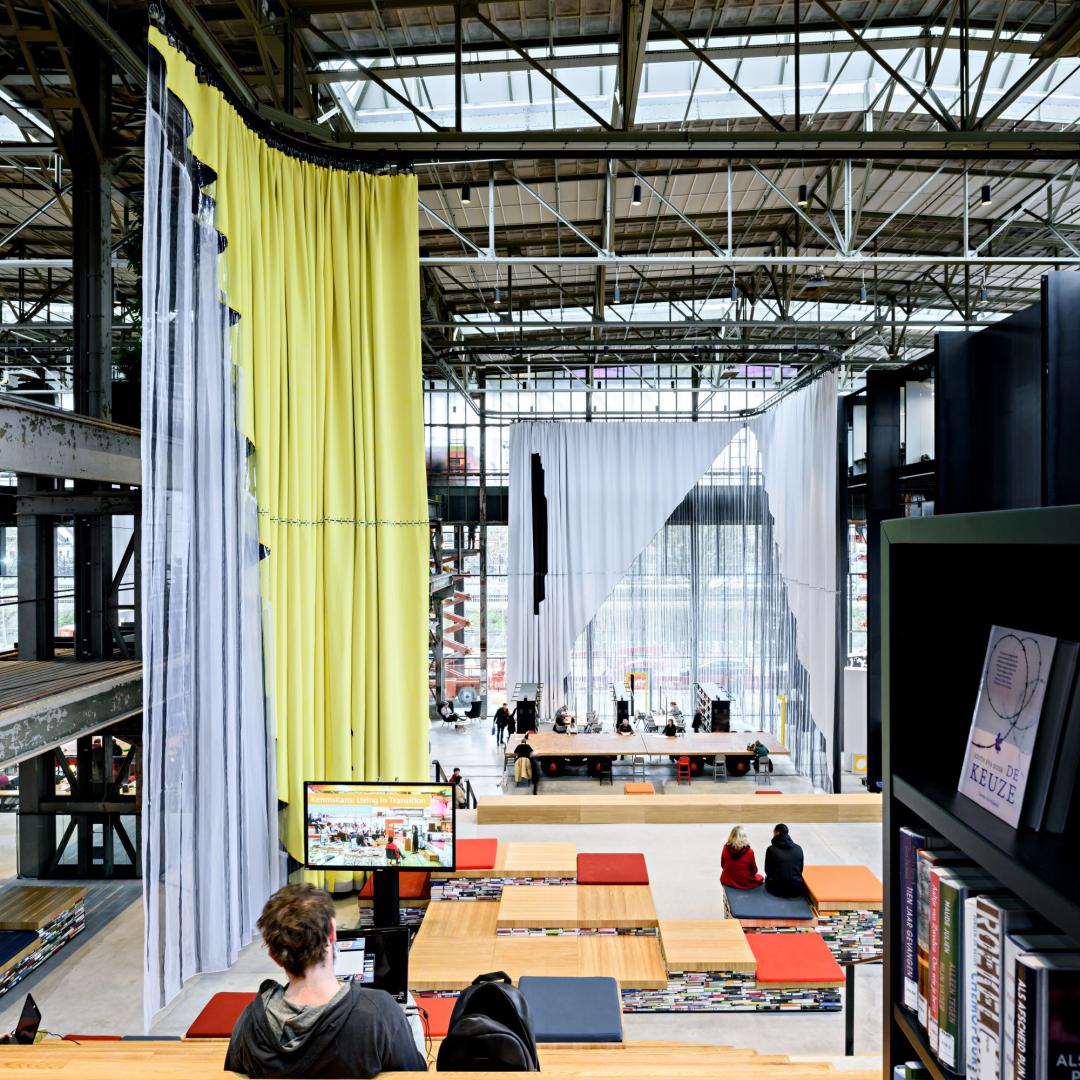
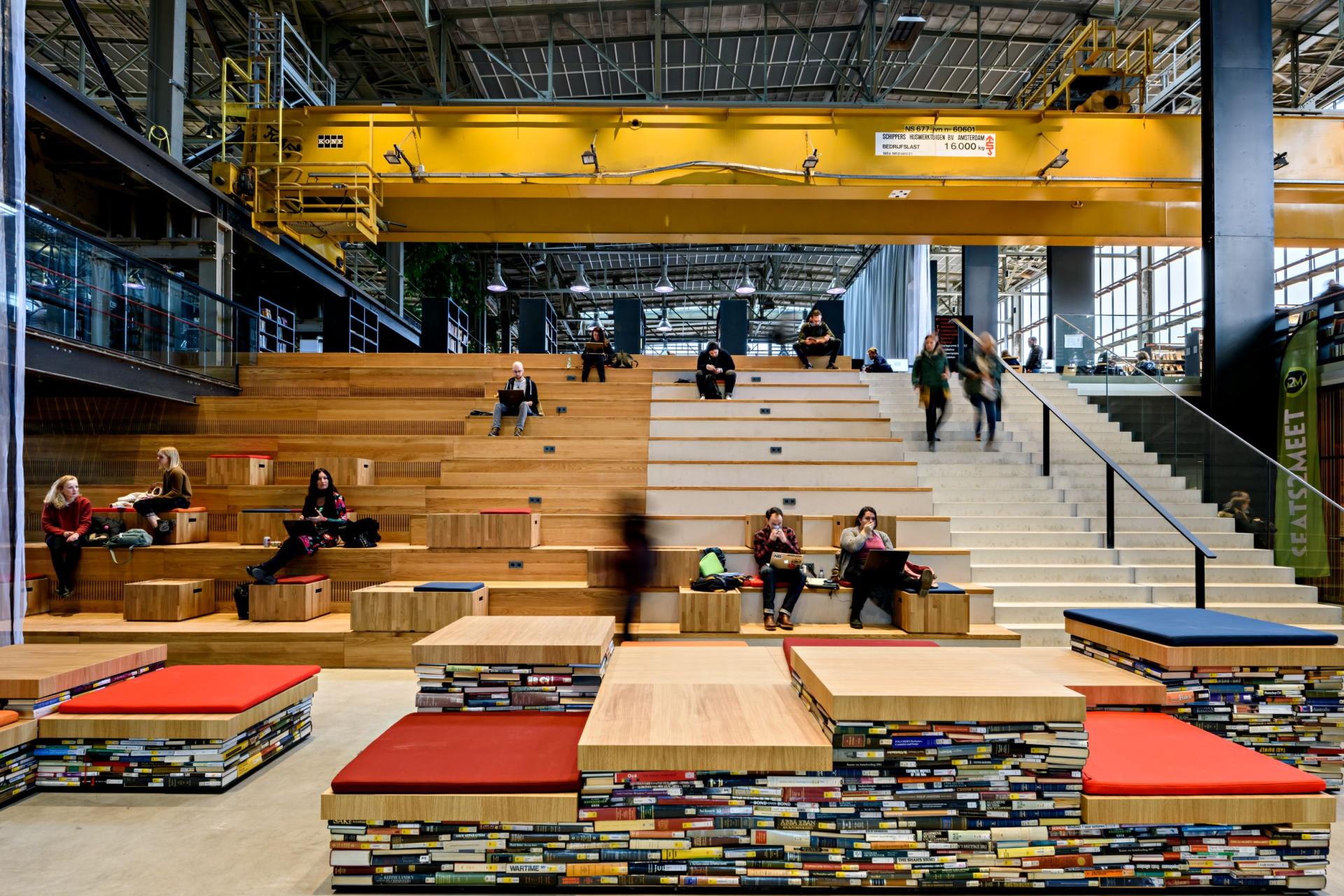
As well as rescuing the Dutch Railways’s 1932 (NS) building, LocHal acts as a catalyst in the redevelopment of 75 hectares of former railway space in Tilburg. Located in middle of a public transport node, LocHal includes a variety of public hangouts, study and learning places including a café and reading room, bleacher-style seating for performances and presentations, and exhibition spaces.
Arup was appointed to provide structural and building services engineering, together with buildings physics and sustainability consultancy for the scheme. Our engineers also consulted on the fire safety, lighting, and acoustic design. Together with Civic Architects, Inside Outside, Braaksma & Roos, the City of Tilburg appointed Arup to provide multidisciplinary services for this extensive refurbishment project driven by sustainability and adaptability. Mecanoo was responsible for the interior design.
Key objectives for sustainability
Adaptable & sustainable: shaping tomorrow’s library. Sustainable climate design and temperature control was one of the key challenges while designing LocHal: as a public meeting space, providing energy-efficient climate control to this enormous, multi-purpose industrial shell was going to prove complex. By combining detailed on-site research with advanced simulation models in the design process, our team of engineers managed to bring to life the ambitions of both the client – the City of Tilburg - and the architects.
The design answer is based on flexible, user-led heating: seating on the bleacher stands will be heated and cooled, while all the smaller offices have their own temperature control.
A major challenge was about preserving the historical quality and creating a building that could be built in an efficient way. The standard solution is the box-in-box principle. This was also the principle stated in the tender. However, this would have meant losing the valuable openness of the hangar. To preserve the authentic spaciousness, smart building-physics solutions were key. The so-called "lantern" of single or wired glass was so crucial to the appearance of the building that it was decided to retain instead of double glazing it.
Sustainable climate design and temperature control was one of the key challenges while designing LocHal: as a public meeting space, providing energy-efficient climate control to this enormous, multi-purpose industrial shell was going to prove complex.
The large open spaces are cooled and heated according to the principle of 'heating the people, not the room'. The design answer is based on flexible, user-led heating: seating on the bleacher stands will be heated and cooled, while all the smaller offices have their own temperature control. The largest part of the room has minimal climate control and is heated and cooled in specific areas. As a result, LocHal is now an energy efficient building.
Key objectives for aesthetics and quality
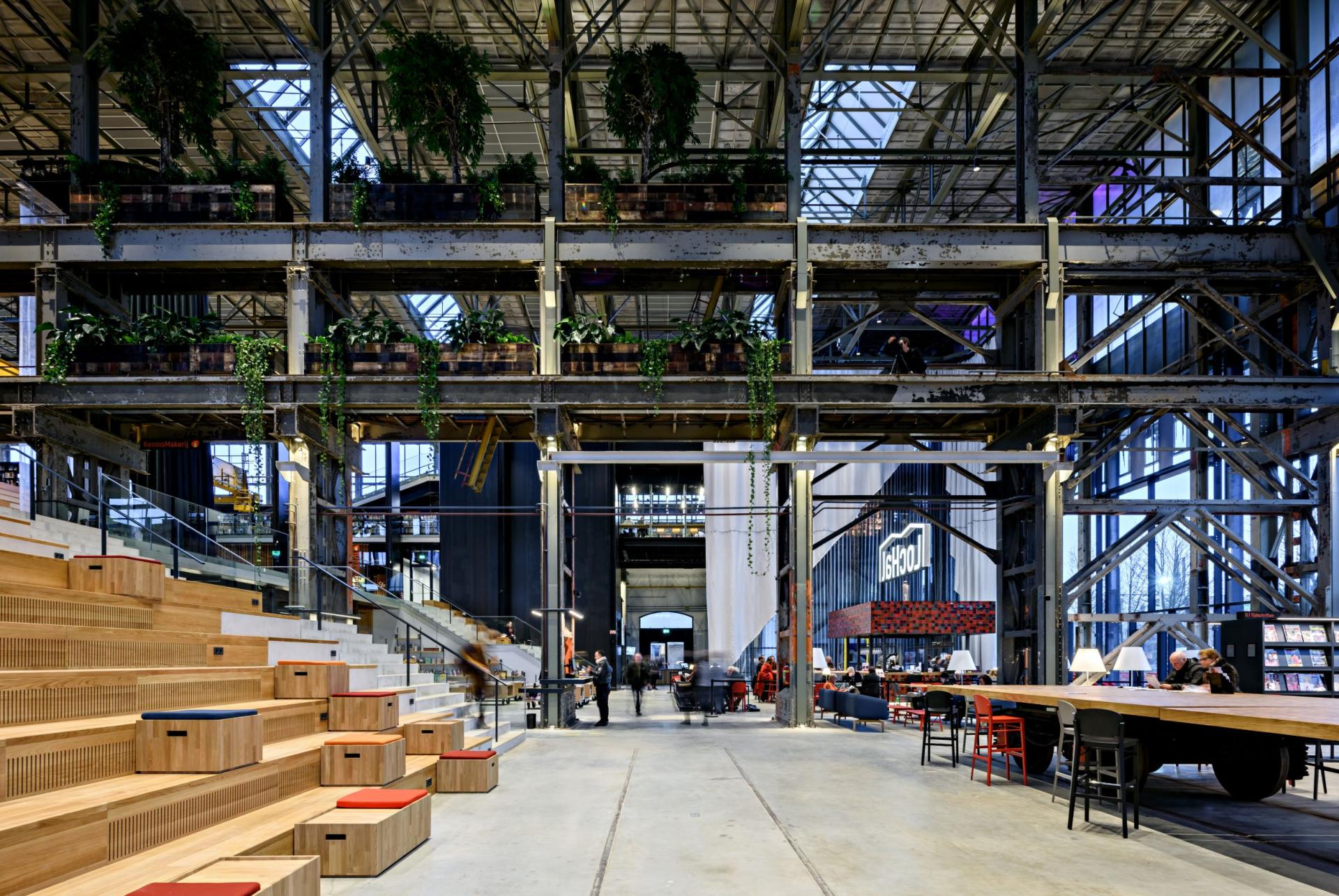
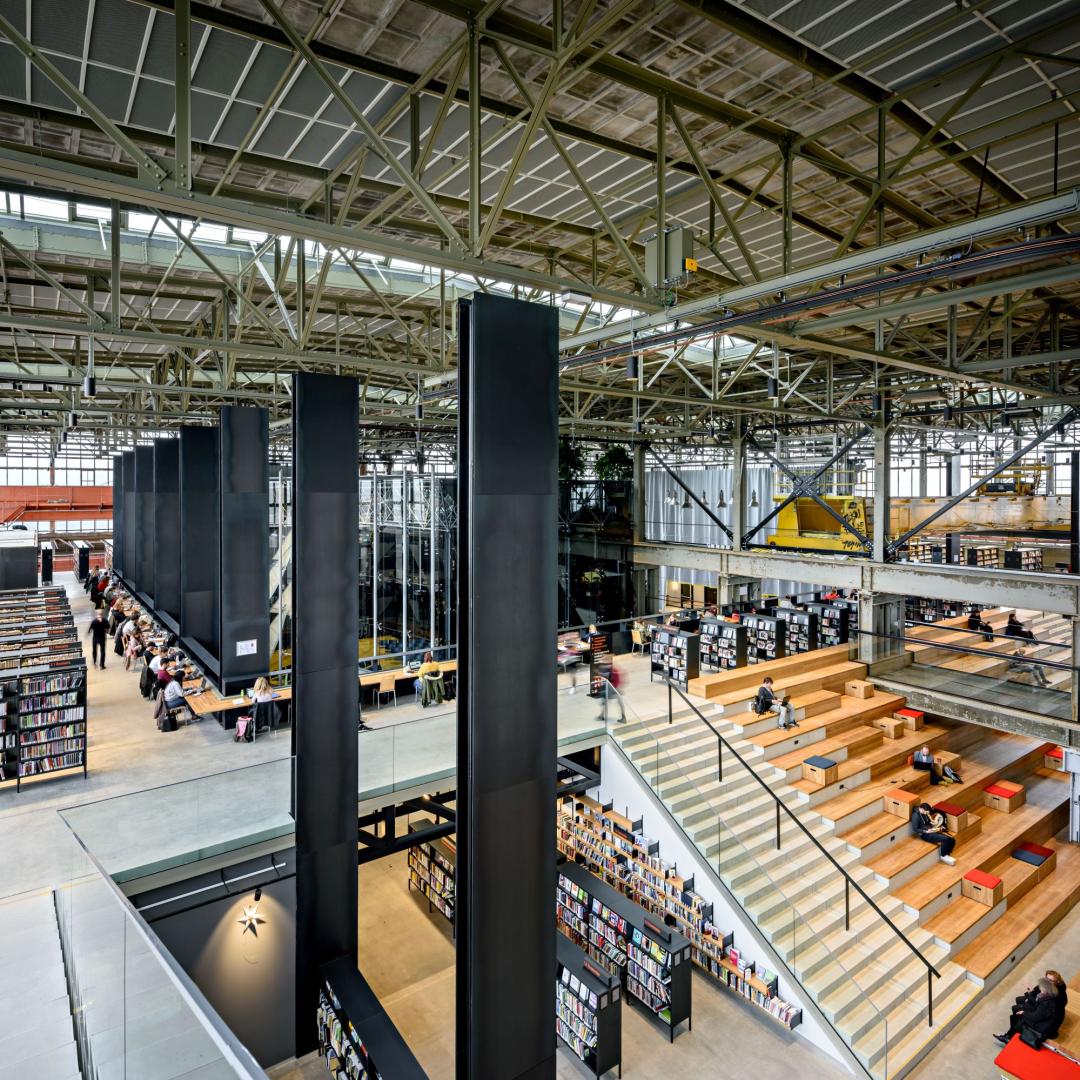
Braaksma & Roos and CIVIC architects carried out the architectural design and renovation. Mecanoo was responsible for the interior design. Visitors of the library can view and borrow books but also other media and changing collections. The building stimulates the joint production of new information. This can be done in so-called 'lab rooms', themed spaces spread across the building. Large open spaces and floor fields match the heritage value of the monumental hall and the idea of an 'open' library. Six mobile and space-high canvases ensure that the staircases are transformed into theater or lecture space.
The open library area can be divided into different zones. When entering the visitor comes in a large central hall where he finds a unit of the former lochal. This courtyard is served by a series of stairs and terraces Give an overview of locations to read, to work, to discuss and to act. Via these terraces there is access to the co-working corridor that is surrounded by meeting rooms. On the last floor wide corridors are placed at more intimate workplaces. This hallway comes out at a shared winter garden with a view over the city...
Maximising and re-using all of the different heritage elements inspired the lighting designers of Arup to working with a sequential approach of the hall. As lighting design plays up the industrial heritage. The large glass façade and partly restored roof lights allow daylight to flood the building, with artificial light points used strategically where required. The lighting designers sought to retain the industrial heritage luminaries, which were retrofitted with new technology.
Arup's acoustic consultants ran extensive simulations to assess the expected noise levels related to the various activities at the different locations in the building. The 'Glazen zaal' is a 250m2, for 220 people and specifically designed as an acoustic highlight and to achieve an optimal experience throughout the hall.
Key objectives for inclusion
The LocHal is a new, world-class urban living room for the people of Tilburg and anyone who wants to have a world-class experience in an historical building. It is located next to the station, in the heart of Tilburg’s new City Campus, and houses the Midden-Brabant Library, the cultural institutions Kunstloc and Brabant C and the co-working spaces of Seats2meet. The LocHal is an inclusive area and mixed used building for anyone who likes to read, learn, study, meet and gather. It is also place for testing, creating, exhibiting and presenting the latest innovations. A vibrant meeting place for everyone.
Results in relation to category
In 2015, the municipality issued a competition for the transformation of the LocHal (a communal monument since 2014), with the idea of placing an air-conditioned box under the eastern roof with library functions and leaving the western half of the hall empty for events; for this, the glass hall that used to be in the Amsterdam Beurs van Berlage, which Tilburg had purchased in 2015 for the symbolic amount of 1 euro, could be used nicely. The municipality's brief seemed to focus mainly on how to get all these new functions - 120,000 books, 500 workplaces - into the building. The designers, who had the necessary experience with transformations, won the competition by approaching the task the other way around: what kind of space do we have available, and how can we maximise it? How do you turn a former rail maintenance depot into the cultural heart of a city? Reopened in 2019, The monumental LocHal has been transformed from a demolition site into a vibrant, modern meeting place. An exemplary project for sustainability in renovation, reuse, and redevelopment.
How Citizens benefit
The Midden-Brabant Library, Kunstloc Brabant, Seats2meet and CAST give meaning to the LocHal, both literally and metaphorically. As a unity they respond to the needs of a rapidly changing society and promote talent development, entrepreneurship, creativity and innovation. By organising joint activities and exhibitions, they work collectively on the exchange of knowledge and skills.
Innovative character
The approach was unique in itself. This scale of refurbishment and redevelopment was a first and the innovative character can be found in all elements of the project. The approach, the integrated design, the reuse of material, acoustics, energy scheme and the interior design. LocHal is an unique learning and working environment, focused on the creation of new knowledge. People, communities, businesses and organisations are linked through six labs around topical themes such as heritage and food. And on the staircase you will find an impressive open stage and more private spaces where knowledge and ideas are shared and created. The LocHal Library is one big living lab, a place where innovations are constantly created by crossovers between sectors, institutions, people and professional groups. LocHal is the epitome of innovation . The project, the development, the design solutions and the use that encourages innovation amongst both users and visitors.