Gabriele
Basic information
Project Title
Full project title
Category
Project Description
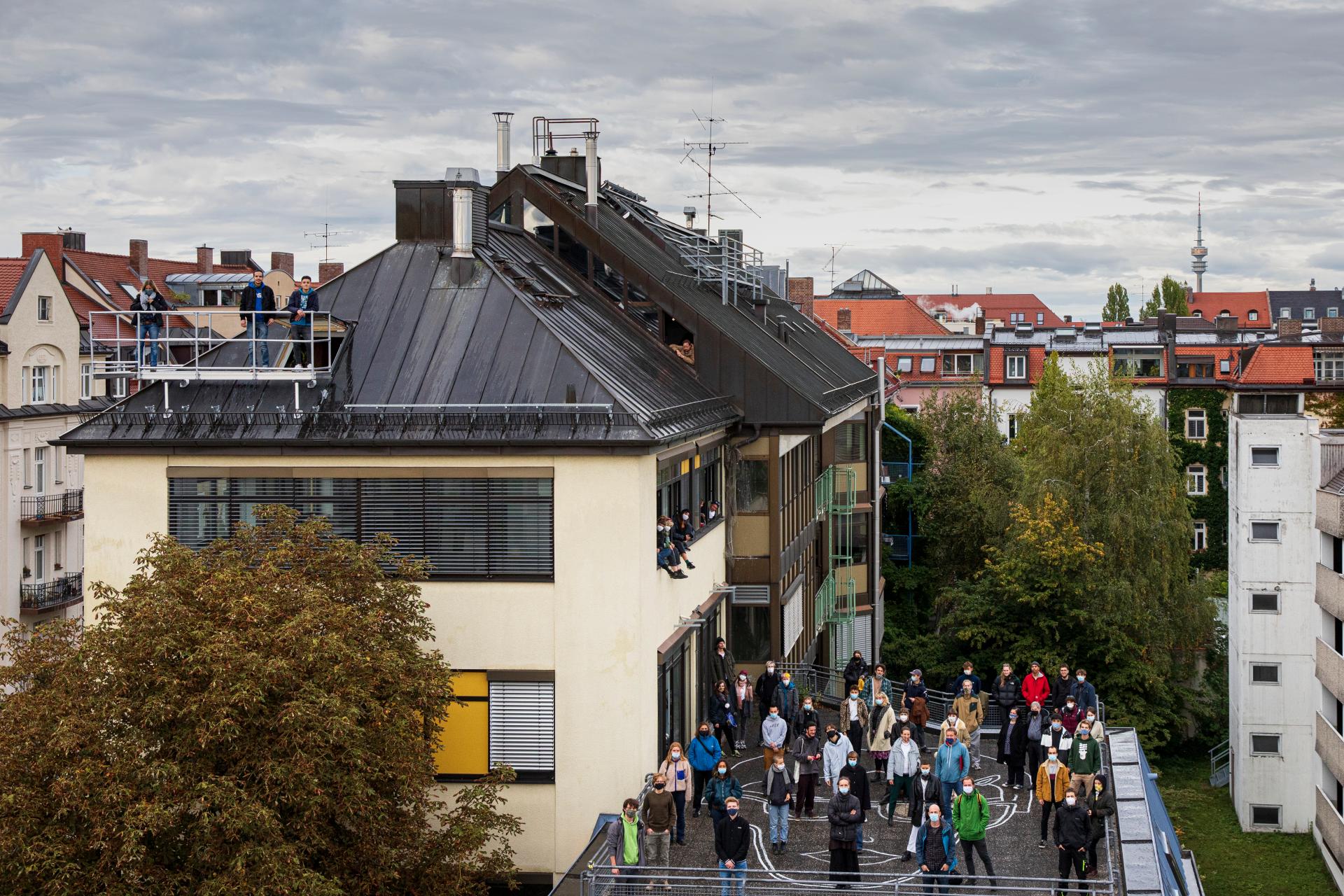
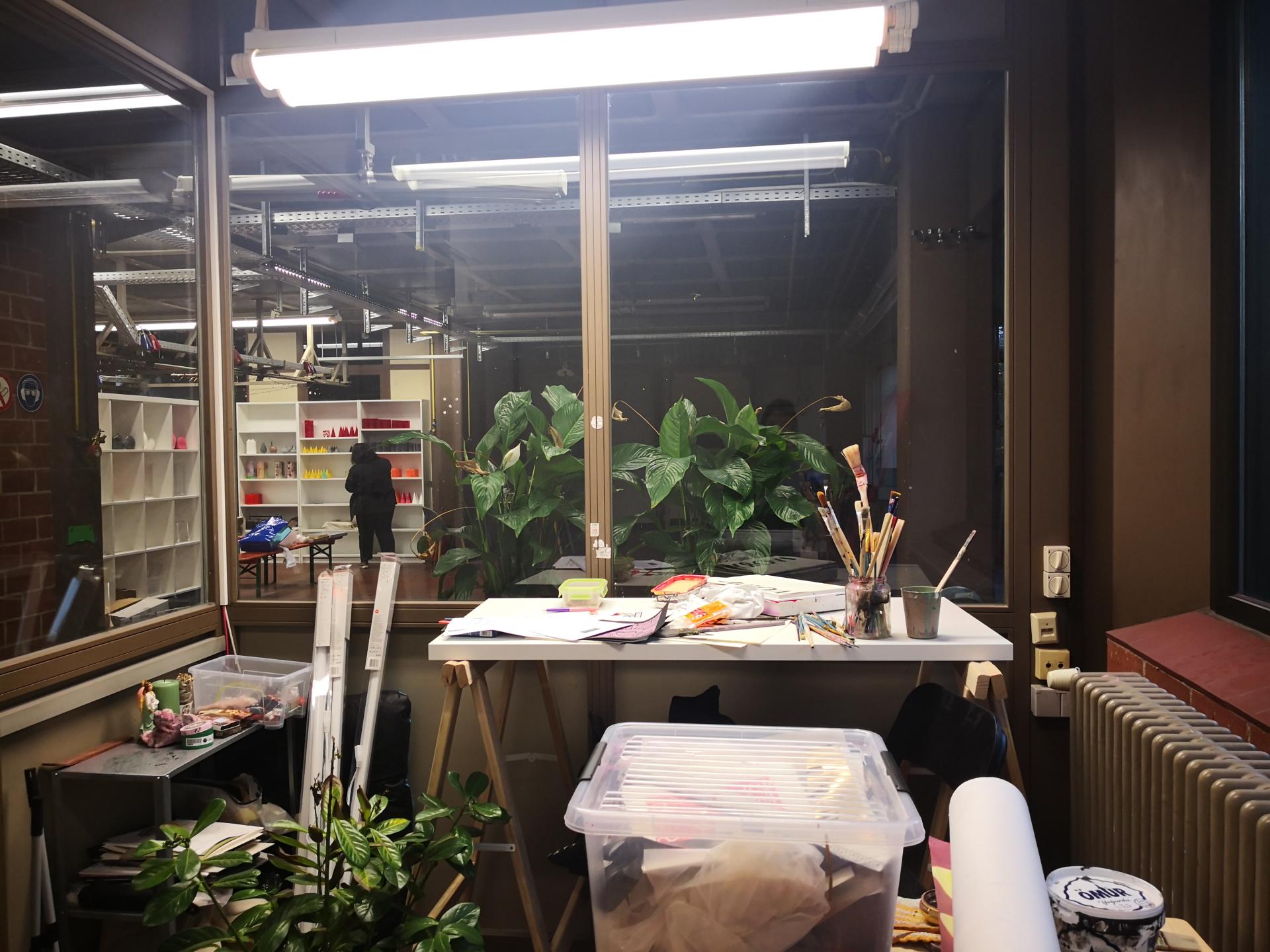
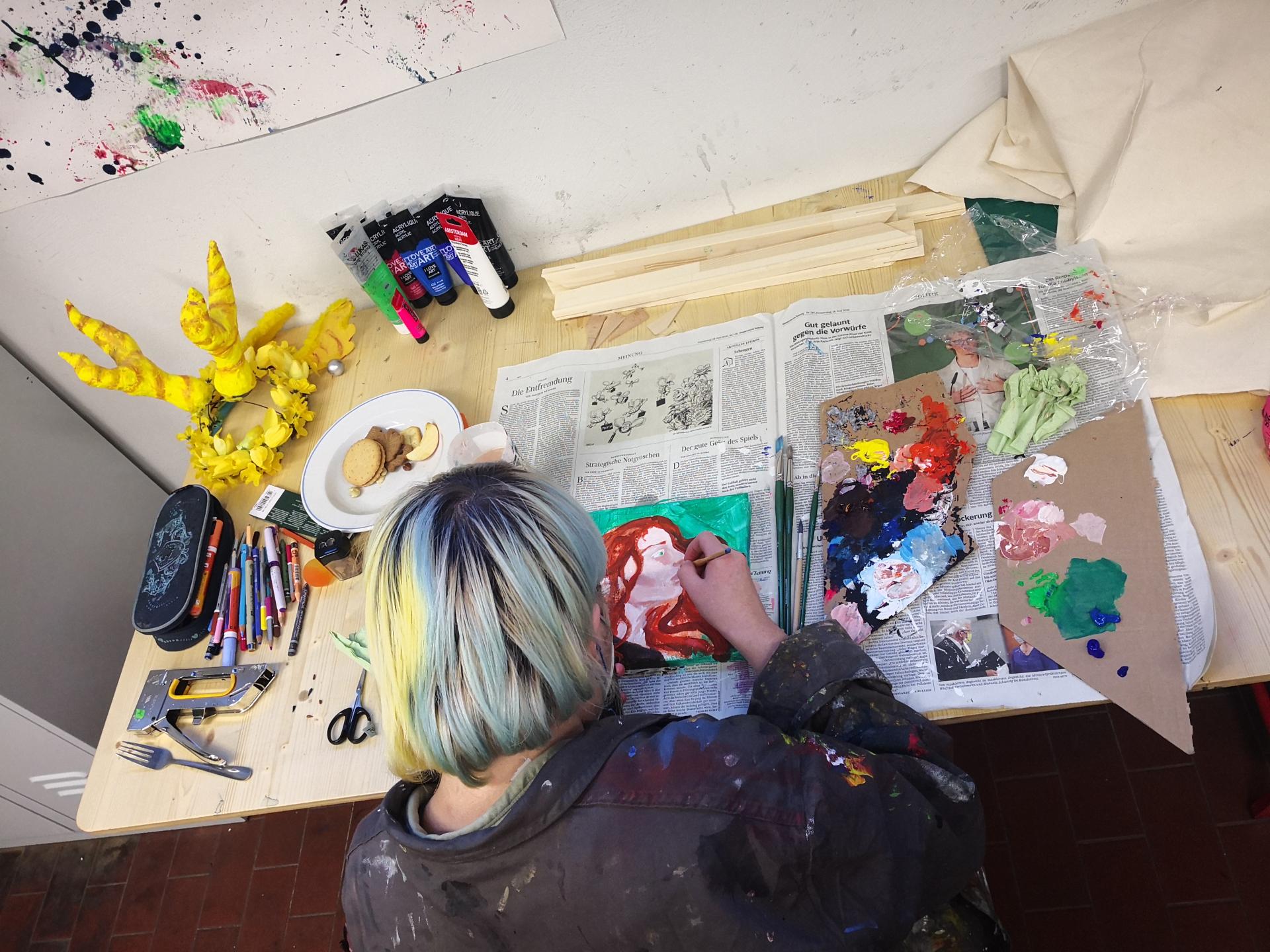
In the middle of Munich, the temporary use "Gabriele" opened for a few months in Gabrielenstraße 3. Artists, cultural workers, youth political initiatives and actors from media and cultural education found a home for their respective projects as well as collaborative efforts in a former training center. Classrooms were transformed into studios, coworking spaces, rooms for workshop, education and discourse. Each partner opens access to a spectrum of cultural work, social innovation and discourse.
Project Region
EU Programme or fund
Description of the project
Summary
In times of global crises, the visual arts create and assert a sensitive realm of liberal, multivalent aesthetic discourse. In its appearance lies the connecting element of fundamental viewability of external and internal realities - as a form of possibility, it is a reflection and venue of existing upheavals and social questions, without ever being able to be fundamentally appropriated by them.
Producing, exhibiting, creating contact: As a part of all project partners, "Gabriele" forms, deliberately shifting intermediate stage of artistic production, social utopia and playful outlook on art market and position discourse. New connections emerge, borders merge, energies flow and transform into a breeding ground for utopian approaches and creative projects. A new togetherness emerges from the in.
We do not see ourselves as a pure exhibition space, but offer opportunities for personal development, space for networking, production and presentation. We understand the quality of interdisciplinary practice as the direct promotion and strengthening of creative democratizing processes.
Free or low-cost offers, work spaces & workshops reduce fear of contact. They form an inclusive, rich cultural offer to the exhibition operation, with the effect of surprising and personally empowering spaces defined by experience, therefore opening up own creative potential to all participants*.
Each project partner brings its own target group, for this reason the target group is deliberately heterogeneous and draws from diverse school, cultural or social contexts. The unifying element is the interest in artistic-cultural projects, artistic work and interdisciplinary dialogue.
Key objectives for sustainability
The whole process and reflection on sustainability was strongly influenced by the fact that the project is a temporary interim use in a disused space. For our needs and the self-developed matching concept, the existing structure and architecture of the building suited ideally.
We saved resources through shared use of workspaces and studios:
- The basic structure of the house consisted of rooms that could be used in multiple ways, including a plenary room, workshop rooms next to the respective collective compartments.
- Material for artwork was pulled from the building.
Our motivation for a intercultural exchange through the medium of art & culture was essential:
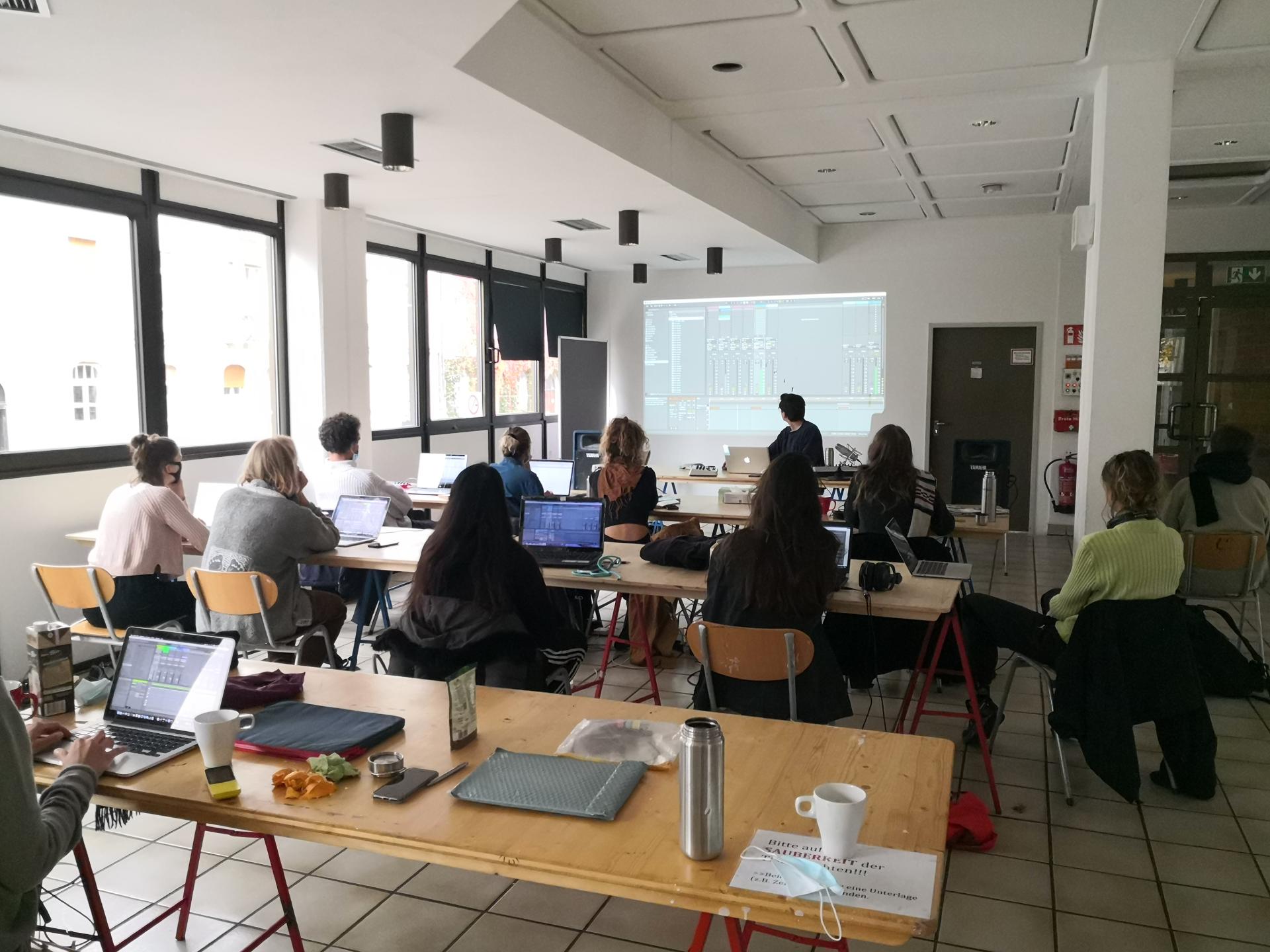
- Competence and knowledge transfer through workshops, readings & events.
- Interdisciplinary networking & dialogue in the fields of visual + performing arts and cultural education.
- Promotion of diversity in the music and event industry and young art in general.
- Inclusion and participation of migrants.
- Democratize arts & cultural education through free offerings.
- Artists rooting from the neighborhood.
An exchange platform for networks, collectives was created:
- Easily accessible workshops for young persons and beginners were offered to enable skill-sharing for other self-organised projects and collectives. This took place both internally and externally.
- The collectives have integrated their networks within the building in self-management with sustainable new networking possibilities.
- With e.g. Holy Tisch we hosted an initiative dedicated to green innovation and sustainable change in the food sector.
Furthermore, we have continued to promote cultural education through cooperation projects:
- The city's social & cultural departments as well as youth initiatives were involved.
- Sports also played a role through a judo club in addition to music studio for involved people by Refugio.
- People of all ages have found access throughout these cooperations.
Key objectives for aesthetics and quality
To show the previous motivation, processes and basic idea of the project to the outside world, we came up with a suitable symbol. The logo of the project is inspired by an existing installation of the former school, a pipe system that was self-contained. Externally, the design communication was kept understandable and easily accessible.
All participants had 24-hour access to the house without classic moderation, but project managers who could help with questions. The collectives have elected a delegated person for a weekly joint plenary in order to effectively carry decisions to all people.
The common areas were very minimalistic and based on functionality. In contrast, the studios and collective spaces were completely individually designed. On each floor there were two parts of about 300sqm each, mostly divided into one large room. Only two floors, which formerly served as office space, had small-scale compartments. The rooms were light-filled with wide windows on both sides and provided a good working atmosphere for all activities.
All rooms were connected via a main staircase. Navigation took place via a room plan displayed on the walls. No classic utilisation concept was developed in advance by an external team, rather participating users of the space itself had an open hand over the process in weekly plenars and work dedicated work groups.
The shared studio areas had their own communal kitchens, which were also available for collectives from rooms and floors across the house. In addition to basic supplies there were drinks available for both participants and guests.
The site had a larger outdoor area at the back, which we preserved in its form because there was a lot of greenery present. The architecture of the building was very intricate in this area, which brought a charm of its own and created many separate places to stay with its own intermediate levels both spatially and acoustically. This helped to maintain the exchange even during Corona.
Key objectives for inclusion
The entire project took place in a non-commercial, non-profit framework. Everyone could participate, we always tried to find space for all requests and make wishes possible. The plenary was the integral place for the inclusion of all needs and the networking aspect of all projects in the Gabriele.
All participating collectives had their own values, some of which they have written down in manifestos, others made (oral) agreements through direct exchange and / or experience, which condemn discrimination. People experienced in the field of awareness would have moderated and taken further action in cases of boundary violations, fortunately no incidents occurred.
Working together across ages and also with the involvement of refugees and other groups was an enriching experience that needs to be established much more in cultural processes.
Long-term visibility takes place through a jointly created catalogue and a website filled by the house community.
Results in relation to category
During the six months of Gabriele, we were able to give 150 artists a place, in addition to many initiatives and cooperation projects. Gabriele is 70% female, the average age is 22. We have received positive national press coverage as a beacon for future interdisciplinary uses.
A lighthouse project against the dynamics of gentrification and with a desire for a sustainable future in dealing with resources but also personnel structures. Together, in a time marked by Corona and generally tough moment for free and artistic spaces in Munich, we have made all this possible.
Our current city administration and politics too rarely come out of the closet here. We have tried to carry out as many insights, guided tours and exchanges as possible over the course of our time, in order to raise awareness of the potential and opportunities of vacant buildings.
This project was a self-organised success in every respect. The house community has taken all these intentions, ideas and influences and has been self-empowered, expressed with conviction and a desire for a constant place. We are now following this wish and are applying for various spaces in the city with a follow-up concept.
How Citizens benefit
Our experience has shown that our target group can be very well supported in participatory processes. The local situation in Munich shows that an own studio is neither affordable nor always necessary. Rather, the target group is looking for temporary work spaces, e.g. to implement an individual project, to prepare an exhibition collaboratively, or to support each other in direct discourse.
In many areas of life, "sharing" - the collaborative use of dwindling resources - is becoming increasingly important and is perceived as an attractive format by the target group.
In particular, young artists from Neuhausen were given the opportunity to work on their projects in this "art workspace for the district" and to present them to the public. This gave the Neuhausen district an important space for action.
Innovative character
The concept of "Gabriele" responded to the growing need of Munich residents of different ages to encounter each other in non-commercialized, creativity- and community-promoting contexts in the increasingly dense city and to be able to engage in artistic/creative activities themselves. In this context, the potential of vacant spaces as a place of creativity, cultural participation and social inclusion for broad population groups in the district and beyond should also be promoted and developed.
Through new formats and collaborations, innovative cultural district work was realized, which - in addition to young people interested in art and creativity - also reached other age and population groups.
Innovation, creativity and flexibility were given on the one hand by the close cooperation with changing artists. These were primarily visual artists, but in the context of interdisciplinary and performative formats could also be musicians, authors, performers, designers, street artists, craftsmen, etc.. Gabriele was a place of exchange, discourse, production and presentation - supported by a broad-based community of users, who as a cooperative community ensured the implementation of the diverse strands of action.