Ped's shoes
Basic information
Project Title
Full project title
Category
Project Description
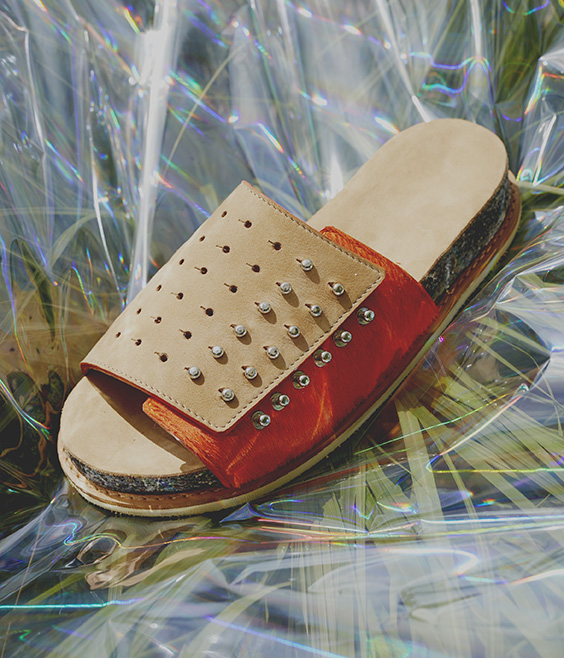
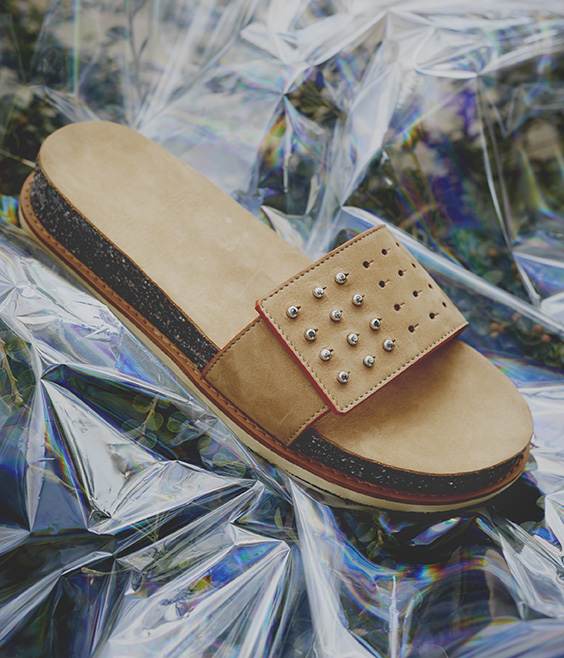
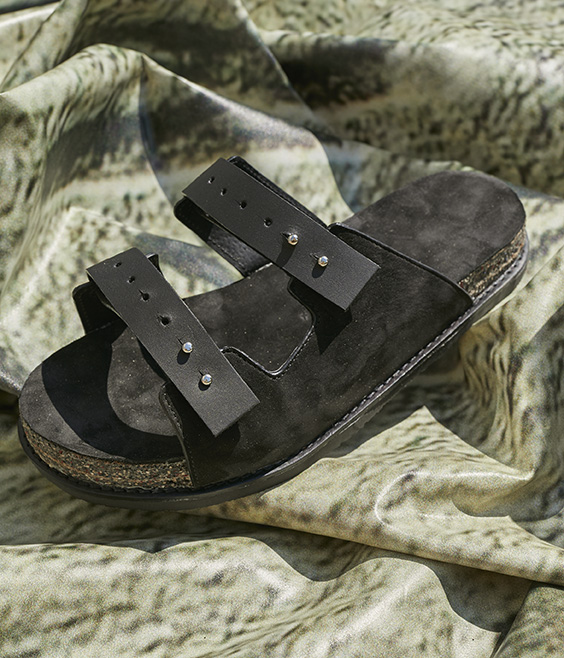
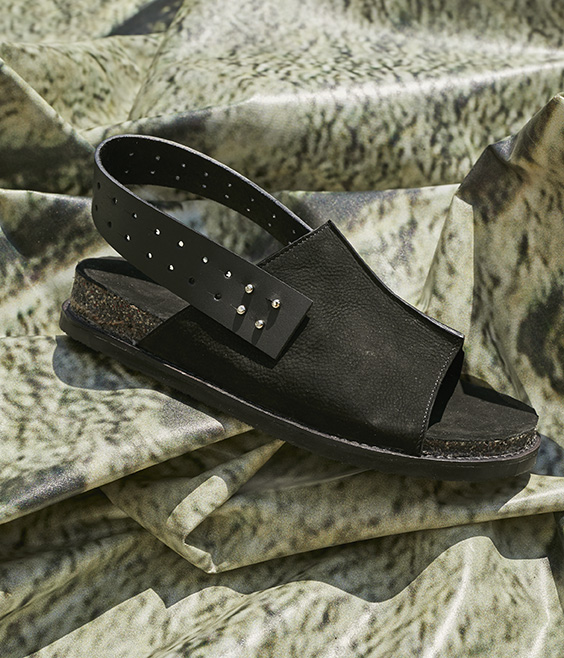
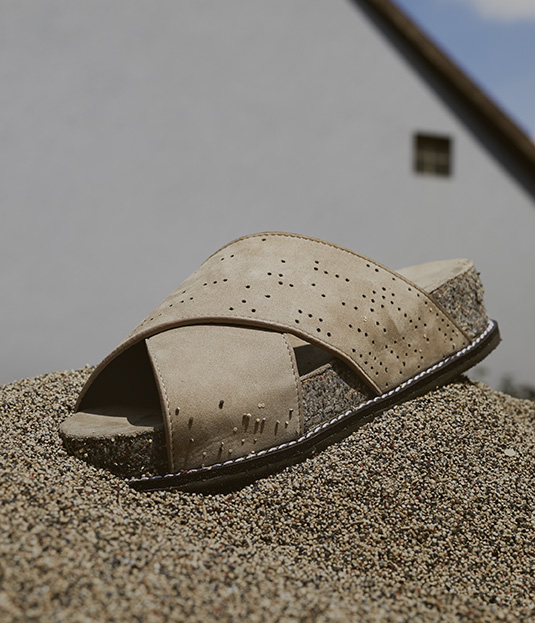
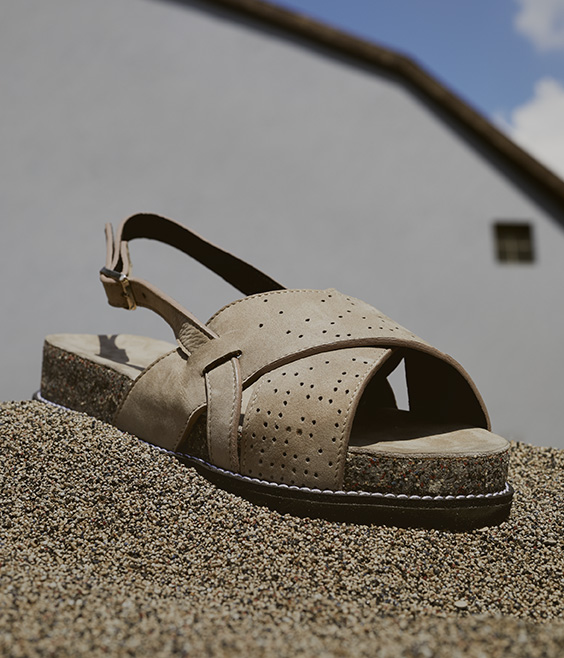
The Ped's shoe collection contains shoes with a unique self-developed shoe insole, which is made out of tailoring and perforation leather waste and biopolymer composite. The design, the innovative technology and the material are equally important parts of the project. The focus always on sustainability.
Project Region
EU Programme or fund
Description of the project
Summary
I started to work on this project when I won the Kozma Lajos Scholarship in 2019. As an accessory designer it is highly important to think about the processing issues of leather. It is always an extremely interesting challenge to design something new and exciting while simultaneously paying attention to using the materials optimally and minimizing the problems caused by the dangerous waste. However, creating some waste is sadly still unavoidable because of the sustainability challenges of the fashion industry.
The Ped's shoe collection contains shoes with a unique self-developed shoe insole, which is made out of tailoring and perforation leather waste from the Eagle Ottawa factory in Szolnok. It is mixed with a specific biopolymer, which acts as an adhesive between the small leather pieces. Currently the insoles are made at my home with a mold developed by myself.
In the future I am going to need help for further developments and larger-scale production from a manufacturer who is able to create products from biopolymer. In addition, I am planning on incorporating a circular system into my process, which will enable me to reuse the old and outworn shoes returned by my customers.
Key objectives for sustainability
In my application, I would like to deal specifically with the production of leather, its processing and the treatment of its waste. This area is more delicate than the same issues in the textile industry, because from the fact that it is made from the skin of a living organism and then goes through a lot of chemical processes necessary for finishing, we go to leather processing where the amount of tailoring waste is much higher than textile. we face highly polluting effects and a lot of controversy.
As an additional designer, I’ve worked with a lot of leather so far and I’ve always been confused that it’s almost impossible to make tailor-free cuts, as there are a lot of flaws on the surface of the skin due to its nature. In addition, the structure and consistency of the skin also change, so the abdominal parts and thickened edges cannot be used. These tailoring wastes make up an average of 20% of the material, but in shoe manufacturing, for example, this proportion can increase many times over due to the shape of the tailoring patterns and the direction of skin elongation, and should be treated as hazardous waste.
Many people try to use leather and other industrial waste, but in most cases resin or other highly polluting toxic substances are used as binders.
Toxic production and long degradation time therefore preclude the use of most polymers. However, I found an existing biopolymer that is made up of completely environmentally friendly ingredients and can also be made in kitchen conditions. The share of biopolymers in the plastics industry is still only 1-1.5%, but according to experts, it would be a solution in the field of mechanical engineering, packaging technology and many other plastics applications.
Key objectives for aesthetics and quality
Since the problem of experimenting and molding the composite is quite a big task, I plan to design slippers and sandals for the beginning of the spring-summer season. The simpler design of these allows me to focus on the sole most of the time, perfecting it. In the beginning, in parallel with the experimentation, I would start designing, during which I will refine the shape of the sole and the design of the upper parts. In the second phase of the work, I would develop the right way to fit the skin and the composite together. After that, I want to make 4-6 pairs of unisex shoes during the construction, in which I take into account the anatomical differences and sizes between the male and female feet.
Key objectives for inclusion
Sustainable design has always been an important factor in my work, and even the starting idea in some cases. I have experimented a lot with materials and forms, but it has already served as a theoretical background, for example in my dissertation, where the wabi sabi philosophy formed the visual basis, ensuring a much more sustainable existence by accepting mistakes and shaping them into values. However, this visual world requires quite a few sacrifices from the user. It greatly determines the style of clothes and accessories, it gives a much more extreme look. Many cannot afford this because of the dress codes adopted in their work, or are simply not brave enough to bear the unusual shapes given by recycled or waste-free tailoring lines. In addition, the production of such products is much more complicated, risky and costly. Going beyond the typical look of eco-conscious design, I realize a collection that follows an industrial line, which is easier to integrate into an existing wardrobe and represents a more casual style. This not only makes the target group more receptive to environmental awareness open to it, so a much wider market can be reached with it.
Innovative character
In my research so far, I have not come across an example where this or a similar mixture would be utilized in the field of fashion, nor have I found a precedent for trying to blend it with leather.
With the New European Bauhaus Initiative Prize my goal is to design a sustainable shoe collection and to experiment with and produce a novel composite material from tailoring leather waste as well as a biodegradable polymer that would offer an alternative to the materials used to make the shoe sole.