Life Capsules
Basic information
Project Title
Full project title
Category
Project Description
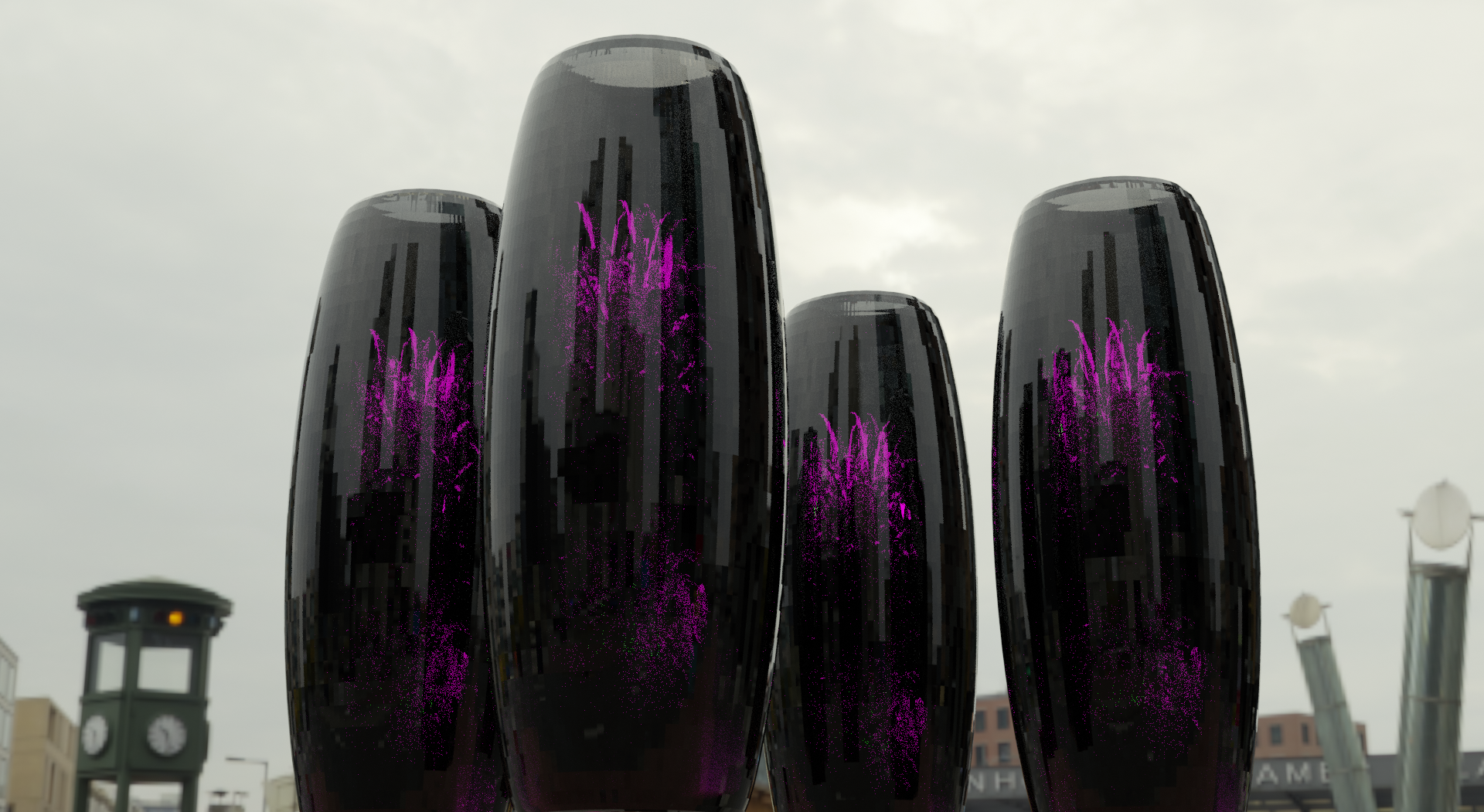
Life Capsules is a public sculpture installation bridging the modern urban lifestyle with nature. The project consists of four 3D printed architectural structures co-developed with Ai Spacfactory, using additive aerospace technology. The transparent 3D printed structures would house individual biospheres functioning as giant self sustaining greenhouses. The structures placed in busy urban areas create a moment of tranquility benefiting mental health and reconnect with nature.
Project Region
EU Programme or fund
Description of the project
Summary
Life Capsules is a public sculpture installation bridging the modern urban lifestyle with nature. The project consists of four 3D printed architectural structures co-developed with Ai Spacfactory, using the same additive aerospace technology the company has developed for NASA’s future Mars missions. The transparent 3D printed structures would house individual biospheres functioning as giant self sustaining greenhouses. The methods used for the greenhouses grew out of a research carried out with DLR (German Aerospace Center) EDEN ISS initiative. The structures placed in busy urban areas create a moment of tranquility benefiting mental health and provide a possibility to reconnect with nature in an everyday environment.
Life Capsules are both educational and an artistic expression growing from a long term art and science collaboration. The sculptures for the first time introduce advanced additive aerospace manufacturing to the Arts. The artwork is co-developed with the award-winning Ai Spacefactory; a leading designer of ‘Marsa’ an insitu 3D printed habitat created with NASA for the first human Mars missions. 3D printing architectural structures provide a sustainable and energy efficient manufacturing method. The structures 3D printed with renewable and recyclable materials which minimize environmental impact without compromising comfort and performance. It offers a simpler, more sustainable solution for building on this planet, while advancing the technologies for living on another.
Key objectives for sustainability
The transformation from MARSHA – AI SpaceFactory's NASA-award-winning Mars habitat – into Life Capsules is a literal demonstration of how Space technology can reshape how we build and live on planet Earth. Modern construction has consumed vast amounts of energy and resources due to its dependence on single-use, carbon intensive materials such as cement. But if the structures get demolished, its exterior shell can be fully recycled and reprinted several times. Ultimately, the material can be composted and returned to earth, making way for future generations of sustainable buildings.
The structures would be built from the same autonomous 3D printing technologies and compostable materials Ai Spacefectory has designed for longterm, sustainable life on Mars. Like its predecessor (the NASA-award-winning Martianhabitat MARSHA), TERA is built from a 3D printed biopolymer basalt composite –a material developed from crops like corn and sugar cane – tested and validated by NASA to be (at minimum) 50% stronger and more durable than concrete.
This material has the potential to be leaps and bounds more sustainable than traditional concrete and steel, leading to a future in which we can eliminate the building industry’s massive waste of unrecyclable materials. It could transform the way we build on Earth – and save our planet
Key objectives for aesthetics and quality
The aesthetic of Life Capsules play on the idea of placing portals in urban city spaces that transform the viewer into nature providing the benefits of mental health and the possibility to disconnect, while promoting new groundbreaking sustainable technologies both in architecture and science. The sculptures are both educational and an artistic expression growing from a long term art and science collaboration.
Key objectives for inclusion
Life Capsules promote equality and the importance of mental health. As well as the right to disconnect from our everyday monotonous grey life cycles. The sculptures equipped with calming lights, an essence of nature, provide a safe haven for self reflection and nurture.
Innovative character
Each Life Capsule would host a modular self sufficient greenhouse unit co-developed with EDEN ISS. The goal of the EDEN ISS project is to advance controlled environment agriculture technologies beyond the state-of-the-art. It focuses on ground demonstration of plant cultivation technologies and their application in space. EDEN ISS develops safe food production for on-board the International Space Station (ISS) and for future human space exploration vehicles and planetary outposts. Life Capsules take its inspiration from this project while relying on data taken from the Biosphere 2 project to create a full closed cycle greenhouses inside the structures.
The production of food in a closed-loop system using Controlled Environment Agriculture (CEA) technologies can potentially mitigate the problems of natural resource over-utilization and food shortage. Better advanced closed-loop systems can be designed to provide oxygen and water as outputs. CEA technologies are developed for different scales of operation, contexts, and output requirements and aim at optimising the growing conditions and resource use within a closed system for cultivating crops.