Dendro-Habitat
Basic information
Project Title
Full project title
Category
Project Description
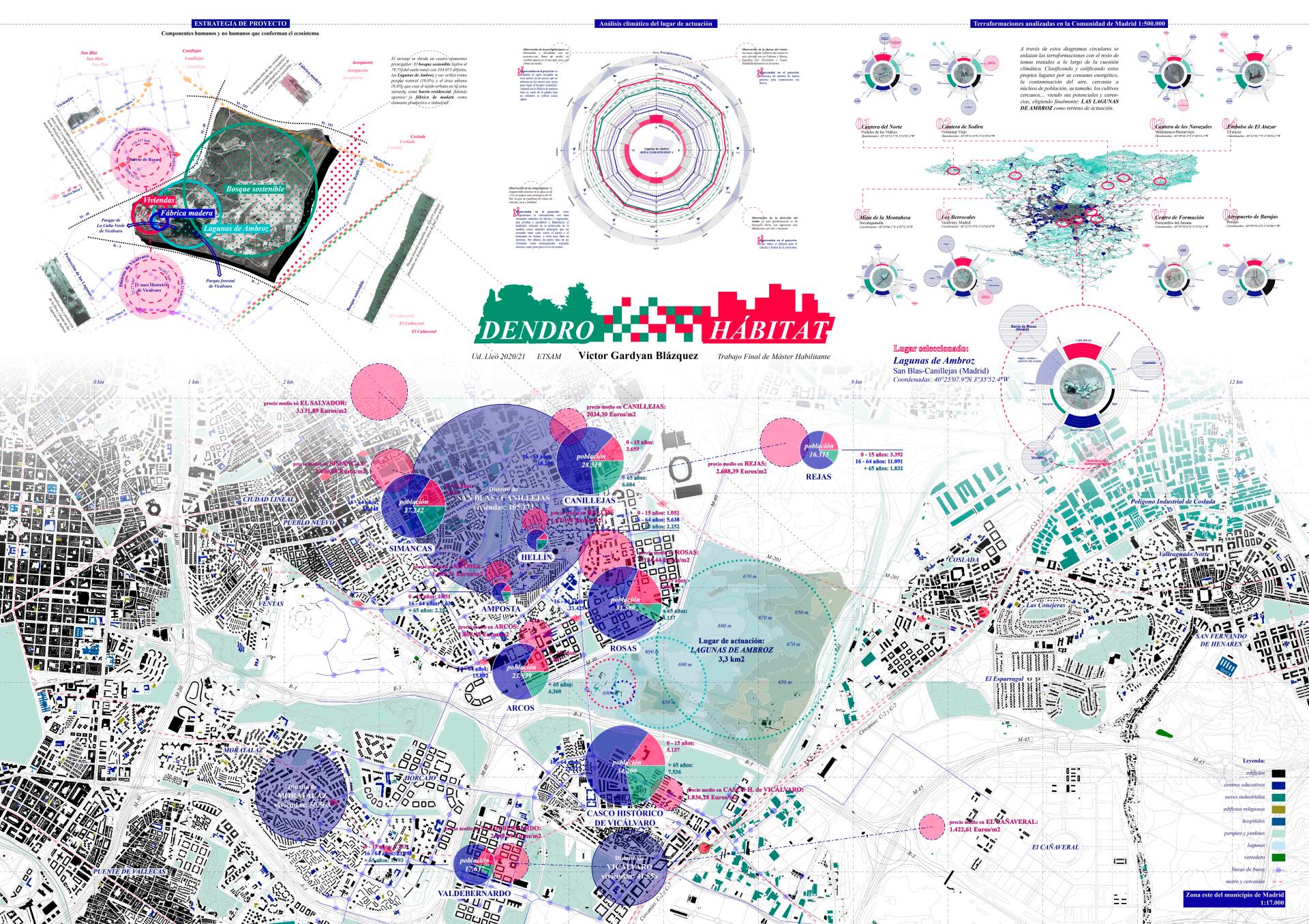
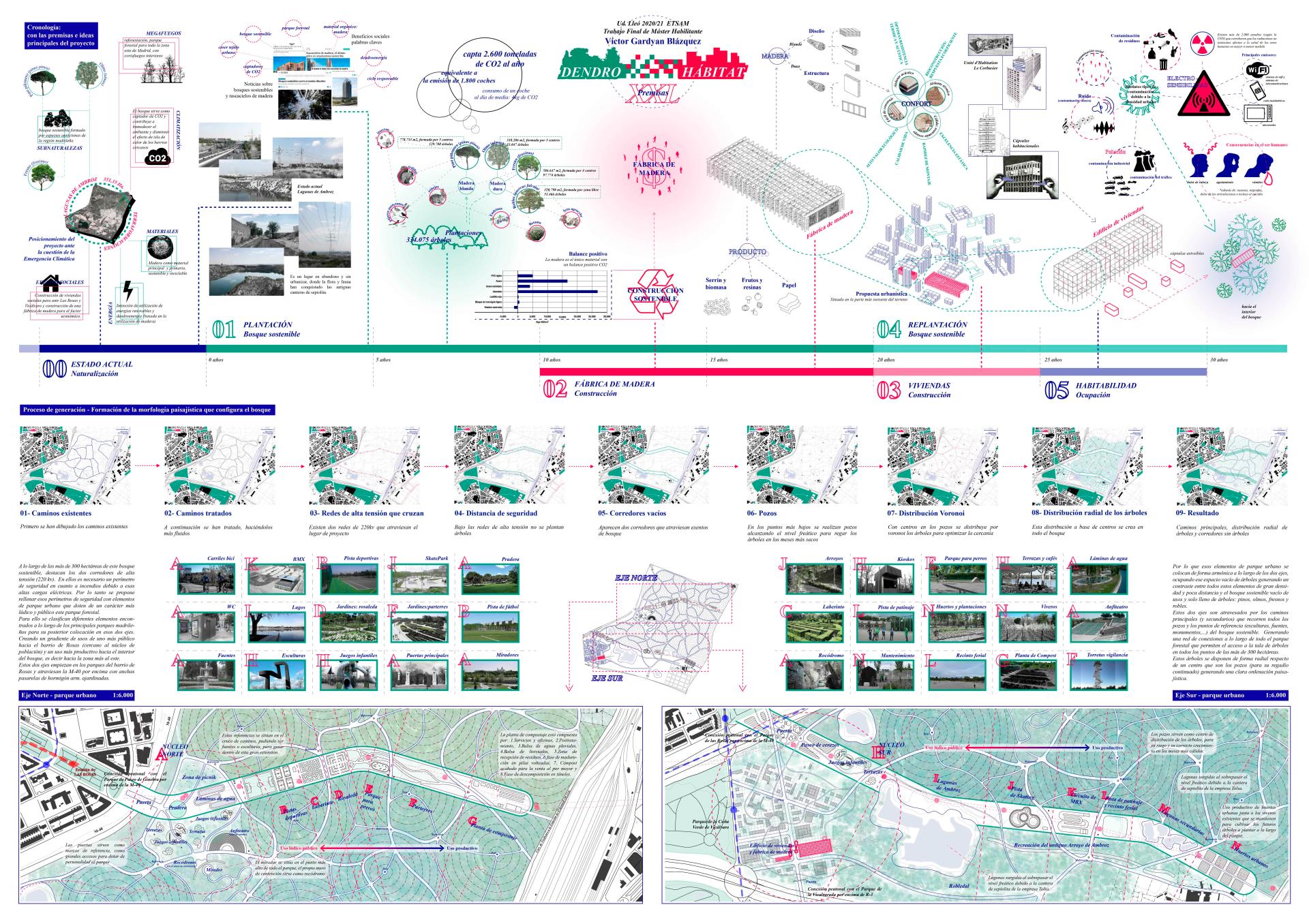
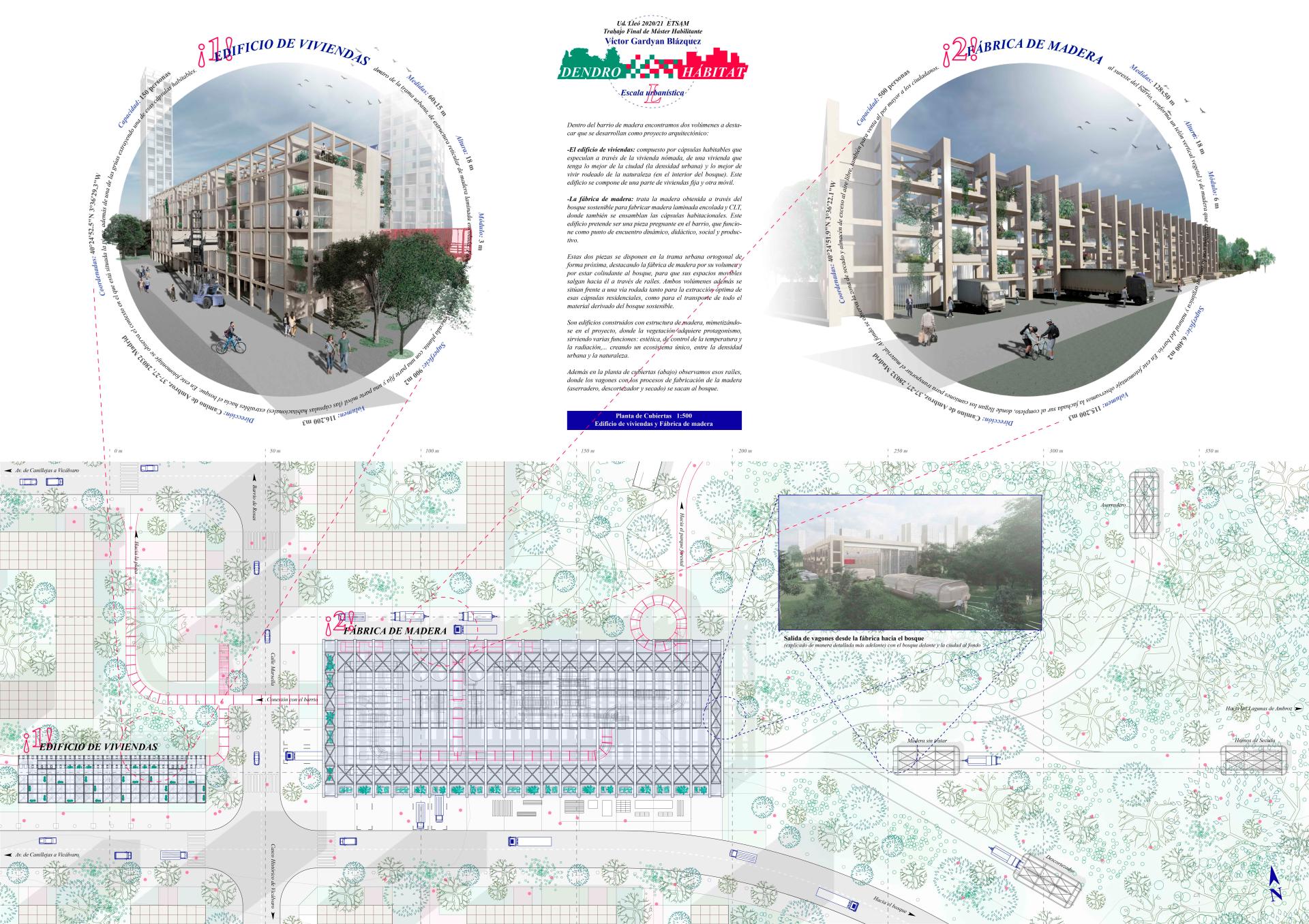
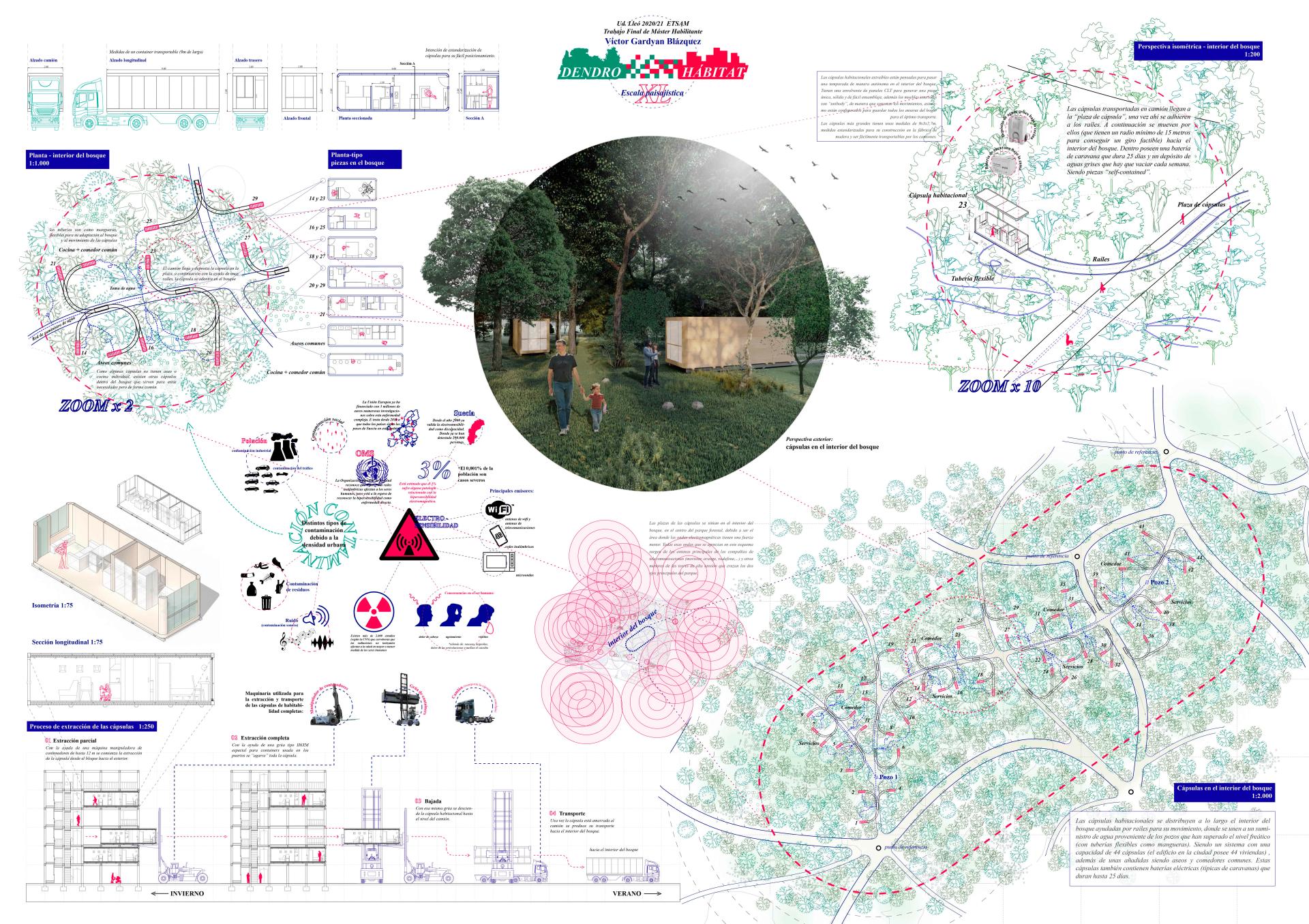
Dendro-Habitat is a project that encompasses several scales. The creation of a sustainable forest that also serves as a park for the neighbors. The use of the wood obtained from that forest as a construction material. The creation of a wood factory that treats the material obtained for the construction of ecological homes and furniture and furthermore it becomes an icon and a meeting point for the residents of the area and the workers, with an essential didactic part.
Project Region
EU Programme or fund
Description of the project
Summary
Taking as premises the neighborhood interest in a forest park in the area, the benefits against climate change of sustainable forests, the rise of wood as a sustainable material and its properties of comfort and ecology.
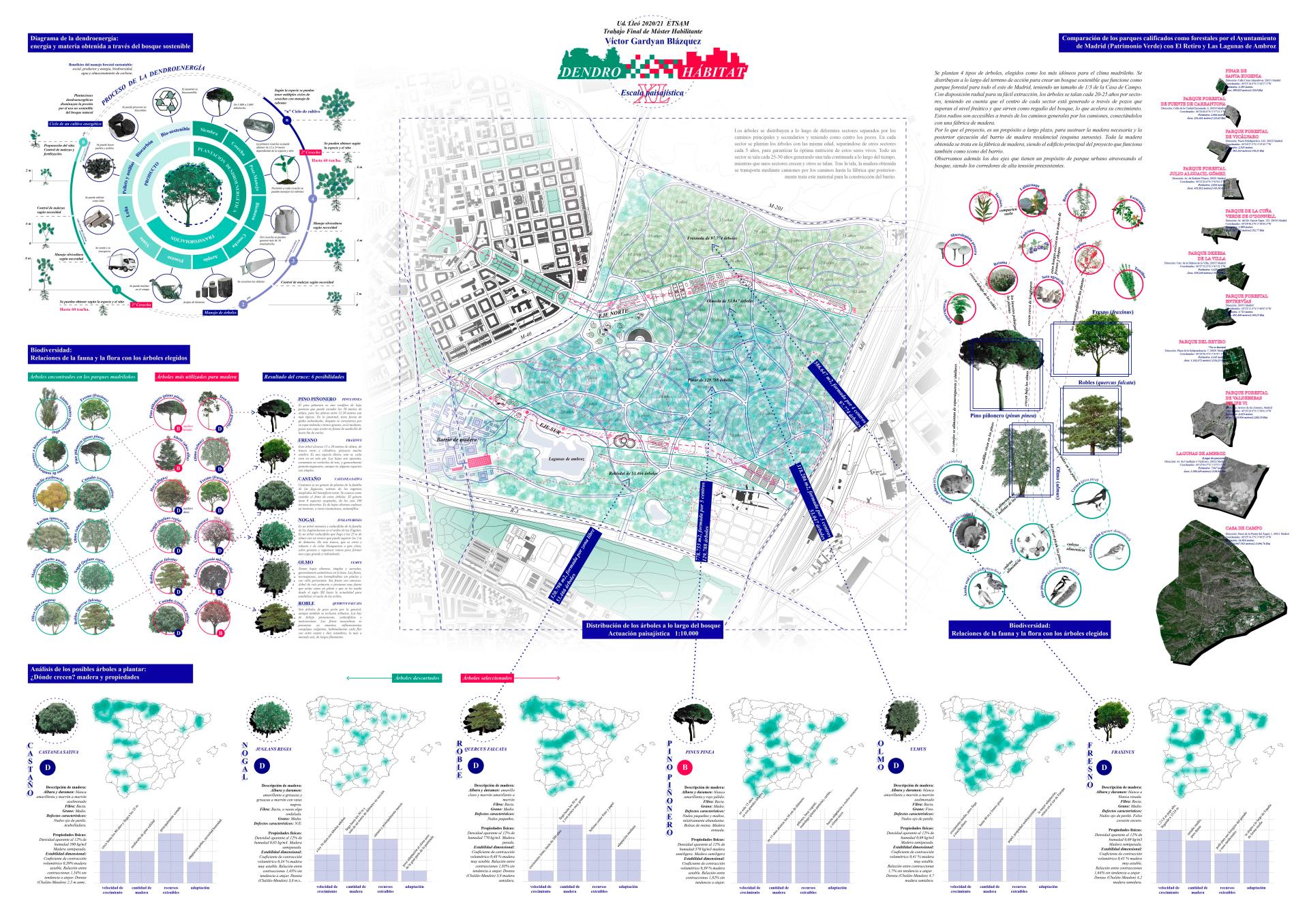
A productive forest park is proposed along the entire land as a landscape action, wooden houses that sew the urban fabric of the neighborhoods as an urban action in the west of the project and a wood factory that treats the material obtained in the forest as architectural performance.
For the plantation of the forest, the trees found in the parks of Madrid and the woods most used commercially are crossed. And they are compared between them by selecting the most suitable trees for this project and place, this being the distribution of stone pines, oaks, ash trees and elms, with more than 330,000 trees, with a potential CO2 capture of 2,600 tons per year, which it would be equivalent to the emission of 1,800 cars.
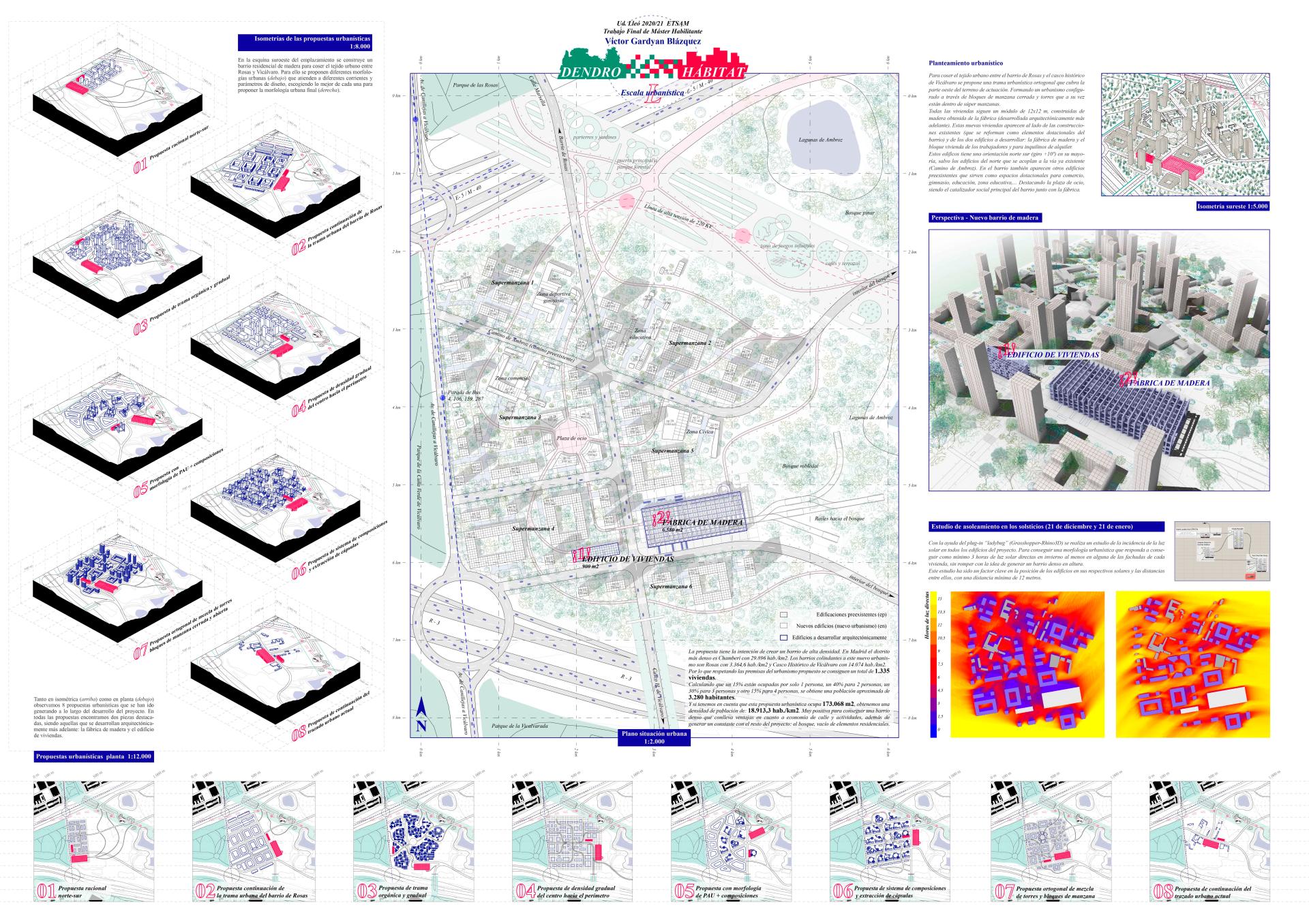
On the urban scale, different urban morphologies are proposed to sew the urban fabric in the east of Madrid.
All these proposals are completed with a study of sunlight to achieve the final urban proposal that mixes a 9x9 meter module as standard and modular housing with the existing buildings that are given an endowment use, achieving a neighborhood with 1,330 homes for more than 3,000 inhabitants.
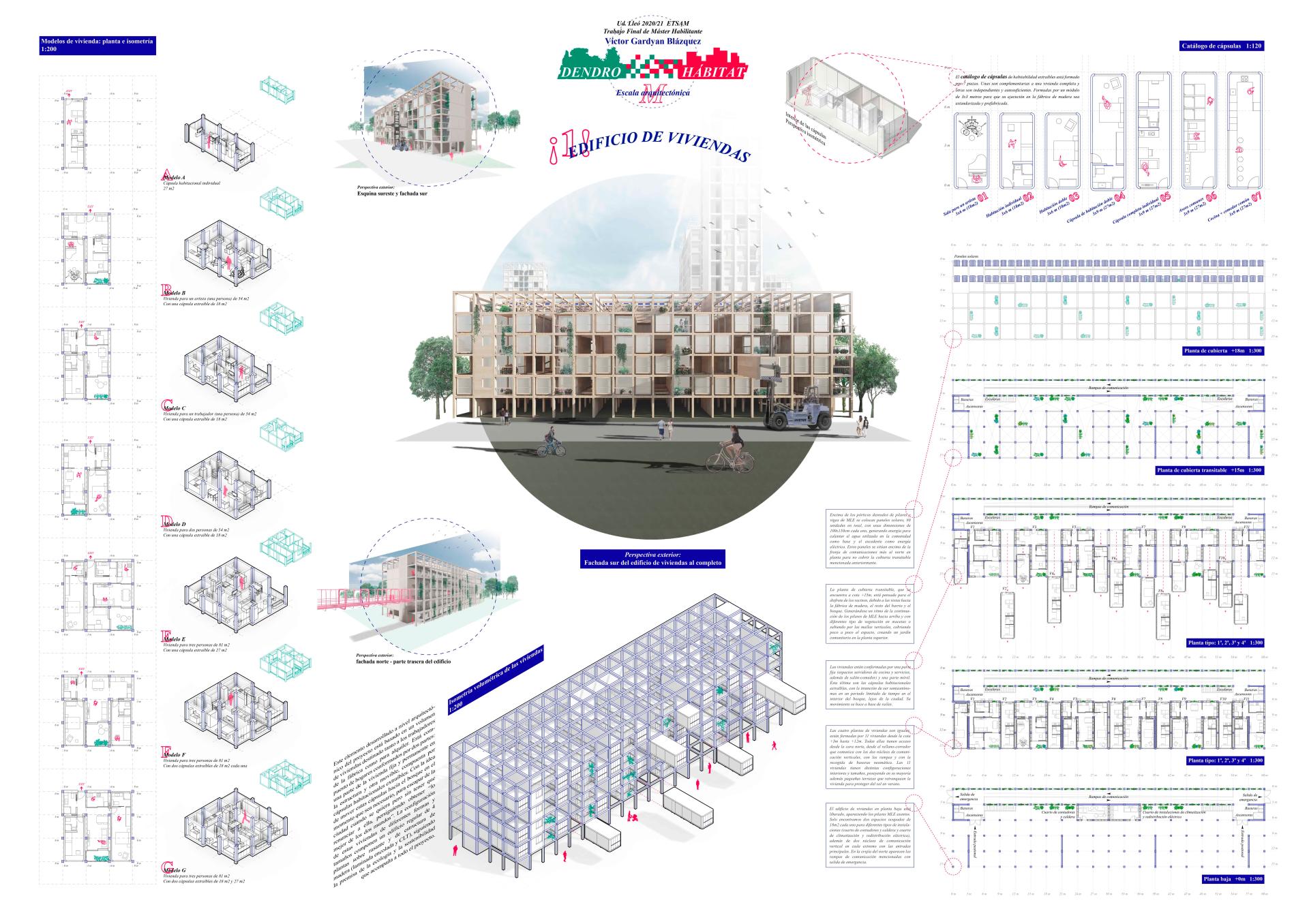
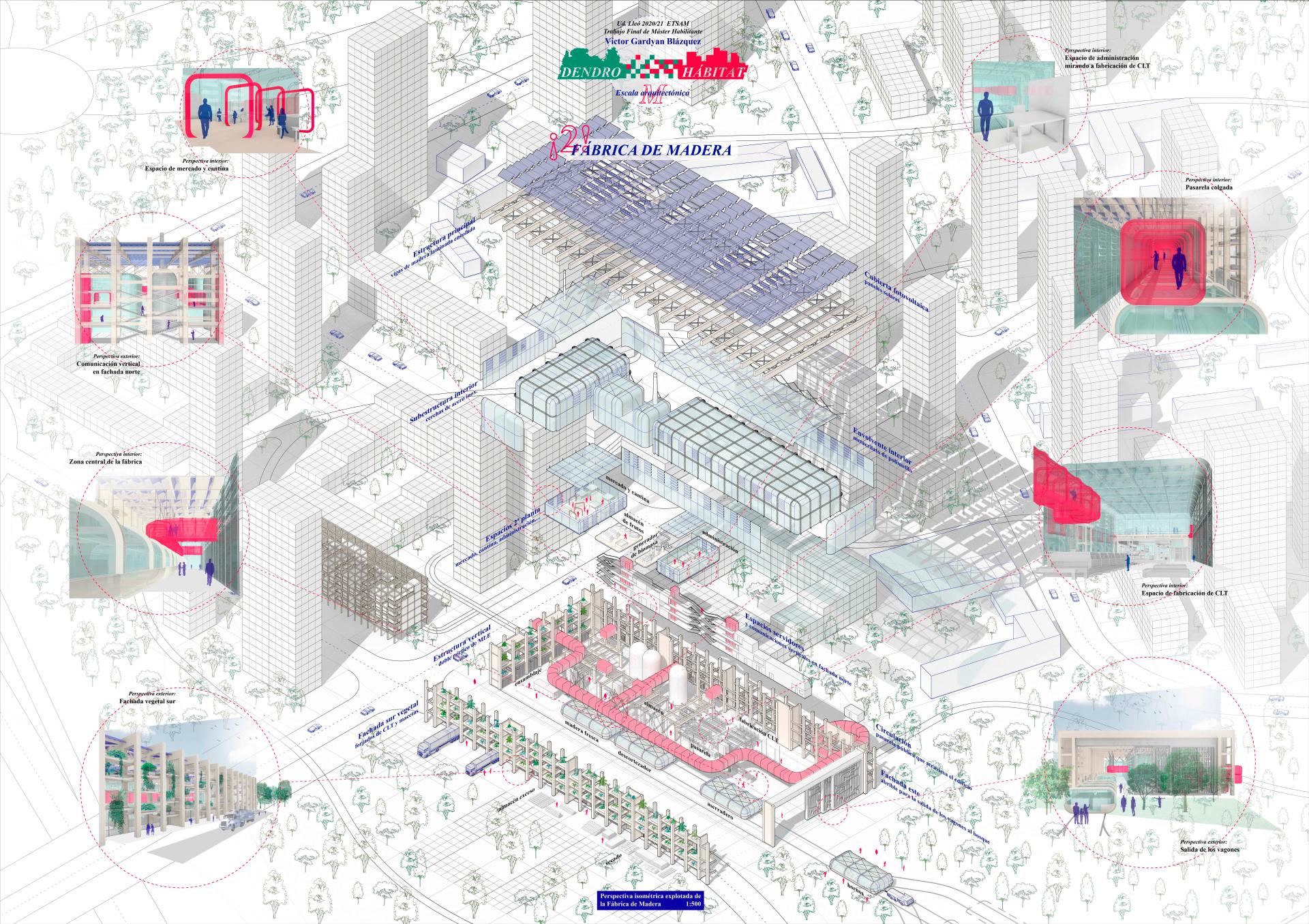
Being a high-density neighborhood thanks to high-rise residential buildings and closed block blocks, generating 5 superblocks. Where the two architecturally developed elements of the project appear: a speculative housing building built with wood from the forest and a wood factory that treats this material and functions as an icon and catalyst for the neighborhood.
So if we travel to the architectural scale we find that apartment building within the city, with all the advantages of urban density.
Key objectives for sustainability
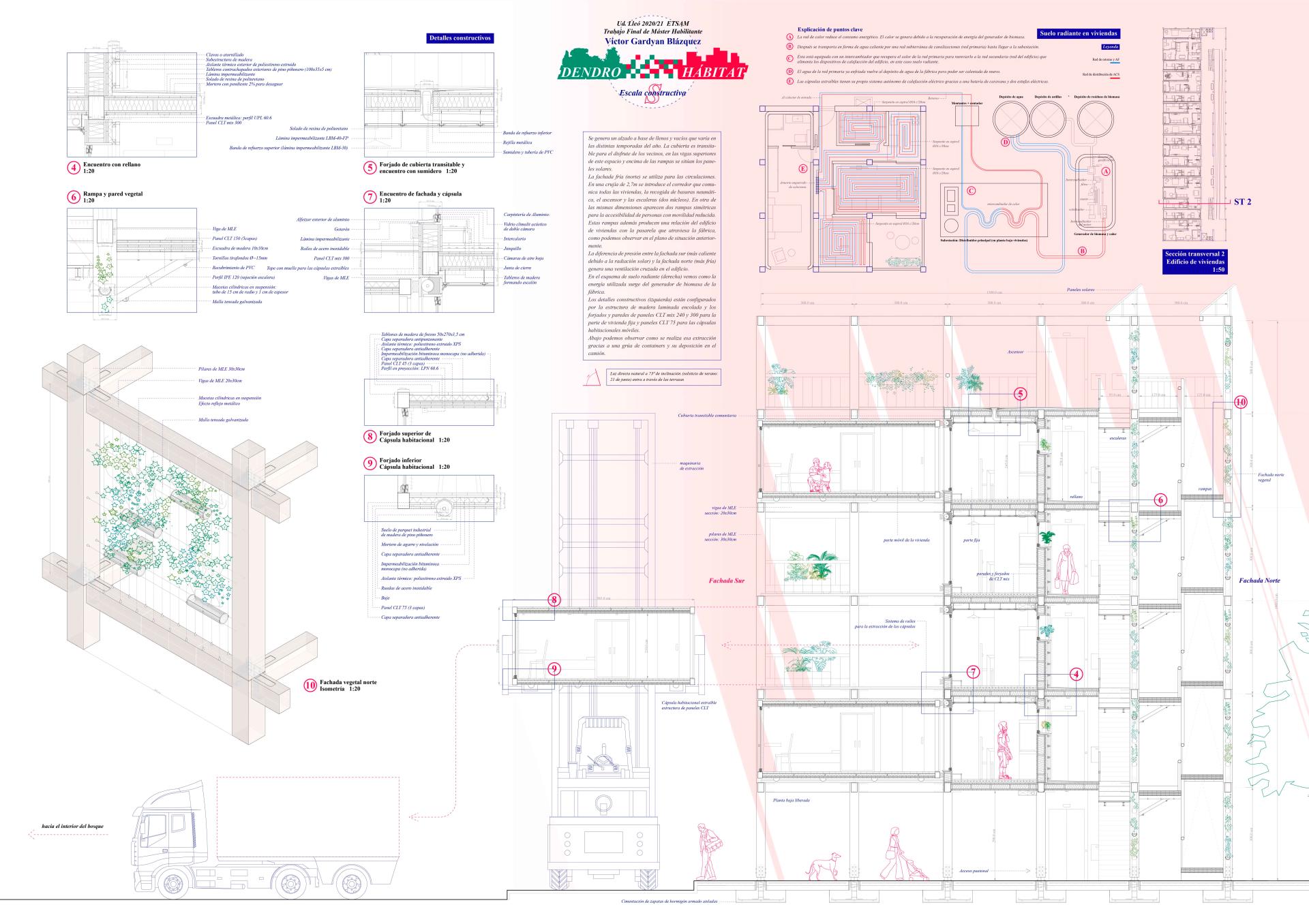
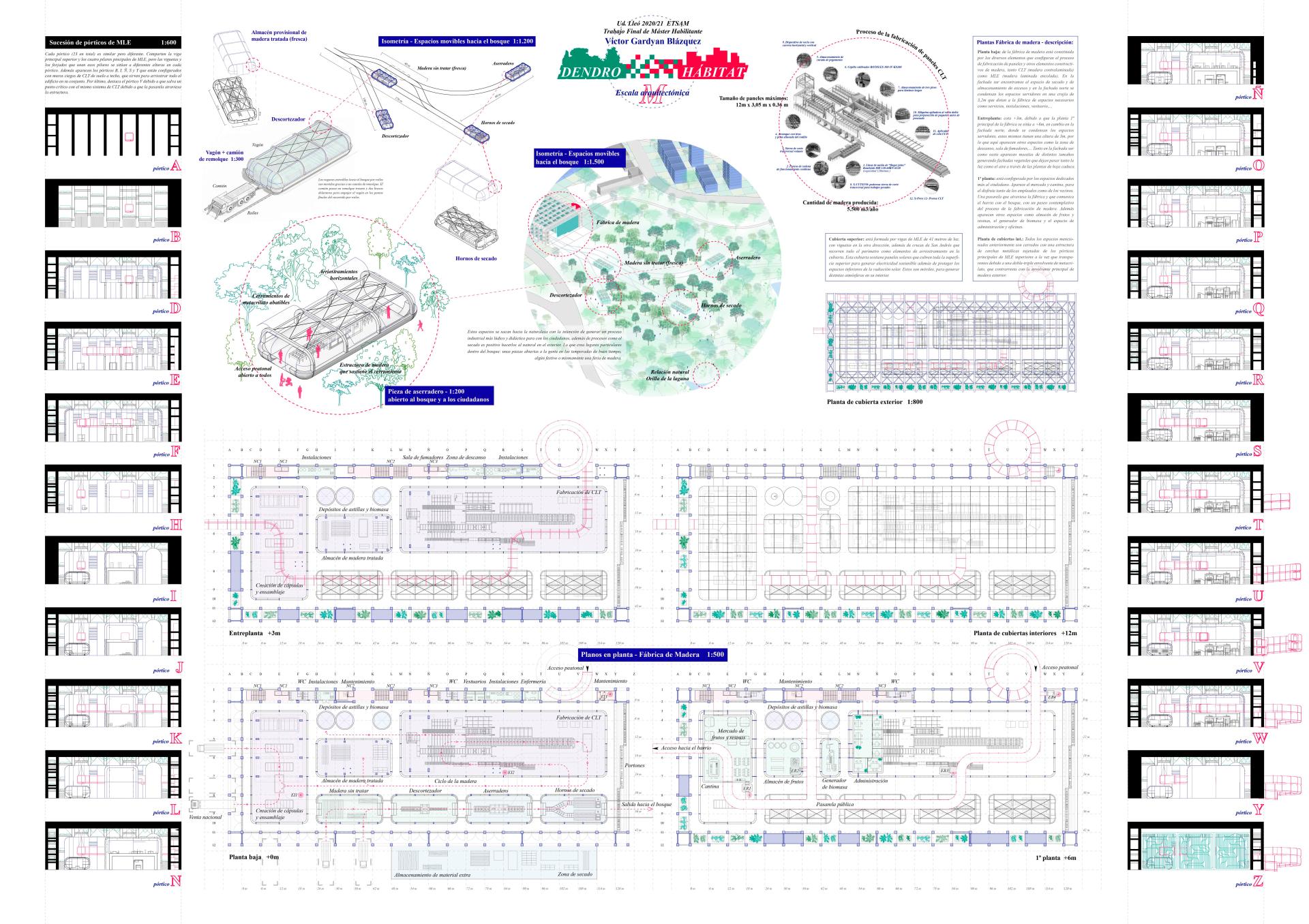
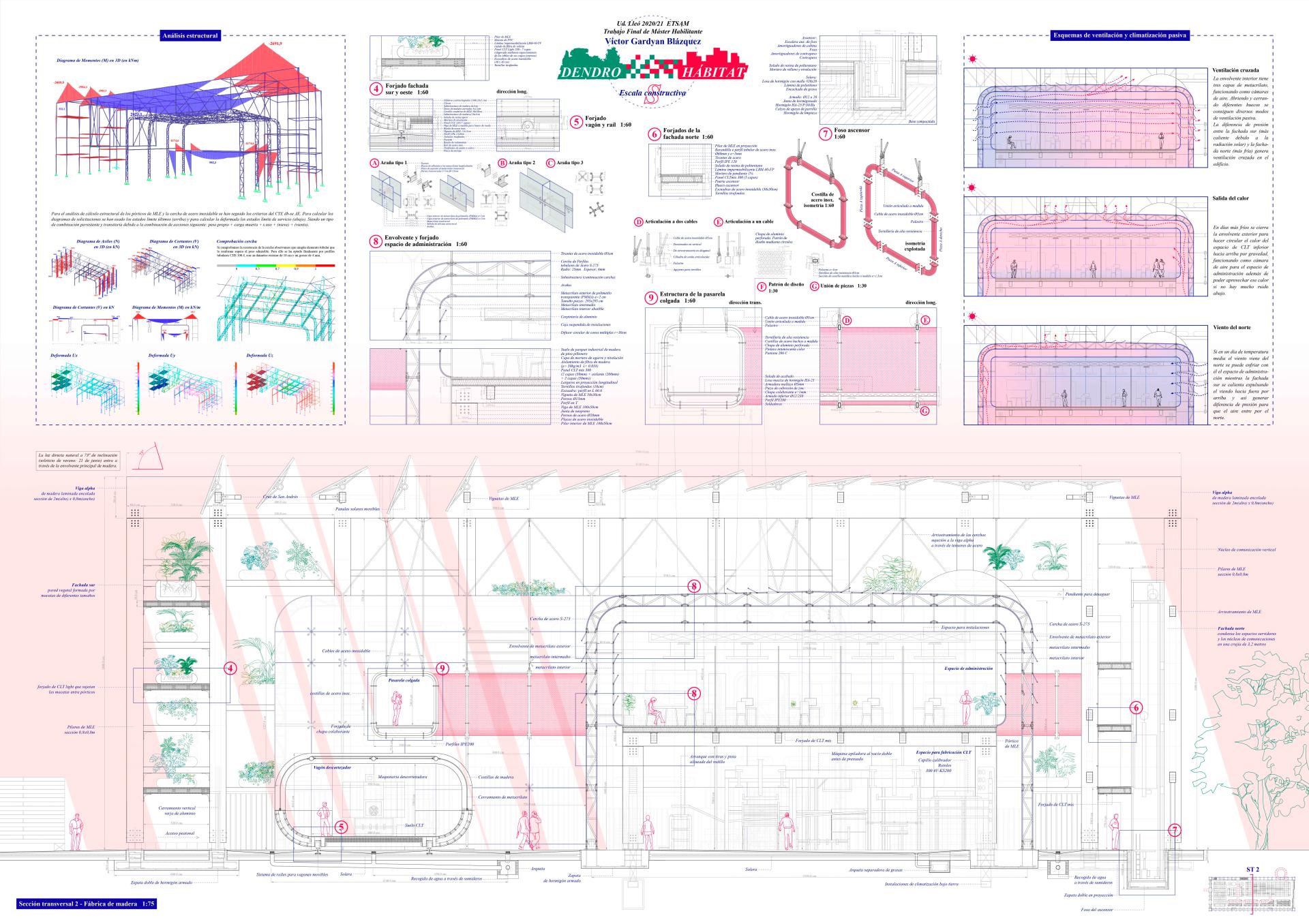
The concept of sustainability that this project has is based on wood as a sustainable material. For this, this wood is used in an ecological way and adapted to planting times to be used later in the construction of habitable spaces by citizens and for both urban and private furniture. Generating a circular economy, a cycle where wood grows through the growth of trees and is subsequently used as a structural material in addition to other purposes. Green energy is also very important, where we can see how the solar panels cover the entire factory and biomass and composting of waste from the wood and forest manufacturing process are used for the production of thermal energy used in the rest of the world. neighborhood.
Key objectives for aesthetics and quality
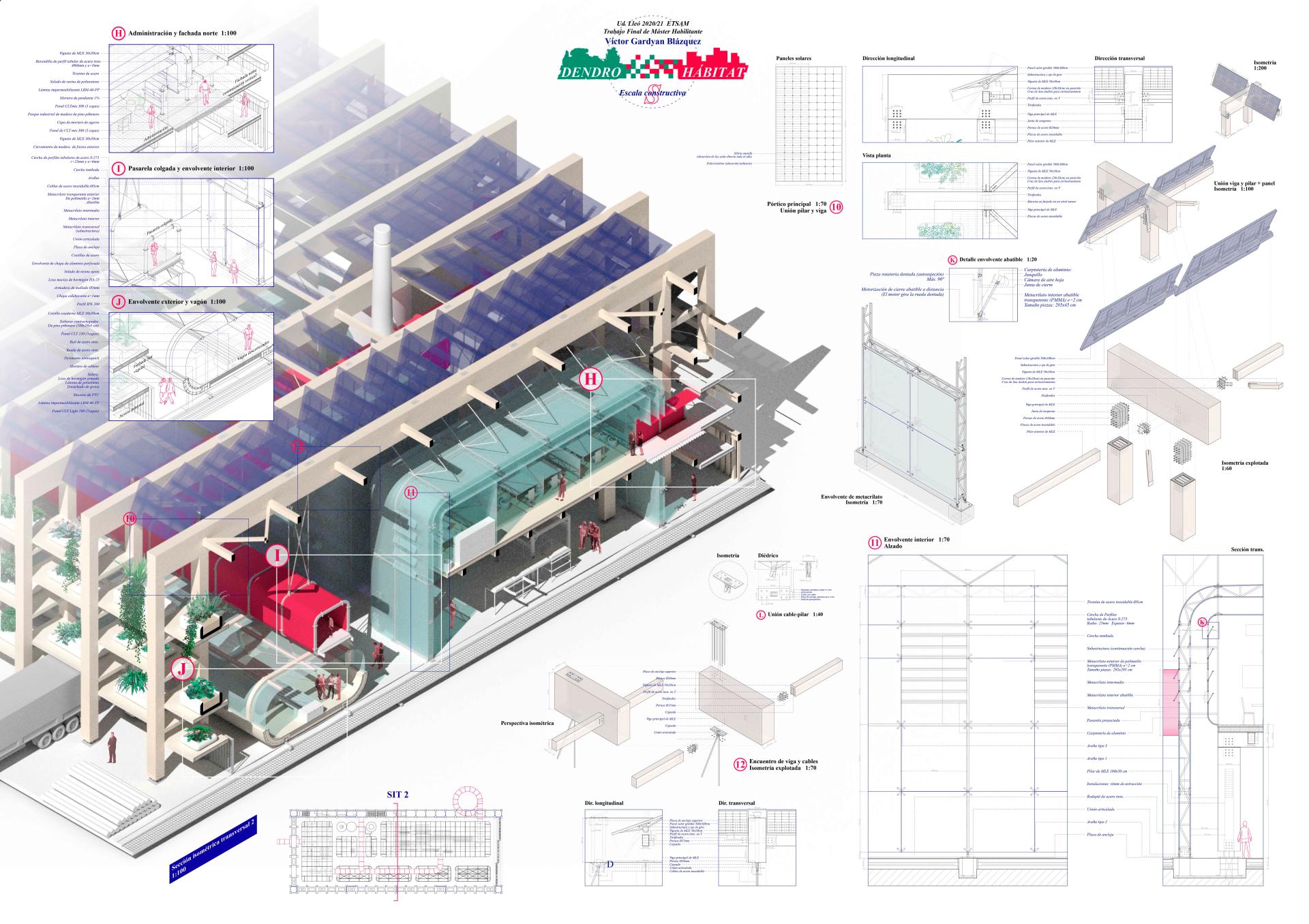
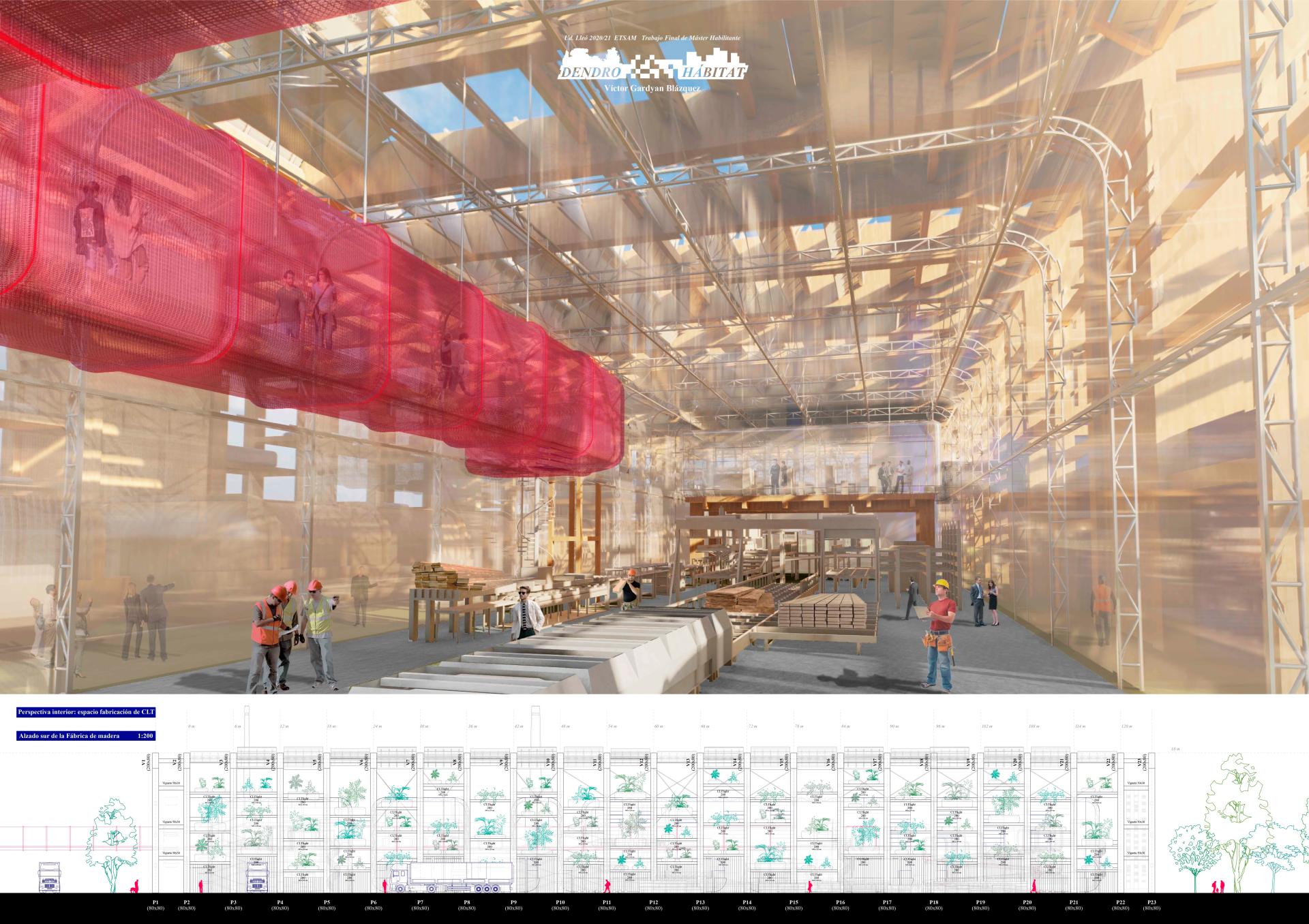
The factory works as an icon and a meeting point for residents. The ground floor is used for the production of wood as a sustainable material, that is, the entire manufacturing process of laminated wood, cast laminated wood and other similar materials. On the other hand, on the upper floor there is a meeting between neighbors, workers and visitors. A place where you can appreciate this manufacturing process while interacting with sustainability, the circular economy and other educational elements from which to learn how to build a better and greener world.
Key objectives for inclusion
So the inclusion of all kinds of people occurs not only in the surrounding neighborhoods, but also in the forest and in the factory itself. For this, an accessible building is built in terms of people with less movement capacity, in addition, different people and volunteers would be provided to help other types of people with disabilities or similar. The objective of the factory is to become the meeting point for all neighborhoods and districts in the area, not only to learn about the wood manufacturing process, but also a meeting point for debate, ideas, diversity and culture.
Innovative character
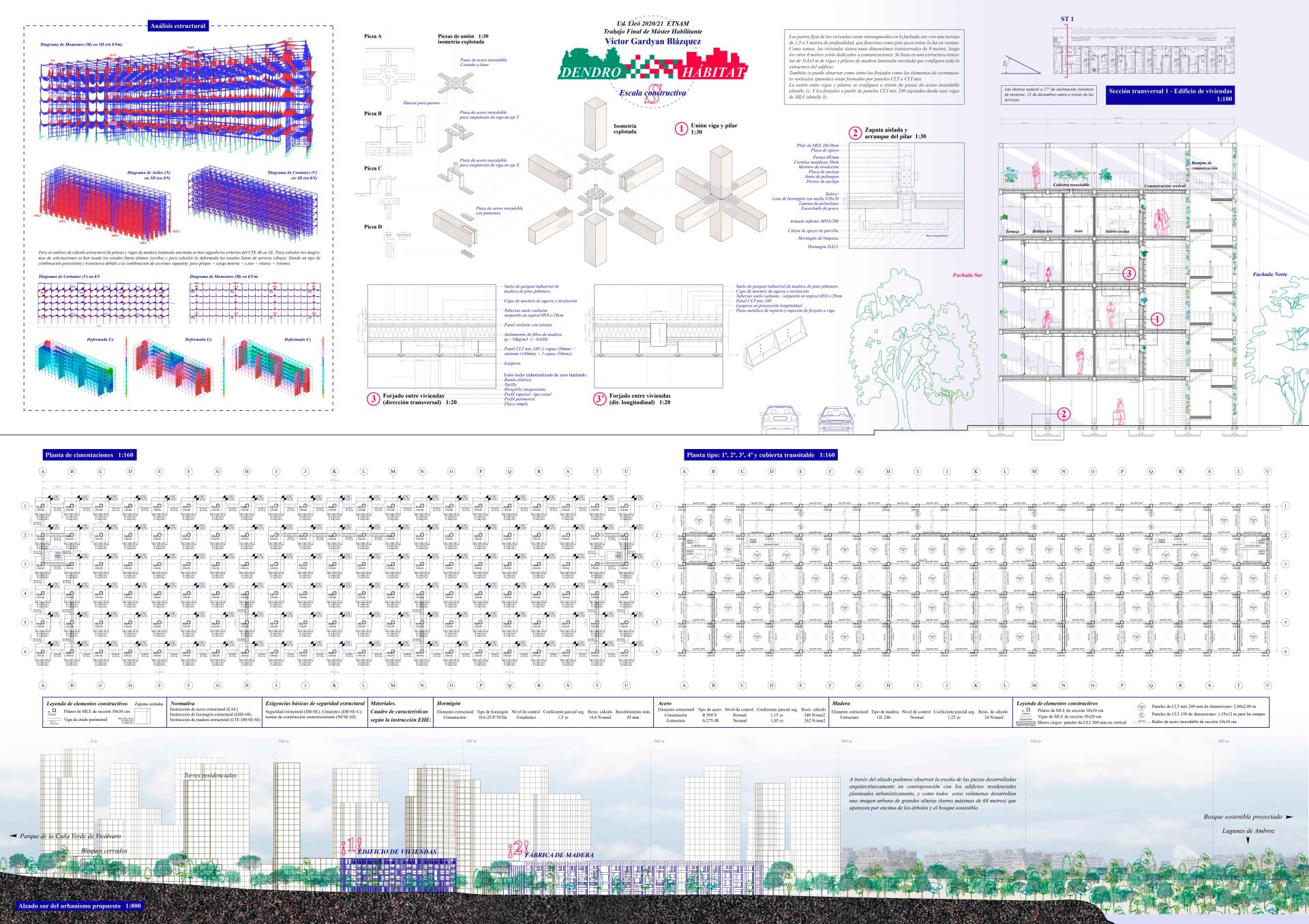
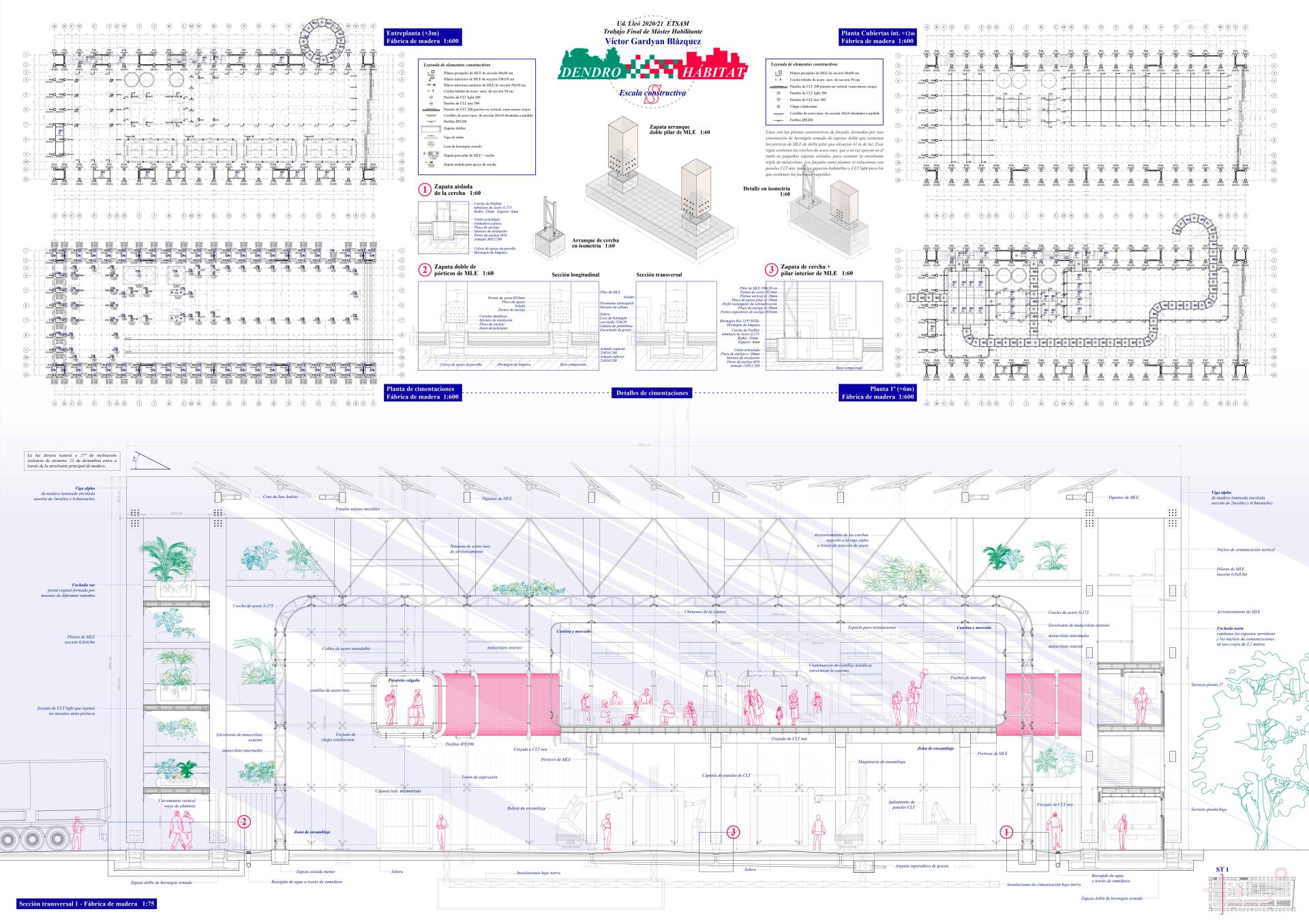
Perhaps the innovation of this project is not based on the greatest avant-garde, the most modern elements, or complex knowledge. But to understand the material as a natural cycle, from the first moment in which the seed is planted until it becomes part of a piece of furniture or a home. It is true that the materials proposed for the construction of the factory explore new innovations in terms of large glued laminated wood structures in addition to using very light and diaphanous elements inside, using stainless steel, aluminum and polymethyl methacrylate.