OASI
Basic information
Project Title
Full project title
Category
Project Description
Oasi is the renaturalization of an strongly transformed area by a latent industrial past that allows the encounter with the river and restores its identity to a place that had lost its relationship with the river ecosystem. The project is materialized in the form of a floodable park with native species of the Mediterranean riparian forest, acting as a protection for the adjacent urban fabric and as a strategic ecotone with natural values.
Project Region
EU Programme or fund
Which funds
Other Funds
European subvention for the "Llei de Barris" of Sallent de Llobregat: Rearrangement of the river Llobregat
Description of the project
Summary
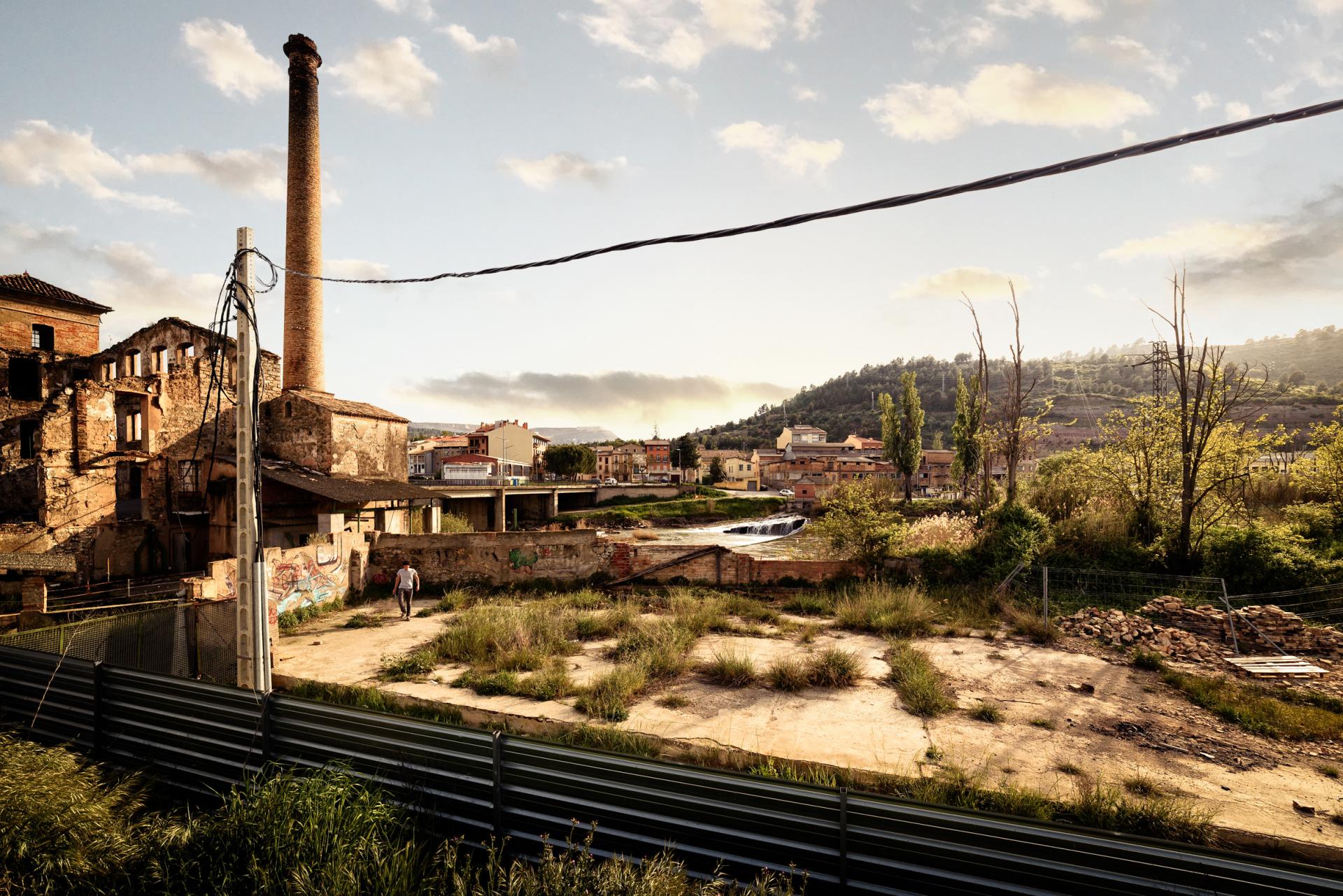
The industrial boom of the second half of the last century has implied a high anthropization of the fluvial environment, compromising the ecological continuity of the Llobregat river as a system and making it one of the most industrialized rivers in Europe. Once the decline of the industrial colonies began, the municipality of Sallent grew with its back to the river, omitting the presence of its waters to which it attributed its identity. On the margins the native natural conditions had been completely lost, being colonized by invasive species, which seriously damage the quality of the ecosystem, and there had been a loss of heritage value.
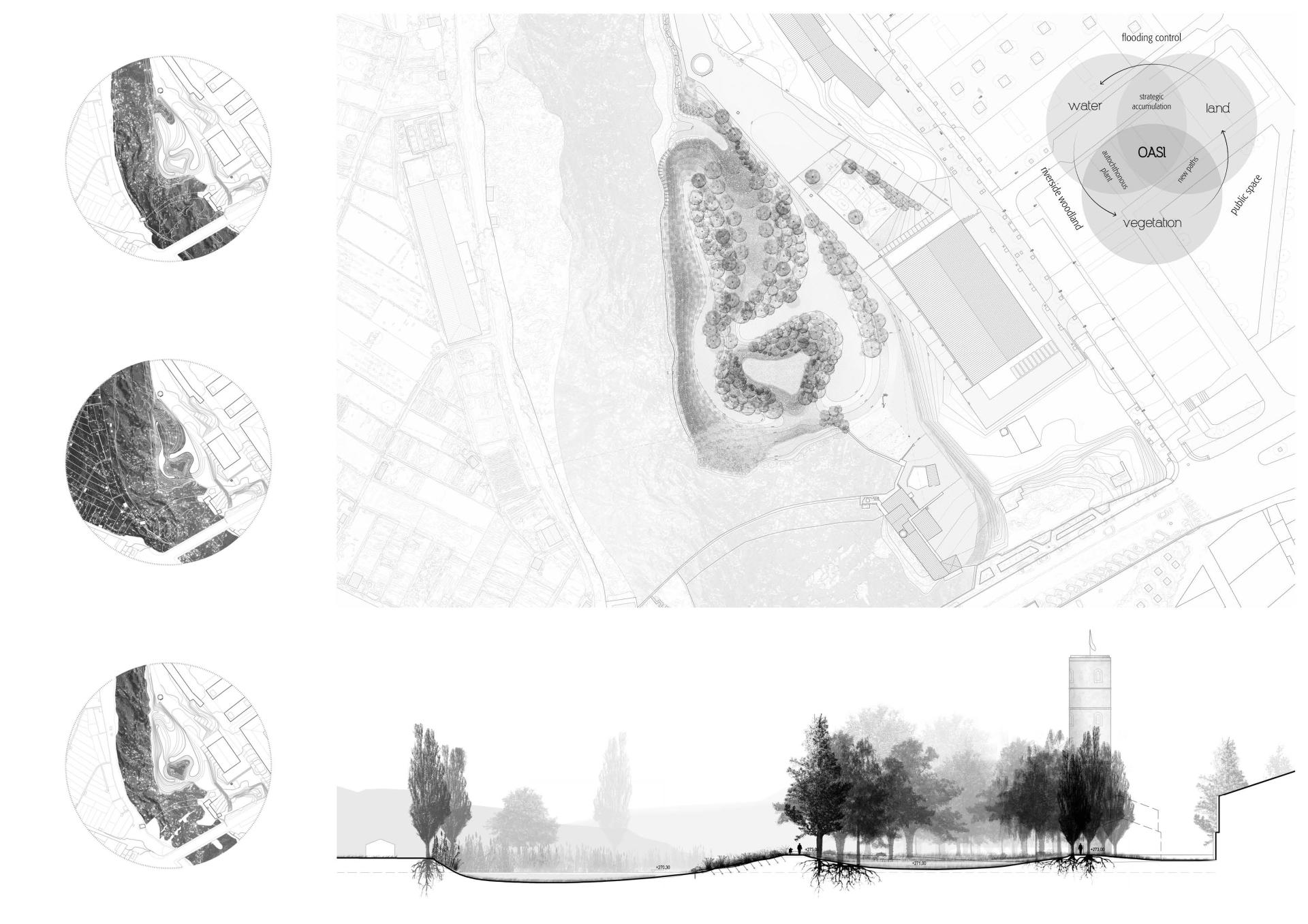
Oasi, consequently with said antecedents, consists of the renaturation of an old industrial space, nowadays converted into a consolidated urban area, located on the left bank of the Llobregat river, in Sallent (Bages). The intervention is based on the interaction of land, water, and vegetation as generators elements of public space with added value.
The projected topography configures a balanced and strategic earthwork with respect to flooding, generating two beaches at the level of the ordinary flow of the river that acts as an inlet and outlet of the water in the event of an avenue. When the flow increases, the water slowly rises through the topography until it fills an infiltration basin that will temporarily retain it and, through a spillway, overflows the surplus to the river. The gravel roads rest on raised protection mounds above the floodplain level, protecting the adjacent urban space.
The plantation strategy recovers the riparian forest structure linked to the water table, which distributes the native plant species according to their water needs, combining deciduous trees with shrub and helophyte communities in the most humid areas. The bioengineering techniques used to consolidate the most exposed banks, stabilizing the slopes weakened by the extraction of the rhizomes of the invasive species.
Key objectives for sustainability
As it is a floodable space, that is to say: it belongs to the river, we understood that we should act at all times with natural logics, consistent with the dynamics of the place. In terms of sustainability, the project has been conceived and executed as a transformation with the least possible waste, since the intervention has basically consisted of a compensated earthworks and the planting of native species from the territory's nurseries.
The reinterpretation of an existing deck of the old industrial buildings allows offering a flat and accessible part with the capacity to house new uses and functions of the space, taking into account the different social and cultural needs, thus generating a viewpoint to the Llobregat river in dialogue with heritage local.
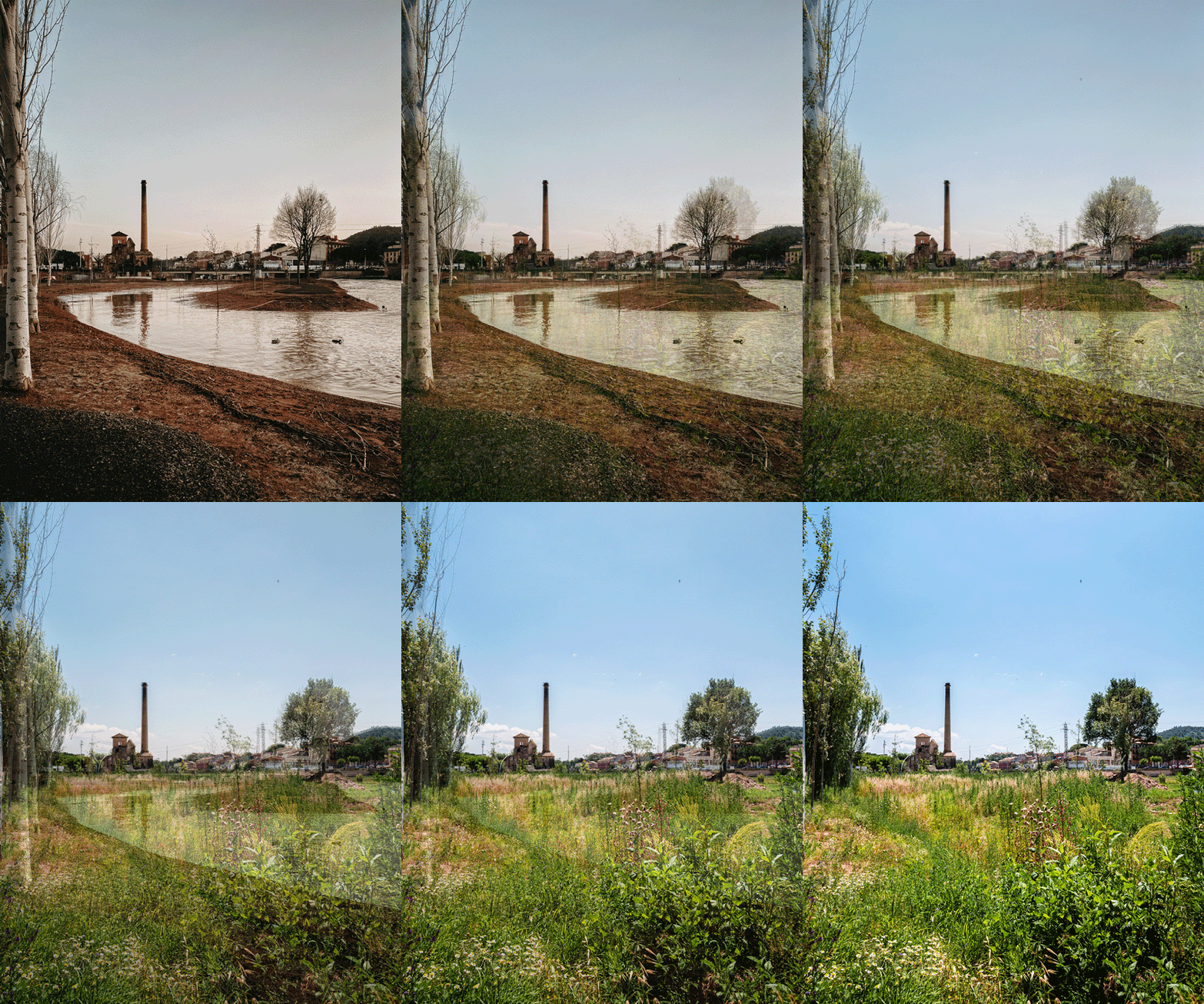
Taking into account the renaturalization nature of the project, the construction of Oasi has been a point of regeneration of the local landscape, acquiring more relevant natural values over time and becoming part of the collective imagination as a place of contact and symbiosis between public space and nature.
The result has been the renaturation of a river area of more than 7.000m² at a cost of less than 17€/m², indicating that it is very viable in economic terms but also ecological terms of the biodiversity of the place.
Key objectives for aesthetics and quality
Assuming the renaturalization nature of the project, the construction of Oasi has been a point of regeneration of the local landscape, acquiring more relevant natural values and becoming part of the collective imaginary as a place of contact and symbiosis between public space and nature.
The constant presence of water guarantees the proper ecological functioning of the area and its fertility, being a refuge of freshness and humidity for biodiversity. By recovering the lost space, the riparian forest acts as a transition of the boundary between the built landscape and the natural one. There is a balance between the heavy and the light, where the earth mass is excavated and the vegetal volumes are raised towards the light.
OASI is a process that begins the day our intervention ends. Since then, we have tried to show nature as it is, transforming anthropization through its laws, its dynamics and its forces, which do not understand speeches and words.
OASI will take on the aesthetics determined by time in the atmospheric and chronological sense. A representation of the beauty of riverside forests. An outdoor space exposed to weather conditions that will generate random moods based on changing weather conditions. Two opposite contacts with the river that create a parallel and alternative longitudinal route to the gravel paths, configured by a vegetal arrangement that generates a free flow of movement towards a large central space, the clearing in the forest that evokes through its frames to the industrial heritage and that allows the passage of water when there are floods and use of the space the rest of the time.
Key objectives for inclusion
Oasi aims to be a neutral place, a flexible public space that does not condition a specific use. The place is located in a large volume between different heritage landmarks and makes contact between multiple destinations from and to the town possible. There is a pleasant transition between what is built and what is natural, although the fluvial is extensively reproduced, becoming included as part of the fluvial system, appropriating the rest of the riverbank.
A place that within its capacity invites the inhabitant to develop with full freedom through space. An open environment, both in the natural nature of the forest clearing and the mineral aspect of the plaza and the river viewpoint, which favors its social appropriation. It becomes a local setting that defines itself through the needs of the village society. In this sense, social relationships are fostered and events of a different scale can be organized.
A project made up of essential elements that show the clarity of the environment. The unobstructed routes promote fluid and accessible circulations from a gender perspective and enabled for all people and their conditions. A sense of security is generated by ensuring clean and well-lit visuals with the absence of black dots. The activation of the space allows a perpetual natural surveillance by society that promotes relationships and care for the OASI environment.
Results in relation to category
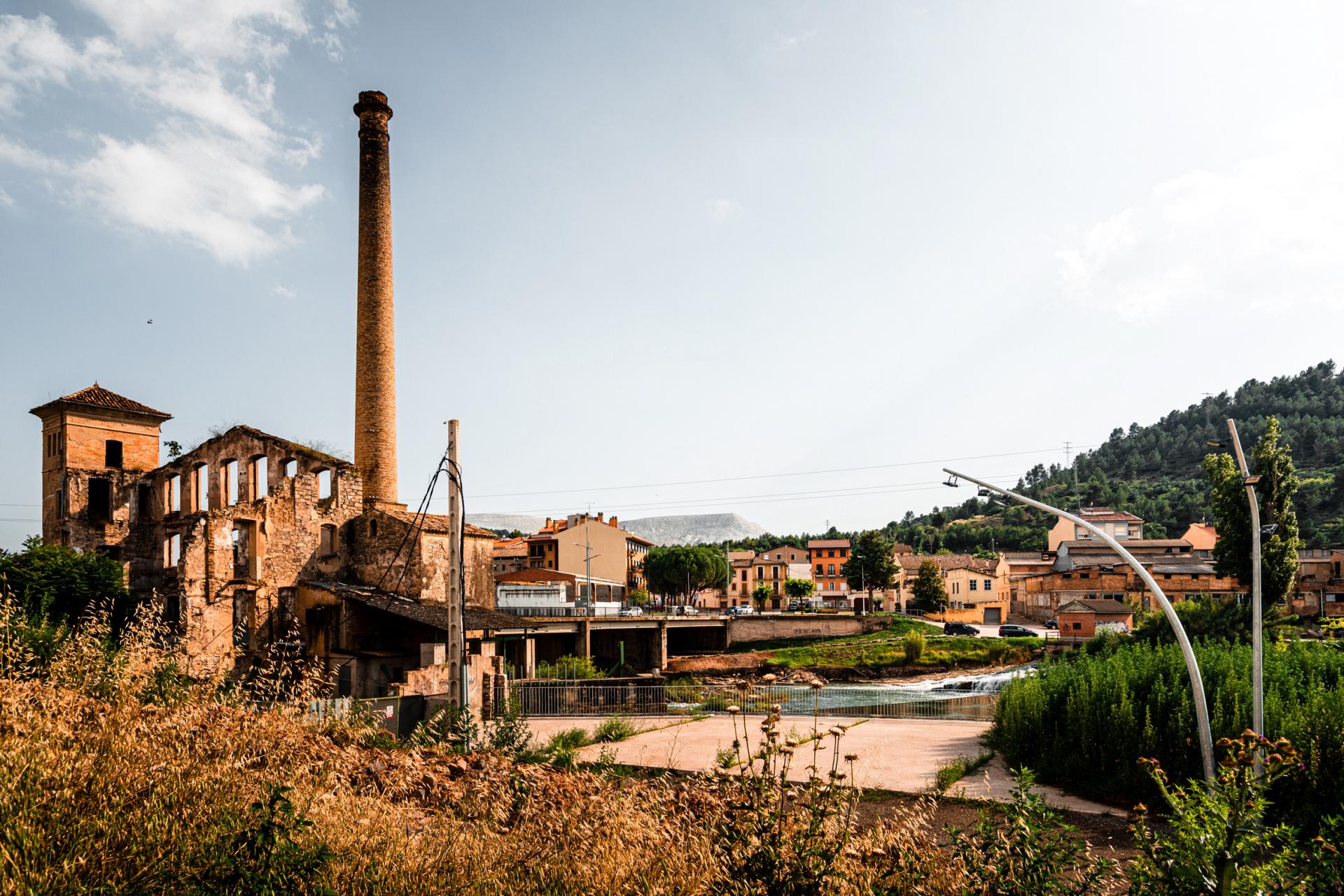
There are many transformations that the Llobregat has undergone in recent decades, waterproofing its basin, urbanizing its banks, building on its bed, cutting off connectivity in the riverside forests that accompany it, and in many points, polluting its waters. Understanding these problems, all of them concentrated in the place, was key to developing a project that would return to the river the space that belongs to it from a process of biomimicry between the natural and the built environment. A solution is proposed in the form of a floodplain that enters into a sincere dialogue with the Torre del Gas and the remains of the Fàbrica Vella, industrial remains that are emblematic of Sallent's heritage. The gravel roads, which act as ridges of the protective slopes, directly link these two heritage elements, generating a viewpoint to the river weir as a reinterpretation of an old industrial hearth.
The intervention aims to be a "reset" to the landscape, the last anthropization of this degraded environment to achieve its natural evolution, a small oasis in an urban area that is part of both the river and the city and its citizens, giving space to contemplation and rediscovery of fluvial space, previously hidden.
Oasi is an example of how the public administration, in this case, the Sallent de Llobregat city council as a promoter of the project, can transform its urban limits into places understood from natural logics where the needs of urban public space are also accommodated. It is a new conception of the strictly "green" space destined for the use and enjoyment of the citizen. The transformation of more neighboring spaces such as Oasi would establish a network of green spaces with great added environmental value.
How Citizens benefit
The project was involved in a process of citizen participation in one of its most initial phases, where we talked with neighbors and associations about the potential for transformation of the space. As a result of these conversations and with the enthusiasm of the city council, the project was gaining momentum.
In addition, as a project commissioned by the public administration, the Sallent City Council presented the executive project for 12 months so that any citizen could make allegations in this regard. After this period and after the work was awarded by public tender, the works began.
Innovative character
Oasi becomes a system that has the ability to rediscover the spirit of river dynamics, providing new uses and functions in public space that guarantee the resilience of the urban fabric and the ecological connectivity of the territory. The renaturation process starts from the last anthropization towards a scenario determined by meteorological phenomena and the passage of time.
The project has been personally for us, the authors, a challenge in which to defend the transformation of a place from a perspective consistent with natural logic, understanding the river space as a complex and dynamic system. The initial decision to let the park flood was the point of greatest controversy. Although it may seem contradictory, the innovative nature of the project lies in re-understanding the river as a river, projecting the beginning of the transformation of a place that will evolve while eroding the footprint of its own design.
Constructively, the project has been based on bioengineering techniques for the reinforcement and consolidation of the margins most exposed to the out of water. The virtue of these techniques, still not very widespread in our country, consists in creating the optimal conditions for the future development of native vegetation that will consolidate the slope with its roots and plant structures, varying the technique depending on its slope and degree of exposure to the force of water.