The Hexabox Interface
Basic information
Project Title
Full project title
Category
Project Description
The Hexabox is an intuitive Tangible User Interface (TUI) for Augmented Reality (AR) that provides educators and students with spatially oriented multimodal interactions with AR content. The developed system physicalizes interactions with 3D content in AR. Through its particular hardware design, the Hexabox leverages existing and novel methods for designing Deployable Polyhedral Mechanisms (DPMs) by applying these methods to the scale of a tabletop controller.
Project Region
EU Programme or fund
Description of the project
Summary
The Hexabox interface is a concept for an interactive educational tool that uses open-source augmented reality technology (AR) and dynamic structural design concepts for its hardware design, specifically the design, of deployable structures to create a highly immersive and intuitive interaction experience with 3D models in augmented reality via a table-top controller.
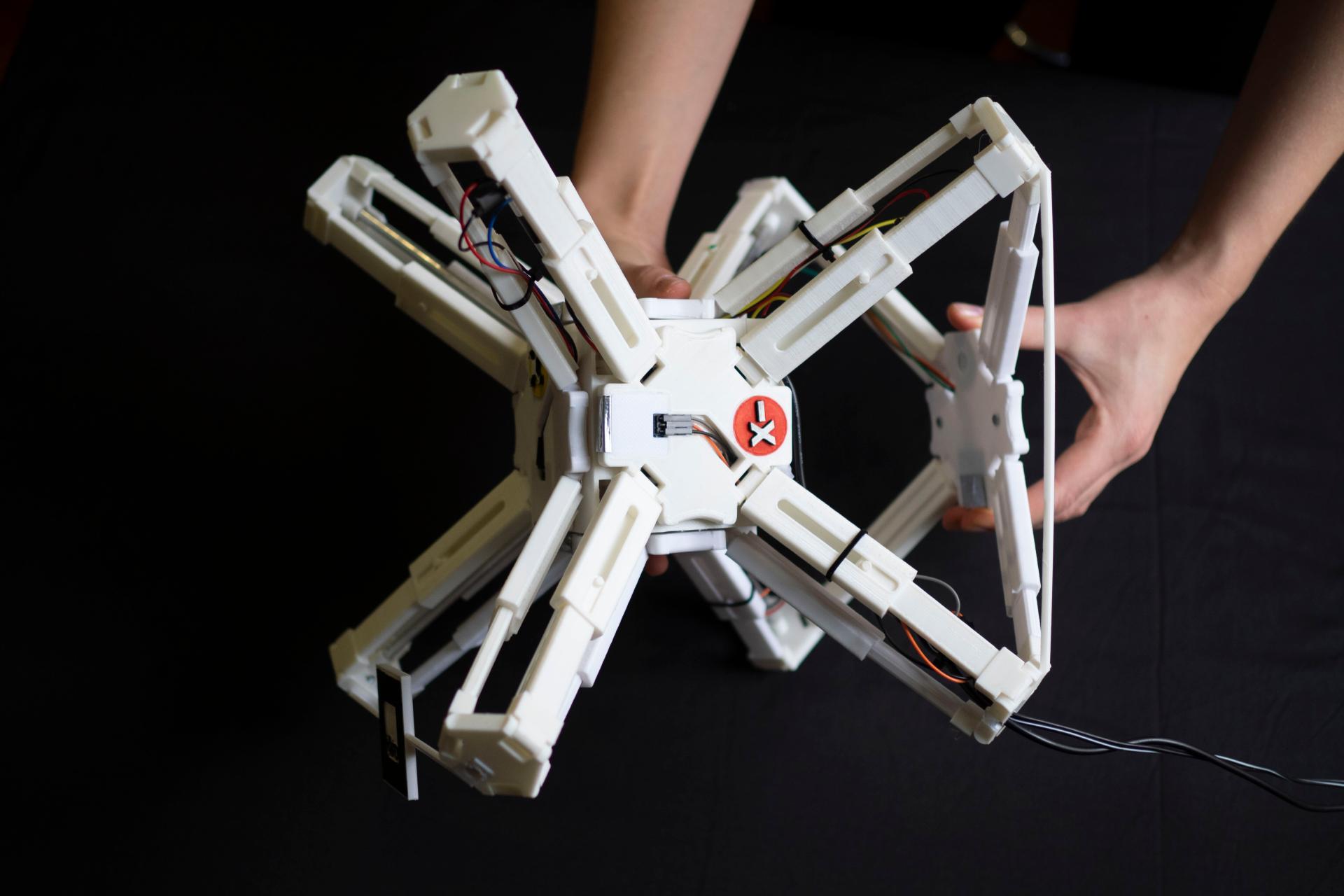
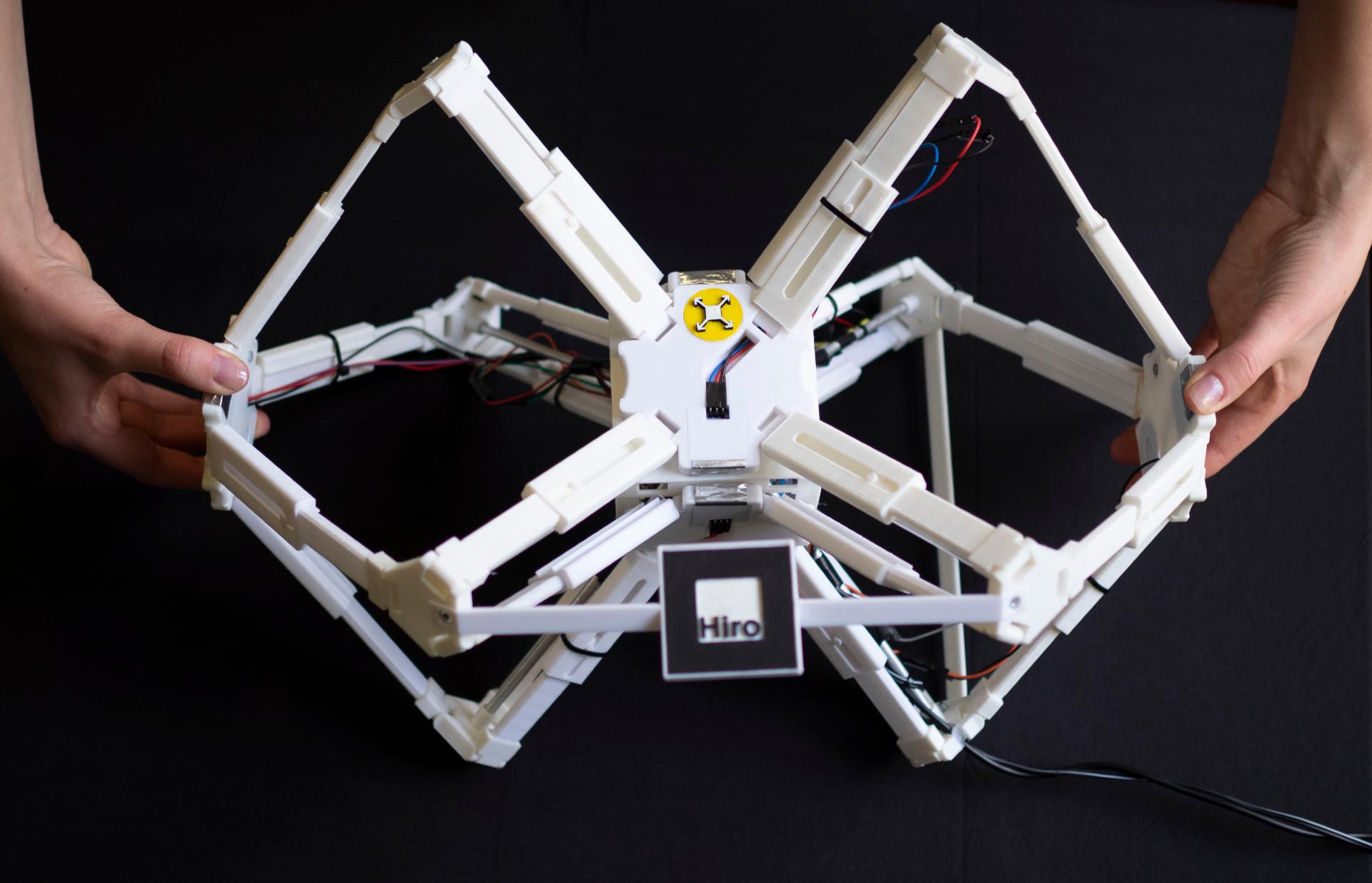
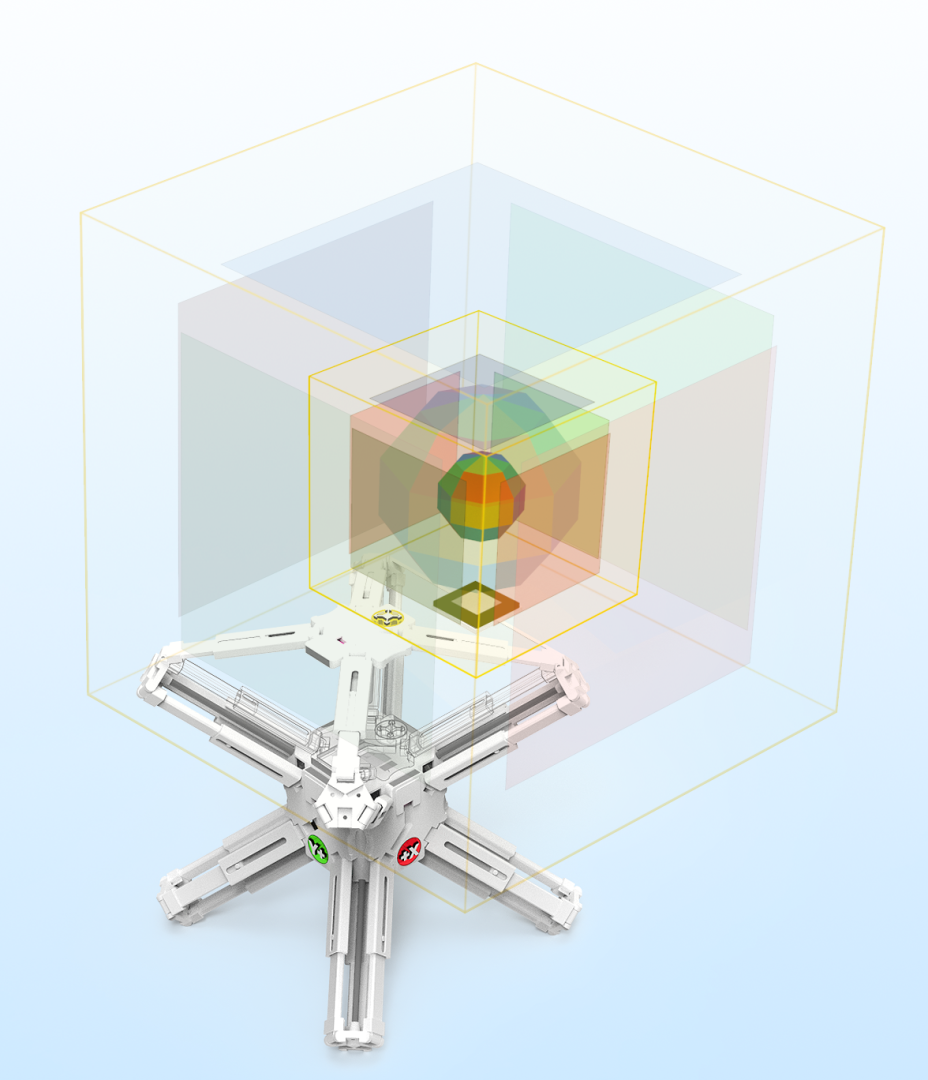
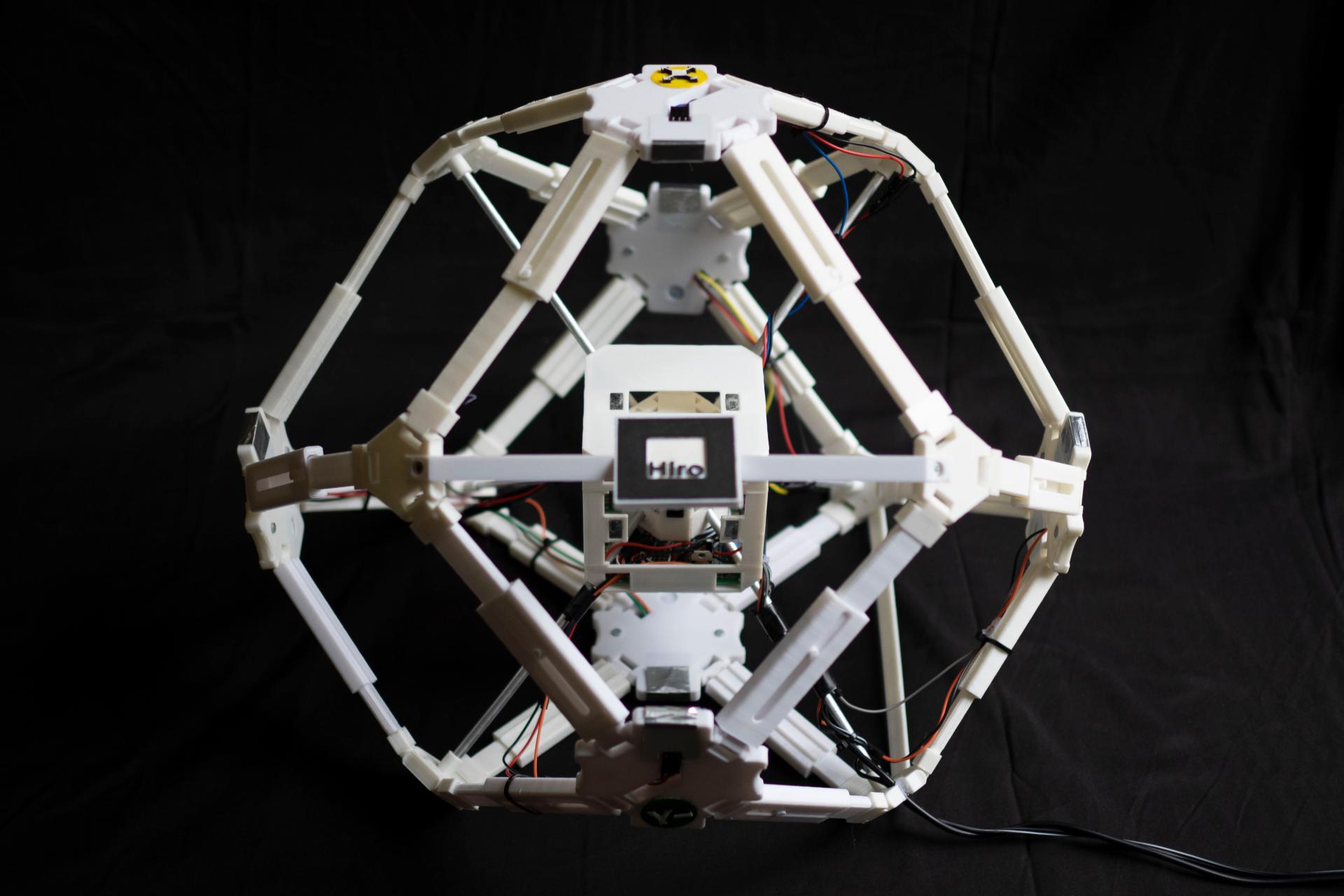
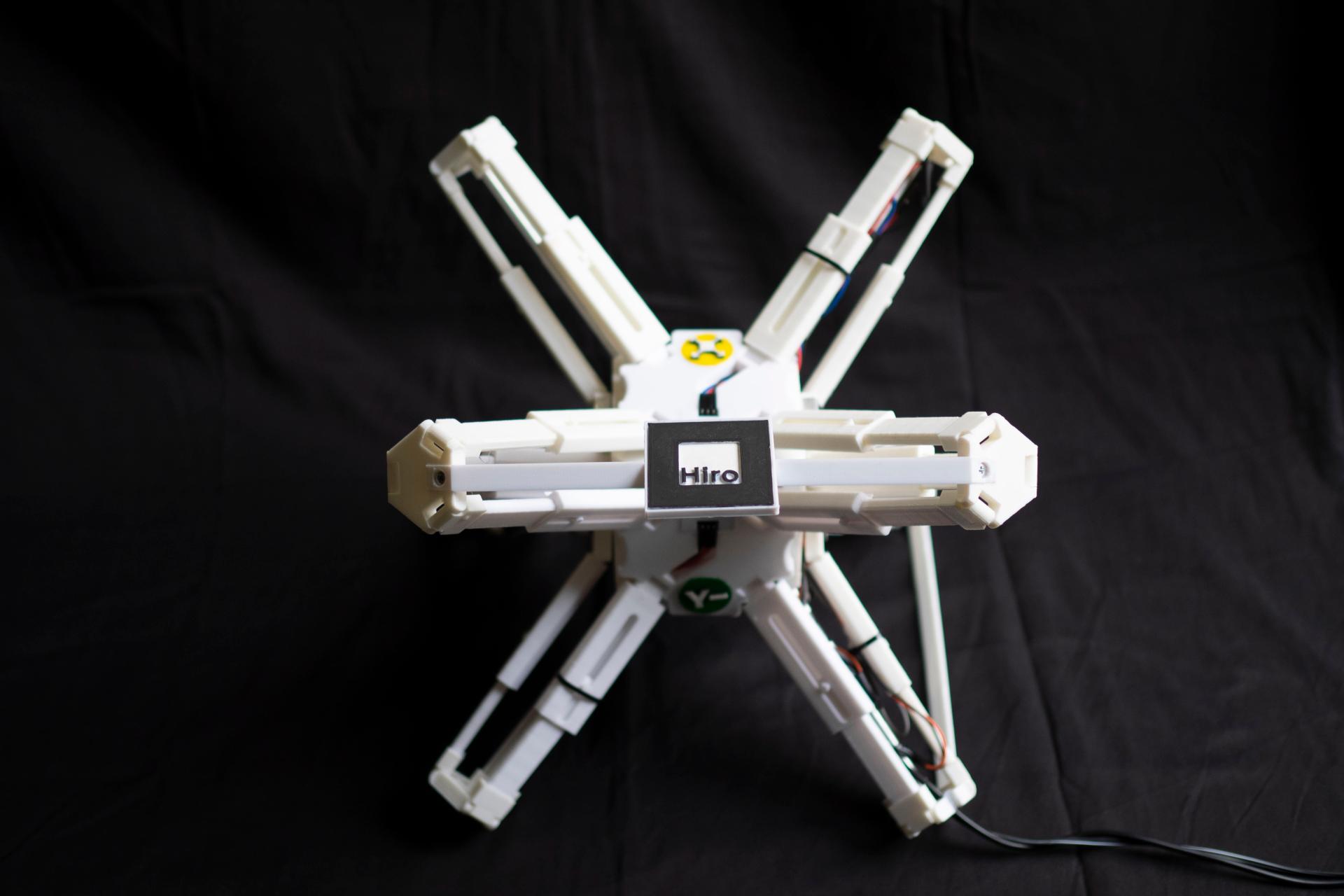
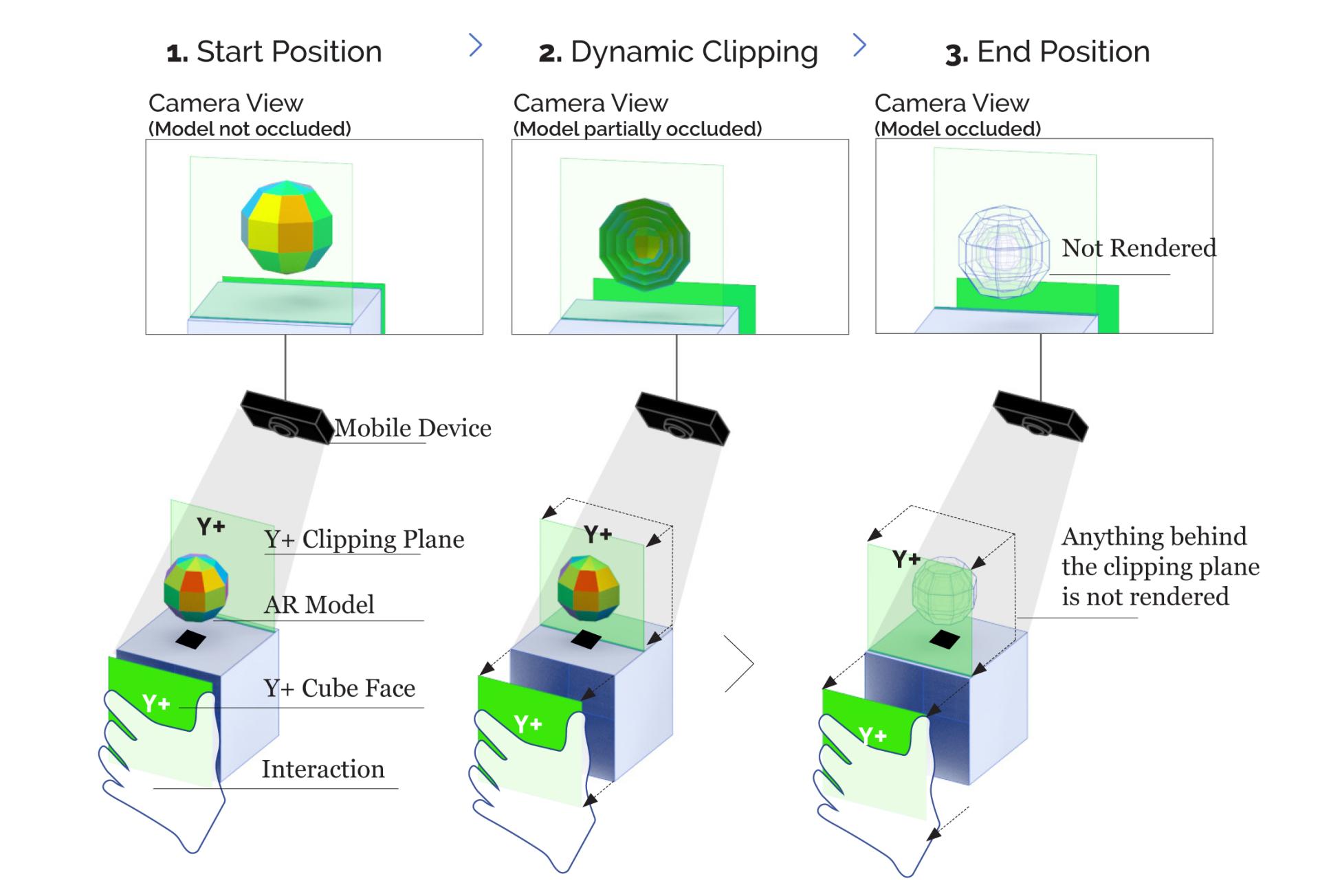
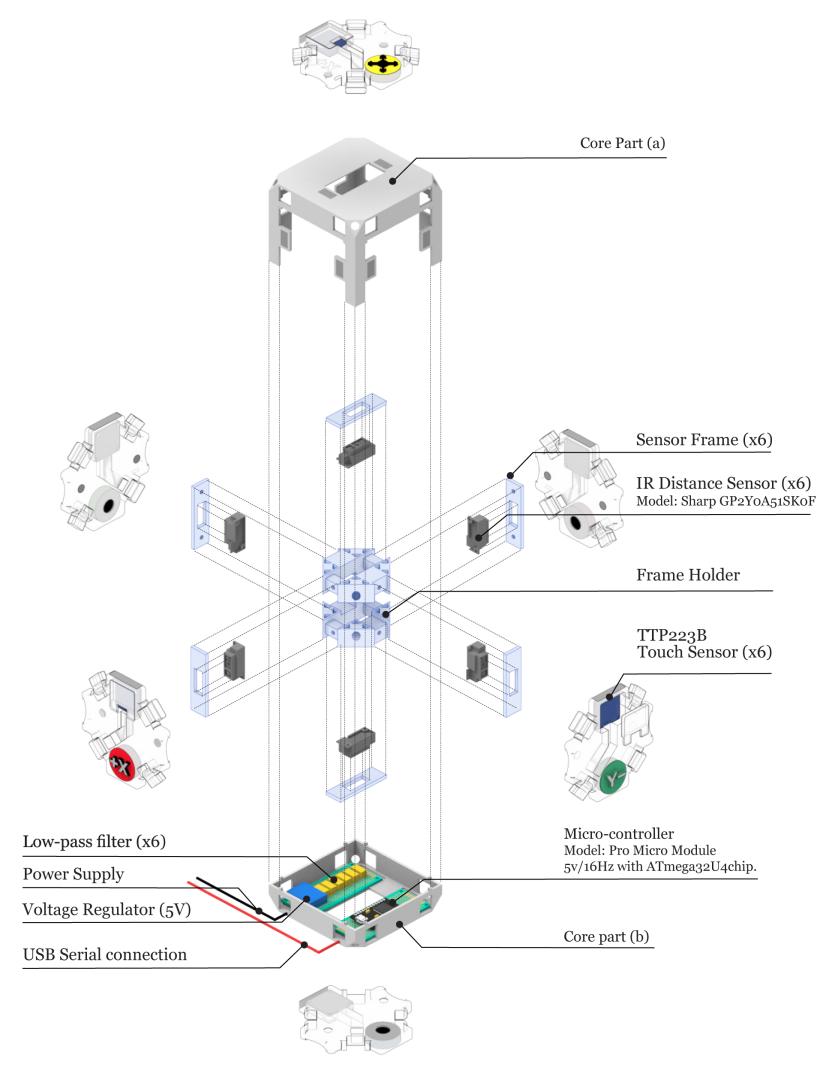
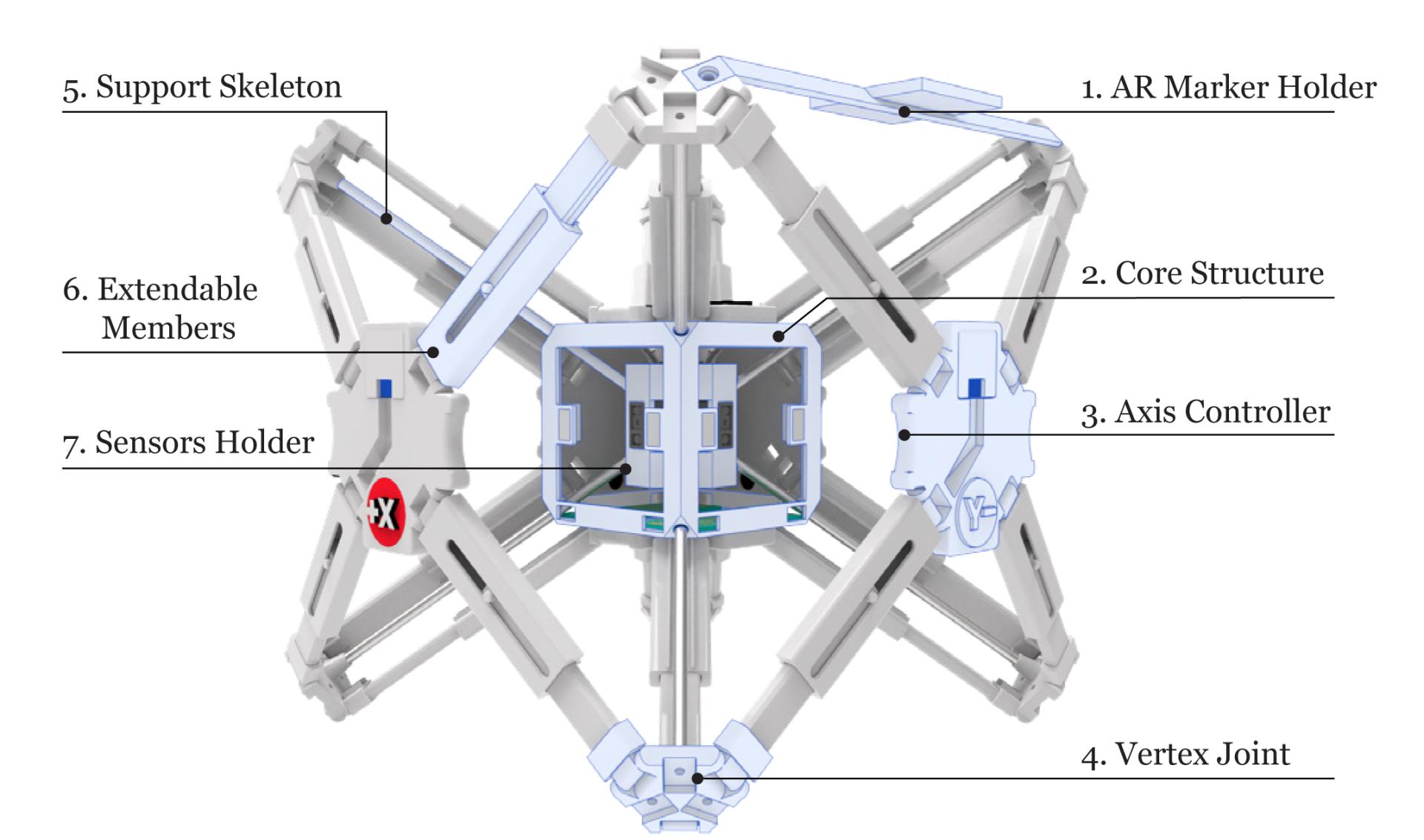
The specific hardware design of the Hexabox consists of a deployable (expandable) cube-shaped structure with a fixed core that houses a micro-controller and six short-range infrared distance sensors, each directed at one of the sides of the cube. Each side of the cube represents a "clipping" or "slicing" plane in augmented reality, except for the top side of the cube, which represents a scaling operation. The controller is operated by the instructor/presenter through moving any face of the cube outward by hand, away from the core, resulting in real-time "clipping" in the same direction of the moving face or "scaling" of the augmented 3D model by moving the top face upwards.
The implemented augmented reality technology is both marker-based and runs through the browser, which requires a static image that serves as a trigger for the browser-based application to position the 3D model on it. The marker is integrated into the overall hardware design of the Hexabox prototype, but can be detached to be positioned anywhere in the room. In addition, the same marker can be duplicated multiple times to create a distributed augmented reality learning experience where the instructor/presenter uses the Hexabox to zoom in on a 3D model or slice it in different directions to explain the inner workings of the 3D model being used.
Please check the following video for a demonstration of the Hexabox (prototype) in action:
https://www.youtube.com/watch?v=Tuwu1SJCIMI
Key objectives for sustainability
Sustainable prototyping
As the challenges of environmental sustainability become more apparent, designers are looking for ways to reduce their negative impact. One way is to rethink the way products are designed, used and recycled. And one way to do this is to prototype in a sustainable way. The physical components of the Hexabox interface were designed to be modular, meaning all parts are interchangeable. Therefore, during the development process, only one part of a particular section had to be 3D printed several times and tested step by step for verification before finalizing the prototype, which was 3D printed from PLA material (a compostable and industrially recyclable material).
Augmented Reality and Sustainability
AR/ VR technologies can be used by geographically dispersed teams/students to reduce the need for travel and reduce carbon footprint. In the manufacturing and design industry, the advent of real-time rendering capabilities coupled with AR / VR technologies can reduce the number of physical prototypes needed in the design process, thereby reducing material waste. In addition, AR / VR technology can help educational institutions by reducing the amount of plastic waste generated from educational models.
Key objectives for aesthetics and quality
The design of the Hexabox hardware is reminiscent of the Hoberman sphere, a deployable structure that expands and contracts when lifted or pulled on one of its sides, allowing it to transform and instantly double in size. In terms of the aesthetic experience, the Hexabox offers users a kinetic table sculpture that transforms from its "retracted" state to its "deployed" state right before their eyes without any particular effort. The quality of the interaction experience offered by the Hexabox can be described in terms of its dynamism, modality, and expression as follows:
Dynamics: the position, speed, and acceleration of the Hexabox's faces work synchronously with those of the digital model's clipping planes.
Modality: the sensory modalities of the Hexabox's responses match the sensory modalities of the user's actions. When the deployable structure is expanded/contracted from any given side, the digital model is also cropped accordingly.
Expression: the metaphorical connections between the actions performed with the Hexabox and the resulting manipulation of the digital models are linked as directly as possible. When a user drags the top face upwards, the digital model on the screen also scales up synchronously.
Key objectives for inclusion
The Hexabox AR software uses open-source, cross-browser technology that aims to lower the threshold for access to the AR experience for students and teachers, as most modern smartphones, tablets, and computers have built-in browsers with cameras, meaning that most of the technology in circulation today already runs the necessary software and can take advantage of the augmented reality experience in classrooms and professional environments.
Moreover, all of the designed physical components that make up the Hexabox hardware design can be printed using a common 3D printer, and the electronic components used in the assembly (the distance sensors and microcontroller) are widely available and relatively inexpensive.
Innovative character
The designed interface concept addresses the scalability challenge in the design of Tangible User Interfacing systems (TUIs), which, as described by Shaer & Hornecker (2009), refers to the inability of TUI systems to scale to complex problems with many parameters once they have been designed for a specific application. This is because the more data and parameters a system has, the more physical space it must take up to accommodate the additional tangible representations needed for the interface elements.
The proposed design of the Hexabox interface addresses the scalability challenge by embedding the interface hardware with literal scalability, inspired by engineering concepts from structural design, specifically the design and implementation of deployable structures that inherently have transformative and scalable spatial qualities. Furthermore, in terms of coupling the system with different software, the Hexabox interface can be thought of as a tangible controller that can be used as a musical instrument or a spatially oriented smart home controller, to name a few examples that extend beyond the proposed application.