Sharing is caring
Basic information
Project Title
Full project title
Category
Project Description
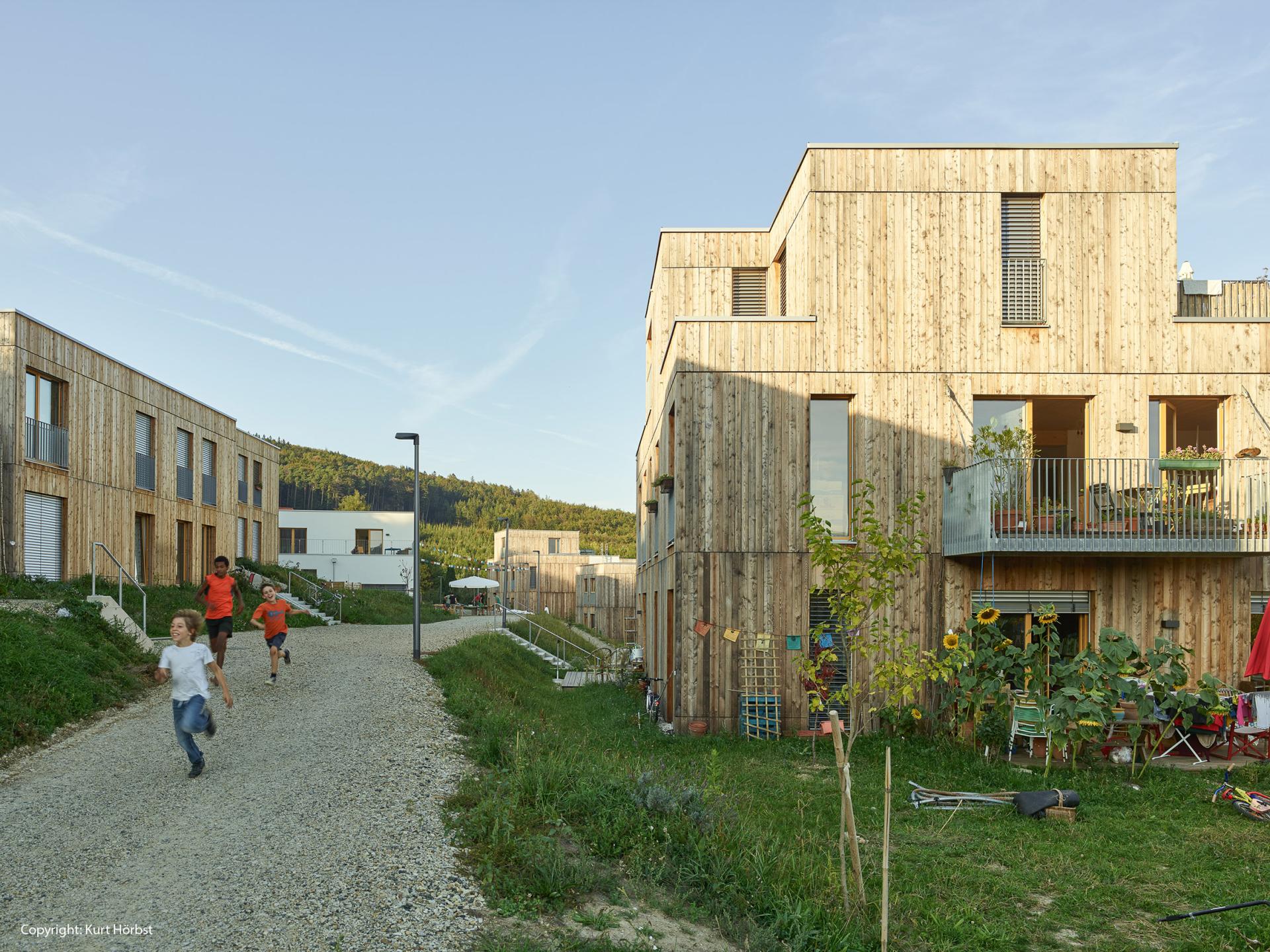
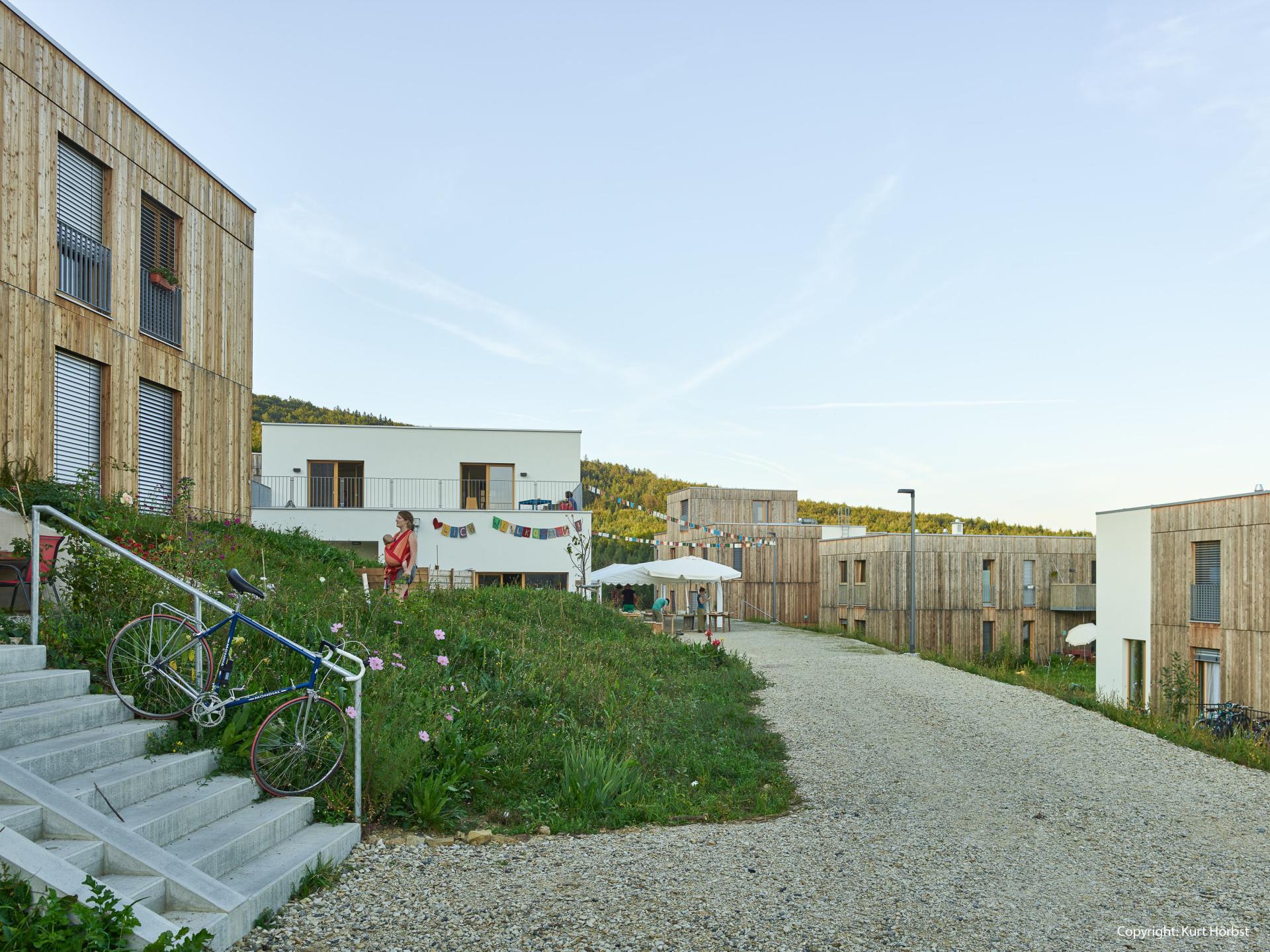
Ten timber buildings plus a community house grouped along a path and a central square, blending in with the natural landscape up the hill in a village 20km west from Vienna. Children running happily in the car-free, discretely shifting from shared to private outdoor spaces. In the co-housing project in Pressbaum, the environment for an alternative kind of living in the Austrian countryside was created.
Project Region
EU Programme or fund
Description of the project
Summary
With all the knowledge and technology at hand, best intentions remain often hard to implement. This is due to various constraints, that can include economic, social or legislative factors which are deeply imbedded in the society structures. With B.R.O.T the good intentions were made possible.
Right from the onset, the architects took the challenge and creatively interpreted the local land and building regulations, to accommodate the higher density development, within the given requirements. Unlike the typical Austrian countryside residential development which such legislation would reinforce - i.e. the monofunctional, car dependent and resource hungry one family house with garden model, B.R.O.T. offers a co-housing, cross generational alternative. In comparison, the project accommodates on the same area 30% more people and seals 45% less soil surface.
The three years long participatory planning process allowed a complex approach, which went beyond the built, into its social and economic dimensions. The outcome is a living environment that is not only closer to its users’ needs, but also one that people identify with and take active care of. This is essential for the long-term viability of the project.
B.R.O.T. also shows how through cooperation and sharing one needs less and achieves more, ensuring a high quality of life within economical constraints, while facilitating environmentally responsible behaviours.
Key objectives for sustainability
Through its building materials and technologies, the development reaches very high ecological standards. 75% of the energy comes from the installed PV panels, the rainwater is collected and reused for toilet flushing and a biomass boiler ensures a common heating system.
Apart from the community building, all houses are made of prefabricated timber elements with ventilated facades, thermal insulation out of cellulose and massive timber slabs that remain exposed. Once the foundations were in place, the building site was very speedy: about 10 days per house.
A food coop providing regional organic products is complementing the reach offer of the community vegetable garden. Carpools and a shared e-cars system with two charging stations, cycling and public transport are fulfilling the mobility needs of the 140 people.
Key objectives for aesthetics and quality
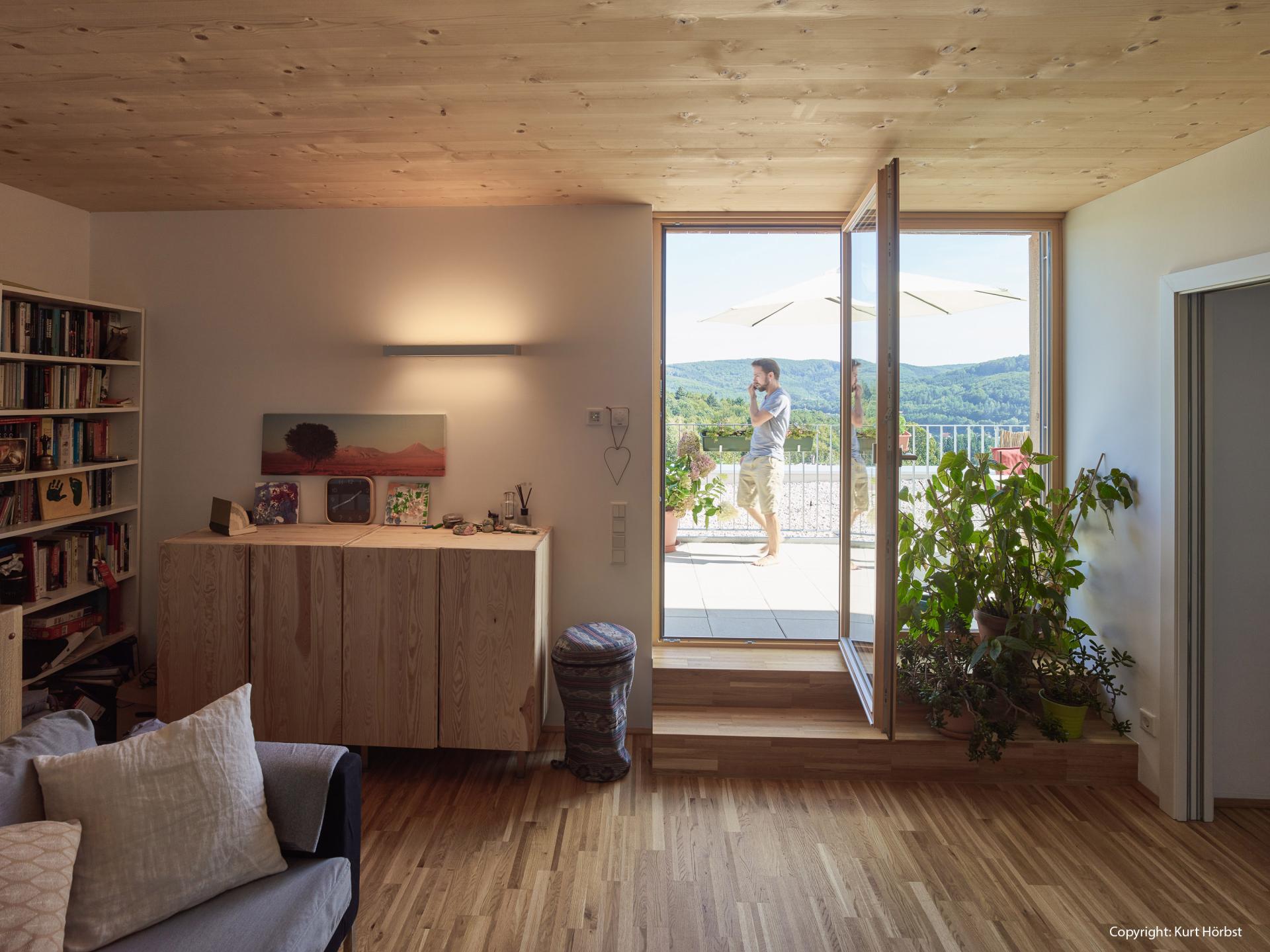
Aesthetics and quality of experience were important objectives at B.R.O.T. These are achieved through the use of ecological materials, through the scale and proportion of indoor and outdoor spaces, through the vast unsealed area in between the buildings that connects the environment with the neighbouring forest and through the extensive use of timber, that remains exposed inside the buildings too.
Communication and privacy spaces is not defined through fences, but through the configuration of the buildings and their orientation. The sight of the beautiful natural landscapes around is purposefully facilitated through generous openings and windows and through ensuring that the neighbouring buildings are not in the way.
Key objectives for inclusion
Often co-housing projects are creating social bubbles. This however, is not the case in B.R.O.T. – here the community had as an objective from the start to open up and share its “privileges” and initiatives with the local community.
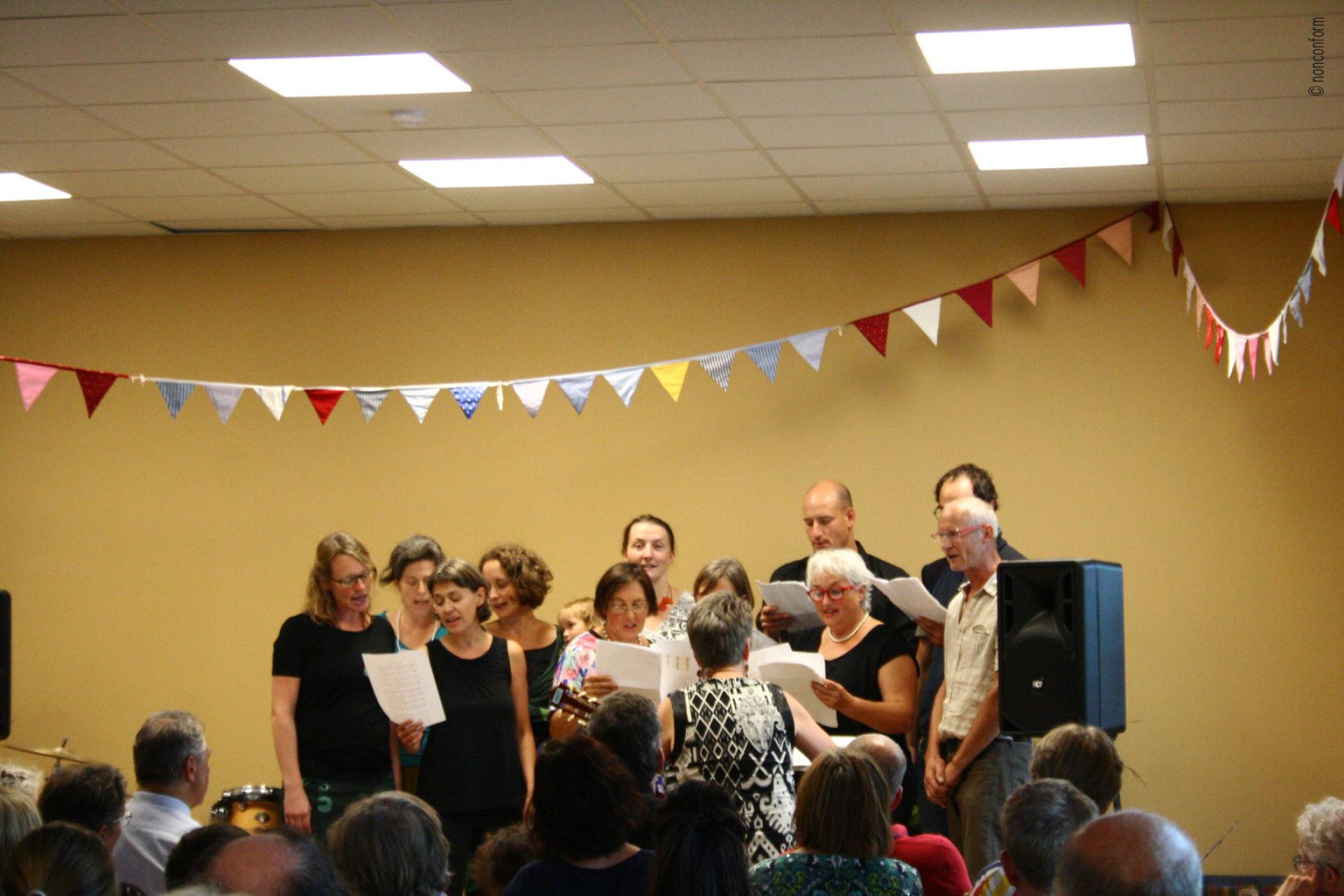
The existing facilities - a food coop, offices and the community event space and kitchen as well as the organised social events (singing group, etc) are used as an opportunity for connecting with the extended local community in Pressbaum. Be it for the daily supply or for the choir evenings neighbours are welcome to join.
One of the apartments was made available for a family of refugees, facilitating significantly their integration in the new country.
Results in relation to category
The values that are the at the core of the B.R.O.T. community are comprised in its name: Begegnen (meeting) – Reden (talking) – Offensein (being open) – Teilen (sharing).
The results that such values, that infuse the life, the architecture and initiatives of the community are multifaceted. B.R.O.T. is not only a housing project – it is an opportunity to meet and share, in a village, where like in many others, the public space has lost its value , in between the innumerable individual houses, with private gardens, pools and playgrounds.
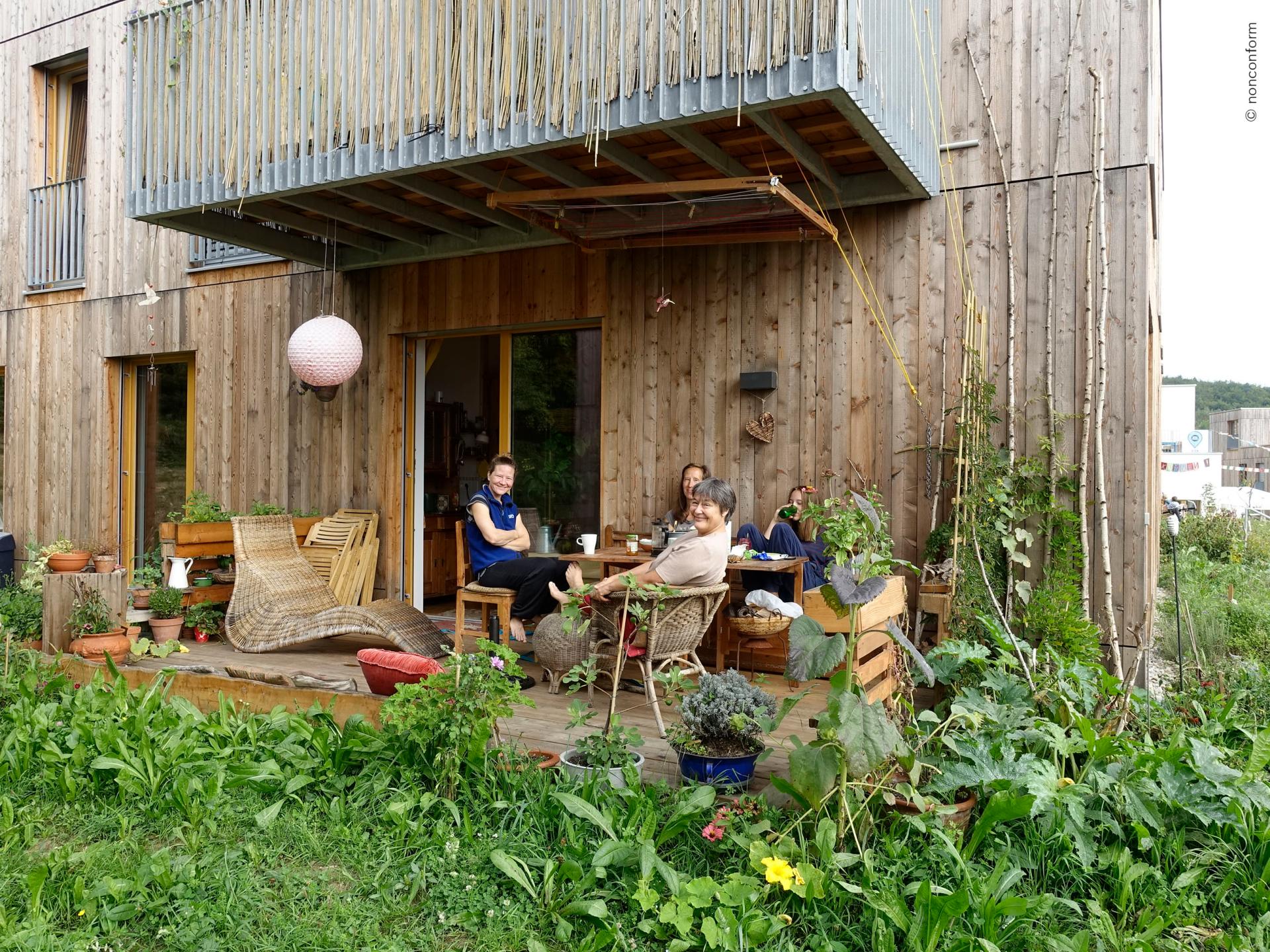
“I find that sharing is the future – and this is what is beautiful here. One big, shared garden, instead of many small private ones. Also, sharing rather mundane things like a hoover or something else, that one does not need every day. One does not need to create a whole world just for themselves.” (Thomas Wibmer-Waldhuber – inhabitant of B.R.O.T.)
Sharing is caring – for the one next to you and for the planet itself, as it is in return for oneself, as it is a known fact that generosity, social belonging and meaningful pro-active behaviours are essential for a sense of wellbeing and the quality of life.
Co-housing is already a familiar presence in the towns of Austria. This is associated with alternative middle class persons, who can afford the costs and embrace the philosophy. However, precisely because they have the means and the stamina to implement their sustainability objectives, such projects can bring an important contribution to reaching the Green Deal targets – even more important because of coming from the private sector and not relying on public money.
How Citizens benefit
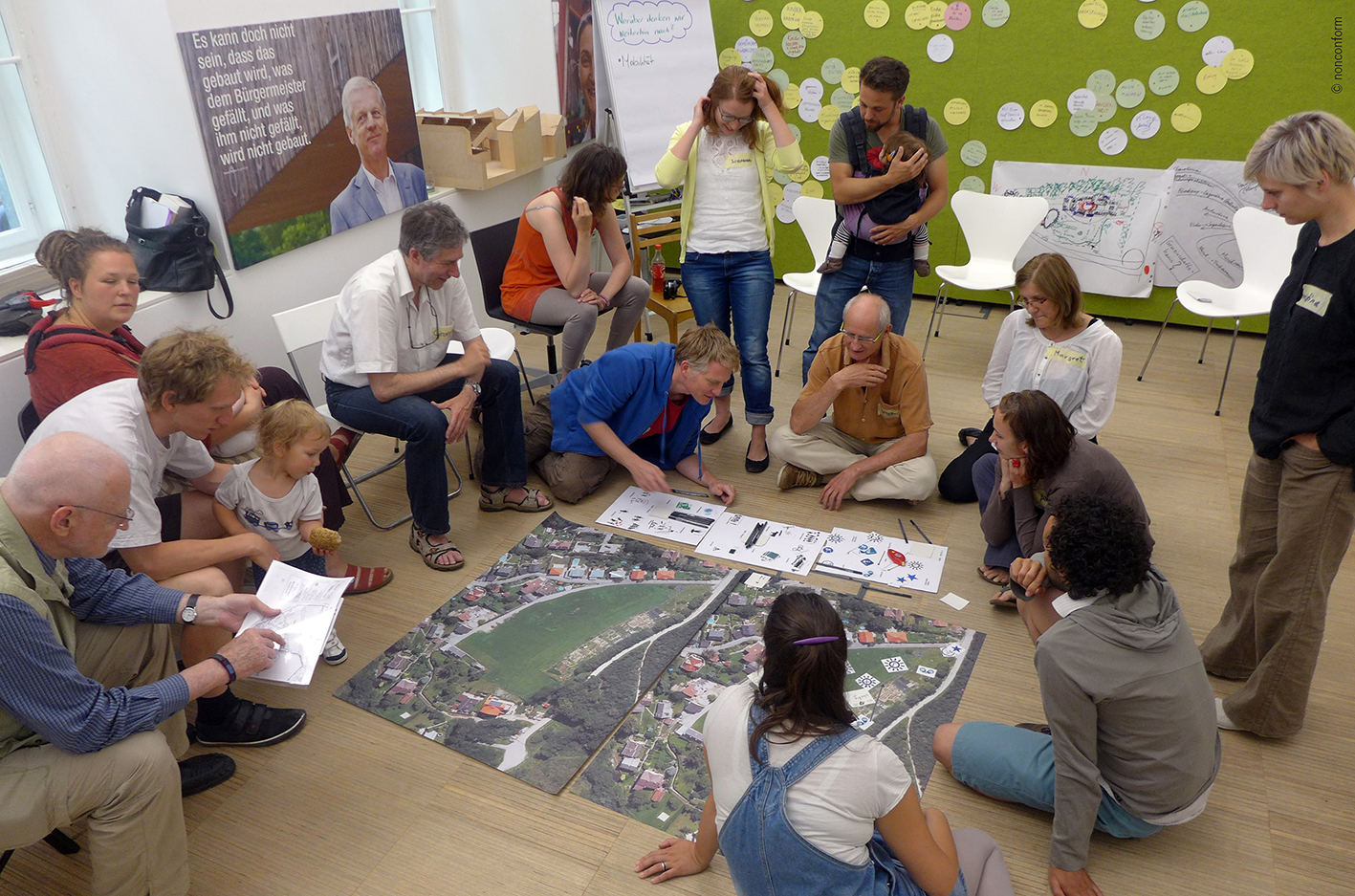
With their extensive expertise in participatory planning processes, nonconform accompanied the B.R.O.T. community from its inception up to the opening ceremony of the built development. The process began with several workshops meant to discuss and decide a way of living and the vision for the future.
An organizational form was defined and methods such as sociocracy or systemic consensus finding were used in the process. A project management team was meant to take efficient quick decisions when needed. Sub-groups for specific themes, such as design and building, green spaces, financial and legal aspects, community spaces, etc. were formed.
This vision was then translated in the parameters for the build environment together with the community. In this stage, the communication skills of the team from nonconform were key in explaining architectural terms in an accessible language. Playful methods were used, other good-practice examples were visited and real life situations were observed in order to be able to absorb the meaning of space dimensions and proportions.
The workshops were under the following topics:
- Defining the vision and ways in which this translates to the building parameters and uses
- Build environment and density – arrangement of buildings on site and consequences, characteristics and extent of community spaces (10%) and location (community house)
- Housing typologies (from 40m2 to 110m2)
- Trip to other relevant realized examples – developing a sense of density, height and distance
- Sampling materials and products
- Individual apartments design
After two years and a half, in March 2017, the building site could begin and only one year later, beginning of 2018 the inhabitants moved in.
Innovative character
With all the knowledge and technology at hand, best intentions remain often hard to implement. This is due to various constraints, that can include economic, social or legislative factors which are deeply imbedded in the society structures. With B.R.O.T the good intentions were made possible.
B.R.O.T. is innovative because of the way it brings within the given legislation a denser development and more unbuilt/ unsealed surface, by making one more step in establishing timber in the residential market and by proving that climate friendly co-housing projects and lifestyles that are not car-dependent are possible not just in towns, but in the Austrian countryside too.