Symbols for waste sorting
Basic information
Project Title
Full project title
Category
Project Description
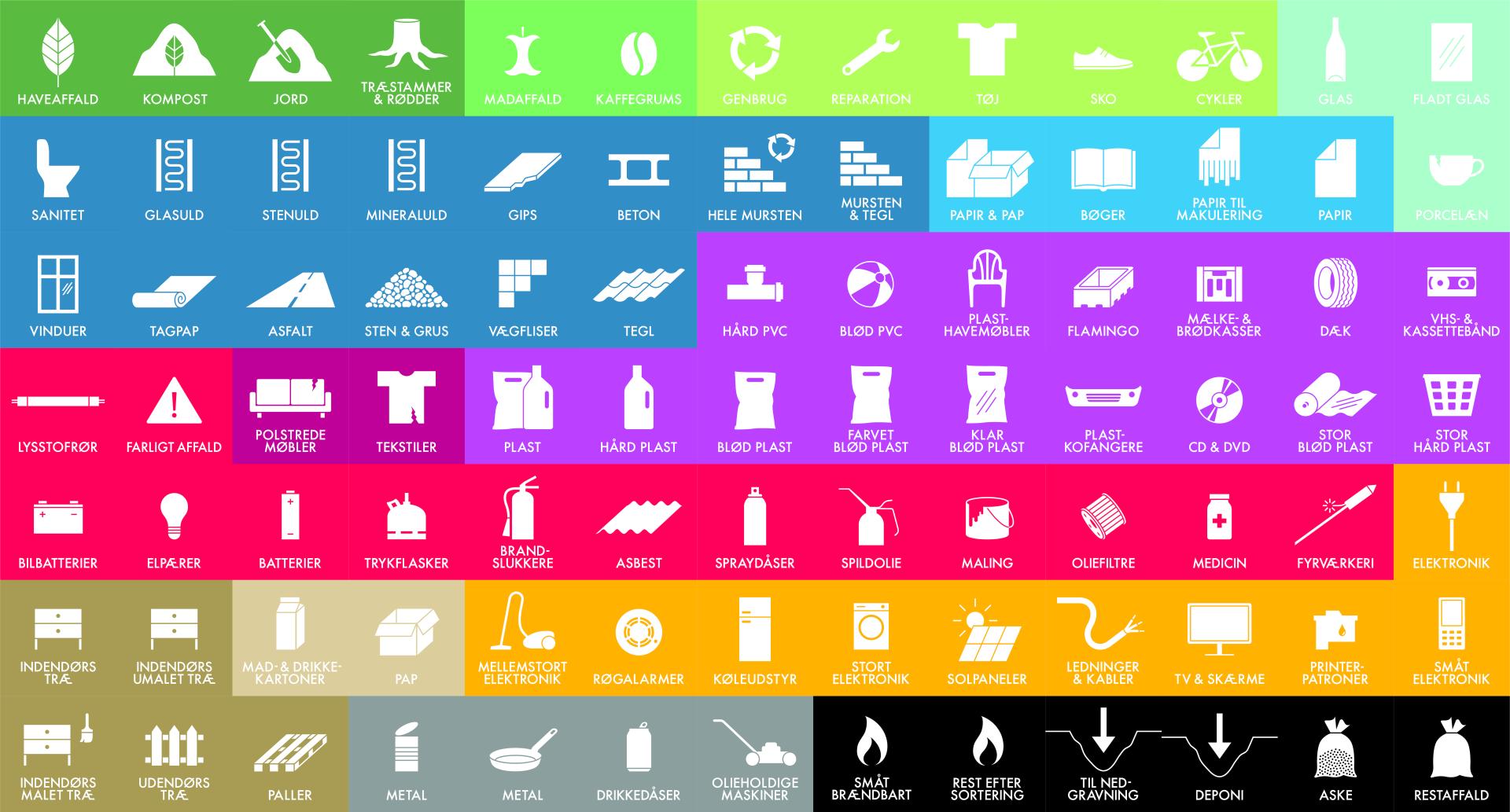
The design studio Futu has designed a National symbol system for waste sorting in Denmark, consisting of 91 symbols and in co-creation with 3000 people.
The 91 symbols help citizens to sort waste better and help living a more sustainable life, by recycling waste and creating awareness about consumption and materials.
The system has gained a lot of attention from abroad and is developed in a Nordic inspired design, based on innovation, aesthetics, technology and craftsmanship.
Project Region
EU Programme or fund
Description of the project
Summary
The design studio Futu has designed a symbol system for waste sorting in Denmark, consisting of 91 symbols.The project was developed for the Danish Waste Association, KL, and Ministry of Environment of Denmark / Environmental Protection Agency.
The symbols have been developed in co-creation with +2500 citizens, +65 municipalities, waste experts and companies. The system is reality now and a huge success, thanks to our humble and engaging approach and extremely precise and professional design. Today, the Nordic countries are exploring a cooperation, based on the Danish system, and the system is already in use in several other countries.
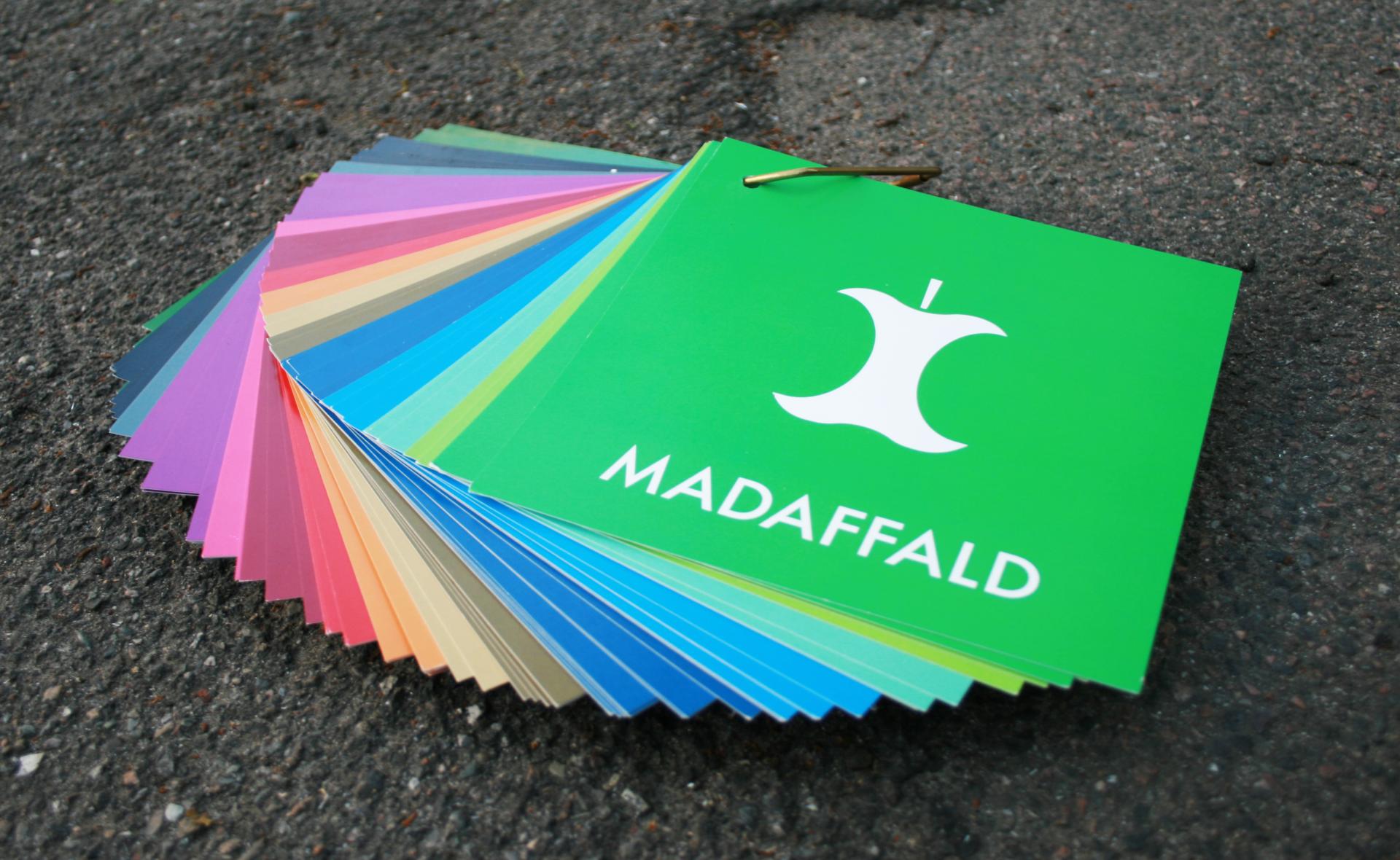
The 91 symbols help citizens to sort waste better and help each individual person to live a more sustainable life, by recycling waste and creating an awareness about consumption and materials. All 91 symbols in the system are built around a geometric system. It makes the system beautiful and coherent. We have worked with 3 elements: text, color, symbol. Each symbol is designed to function inbetween 1x1cm and 1x1meter. Symbols and colors are designed as a building block concept and currently include 14 colors. Usually, waste and design have nothing to do with each other. But with our system, we have tried to incorporate a timeless and simple design, people can invite to their home, kitchen and enjoy at all public spaces.The design and the benefit of the co-creative process, is the result of a completely new way of working with large scale design, strategy and sustainability. It is open innovation as well as detailed crafts and technique.The project requires a holistic approach and thinking - 3D thinking. By transferring this spacious thinking, human centred approach and precision to the waste area, something exciting happens in terms of design. The system has gained a lot of attention from abroad because we have developed it in a Nordic inspired design which is based on innovation, aesthetics, technology and craftsmanship.
Key objectives for sustainability
The 91 symbols help citizens to sort waste better, across our homes, work, public spaces, on packaging, recycling stations, events and festivals etc.
The symbols help each individual person to live a more sustainable life by recycling waste and creating an awareness about consumption and materials.
An incredible amount of resources are also saved by using a common system. In the future every municipality does not have to spend time and money developing and maintaining their own system. After some years we have all learned the common new symbol language for waste sorting, for the benefit of sustainability and our environment.
With 98 different municipalities in Denmark, we used to have 98 strategies for sorting waste. That makes it difficult to develop innovating recycling facilities.
Futu designed the first 18 symbols for households back in 2016, followed up by phase 2-4 up until now.
In 2016, the goal for the first year was 10 municipalities should voluntary use the symbols for waste sorting.
The number of municipalities that use the symbol system for waste have now exceeded all expectations in relation to the original goal. Here, 4 years later, nearly all 89 municipalities in Denmark use or plan to use the system voluntarily.Using the new symbols for waste sorting all over Denmark makes it easy to sort correct, wherever you go.
Last year the Danish government made a very ambitious decision to move to a waste strategy based on circular economy and increase recycling. By July 2021 all Danes are to sort waste into 10 different fractions at home.
The success of the last 5 years of the symbol system for waste sorting, started this movement, towards the new danish recycling strategy.
Key objectives for aesthetics and quality
Design
All 91 symbols in the system are built around a geometric system. It makes the system appear beautiful and coherent, as the eye recognizes the angles, lines and shapes that is significant for this system. A lot of people think it's easy to draw a symbol because it looks simple - but it's not. People only have seconds to recognize the symbol, so it has to be tightly shaped and designed.
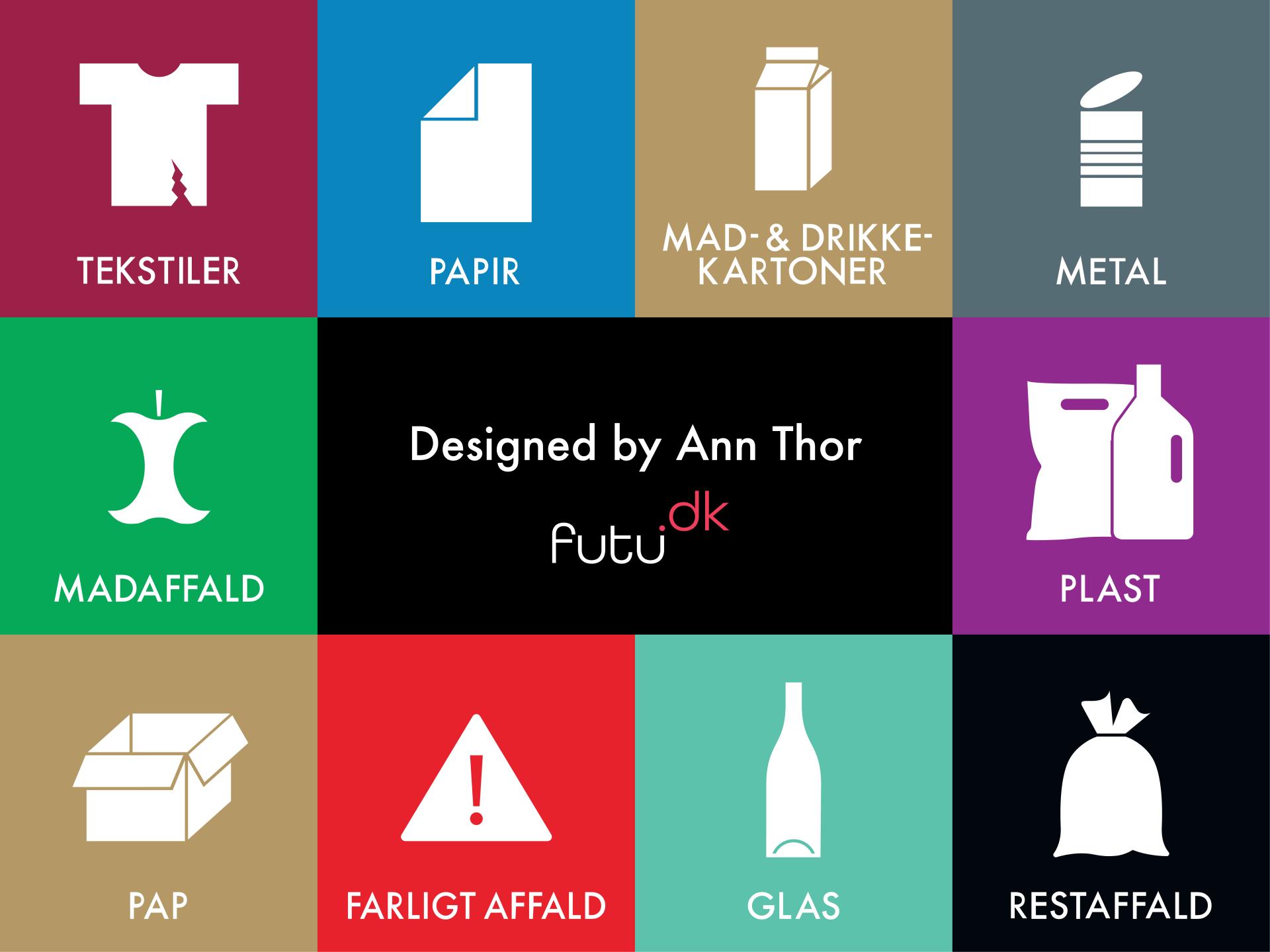
We have worked with 3 elements: text, color, and symbol. Some read only the text, some only see the color and some recognize only the symbol.
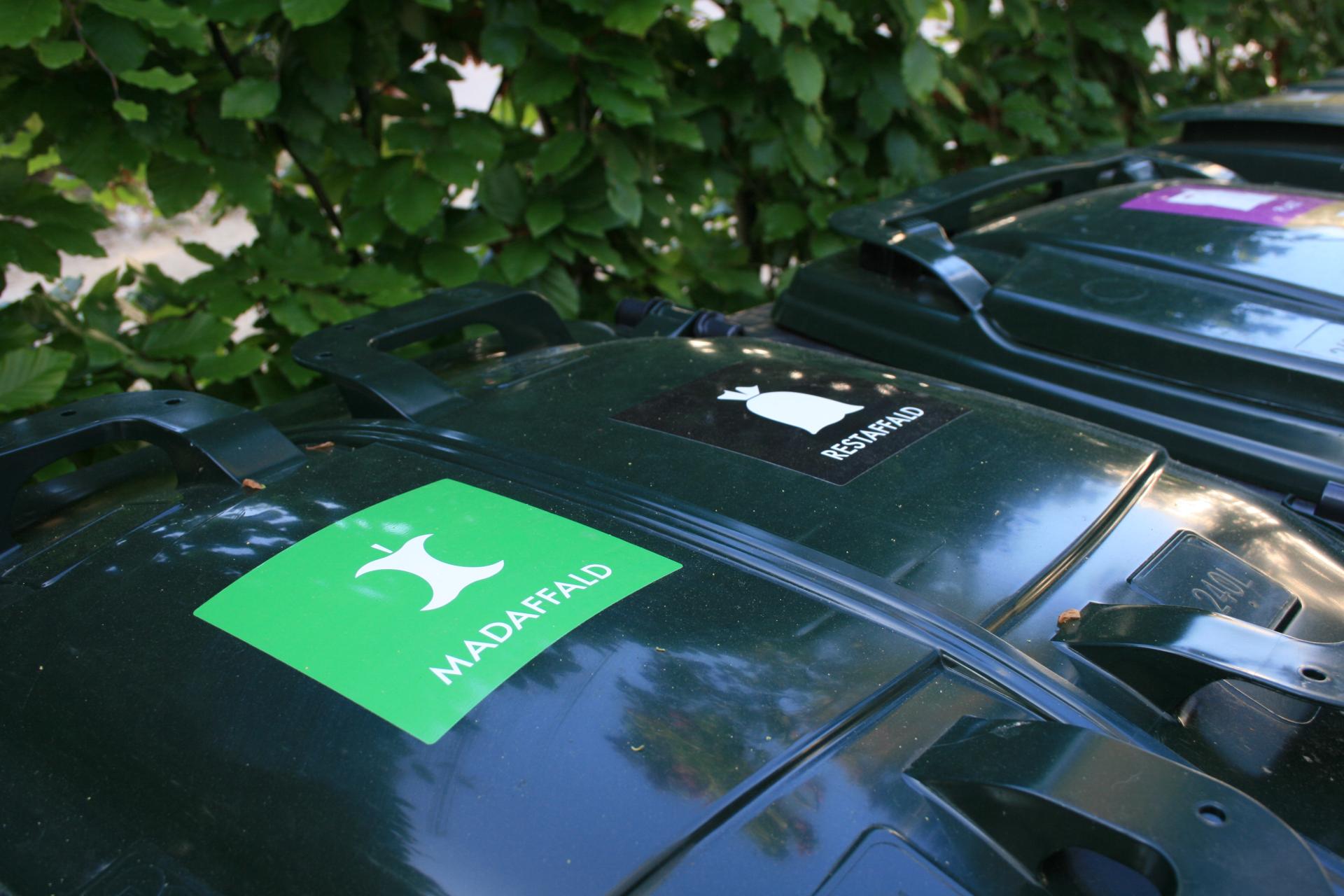
In our design process, we have worked with behavior and nudging. Each symbol is designed to function inbetween 1x1cm and 1x1meter Eg. on packaging and as outdoor signs and on web and print as well. Quite difficult challenges, that shaped the design. We ended up with a solid design with high contrast and without too many lines and details.
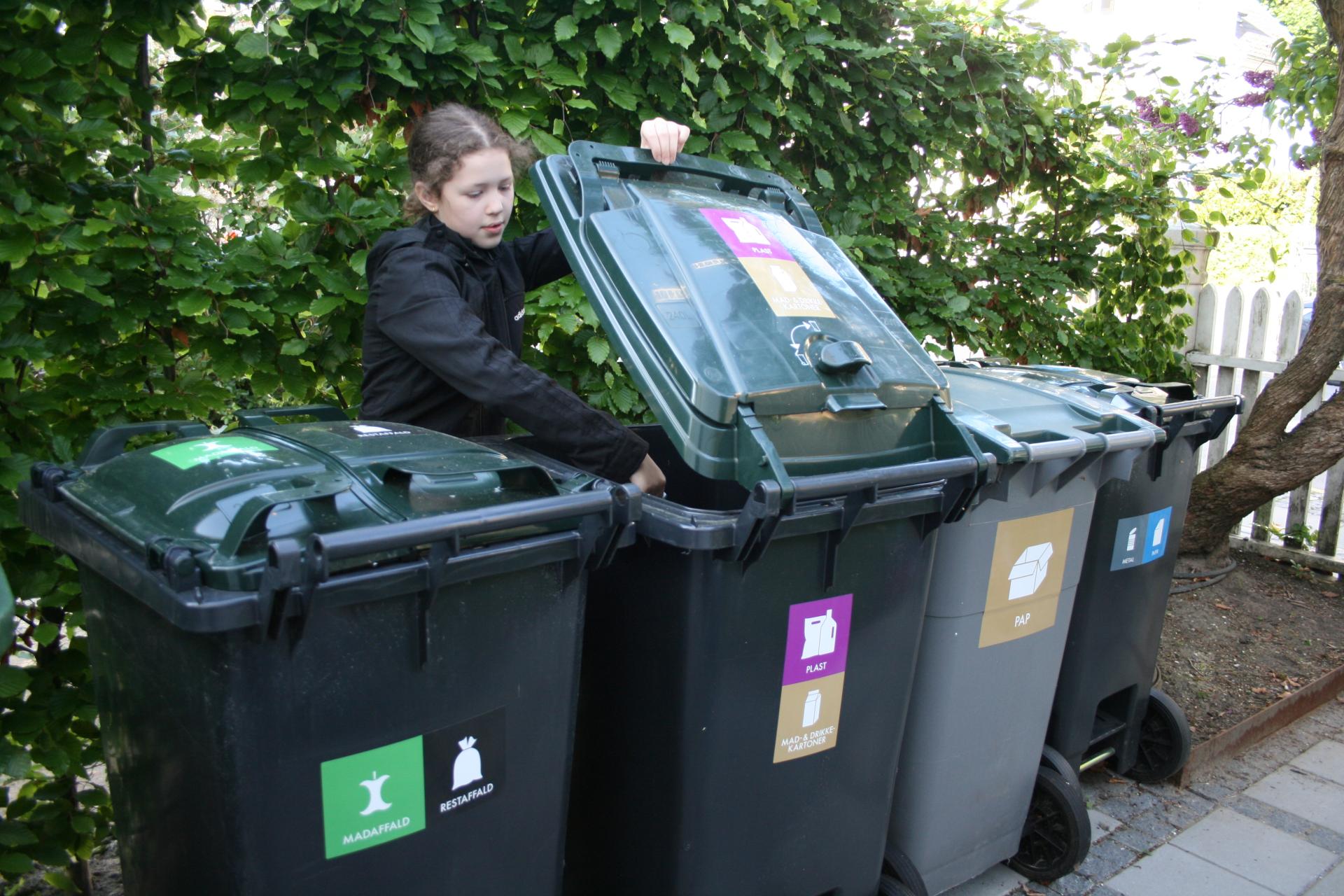
Symbols and colors are designed as a building block concept where a symbol works on its own as well as in different combinations according to local user-customized ways of sorting.
In complex spaces such as recycling stations with 50 different types of waste the symbols play an important role empowering people to sort the right way as well as providing a guidance tool for the staff.
Color system
The color system currently include 14 colors which are carefully selected and developed. There were an incredible number of parameters to take into consideration, such as the greatest possible match in relation to our research, color psychology, intuition, nudging, color composition by "combi fractions" and uniformity in relation to production and web.
User guides
In addition to the symbols themselves, we also designed simple user guides, with reference to the system's structure, file formats, color codes, language, guidelines for label design, combination of pictograms and other infographics and placement of these on waste containers.
Key objectives for inclusion
Large-scale co-creation
The symbols have been developed in co-creation with +2500 citizens, +65 municipalities, waste experts and companies. And of course in close collaboration with the Danish Waste Association, KL (Local Government Denmark) and Ministry of Environment of Denmark / Environmental Protection Agency
We have focused on involving across age, gender, level of education, country / city and different regional parts of Denmark.
A special focus has been on groups who are less good at sorting waste. Futu has been designing and co-creating through workshops, voxpops, surveys, interviews, observation and prototyping. Focus In the involvement process has been to select fractions and symbols, pick out the most common, recognizable and suitable objects to draw, decide colors, drawing style and level of detail.
Detailed research
Before we started the actual design work, we did a very large research and mapping of existing pictograms for waste sorting in Denmark, the EU and the rest of the world. We were especially interested in our neighboring countries and the countries Denmark have many tourists from. The mapping provided us specific guidelines in terms of colors, level of detail, drawing expressions, words and logics, which we later implemented in the co-creation and drawing process.
Results in relation to category
Futu designed the first 18 symbols for households back in 2016, followed up by phase 2 in 2017 and extended in 2018 and 2019.
Back in 2016, the goal the first year, was 10 municipalities should voluntarily use the symbols for waste sorting.
The number of municipalities that use the symbol system for waste sorting has broken all records, in relation to the goal. Here, 4 years later, nearly all 89 municipalities in Denmark use or plan to use the system voluntary.
It did not take long before it was rumored abroad, that Denmark had a beautiful, efficient and welldesignedsystem. Today, the Nordic countries are entering into a co-operation on a common waste language, based on the Danish system and design language.
The Danish symbol system for waste sorting have also been launched in Sweden (2020) and Norway (2020). Finland and Iceland are in the process of introducing it.
It is already an honor, after so few years, to be an inspiration to so many countries with Futus symbols. It could be great if even more people could open their eyes to the system or be inspired by the way we have approached the process.
Usually, waste and design have nothing to do with each other. But with our system, we have tried to incorporate a timeless design language people can invite to their home and kitchen and enjoy at all public spaces.
How Citizens benefit
In the last decades, there has been a lot of talk about a common Danish symbol system for waste sorting. But until recently, it has been too difficult to overcome national, local, political, technical and cultural differences.
The symbols have been developed in co-creation with +2500 citizens, +65 municipalities, waste experts and companies. And in close collaboration with the Danish Waste Association, KL (Local Government Denmark) and Ministry of Environment of Denmark / Environmental Protection Agency.
Because of that, the Danish symbol system for waste sorting is a reality now, and a huge success, thanks to our humble and engaging approach and extremely precise and professional design.
We have managed to incorporate an incredible number of considerations into the design process, which means that each region in Denmark and each target group can recognize themselves in the system.
This now means that citizens throughout Denmark experience the same symbols when they are at home, atwork, in their cottage or visiting family in different parts of the country. At the end that has a huge effect on our environment - less waste sorted wrong.
Innovative character
The design and the benefit of the co-creative process, is the result of a completely new way of working with large scale design, strategy and sustainability.
It is open innovation as well as detailed crafts and technique.
The project was extremely complex and filled with possible pitfalls. Previously unsuccessful attempts have been made to develop and designing a common system in Denmark.
Our work became a joint project where the focal point suddenly became sustainability and climate, also supported by constant testing and prototyping solutions and designs.
We have managed to create a common and unified language, with everyone on board and with a current, simple and timeless design.
The project is not just about drawing beautiful graphic designs or sort waste. It requires a holistic approach and thinking, “3D thinking”, to get all facets into play.
I order to do that, I used my architect skills by thinking the work and process, three-dimensionally, as the designer and project manager on the project.
By transferring this spacious thinking, human centered approach and precision to the waste area, something exciting happens in terms of design.
The system has also been developed with inspiration from our extensive research of sort waste labelling throughout Europe. Many abroad are interested in the system and it is because we have hit a Nordic or common European expression in our design, which is based on our united design traditions from the Bauhaus era, based on innovation, aesthetics, technology and craftsmanship. Just like this project.