Keliaujančios architektūros dirbtuvės
Basic information
Project Title
Full project title
Category
Project Description
It is a 5-day project that takes place during the summer holidays in 7 small towns of Lithuania regions. It aims at encouraging children and youth to become active in creating their own environment, making communal activities more dynamic and raising the public spirit. With this project we want to show that taking care of your environment can be an interesting, playful and engaging activity, and it can be implemented with realistic means that do not require many material or human resources.
Project Region
EU Programme or fund
Description of the project
Summary
Keliaujančios architektūros dirbtuvės - KAD (eng.: Traveling architecture workshops) is a project that takes place during summer holidays. It aims at encouraging young community members to be active in creating their own environment. We want to show that taking care of your environment can be an interesting, playful and engaging activity, and it can be implemented with realistic means that do not require many material or human resources.
Teams of architects and other various creative professionals (such as visual and performing artists), youth workers and researchers (as sociologists) every summer visit 7 little towns in the different regions of Lithuania where they organize 5-day long workshops for local children and youth.
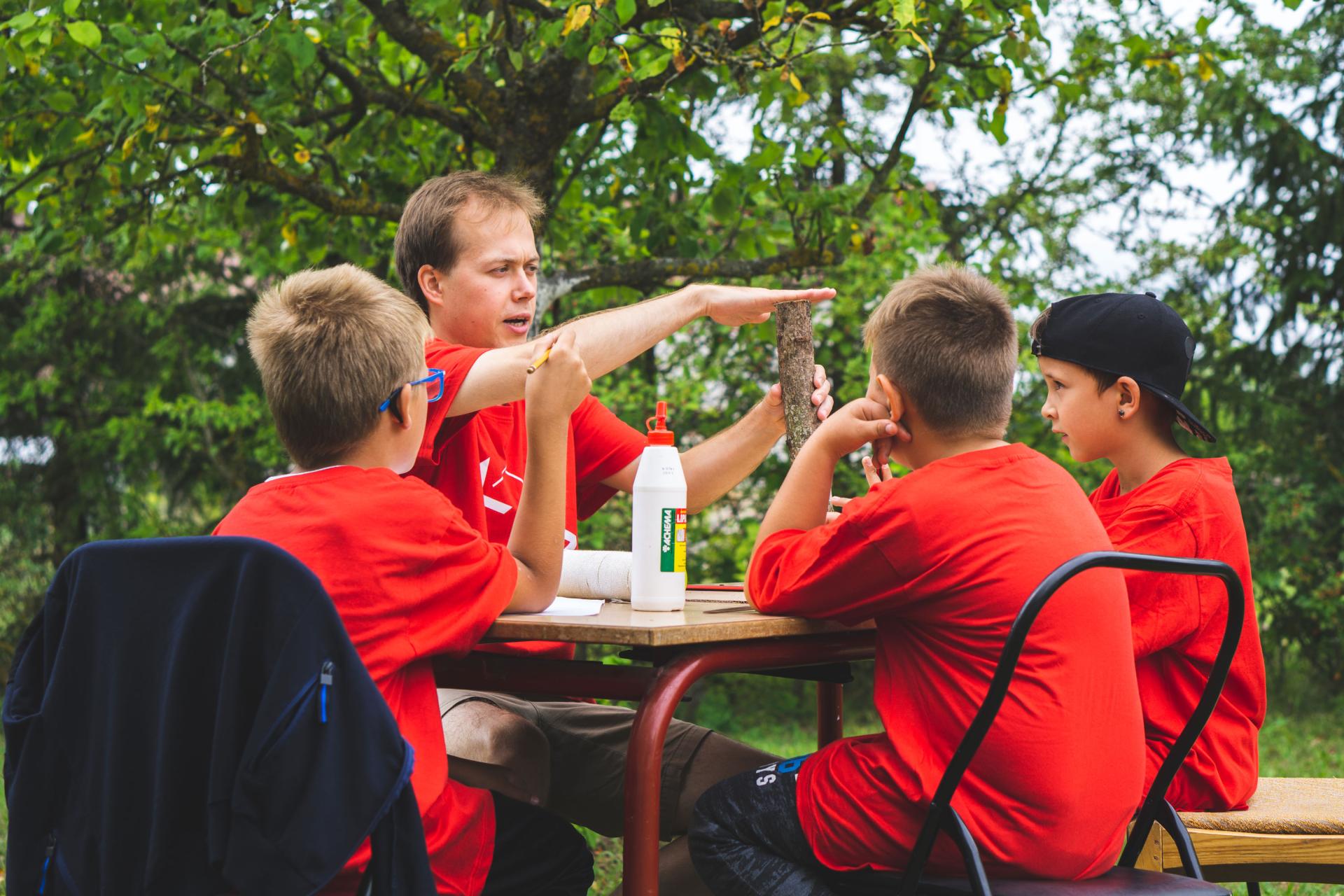
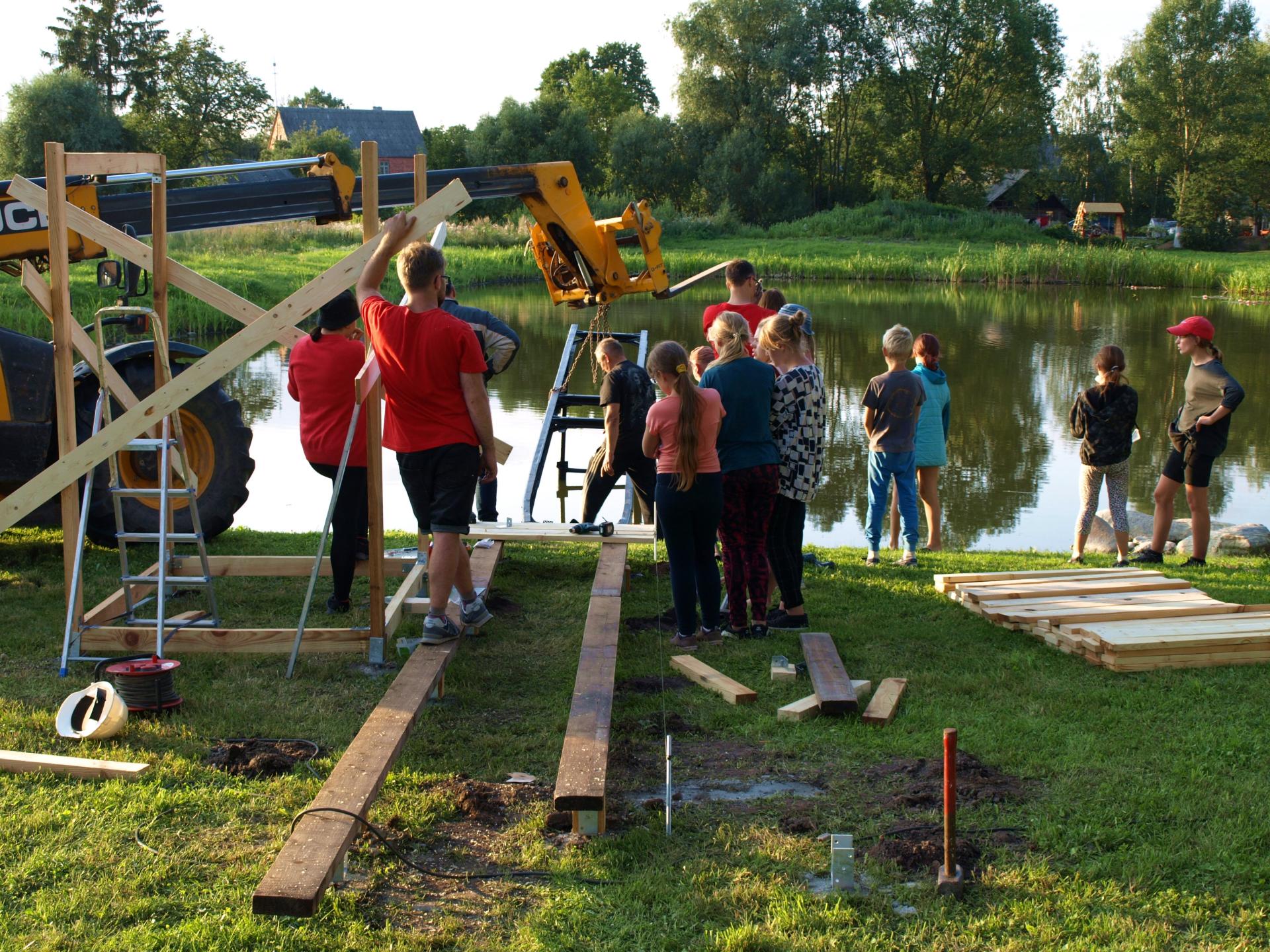
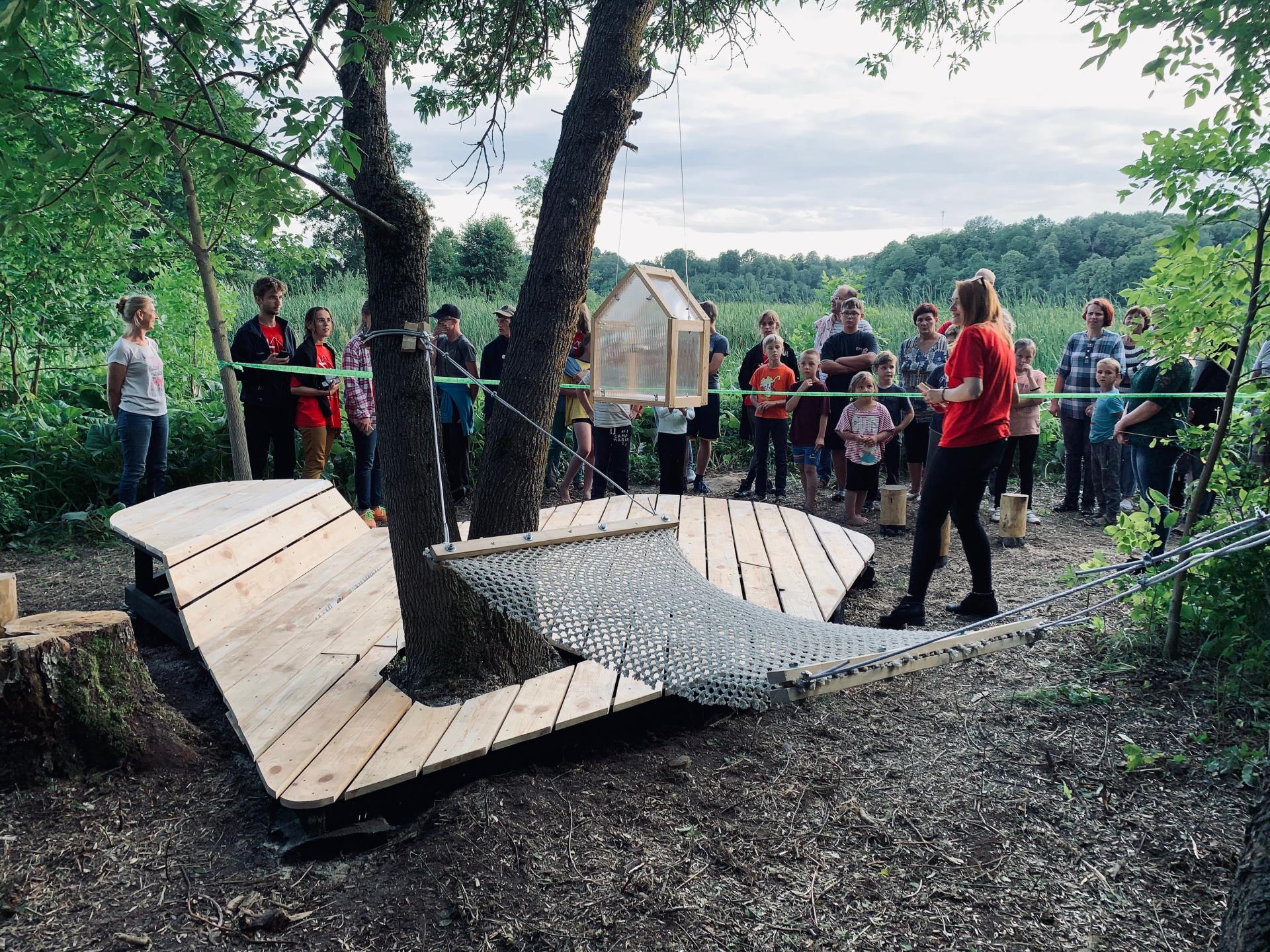
During the workshops we implemented projects of lasting value in public spaces in hope that they would inspire town's community to come together and would promote the continuity of the project. Workshop participants researched their environment, created new and renewed the existing spaces as well as small architecture objects not only for themselves, but for all the residents.
The environment we are aiming to create is a high-quality, aesthetic public space. However, we know from experience that the team’s visit to a town is not limited to the development of public space. We realize that one of the goals of the project is to revive the town’s community which will be using the space after the workshop ends.
We work with children because they are the most receptive part of community. Also, in the rural areas, they are the weakest, the most sensitive and vulnerable part of the community, and most often they don’t have their own voice when it comes to creation of environment or town life.
The project has been running since 2013, its methodology has been updated annually ever since. For today, the project has been implemented in 50 different towns and 52 unique objects were created in the public spaces of various smallest Lithuanian towns.
Key objectives for sustainability
Sustainability and affordability are very important to the project. Working with a variety of tools and materials left a lasting impression on many of young participants. The embodied skills and awareness they developed while tying nets, painting surfaces or sawing, fastening and sanding down wooden planks were made possible by the atmosphere of trust in their capabilities to handle the materials and manage the tasks at hand. The importance of local children making community spaces themselves reaches beyond the civic and emotional social bonds that emerge through interaction, negotiation, consensus and cooperation with other people.
In many KAD projects old materials have been brought to life, many old things have been reused. For example, repurposing the old flooring of a school gym (Upytė, Dūkštas, Turgeliai workshops) or the benches, fencing and even the metal frame of an old carousel that had been sitting in storage (Pabiržė). Building benches out of a discarded sofa (Zibalai) or old school chairs (Obeliai). Making trash cans out of drawers or a table out of a washing machine drum (Žadeikoniai). All these actions cultivate an ethos of ‘making do’ (Decerteau 1984), of working with what is at hand or reusing what has been discarded to make something functional and doing so affordably. KAD appropriated mundane material details of the past and integrated them into new designs. Any excess scraps generated through processes of construction or clean-up were incorporated as decorative elements rather than wasted (Žadeikoniai).
KAD’s interventions are not just built out of affordable, accessible and often recycled materials assembled through cooperative processes that redistribute expertise and foster new embodied skills. They are also built on the hope that if people are actively involved in the making of a space or object, then it will mean something to them and they will feel responsible for its upkeep.
Key objectives for aesthetics and quality
What is especially refreshing about KAD was that each intervention, space or object that was created was unique and specific to that locality precisely because it was generated from the singular synergy of each site as an assemblage of materials, local kids’ habits, visions and decisions, and the catalysing efforts of the volunteers. The open process developed by KAD engages and empowers children and young people as authors, builders and users of a space uniquely created by them.
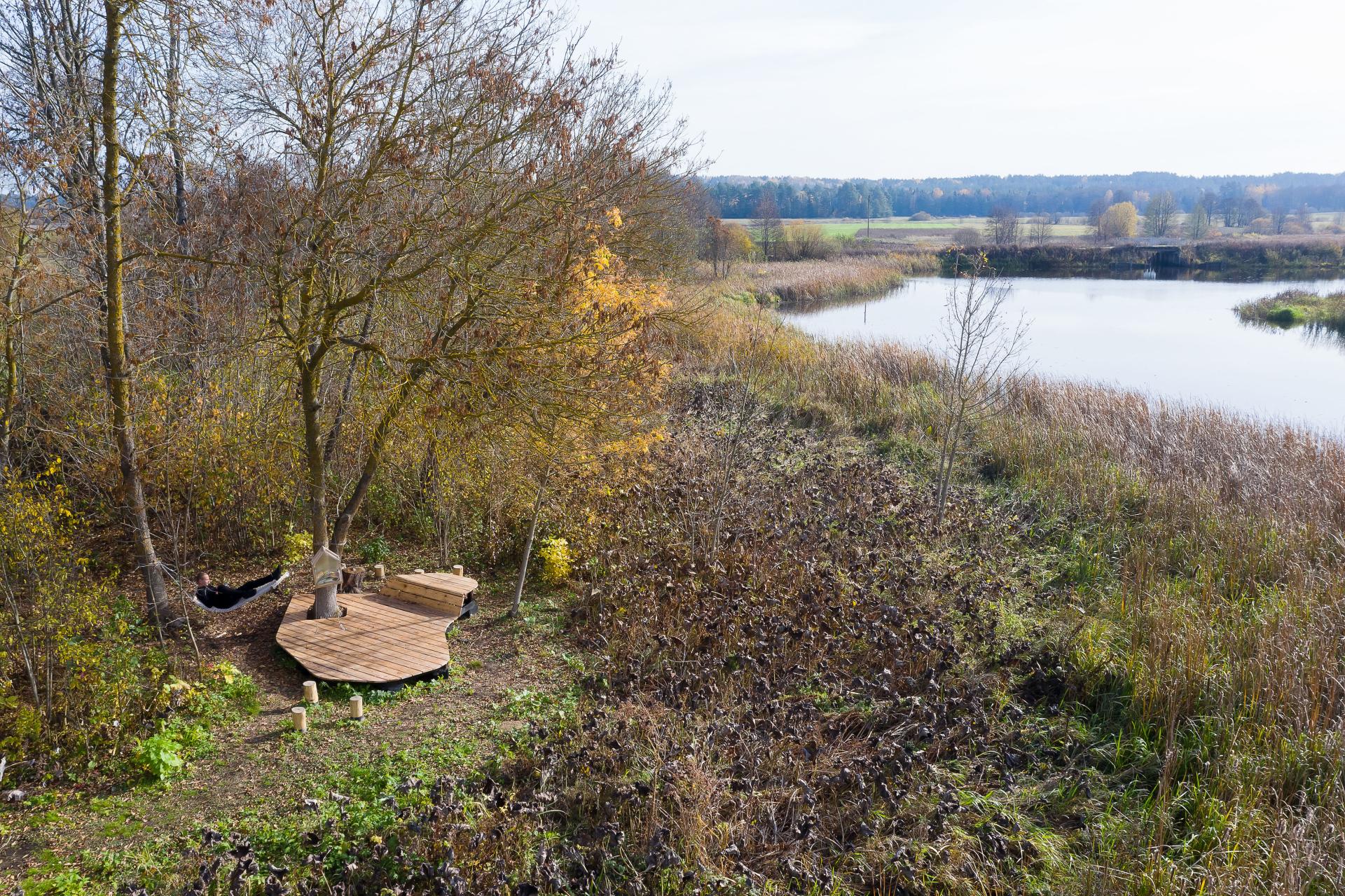
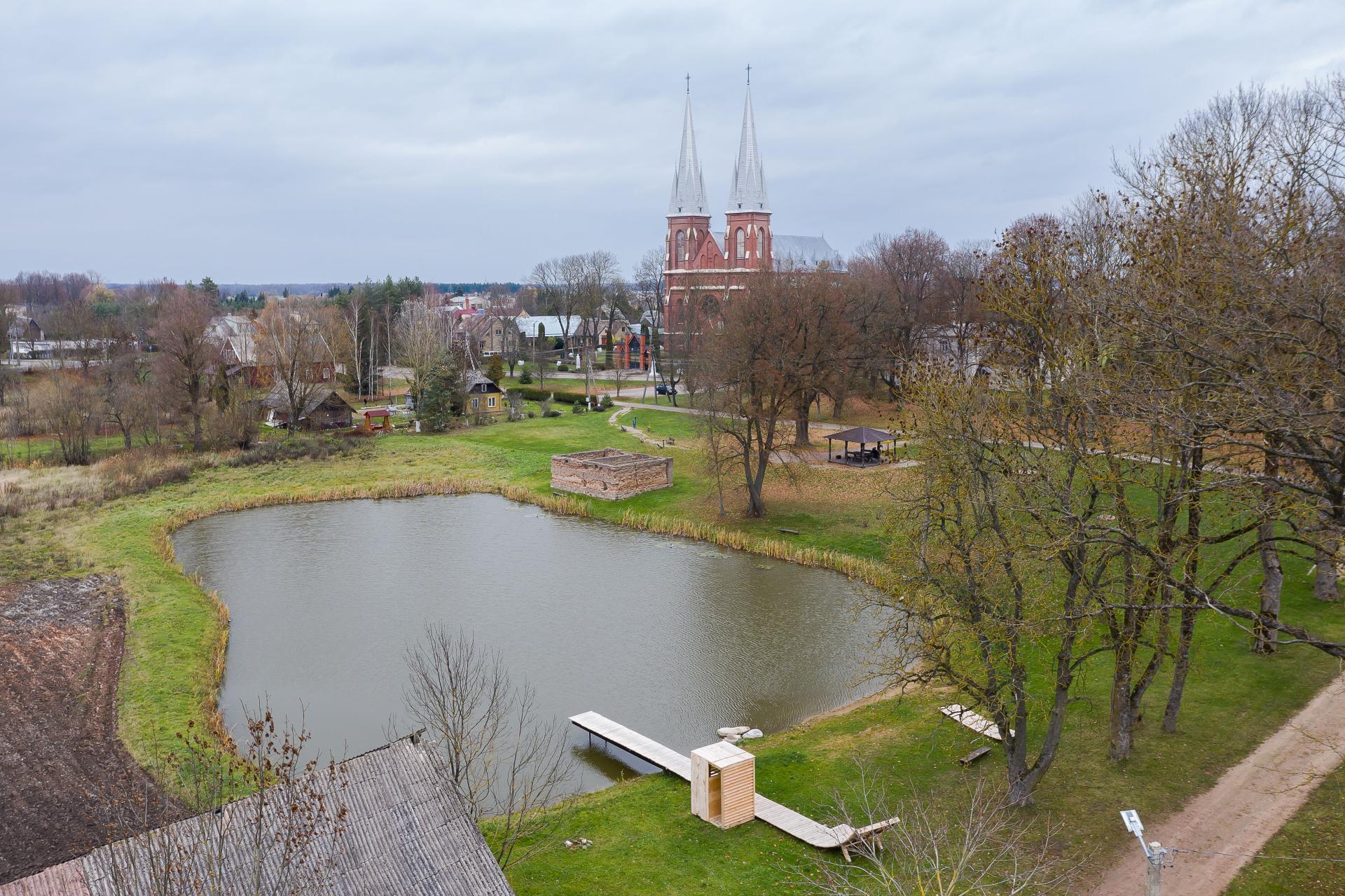
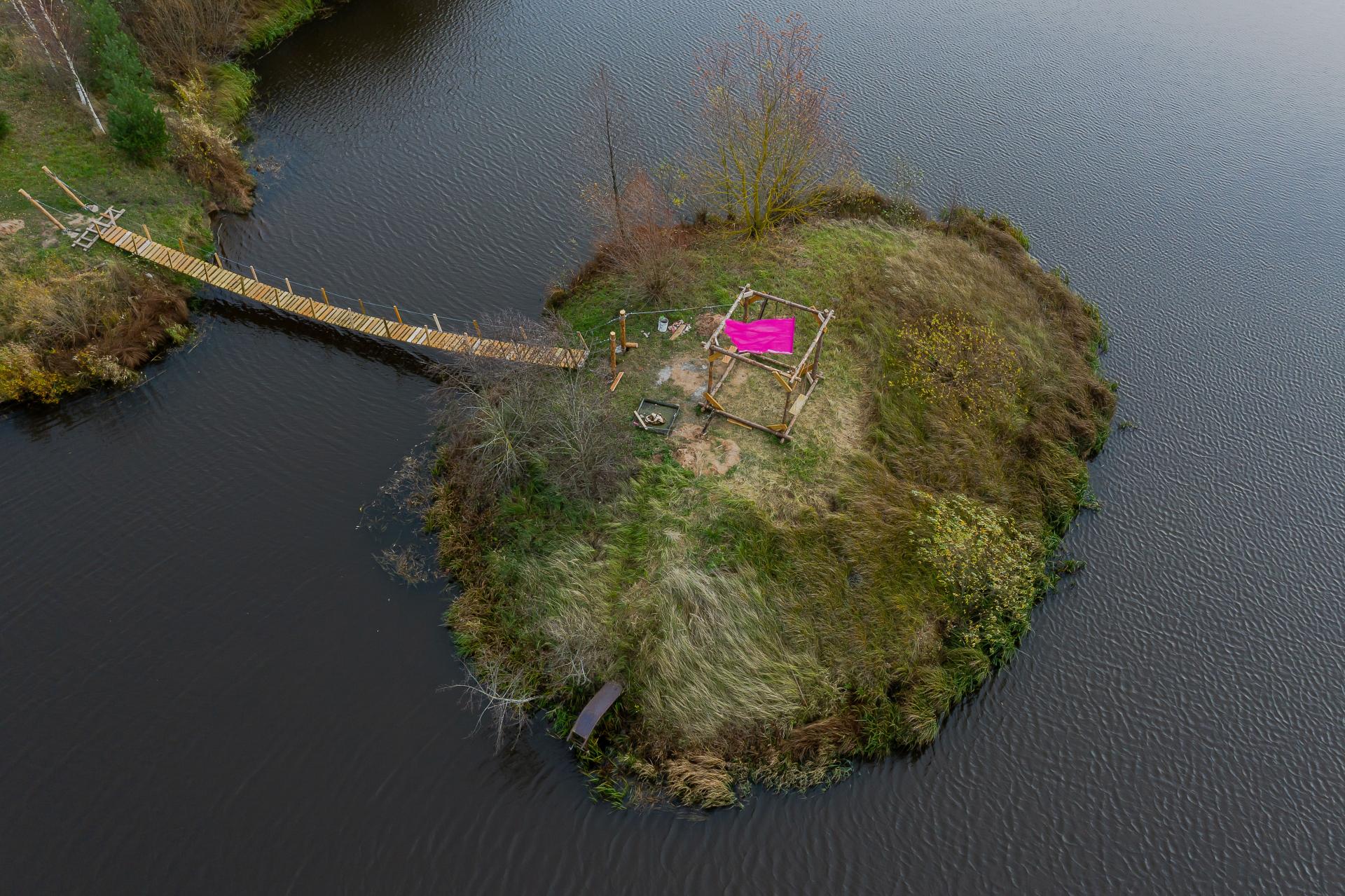
So instead of purchasing a standardised, prefabricated metal and plastic playground, or a templated design that was made elsewhere but could be built by participants, the local children and young people cleaned up, prepared and designed spaces that offered a wide range of possible activities. These included areas for active play or group sports, collectively-played musical instruments, places to sit and hang out together, areas for quiet and solitary engagements with nature such as a sofa built above a stream where one can meditate to the sound of water trickling over rocks (Panemunėlio GS) or linger in a treehouse while listening to the rustling of fir trees (Rečionys). In addition to such opportunities for an aesthetic-sensorial engagement with the natural world, other interventions were very practical infrastructural solutions like constructing passages over soggy spots (Skirsnemunė), bridges to inaccessible islands (Rudiliai) or repairing a rickety pier (Pabiržė, Palonai). In many cases, several sites were linked with aesthetic details that encouraged moving between them and were developed around a unifying conceptual theme with local significance, such as shells in Darsūniškis or water in Baleliai.
Even though the target group of these workshops were local children, they did not simply create spaces only for their age group but were encouraged to think empathetically beyond their desires and consider the needs and memories of other social groups, including adults and the elderly.
Key objectives for inclusion
1) KAD redistributes resources by bringing architectural expertise and quality public spaces to towns and villages that may otherwise be deprived due to disinvestment and out-migration. Moreover, by adopting a DIY approach of constructing a space out of found and locally sourced materials, KAD drives home the point that resources are often available and accessible but need to be assembled through collective initiatives and action.
2) The whole premise of the project is based on recognising children’s and young people’s distinct experiences of space, gearing itself to address the needs of this social group that is usually denied participation or remains ‘unheard’ and voiceless in democratic decision-making processes (Ranciere 2004).
3) The workshop model fosters encounters between local children/young (age 3 to 18 years old) people and volunteers from Lithuania’s largest cities. At the same time, it generates a ‘buzz’ of shared activity through which inhabitants of a town can encounter and engage with one another despite boundaries of age, gender or class that may otherwise separate them.
4) In addition to facilitating opportunities and affordances that allow people to care for each other, the collective making of public space encourages the clean-up, care and maintenance of those places.
5) Finally, procedural fairness refers to the ways that decisions about the production and use of a space are made, considering both who and how people are included in negotiations. KAD volunteers addressed this challenge by humbly approaching a new location, listening to the desires, expectations and aspirations of the people living there, allowing time for walks and reflection and building a sense of trust and inclusion through games, activities and cultural programs beyond construction tasks.
Results in relation to category
The KAD project set out to enhance people’s understanding of their environment, encourage creativity and foster a sense of personal responsibility. Through a DIY ethos that centres the production, repair and maintenance of places and materialities, KAD engaged communities across Lithuania in the purposeful making of public space. This was not a ‘top-down’ reform-oriented project, nor was it a thoroughly ‘bottom-up’ grassroots endeavour, but more of an educational, alchemical, horizontal ‘alongside with’, since the process was as transformative for the volunteers as for the locals. Through involvement in a common experience, KAD activated place-based communities by forging a community of volunteers and others. The project demonstrated a reflexive self-awareness of its position in how it went beyond formal architecture towards conducting ethnographic work by means of attentive written and visual documentation and recorded interviews with participants that can be found on project website.
DIY solutions that prioritised hands-on, experiential learning remedied a lack of shared spaces and objects through a sensitive attunement to embodied needs, cultivating a collective sense of psychological ownership and personal responsibility. In 2020 we have re-visited all 50 smallest towns that had KAD workshops from 2013-2019 and we were very pleased to find out that more than half of these small architectural objects are still under use and taken care of, what took as by surprise is that 5 communities continued to apply our workshop methodology and expanded their public space interventions.
How Citizens benefit
Social practices based on cooperation and collaboration generate experiential value which undermines exchange value and replaces it with value based on social relationships; ergo, KAD’s often repeated emphasis that the process is just as important as the outcome. Initial deliberations deciding ‘what?’ and ‘where?’ enhanced by hands-on construction of models demonstrated the importance of a collective, inclusive and engaged process of negotiation and decision-making. Delegation of tasks cultivated a sense of personal responsibility for a part of the construction process and clearly defined one’s role within the team. At the same time, KAD fostered an understanding that work depends on a broader context than those directly involved in the making. Not only did the parents and teachers of children and young people assist by contributing their tools, time, strength or nourishment, but local businesses and industries such as lumber yards also provided construction materials. Locally sourced materials cast a web or network of social relations to bring a place into being by involving actors beyond those immediately included in the construction process. Furthermore, it is likely (or at least hoped for) that through the continued use and stewardship of the space — as well as in the memories of the children, young people, and volunteers who participated in the project — the relations generated by this intervention extend further into time than the length of the workshops.
Innovative character
KAD's overall approach embraces the spirit of ‘do-it-yourself’ (DIY), which is a loosely organised set of practices based on producing things oneself for one’s own use, often by repurposing or repairing on-hand materials. This approach leads to a sense of autonomy and self-reliance. DIY practices enacted at the micro-level often foster a sense of agency — the belief that one has the power to change the environment in which one lives in much more grounded, immediate, spontaneous and affordable ways.
KAD project has a unique flexible methodology which is constantly updated based practice and interdisciplinary (professionals on their fields) volunteers team reflection that comes to a small, 500 inhabitant Lithuanian town and is guided by local kids to create, explore and to build. By collectively crafting inspirational public space, KAD ties tangible, symbolic and affective threads between people and places, countering contemporary visions of a future uprooted and unmoored from locality.