La Plume
Basic information
Project Title
Full project title
Category
Project Description
Based on the holistic approach of permaculture, La Plume will give you an experience that can radically change the behavior and habits of residents, towards an ecological society, open and respectful of the earth and people. La Plume is a place of creativity, renewal and learning with Nature as a teacher.
Project Region
EU Programme or fund
Description of the project
Summary
La Plume, an estate located in the heart of a Natural parc in the Pré-alpes d'Azur, a sub-region of Southern France, is a place designed to be a gateway that every company will have to explore in the future. It will welcome business leaders, their close teams and young talent to enrich their strategic vision and feed their collective intelligence through learning and inspiration programmes with speakers – intellectuals, economists, writers, navigators and more. Above all, the place will offer a practical experience of working with the land, of manual labor, to rethink oneself; to nourish the body, the mind and to rediscover the coherence between manual gestures and thinking, the correspondences with the life of nature and the construction of a business or a project.
The project is based on the alliance between the transformation of businesses and the people who run them and make them live with a practical application within a permaculture farm. Entrepreneurs, farmers, craftsmen, writers, and intellectuals will thus rub shoulders in this same place.
The objective is to create an immersion around a learning and questioning journey. La Plume wish to provide an experience and a vision that can radically change the behavior and habits of the residents, in their personal and professional lives, in favor of an ecological society, open and respectful of the earth and others.
This experience of nature will be achieved through aspirational interventions, hands-on reflection sessions and permaculture discovery, handicraft workshops; enjoying rest and creation spaces, set within the garden; staying either in the house or in dry huts, in the heart of an ecosystem interwoven with the needs of the land using the principles of biomimetics.
Key objectives for sustainability
The whole project, from its early designed phase to its daily operation is based on Permaculture principles: taking care of the Earth, taking care of people, sharing resources equitably. It is on these three previous principles that the farm-school has been imagined.
In that regard, the five hectares of land dedicated to the permaculture farm-school were progressively transformed into an ecosystem that respects biodiversity.
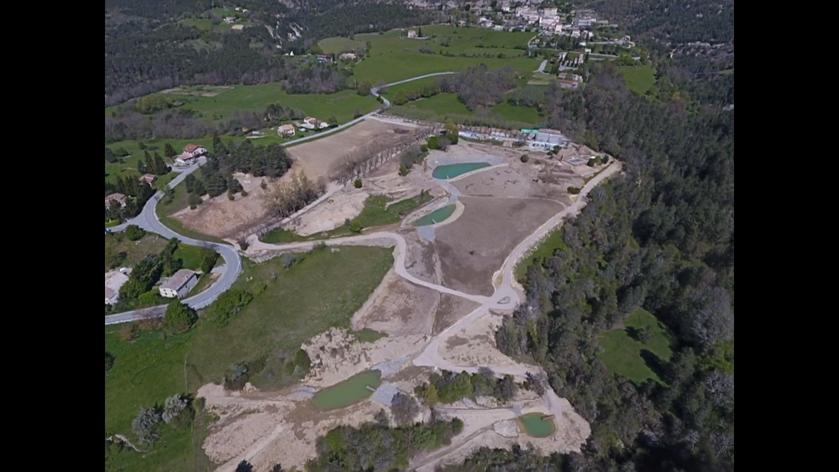
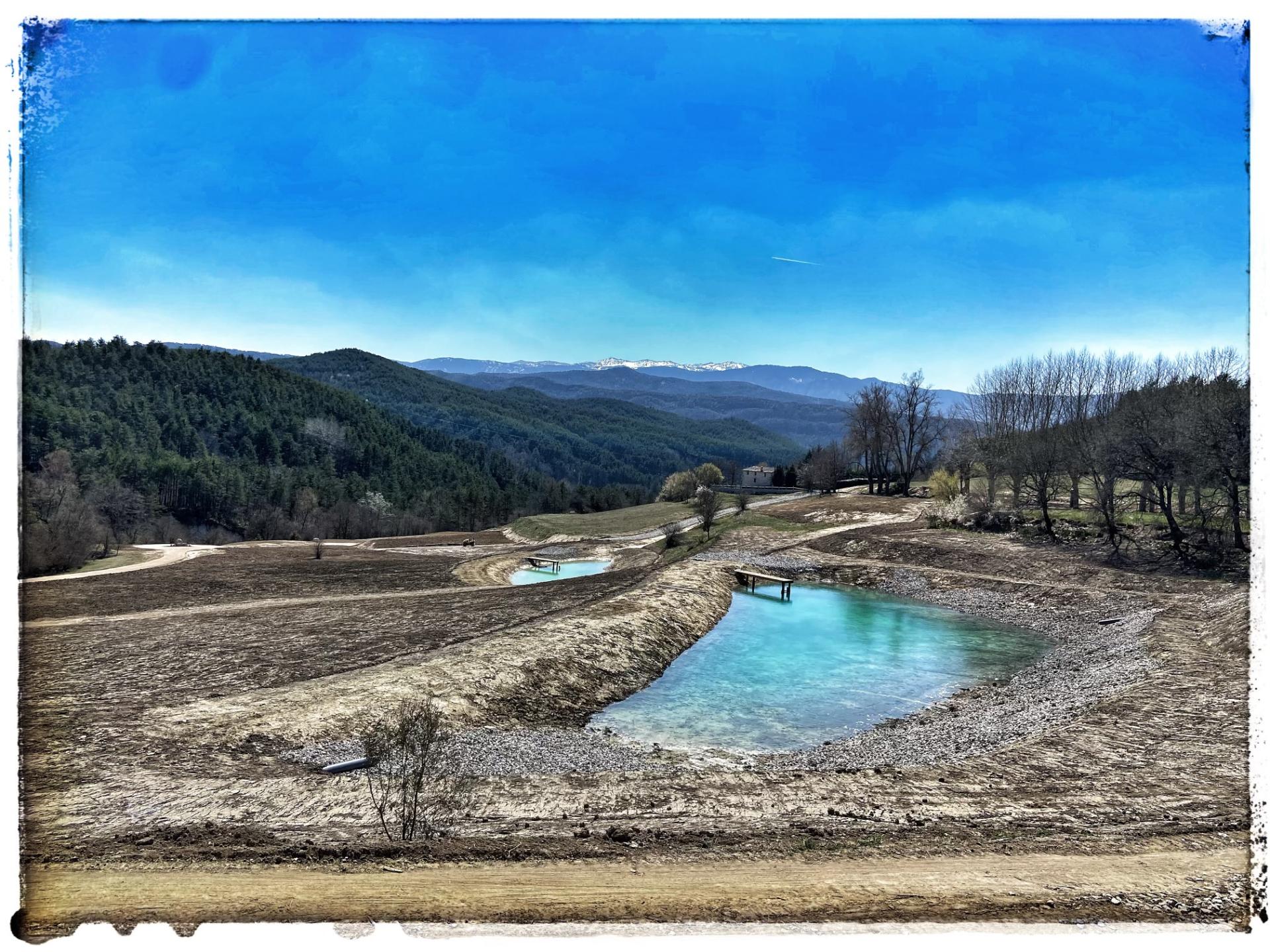
La Plume is also efficient in water resources. The estate will be divided into different areas and will allow the farming of local and environmentally friendly species including nut trees, market gardens and more. Furthermore, five ponds are being dug to collect rainwater and runoff. These large water reservoirs, designed by Joseph Holzer, expert in permaculture, aim at tackling the urgency around land erosion and landslides while only working with run-off water, natural and redesigned ponds to store water.
Beyond the agricultural exploitation of the land, it will be a space for the transmission of knowledge around sustainability concepts. La Plume has the ambition to become a training center and a farm of excellence to allow those who want to start permaculture to learn the essential rules. The permaculture farm will also allow residents who wish to stay for a longer period of time to follow a real education, to develop techniques, practices and knowledge, and apply them to other places in France and in Europe.
Finally, la Plume will encompass solar tiles developed by Akuo. Thanks to this technology classical roofs are converted into producers of renewable energy while respecting the landscape and the environment. While the esthetic aspect remains central in the project, solar tiles are combining it with sustainability and energy production. The tiles will be placed both on the main residency and on the cabin village, nearby the residency, to allow multiple sources of energy production.
Key objectives for aesthetics and quality
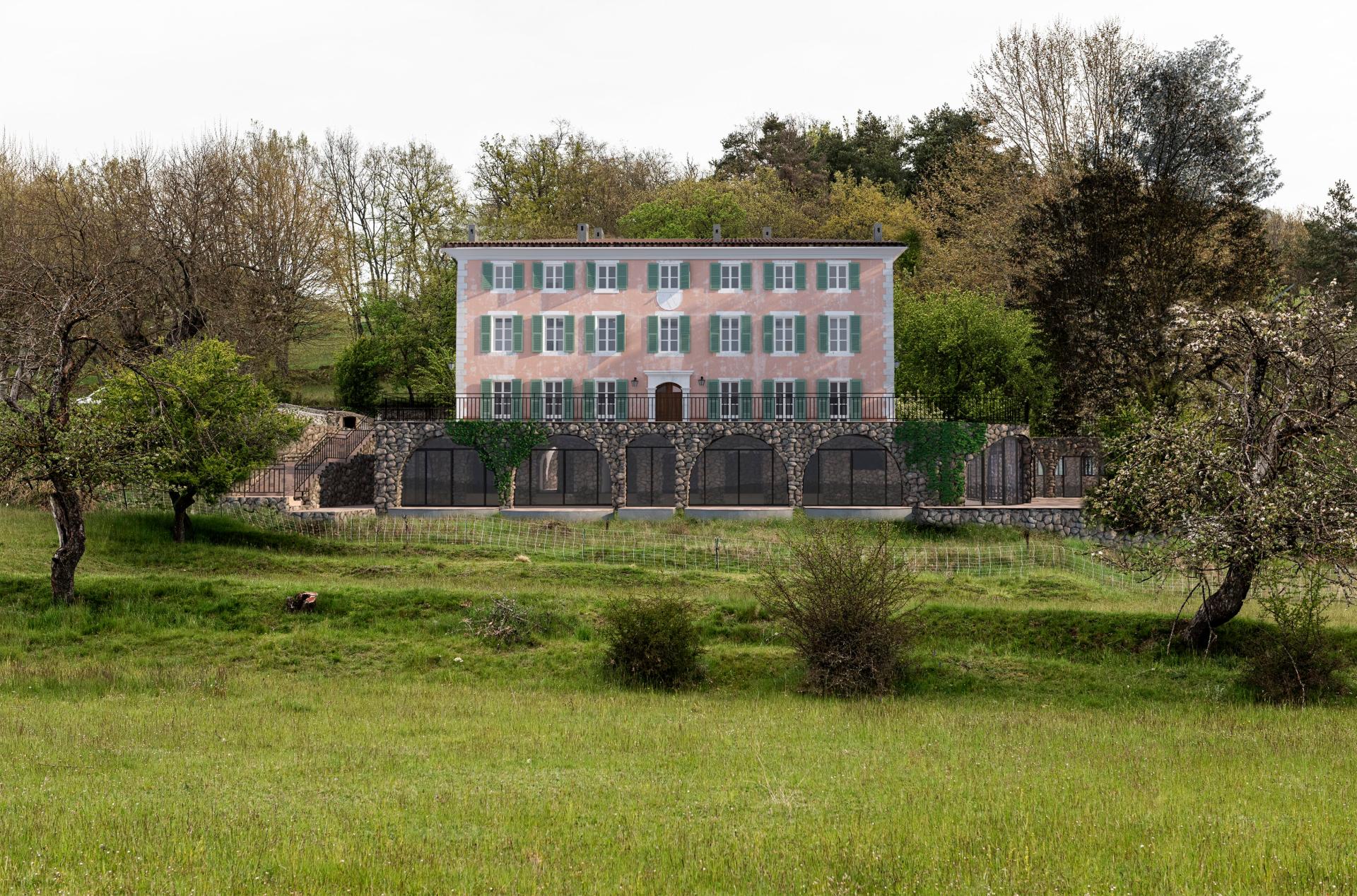
Once the hunting lodge of the Marquis de la Penne, and inhabited by his descendants until the late 1990s, Le Pavillon de la Plume is a house with a historical heritage, but which remains simple and welcoming. These types of old buildings are often difficult to renovate in ways that respects their local and historical environment.
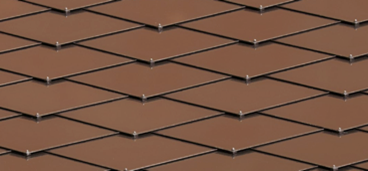
La Plume takes this dual dimension into account. By combining durability and aesthetics with its « terracotta » coloured solar tiles, La Plume tends to make the synthesis between architectural tradition and ecological modernity. Moreover, the building retains an important heritage of its original state with the underlying idea that to create a family and welcoming space, it is necessary to preserve the specificities, sometimes imperfects, but constitutive to its environment and history.
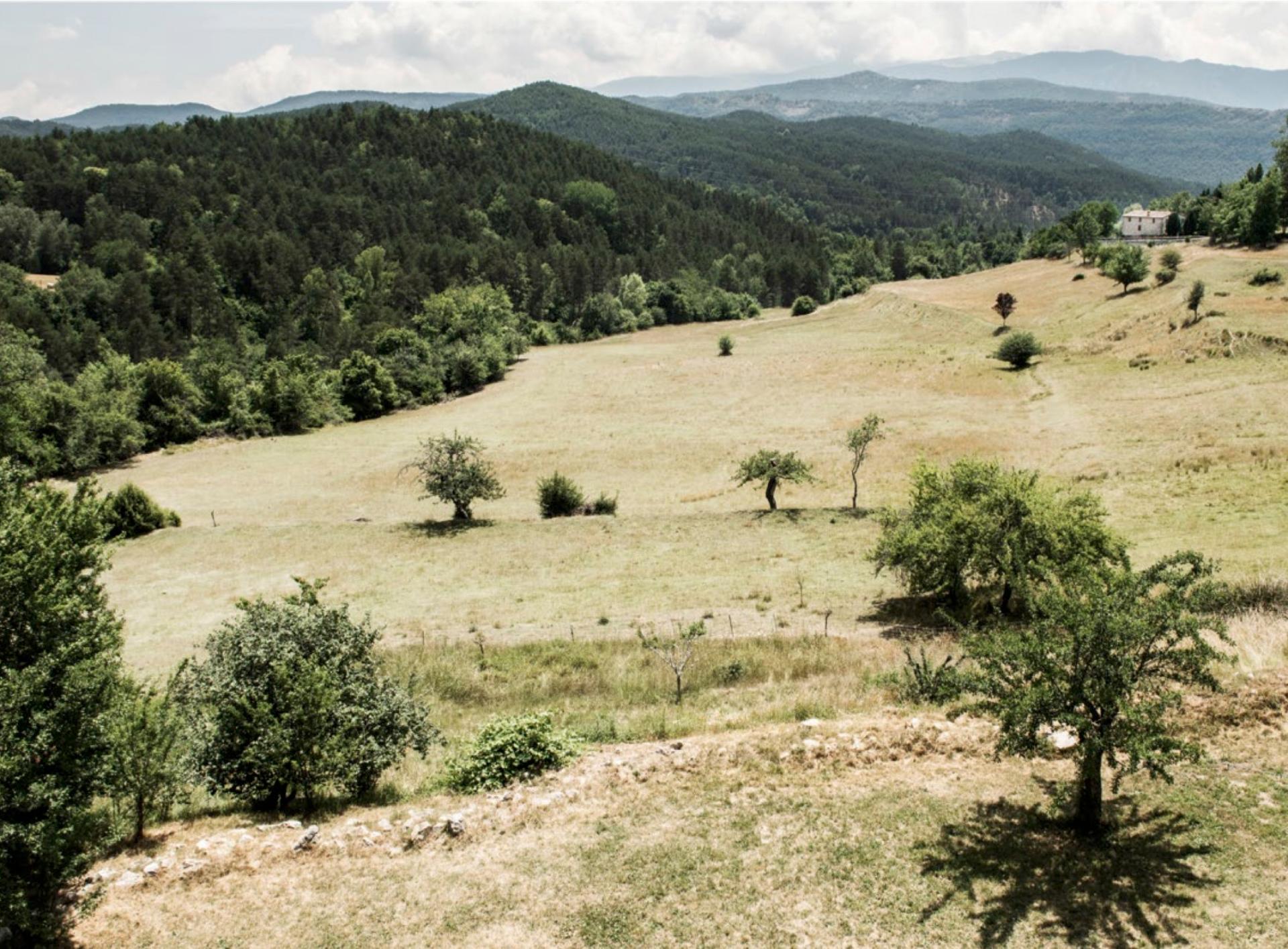
Furthermore, the transformation of the 9 hectares around the property includes the rehabilitation of the ponds. Previously unsuitable for the landscape, these ponds are now benefiting from the water recovery system set up by Josef Holzer and bring diversity to the Domaine de la Plume while promoting the expansion of the local ecosystem, with nature always as an example. These ponds feed the permaculture farm, which before being considered as a place of production, is perceived as a garden, where local people and inhabitants can visit to appreciate its aesthetics.
Overall La Plume, not only respects its historical and natural environment. It aims at enhancing it with nature as a teacher, alike the other dimensions of the project.
Key objectives for inclusion
The philosophy of permaculture, which considers diversity to be a strength, is applied to the entire project.
Everyone is invited to participate in the development of the estate and its functioning, around the concepts of sustainability and cooperation. Apply permaculture from the beginning of the project means moving away from a vertical approach to focus on a participatory one, in the spirit of the New European Bauhaus, drawing on collective contributions. Everybody can thus participate through the Moodboard 2.0 plateform providing an interface where all contributions to any existing or future aspect of La Plume are considered. In short, participants are invited to learn from each other and to advance the development of the system together.
Since its creation, La Plume has brought together people of many different sensibilities - entrepreneurs, farmers, scientists, thinkers, craftsmen and artists - around its project. These meetings, exchanges and cross-fertilization have enabled the project to be built together.
Moreover, the local actors were involved from the very beginning of the project. Territorial anchoring is a determining factor in the success of the project, which in turn brings new economic perspectives to the village and its surroundings. In that regard, cultural events will be organized at La Plume, open to all and especially for surrounding populations. Courses for budding writers are also planned enhancing a 'cross-fertilization' between worlds that rarely meet.
In order to perpetuate a living heritage, the permaculture school farm, which will be dedicated to young farmers of the region, will be a partner of the training project of Puget Theniers, a French village, located 60 km from Nice and 10 km from La Plume
Results in relation to category
The residency “la Plume” is a place of creativity and manual learning with nature as teacher. The Pavillon is an open building on a 9-hectare plot of land, with a view of the valley and the surrounding peaks, below the village of La Penne. The existing building will be retained. It will be refurbished and extended to allow the reception, accommodation, and catering of boarders of all ages. From the inside to the outside, the renovation of the building has been designed with the utmost attention to its environmental impact. The roof will be solarized with Akuo’s building integrated solar tiles in color “terracotta”, respectfully of the local architecture.
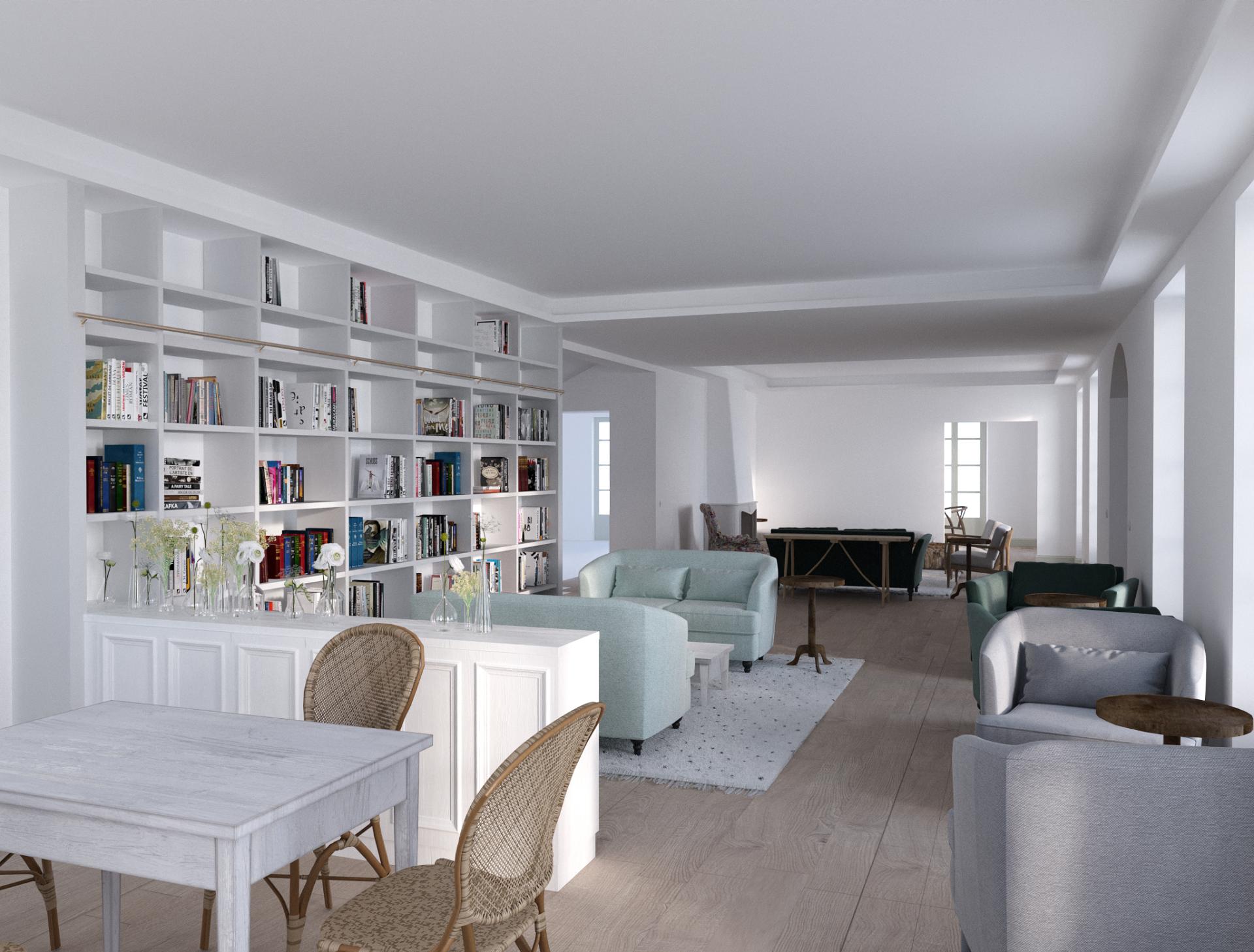
The place will offer an experience that combines manual work, well-being and inner deepening, knowledge and more, all around the theme of the week and with nature as teacher. The project will encompass a boarding school, a restaurant as well as training and relaxation areas.
More than a cosy place, La Plume is designed as a family place. Common areas such as the kitchen, the yoga room or the beduin corner are thought as places to exchange and share with other inhabitants of the house. When it comes to the common production of inhabitants and users of the farm, the farm shop will provide an interface to sell the home made products it allowed to create. A market on wheel will go to the village of La Penne and a monthly fresh market could be organized on the farm. Most of the products will come from the farm and the Greenhouse plantation where everyone contributes.
Finally, la Plume aims at further promoting permaculture. There are groups for exchanging knowledge, advice and training on social networks, such as 'Permacultive', which has thousands of subscribers. The estate could work as an interface to promote further permaculture projects in France and in Europe. With its practical approach, la Plume aims at strengthening this kind of initiative and communicate on new agricultural and consumption practices.
How Citizens benefit
Citizens of La Penne and the sub-region have been involved from the early beginning of the project. The members of Raise, the firm at the basis of the project, made sure of it by first presenting the project to la Penne’s townhall, involving local firms in the construction and rehabilitation projects of la Plume while providing internships and jobs to local inhabitants. Alike the design, the benefits are mutual.
The President of the sub-region, local elected officials, but also the surrounding farmers, craftsmen, construction companies and architects of the region as well as the inhabitants of La Penne and the neighbouring villages all contributed.
Finally, local citizens understand the participatory spirit of the project, even when built. They are becoming more and more involved in making it alive. Following visits organized by members of la Plume, several inhabitants mentioned their will to contribute to activities the 9 hectares of land could welcome. For instance, Bernard Dejonghe an famous sculptor, realized that the properties of the earth of la Plume were especially adaptable pottery and sculpting. Classes with la Plume’s and Penne inhabitants are thus planned with the latter being involved in the construction of a natural oven for the upcoming creations.
Innovative character
Reconnecting with nature, in the case of la Plume, comes with innovating sustainability concepts and technologies such as solar tiles, charging stations for electric cars or retention pounds.
Developped by Akuo, solar tiles are combining solar power generation with proven waterproofing and aesthetics while generating long-term saving for the building. While being a vector towards a more efficiente and sustainable European build stock, the tiles encompass an esthetic aspect, an essential dimension for the preservation of an old residency such as la Plume which must not be distorted. The tiles can indeed match the shape and color of the residency and cabins where they’ll be placed. Having building going from energy consumers to energy producers is central in order to rethink our relationship to energy production and our mean of consumptions. In this regard La Plume will include a 25,075 kWp building integrated photovoltaic system, with 300 tiles covering the whole roof surface area for a period of at least 25 years, covering most energy needs of the estate.
In order to remain open to the outside la Plume will have a car park at the entrance of the estate. This car park has 2 disabled spaces and 2 charging points for electric cars powered by solar panels. The surface of the car park will be made of stabilized soil as to remain as environmentally friendly as possible. All the solar energy produced on the site will be mutualized in order to optimize its distribution amoung inhabitants and activities.
Finally, to ensure the sustainability of the farm, 3 large retention ponds, allowing the capture of 10,000m3 of natural water, were built with the support of Josef Holzer. The ponds will provide water for the permaculture farm and the inhabitants.