Dance Flore
Basic information
Project Title
Full project title
Category
Project Description
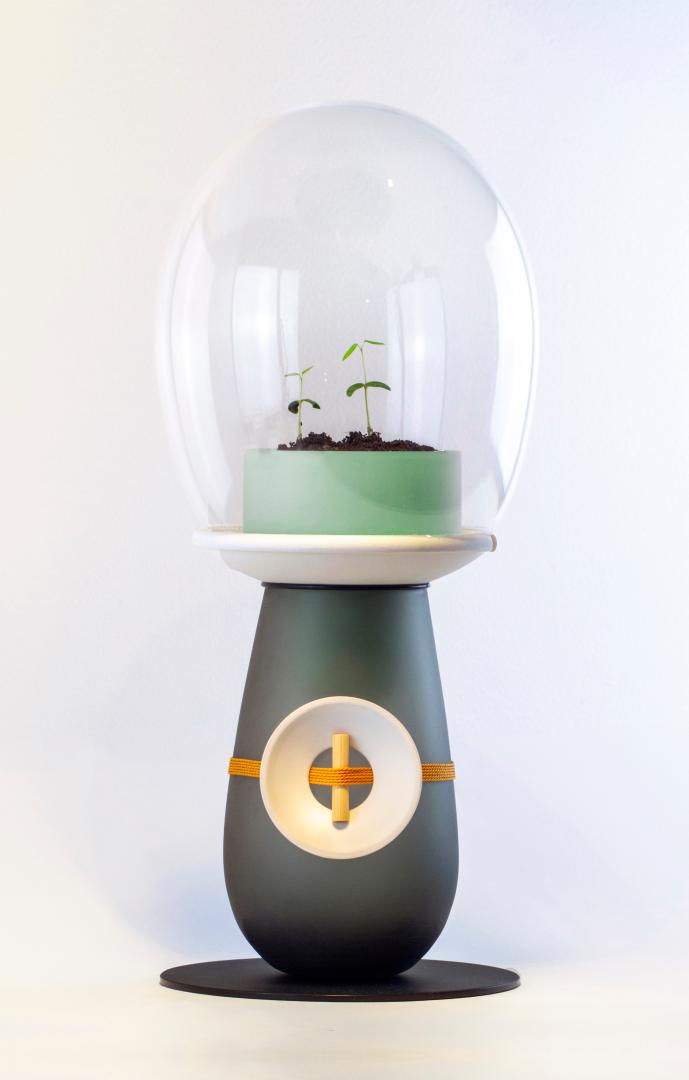
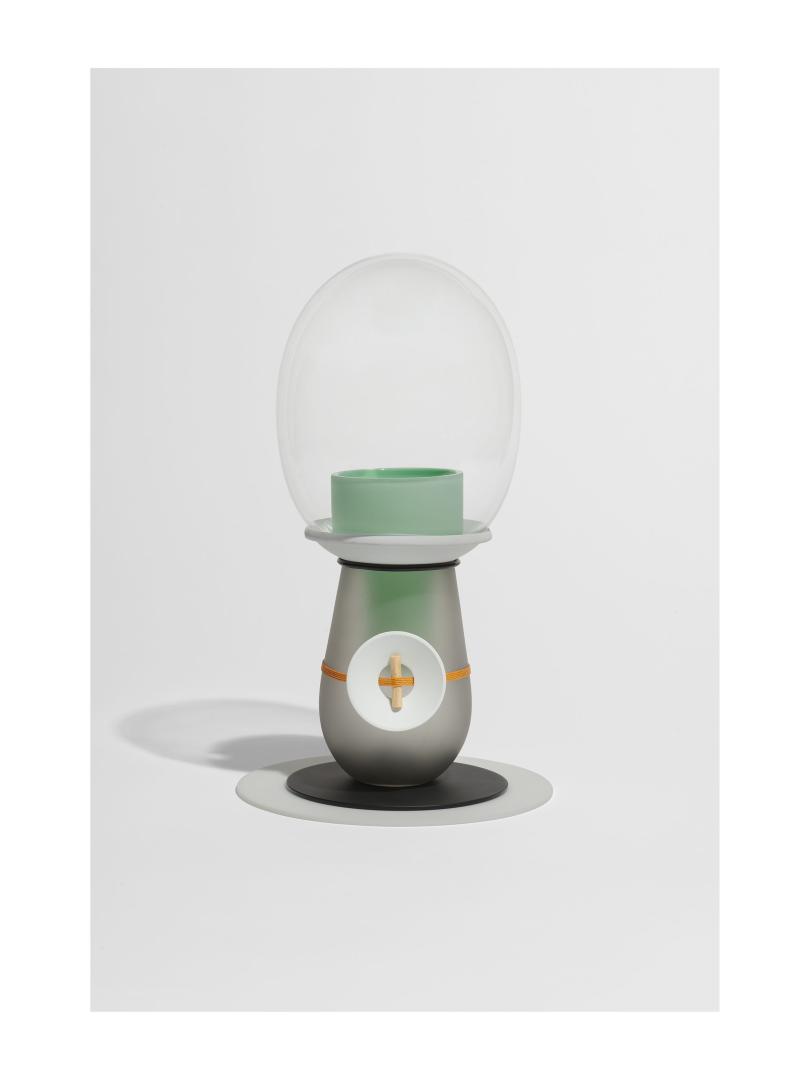
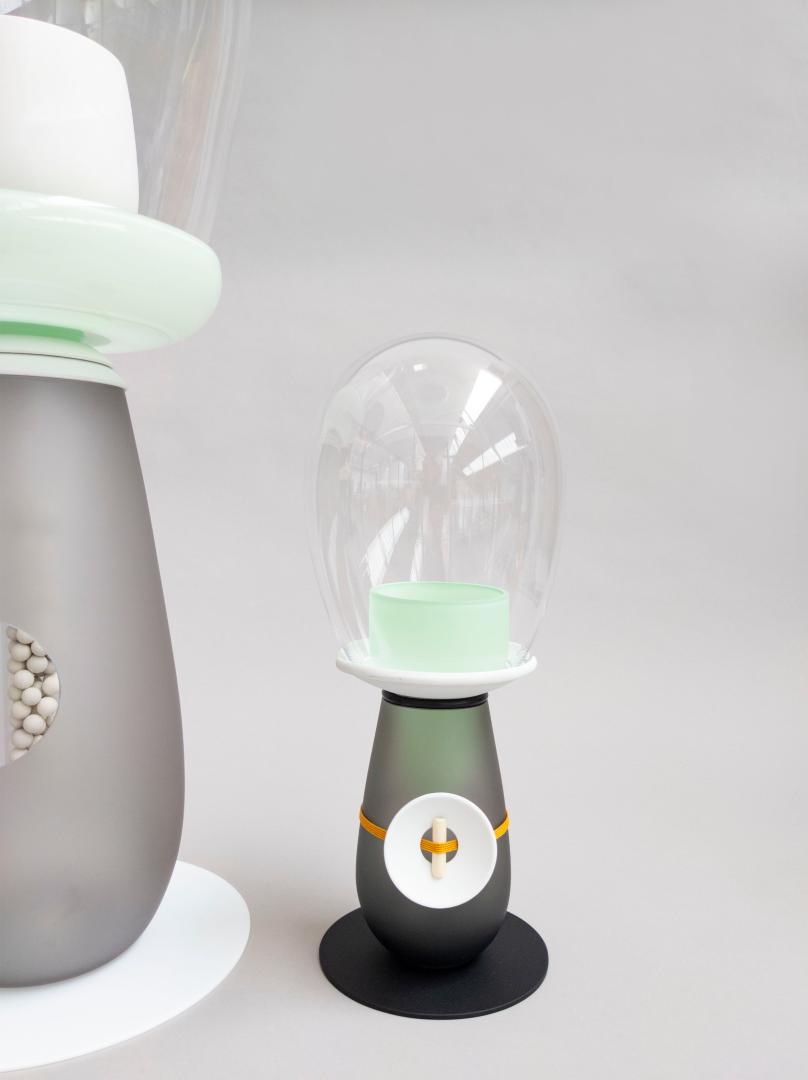
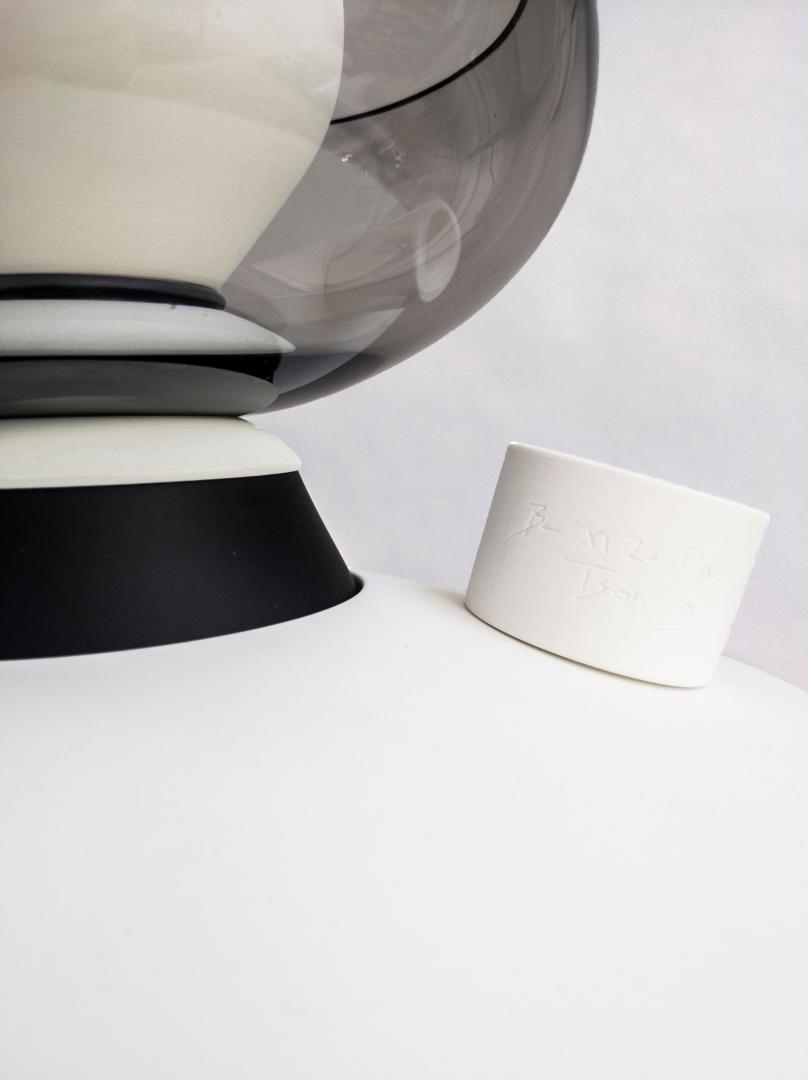
“Harvest - Sample -Assemble” is a design philosophy I imagined. It has been experimented at the Cirva (an art centre dedicated to glass, visual arts and design in Marseille) with a project called “Dance Flore”. Dance Flore is a new way to design a vase : rather than a decorative object for a “dead” flower, it is a “home” for a growing plant. It welcomes a Desmodium Gyrans : a plant that dances.
This playful and cross disciplinary approach is a new step toward ecology and I want to develop it.
Project Region
EU Programme or fund
Description of the project
Summary
“Harvest - Sample -Assemble” is a method to create objects. This method was implemented during my residency at the Cirva, an art centre dedicated to glass based in Marseille. As winner of the Grand Prix Design Parade Hyères, I was invited to design a vase.
Rather than a vase, I chose to made a home for a plant. This plant is called Desmodium Gyrans : it reacts to sound, it moves, I feel that it dances. The process was based on three principles. Now that I have designed a prototype, I want to develop this method in other projects, and to spread its values to young generations as well as to industry.
Harvest : I prefer not to create with ideas I would bring, but with objects that already exist. I want to work with what is already here.
I don’t want to impose shapes, I want to work with what is given to me. At the Cirva I was very interested in not buying raw material but in collecting scraps from the workshop.
Sample : The pieces I collect are sorted and transformed so that it creates a toolbox. I divert the collected objects from their original use toward a new life/ function. The sampling is a very creative way to reconsider a given shape and to see it out of any function. I start with existing objects I found and then crop them in order to get a shape without a function.
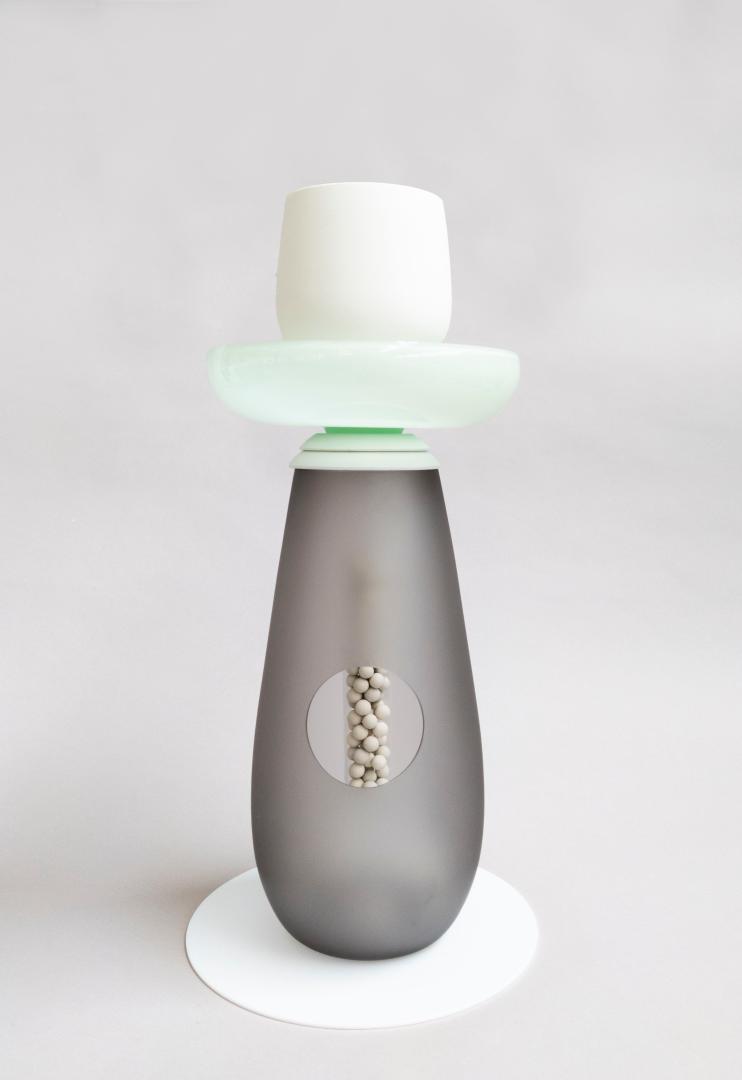
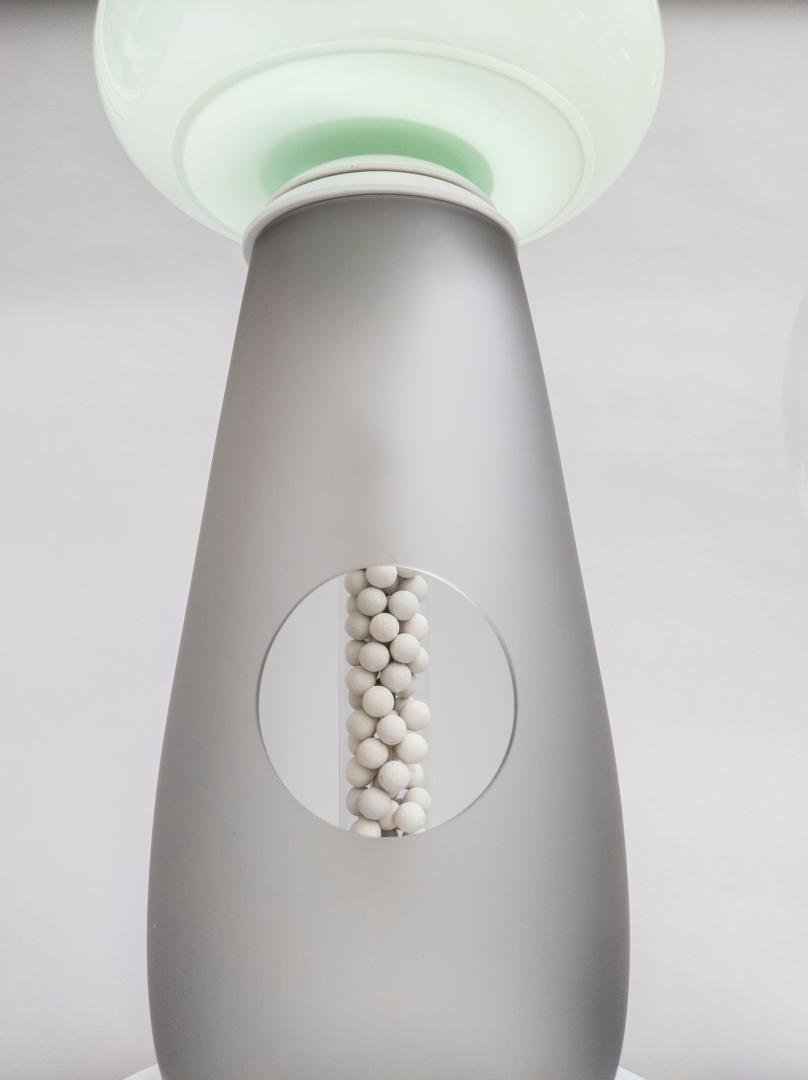
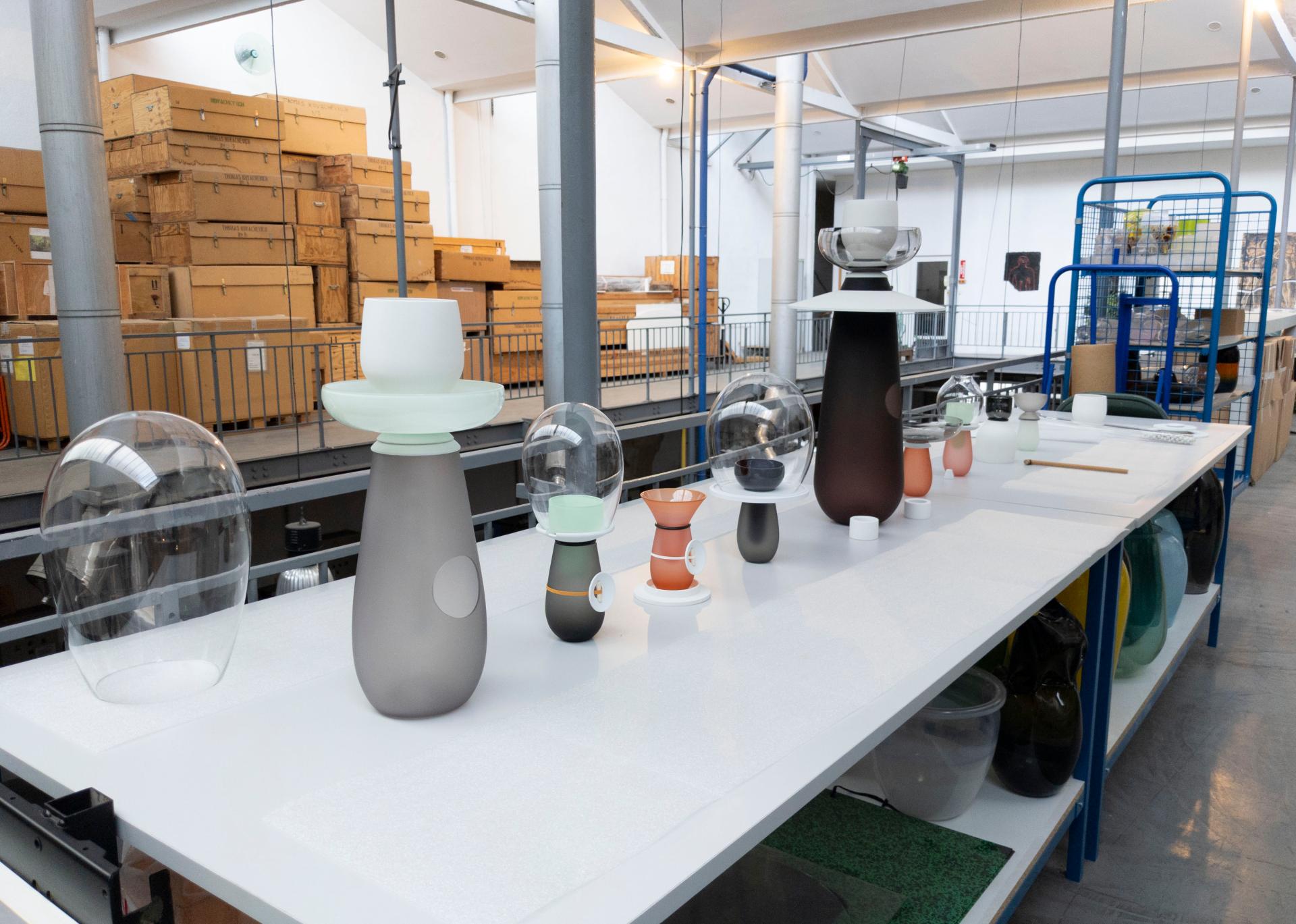
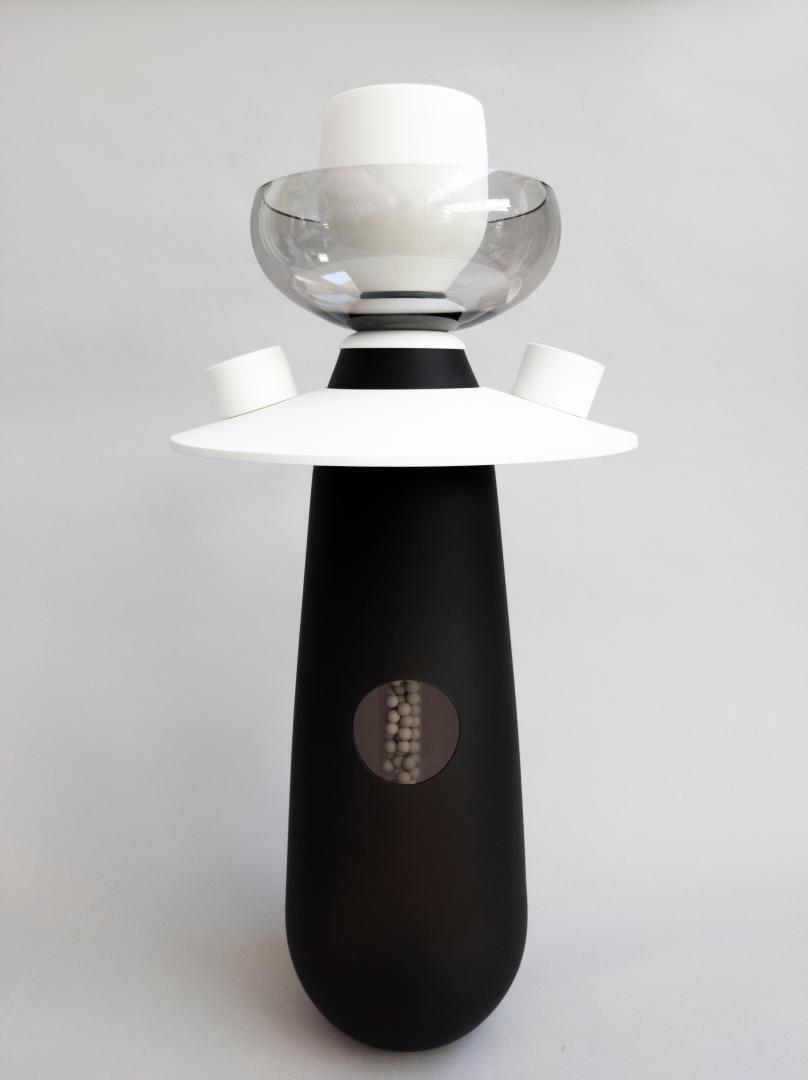
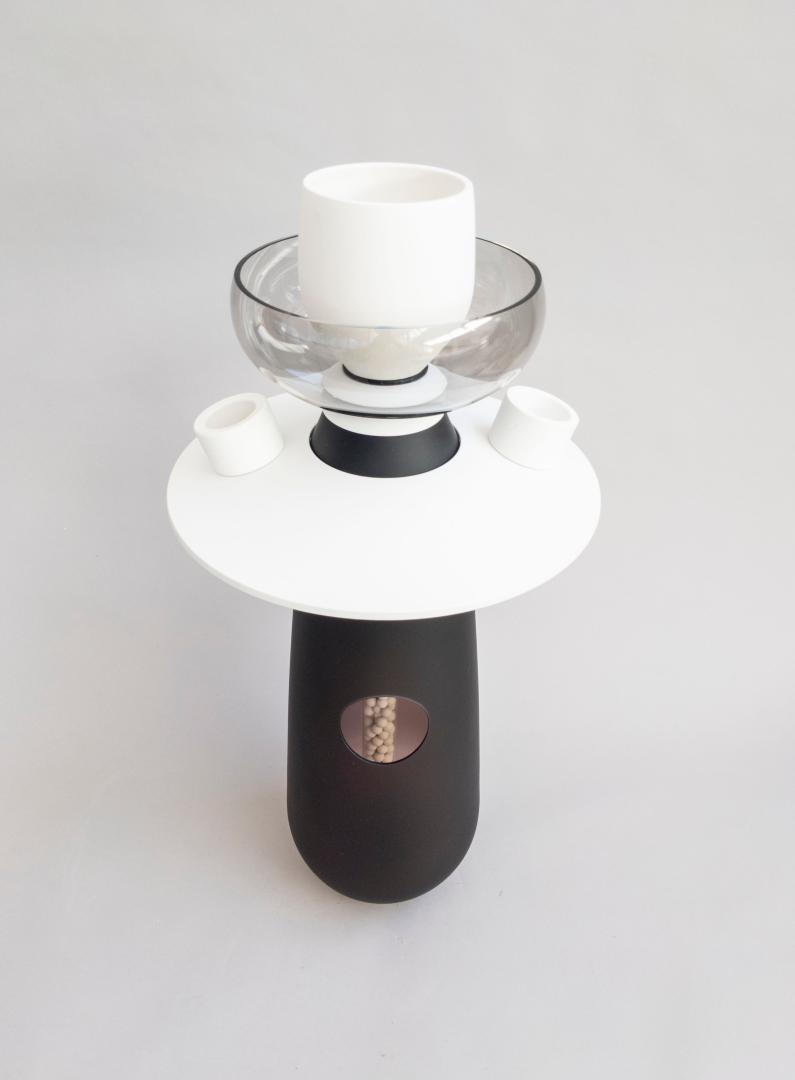
Assemble : these new shapes are meant to be assembled. I combine the pieces from the homemade toolbox to invent playful as well as useful objects. At the Cirva, I built a vase that looks like a totem : we can see it is an assemblage : it combines glass, ceramic (from the Sèvres Manufactory) and wood (from the instrument maker Vibrawell). Danceflore is a home for a plant made from these three actions : harvest, sample, assemble. In this project I wanted the plant to guide my creation : I observed the growth of the plant in the different “homes'' I built and I selected the model that was the most welcoming and cosy for the plant. If the plant feels well, it dances.
Key objectives for sustainability
Harvest - Sample- Assemble is a zero-waste way of thinking, it is based on the idea that the world is full of unexploited treasures.
It invites us to reconsider our relation to production.
First of all, my process does not start from raw material but from existing items that have been discarded. Second, anyone may invent new objects with this simple method. I think that creativity is a core value to design a sustainable society. “Harvest - Sample- Assemble” is a playful way to enhance creativity. As a designer I am often invited to propose workshops, especially with children, this is something I have been doing for years with the art centre Villa Noailles in Hyères. It is easy to teach this method to children. As a designer, I work with industries, manufactories too. I think that they can learn from my process. I am very interested in being a guest designer in various production places, I can always find pleasant scraps and rags there.
The Dance Flore project I developed with the Cirva helped me to realize how fruitful it is to be guided by this method. The object I invented was guided by sustainable goals. Rather than a classic vase, it is a home for a plant. It does not promote consumption of “dead flowers”, on the contrary, it encourages a long-lasting relationship with the plant that grows in it. It also encourages an attitude open to listening and learning : gardening is about care, one has to observe carefully the life of a plant, to accompany its growth. This is very close to the attitude you have to adopt when you harvest (you have to look carefully around you), sample (you have to think differently) and assemble (you have to understand the potential of a sample). Dance Flore values life, this is the very basis of sustainable thinking.
Key objectives for aesthetics and quality
Harvest - Sample- Assemble is an aesthetic in itself. The hasard of the collection leads to unpredictable assemblages.
The results it produces are intriguing, I hope that it will raise questions, and lead the users to think about the genealogy of these objects. This aesthetic is also a form of education : it enhances creativity. I hope that thanks to this method people will look differently to the objects that surround them and think twice before throwing out a piece. This design philosophy leads us to foresee beauty in any object, even scraps. The sampling method opens new perspectives to any object : they are all beautiful.
Beyond functionality Harvest - Sample- Assemble, is a game. I think that going beyond utility is stepping into playfulness.
When you look at the Dance flore vases I made at the Cirva, you notice that it combines different materials : glass, ceramic and wood. This method is a good way to imagine new associations and to make discoveries.
Dance flore is a vase for a plant that dances : its leaves react to sound. My aesthetic is focused toward action. Though I am not a professional dancer, I have been involved in choreographer Régine Chopinot’s projects. To create with other persons is another form of assemblage, this is kind of an aesthetic too.
I want to share all these values during group workshops and I hope I will have soon a teaching position in a school.
Key objectives for inclusion
Harvest - Sample- Assemble is close to the cooking process : it is universal. Cooking consists of starting from given datas : what do you have in your kitchen ? Then, you cut the food according to the kind of dish you imagine. You can try different ways anytime, there is no rule ! Then you assemble the food products and finally you share it. The design method I propose will be understandable by everyone.
I want to give it as a family recipe. I want to share these principles the same way. I want to claim that anyone can be a designer, just as anyone can be a cook. The best dishes are always “home-made” ! Share-time is very important to me, just as you can cook together, you can collect together.
Harvesting objects is also about collecting stories. Each object I use in my assemblage has a past, it is unique. This way of thinking promotes diversity. Look at the vases I created with the Cirva : they are all different, they are full of intriguing and funny materials.
Also it is inclusive as it produces unexpected collaborations between different places. The Dance Flore vases are a bridge between the work from different craftsmen : glassblower from the Cirva, ceramists from the Manufactures the Sèvres and the music instrument maker Vibrawell.
With the dance flore project I work with life : plants ! This implies listening to its needs and caring for it, this is a very inclusive method.
I want to share this project as widely as I can to enhance mutual care between all living species. These universal values can be shared with anyone.
Innovative character
The Cirva is a research art centre, it has always been an outpost in the world of contemporary art and design. It is a unique model worldwide : thanks to public subsidies, it is open to challenges and develops long-term relationships with artists and designers.
This model is innovative in itself. As a designer I had very few opportunities to have such a direct and fruitful collaboration with
high-skilled craftsmen. Design is generally more oriented toward industry.
My work is not framed within the borders of Design, on the contrary, it is opened to various disciplines. Dance Flore is a cross-disciplinary project : it embraces design as well as dancing, music, cooking or gardening. Searching for solutions out of the discipline I have been trained in is a groundbreaking attitude. I am very open to chance, and my design methods teach us to always keep our eyes open, to be awakened to the potential contained in combining diverse ways of thinking.
The Harvest - Sample- Assemble methodology always produces unexpected results, for it is opened to discoveries. I think it can educate anyone to work with chance, to use it as a strength. It is an empowerment model in a world where we cannot control everything.
Harvest-sample-assemble is somehow an unexpected method to deal with problems.