Ringpark- where nature & citizens meet
Basic information
Project Title
Full project title
Category
Project Description
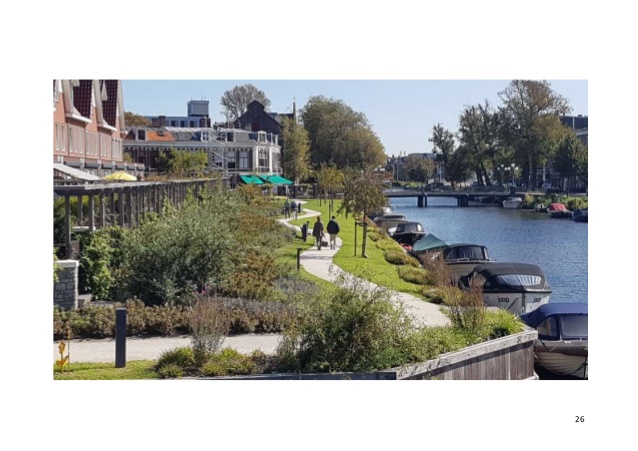
The Ringpark Leiden is a citizen-driven initiative to surround the old city centre of Leiden with a green and infinite park. The park is both envisioned and managed by citizens and offers a sparkling leisure spot for all Leiden’s inhabitants. It lays like a ring around the city-centre, is accessible to everyone, including all mobility needs. The meetingplace for all citizens offers both art and a wide biodiverse nature, combining aesthetics and sustainability in an in-itself architectural park.
Project Region
EU Programme or fund
Description of the project
Summary
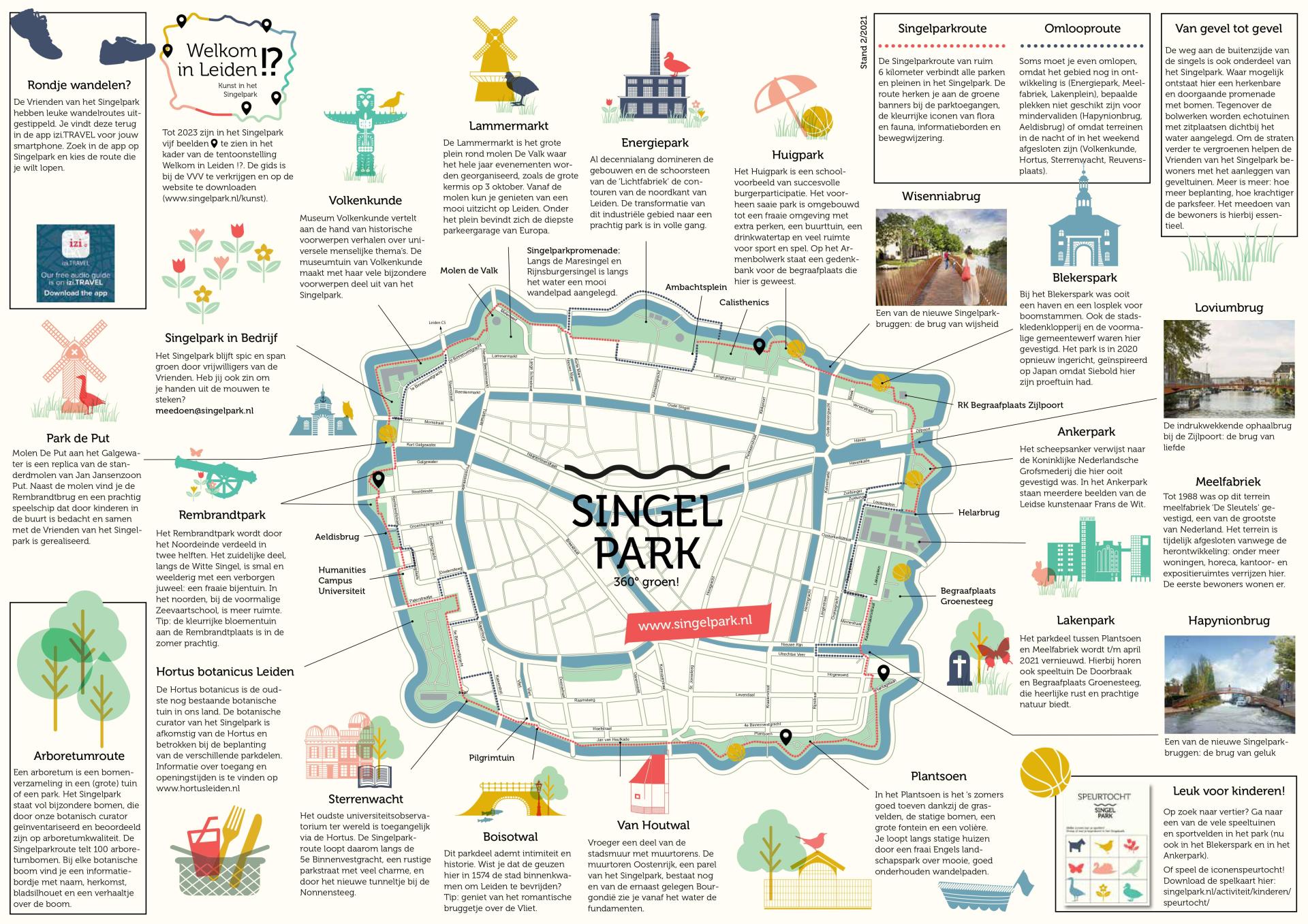
The Ringpark Leiden (Singelpark) is the green lung of the densely built city centre. It connects existing parks into a 6 km infinite park. In 2008 Leiden Citizen J.Maters wrote the plan for the Ringpark, combining old and new visions for culture, sports and nature. The plan encountered much enthusiasm at the municipality and formed the basis for future plans. Maters was joined by a landscape designer, an architect, an historicist, and strategist. Together they made Team Ringpark, which organised public brainstorms, idea-compititions and exhibitions, and collaborated with the municipality to realise the park. In 2012 the ‘Friends of the Ringpark’ was founded, merging Team with many volunteers. They manage the day-to-day maintenance and gardening. The friends advise the municipality on all assets of the park and continuously cocreate improvements of the park. At all levels, committed volunteers and citizens are involved.
11 Guiding Principles
The park is a green lung surrounding the densely built-up inner city of Leiden
The park is of and for all citizens of Leiden
The canals are the leading element in the park
In the park you are able to walk, run, cycle and sail long and short distances.
The park extends from the building-facades on the inside to the building-facades on the outside
The park is car-free
The park shows the stratification of Leiden's rich past
The park connects the inner city and outer city
The park offers space for permanent, temporary and spontaneous activities, and places without activities
The park becomes such a strong brand that it can be used to attract visitors and additional funding
The park must be so good that it brings the city together and makes it proud
10 commandments of the Ringpark
Create a Park/Use water as a guideline/Create exciting routes/Plants Everywhere/Build a Botanical Collection/Work Together/Strengthen the seven Ringpark areas/Create meeting places/Take care of basic facilities/Design boundaries and transitions
Key objectives for sustainability
The core of the sustainability objective of the Ringpark lies in the increase of biodiversity in the city. And with success! Plants are abundant and highly varied: from a 200-year old red beech, young plants, shrubs and flowerbeds. Every season has its own floral splendour. One of the aims of the Rinkpark is to build up a botanical collection. This objective is translated into the Arboretum route: replanting trees, and organising a walking route along the most important trees, shrubs and special plants in the Ringpark. Of course, the Leiden University Botanical Garden, founded in 1590, will be the crown jewel of the route.
The great biodiversity of the park has already attracted an awesome amount of animals: mammals, amphibians, birds, arthropods. And then there’s the water of the canals is teeming with life. During multi-year research no fewer than 22 species of fish, four species of lobster and crab and four species of turtle were counted in the inner city of Leiden! Moreover, it turns out that In addition to 'normal' city fish such as bream and roach bream and roach, there are also exotic Eastern European gobies found.
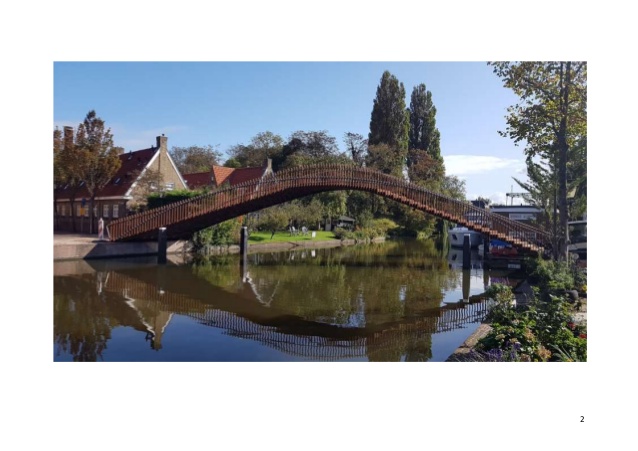
Additionally, in the construction of the park sustainable design was and still is a leading principle. For example, the five bridges that were added in order to interconnect patches of the park that were designed by the architects of NEY & Partners. These Belgian architects were selected because they achieve sustainable quality in the area of tension between design, technology, environment and costs. The last bridges were realized at the end of 2020. The bridges are made of stainless steel, weather-resistant steel and brick, three materials that require little maintenance. These are the basic materials for all Ringpark bridges.
Key objectives for aesthetics and quality
Making the Ringpark is a beautiful park in many ways. We highlight the design of the park and the art in it. As in the whole of the Ringpark, the aesthetic vision of the park driven by citizens and professionals in co-creation. The Friends of the Ringpark have set up a committee for advice and design, in which architects and designers from Leiden propose ideas for new park design to the municipality. In addition, in consultation with the municipal designers and urban planners, they assess the municipal Ringpark designs and make proposals for improvements or offer entirely new design ideas to the municipality. Recently, in 2021, this played a role in the design of the Jan van Houtkade in Leiden.
The five Ringpark bridges designed by Laurent Ney of Ney & Partners, have been given their own Ringpark identity. Together, the bridges form "a family", with their own character and atmosphere, which supports and clarifies the route through the park. The bridges are made up of U-shaped transverse, connected by a series of stainless steel balls that form a structural arch in the parapet. The space between two U-frames of the bridge deck is filled with masonry clinkers, which are typical of the paving in the city of Leiden. The concept is flexible, adapted to the locations and allowed for public participation and cooperation with artists. The spherical shape is the unifying theme in all the bridges - a symbol for both the circular Ringpark and for the global activities of (old) Leiden.
The Friends have also founded "Art in the Ringpark". For the first exhibition, the theme "Welcome to Leiden" is one that ties in with the history of as a city of refugees. The exhibition was curated inspired by the park and its history. Grown on the former fortifications, this green ribbon of over 6 km formed the city border for centuries. The exhibition consists of six works of art spread throughout the park and deals with the meaning of borders that offer protection and freedom.
Key objectives for inclusion
The Ringpark is for everyone. Society is very diverse: young and old, nature lovers and art lovers, people in wheelchairs, people with prams or rollators, people with a visual or hearing impairment, people who seek liveliness and who seek peace. Including all wishes, visions and needs was incorporated even before the design of the park started. The aim has always been a park for everyone and inclusion is the norm. This norm was kept from co-creation, to design and is experienced daily in the every-day use.
For this day-to-day use, high attention was given to the accessibility of the park. The publicly accessible information about the park through a website has a read-aloud function. The information is formulated simple and comprehensible way. Also, the website aids in preparing a visit, pointing out where to change a baby, where to go for a bite to eat or to visit the toilet. There are parking spaces near the park for people who are less mobile.
When designing the route, attention was be paid to terrain height differences that are easy to overcome. Rest areas were created not too far from each other, ensuring plenty resting spots. These spots provide great views to sit down and enjoy the surroundings. The main route is accessible to all; bridges, stairs and exciting paths are a challenge to deviate from the main route for those who are willing and able to do so.
Unpaved paths may be difficult for pushchairs or wheelchairs. So the majority is sufficiently paved and without obstacles or potholes. Extra attentions is given to this aspect in the maintenance of the paths. Signposting on the route is easily distinguishable from the surroundings for people with visual impairments in colour and format. The educational character of the park is supported by explanatory signs placed along the route. Explanations of what one sees in the vicinity: a monumental building, a plant or tree, a history. These signs feature short, simple texts in an easily readable font and size.
Results in relation to category
We believe the Ringpark Leiden is, with 6 kilometres, the longest, most beautiful and most exciting city park in the Netherlands, for and by the people of Leiden. In a period of 10 years (2011-2021), an initiative that originated from a group of 5 pioneers was successfully developed into a city-wide development plan for an infinite Ringpark. This plan was implemented with participation projects for each park section. This resulted in a widely appreciated realisation. A ring road around the medieval city form of Leiden was still present in character, but due to incoherent spatial policy not optimally usable. Now, the Ringpark Leiden is the central ring in the region's green-blue network and as a green entrance to Leiden's historic city centre. Through the proposals from the population, the municipality also joined in the development of a continuous park and released 24 million euro for implementation projects. The Rembrandt Park, Lammermark, Ambachtsplein, Huigpark, Bleekerpark, Ankerpark, Lakenpark and Katoenpark were implemented with citizen participation.
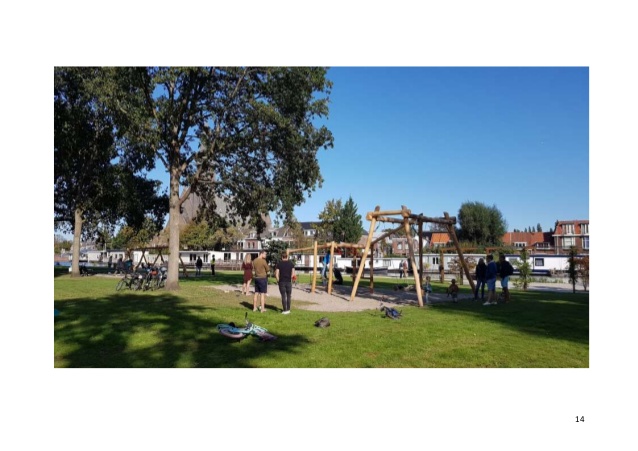
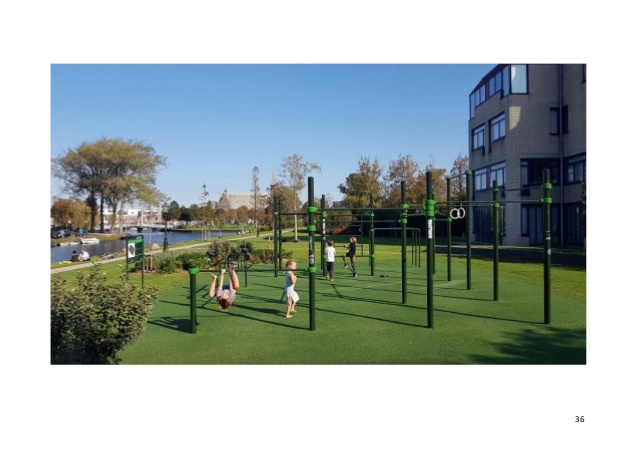
Currently, the Ringpark already is the crucial green space for the compact residential areas of the inner city and the suburbs of Leiden. Offers space for special park use that attracts groups with specific interests, on top of the basic facilities. A sculpture exhibition, sports facilities, an arboretum route, cultural events, student activities.
The Jan van Houtkade and the Energiepark are nearing the implementation phase, in which there is a great deal of citizen involvement. For the Energiepark, a consortium of public authorities - market parties - residents was established, which is at the basis of a plan that will now be implemented.
How Citizens benefit
The Ringpark is a park of, for and by the residents of the city.
Thus all functions and the design of park areas for the Ringpark are developed and realised in close cooperation and consultation with the residents, neighbourhood associations, businesses and other relevant groups. Residents are given the opportunity to participate in the process of developing the Ringpark. By involving them, a joint reflection on what does and does not work in the park is created. This way, plans can be adjusted in time if necessary. New plans or proposals will always be reviewed by a professional review team. The Friends of the Ringpark have set up a number of committees for this purpose: advice and design, programming, sports and games, communication, participation, art in the Ringpark, Ringpark in action, strategy. In all these committees, the stakeholders of the Ringpark think along. The Ringpark is divided into seven park areas, each with its own identity. This identity is further shaped through participation with the users. Further participation is sought in the development of park councils of residents per park area.
Due to the positive cooperation between residents, Friends of the Ringpark and the municipality of Leiden, the municipality is prepared to cooperate further with these parties. This applies to further plan development, but also to the management and maintenance of park areas. The friends of the Ringpark have founded "Ringpark in operation", which is a working organisation of volunteers who maintain park areas and try to bring them to a higher level of maintenance. The Friends have also founded "Art in the Ringpark". For the first exhibition, the theme "Welcome to Leiden" is one that ties in with the history of the city where refugees have been welcomed in past centuries: "Leiden city of refugees".
Innovative character
The innovative character of the development of the Ringpark is that a plan originating from a residents' initiative was embraced by the municipality of Leiden. Unlike in the past, the municipality kept the initiators, the residents and the Friends of the Ringpark involved during the design and implementation of the park. Sometimes it appeared that the municipality had lost sight of the involvement of the residents during the development of the plans. The residents indicated this and the municipality, in response to these comments, restarted the participation process, which led to an outcome that was supported by the residents.
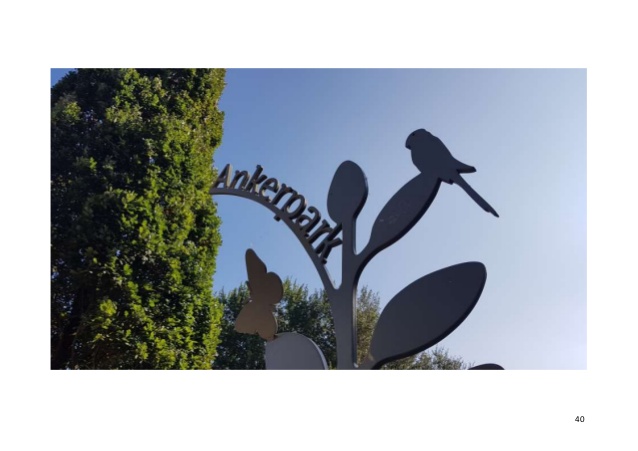
Room was always made for co-design, for example in the the Ankerpark. Architect Fonds Verheyen and the Archiscienza Foundation established by him have made a design for a sculpture garden of the work of Frans de Wit (1942-2004). This sculpture garden was realised with the help of the artist's wife and the Lucas of Leyden Fund. Without the public participation facility, this part of the park would not have become so beautiful, with 10 sculptures that partly refer to the grave forge that stood in the Ankerpark.
In the Huigpark, an initiative of the Foundation The Small Leiden Residence (Stichting het Kleine Leidse woonhuis) in cooperation with Archiscienza and the Friends of the Ringpark, a memorial bench has been placed that brings back the forgotten history of the ‘Poor’s cemetery’ (Armenbegraafplaats). In the period 1816-1912, 45000 people were buried on this spot. All this development would not have been possible without the original idea. In the meantime, people are thinking along with us again.
The pioneers of Team Ringpark, who organised a broad brainstorms session about in 2012, stayed active. In 2012 this resulted in eleven 'guiding principles'. Now,September 2020, the Team made the rounds and tested the principles against the current state of affairs. They delivered the report 'Ringpark Leiden: recommendations for the next phases'.