Institute for Grey Energy
Basic information
Project Title
Full project title
Category
Project Description
Designers, architects and urbanists are dedicated to researching, conserving and activating energy stored in various materials—the so-called »Grey Energy«. This resource is considered crucial for sustainable economies and construction, but it is non-renewable. That is why we are initiating a radical change in the way we have dealt with it so far. We are looking for potential energy—and finding it in the many ample and unused existing buildings and brownfield sites in rural regions.
Project Region
EU Programme or fund
Description of the project
Summary
The use of natural resources to shape our environment requires the use of energy. This energy is invisibly inherent in the materials as so-called grey energy. In the sense of resource-saving construction, this energy must be made visible - new ways of conservation and utilisation are necessary and the goal of the Institute for Grey Energy. Understanding how to deal with grey energy forms the basis of a holistic approach towards material, aesthetic and inclusive sustainability for the development of cities and regions.
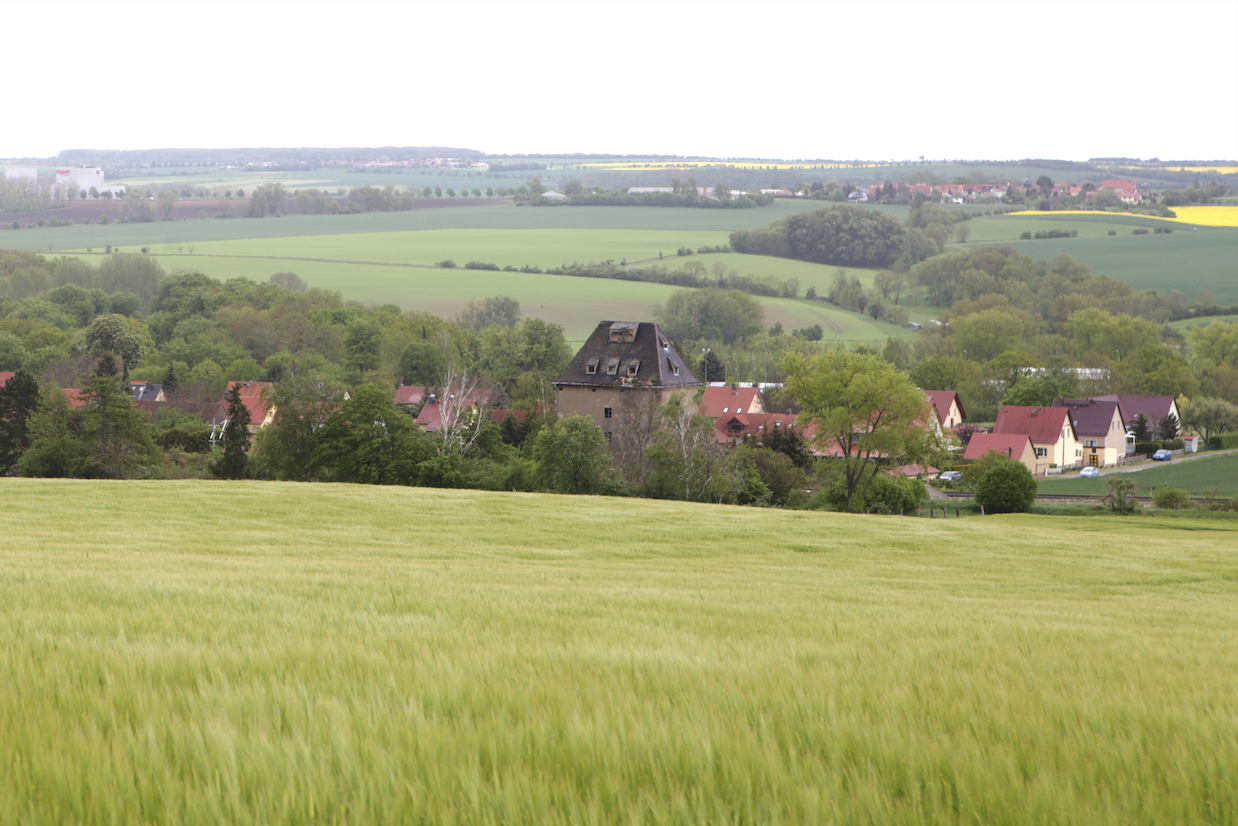
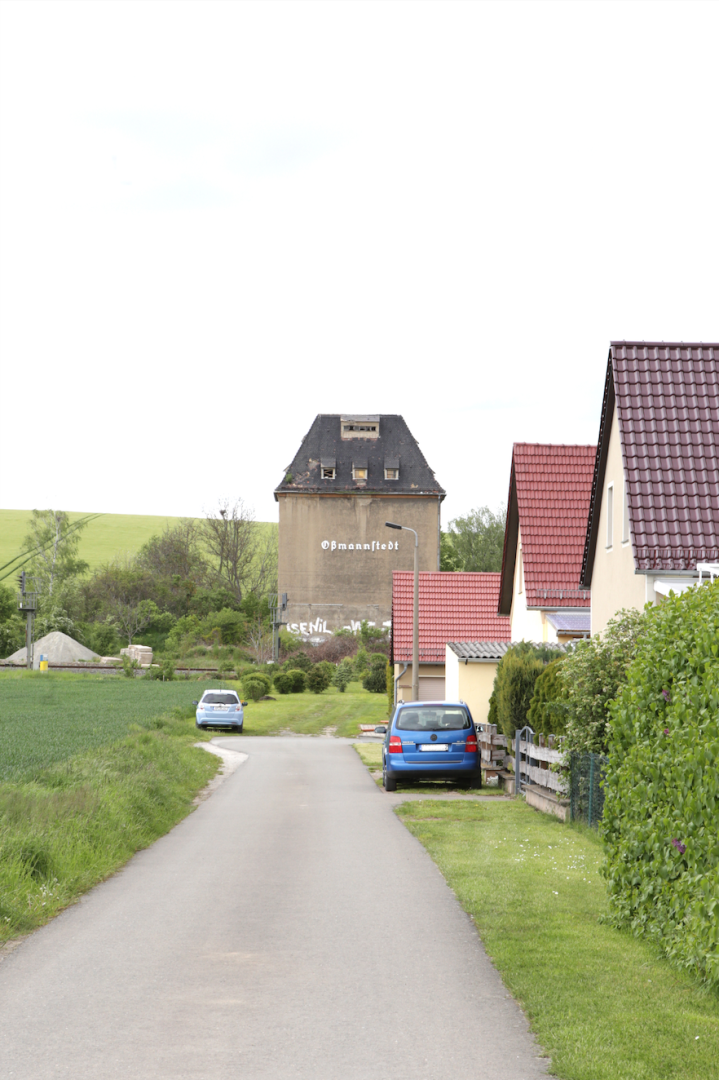
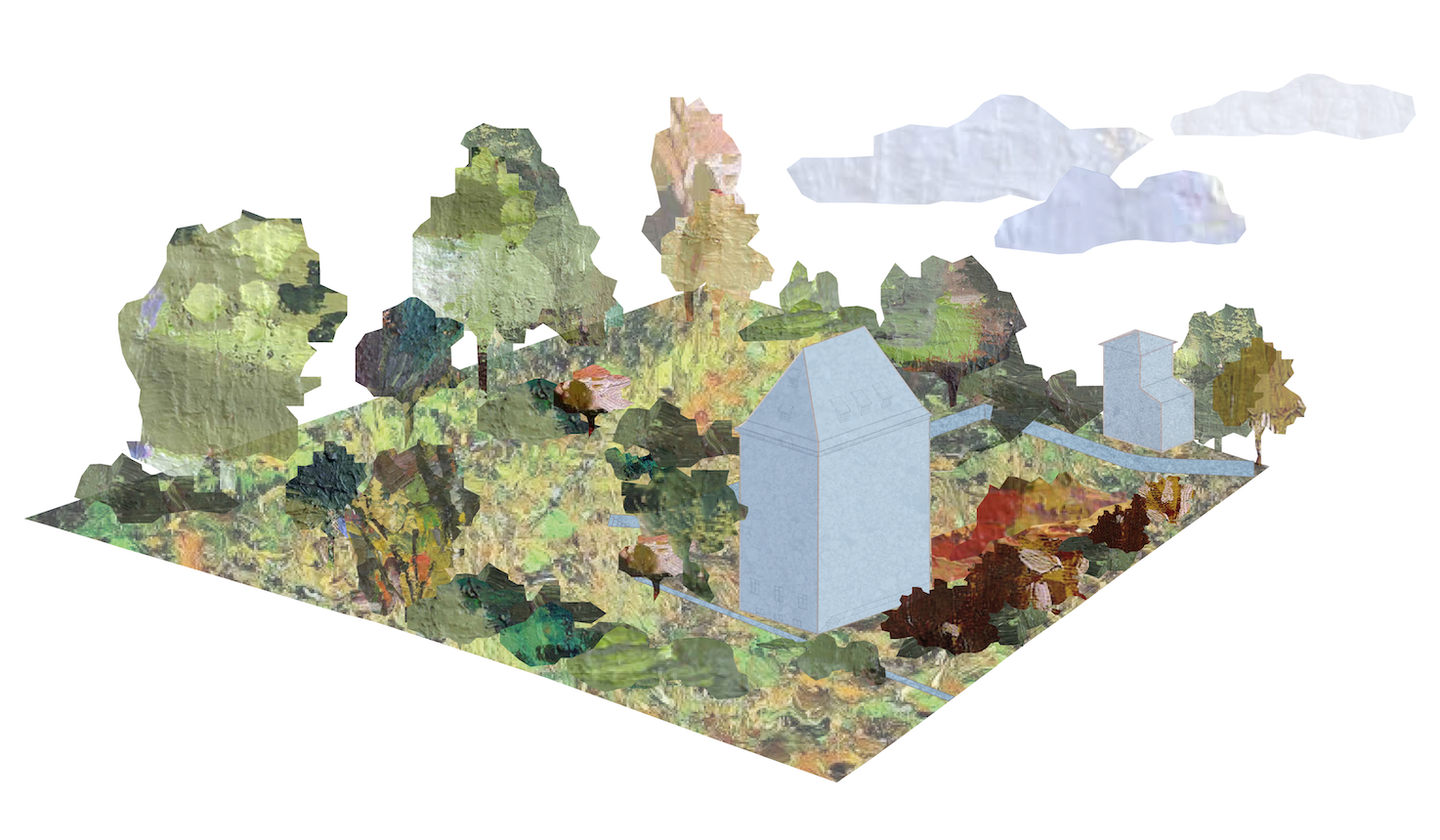
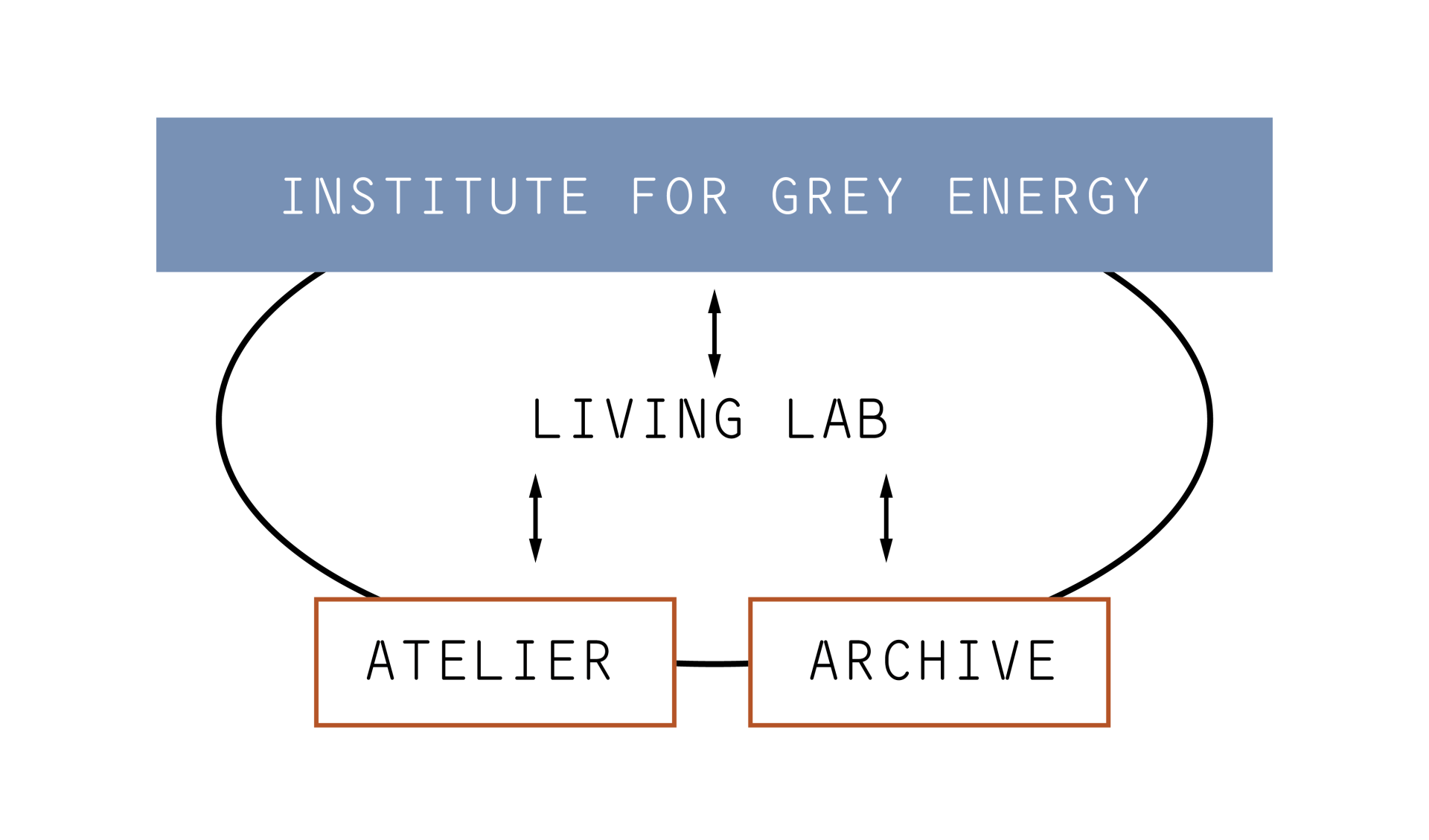
The Institute is composed of three sections. The "Atelier" is a collective of young planners who develop strategies of radical conservation on the object. The "Archive" becomes a place for generating and storing knowledge: Here we explore the emergence of grey energy since the beginning of modernity, its interdisciplinary significance and its transformation as a current challenge of the 21st century. The "Living Lab", a former granary in Oßmannstedt (Thuringia), is a pivotal point, home base and first project for The Institute at the same time. A public centre for collaborative spatial development is being created here, where inclusive planning approaches for spaces beyond the metropolises are being devised.
Cooperation and networks form an important core of The Institute. For the artistic and cultural appropriation, cooperation with the artists' collective "Godot-Komplex" from Weimar and the cultural centre "TRAFO" in Jena is planned. For regional networking and further projects, talks are taking place with the "LeerGut agents" of the "IBA Thuringia" and the "Fabrik.Weiterstricken" initiative from Apolda. Furthermore, local cooperation with the Klassik Stiftung Weimar and the "Wielandgut" in Oßmannstedt or the municipality of Ilmtal-Weinstraße are being sought. The Institute for Grey Energy will also become part of the future "learning network" of AG Rurban at Bauhaus-University Weimar and is connected to the student initiative achthektar.de.
Key objectives for sustainability
The construction industry uses an enormous amount of energy in the production and demolition of buildings, which is already ecologically and socially unacceptable. We do not strive for resource-saving, post-fossil new construction, but for radical preservation of existing buildings and their further use and re-use as the most sustainable solutions. Our contribution to building in the face of climate catastrophe is therefore new strategies for dealing with existing and previously unused grey energy, resulting in the following principles for intervention:
1. The precise recording of existing structures and an understanding of what is there is the basis for any intervention.
2. Existing substance should always be preserved. Demolition is the ultima ratio. If this appears to be unavoidable, local reuse of the material is to be preferred to its mere reprocessing. Instead of new technological systems, existing systems should be repaired or upgraded.
3. The transformation of a derelict building is based on what already exists. To strengthen the building's resilience to future uses, the necessary interventions should be adaptive in the long term. The smallest possible interventions are preferable to energy-intensive transformations. In the sense of a circular building economy, transformations should always be reversible.
4. Since uses have shorter life cycles than buildings, they should always be understood as interim uses. Smaller, low-threshold uses can serve as nuclei in large complexes. A generous and variable "underuse" is preferable to optimised and closed "overuse".
In The Living Lab in Oßmannstedt, these principles are to be applied in a radical form and analysed in terms of their real energy savings and significance for a sustainable building industry. The structure of The Institute with Archive and Atelier furthermore ensures the approach a long-term and supra-local implementation and further development.
Key objectives for aesthetics and quality
The Institute for Grey Energy focuses on buildings and areas that were previously perceived as inconvenient or even as "disgraceful spots", so that preserving and researching the grey energy bound up in them almost always has a significant impact on perception.
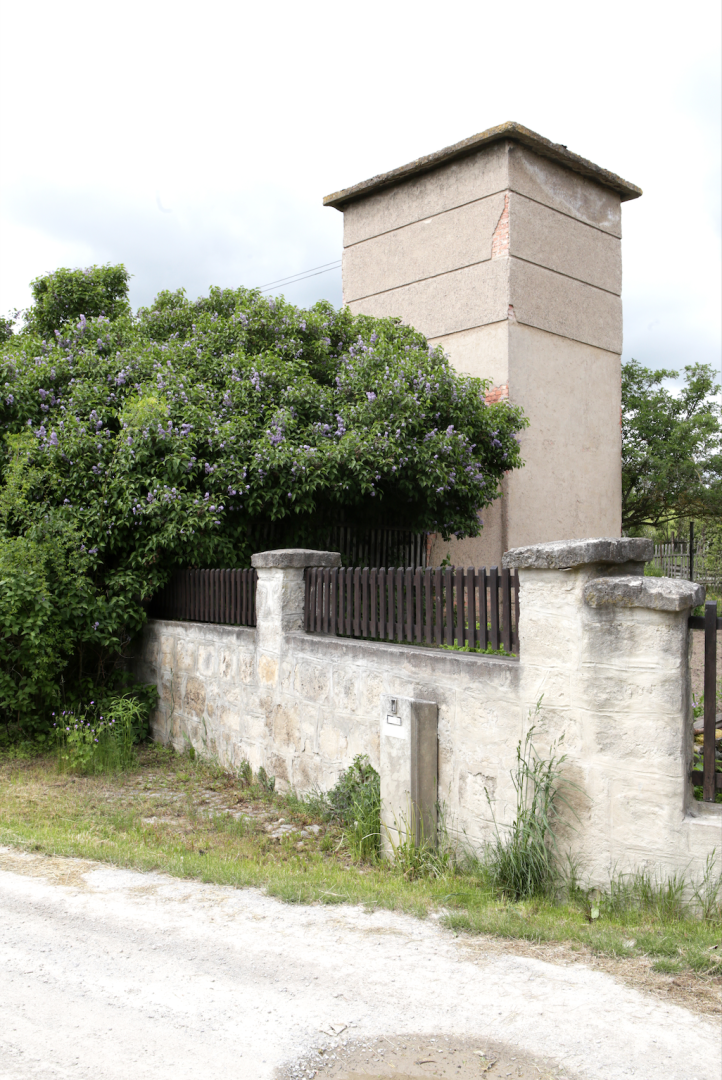
A first goal is to stop the deterioration of the building, to end the vacancy and to preserve existing aesthetic qualities. Beyond aspects of use, this first step is already visually perceptible.A closer look quickly reveals that these properties in particular are characterised by impressive architecture and urban structure, shape the sense of place and landscape, and are an essential part of the aesthetic integrity of a region. In the example of The Living Lab, this means the preservation of a 24-metre-high landmark in the Ilm Valley, which shapes numerous visual axes of this cultural landscape and illustrates the regional importance of agriculture.
In many cases, it can also be assumed that decay and vacancy merely superimposed today's view and that various stories, memories and associations still shape perception today. For a new quality of experience, the next step is therefore to open up the places that have not been legally accessible for a long time and to deal with the narratives that have been attached to them up to now. For The Living Lab, for example, this means questioning the perception of the site as an agricultural centre, but also the significance of the National Socialist background to its origins. This understanding is the basis of a new perception.
However, further treatment must not be limited to restoration and conservation. New layers of use and the associated interventions need their own creative expression. For The Living Lab, this could mean preserving the massive impression of the granary with its traces of age and adding the cantilevered canopies in a filigree new form.
Key objectives for inclusion
A long-term rethinking of grey energy can only succeed with a consensus on its value throughout society. With The Institute, we are linking accumulated knowledge, in-depth experience and new ideas with existing conservation strategies. In doing so, the success of these points depends on the participation of as many professional and social perspectives as possible, which we want to inspire for the joint work through various strategies beyond our existing cooperation.
The Institute therefore sees itself fundamentally as a non-closed and interdisciplinary collective. It offers an open centre for all interested parties and wants to actively push their collaborative participation on site.
The first basis is the location of The Living Lab and the full implementation of all areas of activity of The Institute in the focused region. Ideas for the non-urban space are developed together on site and not projected from the urban centres. At the same time, The Living Lab forms a reception space for interested parties from other regions.
In order to guarantee this goal in the long term, not only the projects, but also the collected knowledge and ideas remain on site. The Archive's "knowledge repository" enables all interested parties and researchers to cooperatively produce knowledge in the region. The Archive's "project fair" explicitly serves to receive further suitable project ideas, which can be discussed with local participants in The Living Lab, debated and compared with reality.
Last but not least, strategies for collaborative spatial development are tested in practice in The Atelier. Local knowledge is not simply exploited, but developed, expanded and applied cooperatively. In this way, The Institute's work is intended to go beyond mere participation and to develop activating and low-threshold formats of collaborative spatial development. This explicitly includes practical cooperation, the exchange of experiences or as
Innovative character
Just like the conversion of industrial landscapes, the reuse of grey energy has been an urgent challenge of structural change for about 30 years now. As an Institute, we tie in with discussions, but attempt a model approach to a radicalised concept of conservation. The focus on the industrialised landscapes of Central Germany holds undeveloped potential for securing and activating this energy resource.
What is particularly new here is the semantic expansion of the concept of grey energy. In cooperation with various disciplines of building and design, we enrich building technology concepts with inclusive, social and cultural concepts. In this way, the term is prudently expanded: we also consider knowledge, networks and cooperations - which cannot be created without energy - to be worthy of preservation and social use. The Institute already fits into a network of governmental, academic and social stakeholders in the region. In order to counter images of decay and narratives of decline, historical research and cultural upgrading are taking place in parallel with the structural upgrading.
The innovative content of the holistic view of grey energy is tested as a model and taken to its extremes. The granary in Oßmannstedt shows us how the approach can be made productive, but also where it reaches its limits. The Living Lab functions both as a compass and an engine of transformation. In addition, we develop strategies in the Atelier that can be communicated on a wider scale and made usable for other projects. The Archive as a central and permanent facility for collecting and documenting the research, strategies and approaches represents the hub of these adaptation processes.
Approaches of radical conservation can help in the long term to replace resource-saving construction with resource-avoiding reuse, and to demonstrate radical solutions for saving greenhouse gases, by combining experimentation and documentation, as well as making