Out of sight
Basic information
Project Title
Full project title
Category
Project Description
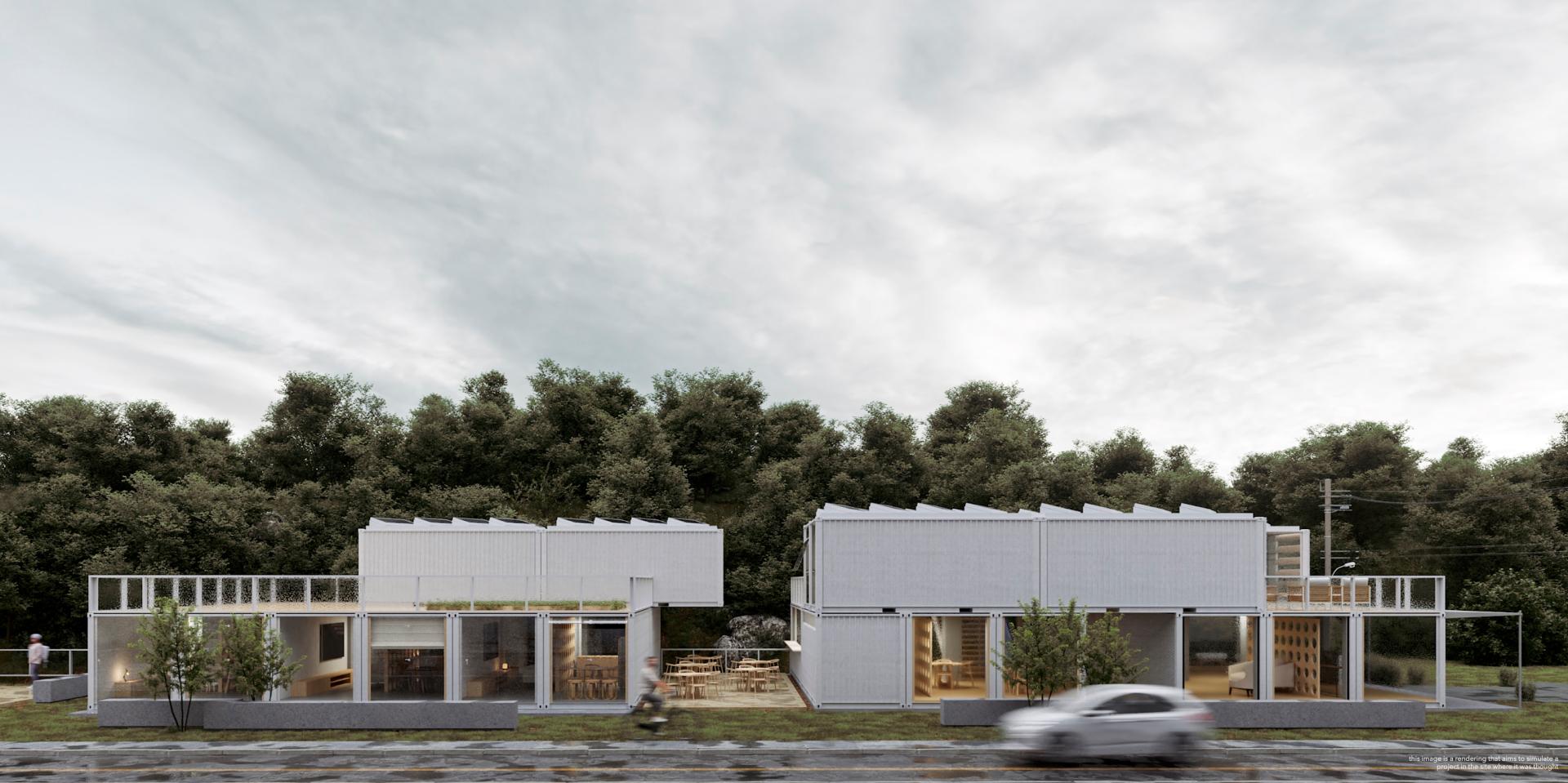
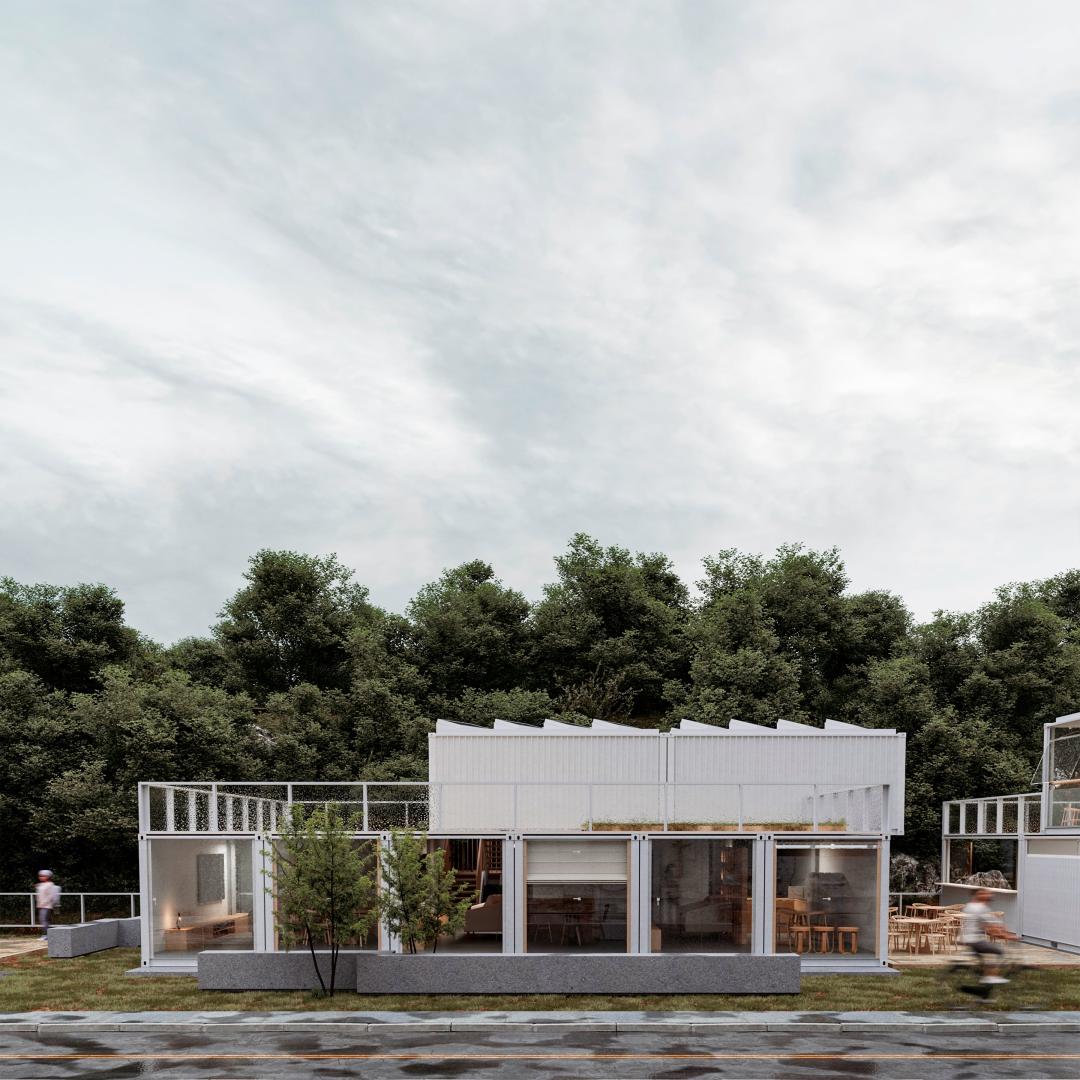
The aim of this project is geared towards the local residents of Madeira Island, in Portugal, paying attention to their needs and considering the bucolic environment and lack of public resources, in order to ensure basic services to the citizens. With the support of local political movements, it is proposed the insertion of forty two containers to attend two local necessities: a dance school, which used to operate in adjacent spaces to the neighboring church, and three emergency social housings.
Project Region
EU Programme or fund
Description of the project
Summary
The place chosen for the implantation was the Madeira Island, in the northern area of Portugal. Located in a slightly dense region, just 11 km far from the island center. The project is characterized by the combination of landscape formed by plains and an intense and preserved afforestation that configure the bucolic climate, having as principal view the north atlantic ocean. Having as object of study extensionist projects of local relocation, as well as the learning resulting from the experience of residents, the project aims thinking the island from the limits that define it, whether physical- tangible or social, assuming a critical reading about the role that they play on these resident ́s lives.
The project was thought during 6 months, with an estimated execution of 4 months. In it, It was proposed the insertion of 42 conteneirs of 20 foot treated with thermal insulation, totaling a space built of 620 m to meet two needs: a dance school that previously operated in spaces adjacent to the church and three emergency social housing, which would serve as temporary shelter for the residents, always having on mind the necessity of a fast and accessible construction, with materials of easy insertion on the local.
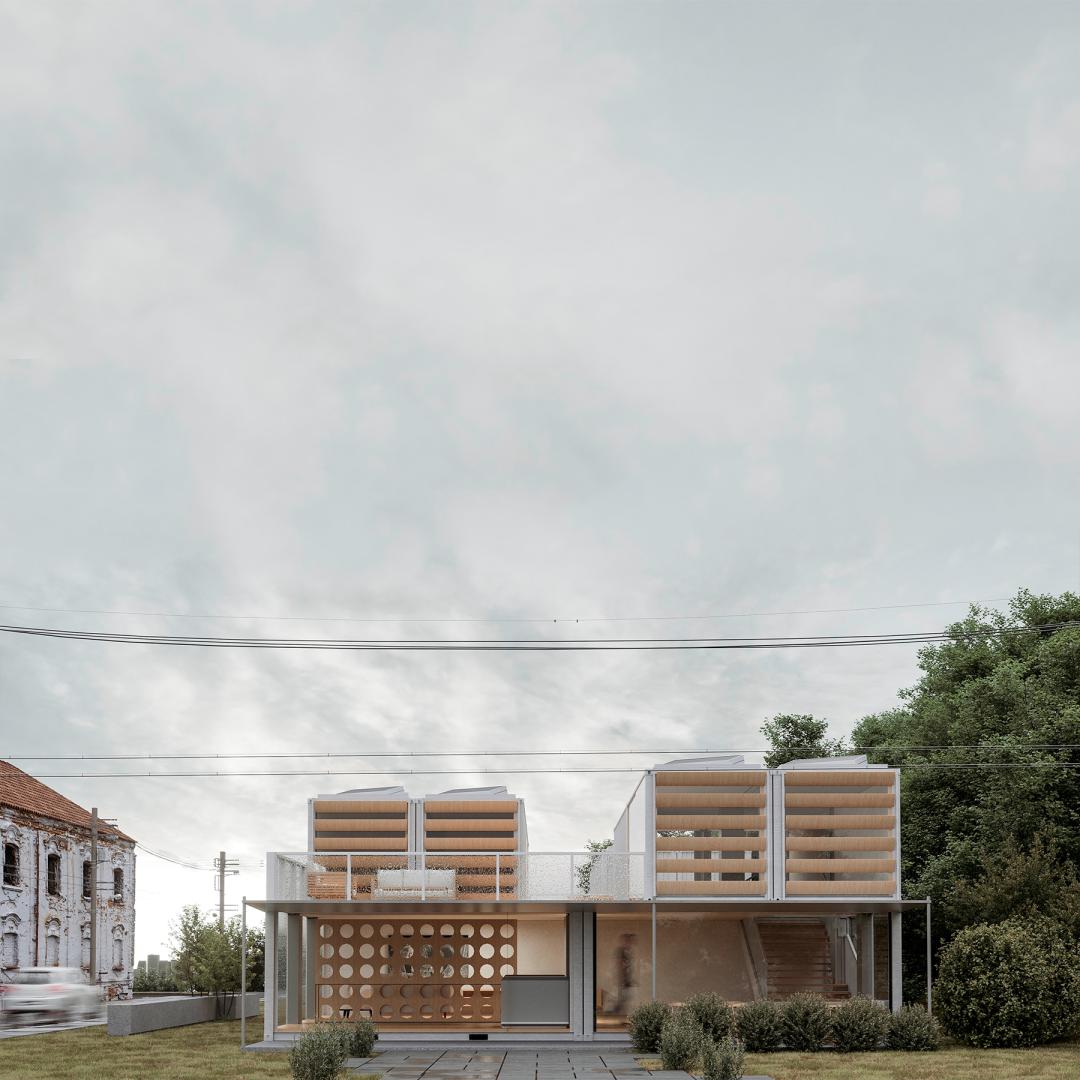
Their project aims to respect the limits of the existing topography, tracing the axis of the street parallel to the neighboring building, a church dating from the XVIII century, within the limits of the unified lots, taking advantage, above all, of the space in which it had been the stage of small tenements belonging to the local religious.
Key objectives for sustainability
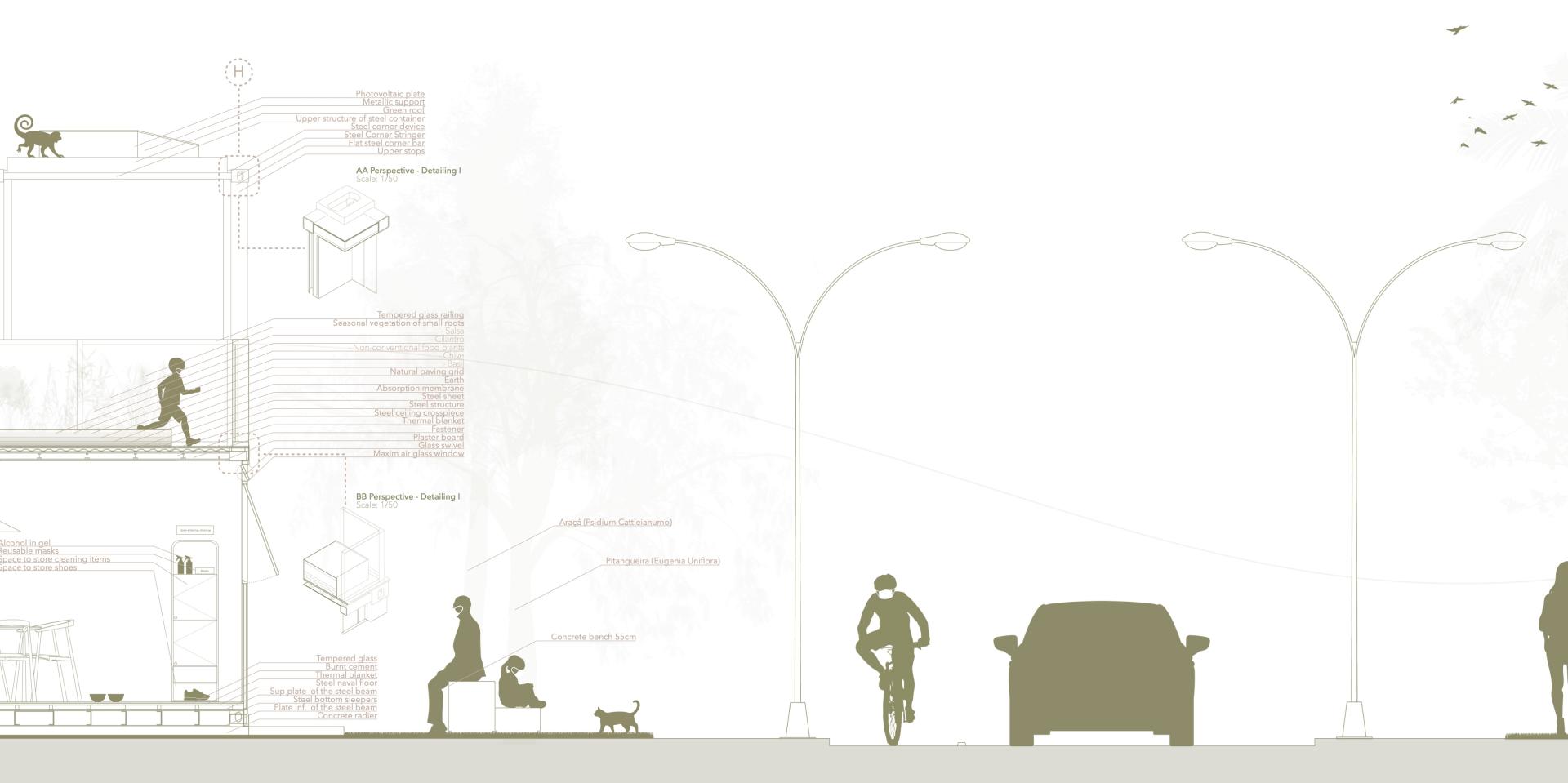
The option for the place and, specifically, Madeira Island is based on the abundance of biodiversity, easy access by the population, the need for public facilities and the bit potential for the development of activities related to ecotourism and local culture, in order to reinforce the population's affective ties to their ancestral land. The biggest difficulty of the project was to combine the short period of time, conception and execution, the low budget and the difficult one reaches the place. Also the motivating challenge and key objective of designing a 100% sustainable building. In order to achieve the objective of keeping the construction light, practical, safe and environmentally friendly, it was chosen to use steel as a constructive system. Thus, in order to reduce the construction, it is seen in the container structures a way to solve the most urgent problems of the residents totaling a space built of 620m.
Key objectives for aesthetics and quality
The party aims to respect the limits of the existing topography, without in any way mischaracterizing it, and aiming to trace the axis of the street parallel to the church within the limits of the unified lots, taking advantage, above all, of the space in which, during the 20th century, was the stage of small tenements belonging to religious users. The same axis mentioned has at its end an alley that gives access to the sea.
Once the user is on the ''ground level'' of the project, located 15 meters from the island's zero level, it is possible to wander through the public part of the three buildings and enjoy the natural landscape of Madeira Island and the distant view of the ocean, acting for a moment as an observer. The projects themselves were arranged to distribute and organize the Dance School X Residence X Church relationship, these public-private areas separated into blocks and connected through the public space, making the entire flat space habitable, “enjoyable”.
The lack of infrastructure, dissemination and planning, make it difficult to explore its potential for ecotourism and research. As a consequence, their entire social, political and economic base is deeply damaged. It is noted that the region has a clear need for requalification of the infrastructures present in the city, which respect the environment, as already mentioned, the creation of new equipment that regains the feeling of belonging of the population that gave life to that region.
Key objectives for inclusion
Project regencies
Social accessibility: the project aims to supreme two big necessities of the Madeira Island ́,s residents: the access to culture and the temporary management of Mangue’s families that suffered after the removal process.
Tactical urbanism: through punctual, microscale actions, both in the building party and in the disposition of urban furniture, aimed at social interaction, the participation of residents and the possible self-management of space.
Structure as a whole: the form that ruled the building party was the 12 feet of the containers that, after being armed, overlapped, addicted and subtracted, between them, helped with the horizontal layout of the building
Innovative character
Among the advantages of construction, we have great practicality as a characteristic. As they are boxes made of steel, they arrive ready, it is only necessary to install in the desired place and start to use, then, generating little debris. Thus, longer stages of construction processes are dispensed with, such as traditional foundations, as well as the need for labor considerably reduces. Container construction has a shorter and more efficient construction schedule, since fewer steps are required and there is no use of materials such as cement, water, gravel etc.
The most striking feature of a container in civil construction, probably, it's versatility. The modules, in addition to being able to be transported from one place to another, serve several purposes and can be coupled (vertically and horizontally) whenever it is necessary to expand a room. Thus, the structures allow it to adapt easily to new needs, ranging from an expansion of accommodation for employees and employees to the transfer of a cargo warehouse to another place on the construction site. It is worth noting that the containers, when empty, have little weight. Therefore, relocation takes place quickly and easily, requiring only space for the crane truck to maneuver.
Adopting a policy of reuse, the use of container goes deeper into the question of sustainability, in contrast to civil masonry constructions, which generate about 60% of solid waste in urban centers. Large-scale production of rubble causes serious negative effects on the environment. So, when a company prioritizes the use of containers, the amount of waste is reduced considerably. Therefore, the advantages of container construction are many, but not everything is made up of only good parts.