house without a footprint
Basic information
Project Title
Full project title
Category
Project Description
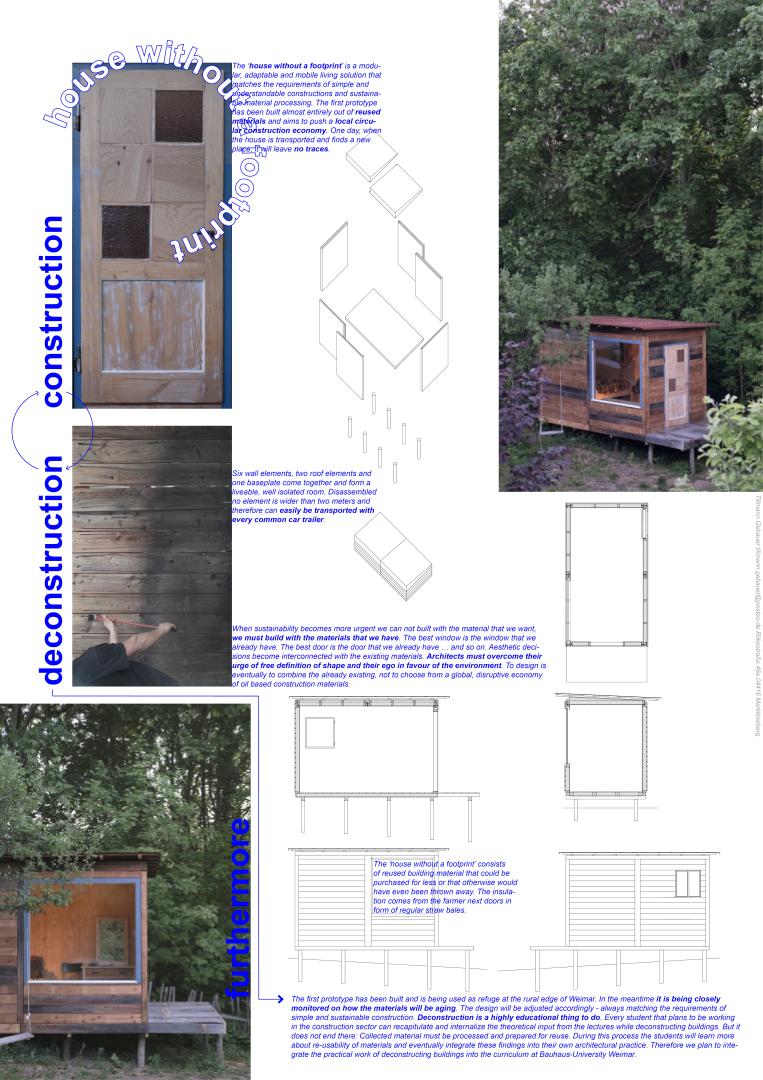
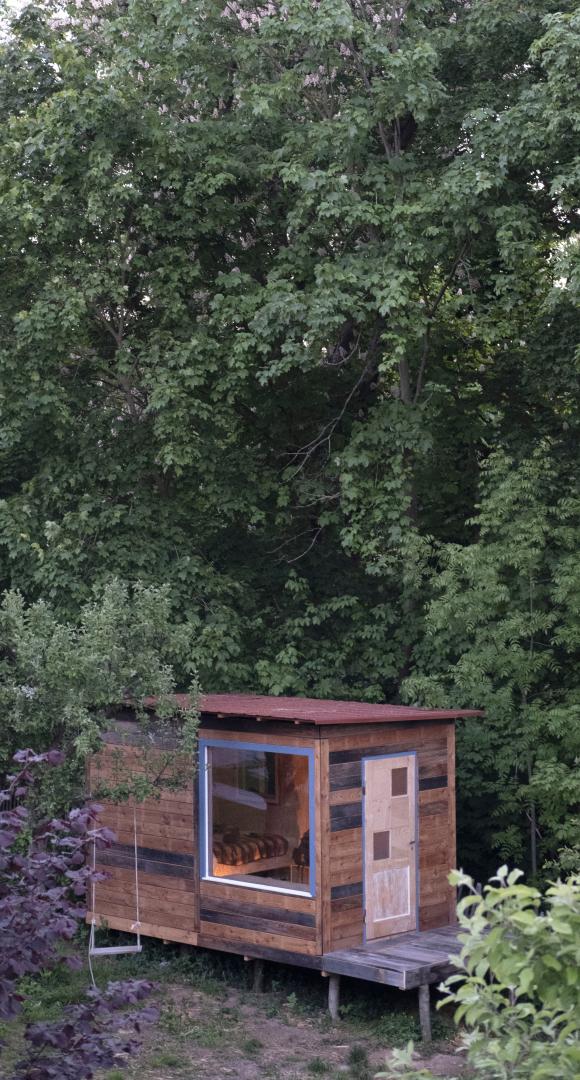
The ‘house without a footprint’ is a modular, adaptable and mobile living solution that matches the requirements of simple and understandable constructions and sustainable material processing. The first prototype has been built out of reused materials and aims to push a local circular construction economy. By carefully reusing existing materials the new aesthetics of sustainability almost reveals itself. One day, when the house is transported and finds a new place, it will leave no traces.
Project Region
EU Programme or fund
Description of the project
Summary
Thuringia includes some of the fastest shrinking rural regions of Germany right next to fast growing, yet smaller cities like Erfurt, Weimar and Jena. Buildings are being torn down while the prizes for new materials are skyrocketing and pushing the costs of constructions. A local circular economy for construction materials will be essential for saving money, energy and emissions. Furthermore the rural communities experience a change in conditions. They serve more and more as retreats from the highly competitional living conditions in the urban environments. This can be a force of innovation in the future when correctly interpreted.
The proposed design adopts to these framework conditions and proposes a highly adaptable, movable and expandable house module crafted nearly 100% out of reused material. Consisting of interchangeable wall elements the 'house without a footprint' can adapt to many uses that work on limited space. Thinkable are weekend home, sauna, office, atelier and so on. The house unfolds its full potential when placed in the healing loneliness of the rural landscape. The dimensions are chosen just under the limit so that the user does not need an elaborate building permit.
Key objectives for sustainability
The 'house without a footprint' consists of reused building material that could be purchased for less or that otherwise would have even been thrown away. The insulation comes from the farmer next doors in form of regular straw bales. Because the rural soil is affected heavily by erosion and sealing the house stands on partly buried piles that lift it 30 centimetres of the ground and consequently protects the soil underneath it. This foundation is easy to install and can be done by everybody. One day, when the house is transported and finds a new place, it will leave no traces. Like the name says it has no footprint whatsoever.
Key objectives for aesthetics and quality
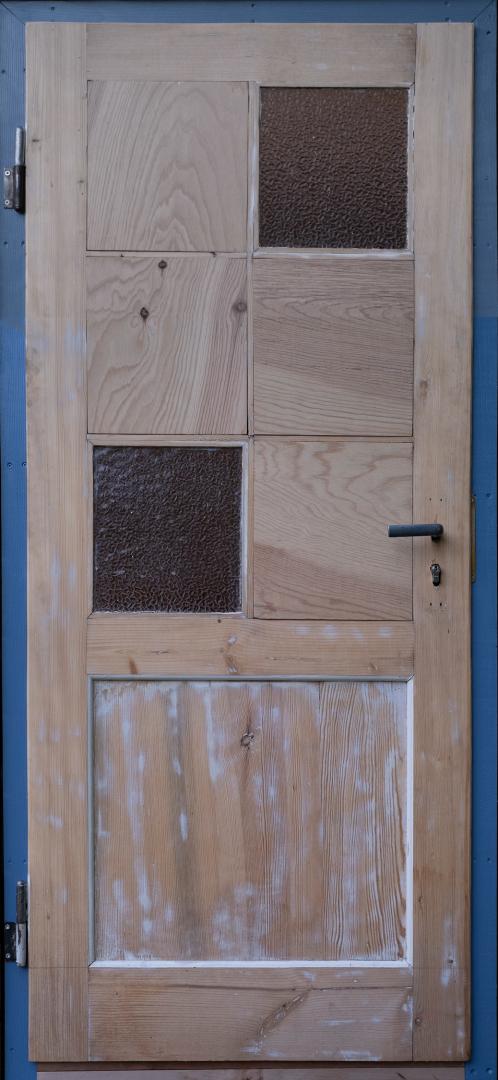
When sustainability becomes more urgent we can not built with the material that we want, we must build with the materials that we have. The best window is the window that we already have. The best door is the door that we already have … and so on. Aesthetic decisions become interconnected with the existing materials. Architects must overcome their urge of free definition of shape and start to overcome their own ego in favour of the environment. To design is eventually to combine the already existing, not to choose from newly produces, oil based construction materials made by an global, destructive economy.
Key objectives for inclusion
Everybody can be their own architect when architecture becomes simple enough so that everybody can understand and built it themselves. To build simple means to really own your architecture. In contrary to be owned by your architecture when problems occur you don’t understand or when you cannot adapt and extend your own spaces. The 'house without a footprint' can be built by everybody and therefor can be owned by everybody. Because of its modular construction it can be moved easily without any heavy machinery. The blueprints are to be released online.
Innovative character
In a world where the construction economy is responsible for more than 40% of the global CO2 emissions every building that is consuming more CO2 than it is emitting is innovative. Opensource blueprints and simple architectural designs democratize the construction economy. The modularity allows to adapt and even expand the house to meet the changing needs. Everybody can build means everybody can live.