OBELO Space Divider System
Basic information
Project Title
Full project title
Category
Project Description
Divide et includa
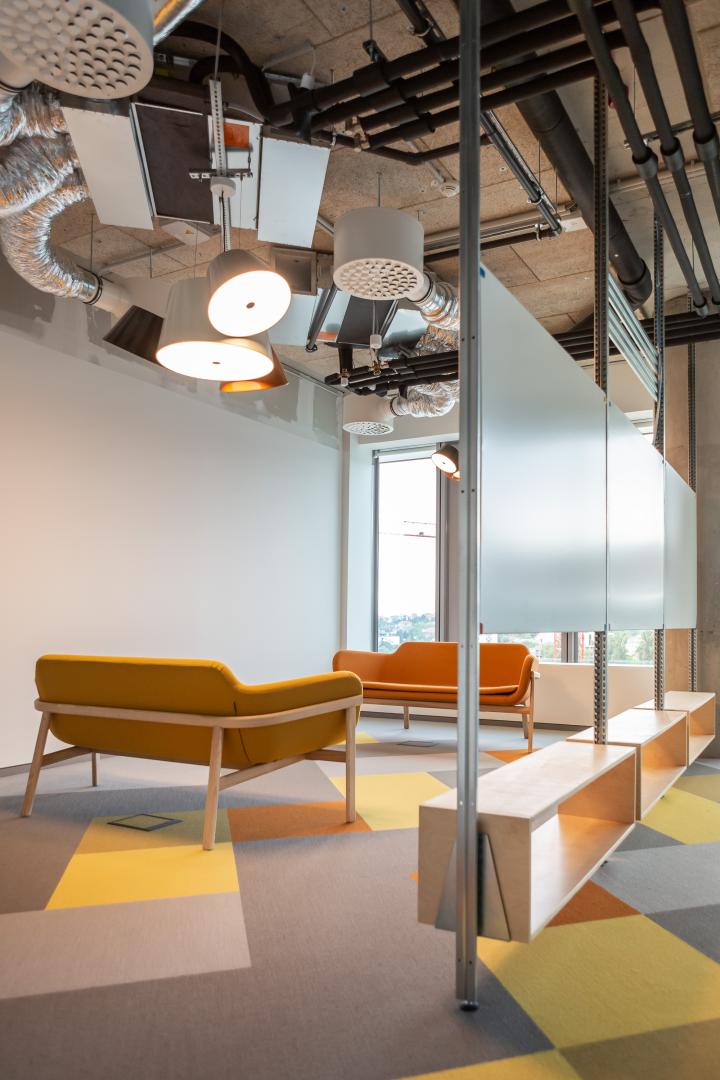
Open plan offices long for separation. This eternal truth brought our room divider system to life. In contrast to separation OBELO is solving a wide range of spatial situations related to activity-based work. We bring people together: the reconfigurable elements create informal meeting rooms, ad-hoc collaborative zones, break-out areas flexibly and cost-effectively. The system can easily be installed like a furniture; customised both in size and functionality.
Project Region
EU Programme or fund
Description of the project
Summary
OBELO is a flexible and adaptable room divider system.
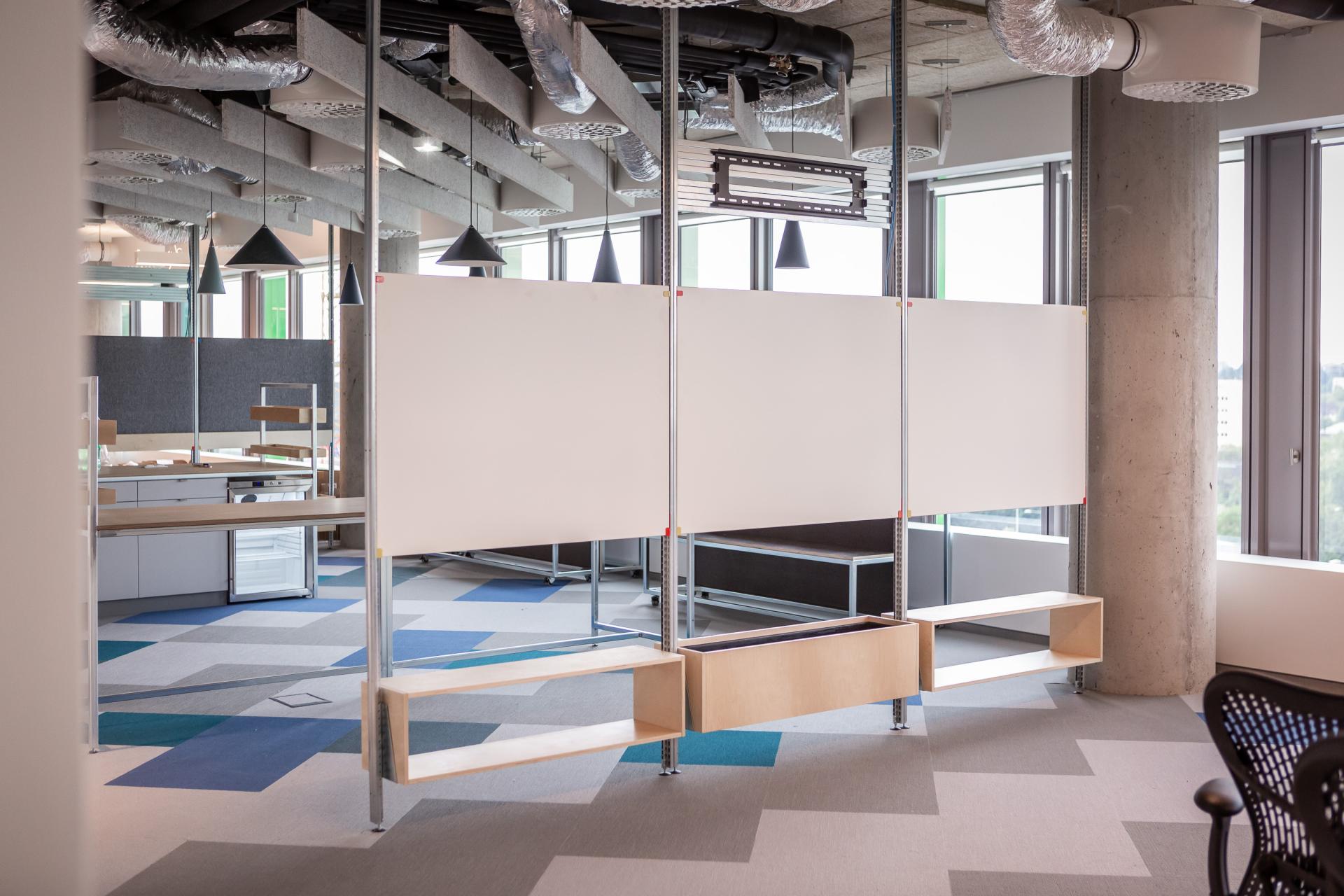
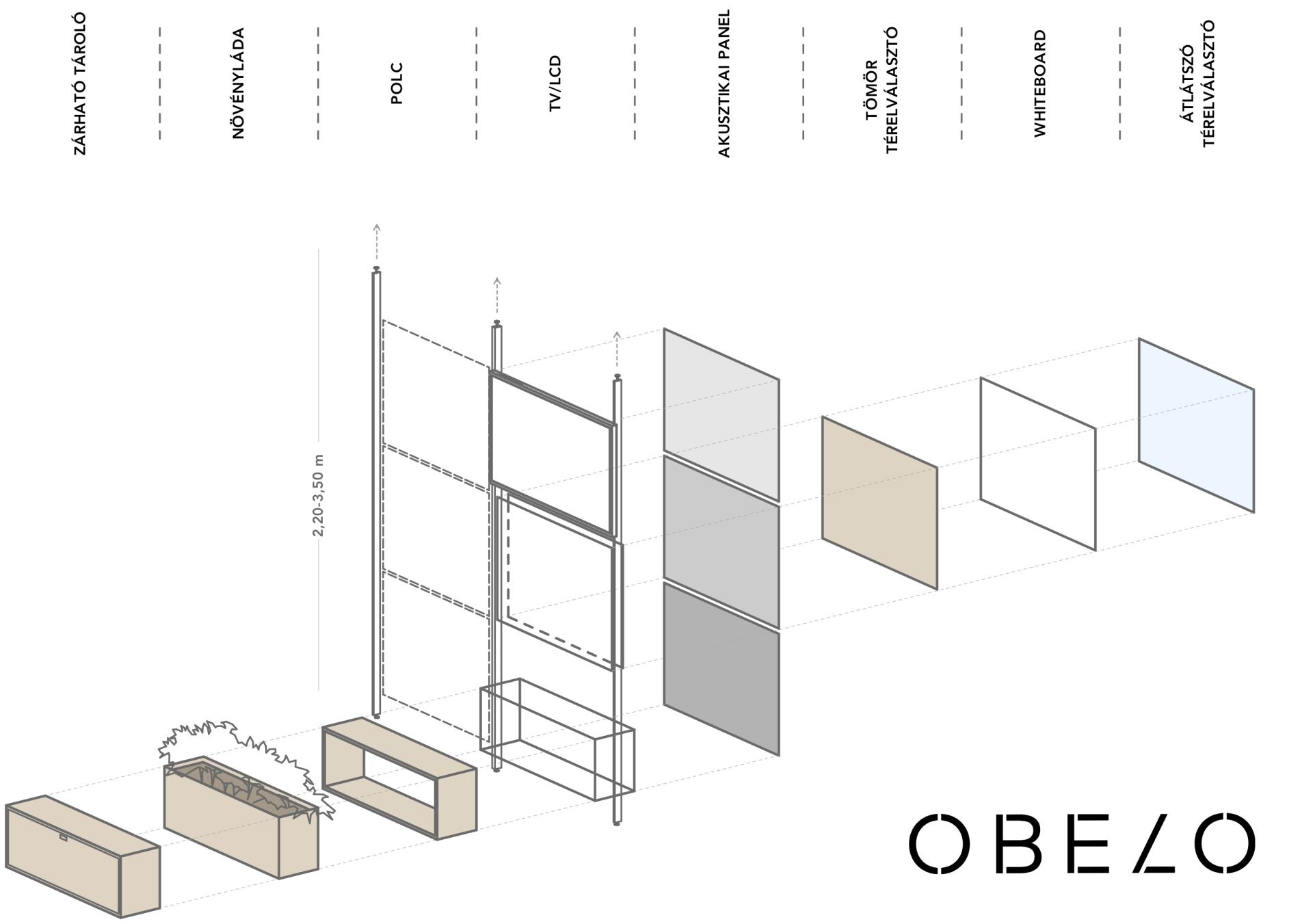
It consists of two main types of elements: a pair of columns and a set of panels or infills.
OBELO
The origin of the name comes from the Latin obelus as a division sign – a line with two dots. A graphic sign interwoven in the brand logo. The word originates from obelisk, or column, which also comes together with the stretched columns of the space divider.
Columns
The support frames are fixed between the floor and the ceiling. Their great advantage is that they can be moved or relocated anywhere without specialised work, without the need to involve an external contractor for their assembly.
Panels
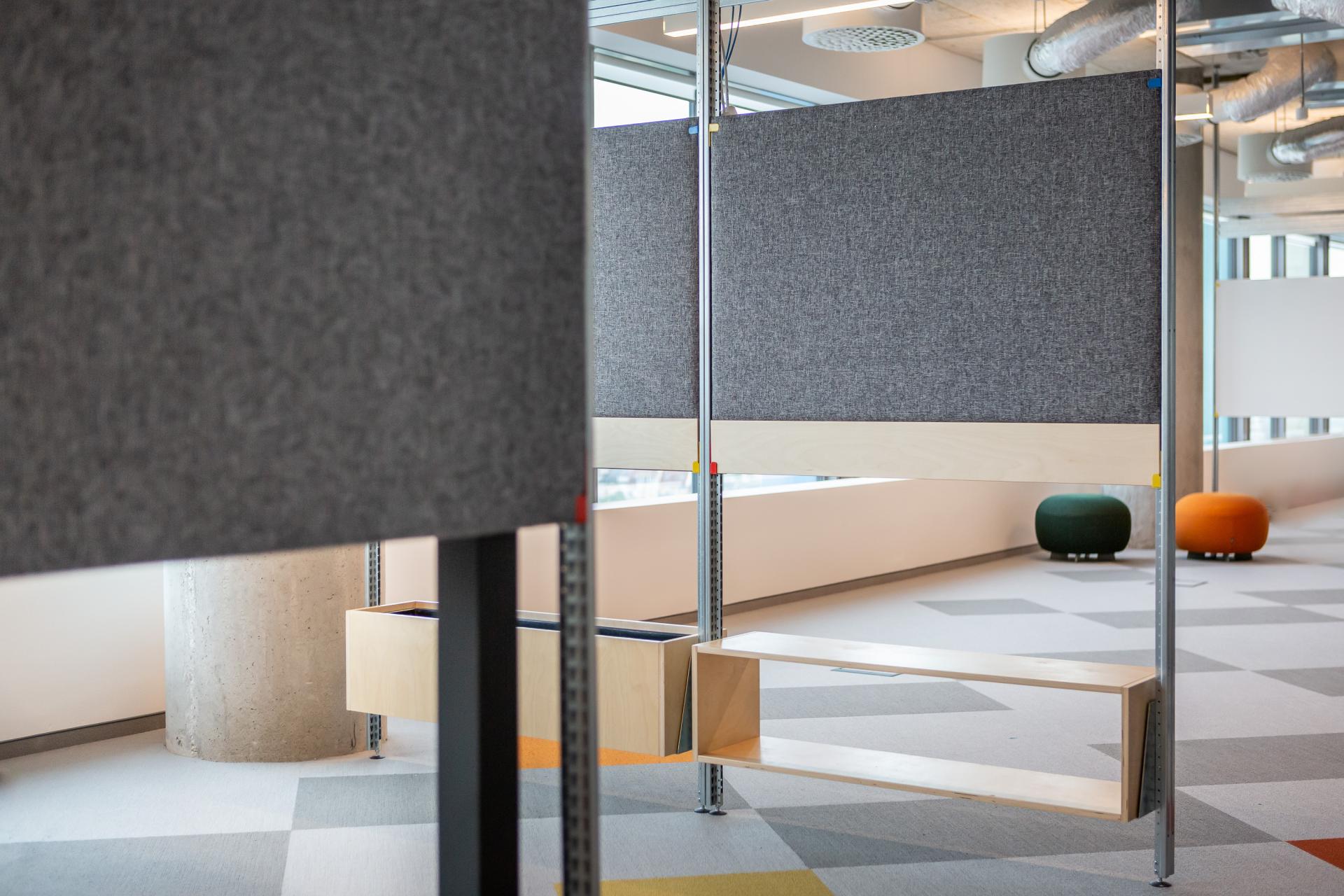
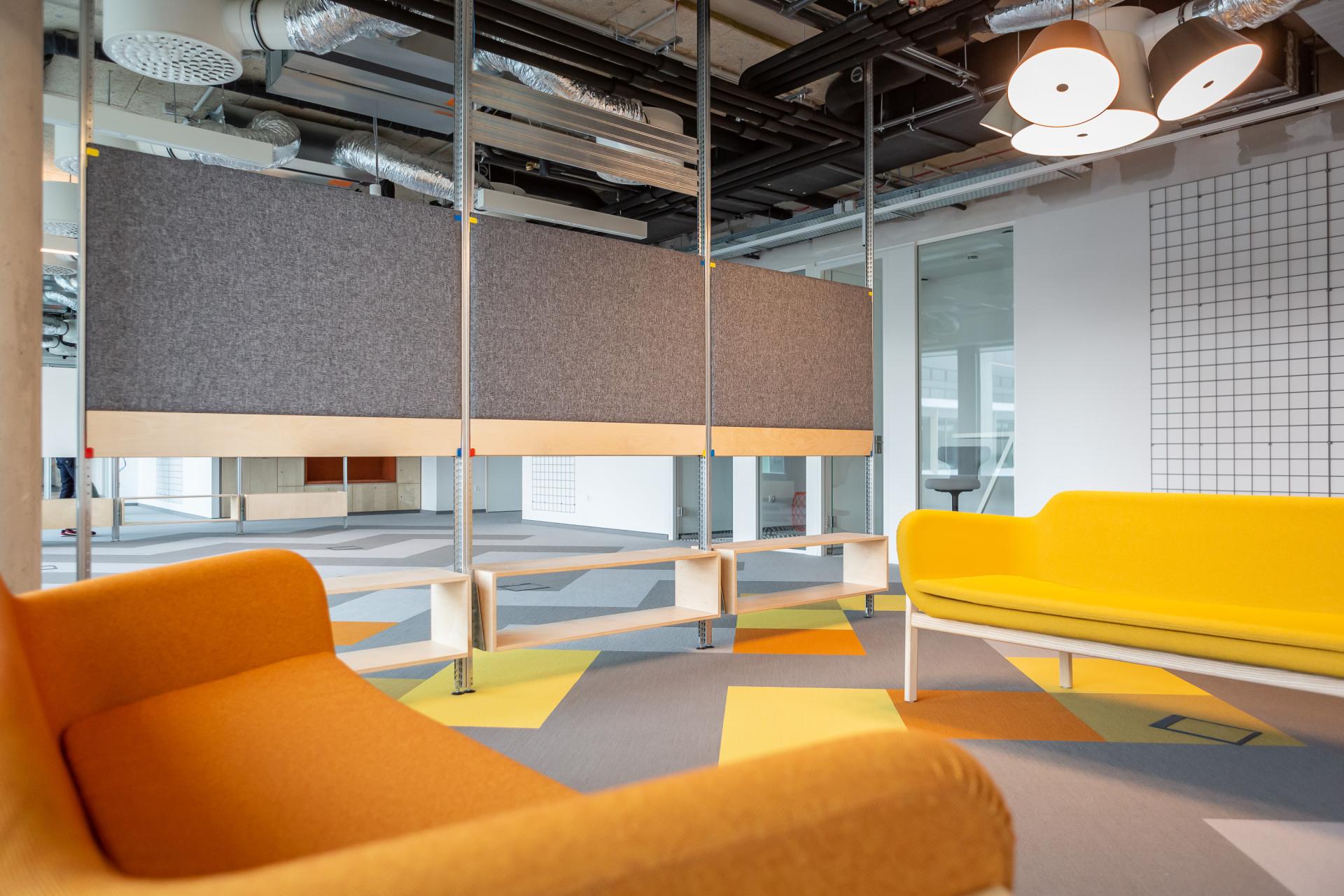
The panels are hung on the module-sized frames, finishes and placed depending on individual requirements. These infills can be whiteboards, pinboards, sound absorber or decorative panels; shelf and flower planter elements; or even active elements like LCD displays.
Customisable details
The surface of the frame and panels is basically raw and tactile: metal, plywood, textile. But since the system can be customised in every detail, even the customer’s corporate identity can be infused into the elements.
Adaptability to unforeseen challenges
Instead of single-use and specific solutions for the pandemic, OBELO offers a flexible solution that can be used in the long run: if certain elements are no longer needed, they can be used for other purposes: writable surfaces, whiteboards or sound-absorbing panels.
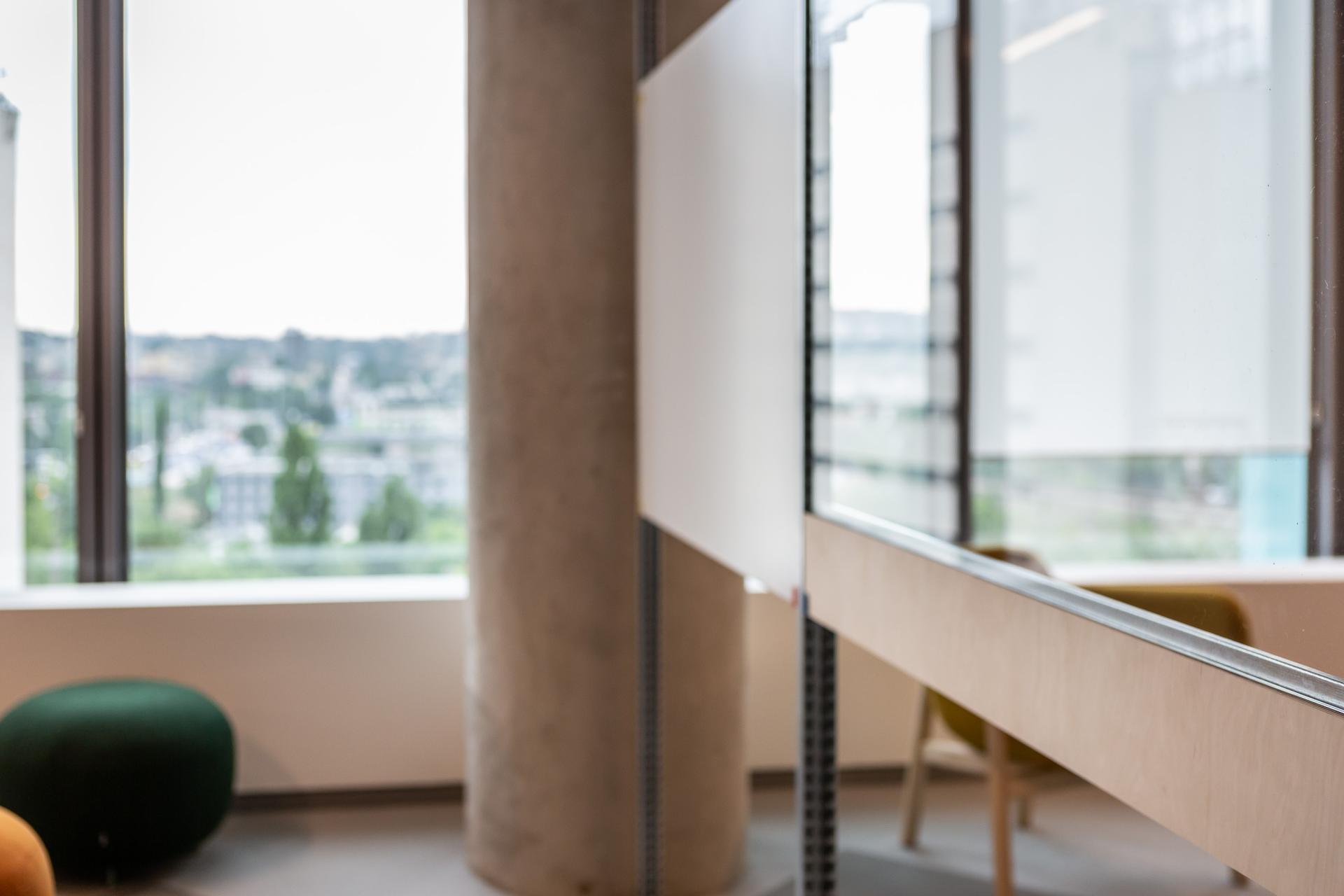
Perhaps the best example of the adaptability of the system is the response it provided to the situation set by the pandemic. As the coronavirus demanded new usage of the office space, we were able to extend the system with a new element immediately: a transparent plexiglass panel, that effectively separates employees’ personal spaces from each other, while visually not separating them from each other.
Key objectives for sustainability
A better substitute
The idea that brought the division system to life was the search for a better and more sustainable solution instead of a plasterboard wall. In current office design plasterboard walls are used as default, while their life span is less than of a furniture. Our objective was to create a division system of the same cost but of a multiplicity of a lifespan though a more flexible and adaptive functionality, thus reducing the waste stream of the perpetual reconfiguration of the office space.
Recyclable and carbon neutral
The used elements are either fully recyclable, as the steel structure system and the selection of the textiles, or carbon neutral as the plywood panels.
Eternal life cycle
As the divisions can be relocated, the system can adapt to the demands of the space, creating an almost infinite life cycle for OBELO.
Key objectives for aesthetics and quality
Simple and banal
Rather than having an aesthetic of a furniture, we wanted to relate to building structures.
Low tech, high touch
The aesthetics of the raw materials, the joints and details give, what is more, provoke touch. OBELO creates a nice contrast to the over virtual offices of our days.
Key objectives for inclusion
Divide et includa
OBELO is neutral, no biases: it divides any space. It just stands there and takes everyone and every situation as they are. Divides for the better and actually lets us come together.
Results in relation to category
Reconfigurable products
We have to rethink the notion of a product. It might not be a shiny new toy, sometimes it is just something we need. Like a bowl of water, it is essential, it is there, you can drink it, make a tea of it, pour it under a plant, or wash your hand with it. You going to decide up to the situation what you use it for. How it is made?
Very short development cycle
The design of the screen system started in the middle of 2019 in connection with an office interior design commission, the prototypes were completed by the beginning of 2020, and soon after the first complete system was installed, which immediately proved to be successful.
Open development process
It is not a finished story, the divider can be different in each office, customised to the individual needs and conditions; the possibility of development and change is a key feature.
How Citizens benefit
Co-development
Since the development process was an open vertical collaboration between vendors, manufacturers, designers, and client, the end users were in the design process, through the briefing, the selection of the elements, and the final styling of the product.
Ownership through involvement
Such involvement of the client in the development creates a sense of ownership in the project ant the end-product, which leads to a deeper understanding and large competence through the use of the product. In our case the understanding of the reconfigurability of the divider system make the use conceivable in an everyday scale.
Innovative character
Here and now
There was no long development cycle, we actually and literally settled on an existing commercial shelving system.
Upcycle
Taking a bow to hack culture OBELO uplifts the banal an adds some quick expert fixes, and unleashes a creative potential of a collaborative process.
Minimum viable product
We used the logic of software development, by creating a version of the product with just enough features to be usable by early customers who can then provide feedback for future product development. A focus on releasing an MVP means that developers potentially avoid lengthy and (ultimately) unnecessary work. Instead, they iterate on working versions and respond to feedback, challenging and validating assumptions about a product's requirements. (https://en.wikipedia.org/wiki/Minimum_viable_product)
Adaptability
The full height division walls can be relocated, creating new space layouts to adapt to the ever-new demands of office space.
Customisable
OBELO can be personalised to the last elment: colours, materials textures, panels, infills, all free to be changed.