Mathias Corvinus Collegium (MCC)
Basic information
Project Title
Full project title
Category
Project Description
MCC believe that supporting highly talented young people is a fundamental public interest. To fulfill this mission, we organize our work on the basis of unified professional principles. The Hungarian Parliament acknowledged the effectiveness of our endeavor when MCC has been chosen as the future base for talent nurturing. Thanks to the project we launched in the fall of 2020, MCC will become the most important young talent nurturing institution in the Carpathian Basin.
Project Region
EU Programme or fund
Description of the project
Summary
In the center of many Hungarian cities, you often find old, abandoned buildings in ruins. Former hotels, offices, military barracks and garrisons that once were architectural jewels struggle to find a place and a function in the 21st century. One might think those properties have a great market value. And they would, if only their insalubrity, poor construction materials, and legal obstacles for renovation did not drastically decrease their value.
The Mathias Corvinus Collegium (MCC) aims at identifying these buildings, renovating and giving them a specific and encompassing purpose: talent management and quality education for all, from primary schools to post-doctoral students. And we do so by the highest standard of energy efficiency and environment protection while we also build a community around them that will ensure their sustainability and long-term maintenance.
In our project, we have incorporated the principles and philosophy of the European Commission’s New Bauhaus’ . Moreover, our vision is to give a second life and recover the prestige of those buildings turning them into vivid centers to share knowledge and ideas through debates, discussions, conferences and seminars.
Our first project is the construction of MCC’s main building in Budapest.
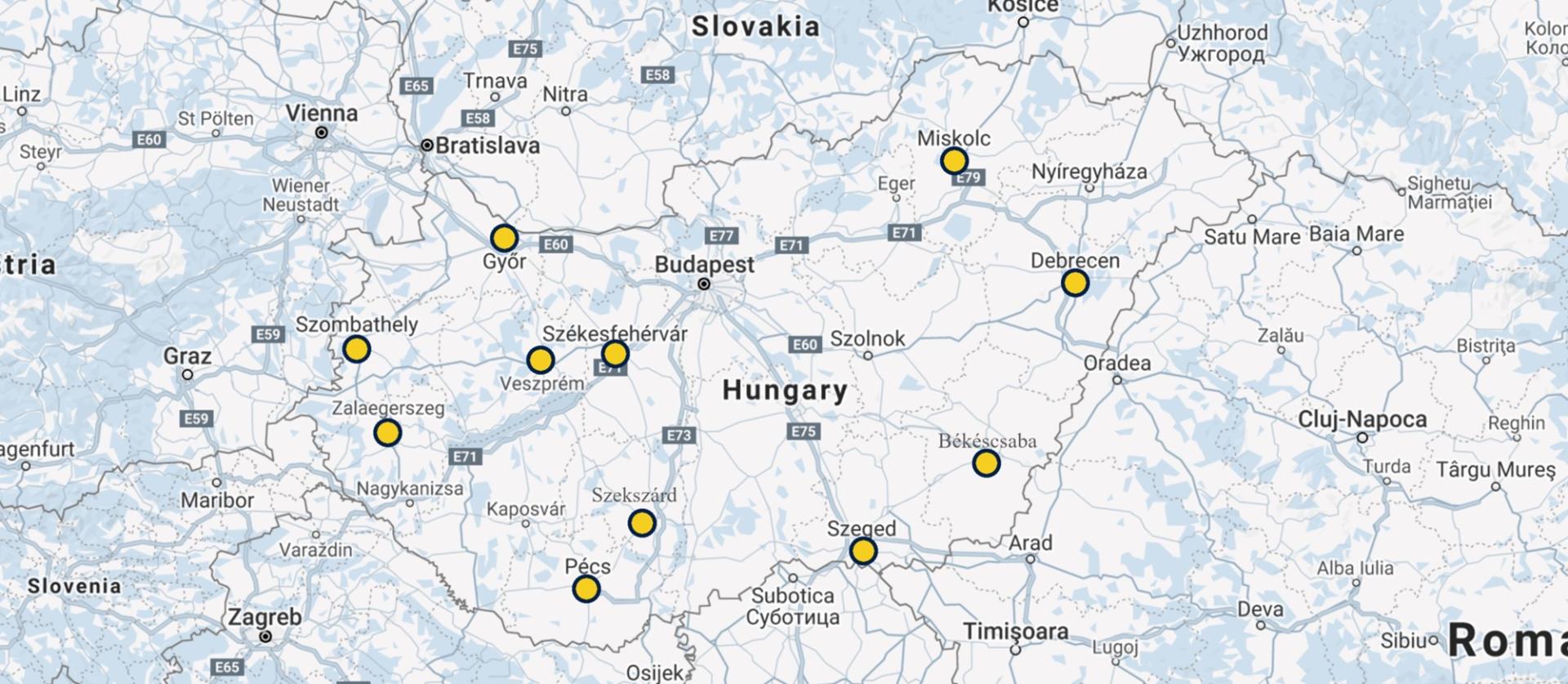
Besides its main building in Budapest, MCC owns fourteen regional educational centers in other parts of Hungary, three in Romania and Ukraine. In the next 5 years, MCC will expand and be present in up to35 centers across the region. We will provide free-of-charge training and education to 3500 primary school, 4000 secondary school and 1500 university, and 500 post-university students.
Key objectives for sustainability
We fully agree with these principles and, we much believe that the new MCC building, whose primary purpose will be to educate young people, is a good example of what the New European Bauhaus stands for. President von der Leyen underlined these buildings should be aesthetic, but also functional and efficient. Yet, a new element is added to functionalism: sustainability - both from the environmental and social point of view. The project of the new MCC building precisely fulfils both criteria. We do not only plan to build a simple educational institution but a unique cultural and educational place that is inclusive and inspiring for everyone living there. This project goes far beyond providing knowledge to students; it is about creating a hub of exchange, an incubator of ideas across disciplines and silos, a dynamic place where students learn how to learn, where teamwork is the rule and not the exception and where students will improve their attitudes as much as their aptitudes. Through conferences, guest lectures and debates, students will be exposed to diversity and will improve their critical thinking, in a spirit of openness and inclusion.
MCC is also highly dedicated to protect our natural environment and ensure a sustainable future for the next generations of Europeans. Some years ago, MCC established the Climate Policy Institute to analyse the complex social phenomena linked to climate change. Our environmental impact study showed that the circular use f construction materials is quite low in Hungary. We therefore established a research group at our Climate Policy Institute to enhance the knowledge in that specific field in order to turn MCC and its Climate Policy Institute into pioneers of circular use of construction materials in Hungary.
Key objectives for aesthetics and quality
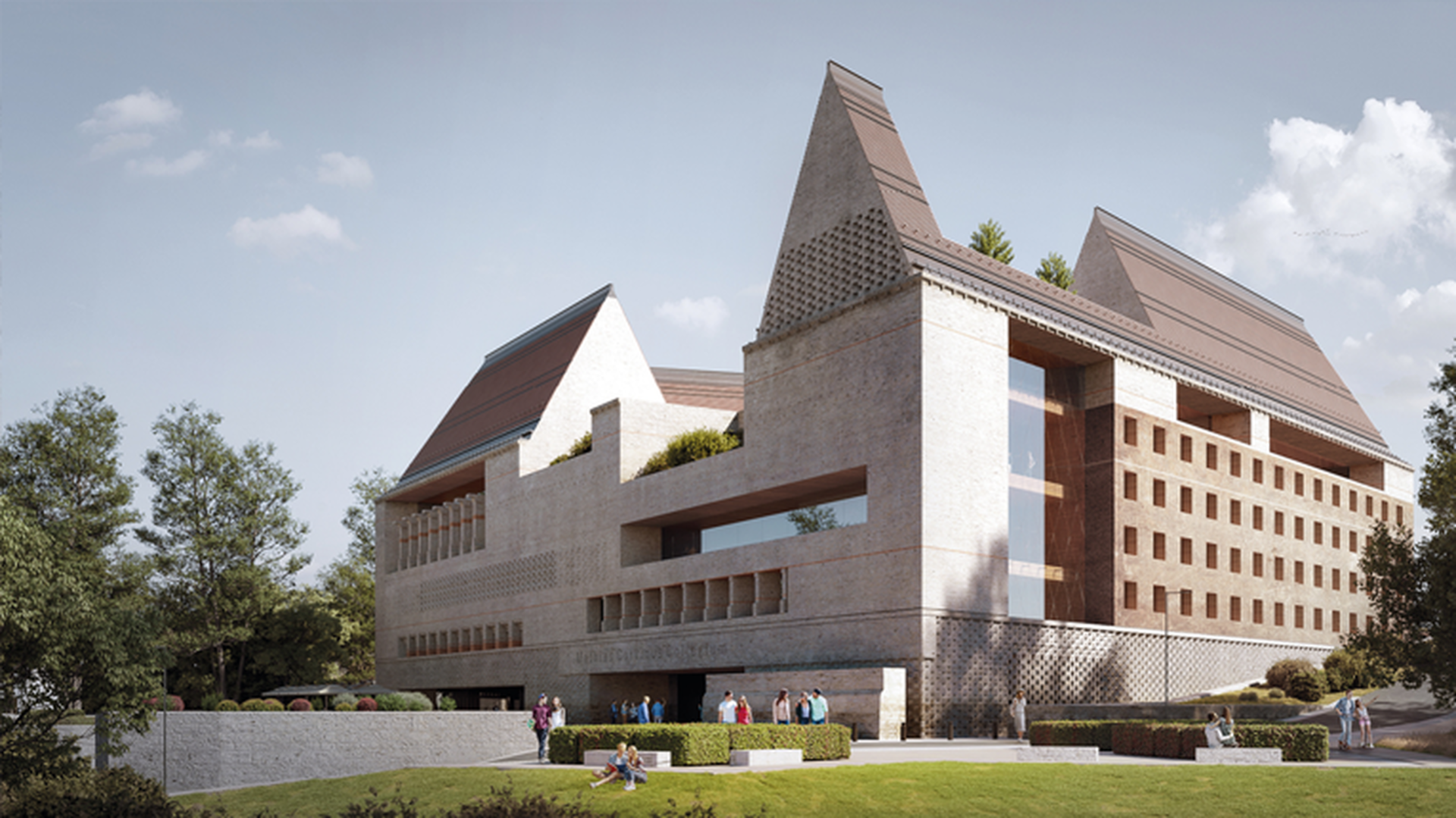
President von der Leyen's made clear that new construction materials should be used for New Bauhaus buildings and we are proud that MCC’s project much meets these criteria. It foresees a building that smoothly merges into the landscape and is built according to the highest environmental standards. This is why the selected designs are dominated by natural materials.
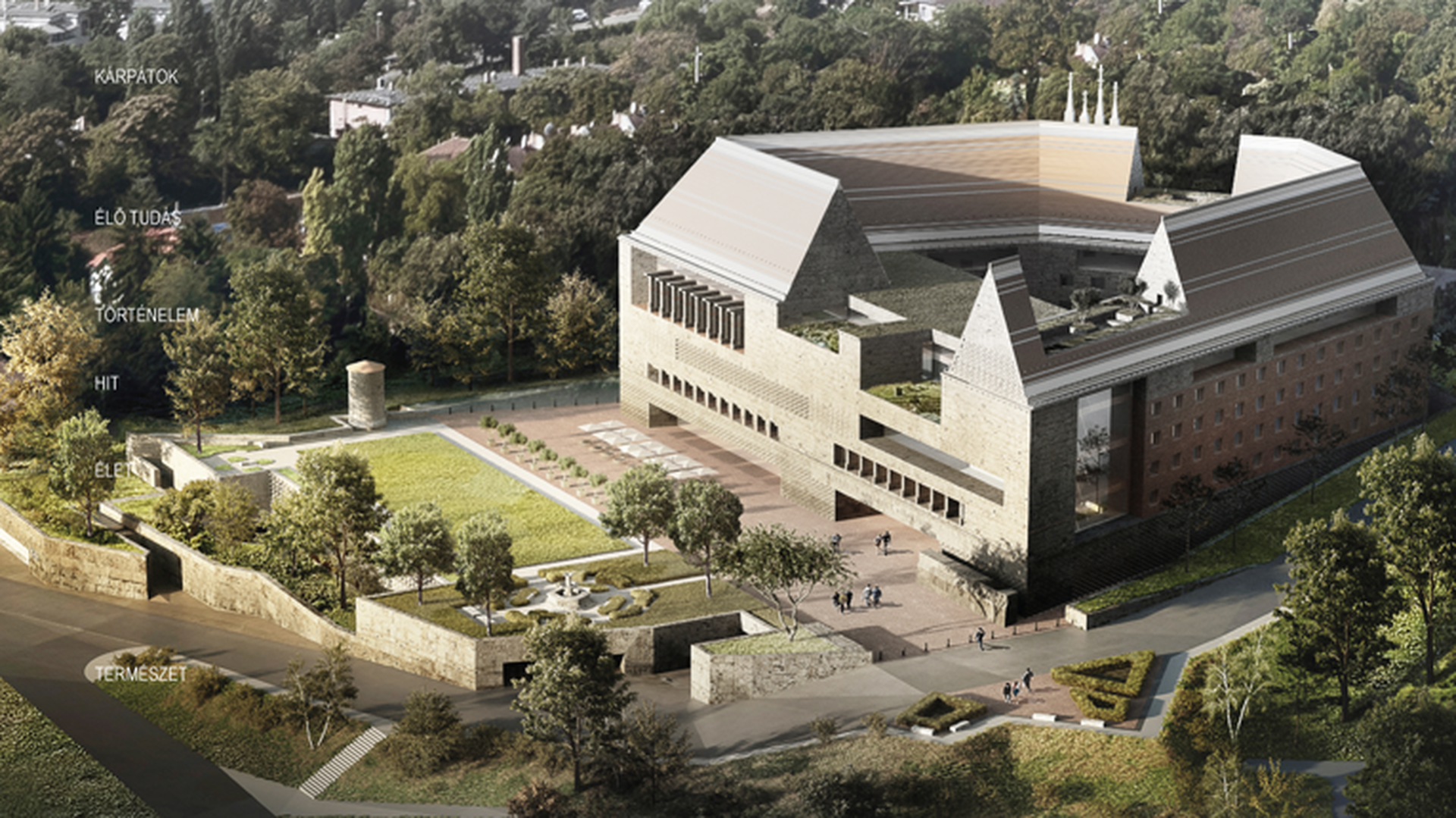
In the design of the new building, we also aim at representing local materials and local culture. We dream of a building on the Gellért Hill that fits not only into its immediate surroundings, but into the entire society. The building will display our cultural and historical features, but it will also be built with 21st century technology that meets the highest standards of our time. This is the essence of the New European Bauhaus: to display local beauty and culture must be displayed while using modern architectural technological solutions. Finally, we wish to erect a building that reflects its Hungaria and European roots.
Key objectives for inclusion
MCC is not just an education institution, it is first and foremost a community of communities: one that which belongs to larger communities, consists of smaller ones and is happy to work with other communities. And this is precisely the third thought of President von der Leyen: planning and thinking together, not in silos. Not only architects defined our project; historians of art, lawyers, economists, scientists and other cultural figures worked on defining it, with the idea of building an open space for all those who are interested education, culture, knowledge and exchange.
Results in relation to category
The new Budapest building goes beyond the construction of a new building. It will be a milestone for other MCC buildings in the countryside of Hungary and it may be one for other European projects.
In the other parts of Hungary, MCC will open new centers in buildings that are representative of the city and haven’t been used for decades. Using the example of the new Budapest building, we aim at establishing communities which are able to maintain and take responsibility for the renovated buildings and turn former ruins into the pride of the cities. Education will remain the most important issue in the century to come and in every city we seek to build a astrong community, one that will enthusiastically use and take care of these buildings.
How Citizens benefit
In Budapest, MCC is located in the former headquarters of the Workers' Militia, previously the seat of the paramilitary “strong hand” of the communist regime. The building was renovated and expanded in the early 1980s, but with poor quality materials and very low level of energy even by the 1980s’standards. The design of the building follows the logic of its military function, including its windowless armory or its shooting range. Hence, we are speaking about a building that currently hardly suited to provide quality education for students from different backgrounds.
The building is situated on Gellért Hill, on a unique spot at the crossroad of the inner city and its outskirts.. To the East, there is an outstanding view of Budapest’s historical centre, while to the West the view of the Buda Hills makes you forget you are in the middle of a 2 million people city. According to several scholars and architects, the main value of the building lies on its singular location, an ideal place to build an iconic building that would send a clear message and will display the specific meaning of what MCC stands for: to provide excellent and inclusive education and host cultural exchanges.
After a long and careful analysis, MCC decided that the current building is not fit for its mission and that its renovation would be extremely expensive. We did a genuine effort to consider the reconstruction of the current building, but the costs were far too high. Moreover, the historical precedent of the current building is not at all compatible with the fundamental European values of freedom and democracy we all share.
Innovative character
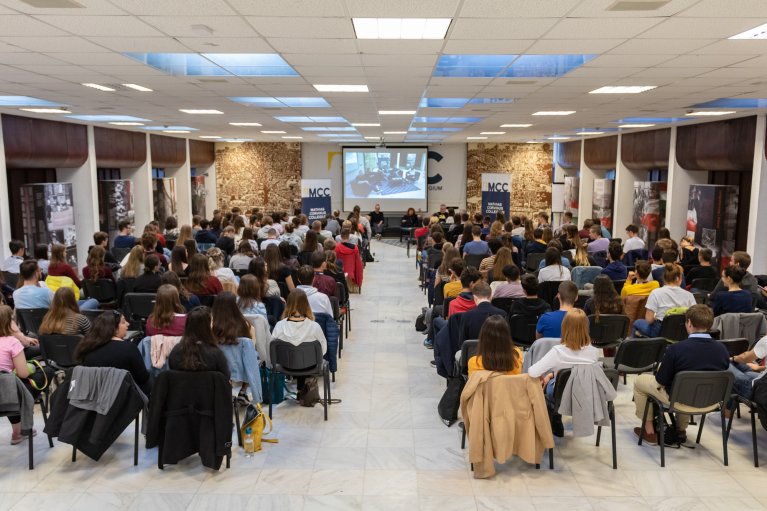
The Mathias Corvinus Collegium is the largest knowledge center in Hungary. It offers extracurricular, high quality, free education for talented students and a platform for exchanging ideas in Hungary, its neighboring countries and beyond. Our students are selected on their merit regardless of their socio-economic background. Then, MCC helps them untap their potential and encourage them to take responsible actions for the benefit of their own community, be itlocal or larger. . Over the past 25 years, MCC became a trusted international partner for distinguished scholars, universities and research centers, and a synonym of excellence for talent management in Hungary. Currently MCC helps more than 2500 students, from all education levels, to achieve their objectives and fulfil their dreams.