SMART
Basic information
Project Title
Full project title
Category
Project Description
And thus the idea of the “Kuldiga Street Art Festival” was born to create murals on the buildings of the new part of Kuldiga town (Latvia) gradually transforming the municipality into the Open-Air Art Gallery!
Project Region
EU Programme or fund
Description of the project
Summary
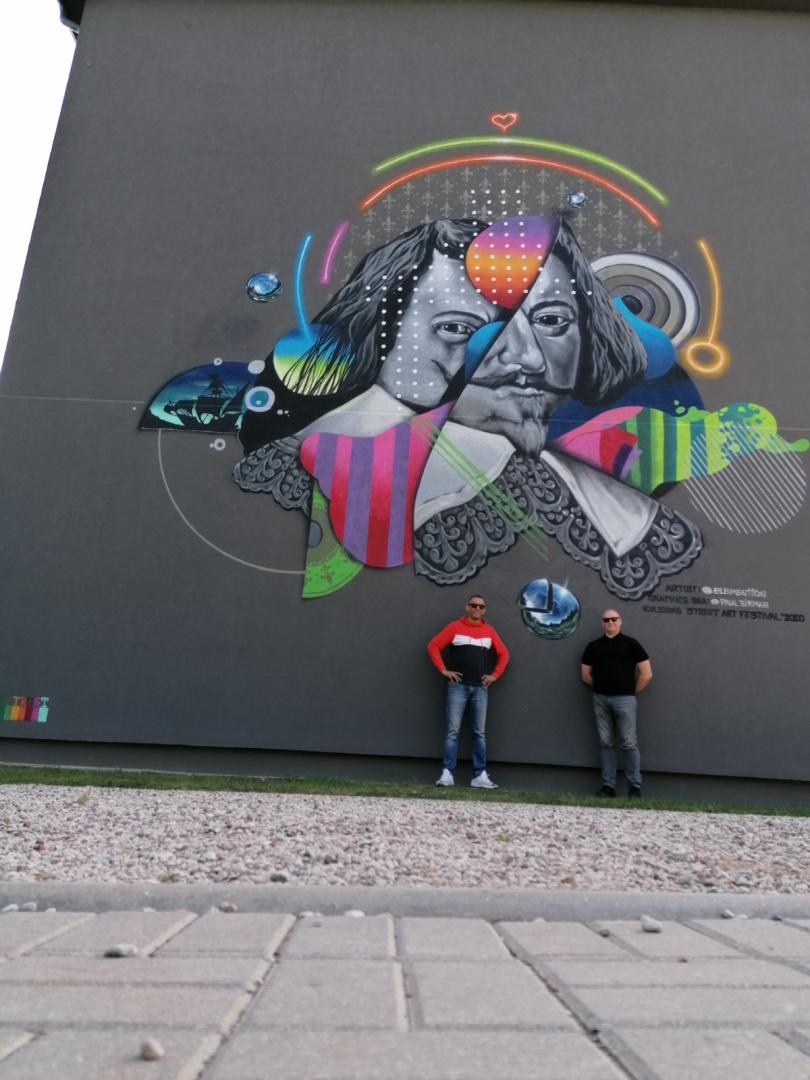
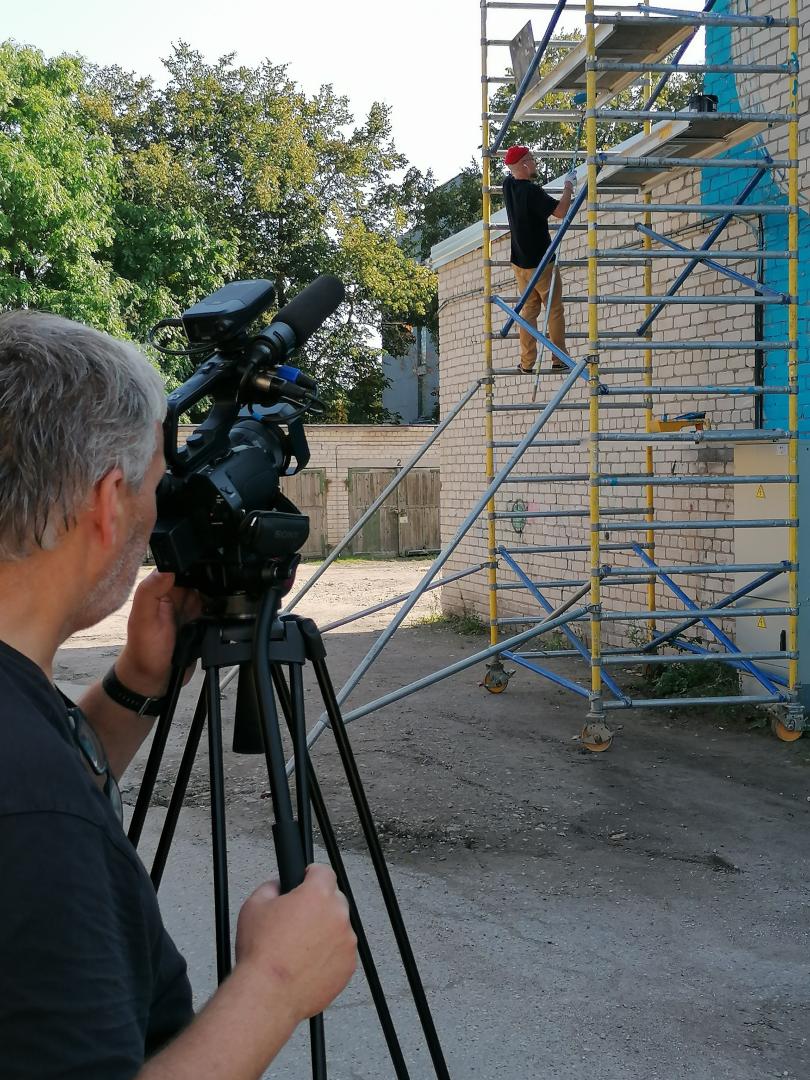
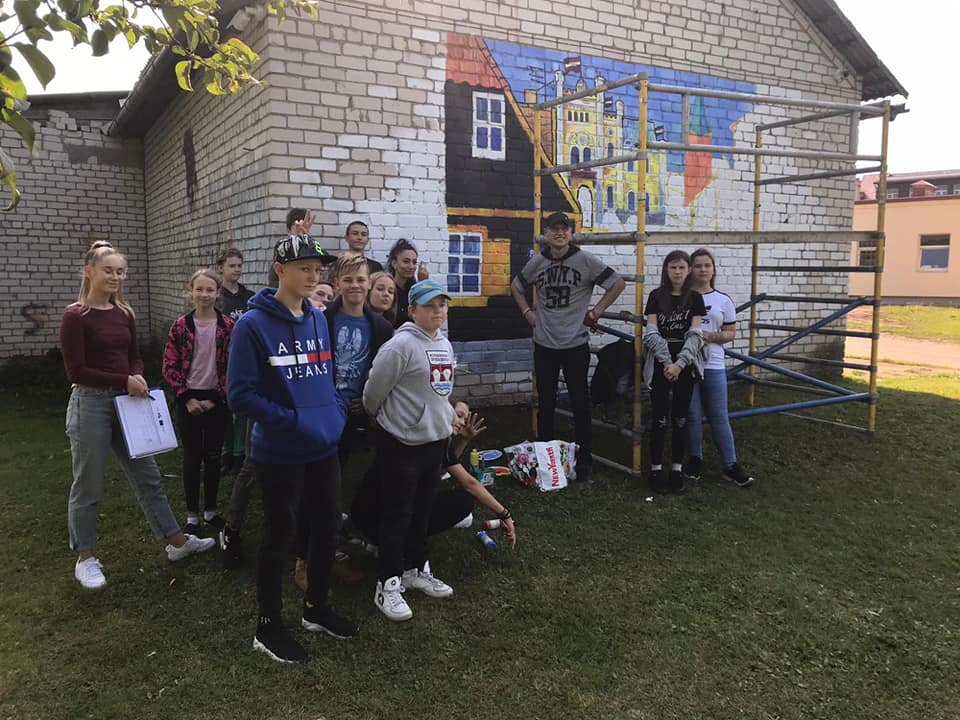
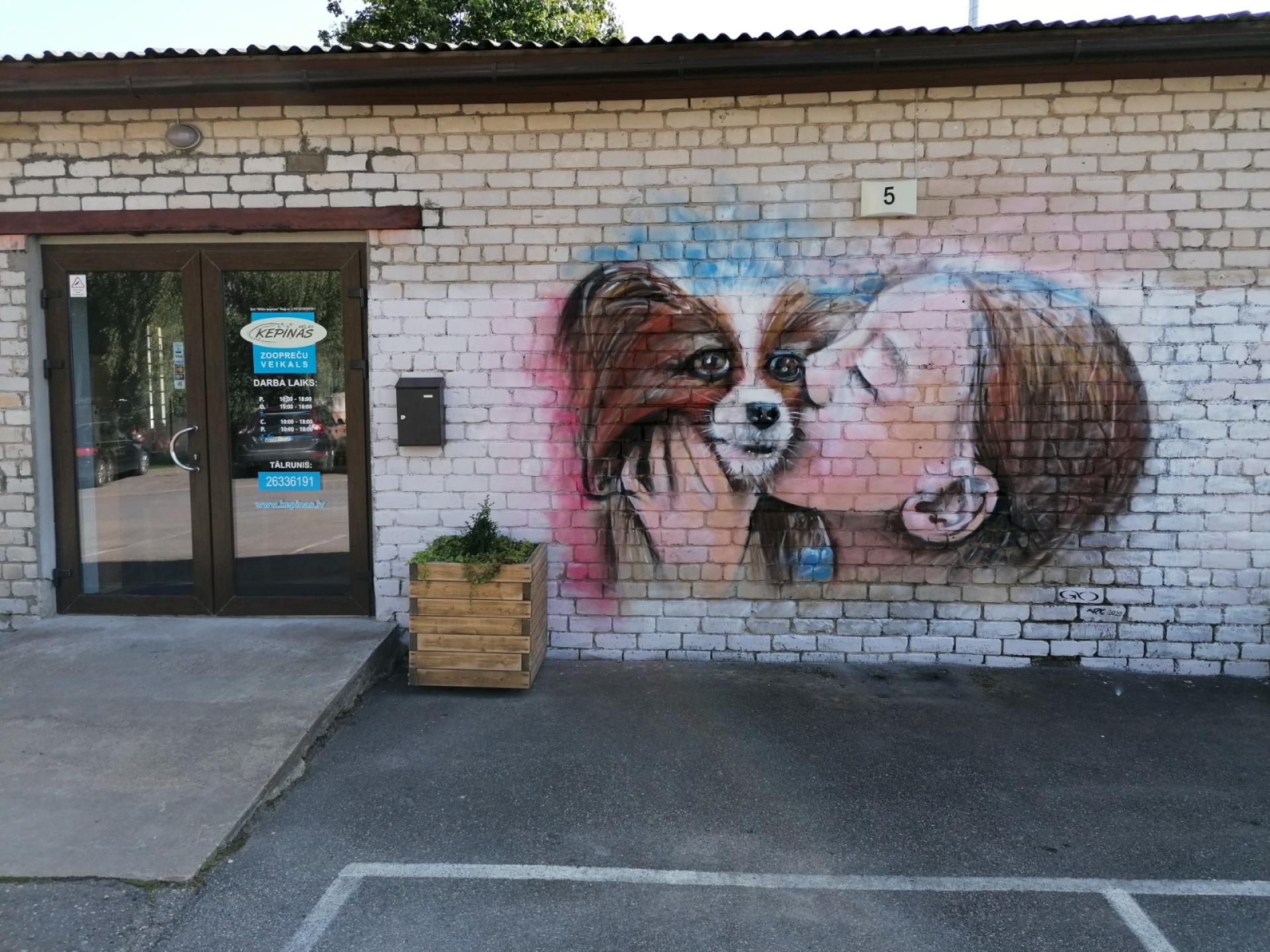
Kuldiga municipality (Latvia) in cooperation with the NGO “Art and Technology Centre” has organised “Kuldiga Street Art Festival” for the first time in September 2020. Due to COVID-19 restrictions this time only 8 artists have participated representing Latvia, Spain and Russia.
The NGO “Art and Technology Centre” is a creative association of artists established together with Kuldiga Photography Club and working by uniting artists, photographers and professionals of other creative industries.
The “Kuldiga Street Art Festival” (the Festival) was a new event in the series of events devoted to climate and digital issues implemented in Kuldiga during the last years, e.g. the festival “Kuldiga, Europe Thinks Green”. We have also been pioneers in digital data analytics in Latvia regarding the global visitor flow analysis by artificial intelligence in the local climate context. This innovation helped us to identify the number of visitors of the Festival and to predict the number of visitors in correlation with weather conditions.
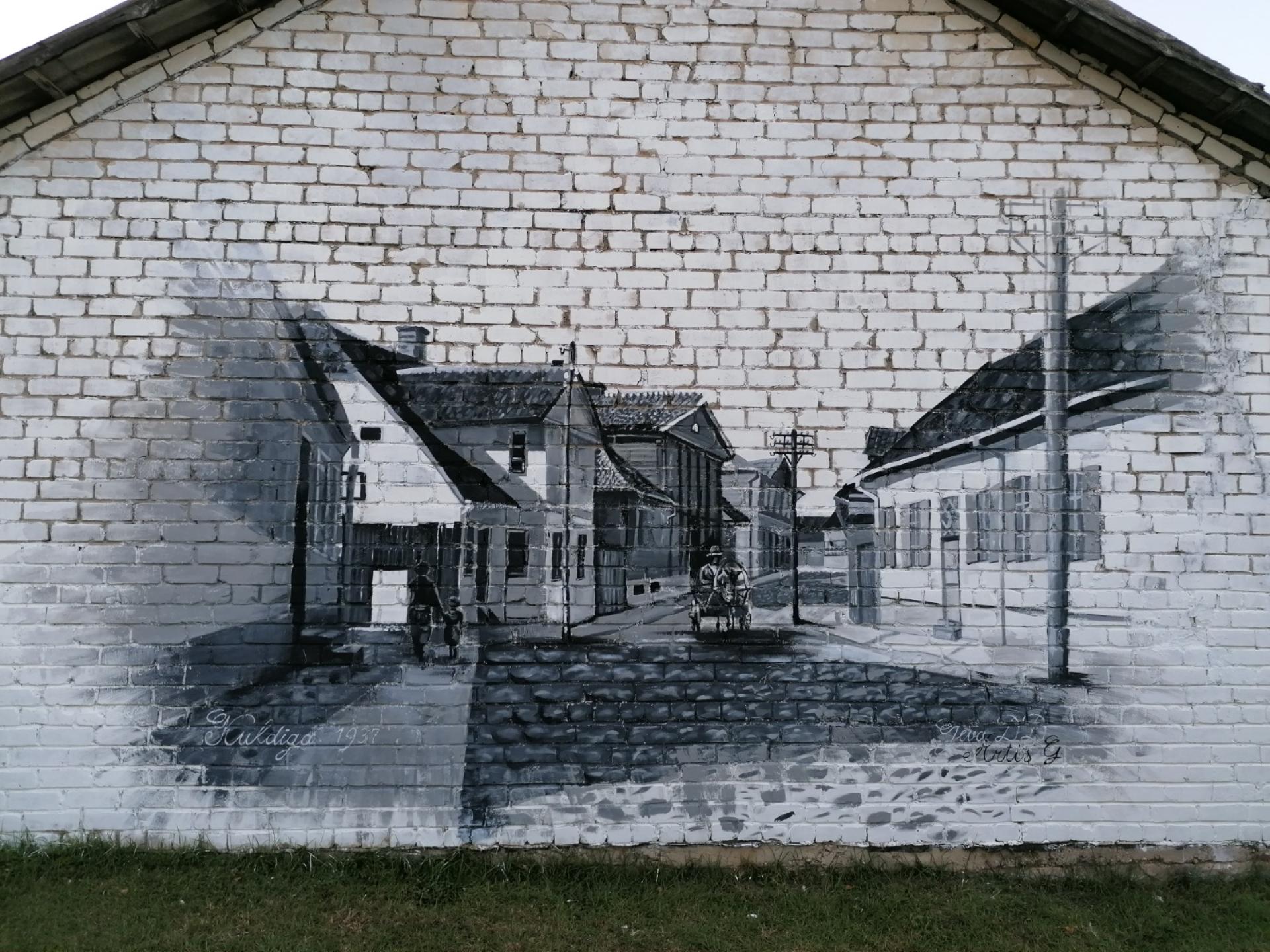
The Festival aims to bring together all the three key European priorities: innovation, digitalisation and climate change. It is developed as a green interdisciplinary event aiming to meet a growing number of green criteria every year, as by providing this kind of knowledge citizens can contribute to urban development in a sustainable way. Likewise, the aim of the event is to transform old and partially abandoned industrial buildings into artworks. At the same time, the Festival is shaped taking into consideration the involvement of local residents by painting the walls of 5-10 houses in Kuldiga with reproductions of Kuldiga's most famous painters. As the Festival will continue to take place, with every year the number of murals will increase by 5 – 10 and gradually Kuldiga will become as an Open-Air Art Gallery, encompassing all the three pillars of the New European Bauhaus initiative – being sustainable, beautiful place made by all together.
Key objectives for sustainability
The key objective of the festival is twofold: to make more creative living spaces together with inhabitants and to bring the city closer to nature by using sustainable materials in creation of murals.
In order to achieve the sustainable character of the Festival we have established the following main aims:
- to implement a socially significant, original and innovative art festival that would improve the environment and infrastructure by painting the murals on various buildings in the new part of Kuldiga town at the same time rebalancing the investment of resources in different parts of the town and making it more inclusive;
- to identify local community groups and NGOs and involve local people in the implementation of their own ideas. The activists involved in the organisation of the Festival continue the cooperation not only annually during the Festival, but also on a regular basis by participating at local, national and international environmental projects, e.g., in creating “The Green Event Handbook of Latvia” prepared by the Latvian Fund for Nature;
- to promote improvements in social field and public education by using educational and artistic values in order to motivate adults to become involved in the learning process, acquire new skills and competencies, cultivate creativity and share their experiences;
- to create new local culture product: the Open-Air Art Gallery;
- to paint the murals of 5-10 buildings every consecutive year of the festival;
- to promote the image of Kuldiga as a green and creative town in Latvia and abroad;
- to create a sustainable project in order to improve the quality of life of local people;
- to encourage artists and organisers of the Festival to use bicycles when moving during the festival.
Likewise, the organisers of the Festival together with representatives of local inhabitants are taking into consideration several sustainability criteria when choosing the location of murals.
Key objectives for aesthetics and quality
We believe, that the art and creative environment in the city plays a huge role in how we feel or behave. Our project is multidisciplinary and teaches children and young artists such values as beauty, sustainability. Paintings on the walls are more than just drawings or functionality - a more beautiful exterior wall, - but they make the city more aesthetic, and these values can influence the everyday life of inhabitants.
The project also showcases, how artists have addressed different social challenges by transcending national, cultural, political, social and linguistic borders. Likewise, the project is multicultural and aims at creating an Open-Air Art Gallery accessible to any interested person offering the possibility to experience the culture at any time. The accessibility of art was especially important question during the confinement period, when museums and art galleries were closed, but people were longing to enjoy some aesthetic and cultural values.
Key objectives for inclusion
In order to involve seniors, it was necessary to ensure access to lifelong learning regardless of the age, gender, educational background, as well as to develop quality and diversity of informal education. A number of local organisations don’t find it easy to reach seniors, and involve them in creative or cultural activities. A successful and desirable form of such participation is an art. Therefore the project provides up-to-date knowledge and skills, new ways to express creativity and contributes to the inclusion into both labour market and society.
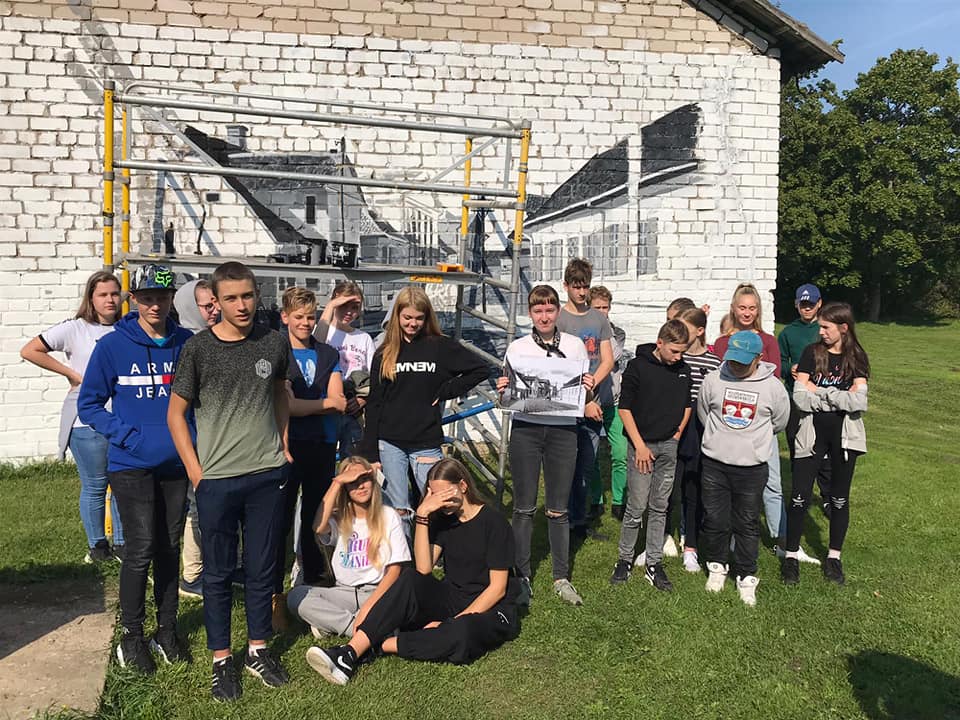
Likewise, in the framework of the Festival there were organised creative workshops for children and youth on drawing and photography. It was intended to foster cognition, creativity and community inclusion through one of the most accessible technologies and kinds of arts - photography. In addition, it helped to create and develop sustainable international relations, educate and/or improve the skills and competences of those participating in adult education, which is necessary to make creative and innovative decisions, control current challenges and risks, encouraging intercultural interaction and creative citizen self-awareness.
Results in relation to category
We aimed to improve social cohesion and develop a shared sense of ownership through common activities involving inhabitants. Likewise, we have used the method of storytelling, introducing with the objectives of the Green Deal during the workshops.
During the preparation and implementation phase of the Festival we have involved a huge number of people and had the possibility to introduce them with the values set to be at the core of the event. After the festival the visitors of Kuldiga have regularly observed the mural paintings and published photos, which can also be regarded as a good marketing tool in the longer perspective.
The biggest added value of this project is its sustainability: the large-scale wall paintings will be observable for decades, and with every year the exhibition in the Open-Air Art Gallery will be renewed with approximately 10 new master pieces. It is important to note that this is one of the few festivals, which is a so-called “COVID-friendly” event, because it meets all restrictions, - each artist is making his artwork alone in the open air working with his own mural, but visitors are visiting murals by keeping social distancing.
There are several other results of the project to be mentioned::
- improved knowledge of citizens about the main concepts, solutions and ideas connected to a green, climate-neutral and sustainable city;
- improved awareness and preparedness of citizens to participate in urban participatory decision-making;
- improved self-confidence and open-mindedness of the citizens regarding urban participatory decision-making.
How Citizens benefit
With this project we are regaining a sense of community, finding back a feeling of belonging. Through this project citizens are learning about the ecological footprint created by such festival and similar events. The Open-Air Art Gallery is accessible 24/7 and constantly works as a motivation for socio-cultural motivation, development and improvement of skills related to learning, motivation of creativity, developing artistic style and innovative view on current challenges, as well as broadening the worldview.
The organisers of the project are also collecting quantitative and qualitative data regarding the Festival. As to the quantitative data we are collecting numerical information and analysing, e.g. number of visitors, money spent by visitors, etc. During the Festival of 2020 besides the organisers and artists we have involved about 90 staff members of our municipality, 30 local NGOs from Kuldīga municipality and about 5 000 local inhabitants.
As to the qualitative data, after the Festival we have organised the survey of local inhabitants asking for their impressions on the implementation of the Festival, the works created, workshops organised and their suggestions as to the next edition of the Festival in 2021. The suggestions and comments of the respondents are taken into consideration in organising this year’s Festival to be take the place in September 2021.
Innovative character
Participants of the festival were introduced with modern art and culture, thus fostering their creativity. Digital workshops, modern mural art and contemporary photography is reaching cultural synergy goals. Sometimes people willing to be involved in the cultural community are lacking skills, knowledge, resources and good international practice examples. It is important to discuss, how to apply easily accessible technology for their involvement and improve artistic skills making it as a useful tool: to become familiar with taste of art in general in combination with the basics of “green city”, cultural heritage, creativity, foreign language skills, at the same time sharing eco-friendly attitude, participation at communal activities and spending quality leisure time.
The Open-Air Art Gallery and its interactive presentation at digital software deals in an innovative way with problems of accessibility, sociocultural inclusion and adapts to dynamic daily challenges of citizens in appealing, creative and modern way.