Four Seasons in one House
Basic information
Project Title
Full project title
Category
Project Description
The project tells the story of a stone found in situ, as it has always been, which has been converted into house. The seasonal living concept brings a millennia-old cultural technique into present day. Condensing living space in colder seasons saves resources and costs - in summer, the space doubles. A mobile kitchen moves with the residents. Conventional energy-saving houses, isolate themselves from their surroundings. This house encourages ecological living in connection with the environment.
Project Region
EU Programme or fund
Description of the project
Summary
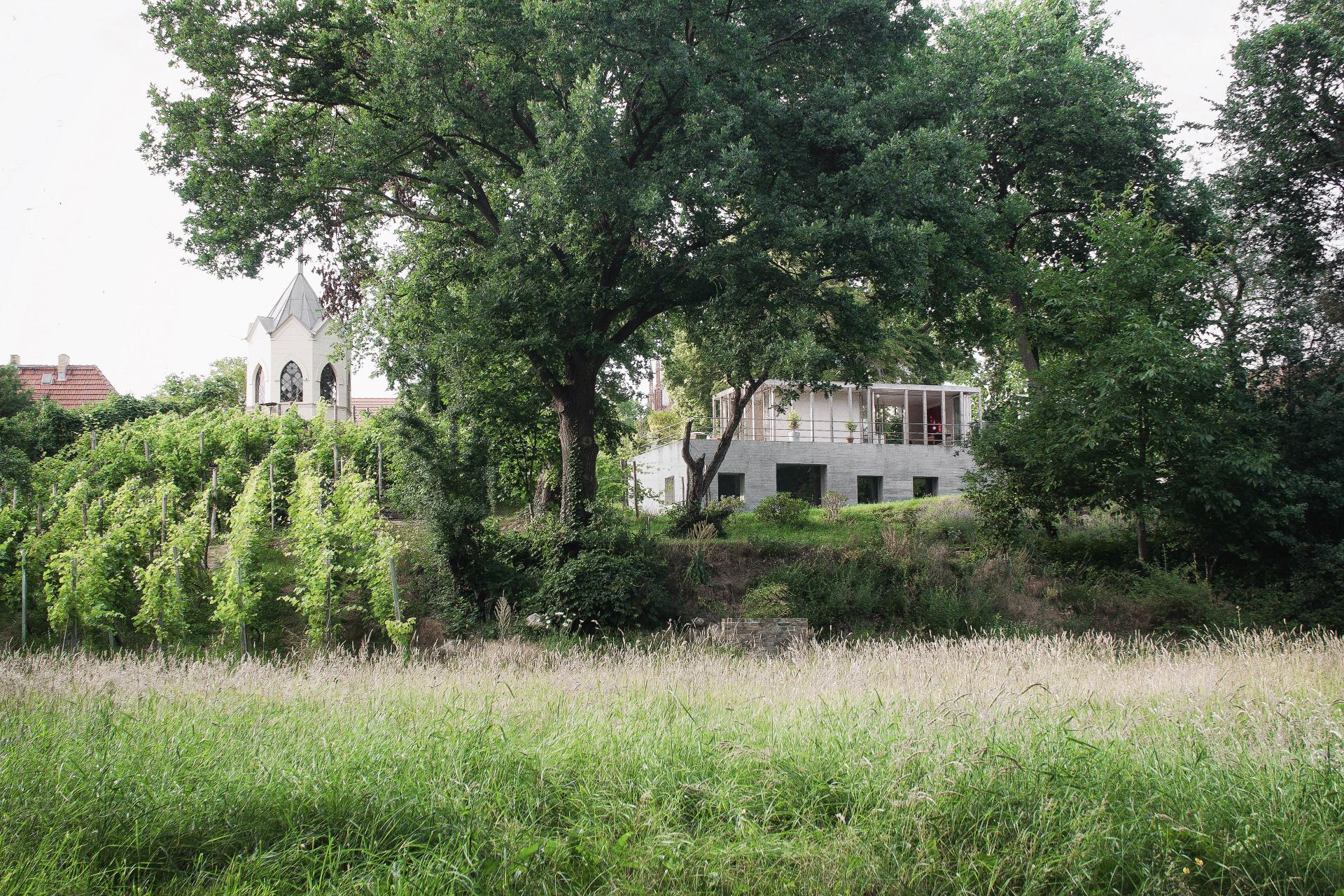
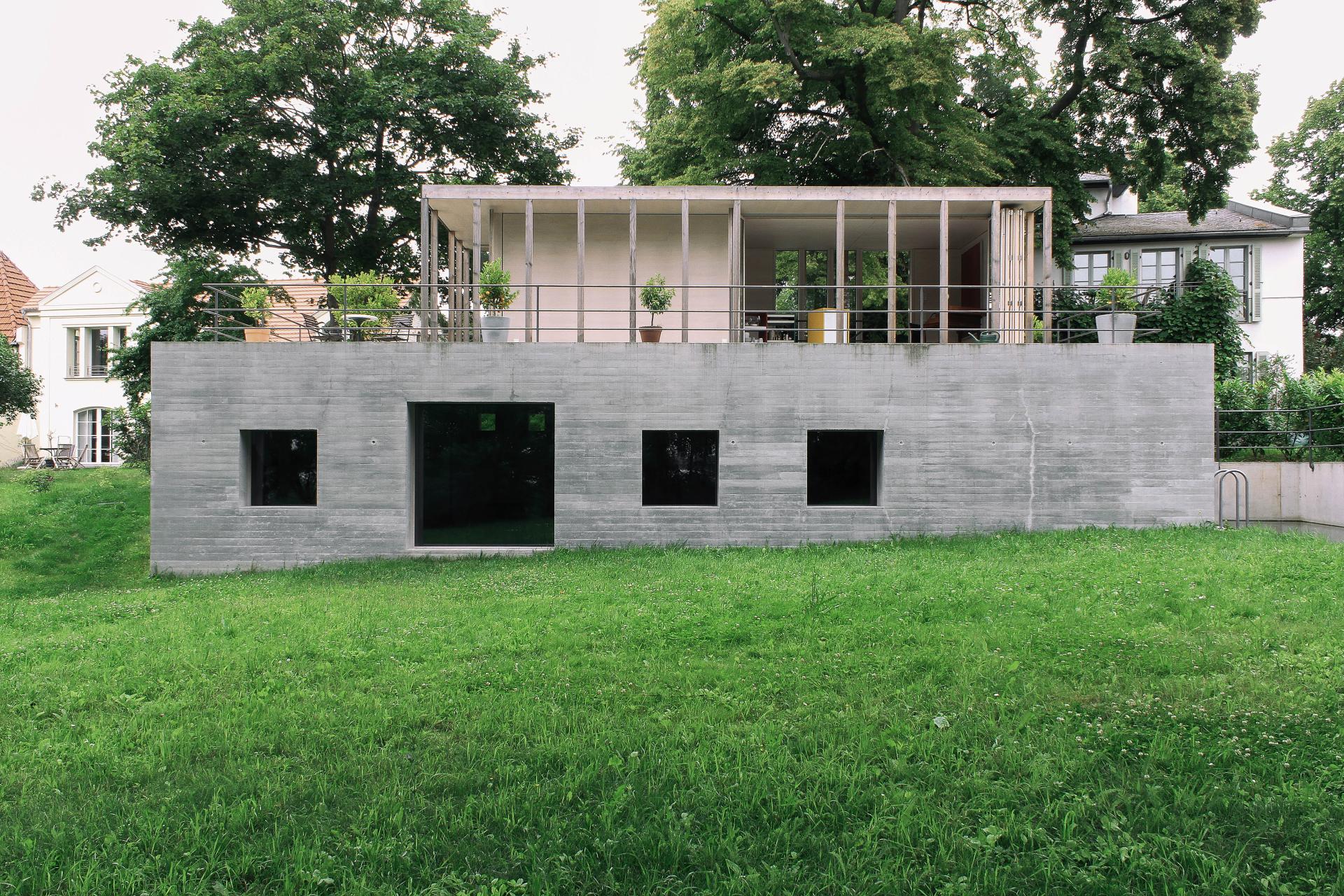
The House is situated on a slope facing the river Havel. Nestled in between four other houses of very different styles, it tells the story of a stone found in situ, as it has always been, which has been converted into a house. The stone is a hollowed-out concrete body into which openings have been cut.
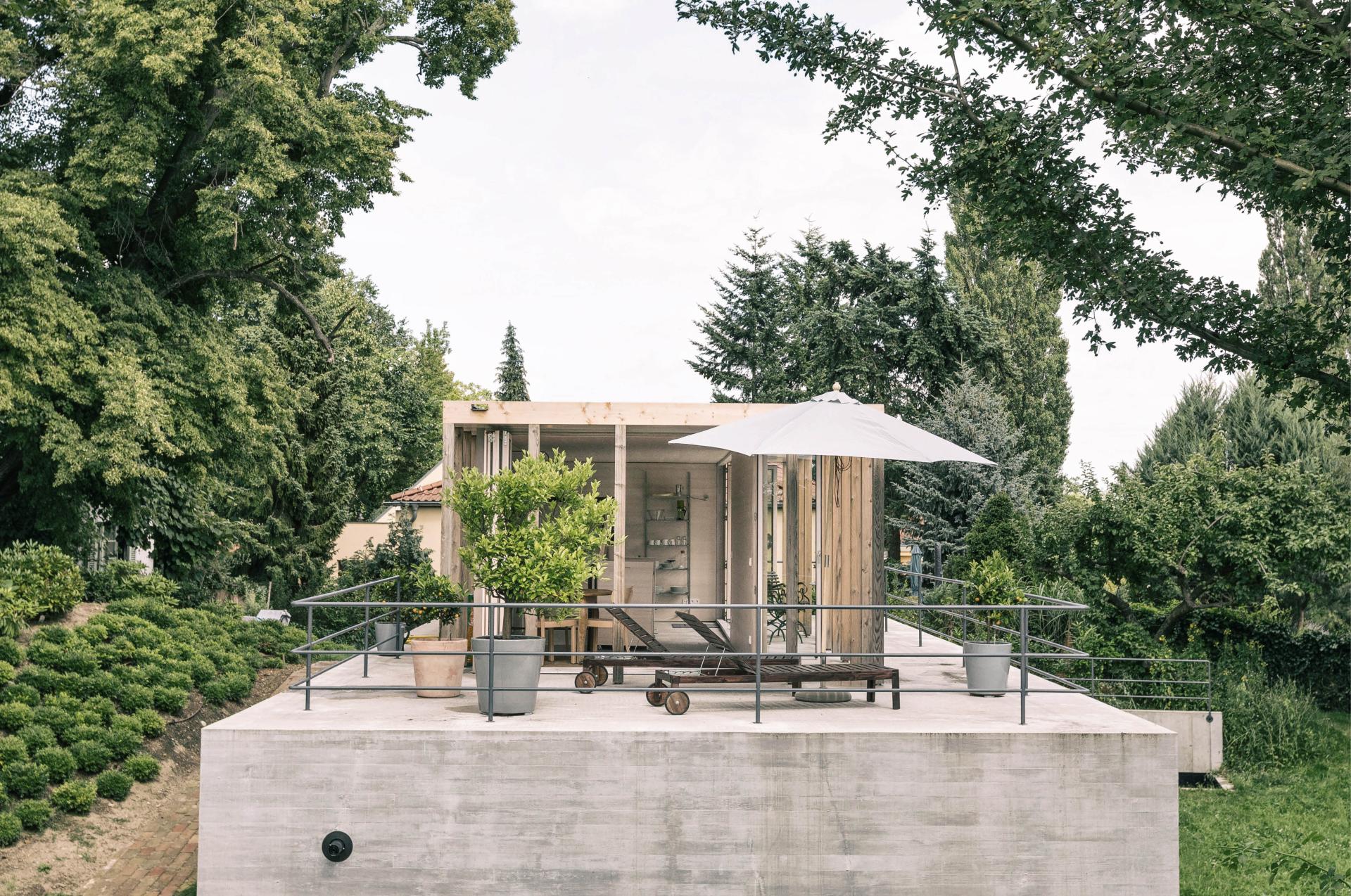
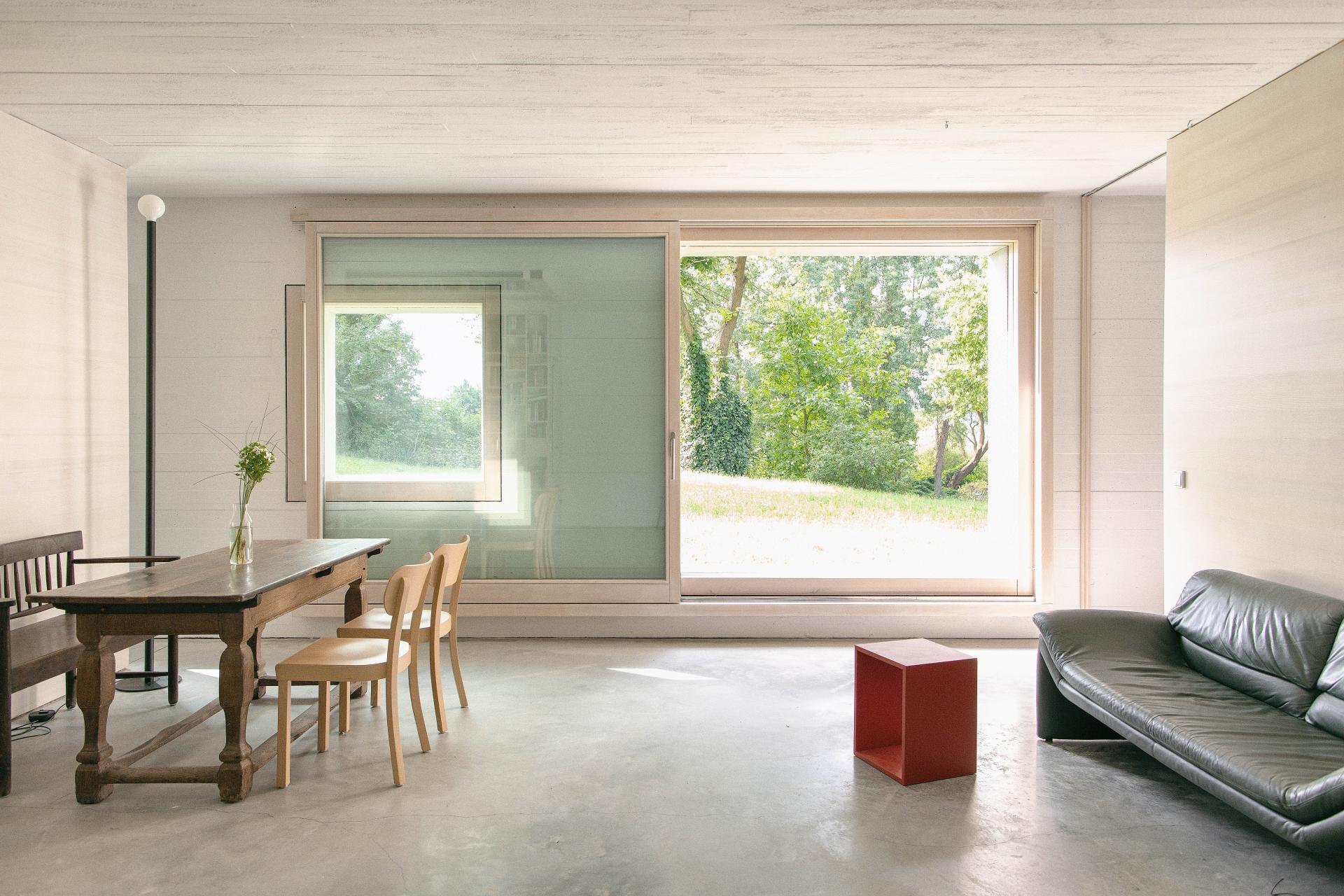
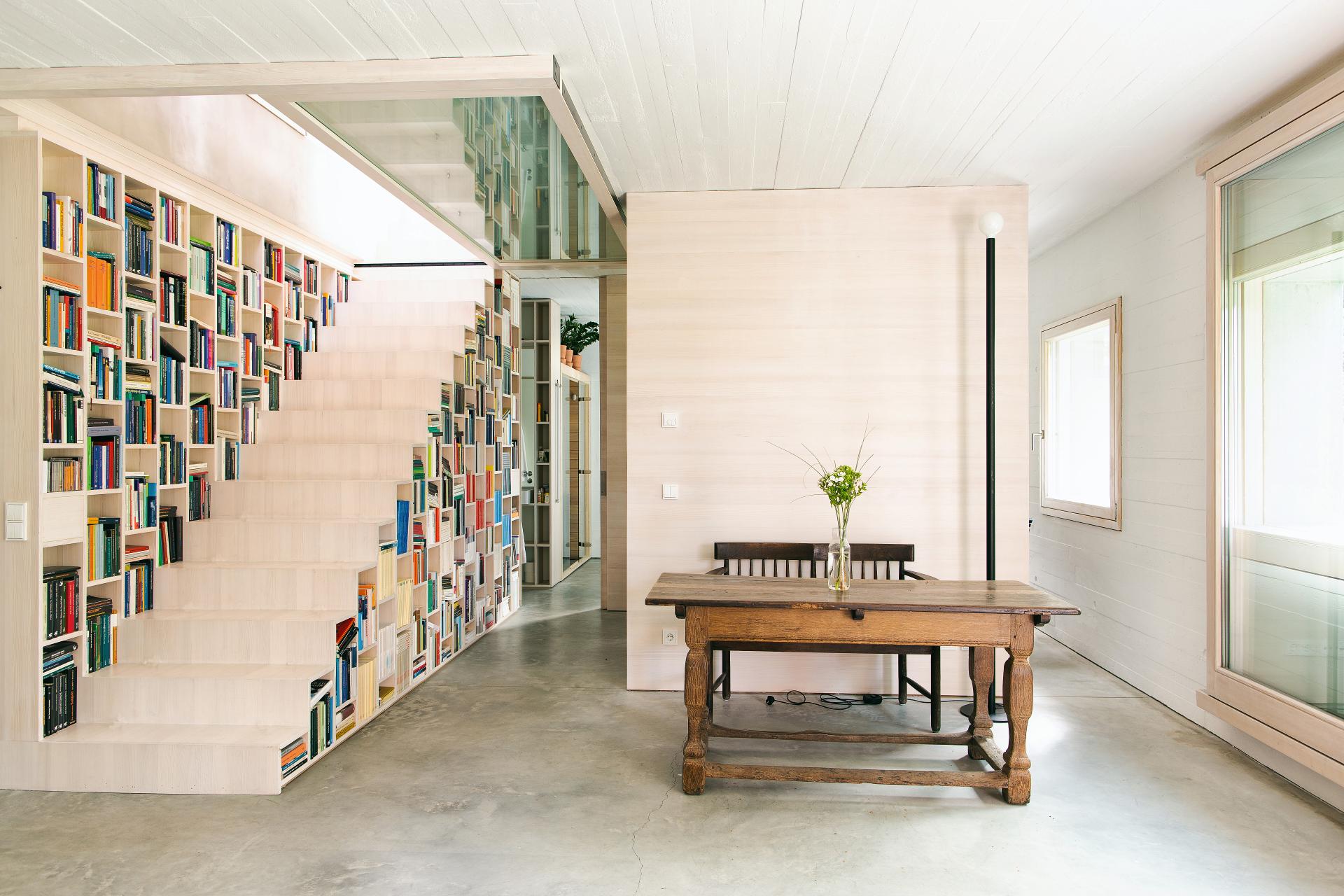
In contrast to the solid concrete block, the rest of the structures are made of wood. All the construction materials remain visible. Free-standing partition walls made of wood subdivide the interior and wooden window frames protect against the weather. A wooden pavilion has been placed on the roof.
The surrounding terrace offers a view of the passing Havel river. A wooden staircase, which also serves as a bookshelf, connects both floors. The large sliding doors provide access to the stone outdoor pool and the garden which slopes down to the river.
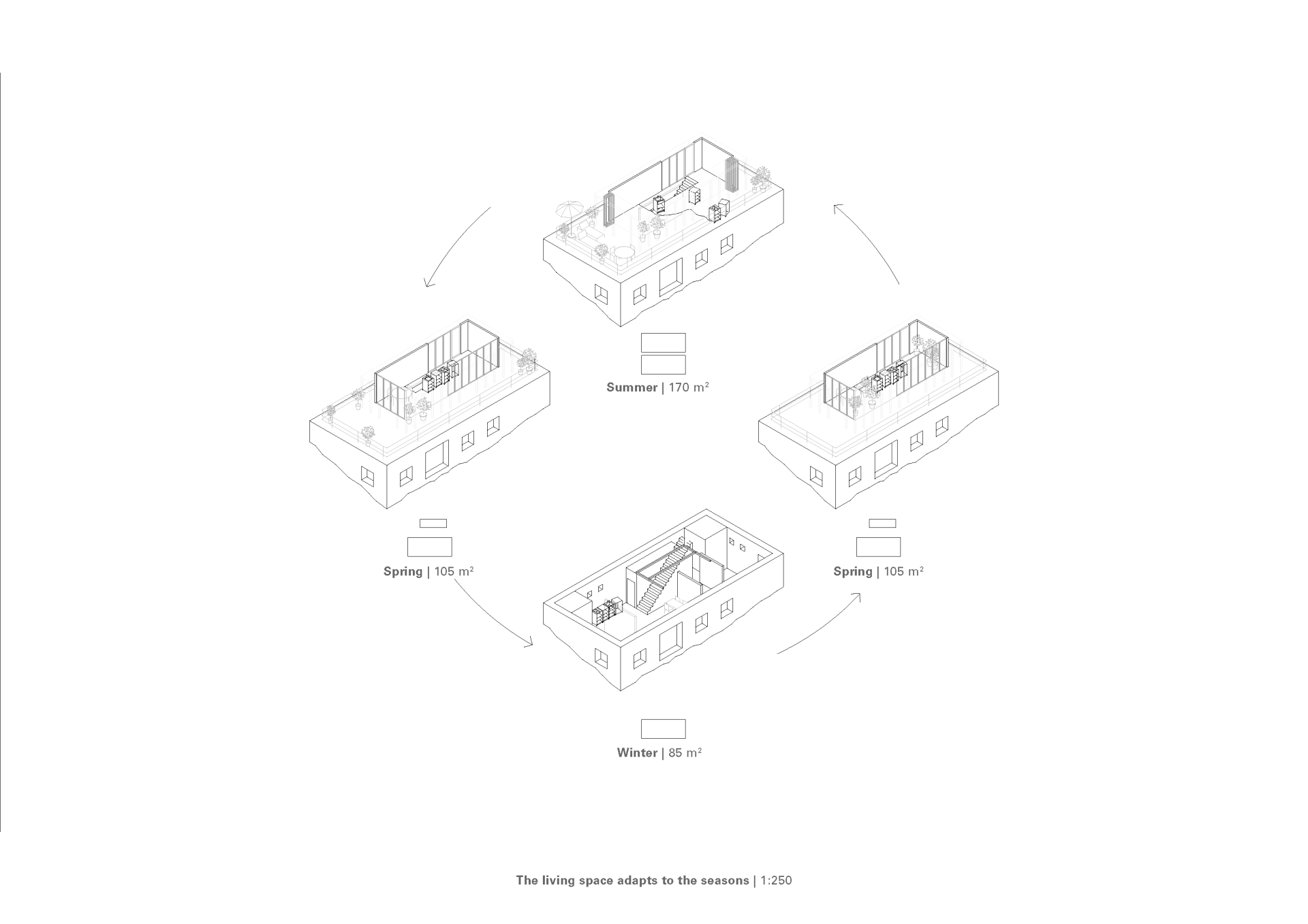
The House is used differently depending on the season. In winter, the residents retire to the garden floor. In summer, the pavilion and terrace are added, doubling the living space. The mobile kitchen moves with the residents. Folding doors open the pavilion in the warmer months and close it during the colder seasons. A horizontal sliding window separates the pavilion from the garden level in winter.
Condensing the living space in winter saves resources and costs. The insulation is reduced to the garden level. The northern, eastern and western sides are buried in the slope. The earth layer provides the house with additional insulation. The waste heat from below makes it possible to use the pavilion as a conservatory for plants in the colder seasons. The closed, unheated room then serves as an extra layer of insulation for the garden floor.
The seasonal living concept brings a millennia-old cultural technique into the present day. In contrast to conventional energy-saving houses, which isolate themselves from their surroundings, this project encourages ecological living in connection with the environment.
Key objectives for sustainability
The House is used differently depending on the season. In winter, the residents retire to the garden floor. In summer, the pavilion and terrace are added, doubling the living space. The mobile kitchen moves with the residents. Folding doors open the pavilion in the warmer months and close it during the colder seasons. A horizontal sliding window separates the pavilion from the garden level in winter.
Condensing the living space in winter saves resources and costs. The insulation is reduced to the garden level. The northern, eastern and western sides are buried in the slope. The earth layer provides the house with additional insulation. The waste heat from below makes it possible to use the pavilion as a conservatory for plants in the colder seasons. The closed, unheated room then serves as an extra layer of insulation for the garden floor.
Key objectives for aesthetics and quality
In contrast to the solid concrete block, the rest of the structures are made of wood. All the construction materials remain visible. Free-standing partition walls made of wood subdivide the interior and wooden window frames protect against the weather. A wooden pavilion has been placed on the roof.
The surrounding terrace offers a view of the passing Havel river. A wooden staircase, which also serves as a bookshelf, connects both floors. The large sliding doors provide access to the stone outdoor pool and the garden which slopes down to the river.
Key objectives for inclusion
In contrast to conventional energy-saving houses, which isolate themselves from their surroundings, this project encourages ecological living in connection with the environment.
Results in relation to category
The projects shows how we can conserve resources while living sustainably in connection with the environment.
How Citizens benefit
The Haus am See was deliberately designed without the most modern technology. This allowed it to be built by small local craftsmen. The long-term and thus sustainable use of the building should should not be impaired by the permanent integration of quickly outdated technology. The simplest installations, located exclusively in the in the wooden partition walls that have been set in place, leave the the possibility to additively adapt the technology to the latest to the latest state of the art.
Innovative character
The seasonal living concept brings a millennia-old cultural technique into the present day.