The Winston Churchill residence renewal
Basic information
Project Title
Full project title
Category
Project Description
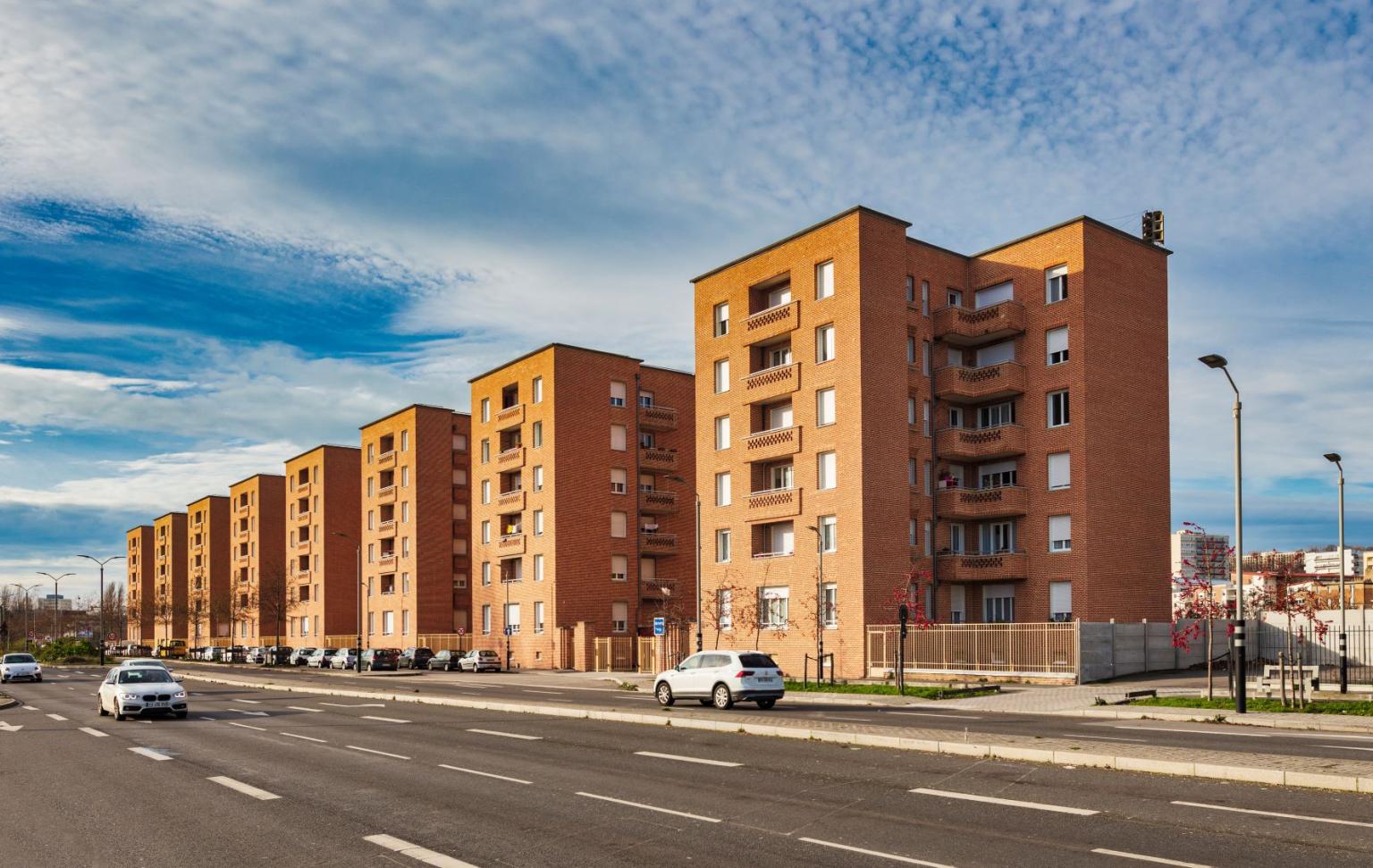
Inaugurated in the 30's, the W. Churchill residence is one of the oldest in Habitat 76. With its remarkable architecture, protected by a local protection plan, it marks the main entrance to Le Havre. This residence was built to meet the needs of the inhabitants but these needs have evolved and with them the need to modernize it completely. Habitat 76 has made every effort to ensure that this rehabilitation brings it modernity and attractiveness without compromising its identity.
Project Region
EU Programme or fund
Which funds
Other Funds
European regional development fund / 2014-2020 program / Action : Increase the energy performance of buildings
Description of the project
Summary
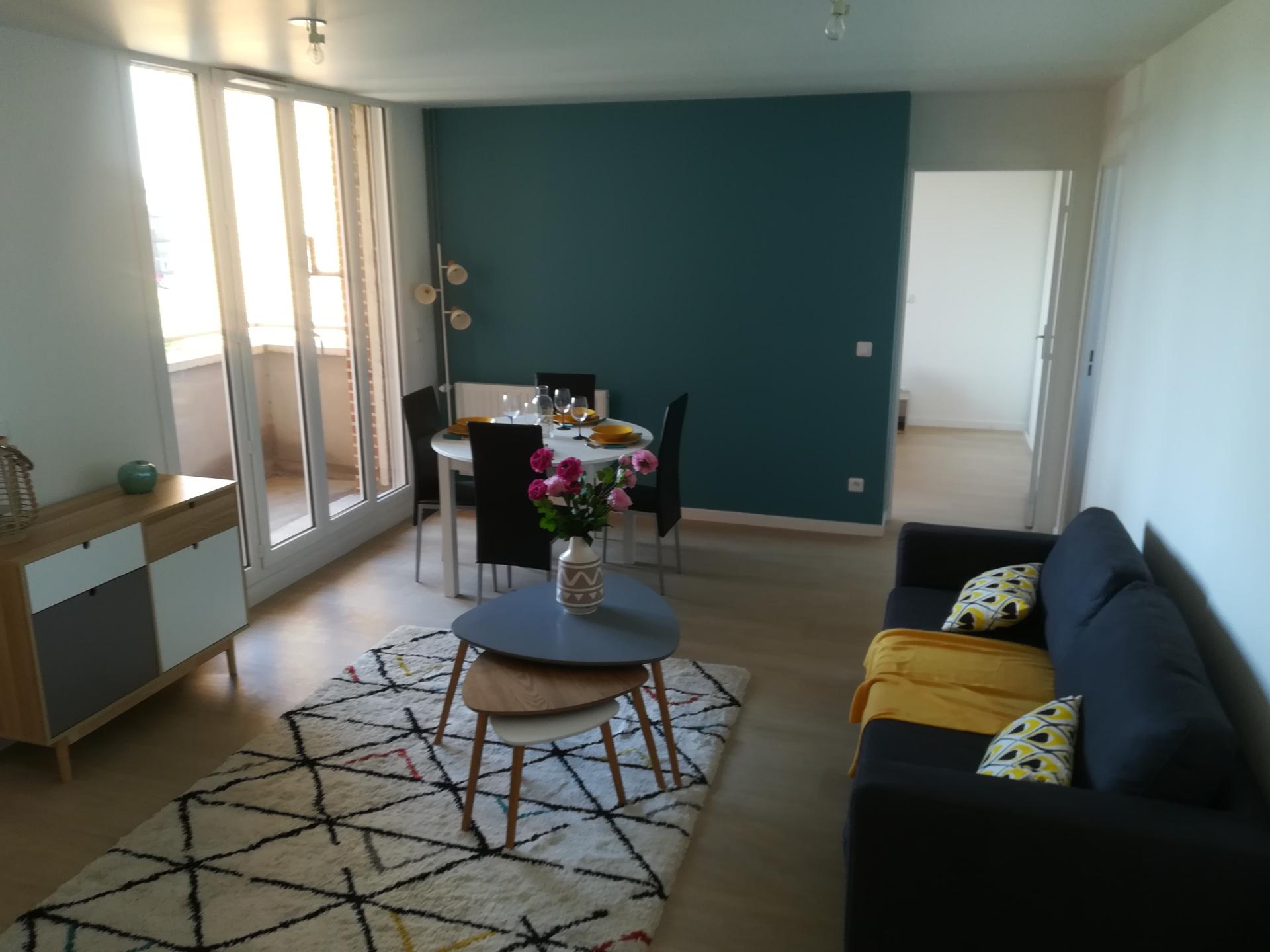
The Winston Churchill residence, inaugurated at the beginning of the 30’s, is one of the oldest real estate of habitat 76. Located at the main entrance of Le Havre, the red bricks that make up the facades are a representation of the architecture and construction methods of this period. Therefore Habitat 76 has made every effort to ensure that the rehabilitation of this residence brings it modernity and attractiveness without compromising its character. Indeed, despite all the maintenance and improvement work carried out throughout the life of the buildings, the residence, which originally was composed by 143 appartment, didn’t answer anymore to the new habits in the early 2010s, was technically obsolete and weakened on the social level. Also, the comfort and accessibility, as well as the type and configuration inside the appartments was no longer up to date after almost 90 years of loyal service. However, it being specified that demolition-reconstruction could not be envisaged, in order to ensure the sustainability of this heritage, but also to presevere ressources. To restore its attractiveness and to diversify the social composition, it was essential to consider a major renovation operation with what we call “a reuse of the buildings” under the circular economy to protect at the same time historical aspect and the environment one (past and futur). During 2 years, renovations work were held, with the tenant's participation. The size of the room's in the appartments has been redesigned, a complete energy and acoustic rehabilitation has been carried out, and the common areas have been modernized and adapted. Today the residence has almost the performance of a new construction with a 70% reduction of energy consumpion.
Key objectives for sustainability
This project, which required an investment of €13.527.729, is a response to the new needs of inhabitants (established after studies).
After nearly 90 years of existence, habitat 76 has give a new life to this residence which keep experienced what time have to offer, and meet the challenges of the future. The objective to guaranteed durability is : QUALITY. Durability of the architectural envelope but also of the infrastructures. In addition, the heating systems installed are more efficient and will allow over time to reduce gas emissions (- 308647lb per year) :and reduce consumption. We can therefore also speak here of the durability of our resources.
Finally, one of the major challenges of the operation was to keep in favorable economic and technical conditions a highly vulnerable population.
Key objectives for aesthetics and quality
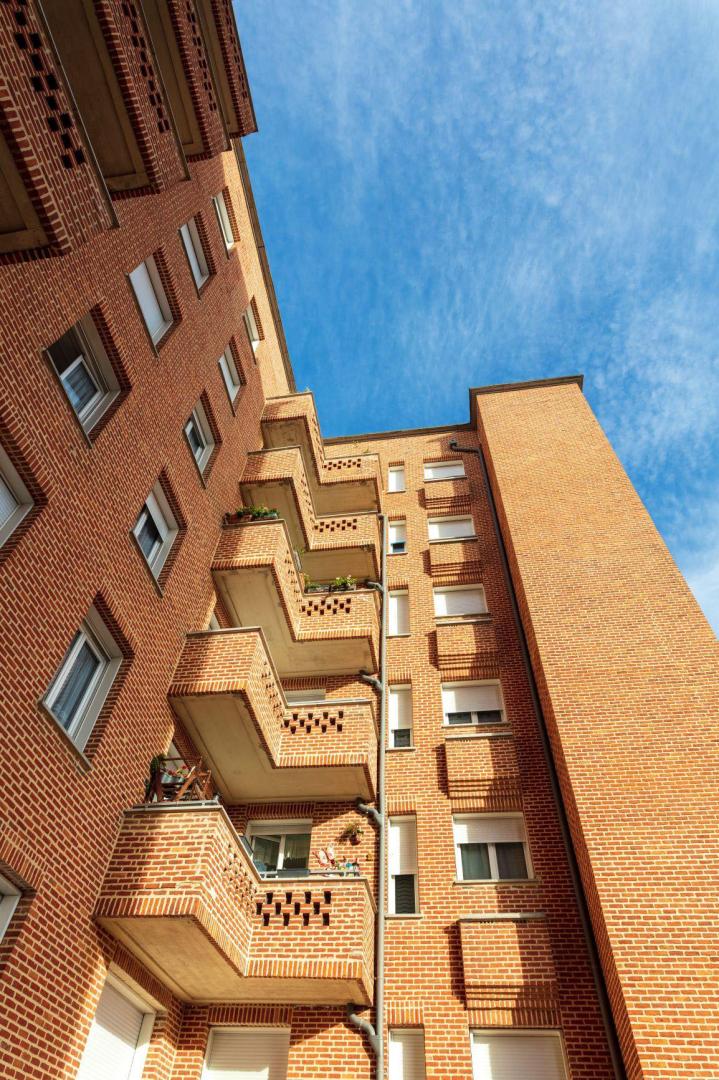
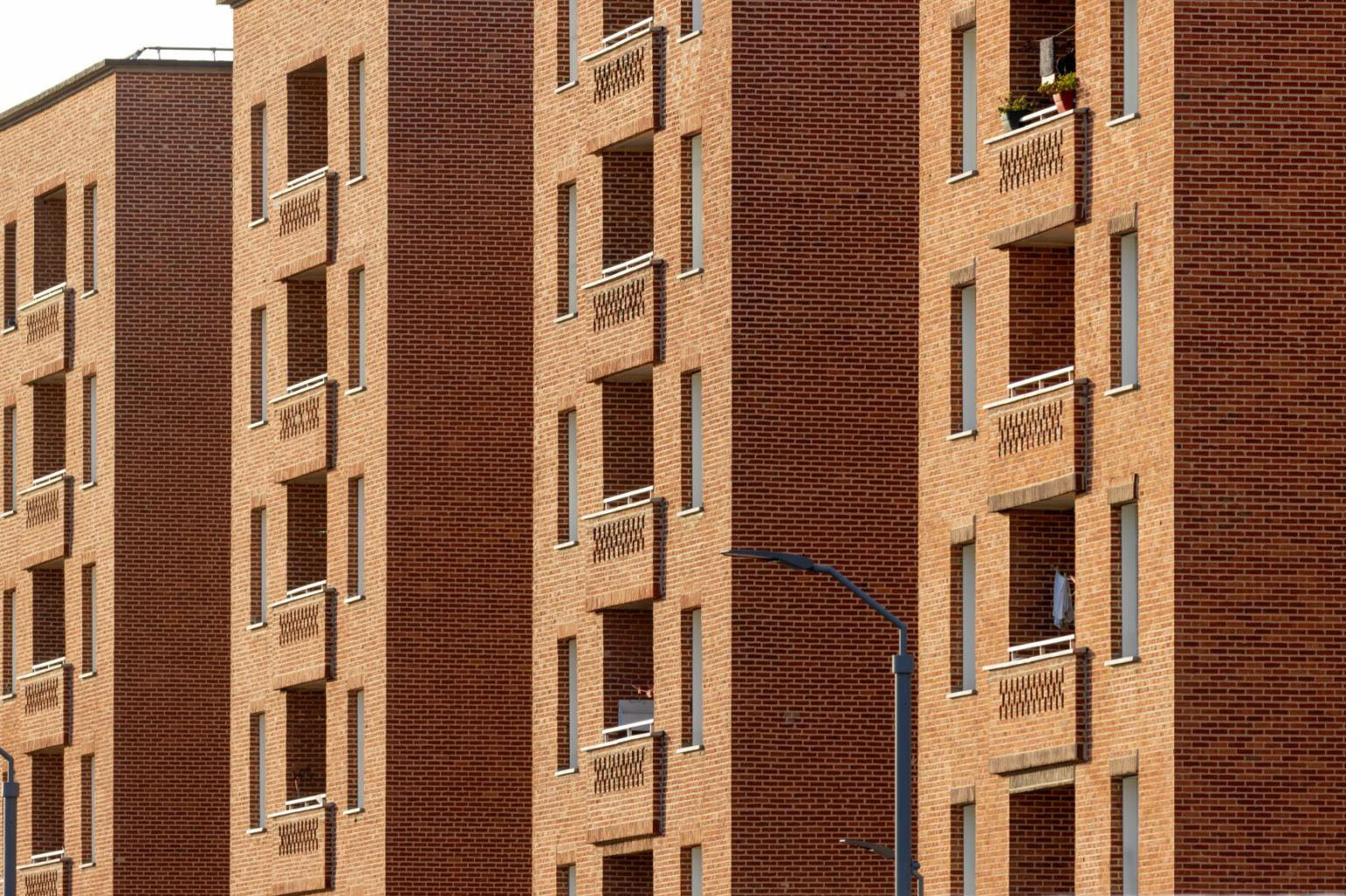
The idea of the project was to keep the entire envelope of the buildings while giving to the residence modernity and comfort. The ambition was high, but the result is present : the building has kept the spirit of the 30’s and meets the expectations of the city and the tenants.
To achieve these objectives, the organization relied on an intense programming phase at the project’ launch. Based on technical and social diagnoses, it provided a precise framework for defining the project. Involving the tenants in the design of the project allowed their adhesion to the process. The implementation of the design-production procedure with a strong dialogue allowed to explore all the technical tools, to innovate and to choose the best project.
Talking about tenants and experience’s quality, they were involved and accompanied during all the renovations work and they appear really satisfied. Actually, more than half of the new appartment are occupied by former tenants.
Key objectives for inclusion
As a social landlord, habitat 76 have a role to guarantee a significant form of social mix within all of its residences. Winston Churchill’s one is not an exception then. Also, improving the energetic performance of the appartments has made it possible to guarantee housing costs (rent + charges) compatible with the resources of the tenants. Let the possibility for a socially vulnerable population to live in the residence in favorable economic conditions was an important element of the project and the new inhabitants moving in offered this social and generational mixed. Also, improving accessibility for people with reduced mobility, in particular with the installation of lifts in all the buildings, was an achieved objective which also responds to the aging of the population and the need to support this type of tenants. Living all together allows a better neighborhood life and a strong social bond. Finally, all of this would not be possible without the tenants themself who contributed to the definition of the project during many consultation meetings in order to make this residence, a residence that looks like them. Also, a delegation of tenants participated to the final choice of the project during an office's tender committee session.
Results in relation to category
The real estate heritage and the imprint it has on the city was well and truly preserved. Habitat 76, by this renovation, offered to the city of Le Havre a brand new residence that is still full of history. Indeed, the city of Le Havre, a UNESCO heritage site, has invested a lot these few last years to renovate and modernise itself while preserving its heritage. The rehabilitation works carried out within this historic residence are therefore a link with those accomplished by the municipality and are an illustration of a local state of mind with an international resonance. Habitat 76 has accompanied a renewal of the main entrance of the city of Le Havre.
How Citizens benefit
At habitat 76, tenants are regularly consulted on rehabilitation programs so that they can fit their needs and expectations as much as possible. Information’s meetings are organized in order to share the plans, the materials used and to answer questions that may be asked by them. At this occasion, model homes are presented so that residents can see themselves more easily and can give their opinion after having all the informations. The rehabilitation of the Winston Churchill residence is a concrete illustration of this. Indeed, the project was built in constant consultation with the tenants from the development of the program to the reception, including the award of the contract. At the same time, individualized support has been put in place, allowing everyone to experience rehousing as well as possible and find adapted solutions for each situations. Today, more than half of the apartments on the site are occupied by tenants who were there before the constructions work. Also, they still have the possibility to talk to a referent in the residence if they have any problem thanks to an on-site office, a permanent link with the tenants' association created since the end of the work, and finally the disponibility of a common room.
Innovative character
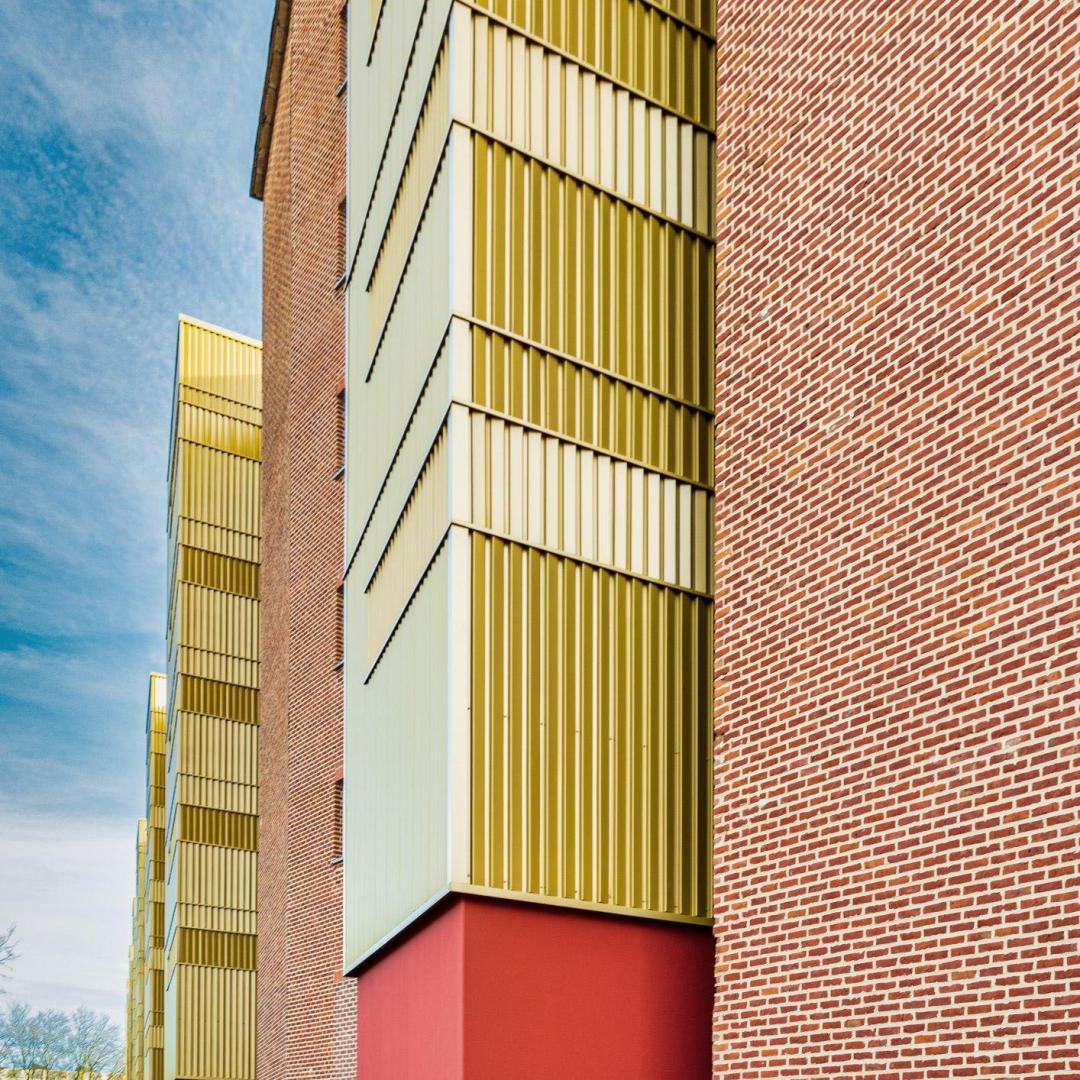
The project is an innovation because nothing, in the architectural envelope of the buildings, has been changed (except for the creation of stairwells with lift). From an outside point of view, everything looks just the same as before. It's only when you come inside the buildings that you can notified the modernity and all the rehabilitations work that have been made. Everything has been thought to reach out the new needs of the tenants. Moreover, the buildings are respectful of the environment and as we have seen, is energetically really close to a new construction.
It is also an innovative approach, where companies, architects, design offices, economists and heating operators worked togeteher.