BIOTIC CITY - Agroplaza
Basic information
Project Title
Full project title
Category
Project Description
Biotic City is a research-action project to transform in a broad, permanent and real way how the current city is designed and built. It is a new model of habitat designed through an experimental co-creative process for the social and ecological transformation of the city.
Biotic City is the theoretical framework of Agroplaza, an urban ecological equipment model, based in participatory design processes with local communities and spaces within different european locations.
Project Region
EU Programme or fund
Which funds
Other Funds
Agroplaza Getafe was implemented thanks to FEDER funds in 2015
Agroplaza Kirikiño was implemented thanks to Designscapes Project (Design-Enabled Innovation in Urban Environments, H2020-SC6-CO-CREATION-2016-3 Project number:763784) in 2020 - 2021
Description of the project
Summary
Biotic City was born in 2015. It is an approach to urban design through collaborative development, positioning life and it’s diversity at the core. It consists in a city model built by transformative, creative, social, inclusive actions that come from community based movements mainly focused on citizen participation, feminism and ecology. The project pursues not only the reflection on the current city habitats but also the effective realization of the methodologies, prototypes and theories which allow us to walk towards this real and necessary new model of city.
Our focus is oriented to collaborative projects created on public and community spaces. They consist in urban interventions, design of parks, squares and/or community spaces; experimental processes of co-design and renaturalization; reflections on social behaviours and inclusive perspectives from a design point of view.
We want to approach a city and society model which is designed by using creative actions. We want to balance the relationship with the natural environment. We want to design with the collaboration between different people with a gender perspective. We also claim for individual and collective rights linked to multiculturalism, precariousness, functional diversity, multi-generational coexistence and other social needs.
The Biotic City project hosts Agroplaza workshop interventions, in order to design socio-environmental urban equipment. Agroplaza is an urban furniture model for socio-ecological transformation of cities, based in participatory design processes with local communities and spaces within different european locations. The process detects specific local needs through co-creation and design-thinking with the aim of providing a platform for the reformulation of New Urban Realities: practices and possible situations that impact our everyday life in relation to self-sufficiency in terms of common goods (technology, energy, culture, food, etc.).
Key objectives for sustainability
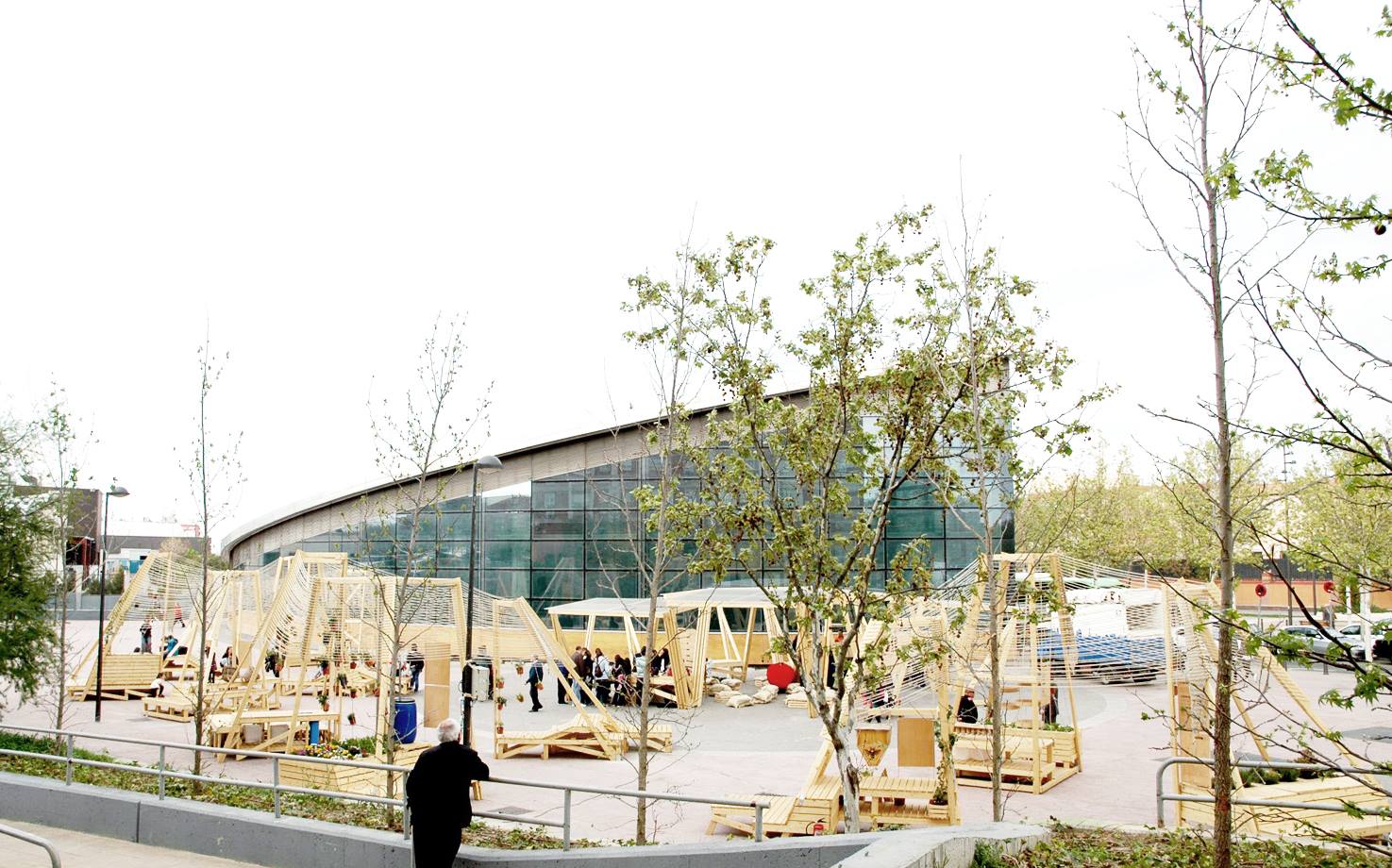
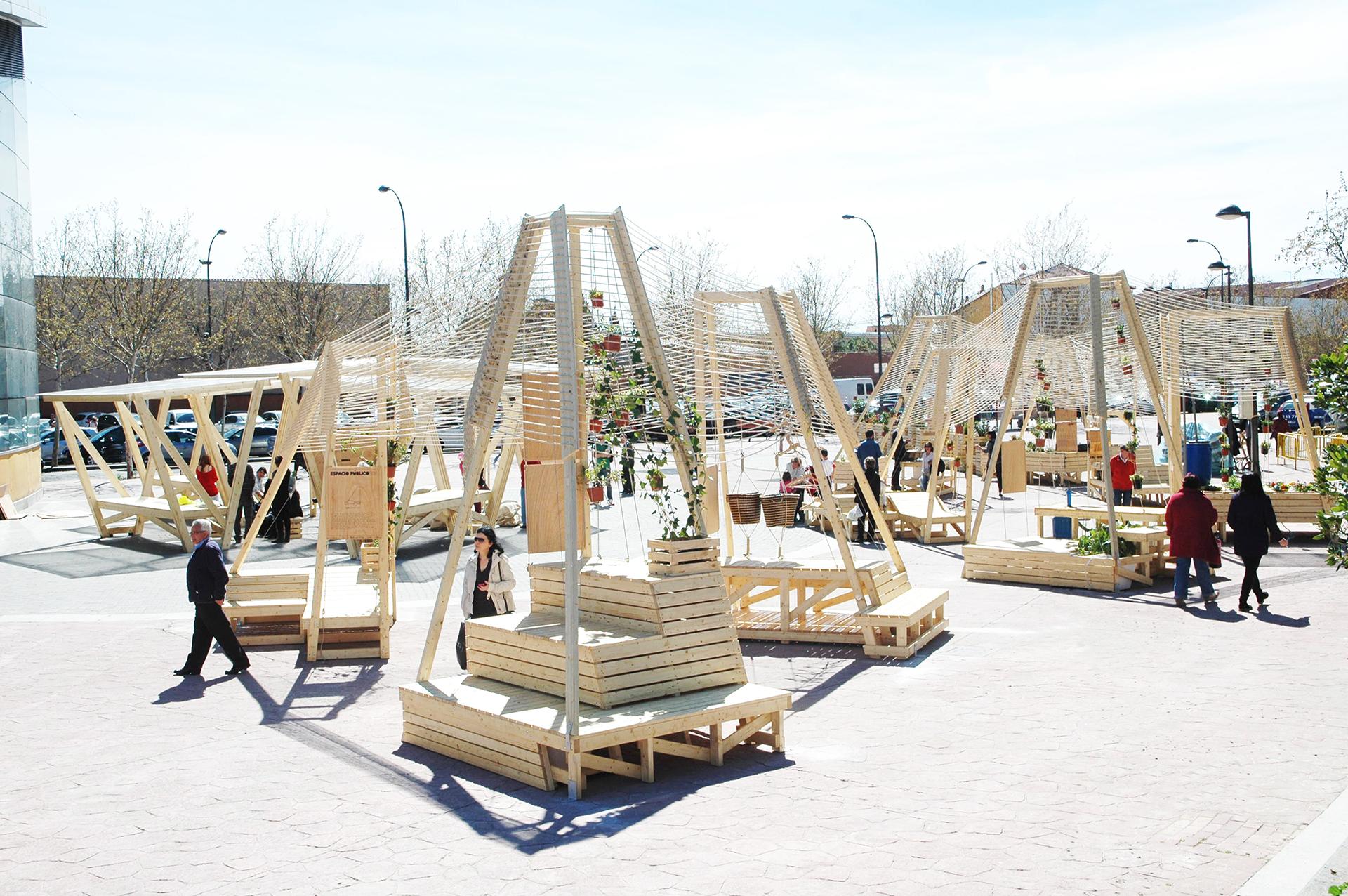
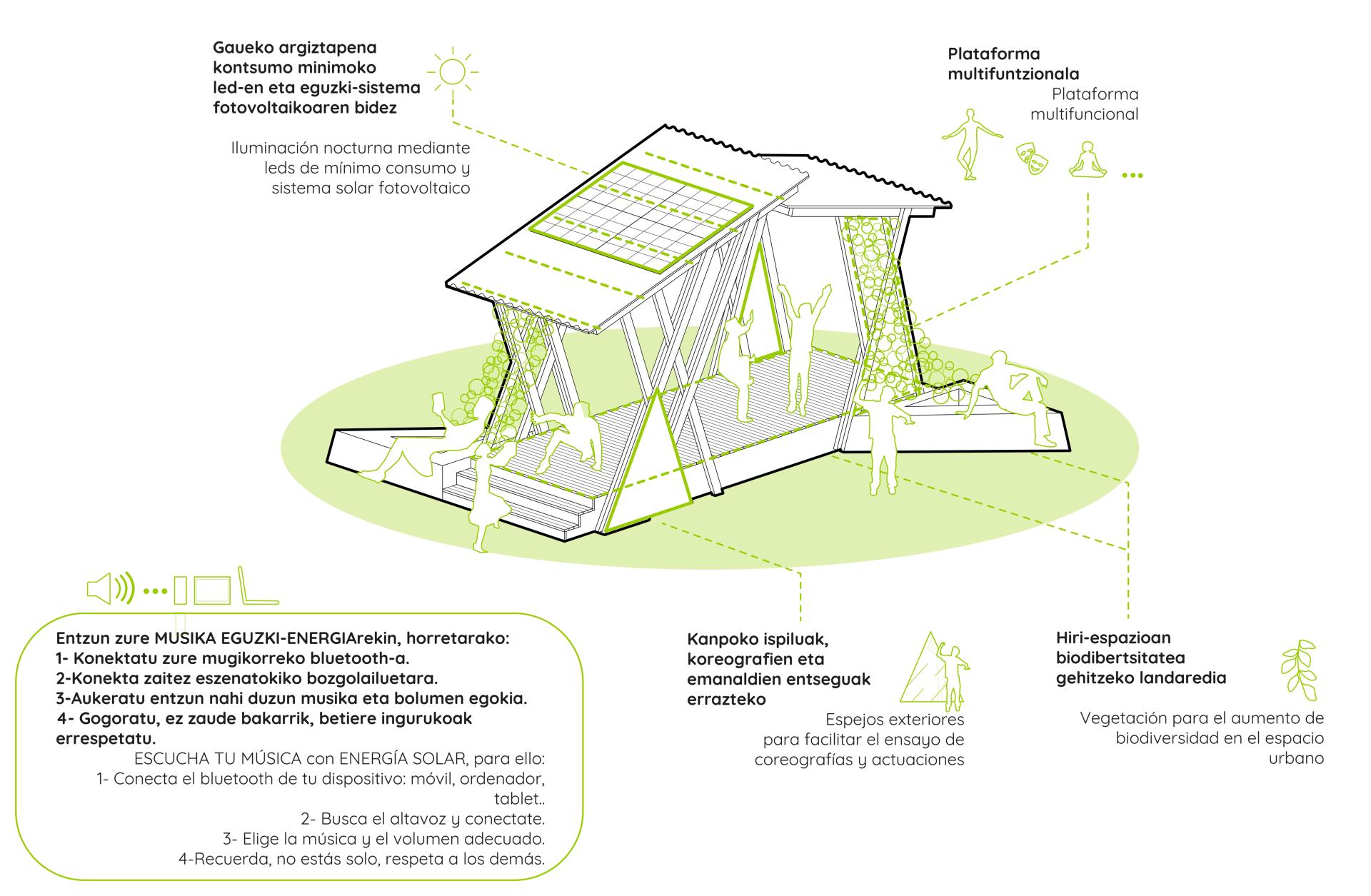
Agroplaza addresses Climate Change and Environmental Footprint through different fields . Specifically, Agroplaza Getafe is composed of 12 Urban Ecological Installations that allow us to share knowledge, arise reflections and cause transformations in relation to ecology, the environment and coexistence. In the case of Agroplaza Kirikiño, the intervention is composed of 2 Urban Ecological installations co-designed with the neighbours to propose a refurbishment of the square in a way in which they feel more connected to technological innovative systems and ecological and natural environments.
This installations consist of pieces of urban furniture that have been defined during the participatory process and which incorporate systems of closed cycles of resources:
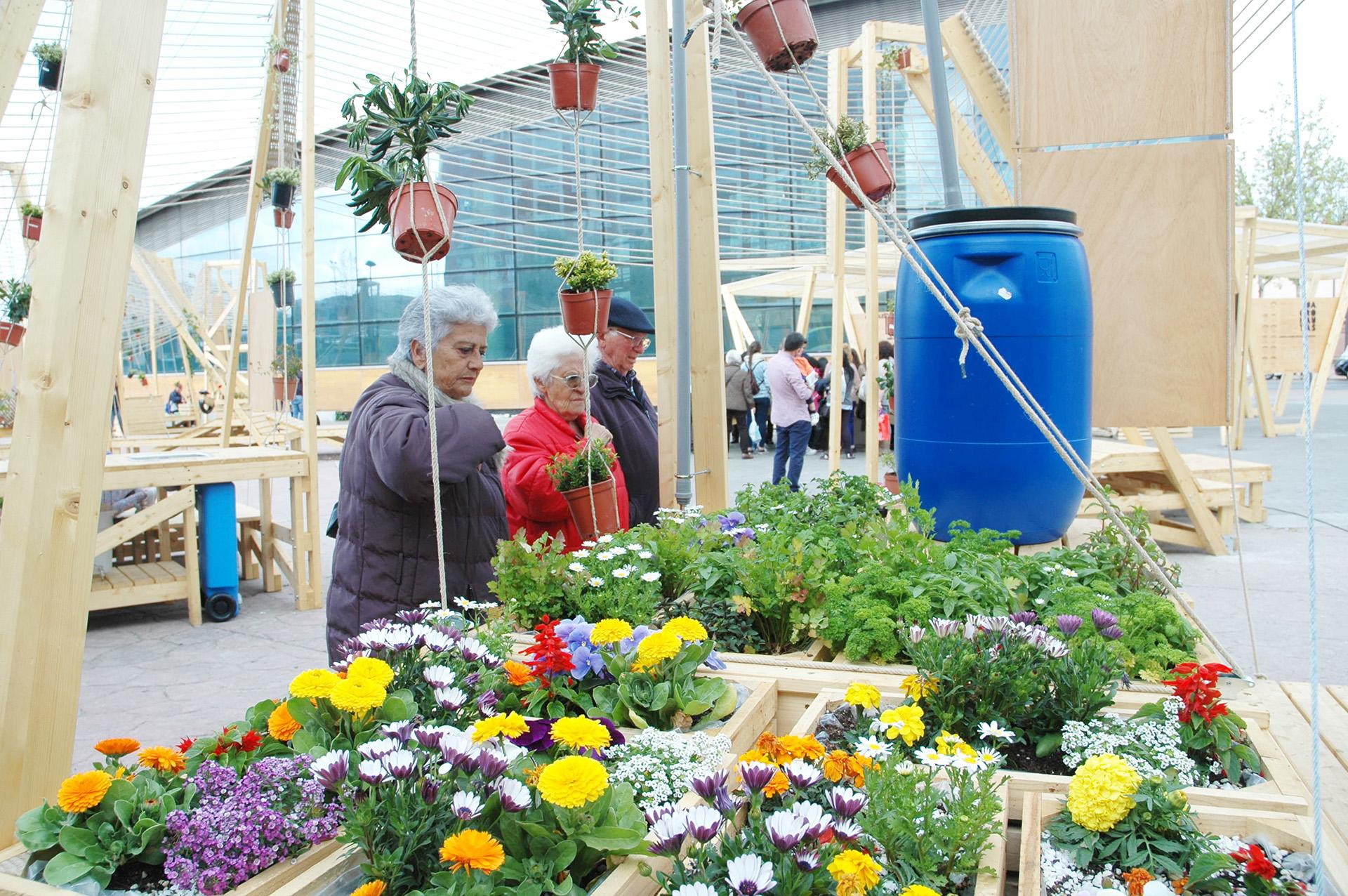
- Farming, including different crops and urban gardening, and fostering the coexistence of living organisms in the city
- Energy production systems which can be used to charge your cell phone, listen to music or switching on the light
- Water depuration and reuse
- Waste management and reuse
- Social open public spaces to gather community
In addition, every furniture piece has been designed with a minimum sustainable criteria guide:
- Life cycle analysis: Minimizing the use of resources and energy in the manufacturing process. Using natural/sustainable origin and Km0 materials, local distribution, recycling/reuse
-Use: Promote life (biodiversity, species inclusion, non-toxicity). Renewable energy production, natural - human energy (minimum fuels etc.). Minimize polluting emissions (gases, component evaporation ...)
Key objectives for aesthetics and quality
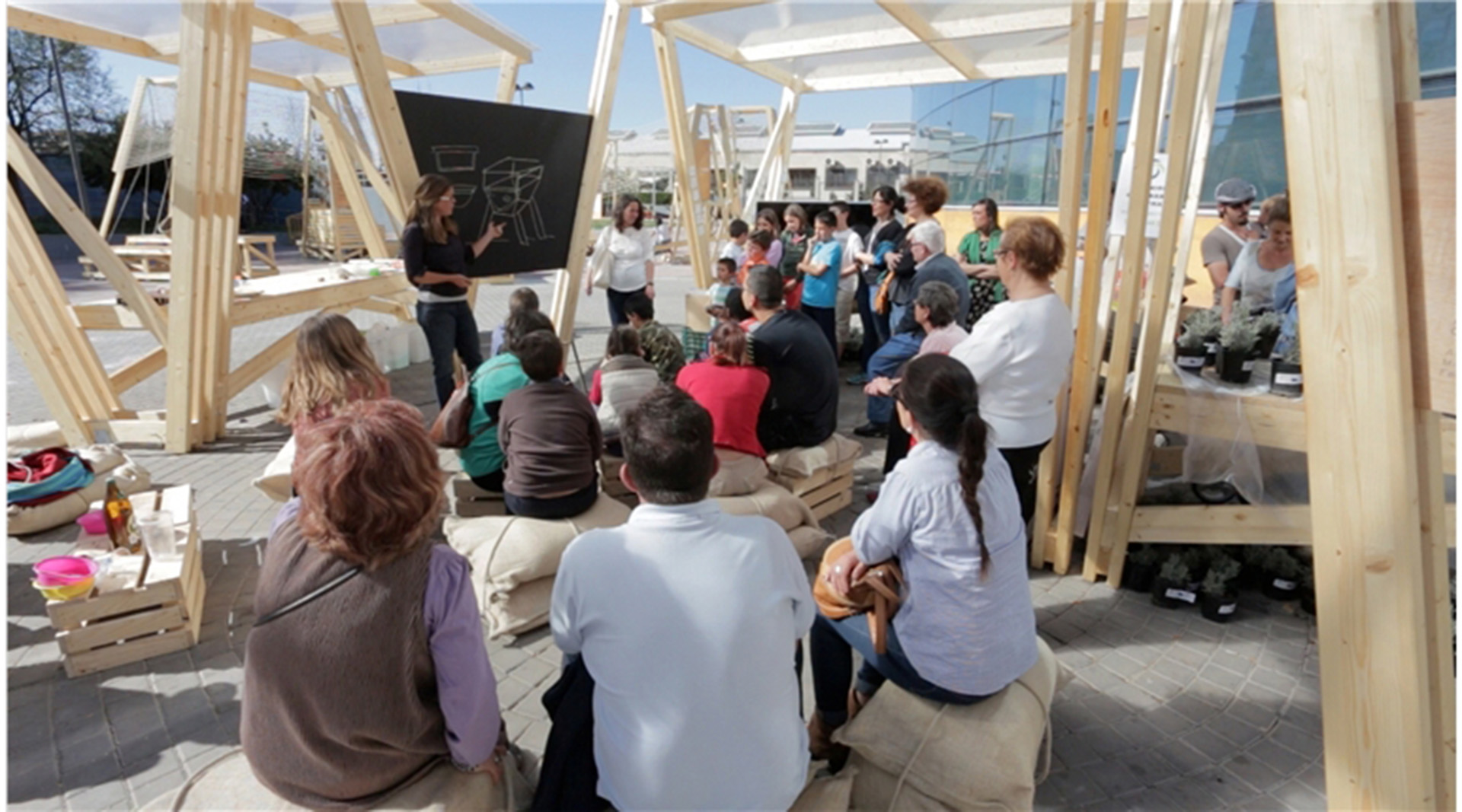
Agroplaza - a new model of plaza - is a mix of a classroom, a square, a park and an exhibition: a naturalized public space with urban furniture that includes ecological systems to promote innovative practices. It is a pedagogical space that reformulates our daily life. It promotes the dissemination of techniques, habits and systems to favor the transformation of public space and the city, with the aim of improving the quality of life of human and non-human communities through interaction and collaboration, towards more sustainable, diverse and fairer models.
Our objective is to transform ordinary public spaces into learning and experimental environments by introducing urban furniture that catalyzes new behaviors in the local community. Emphasis is placed on the integration of living communities in the urban and rural environment.
Agroplaza is proposed as a learning space linked to topics such as ecology, cultural practices and circular economy. It becomes essential for our human activity, by establishing a dialogue with common interests that attack a majority of global citizenship.
In addition, it is made using traditional construction techniques and is mainly made of local wood, which can be easily found and may vary depending on the country in which the prototypes are implanted. It can be easily built, so it has low costs and the prototypes can be dismantled and transported in case it is needed. It includes open-code systems so it can be easily replicated.
For instance, Agroplaza Kirikiño has been adapted also to the city council and local manufacturers requirements, including more durable materials and high quality technology.
Key objectives for inclusion
Biotic City is an experimental co-creation process to build a city model from a collective imaginary where nature, reflections and social and inclusive perspectives are the main tools as well as the claim of individual and collective rights linked to multiculturalism, precariousness, diversity functional, gender, multigenerational coexistence and many other groups.
The main challenge we are addressing is to recover public spaces in the city to transform them in nature-connected innovative places with citizen participation. Agroplaza raises the connection between regulated and non-regulated knowledge environments by working in public spaces with open citizen groups and communities and linking them to experts, artists, cultural, academic and research groups. Chosen locations give an answer to the specific needs of local communities and institutions. With Agroplaza we hope to completely transform emptiness in living squares and parks connected to nature for the wellbeing of its inhabitants.
Agroplaza Getafe, is located in a working-class neighbourhood, a lonely underused space without green spaces and hard pavement. Its refurbishment is taking place under the urban regeneration project of the Alhóndiga Neighborhood. Through the participatory process in which citizens, artists, collectives and institutions have taken part, the urban furniture prototypes have been co-created and designed from the intersection of their different needs.
Agroplaza Kirikiño is also located in a neighborhood of similar characteristics. Neighbours have been insisting for long on the need to change the square. A square in which there are many different uses and urban furniture but with no sense of functionality. This was the main reason to boost a collaborative-participatory project in Kirikiño and link the needs of the neighbours with the uses of the place.
Results in relation to category
Public space and its socio-ecological transformation are the main focus within the creative mediation processes. Cultural, relational, resilient and economic activities cluster from different disciplines, to generate a new vision and cultural production models, always more inclusive.
The impacts and results achieved can be summarized in these categories:
-Social: Agroplaza supplies the real needs of local communities by providing them with inclusive, safe and equipped public spaces that encourage meeting and collective learning. It metamorphoses in an open pedagogical space and opens the collective imaginary catalyzing new behaviours and realities.
-Environmental: The dispositives introduce living communities and make biodiversity grow in a very tough and dense area. They also close cycles renewable of energy and resources and sensitize neighbours about the importance of promoting an ecological urban habitat. They are designed with a sustainable criteria guide.
-Economic: The experience of designing, developing and producing Agroplaza strengthens the local innovative enterprises. This enhances and dynamizes innovative environmental technologies and inspires similar initiatives in the area. In addition, Agroplaza impulses a more ethical economy. Reuse, repair and barter are integrated in Agroplaza as ways to explore alternatives to actual exacerbated consumption.
- Political: This experience works as a pilot project and encourages the City Council to develop more public spaces with citizens participation. The project hybridizes knowledge and people from different backgrounds, (academics, administration, social groups). It generates new dynamics between institutions, professionals from different disciplines, organized and unorganized citizenship around creative and innovative urban transformation methodologies.
How Citizens benefit
Biotic City is designed and built on the basis of artistic and technical mediation in participatory creative actions. In this model of inhabited space, where life at all scales is at the core, collaborative and open creative processes appear as powerful tools for learning and transformation.
Our framework is to reformulate city production to reduce its impact on the planet. This challenge is addressed through innovative practices where citizens are responsible, owners and actors. The project’s approach contains from its beginning the purpose of enhancing democracy and active citizenship in each place of implementation. We developed different tools and methodologies through a dozen prototypes and processes in Madrid, Bilbao, Barcelona, Málaga, Alicante in Spain and internationally in NYC and Reykjavik.
Users are the center and drive the project. Our experience tells us this is the best way to achieve good results so that they get involved in the care and use of the final intervention. We involve local communities and associations as part of the co-creation and testing of the prototypes. Public institutions are also essential agents, as they fund part of the intervention, so they also participate.
During the ‘Participated Design’ phase, local users and institutions give information about the location (history, identity, use etc), some technical characteristics (accessibility, gender perspective, etc.) and their needs and desires for the space, in order to adapt the prototypes to them. During the ‘Installation and testing’, users give us their feedback about the whole process and results.
Since 2015 Agroplaza has existed as an open ecological plaza in Getafe, 20km to the south of Madrid, as a pilot within the framework for the Integral Regeneration Project of the Alhóndiga Neighborhood. In 2019, it was permanently installed on public land managed by the city hall and civil society. It works with a hybrid public and private governance mode
Innovative character
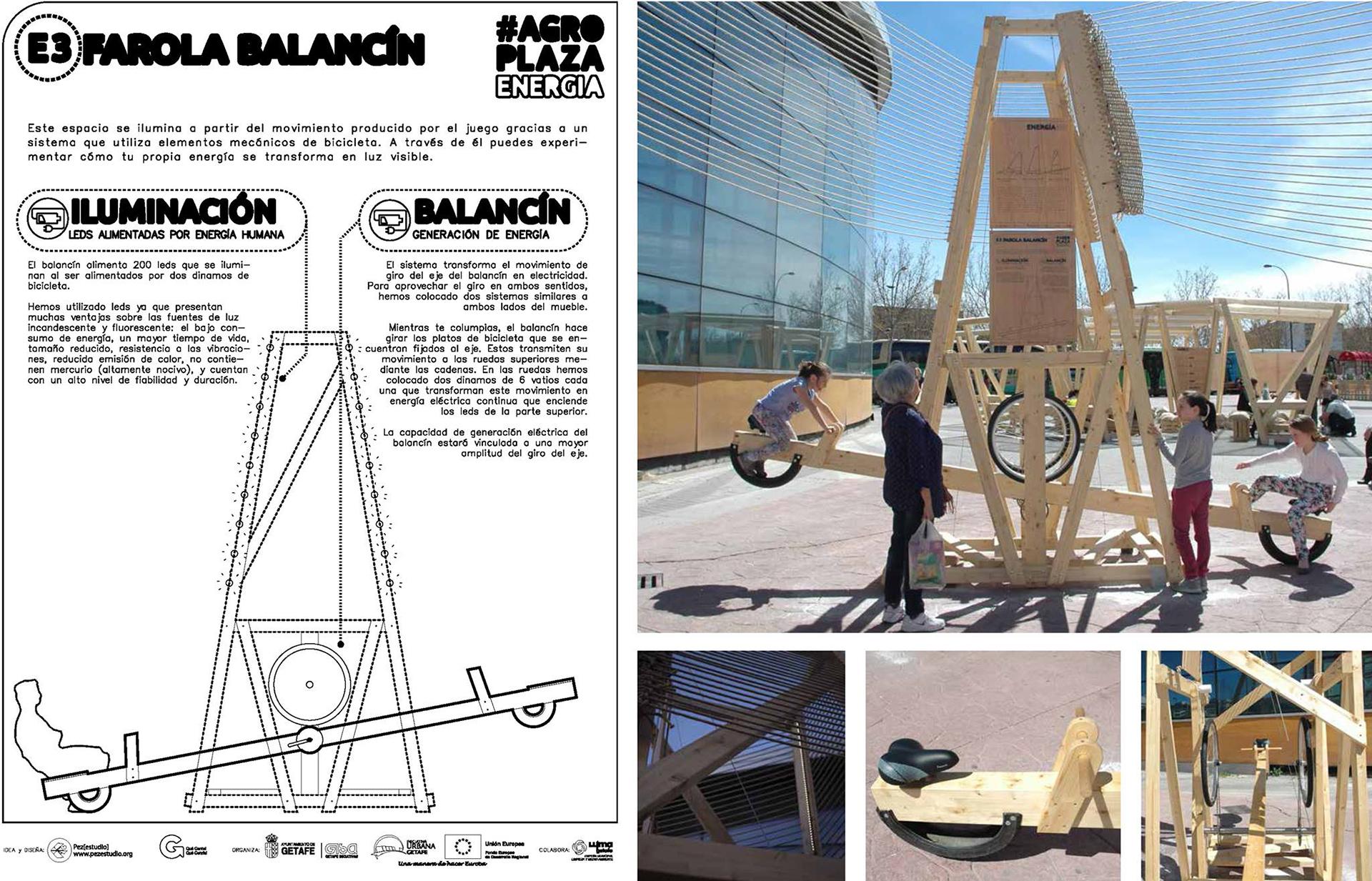
Agroplaza transforms ordinary public spaces into learning and experimental environments by introducing urban furniture that has been designed through participatory processes with their future users, which is, globally, an innovative idea. On the other hand, all the dispositives included in the design are unprecedented, such as a wooden seesaw that produces light through human play, a bench that amplifies your favourite music, a water garden that purifies water, another garden irrigated by rain, charging mobiles from photovoltaic panels.…They also look for Biodiversity and Sustainable Food Supply Chain with farming modules (vegetables and fungus growing, insect hotel...) and the reduction of waste with the classifier and composting module and the reusing objects point.
It is designed with a Glocal target: the project thinks globally and acts locally. On one hand, the project is designed to reformulate the configuration of public spaces; prototypes can be placed in different types of environments and contribute to disseminate designs for a more sustainable global society. On the other hand, the project is redesigned with Local communities to adapt the prototypes to their reality and needs.
From a social perspective the project connects different users: regulated environments with non-regulated social initiatives, bringing together reference experts linked to university or professional environments (art, sociology, architecture, urban planning, economy) and putting them in contact with citizen associations, neighborhood and general citizenship.
The project pursues not only the reflection on the city but the effective realization of methodologies, prototypes and designs that, starting from the ideology of a radical utopia, allow us to imagine, design and walk towards that real and necessary model of the city.